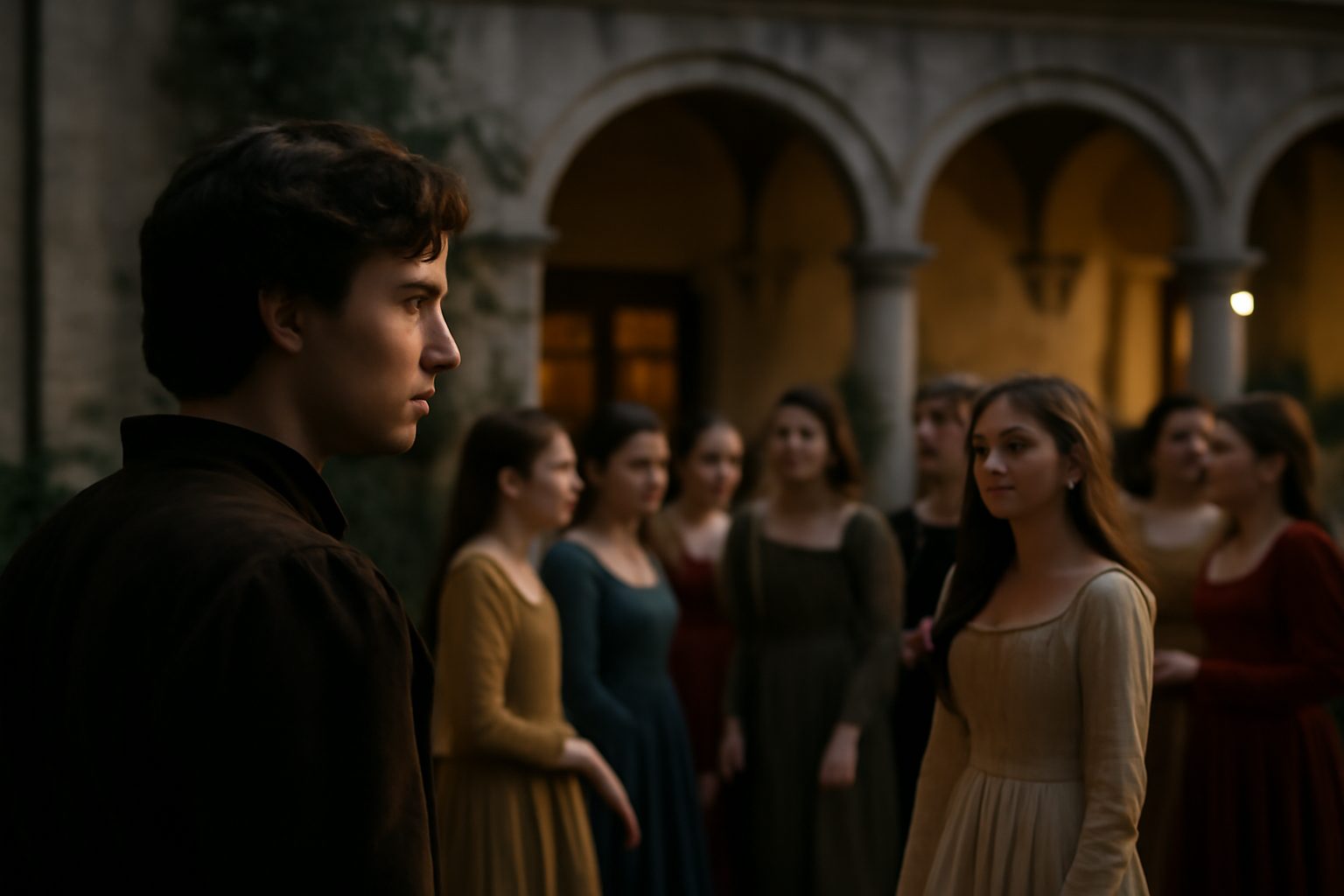
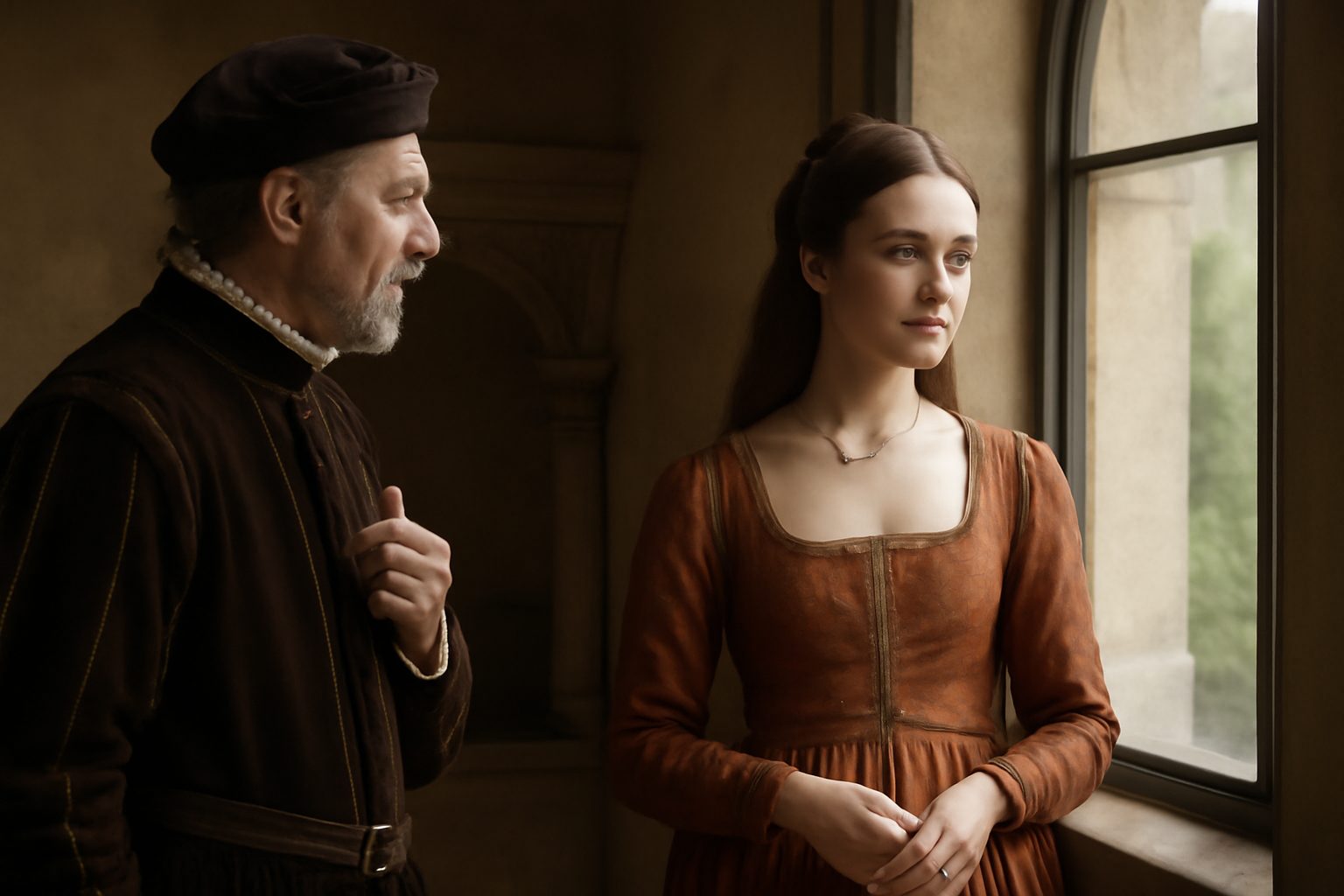
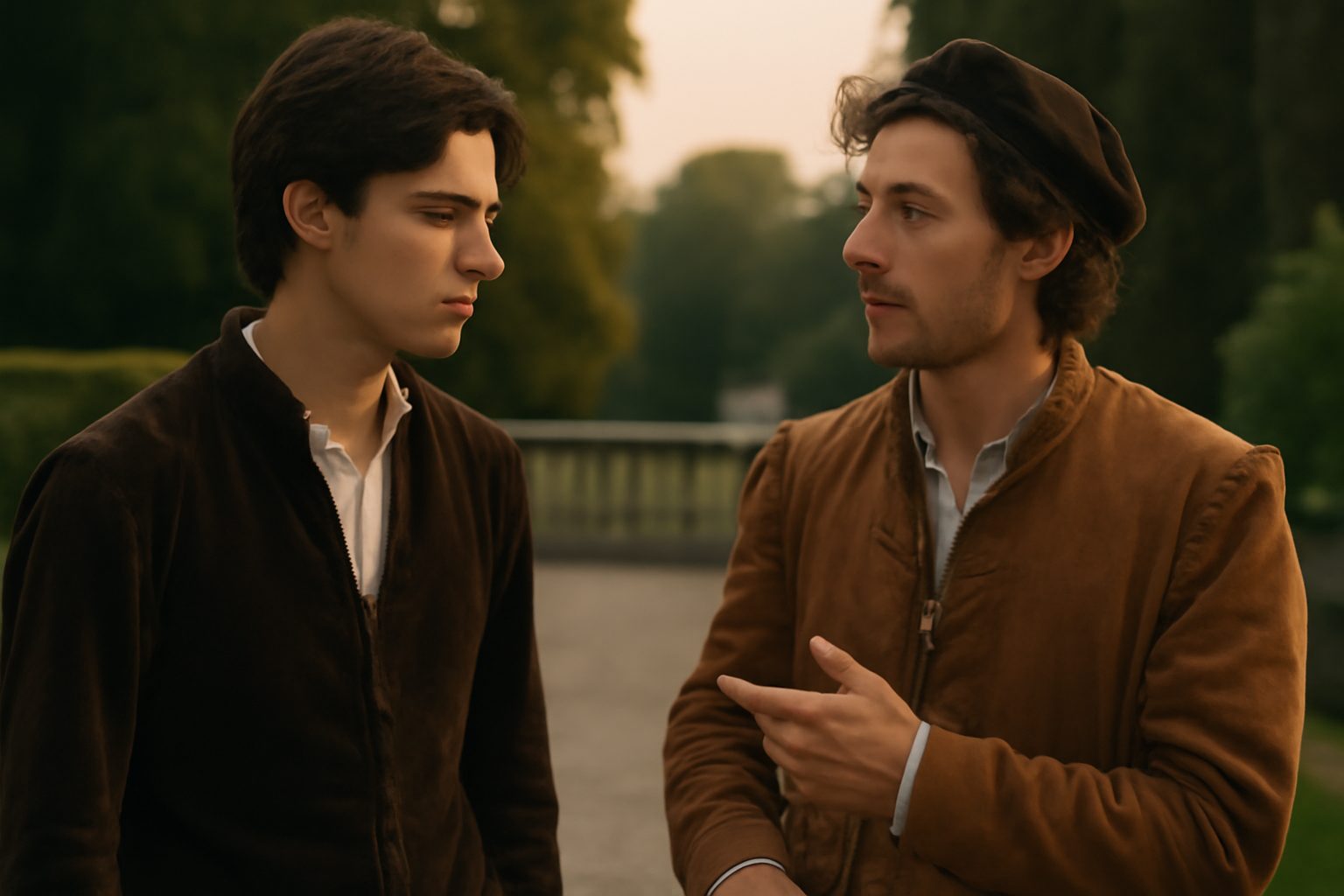
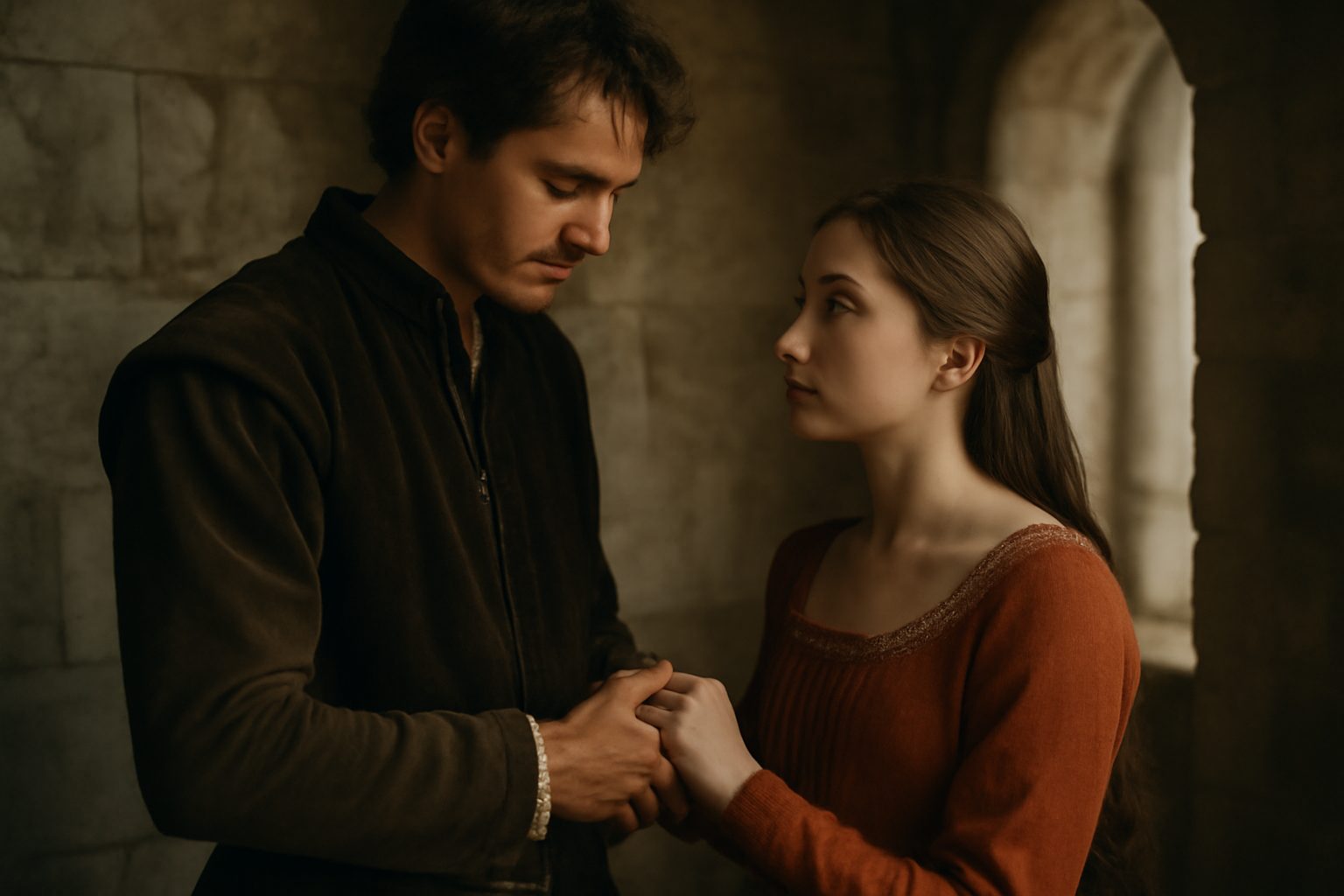
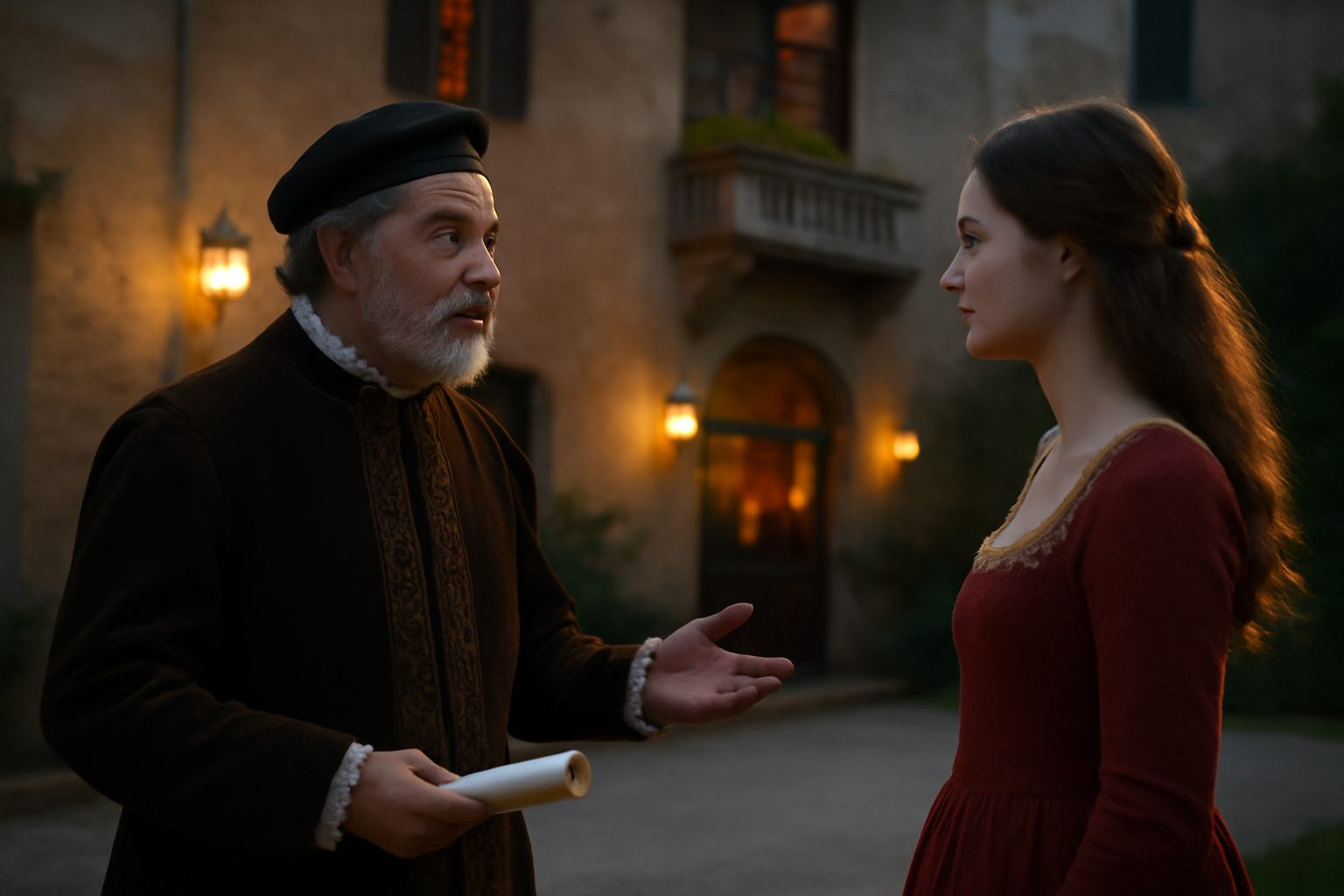
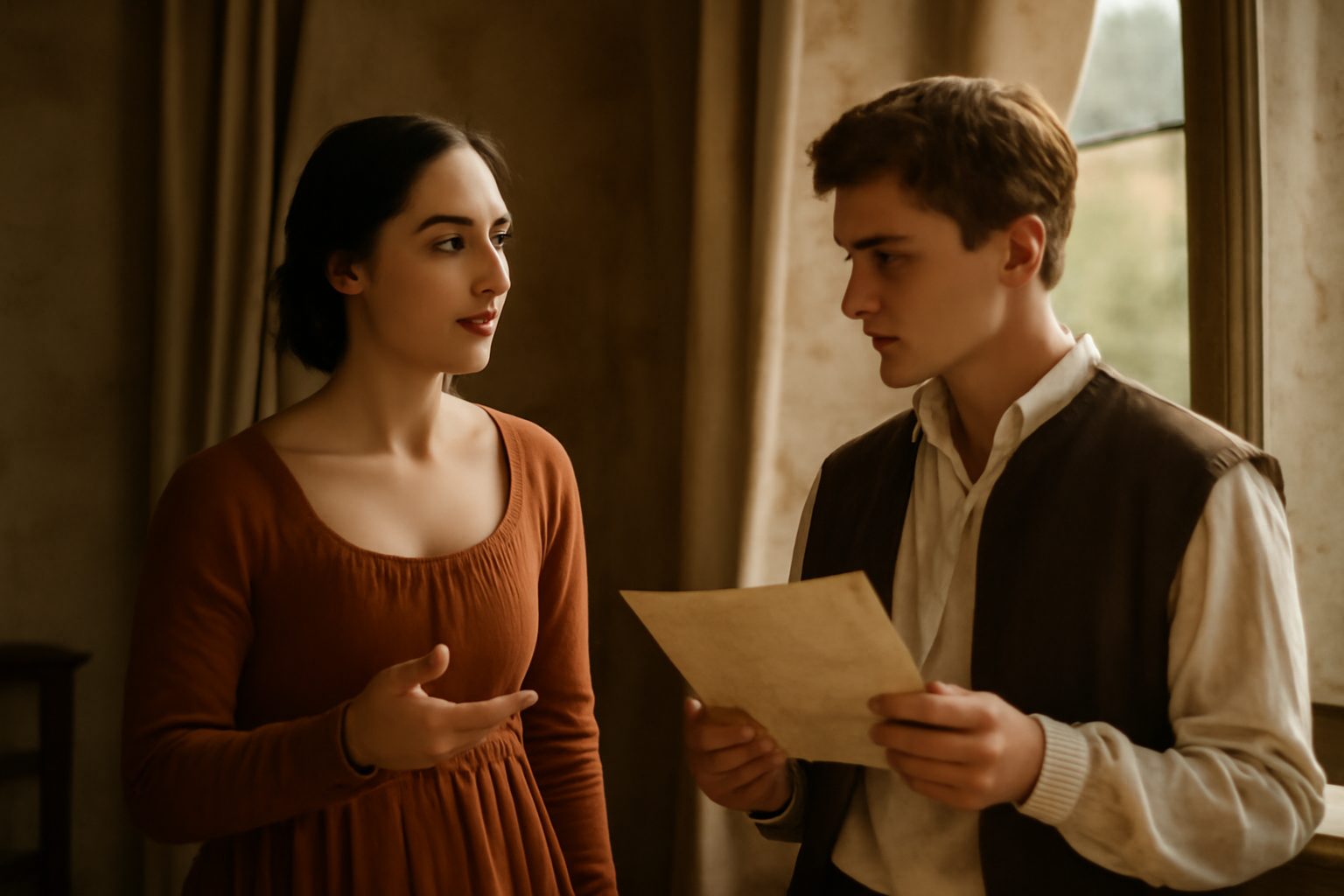
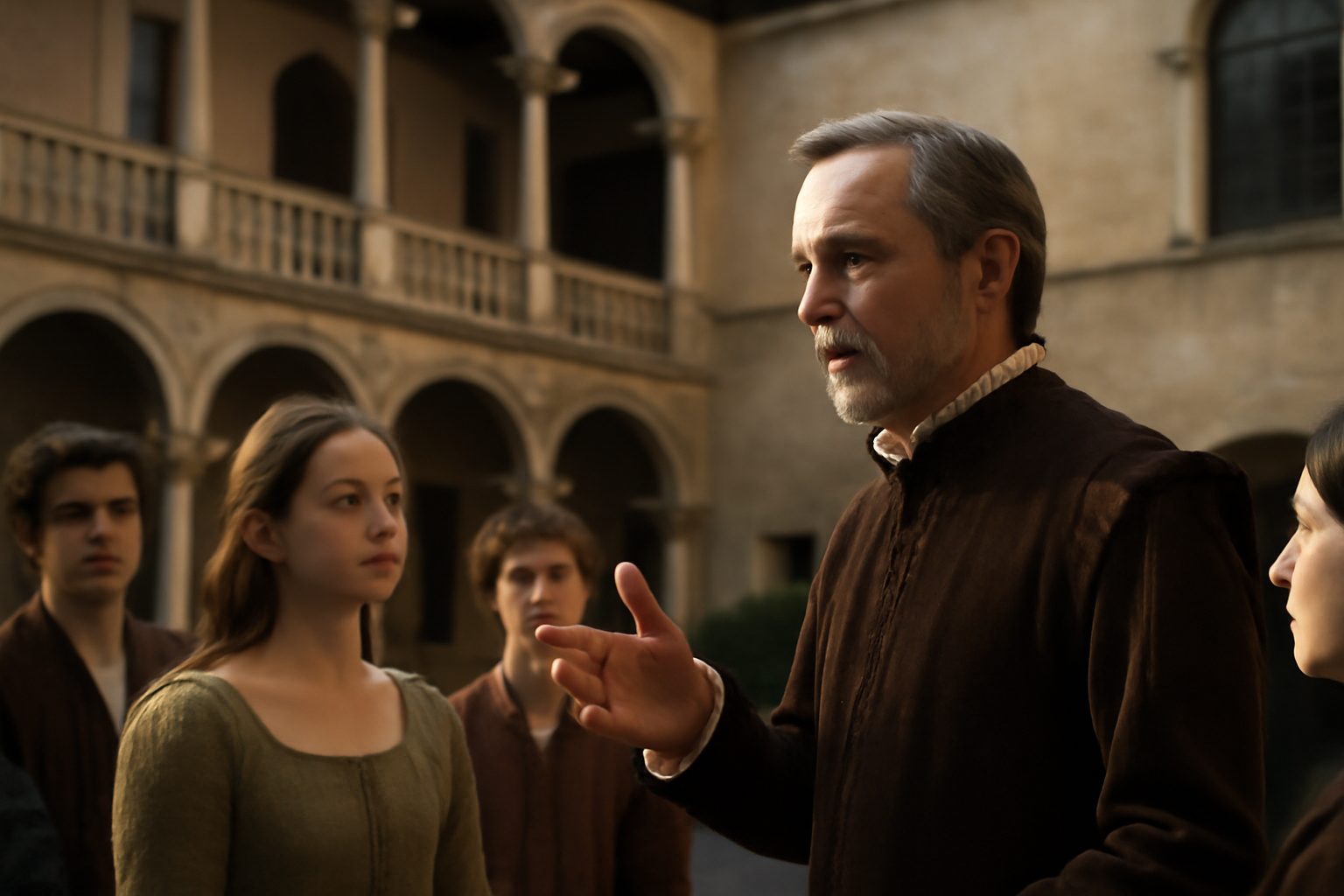
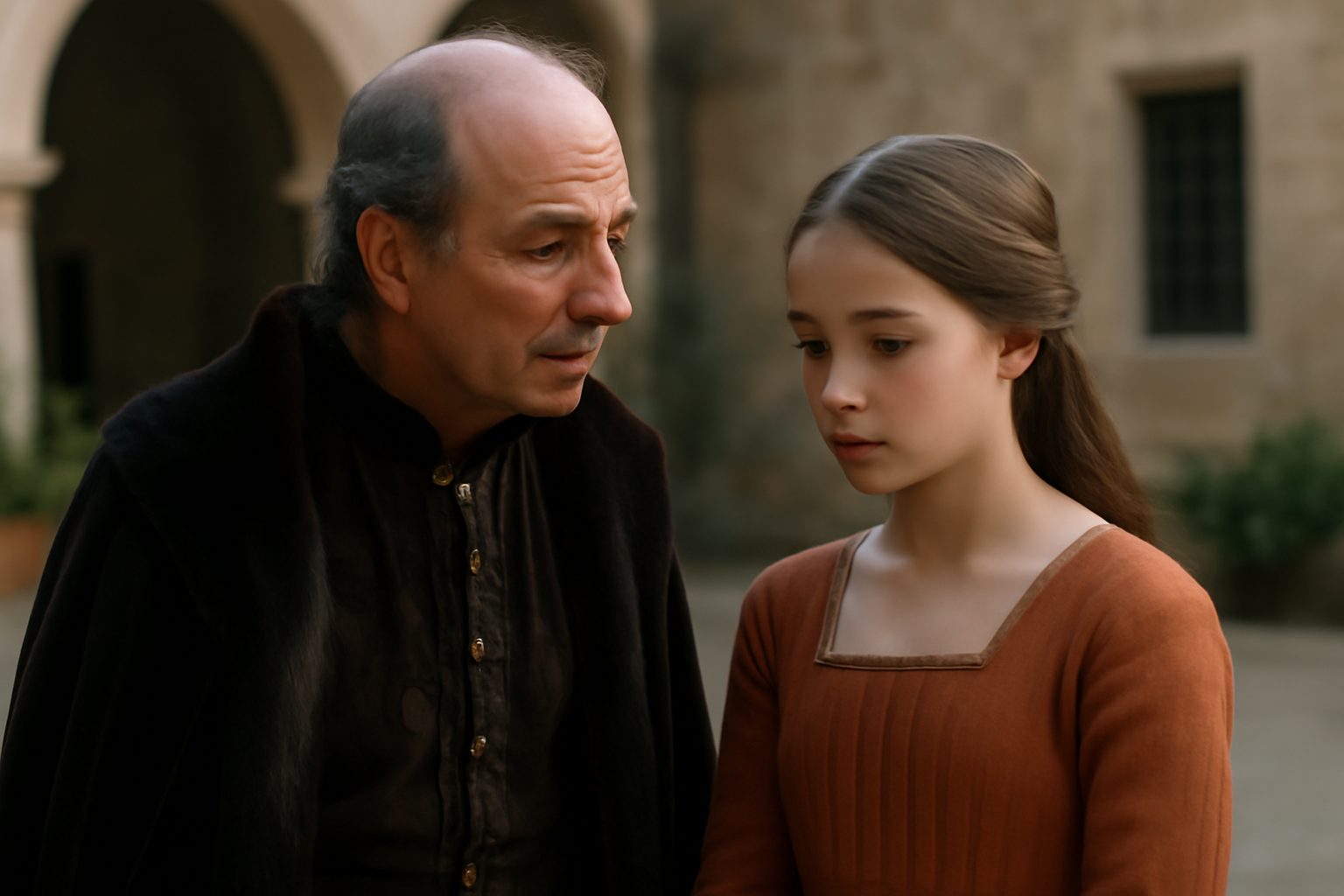
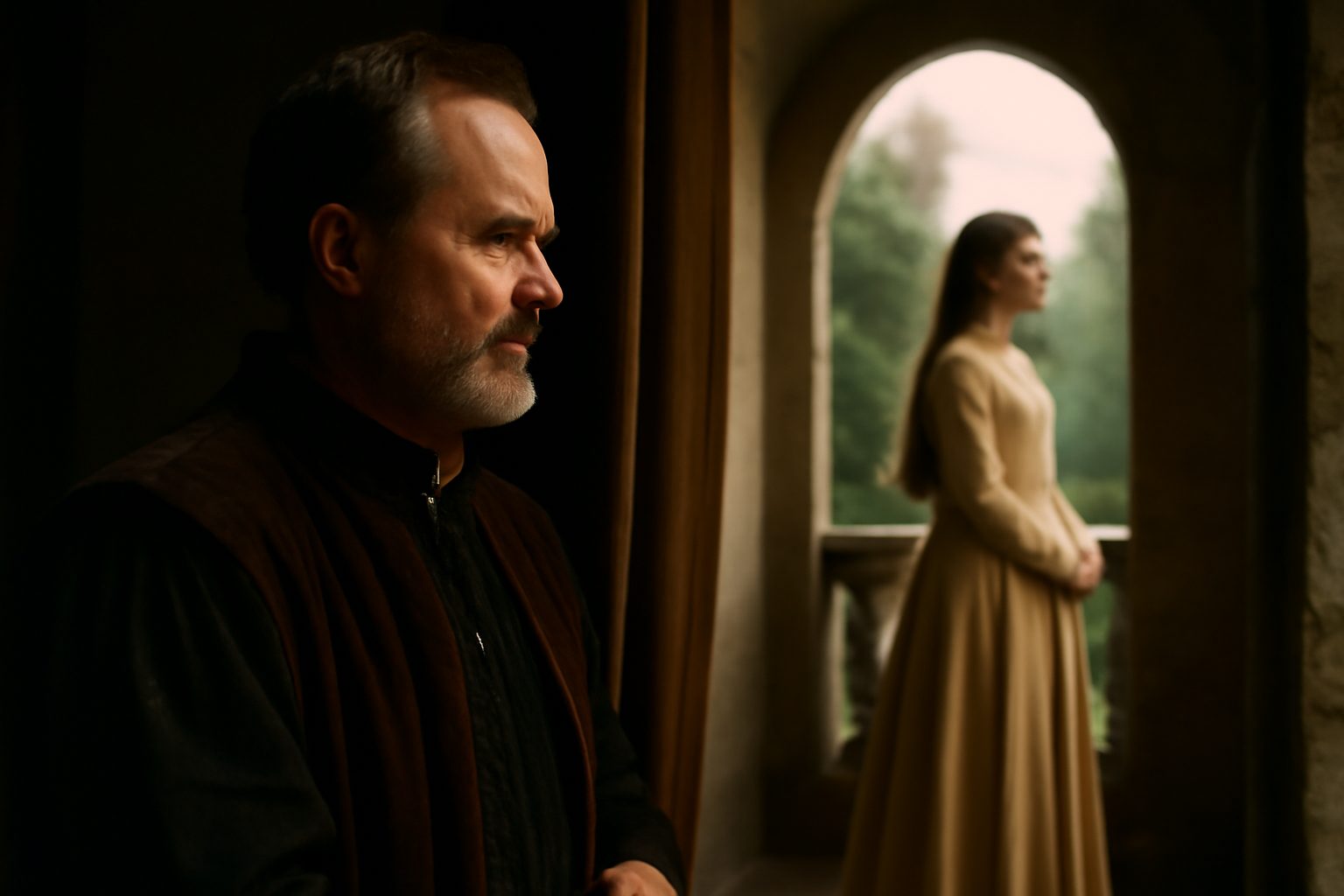
In Act 1, Scene 2 of Romeo and Juliet, Capulet's servant is given a list of guests to invite to the upcoming feast. Overwhelmed by the task, the servant seeks help, leading to this instruction, which dismisses him to carry out his duties. The line reflects the bustling preparations for the party and the hierarchical dynamics between masters and servants in Verona.
Capulet: "Go, sirrah, trudge about"
In modern day english, we would say:
Go, servant, hurry and walk around the town.
Frequently Asked Questions
What does Capulet tell his servant to do in this line?
Capulet tells his servant to go and walk around.
Connections to other verses:
Connections to "Go, sirrah, trudge about"
The verse "Go, sirrah, trudge about" is spoken by Capulet to his servant, instructing him to deliver invitations to the feast. This directive initiates a chain of events that connects to several other verses in the scene.
Invitation and Guest List
Capulet's command leads directly to the servant's task of finding those whose names are on the list, as seen in "Through fair Verona; find those persons out" and "Whose names are written there, and to them say". The servant's struggle with literacy, highlighted in "writ, and can never find what names the writing", underscores the accidental nature of Romeo's invitation.
Feast and Social Context
The feast itself is described in "This night I hold an old accustom'd feast" and "Whereto I have invited many a guest". The guest list includes notable figures, such as those mentioned in "County Anselme and his beauteous sisters" and "Rosaline; Livia; Signior Valentio and his cousin", setting the stage for the encounter between Romeo and Juliet.
Romeo's Involvement
Benvolio's advice to Romeo to attend the feast and compare Rosaline to other beauties, as in "Go thither; and, with unattainted eye" and "Compare her face with some that I shall show", ties back to the servant's task. Romeo's eventual decision to go, expressed in "I'll go along, no such sight to be shown", is a direct consequence of the servant's actions initiated by Capulet's command.
Foreshadowing and Themes
The scene also touches on themes of youth and haste, as in "Let two more summers wither in their pride" and "And too soon marr'd are those so early made", which contrast with the impulsive actions set in motion by the servant's errand. The feast becomes the catalyst for the tragic events that follow, linking Capulet's seemingly mundane instruction to the play's central plot.