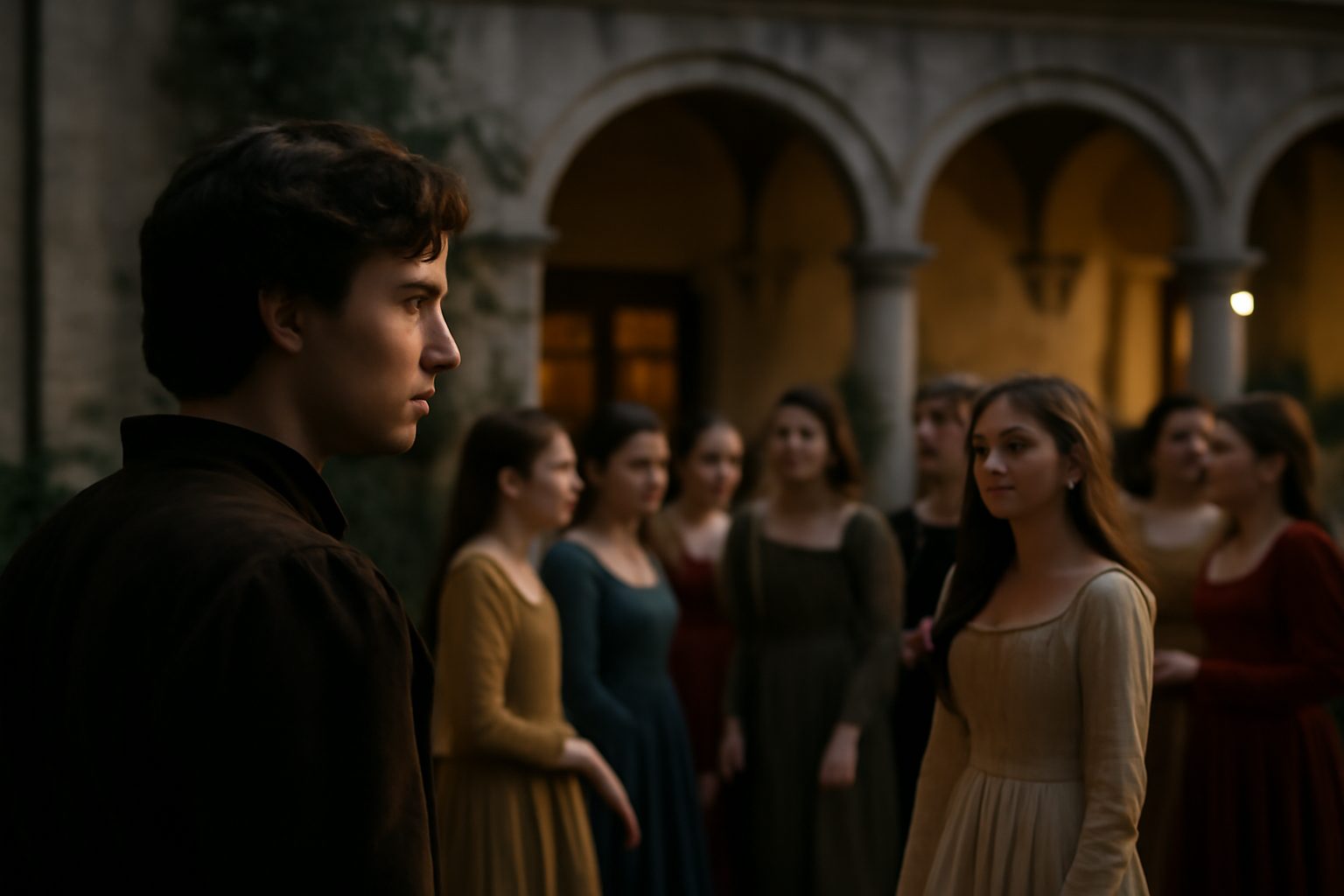
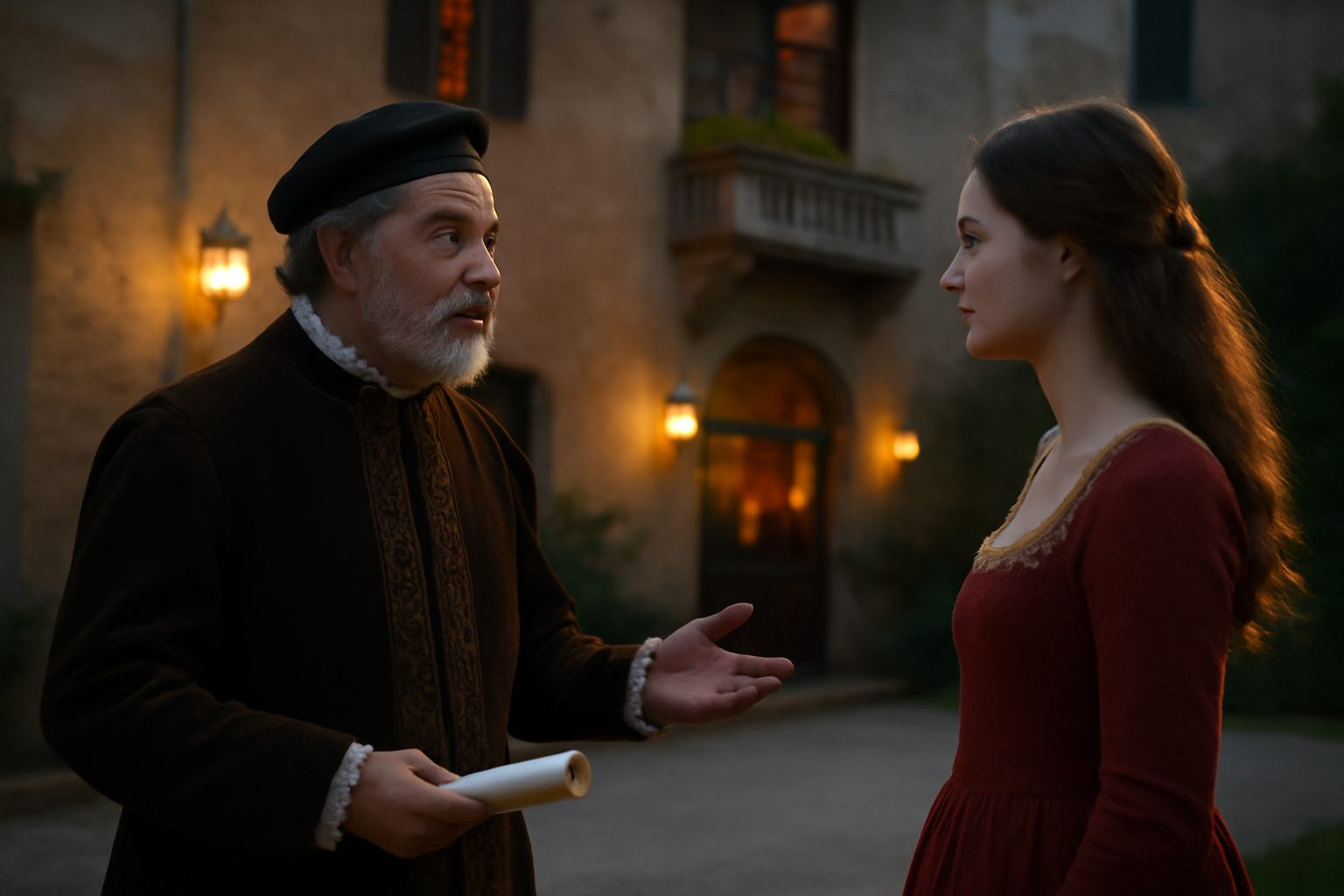
In Act 1, Scene 2 of Romeo and Juliet, a servant of the Capulet household speaks these words while struggling to read a list of invited guests for the upcoming feast. The line reveals his frustration as he tries to explain his master's identity without being prompted, highlighting the casual yet tense dynamics between servants and nobles in Verona. This moment sets up the accidental encounter between Romeo and the servant, which leads to Romeo attending the Capulet party and meeting Juliet.
Servant: "Now I'll tell you without asking: my master is the"
In modern day english, we would say:
Here’s the modern version of that line: I’ll save you the trouble of asking—my boss is the great rich Capulet.
The servant is talking to Romeo and Benvolio about the party, explaining who his employer is without them having to ask.
Frequently Asked Questions
Who is the servant talking about in this line?
The servant is talking about his master.
Connections to other verses:
Connections to Other Verses in Act 1 Scene 2
The verse "Now I'll tell you without asking: my master is the" (/romeo-and-juliet/one/1-2/act-1-scene-2-80/) is spoken by the Capulet servant, who is tasked with delivering invitations to the feast. This line directly relates to several other verses in the scene, particularly those involving the servant's interactions and the context of the feast.
Direct Context and Task
This verse is part of the servant's dialogue where he reveals his master's identity and the purpose of his errand. It connects to Find them out whose names are written here! (/romeo-and-juliet/one/1-2/act-1-scene-2-39/), as both refer to the list of guests he must invite. Additionally, it ties to sent to find those persons whose names are here (/romeo-and-juliet/one/1-2/act-1-scene-2-43/), reinforcing his mission.
Feast and Invitations
The mention of "my master" alludes to Capulet, linking to verses that describe the feast, such as This night I hold an old accustom'd feast (/romeo-and-juliet/one/1-2/act-1-scene-2-20/) and At my poor house look to behold this night (/romeo-and-juliet/one/1-2/act-1-scene-2-24/). It also relates to great rich Capulet; and if you be not of the house (/romeo-and-juliet/one/1-2/act-1-scene-2-81/), where the servant further discusses his master's identity and the feast's exclusivity.
Interaction with Romeo and Benvolio
The servant's inability to read the list leads him to seek help, connecting to God gi' god-den. I pray, sir, can you read? (/romeo-and-juliet/one/1-2/act-1-scene-2-59/) and Stay, fellow; I can read (/romeo-and-juliet/one/1-2/act-1-scene-2-65/), where Romeo assists him. This interaction prompts Romeo's decision to attend the feast, as seen in Sups the fair Rosaline whom thou so lovest (/romeo-and-juliet/one/1-2/act-1-scene-2-85/), leading to the pivotal meeting with Juliet.
Social Hierarchy and Servant's Role
The verse highlights the servant's position, relating to Go, sirrah, trudge about (/romeo-and-juliet/one/1-2/act-1-scene-2-35/), where he is ordered to complete his task. It also contrasts with Capulet's authority in verses like She is the hopeful lady of my earth (/romeo-and-juliet/one/1-2/act-1-scene-2-15/), emphasizing the social dynamics within the scene.