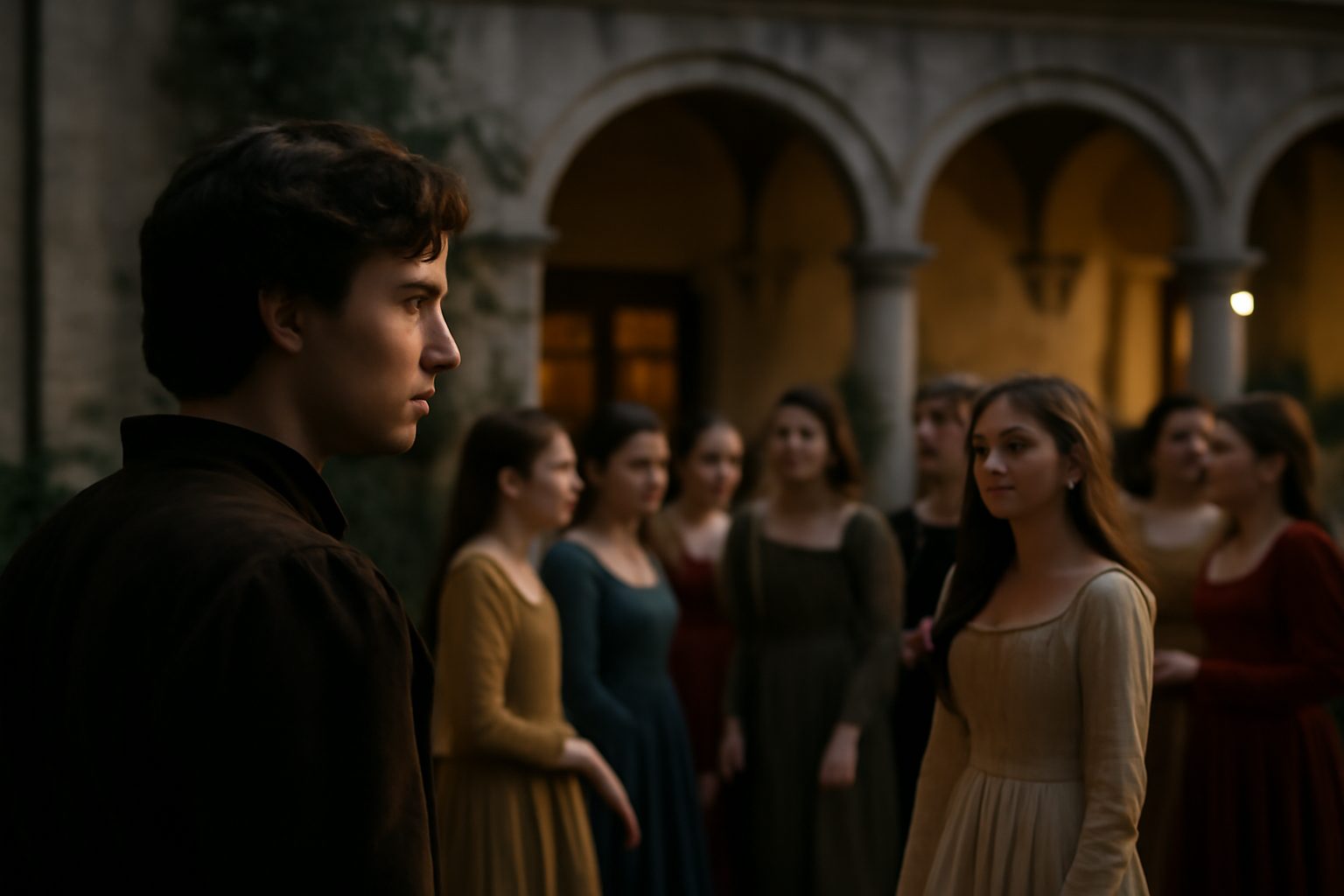
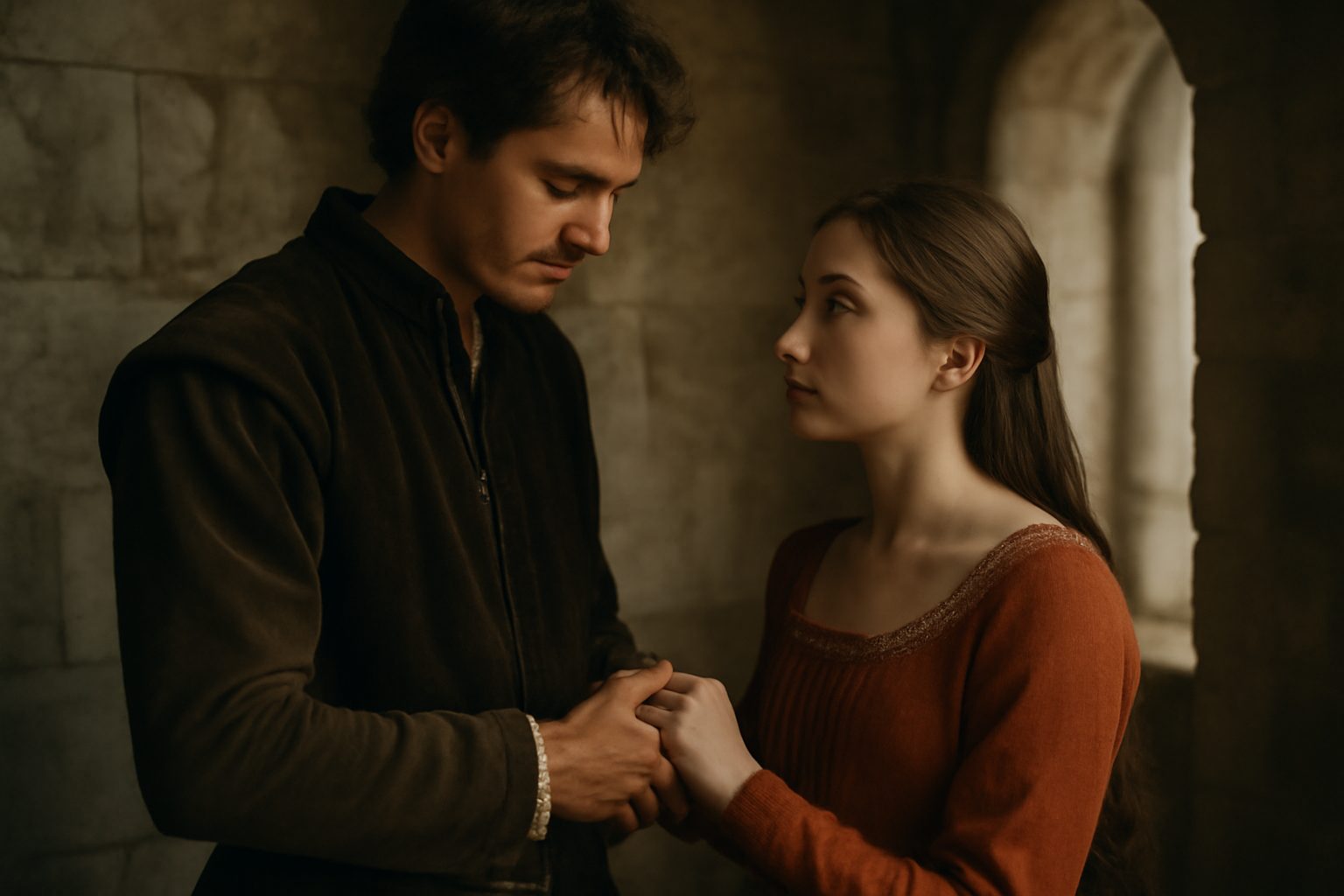
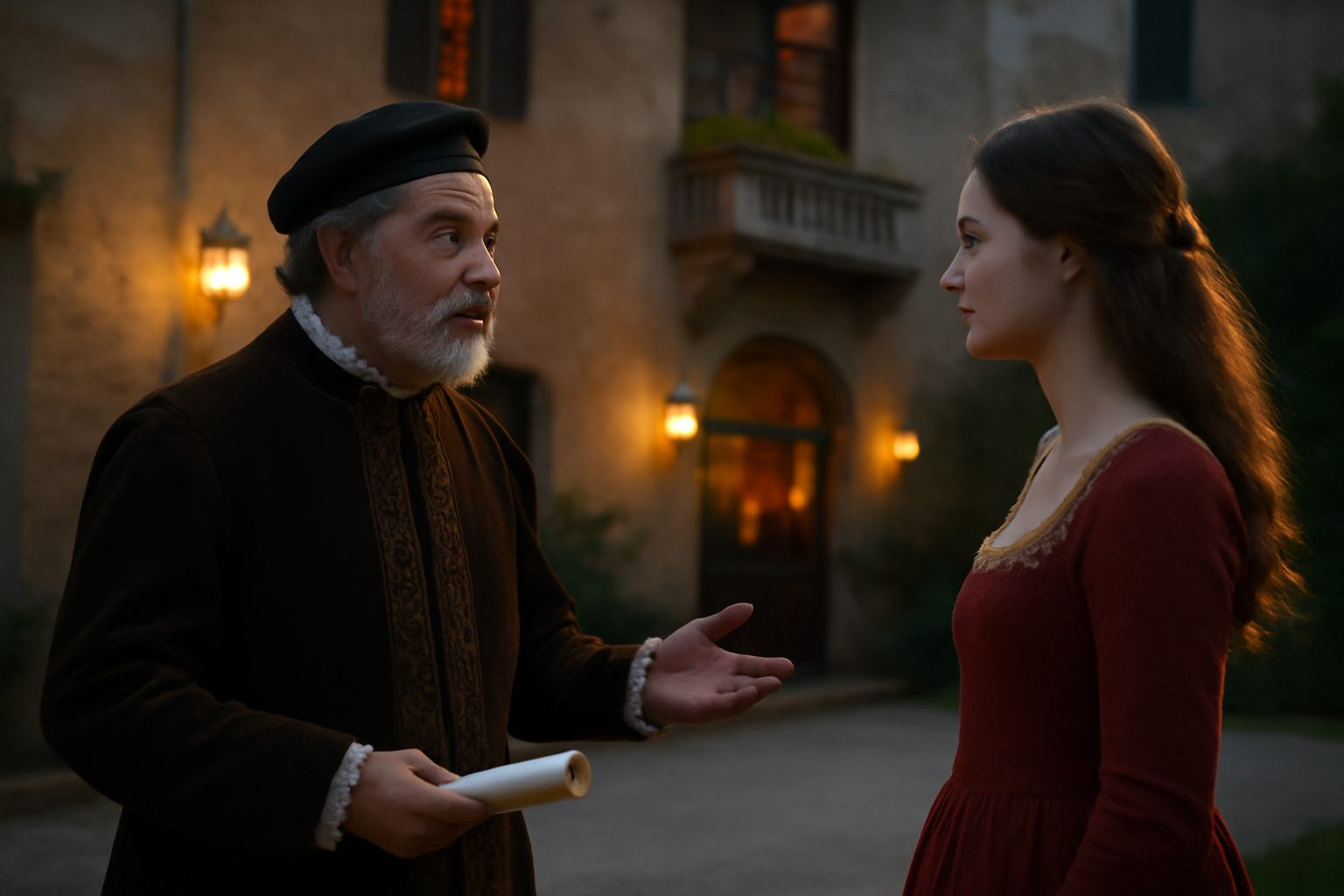
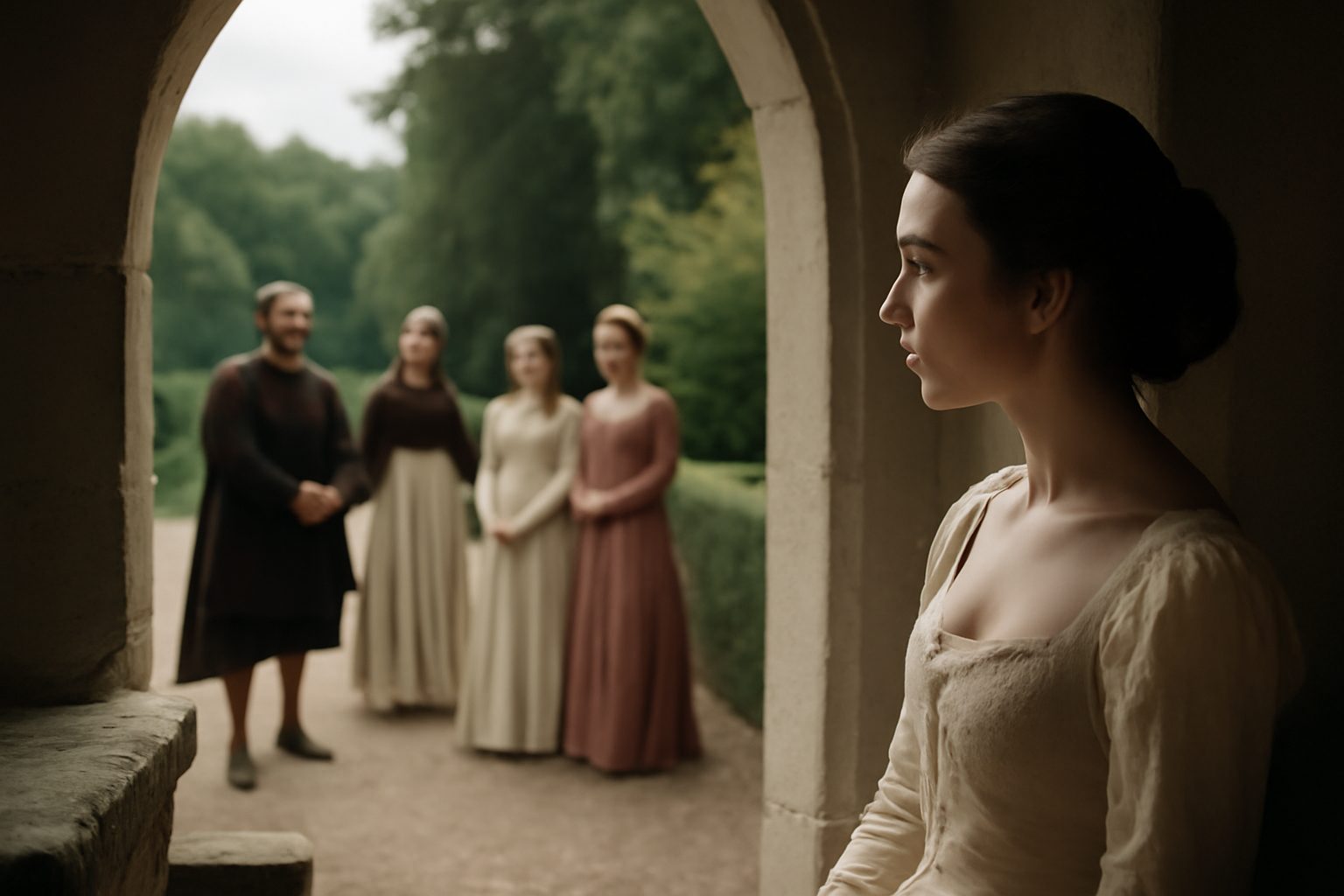
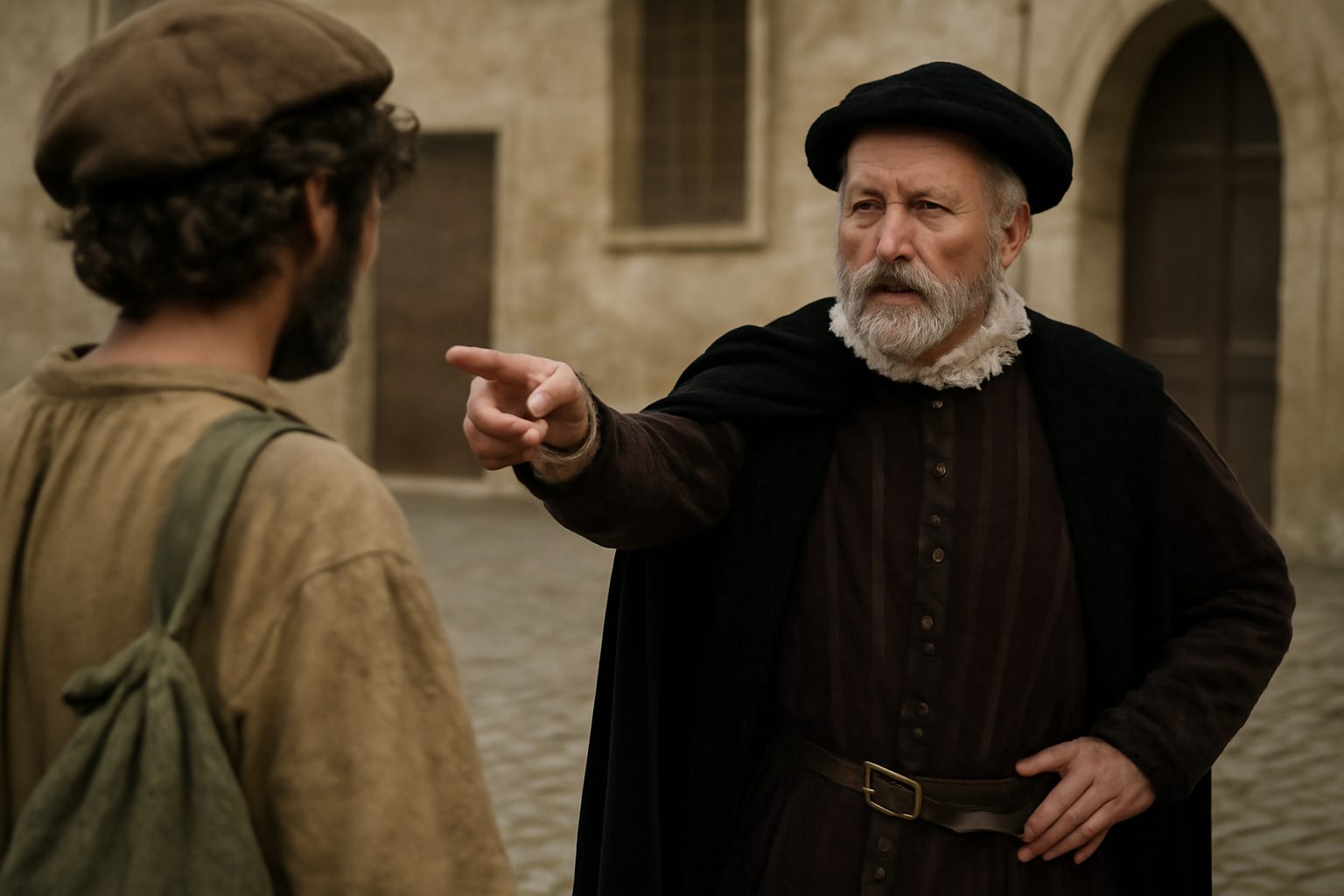
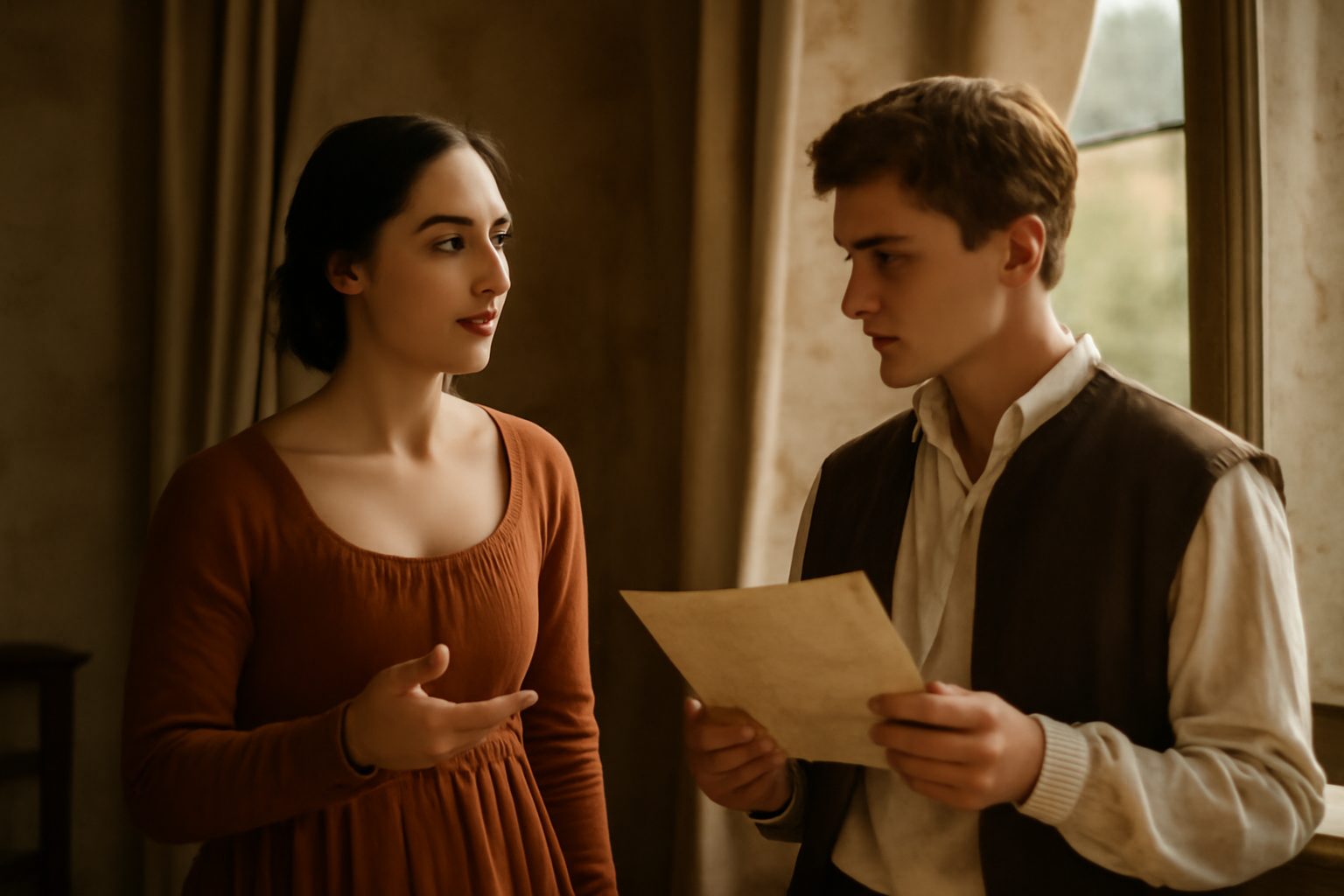
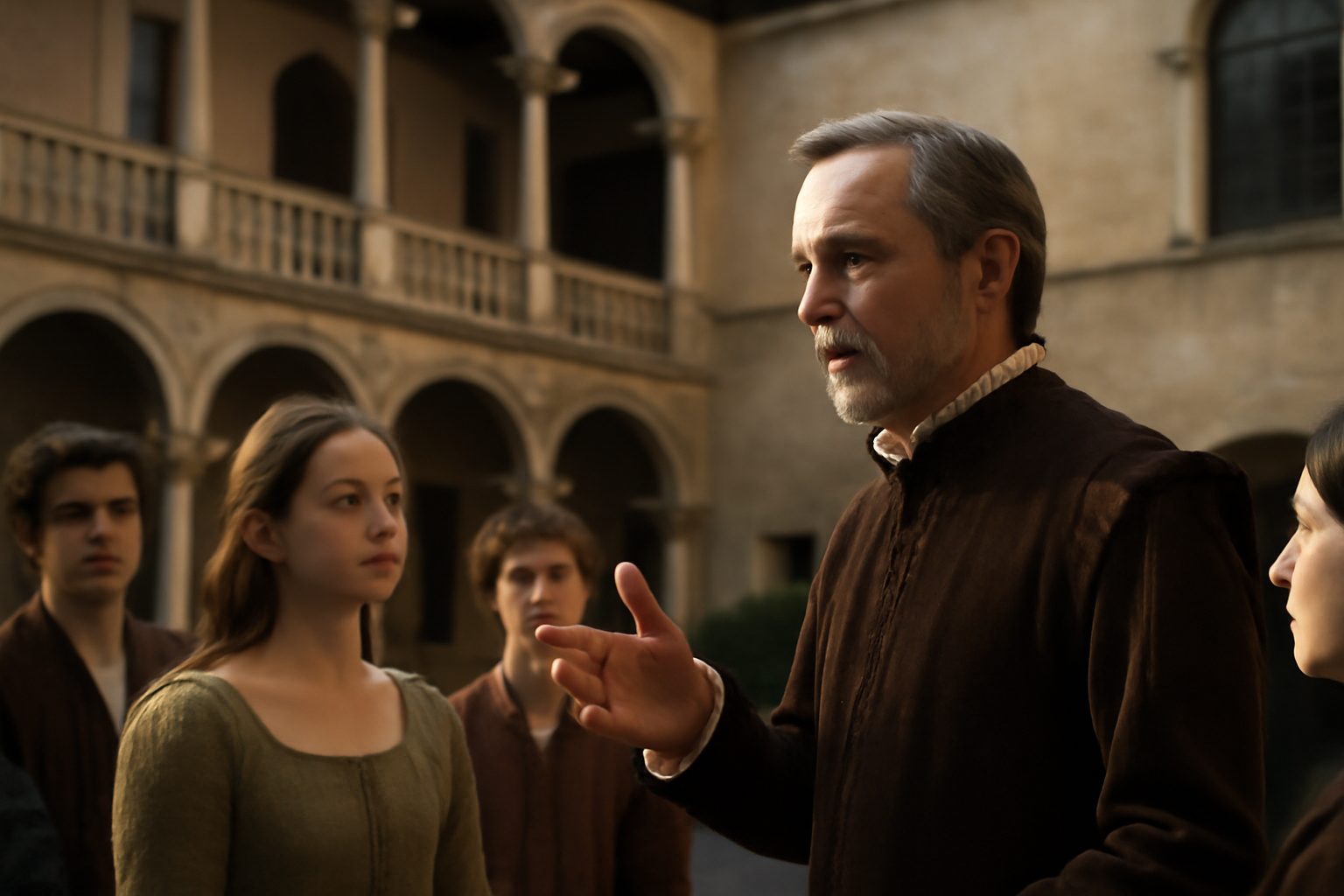
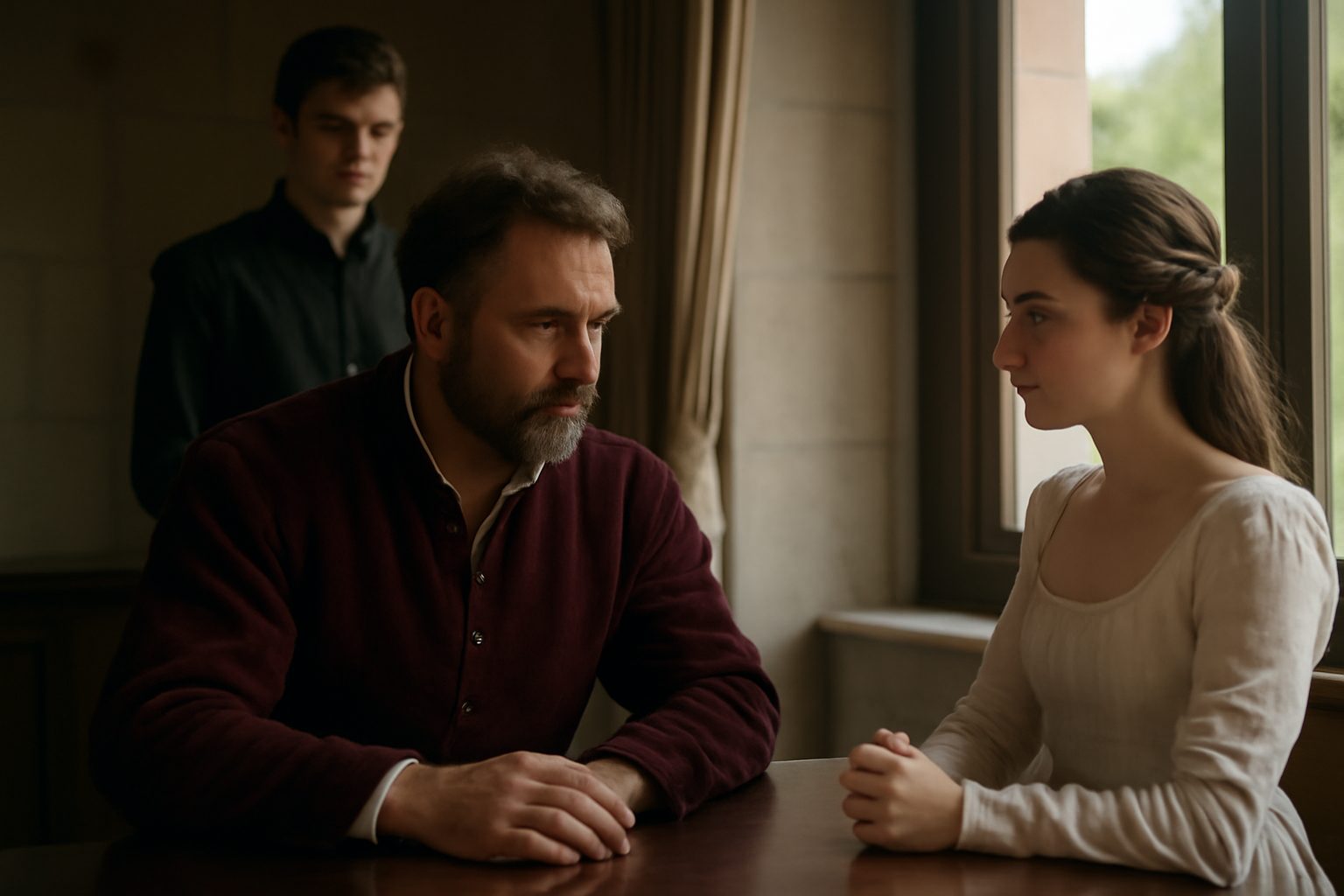
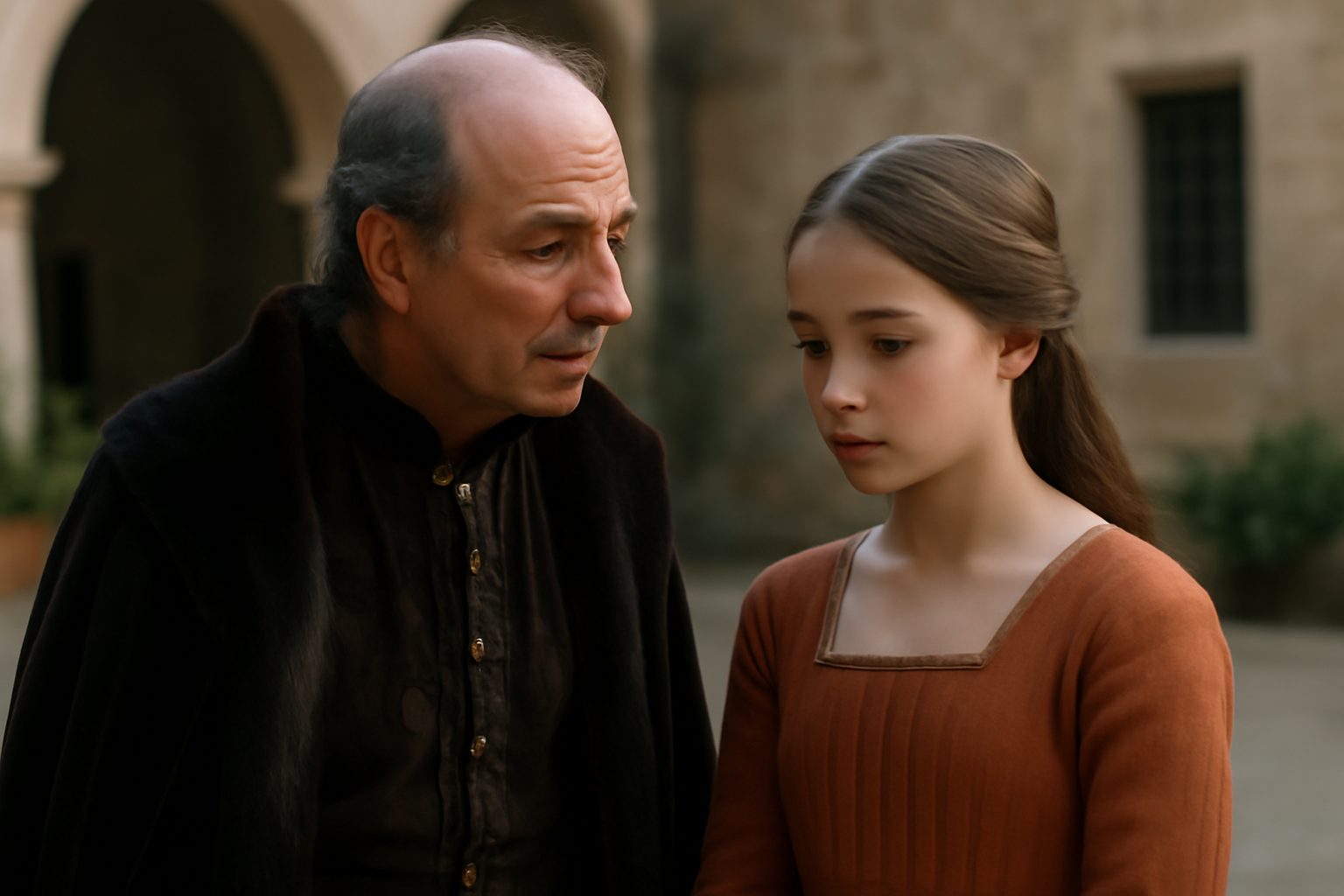
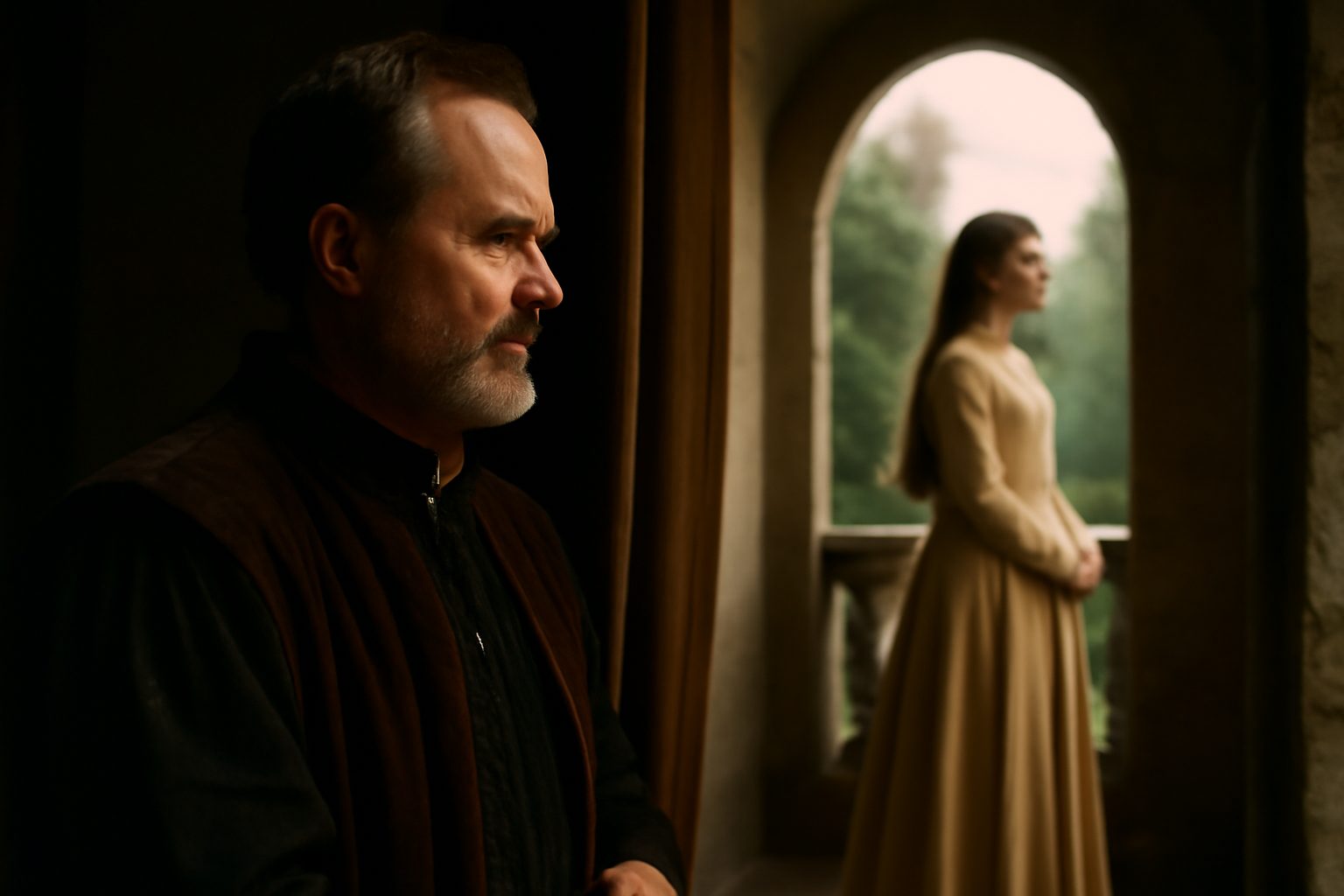
In Act 1, Scene 2 of Romeo and Juliet, Paris asks Capulet for permission to marry Juliet, and Capulet invites him to a feast to woo her. As Capulet’s servant is sent to deliver invitations, he confesses his inability to read the guest list, highlighting the social divide and his lack of education. This moment adds a touch of humor while subtly underscoring the themes of class and communication in the play.
Romeo: "Ay, if I know the letters and the language."
In modern day english, we would say:
Yes, but only if I can read and understand it.
Frequently Asked Questions
What does Romeo mean when he says he knows the letters and the language?
Romeo is saying that he understands how to read and speak the language being used.
Connections to other verses:
Connections to Other Verses in Act 1 Scene 2
Literacy and Communication
The verse "Ay, if I know the letters and the language" is part of a dialogue about literacy and understanding. It connects to "God gi' god-den. I pray, sir, can you read?", where the servant first asks Romeo if he can read, and to "pray, can you read any thing you see?", which further emphasizes the theme of literacy. This exchange leads to Romeo reading the guest list, which ties to "Find them out whose names are written here!", as Romeo helps the servant interpret the list.
Invitation to the Feast
Romeo's ability to read the list directly results in his learning about Capulet's feast, referenced in "This night I hold an old accustom'd feast" and "At this same ancient feast of Capulet's". The servant's instruction to invite guests, as in "Whose names are written there, and to them say", is fulfilled through Romeo's assistance, highlighting how literacy bridges social divides and sets the plot in motion.
Contrast with Earlier Dialogue
This moment contrasts with Capulet's earlier conversation with Paris about Juliet's readiness for marriage, such as in "My child is yet a stranger in the world" and "Let two more summers wither in their pride", where Capulet expresses caution. The servant's illiteracy and Romeo's help underscore themes of fate and chance, as Romeo's presence at the feast will lead to meeting Juliet.
Foreshadowing and Irony
Romeo's willingness to read the list ironically foreshadows his future entanglement with the Capulets, hinted at in lines like "Sups the fair Rosaline whom thou so lovest", where Benvolio mentions Rosaline, and "Take thou some new infection to thy eye", suggesting Romeo's affections will shift. This small act of reading propels him toward the fateful encounter.