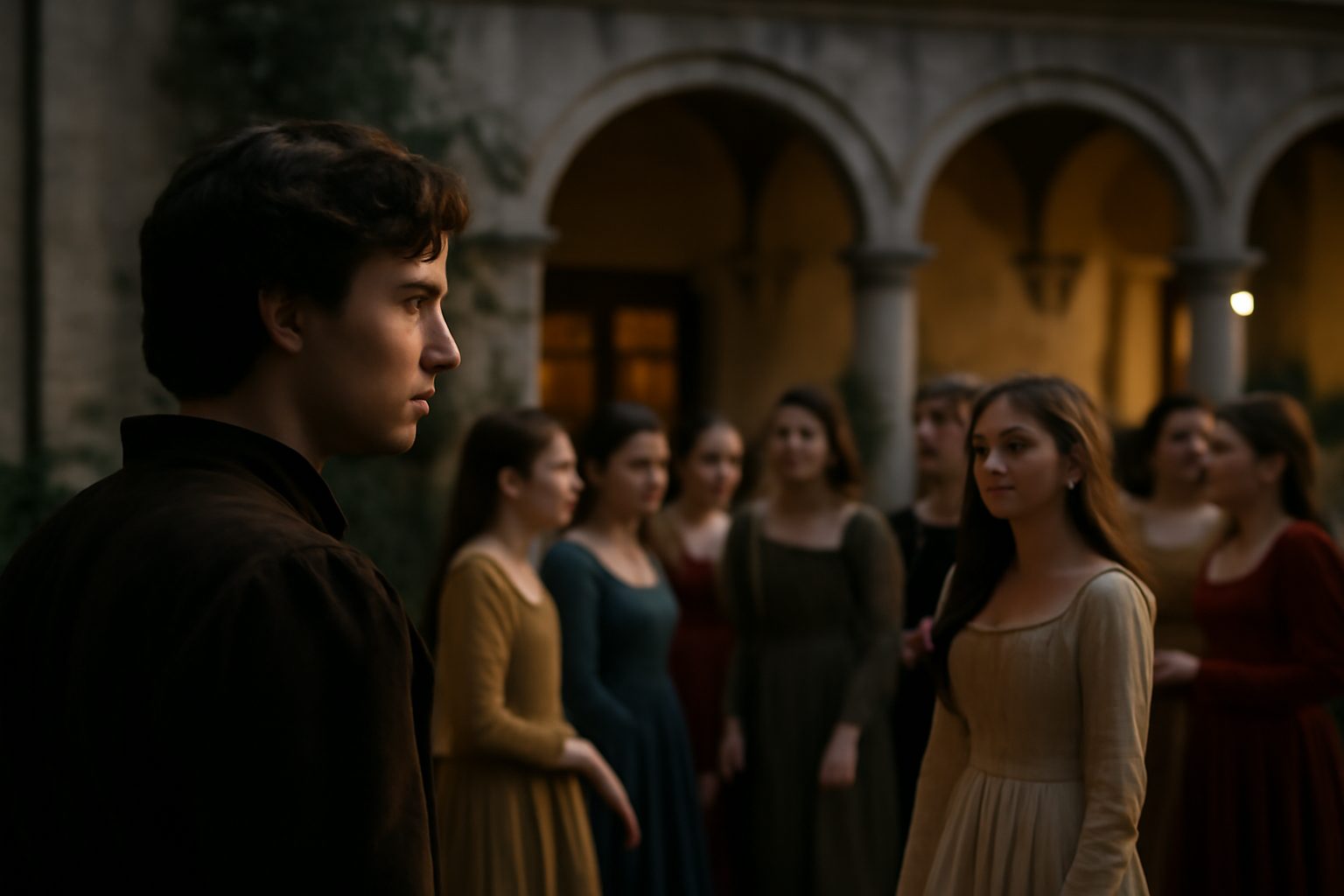
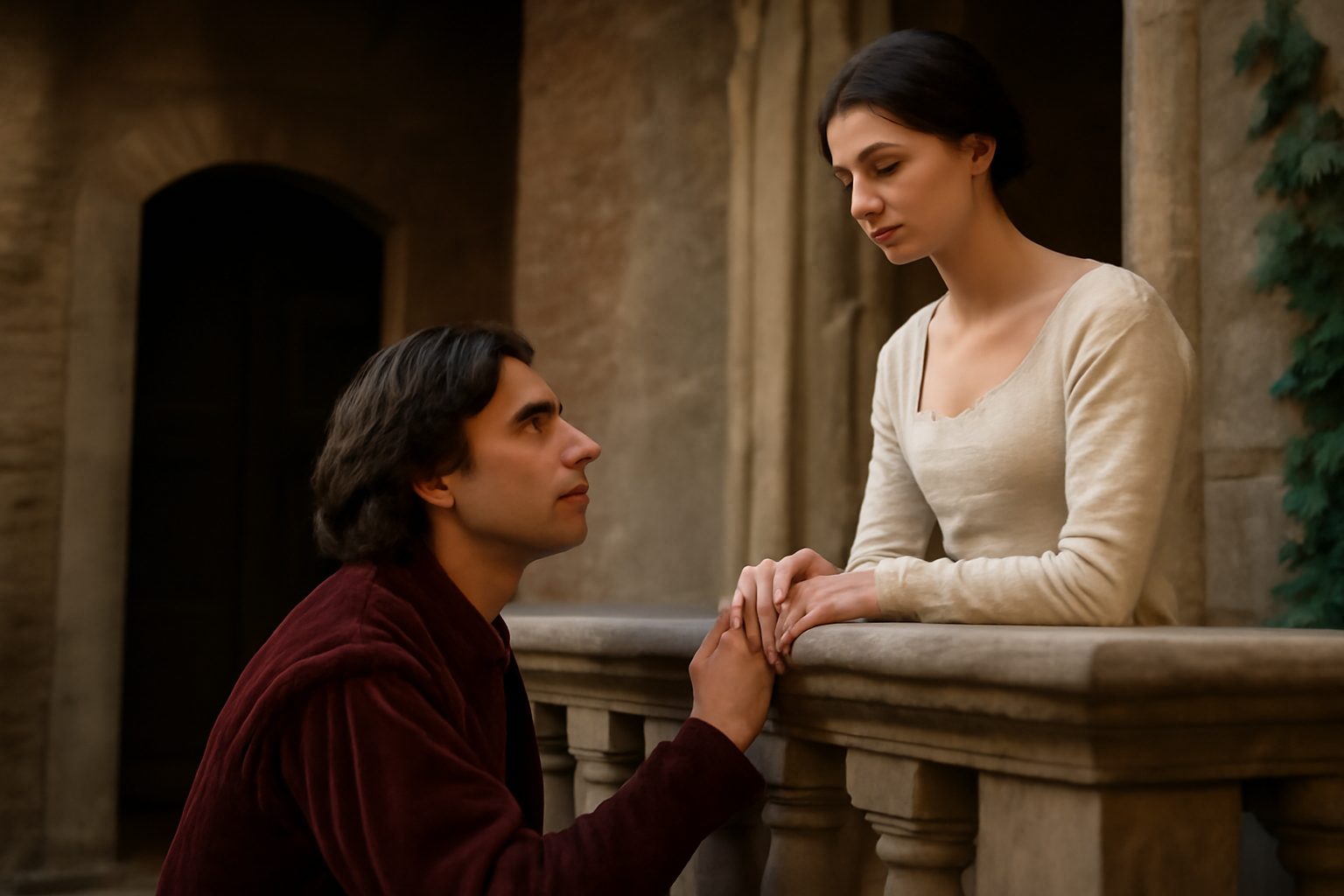
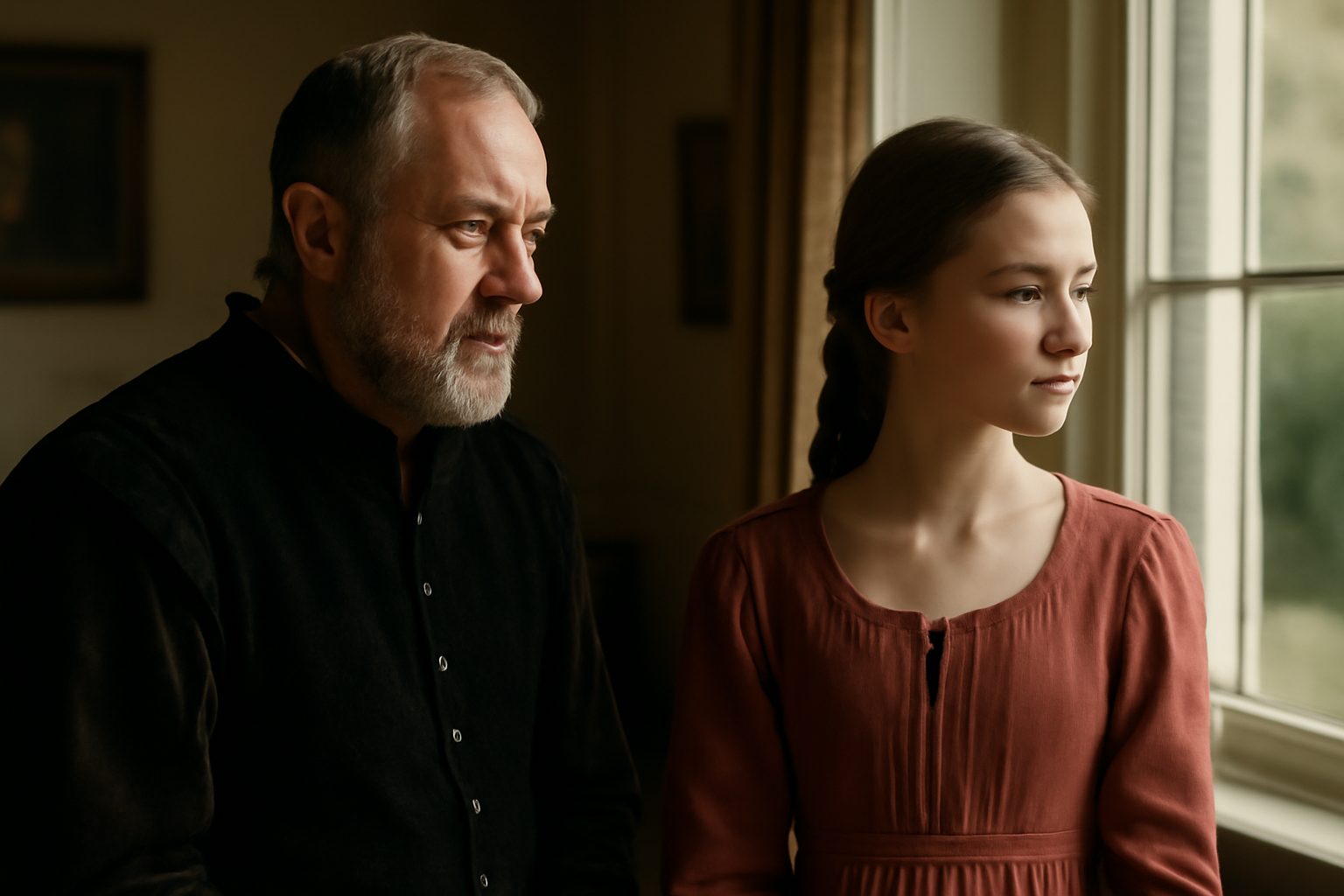
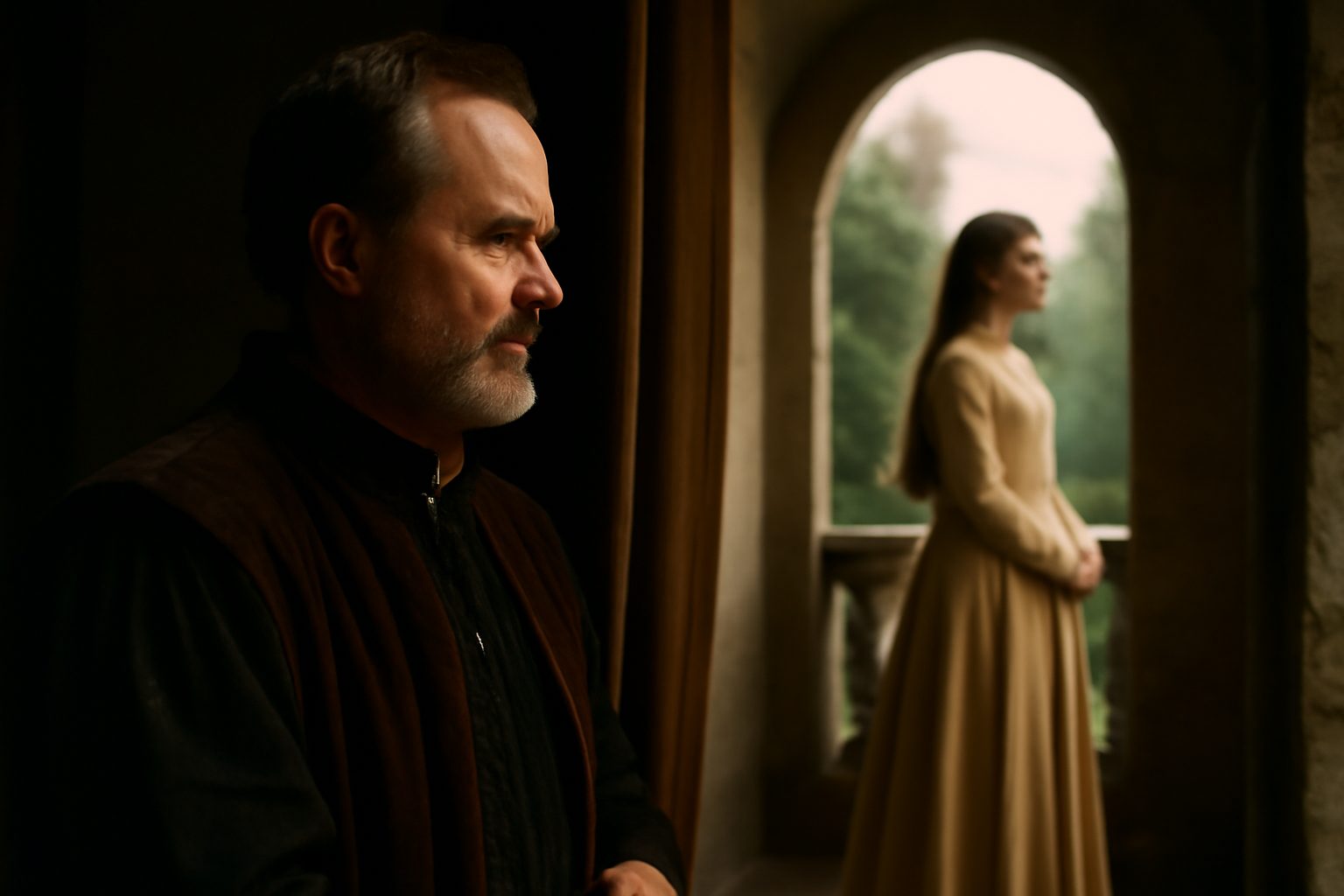
In Act 1, Scene 2 of Romeo and Juliet, Paris speaks these words to Lord Capulet while discussing his desire to marry Juliet. He expresses his wish to take joy in his own good fortune rather than rely on another's wealth or status. This moment reveals Paris's dignified yet somewhat self-assured attitude toward the proposed match.
Romeo: "But to rejoice in splendor of mine own."
In modern day english, we would say:
He just wants to enjoy his own happiness in private.
Frequently Asked Questions
What does Romeo mean when he says he wants to rejoice in his own splendor?
Romeo means he wants to take joy in his own happiness and personal qualities, rather than seeking it from others.
Connections to other verses:
Connections to "But to rejoice in splendor of mine own"
This line, spoken by Capulet, reflects his pride in hosting his feast and showcasing his household's wealth and social standing. It connects thematically and contextually to several other verses in the scene.
Pride in Hospitality and Social Standing
Capulet's declaration of rejoicing in his own splendor is closely tied to his role as a host. In "This night I hold an old accustom'd feast", he emphasizes the tradition and grandeur of the event. Similarly, "Whereto I have invited many a guest" highlights his effort to gather Verona's elite, reinforcing his social prominence. The phrase "My house and welcome on their pleasure stay" further underscores his pride in offering generous hospitality.
Wealth and Display
The "splendor" Capulet mentions is evident in descriptions of the feast's attendees. "Earth-treading stars that make dark heaven light" poetically conveys the brilliance and beauty of the guests, mirroring the splendor of his household. Additionally, "With all the admired beauties of Verona" emphasizes the gathering's opulence, aligning with Capulet's rejoicing in such displays.
Personal and Familial Pride
Capulet's pride extends to his daughter, Juliet, whom he describes as "the hopeful lady of my earth". This paternal pride is part of the "splendor" he celebrates, as her marriage to Paris would enhance his family's status. The conditional approval in "Lies my consent and fair according voice" shows his careful curation of this splendor through strategic alliances.
Contrast with Other Perspectives
While Capulet revels in splendor, other lines offer contrasting views. Romeo's melancholic "Ay, mine own fortune in my misery" juxtaposes personal despair against Capulet's celebratory tone. Similarly, the servant's comedic struggle with the guest list in "writ, and can never find what names the writing" adds a humble, practical layer to the scene's grandeur.
Invitation and Inclusion
Capulet's splendor is inclusive yet exclusive; he invites many but expects worthy guests. "Such as I love; and you, among the store" shows his selective generosity. The servant's task to "find those persons out" on the list ensures only the appropriate attendees share in this splendor, reinforcing social hierarchies.