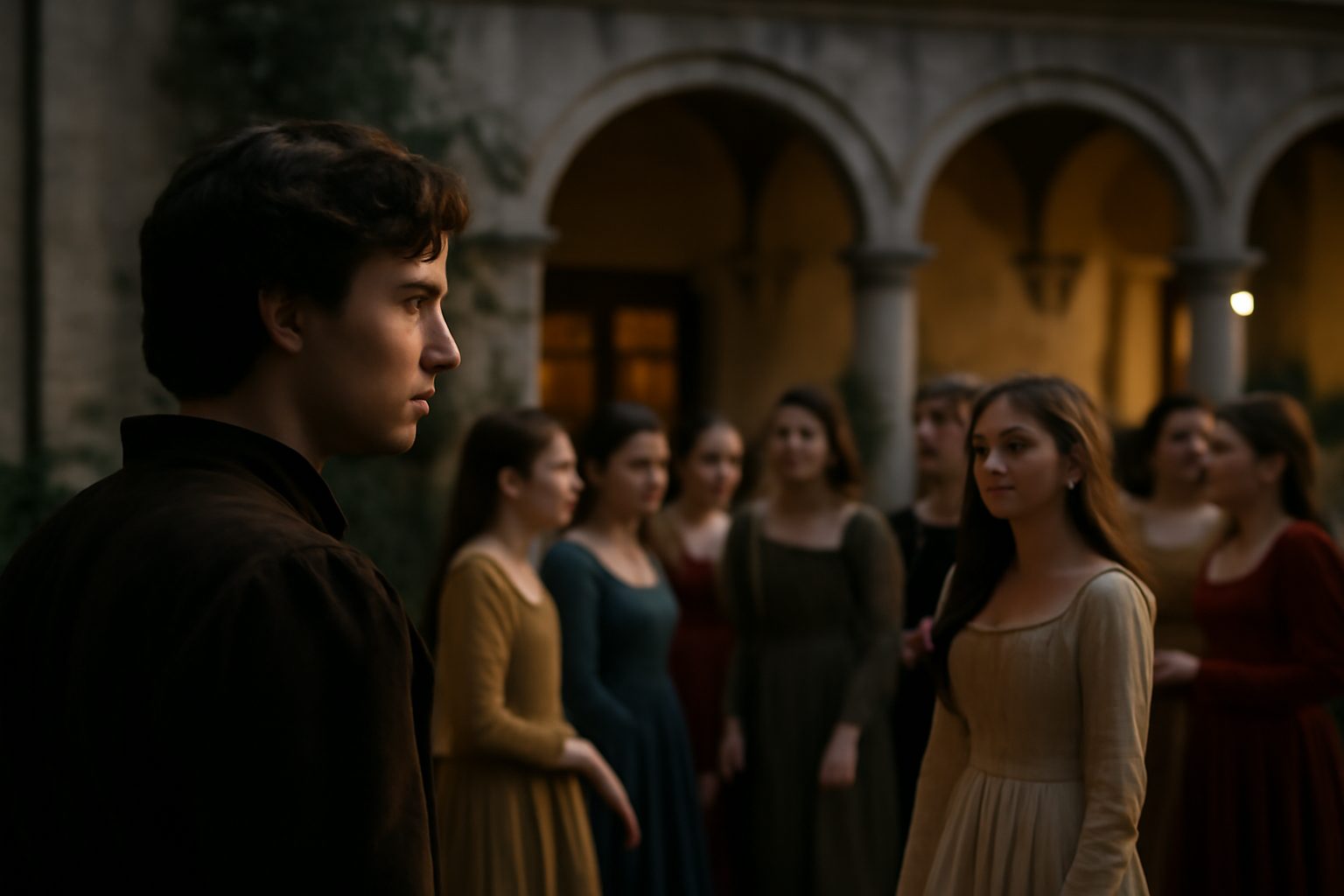
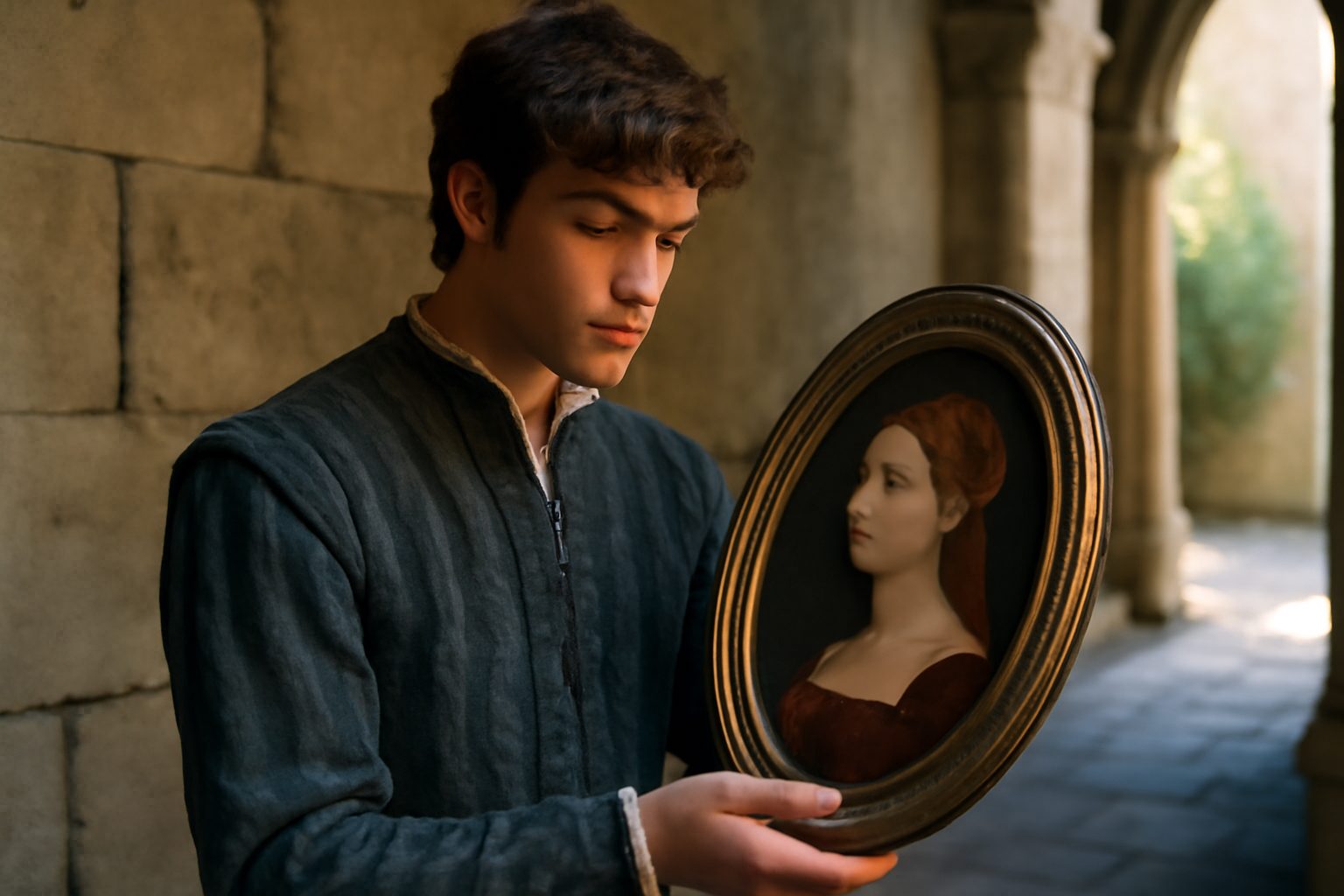
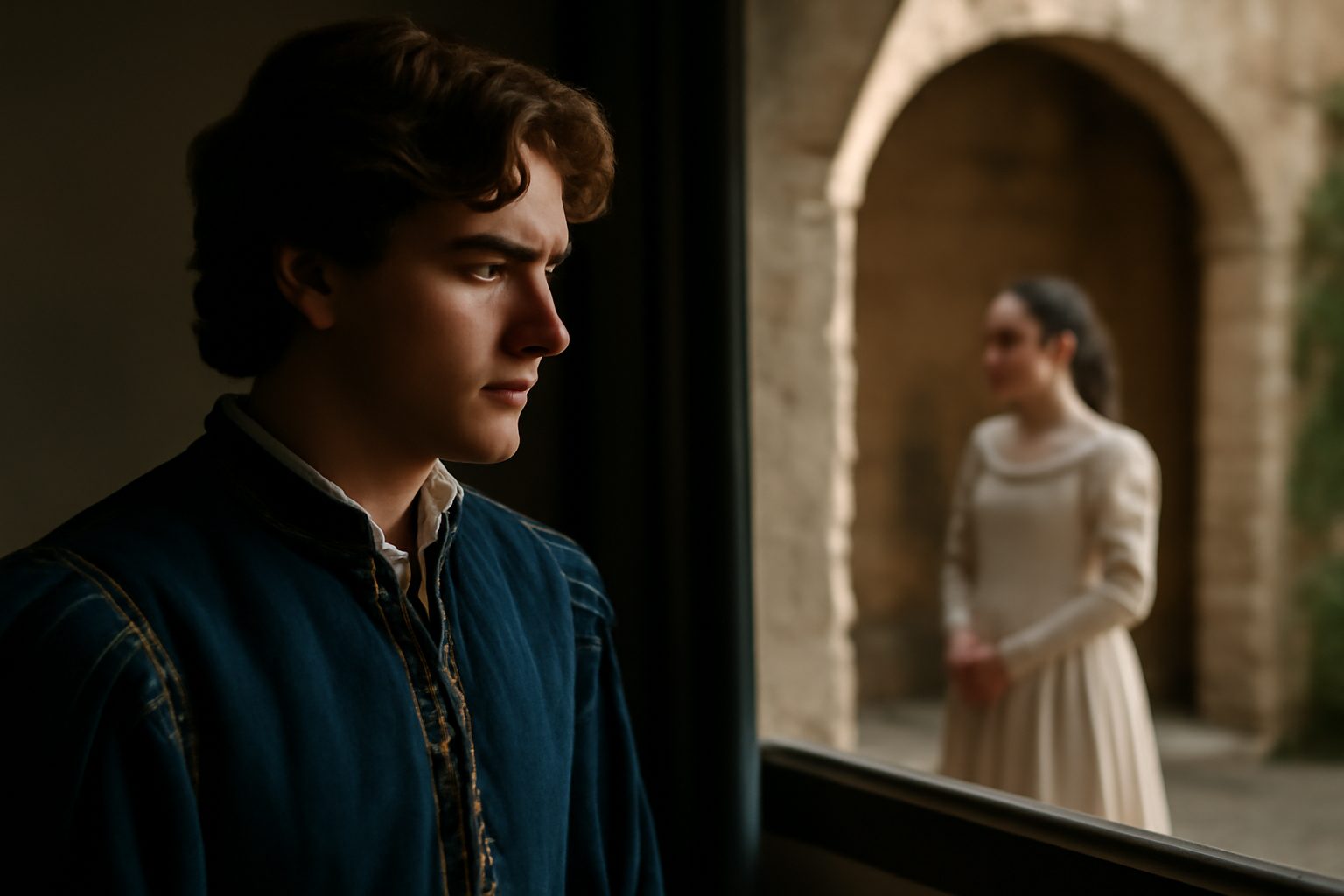
In Act 1, Scene 2 of Romeo and Juliet, Benvolio attempts to lift Romeo's spirits by convincing him to attend the Capulet feast. He suggests that comparing Rosaline, Romeo's unrequited love, to other women will make her seem less exceptional. This line reflects Benvolio's playful yet persuasive effort to shift Romeo's perspective and move him past his melancholy.
Benvolio: "And I will make thee think thy swan a crow."
In modern day english, we would say:
I’ll make you see even the most beautiful person as ordinary.
Frequently Asked Questions
What does Benvolio mean when he says he will make someone think their swan is a crow?
Benvolio means he will make the person realize that what they think is beautiful (like a swan) is actually not special (like a common crow).
Connections to other verses:
Connections to "And I will make thee think thy swan a crow"
This verse, spoken by Benvolio, is part of his attempt to cure Romeo's lovesick melancholy by showing him other beauties at the Capulet feast. It connects thematically and structurally to several other lines in the scene.
Comparative Beauty and Perspective
Benvolio's promise to make Romeo's current love (the "swan") seem like a "crow" in comparison to others directly relates to his earlier suggestion: Compare her face with some that I shall show. Both lines emphasize the idea of relative beauty and the power of new perspectives.
This idea is reinforced when Benvolio claims Ne'er saw her match since first the world begun, suggesting that even someone as fair as Rosaline might be surpassed, and And she shall scant show well that now shows best, which echoes the "swan a crow" metaphor by implying current perfection will pale in comparison.
The Feast as Setting for Comparison
The context for this comparison is established through Capulet's description of the feast where Romeo will see these other women. Capulet's invitation (This night I hold an old accustom'd feast) and his mention of Among fresh female buds shall you this night create the backdrop against which Benvolio's plan will unfold.
Theme of New Love Curing Old
Benvolio's approach reflects a broader theme in the scene that one love can displace another. This is evident in his lines One desperate grief cures with another's languish and Take thou some new infection to thy eye, both advocating for replacement as a cure for lovesickness.
Contrast With Romeo's Current View
Romeo's own perspective on Rosaline's beauty makes Benvolio's task seem difficult. Romeo claims One fairer than my love! the all-seeing sun believes she has no equal, which Benvolio's "swan a crow" line directly challenges.