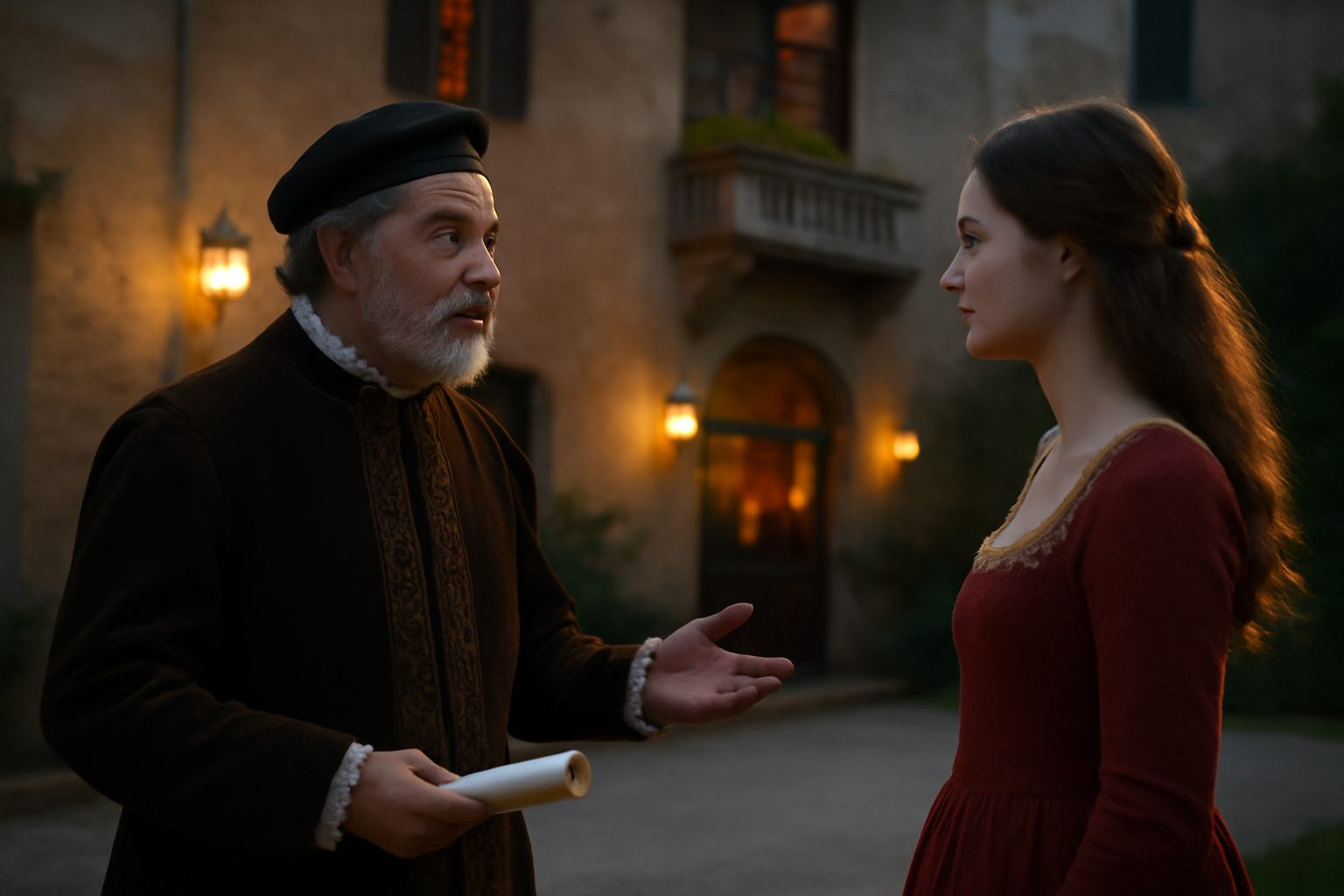
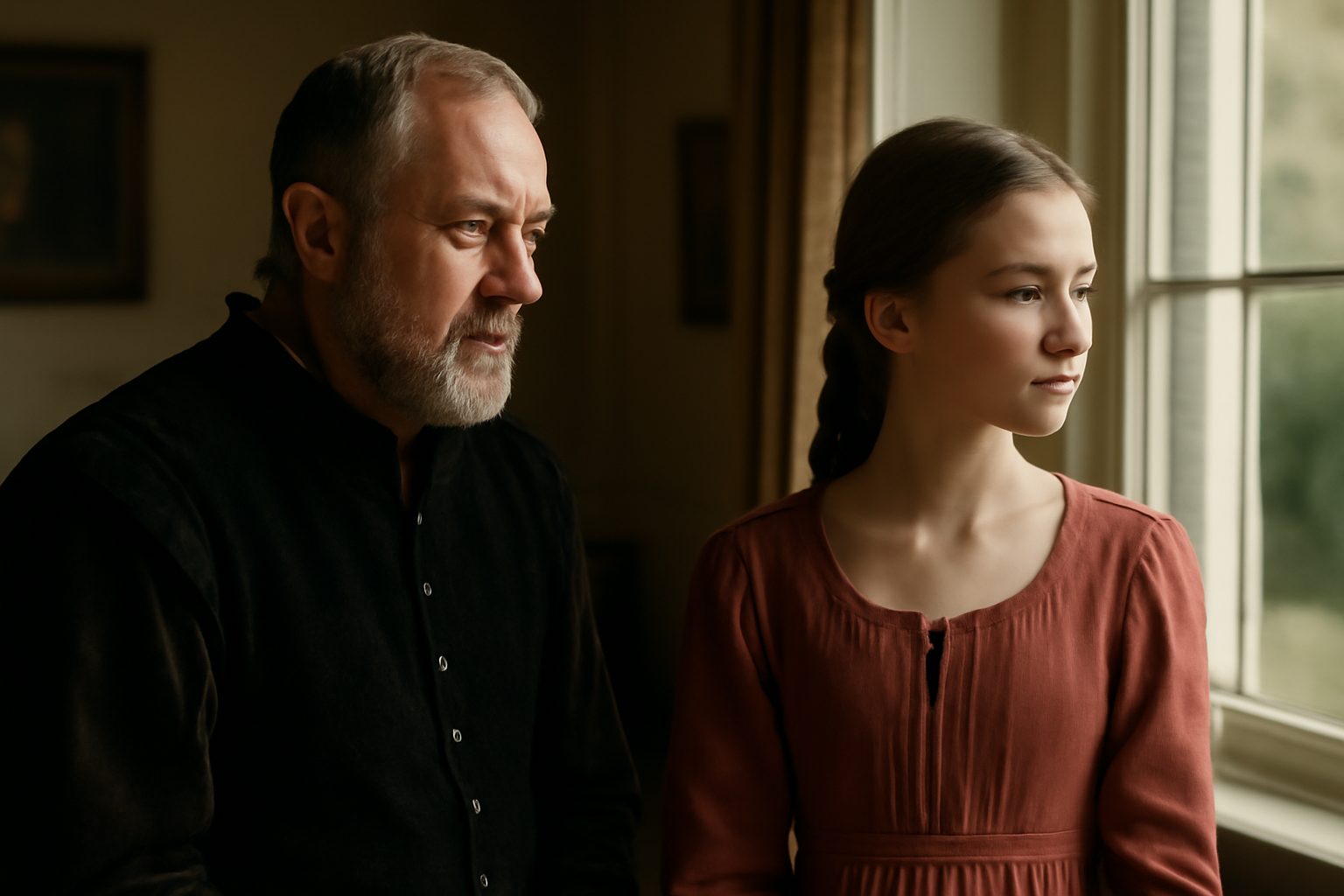
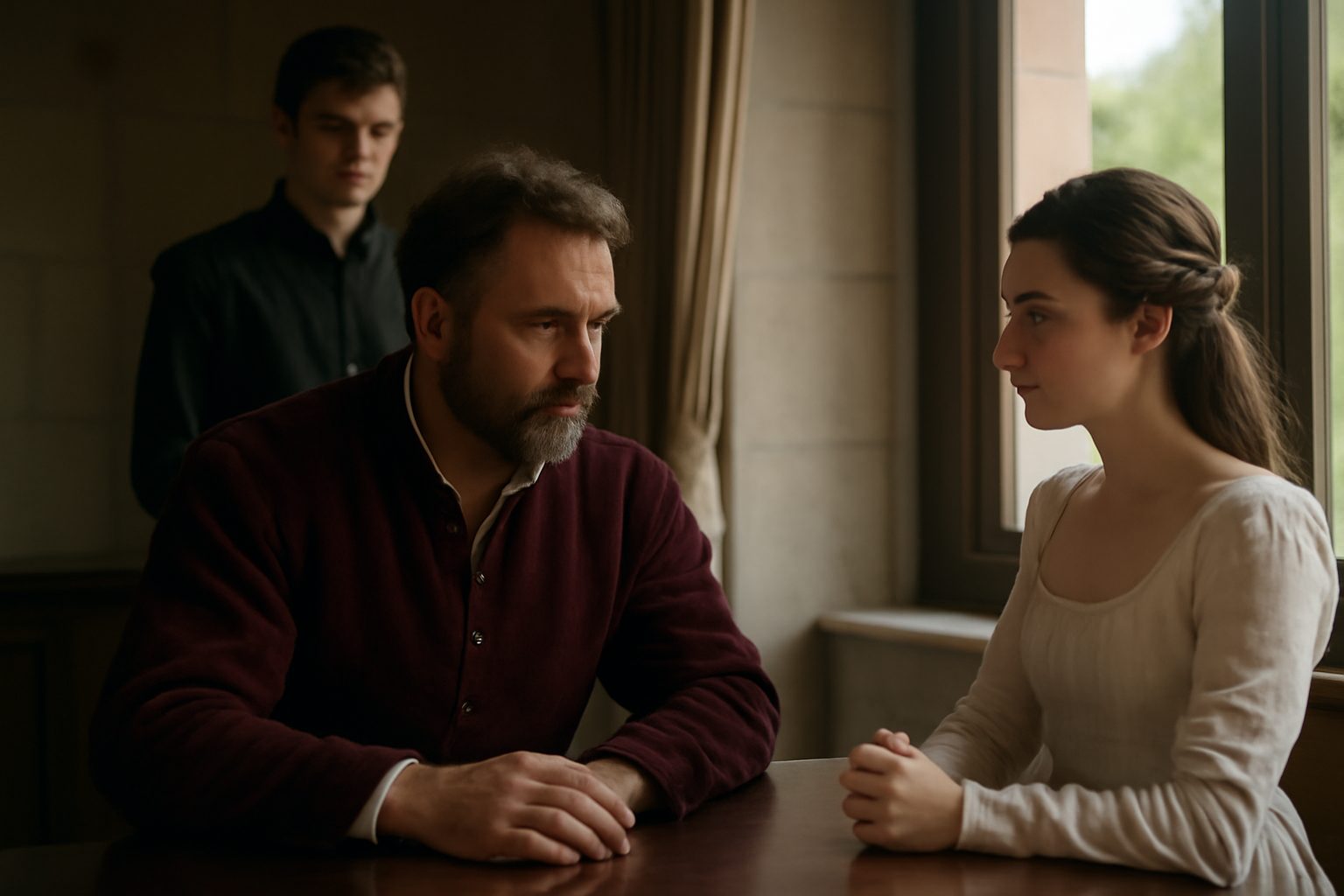
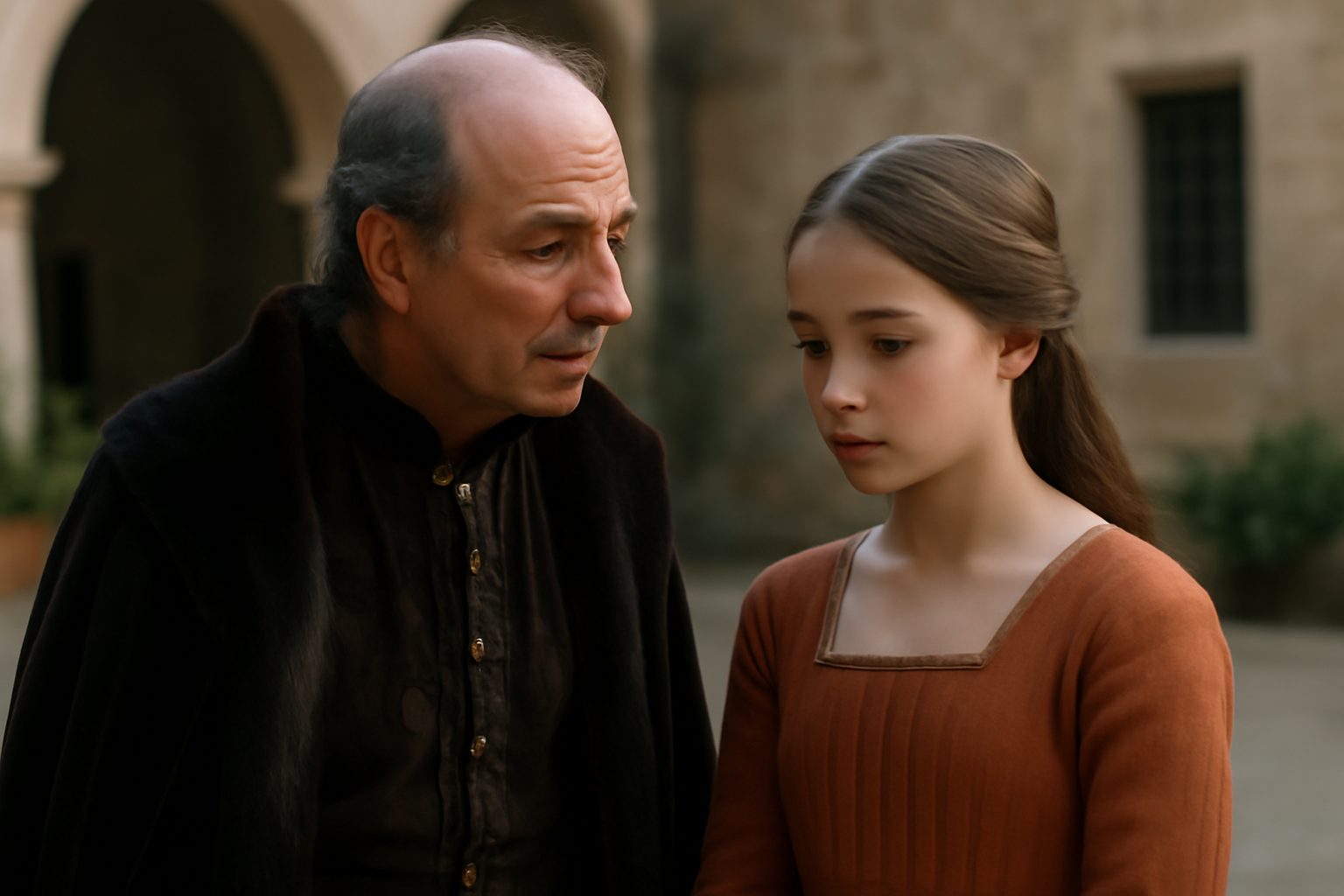
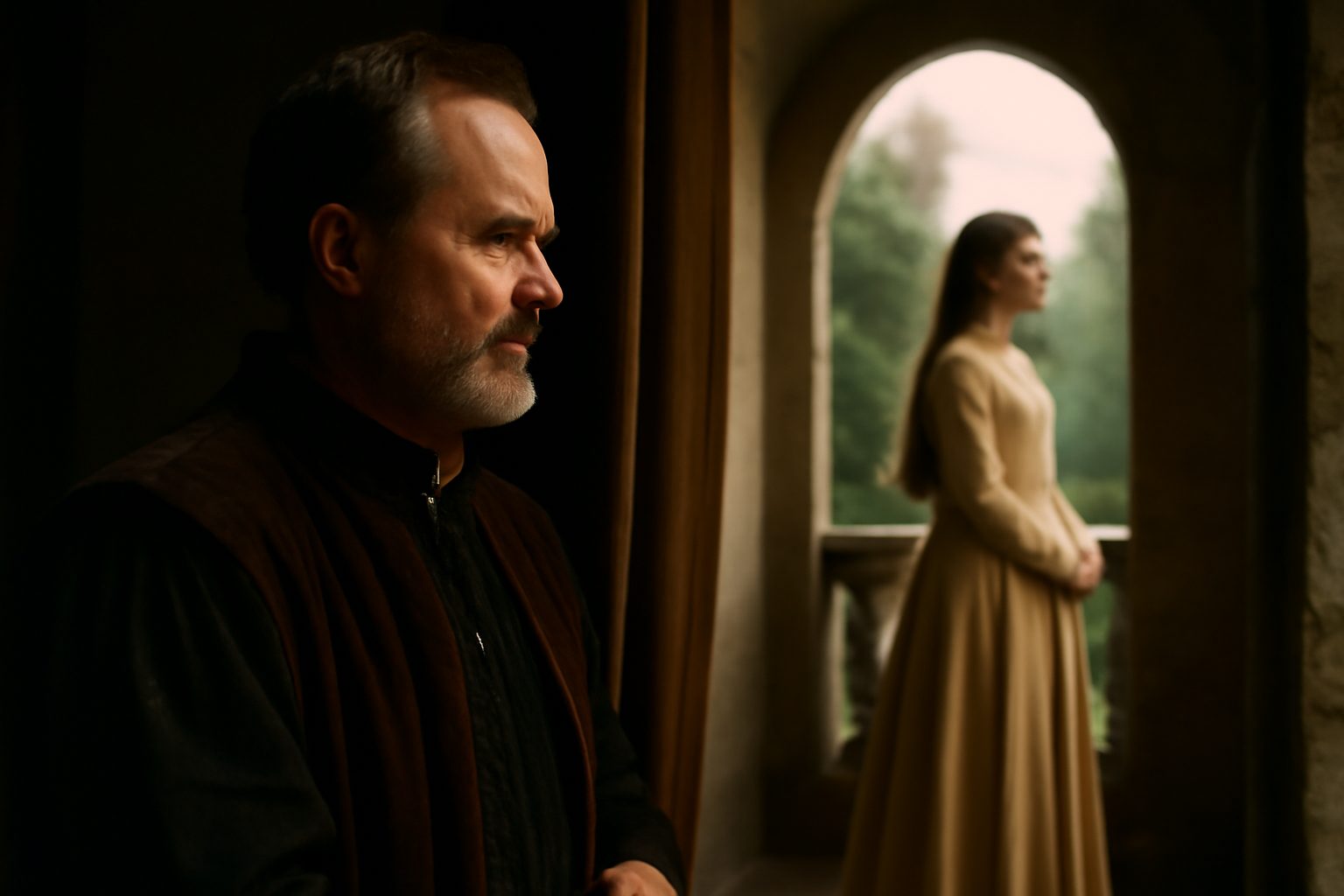
In Act 1, Scene 2 of Romeo and Juliet, Paris presses Lord Capulet for permission to marry Juliet. Capulet responds cautiously, suggesting Juliet is still too young for marriage, emphasizing that she has not yet reached the maturity he deems necessary. This moment highlights Capulet's protective, though somewhat dismissive, attitude toward his daughter's readiness for adulthood.
Capulet: "Ere we may think her ripe to be a bride."
In modern day english, we would say:
Before we consider her ready for marriage.
Frequently Asked Questions
What does Capulet mean when he says Juliet is not ready to be a bride?
Capulet means that Juliet is too young to get married and needs more time to grow up.
Connections to other verses:
Connections to "Ere we may think her ripe to be a bride"
Capulet's statement about Juliet's youth and readiness for marriage connects thematically and structurally to several other verses in this scene, particularly those discussing age, consent, and the nature of love.
Parental Concern and Juliet's Youth
Capulet's hesitation directly relates to his earlier assertion that "My child is yet a stranger in the world", emphasizing her innocence and lack of worldly experience. This is further supported by his specific mention of her age in "She hath not seen the change of fourteen years", establishing the concrete reason behind his reluctance.
Contrasting Perspectives on Marriageable Age
Paris presents a counterargument in "Younger than she are happy mothers made", highlighting the societal norm of early marriage that contrasts with Capulet's protective stance. This tension between youthful marriage and proper maturity is further complicated by Capulet's warning in "And too soon marr'd are those so early made", suggesting that premature marriage can lead to ruin.
Temporal Framework for Readiness
Capulet proposes a specific waiting period in "Let two more summers wither in their pride", creating a tangible timeline for when he would consider Juliet "ripe." This future-oriented perspective connects to his broader view of Juliet's development and his role in guiding it.
Consent and Choice
The concept of readiness ties into Capulet's surprisingly progressive stance on Juliet's agency, as seen in "An she agree, within her scope of choice" and "Lies my consent and fair according voice". These lines show that his concern for her ripeness encompasses not just physical maturity but also mental and emotional readiness to choose a partner.
Juliet's Unique Value
Capulet's protective attitude stems from Juliet's special status as "The earth hath swallow'd all my hopes but she" and "She is the hopeful lady of my earth". These declarations underscore why he is particularly cautious about her marriage, viewing her as his last and most precious hope.
Social Context of the Feast
The discussion of Juliet's readiness occurs within the context of Capulet's planned feast, mentioned in "This night I hold an old accustom'd feast". This gathering becomes the setting where Paris can begin his courtship, making the timing of their conversation about Juliet's ripeness particularly relevant to the evening's events.