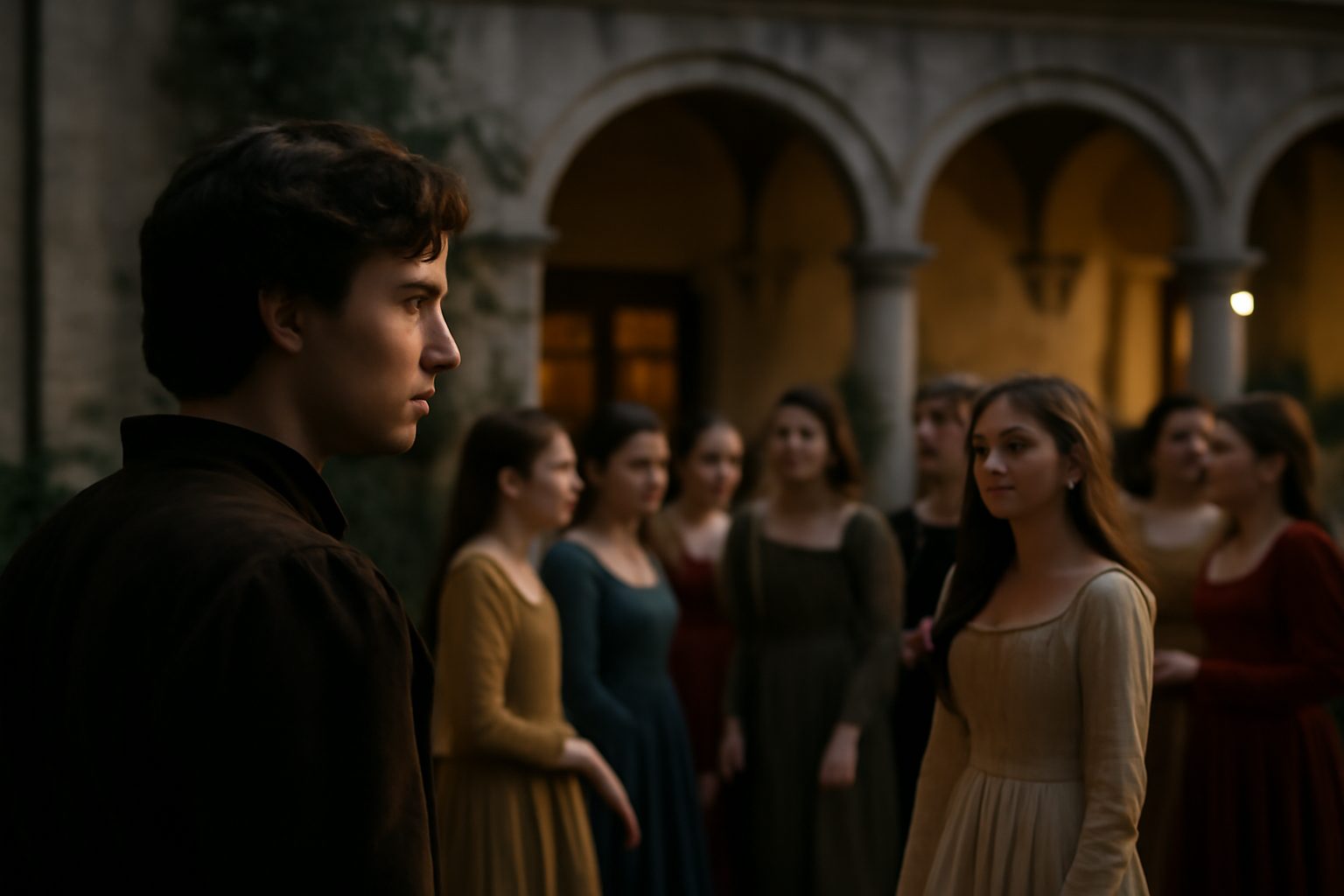
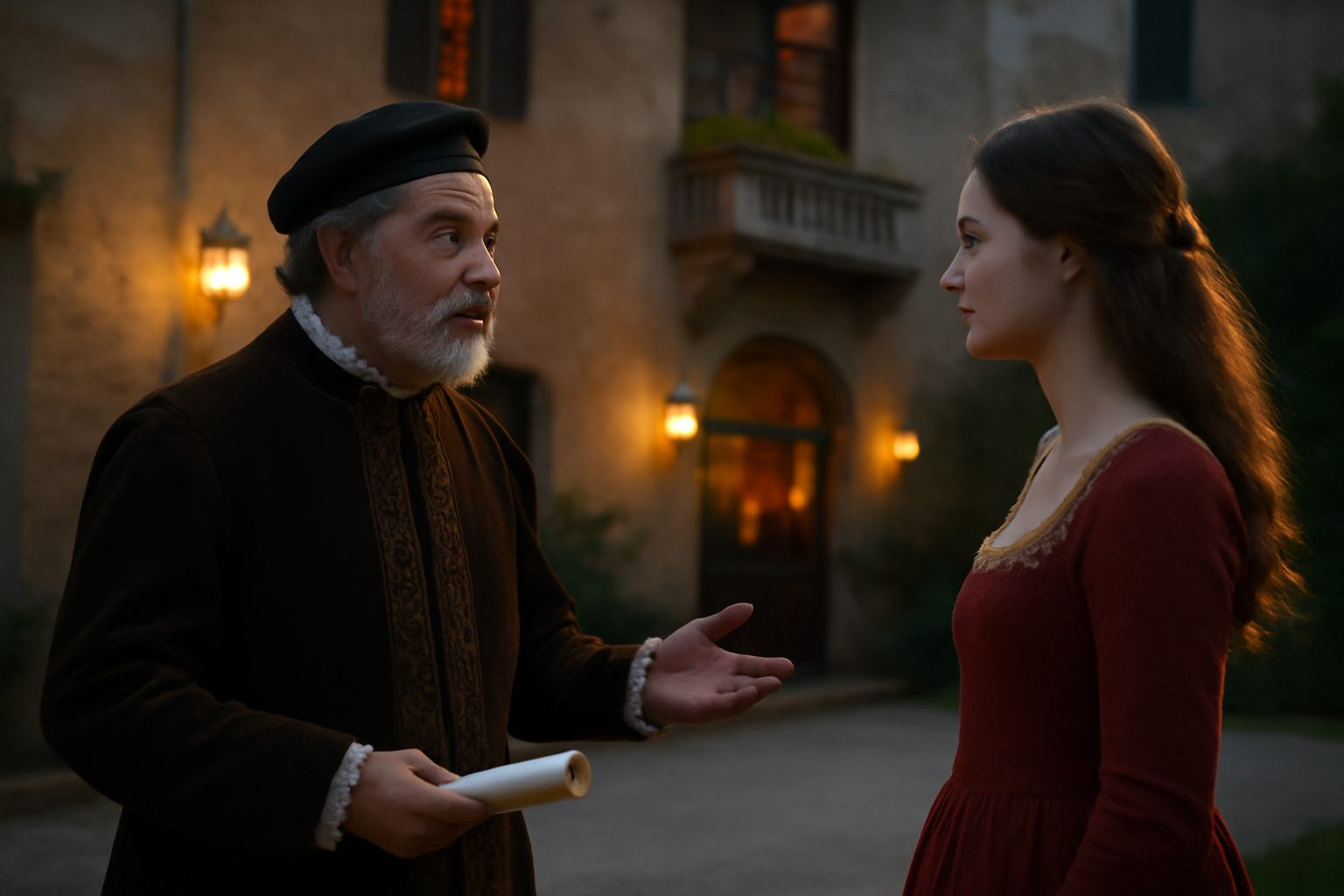
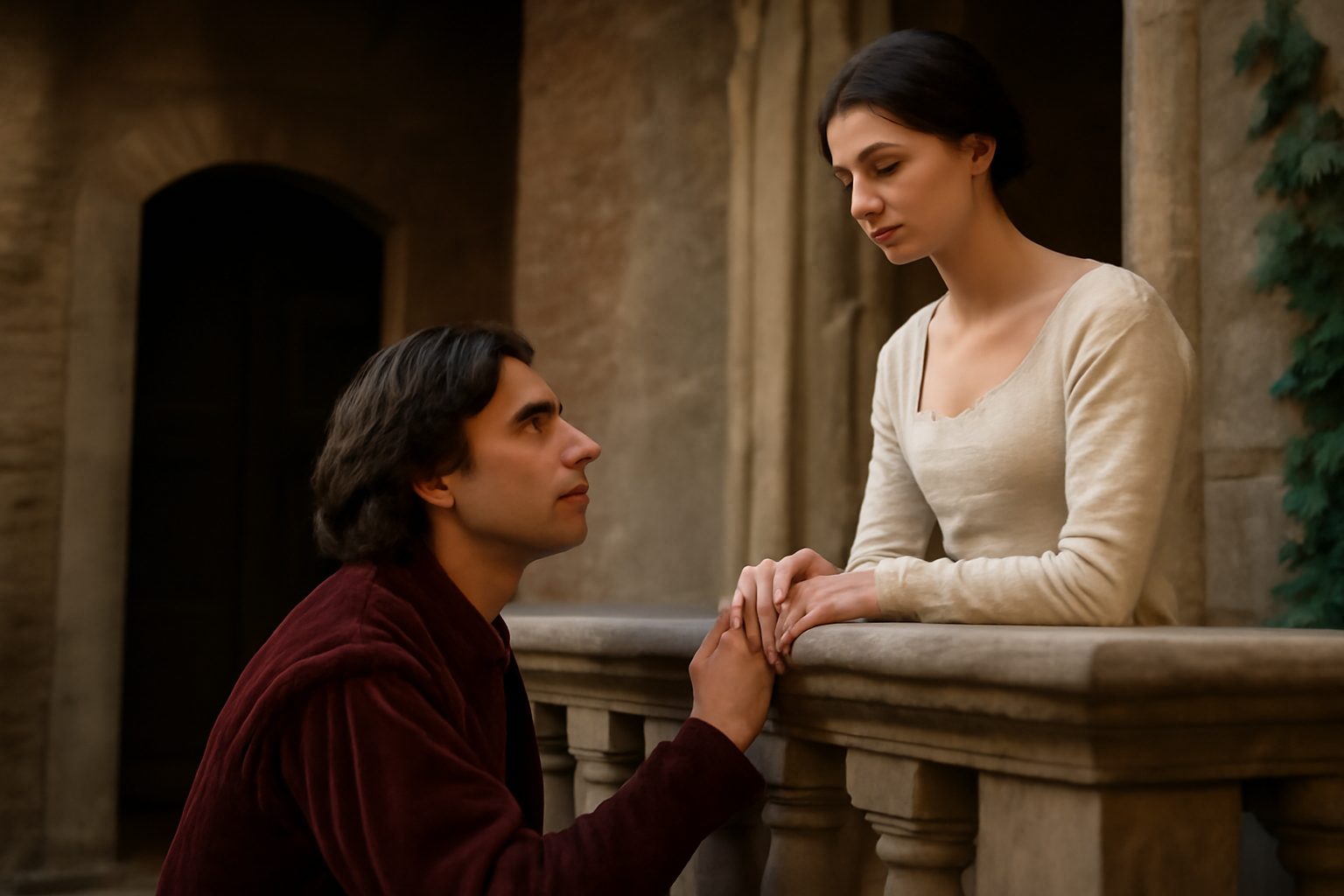
In Act 1, Scene 2 of Romeo and Juliet, Paris asks Capulet for permission to marry Juliet. Capulet, though initially hesitant, invites Paris to a feast at his home that evening, encouraging him to meet other young women as well. The line reflects Capulet's casual tone as he extends the invitation, suggesting Paris observe all the guests before deciding on Juliet.
Capulet: "Inherit at my house; hear all, all see,"
In modern day english, we would say:
Come to my house and you’ll hear everything, see everything.
Frequently Asked Questions
What does Capulet invite people to do at his house in this line?
He invites them to come to his house to hear and see everything.
Connections to other verses:
Connections to "Inherit at my house; hear all, all see"
The verse "Inherit at my house; hear all, all see" is spoken by Capulet as he invites Paris to his feast. It emphasizes the openness and hospitality of his household, where guests can observe and experience everything. This line connects thematically and contextually to several other verses in the same scene.
Invitation and Hospitality
Capulet's invitation is echoed in This night I hold an old accustom'd feast, which sets the scene for the gathering. The idea of welcoming guests is reinforced in My house and welcome on their pleasure stay, highlighting Capulet's generosity.
Visual and Social Experience
The phrase "hear all, all see" underscores the sensory and social nature of the feast. This connects to Earth-treading stars that make dark heaven light, which poetically describes the beautiful attendees, and With all the admired beauties of Verona, emphasizing the visual spectacle.
Narrative Function
This invitation serves as a plot device, leading to Romeo's encounter with Juliet. It ties to Sups the fair Rosaline whom thou so lovest, where Benvolio encourages Romeo to attend and compare Rosaline to others, and Go thither; and, with unattainted eye, urging an unbiased view.
Contrast and Irony
Capulet's open invitation contrasts with the secrecy of Romeo and Juliet's later relationship. It also ironically sets the stage for the tragic events, linking to themes in And pity 'tis you lived at odds so long, which references the feud underlying the play's conflicts.