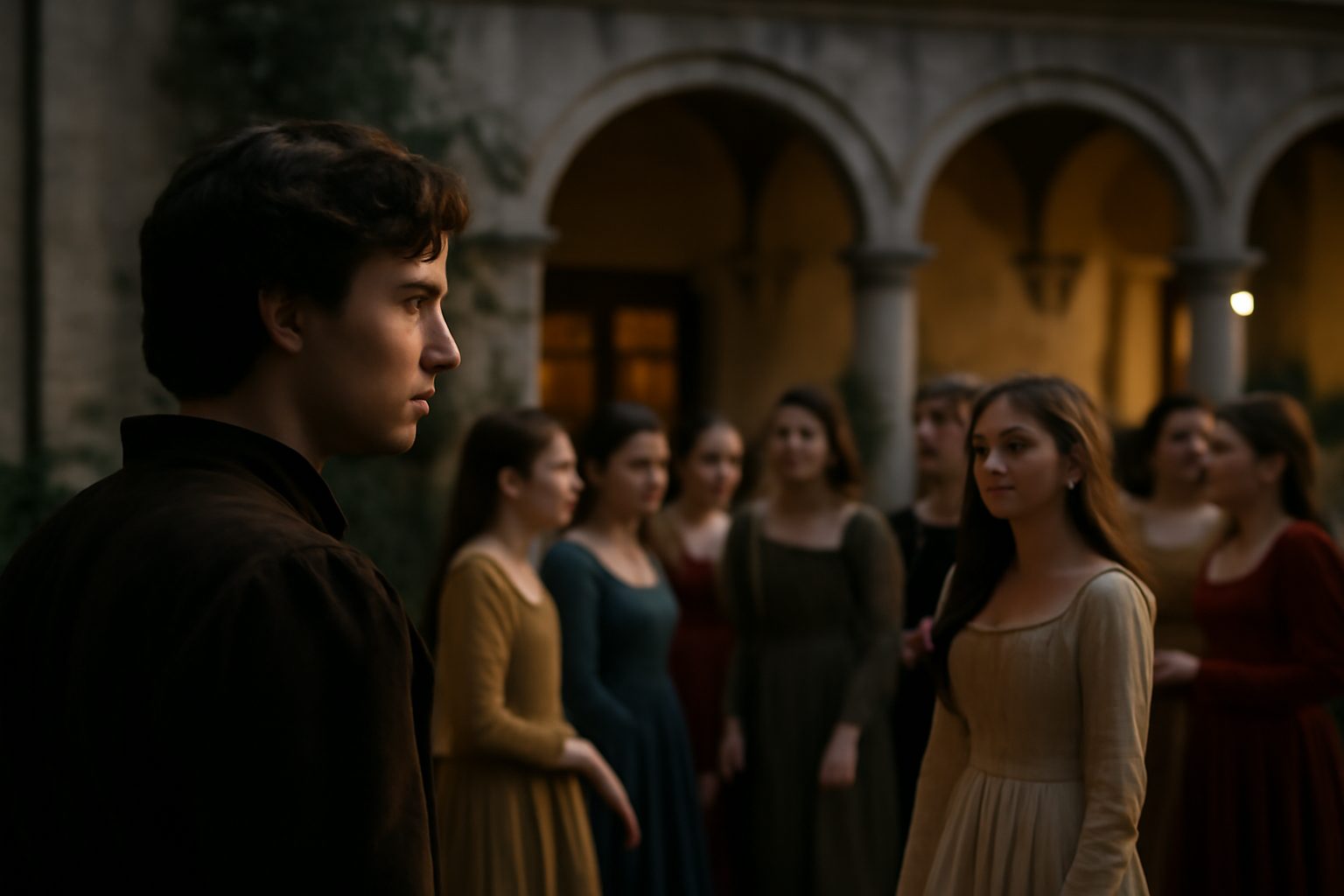
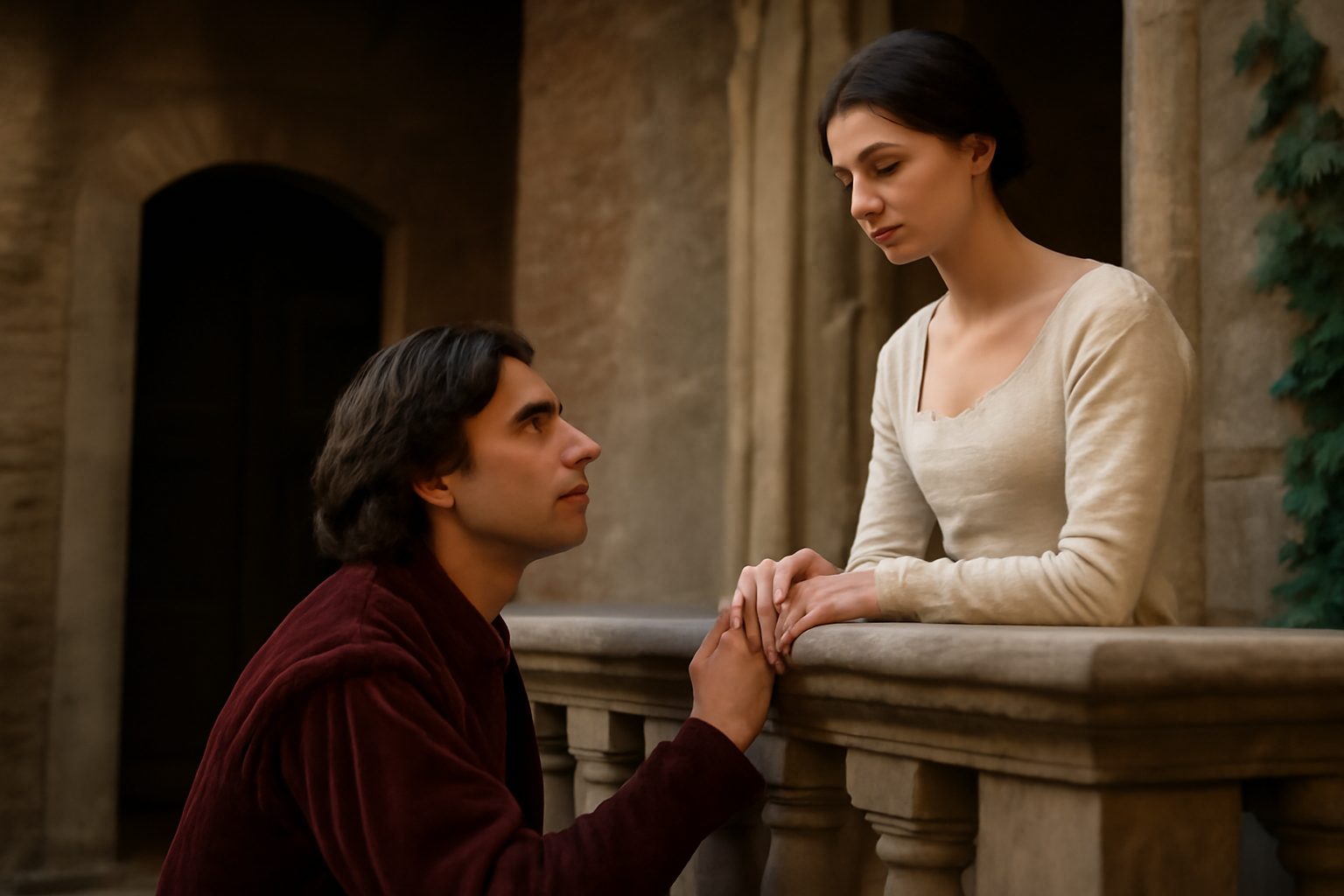
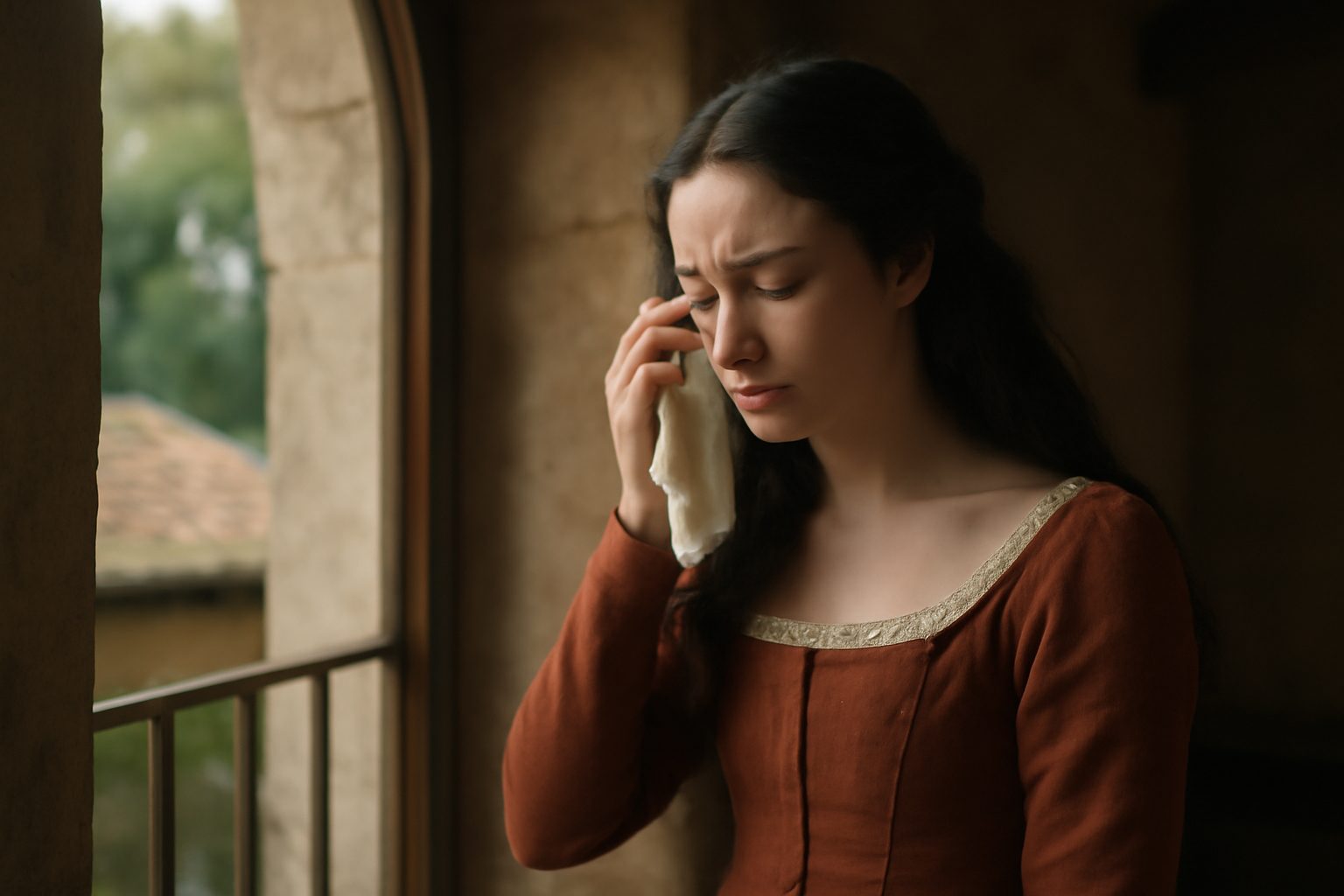
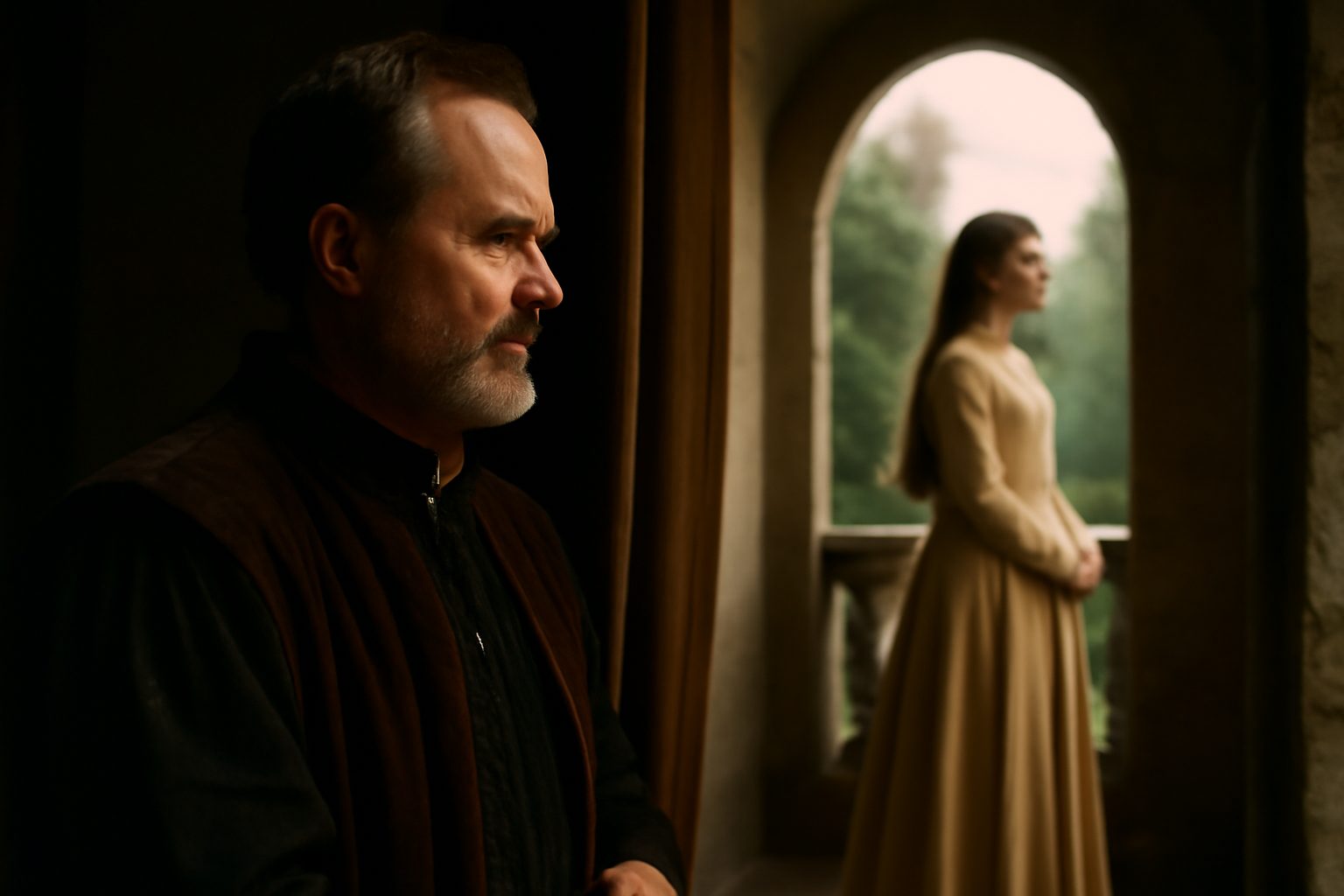
In Act 1, Scene 2 of Romeo and Juliet, Benvolio attempts to console Romeo, who is heartbroken over Rosaline. As they discuss love and suffering, Benvolio suggests that one sorrow can be eased by witnessing another's greater pain. This line reflects the play's early exploration of love's complexities and the ways characters seek relief from emotional distress.
Benvolio: "One pain is lessen'd by another's anguish;"
In modern day english, we would say:
When one hurt distracts you from another, the first pain feels lighter.
Frequently Asked Questions
What does Benvolio mean when he says that one pain is lessened by another's anguish?
Benvolio means that when we see someone else suffering more than we are, our own pain feels smaller or easier to bear in comparison.
Connections to other verses:
Connections to "One pain is lessen'd by another's anguish"
The verse "One pain is lessen'd by another's anguish" is part of a larger philosophical reflection on emotional and physical remedies, spoken by Benvolio as he advises Romeo. It connects thematically and structurally to several other lines in the scene.
Parallel Remedies and Emotional Contrasts
This idea of one suffering alleviating another is echoed in "Tut, man, one fire burns out another's burning", which uses a similar metaphor of fire to suggest that new passions can extinguish old ones. Both lines advocate for replacement as a cure for emotional pain.
Additionally, "Turn giddy, and be holp by backward turning" extends this concept, proposing that disorientation or a change in perspective can provide relief, further emphasizing the theme of counterbalancing emotions.
The related line "One desperate grief cures with another's languish" reinforces the idea, using synonymous terms ("anguish" and "languish") to underscore that grief can be mitigated by witnessing or experiencing another's suffering.
Advice and Foreshadowing
Benvolio’s counsel culminates in "Take thou some new infection to thy eye", urging Romeo to seek a new love to cure his current heartache. This direct advice ties the metaphorical "pain" and "anguish" to the practical suggestion of moving on.
Furthermore, Benvolio promises in "Compare her face with some that I shall show" to demonstrate that other beauties exist, directly applying the concept of lessening one pain (love for Rosaline) by introducing another (new attractions).
Contrast with Capulet’s Worldview
While Benvolio speaks of emotional remedies, Capulet’s lines, such as "She is the hopeful lady of my earth" about Juliet, introduce a more grounded, familial perspective on love and value, contrasting with the abstract, almost clinical advice Benvolio offers Romeo.
Capulet’s emphasis on consent and choice in "Lies my consent and fair according voice" further highlights a different approach to emotional matters—one based on respect and patience, rather than quick fixes.
Conclusion of Themes
The notion of replacement and emotional balance introduced by "One pain is lessen'd by another's anguish" permeates Benvolio’s dialogue, serving as a prelude to the events at Capulet’s feast, where Romeo’s encounter with Juliet will indeed "cure" his prior affections, albeit with tragic irony.