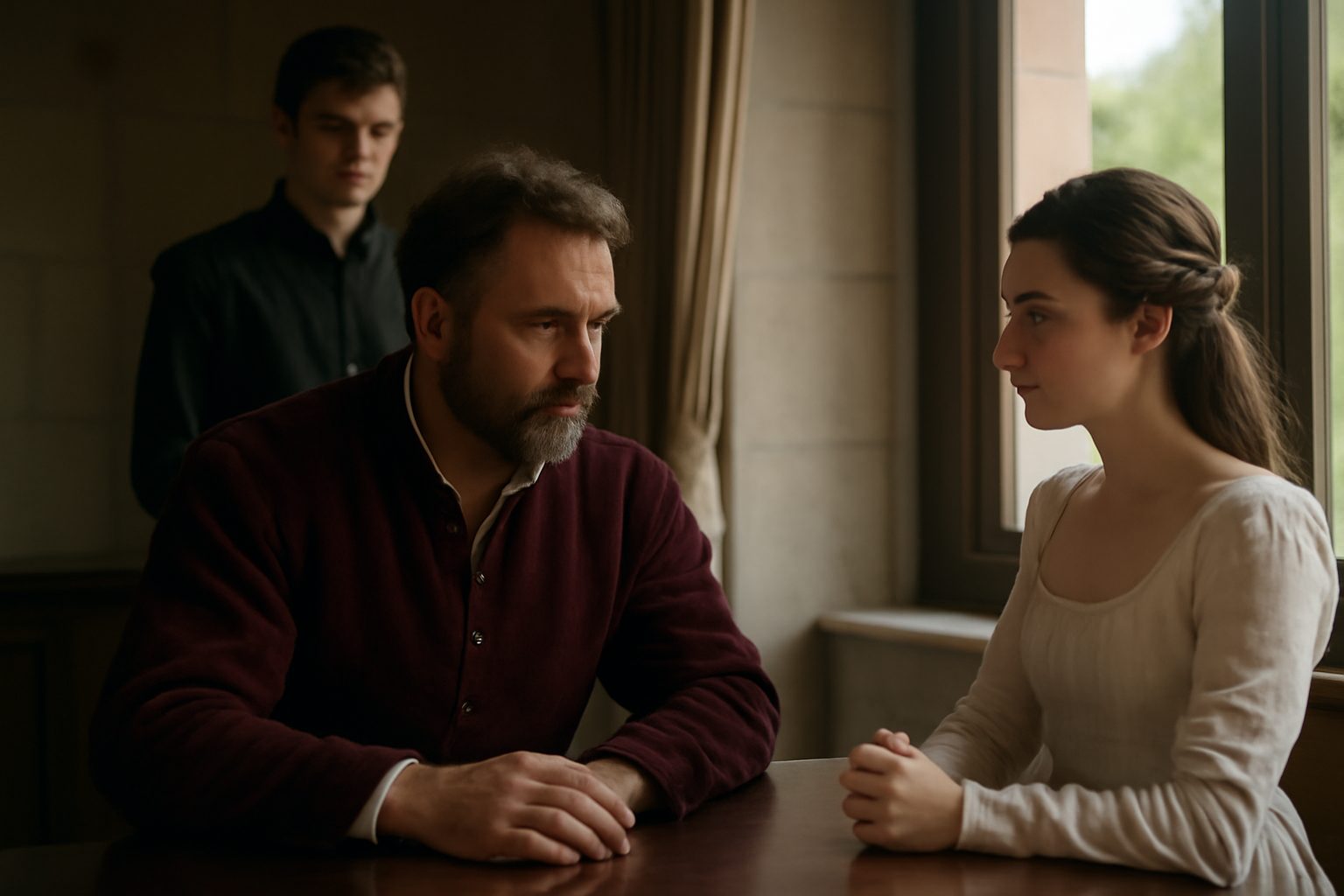
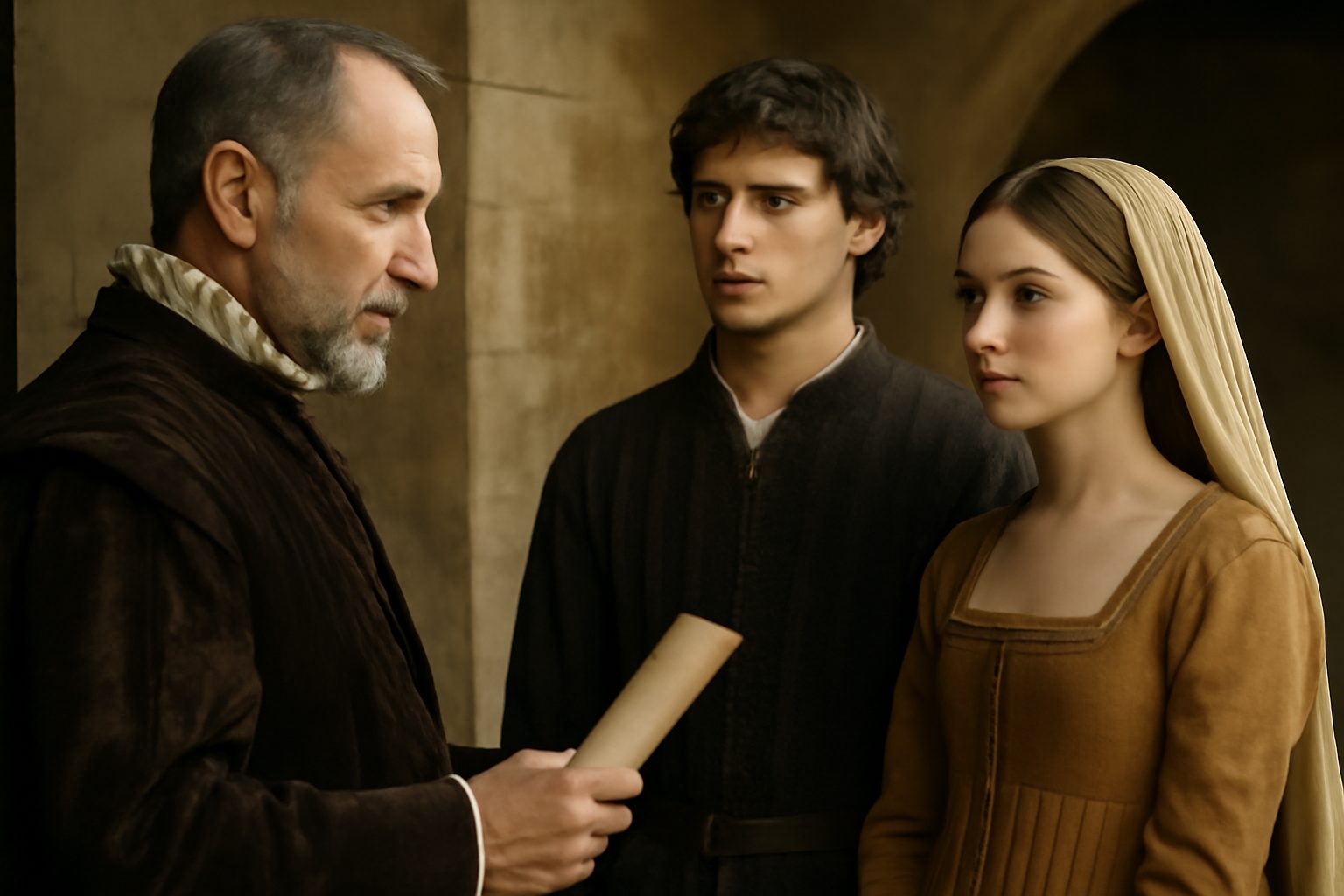
In Act 1, Scene 2 of Romeo and Juliet, Lord Capulet speaks with Paris, who wishes to marry Juliet. When Paris presses for an answer, Capulet describes his daughter as the most cherished part of his life, emphasizing her youth and his reluctance to rush her into marriage. This line reveals Capulet's protective, though ultimately conditional, love for Juliet.
Capulet: "She is the hopeful lady of my earth:"
In modern day english, we would say:
She is the one I cherish most in my life, my only heir and hope.
Frequently Asked Questions
What does Capulet mean when he calls Juliet the hopeful lady of his earth?
Capulet means that Juliet is his only child and the one who brings him hope and joy in his life.
Connections to other verses:
Connections to "She is the hopeful lady of my earth"
Capulet's declaration that Juliet is "the hopeful lady of my earth" (Act 1 Scene 2 Line 15) reveals his deep paternal affection and the weight of his dynastic hopes resting upon her. This line connects thematically and narratively with several other verses in the scene.
Parental Concern and Juliet's Youth
Capulet's protective attitude is immediately evident when he tells Paris that "My child is yet a stranger in the world", emphasizing her youth and inexperience. He reinforces this by stating "She hath not seen the change of fourteen years", showing his awareness of her tender age. His caution extends to the warning that "too soon marr'd are those so early made", expressing concern about early marriage.
Conditional Consent and Juliet's Agency
Despite his hopes for Juliet, Capulet shows remarkable consideration for her wishes, telling Paris "But woo her, gentle Paris, get her heart". He makes clear that "My will to her consent is but a part" and that his approval depends on "An she agree, within her scope of choice", ultimately promising that "Lies my consent and fair according voice" only if she agrees.
The Capulet Feast and Future Prospects
The scene's central event—the feast—becomes the vehicle through which these hopes might be realized. Capulet's invitation to Paris to "This night I hold an old accustom'd feast" where he will "Such as I love; and you, among the store" be welcome, sets the stage. He promises Paris that among the "fresh female buds" present, he should "like her most whose merit most shall be", hinting at Juliet's exceptional qualities.
Contrast with Romeo's Perspective
Meanwhile, Romeo's conversation with Benvolio provides ironic contrast. Benvolio suggests Romeo "Take thou some new infection to thy eye" at the feast, and "with unattainted eye, Compare her face with some that I shall show", promising to "make thee think thy swan a crow" compared to other beauties. Romeo stubbornly maintains that "One fairer than my love! the all-seeing sun Ne'er saw her match since first the world begun", unaware he will soon see Juliet.