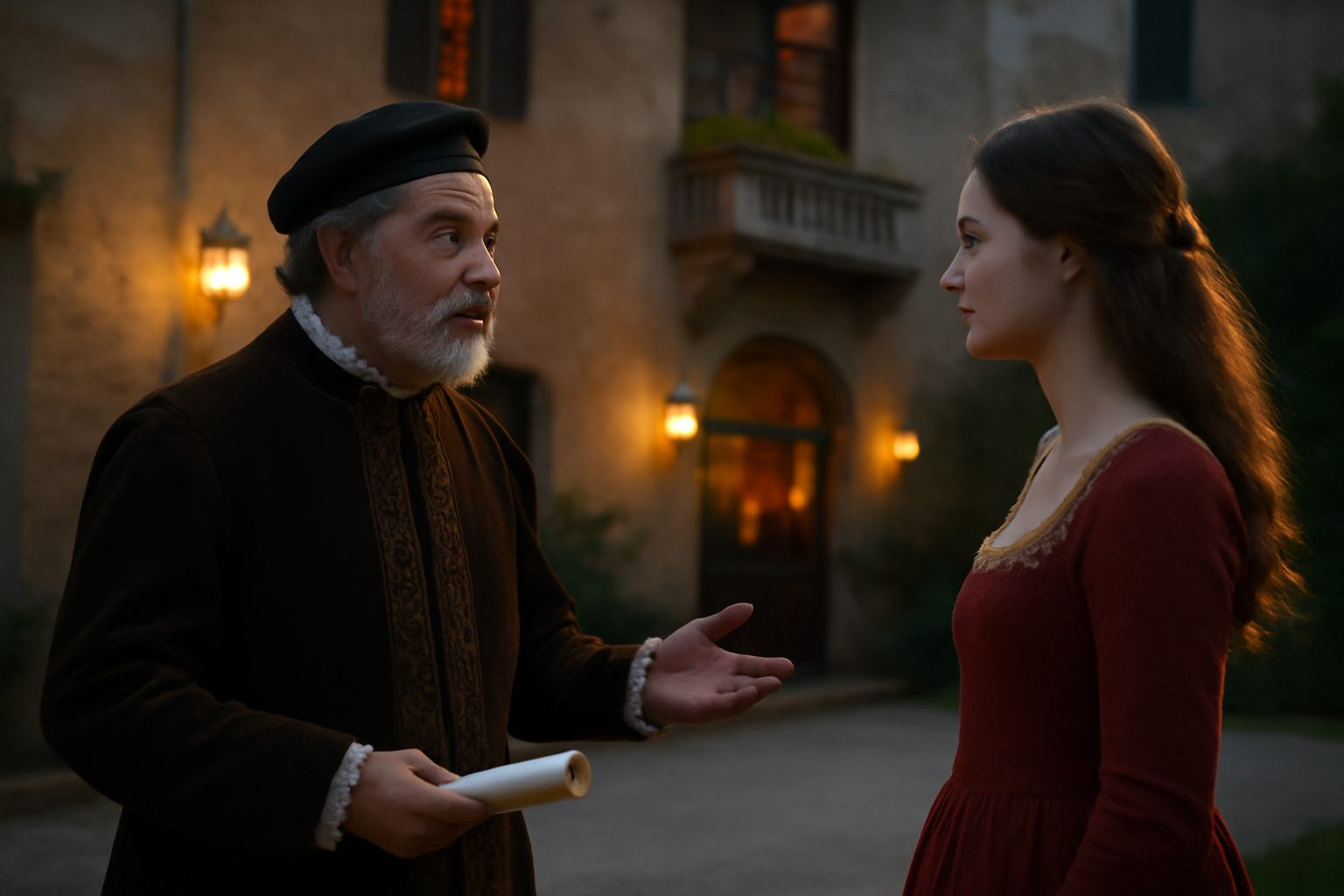
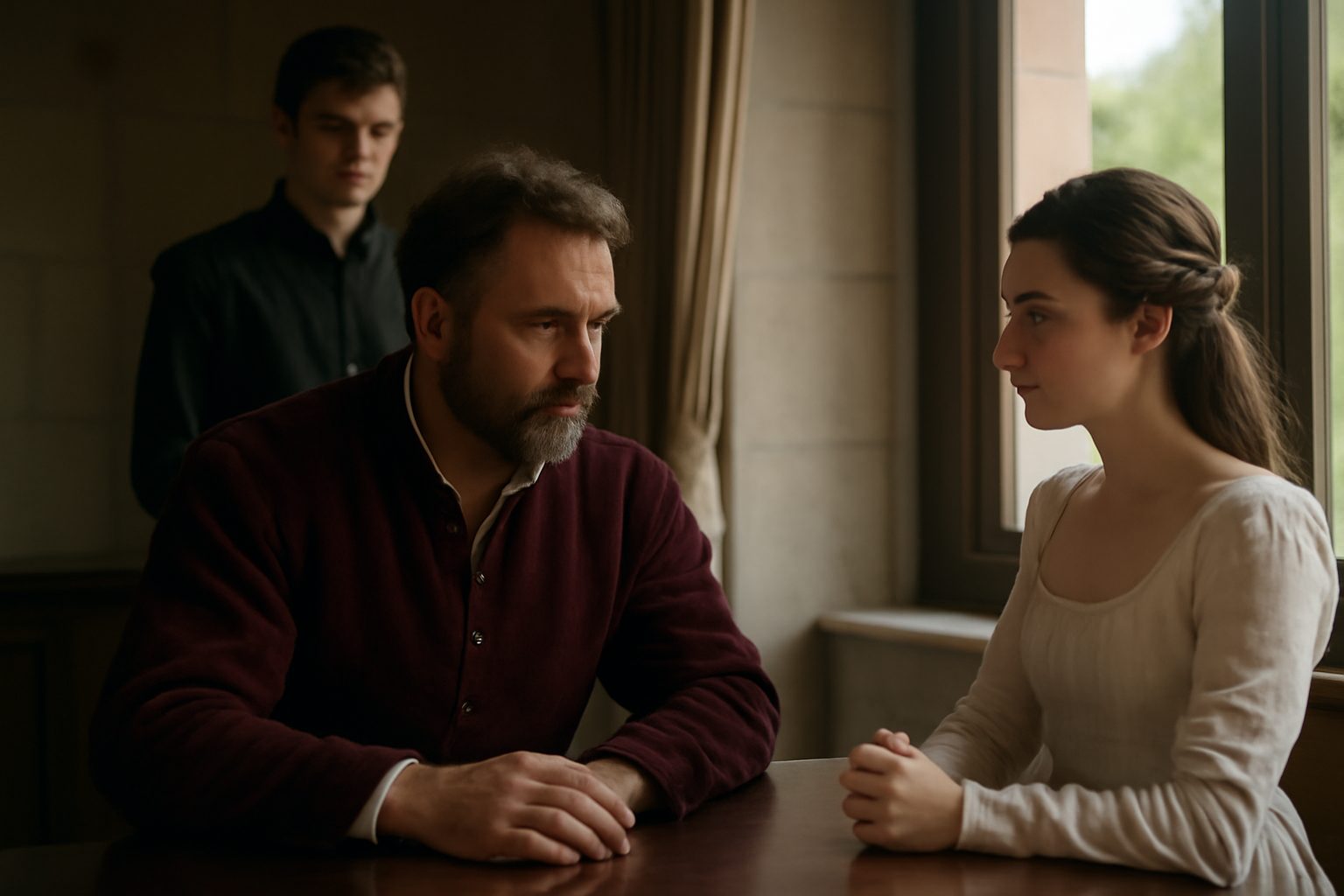
In Act 1, Scene 2 of Romeo and Juliet, Paris speaks with Lord Capulet about marrying Juliet. Capulet, though initially hesitant, suggests that winning Juliet's consent should be no difficult task for Paris. This line reflects Capulet's casual assumption that Juliet will comply with his wishes, hinting at the societal expectations of the time.
Capulet: "In penalty alike; and 'tis not hard, I think,"
In modern day english, we would say:
The punishment is the same for both families, and I don’t think it’s too harsh.
Frequently Asked Questions
What does Capulet mean when he says the penalty is alike and not hard?
Capulet means that the punishment or consequences will be the same for everyone involved, and he believes this is fair and not too difficult to accept.
Connections to other verses:
Connections to "In penalty alike; and 'tis not hard, I think,"
This line, spoken by Capulet, refers to the shared penalty imposed on both the Montague and Capulet households by the Prince for their ongoing feud. It establishes the legal and social context of the play's conflict.
Direct Contextual Links
Capulet's statement about shared penalties connects directly to For men so old as we to keep the peace, where he acknowledges their age and responsibility in maintaining order. It also relates to And pity 'tis you lived at odds so long, reinforcing the senselessness of their long-standing conflict.
Structural and Thematic Echoes
The idea of balance and equivalence in penalty finds a parallel in Paris's courtship discussion, particularly My will to her consent is but a part, where Capulet emphasizes mutual agreement rather than imposition. The theme of measured judgment appears again in But in that crystal scales let there be weigh'd, where Benvolio urges Romeo to compare Rosaline objectively.
Contrasting Perspectives
While Capulet speaks of external, imposed penalties, Romeo's internal suffering is highlighted in lines like Not mad, but bound more than a mad-man is, showing how personal anguish transcends societal rules. The festive invitation in This night I hold an old accustom'd feast further contrasts the scene's serious opening with impending social harmony.