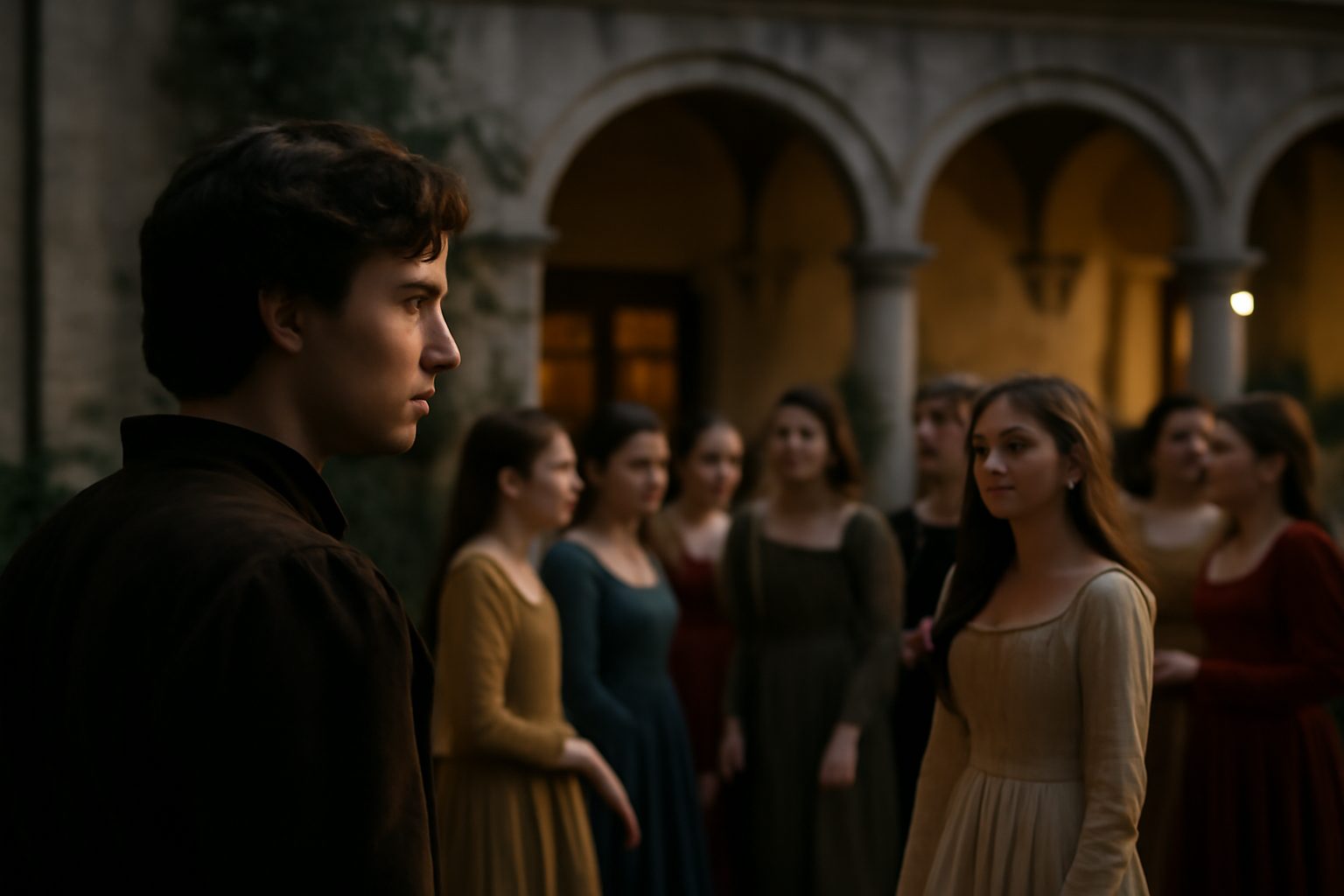
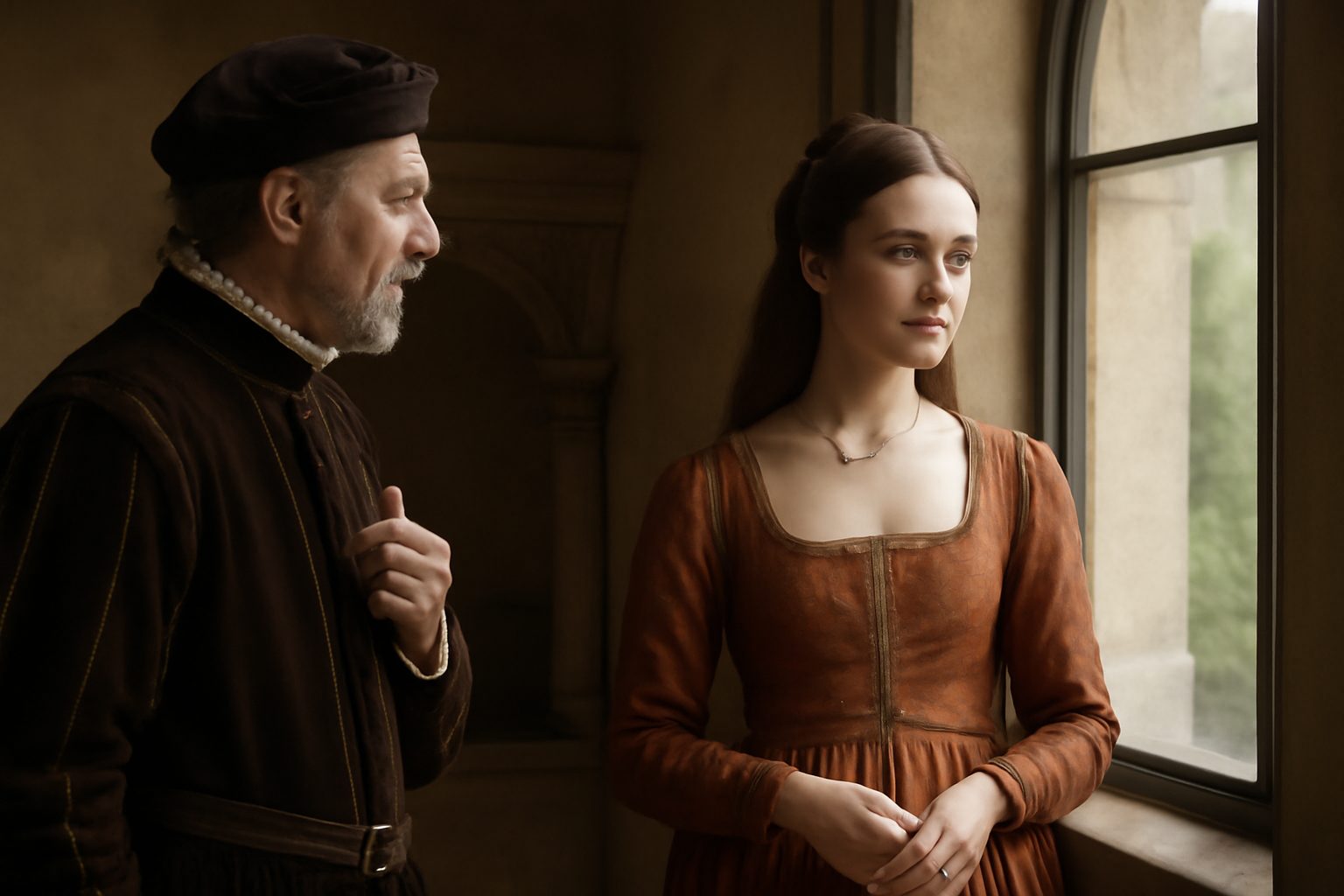
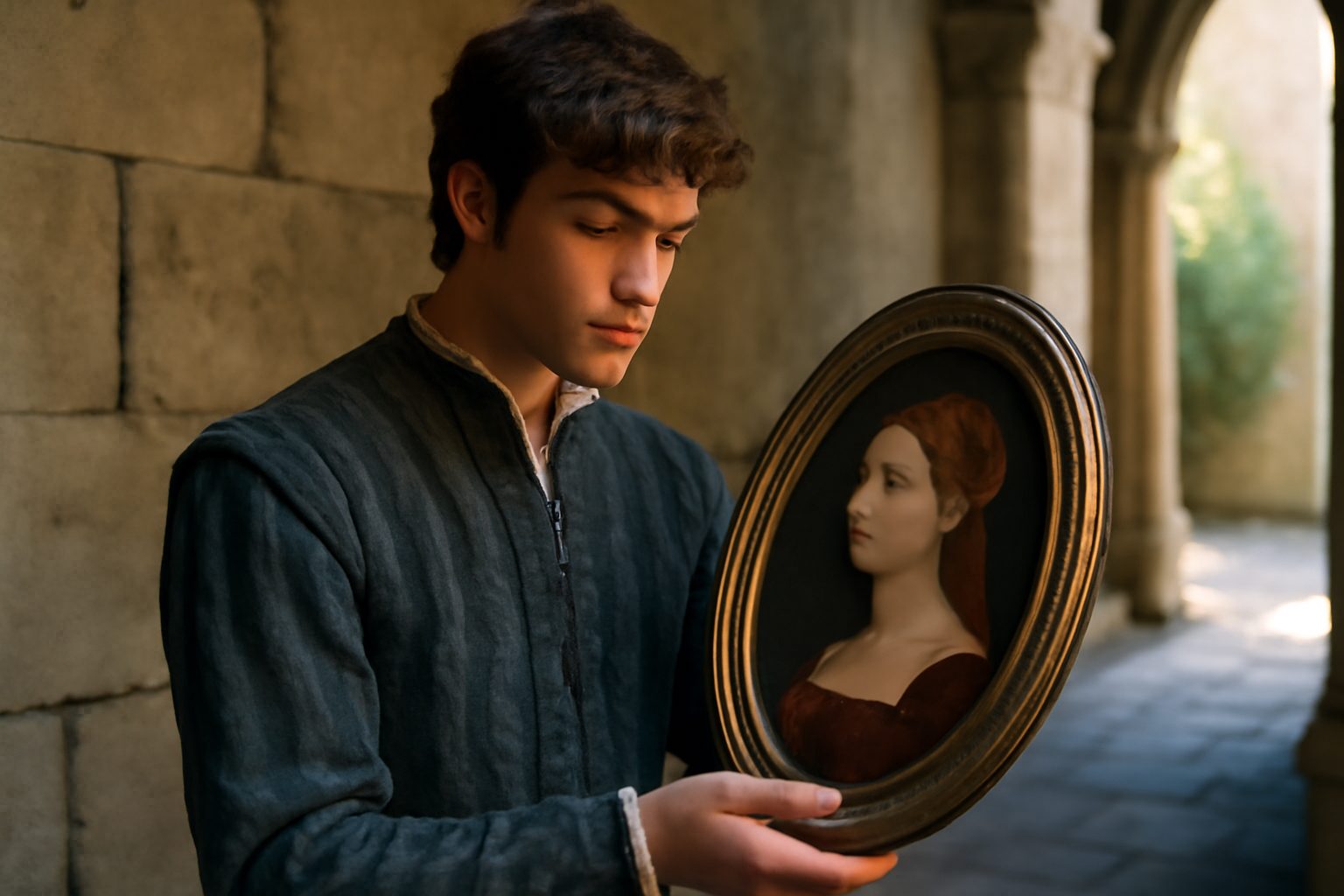
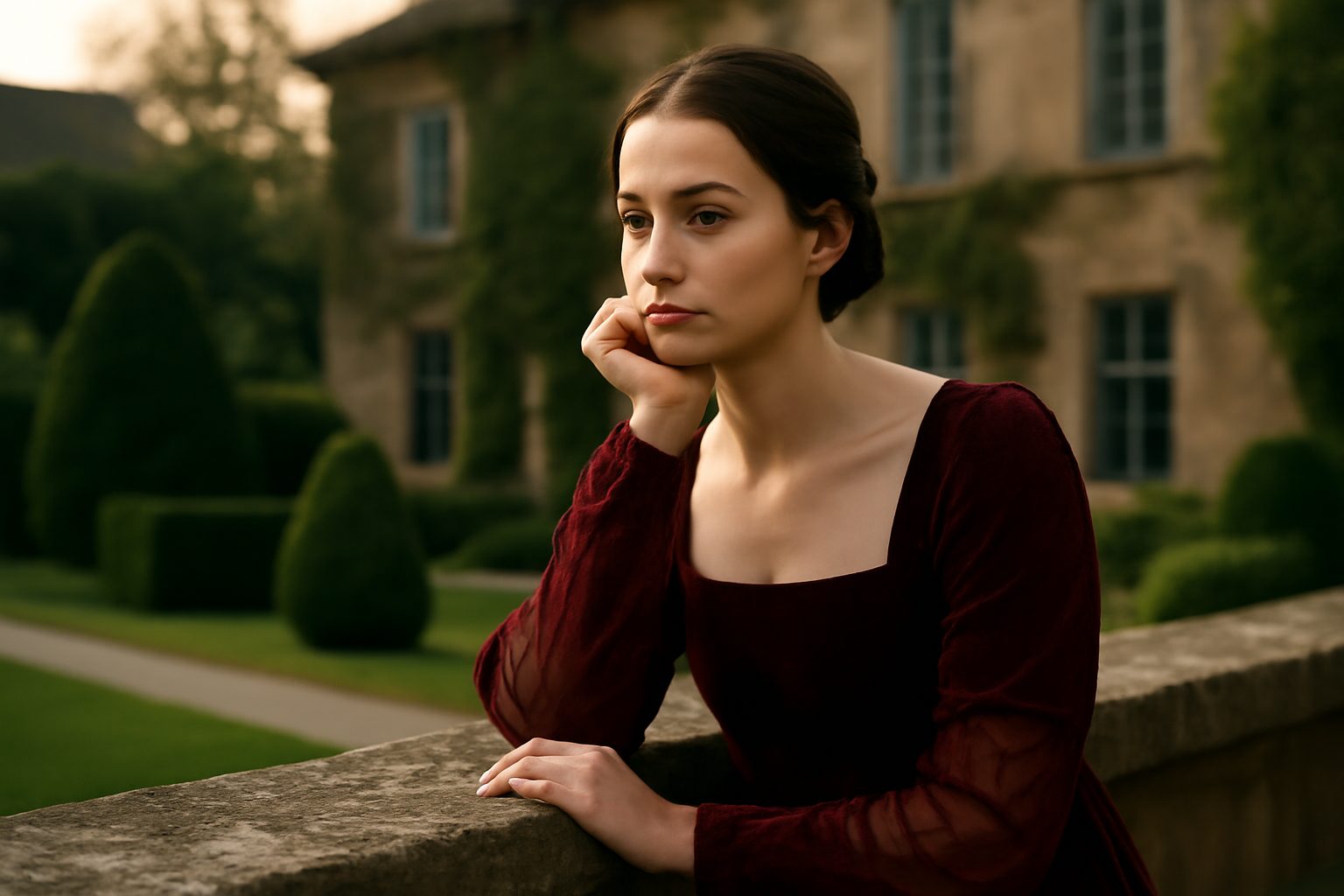
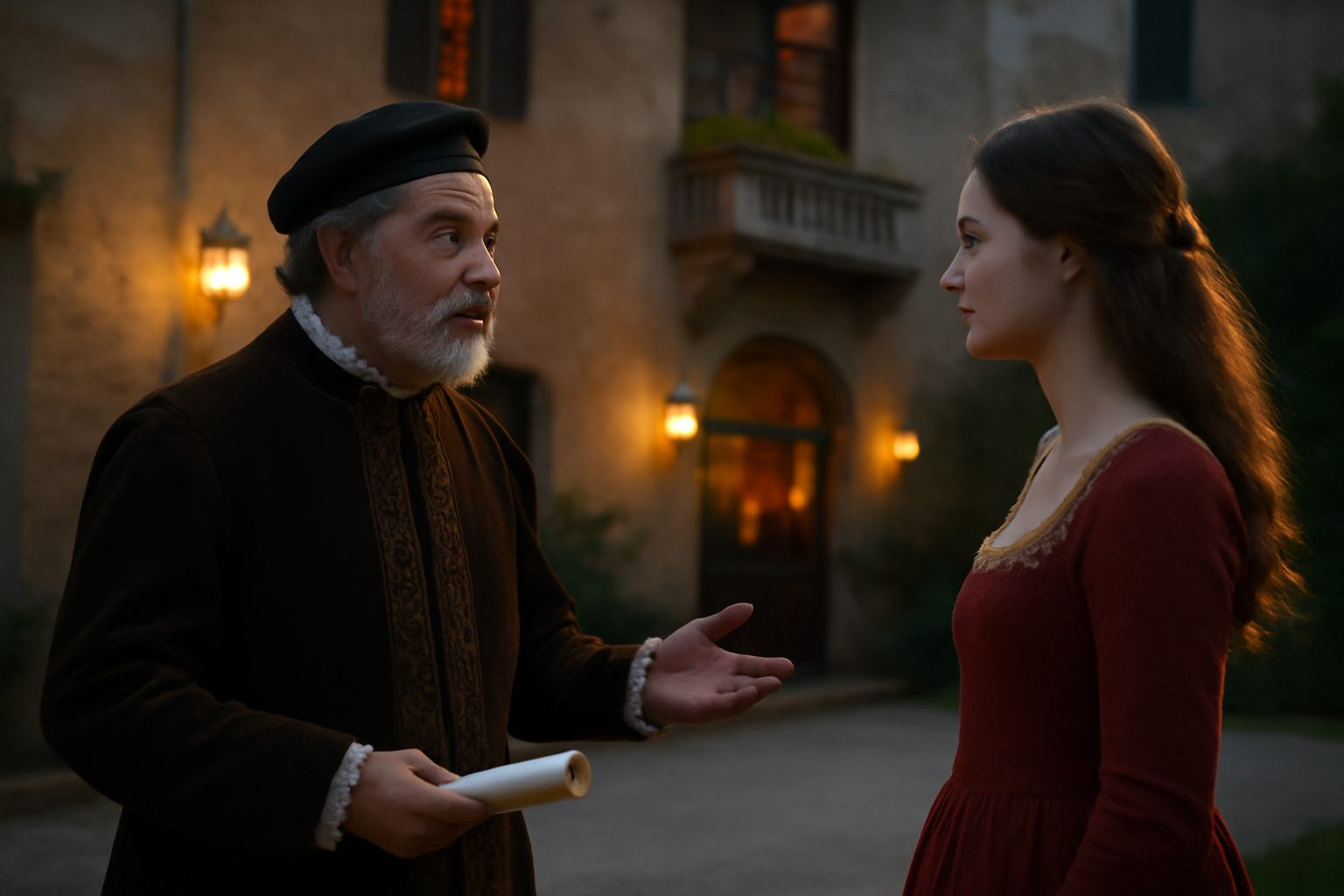
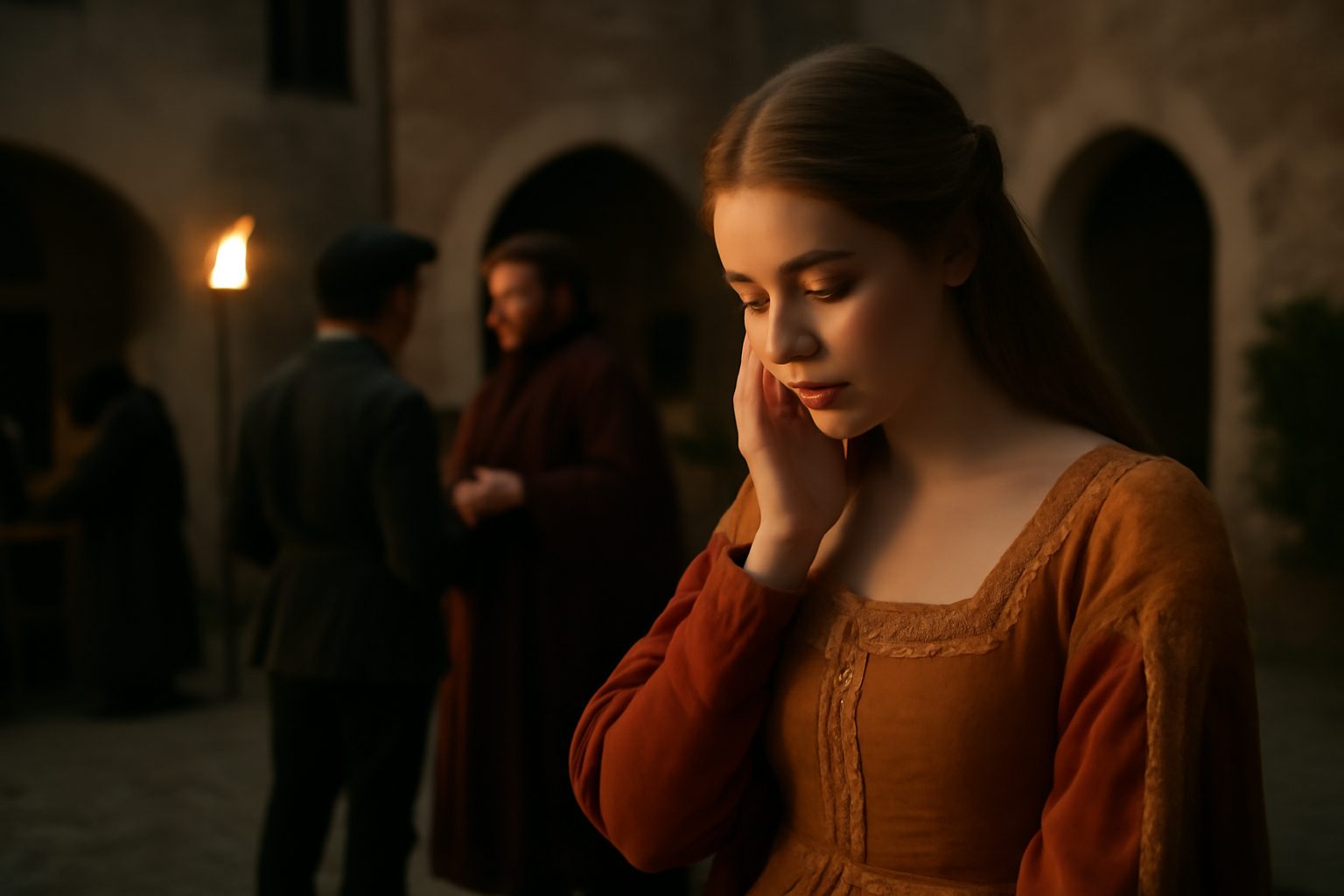
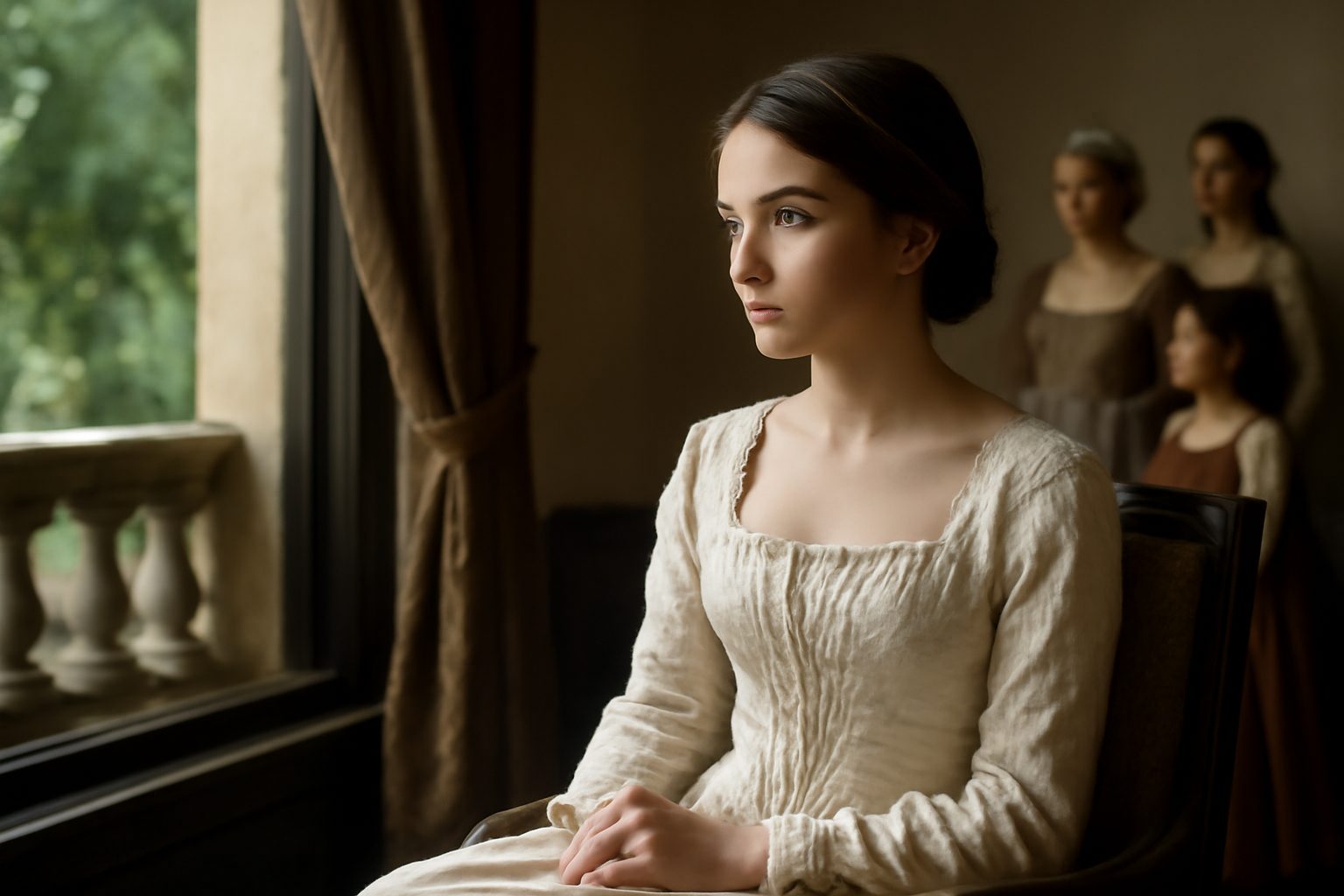
In Act 1, Scene 2 of Romeo and Juliet, Lord Capulet speaks this line while discussing his daughter Juliet with Paris, a nobleman seeking her hand in marriage. He suggests that Juliet is still too young, having not yet turned fourteen, and advises Paris to wait before pursuing her. This moment highlights Capulet's initial protective stance toward his daughter, though his attitude shifts later in the play.
Capulet: "She hath not seen the change of fourteen years,"
In modern day english, we would say:
She hasn’t even turned fourteen yet.
Frequently Asked Questions
How old is Juliet according to Capulet in this line?
Juliet is almost 14 years old.
Connections to other verses:
Connections to "She hath not seen the change of fourteen years"
The verse "She hath not seen the change of fourteen years" is spoken by Lord Capulet, referring to Juliet's youth. This line connects thematically and contextually to several other verses in the same scene, particularly those discussing Juliet's age, readiness for marriage, and Capulet's protective stance.
Youth and Readiness for Marriage
Capulet's emphasis on Juliet's youth is echoed in "My child is yet a stranger in the world", which underscores her inexperience. He further elaborates on her immaturity in "Ere we may think her ripe to be a bride", suggesting she is not yet ready for marriage. However, he acknowledges societal norms in "Younger than she are happy mothers made", indicating that others marry even earlier, yet he remains cautious due to the risks mentioned in "And too soon marr'd are those so early made".
Parental Concern and Consent
Capulet's protective nature is evident in "She is the hopeful lady of my earth", highlighting her importance to him. He insists that Paris must win Juliet's heart in "But woo her, gentle Paris, get her heart", and emphasizes her autonomy in "My will to her consent is but a part" and "An she agree, within her scope of choice". His conditional approval is summarized in "Lies my consent and fair according voice".
Invitation to the Feast
The scene shifts as Capulet invites Paris to a feast where he can meet other young women, as seen in "This night I hold an old accustom'd feast" and "Among fresh female buds shall you this night", offering Paris a chance to compare Juliet to others. This connects to the broader theme of youthful beauty and choice introduced by Juliet's age.