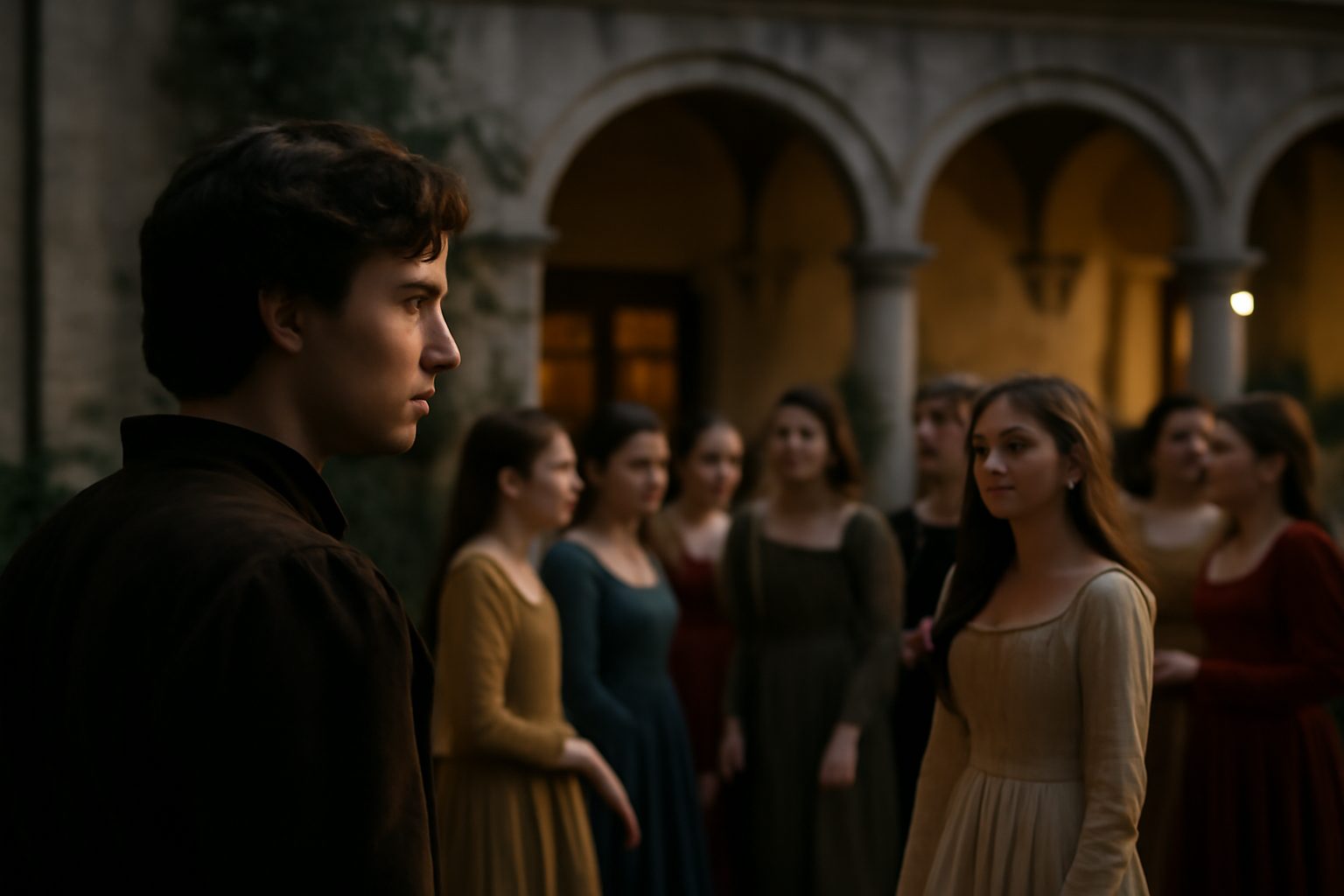
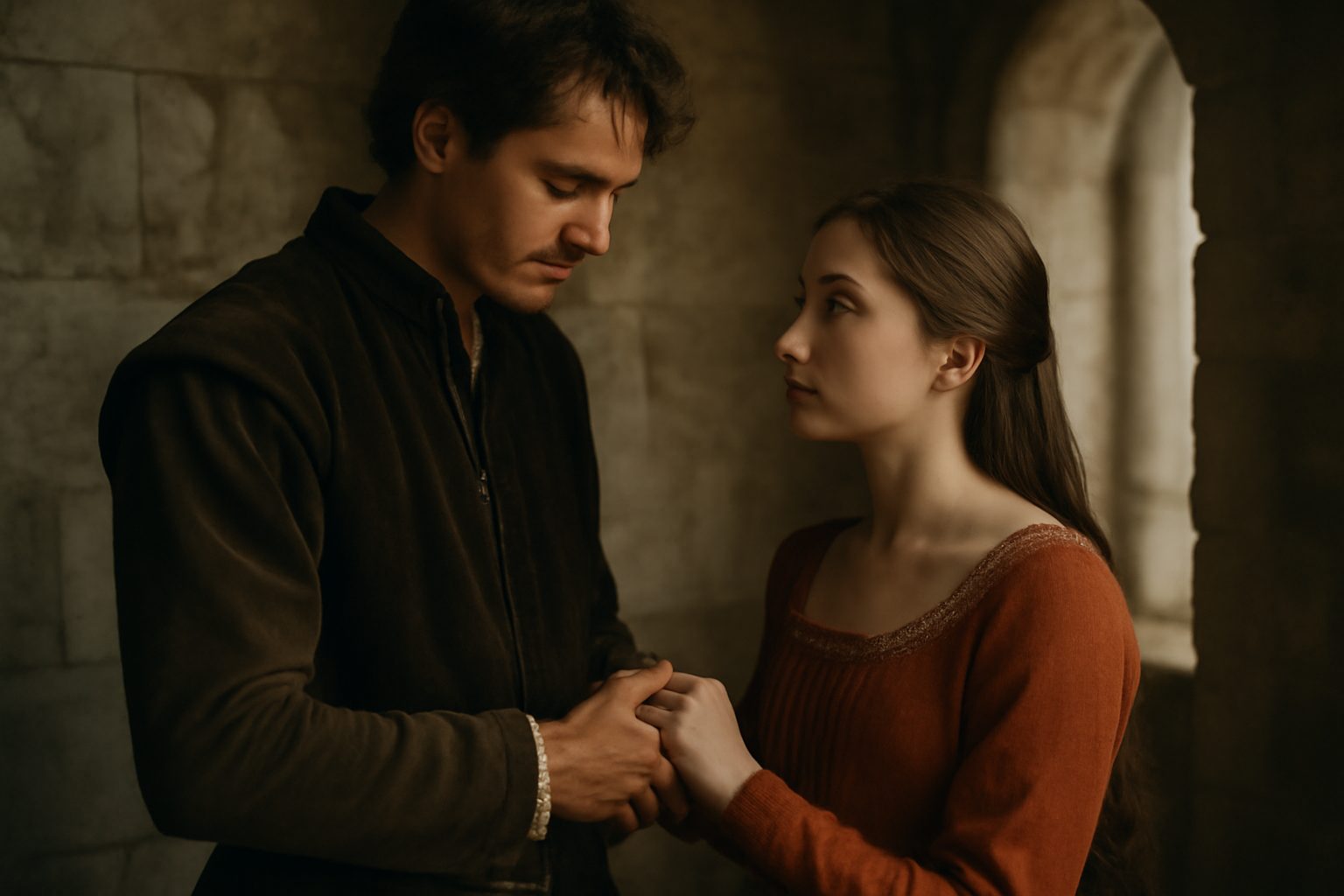
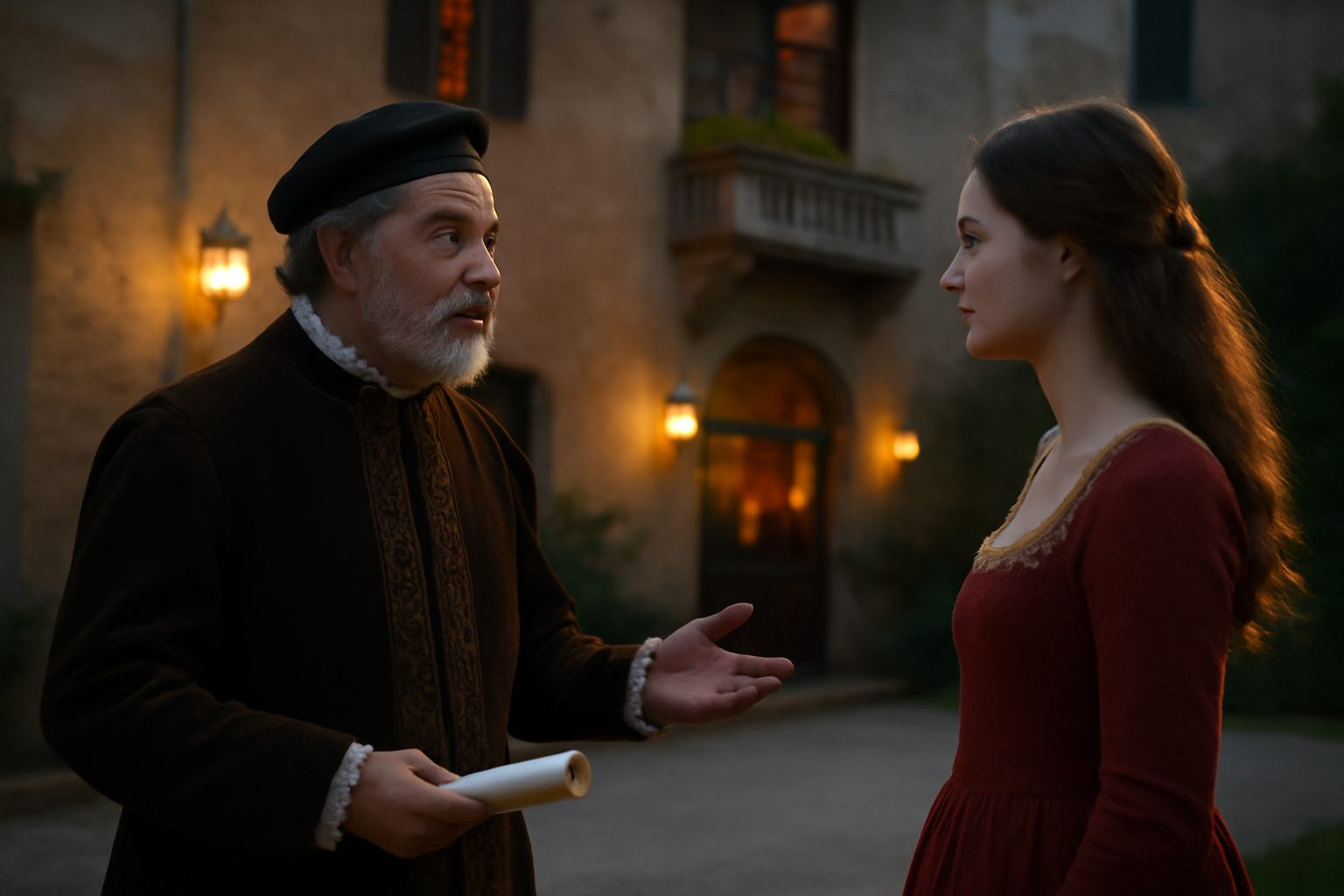
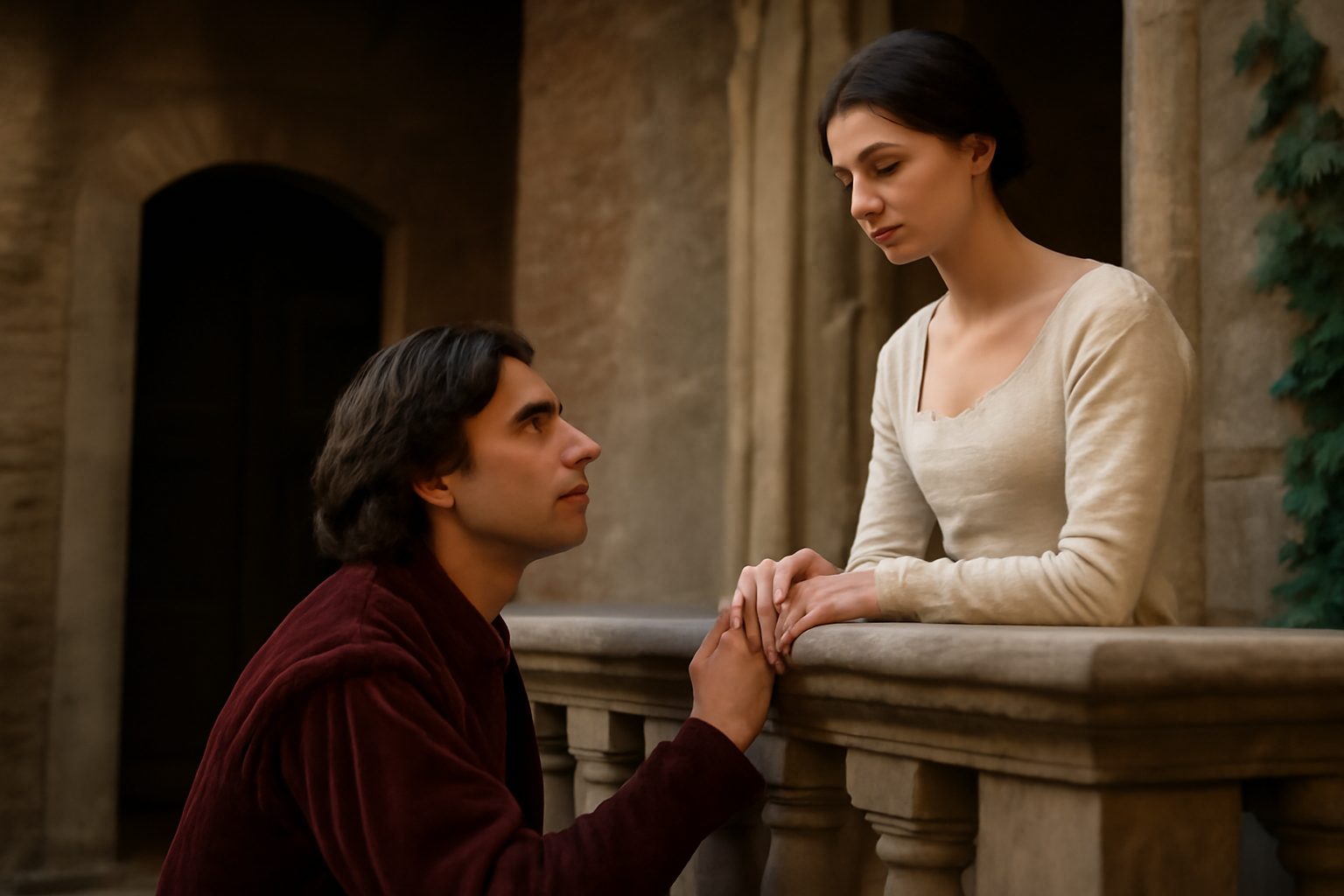
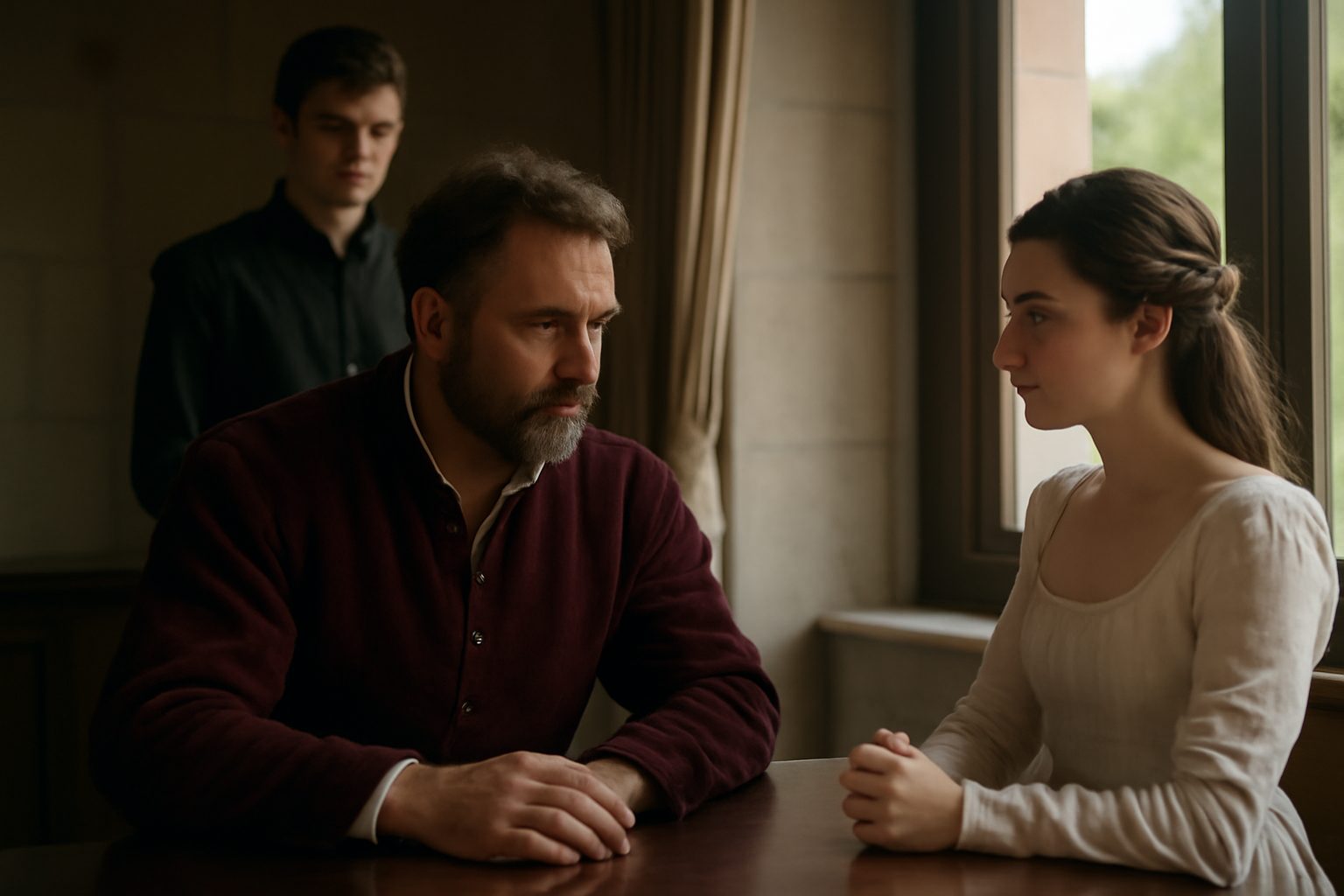
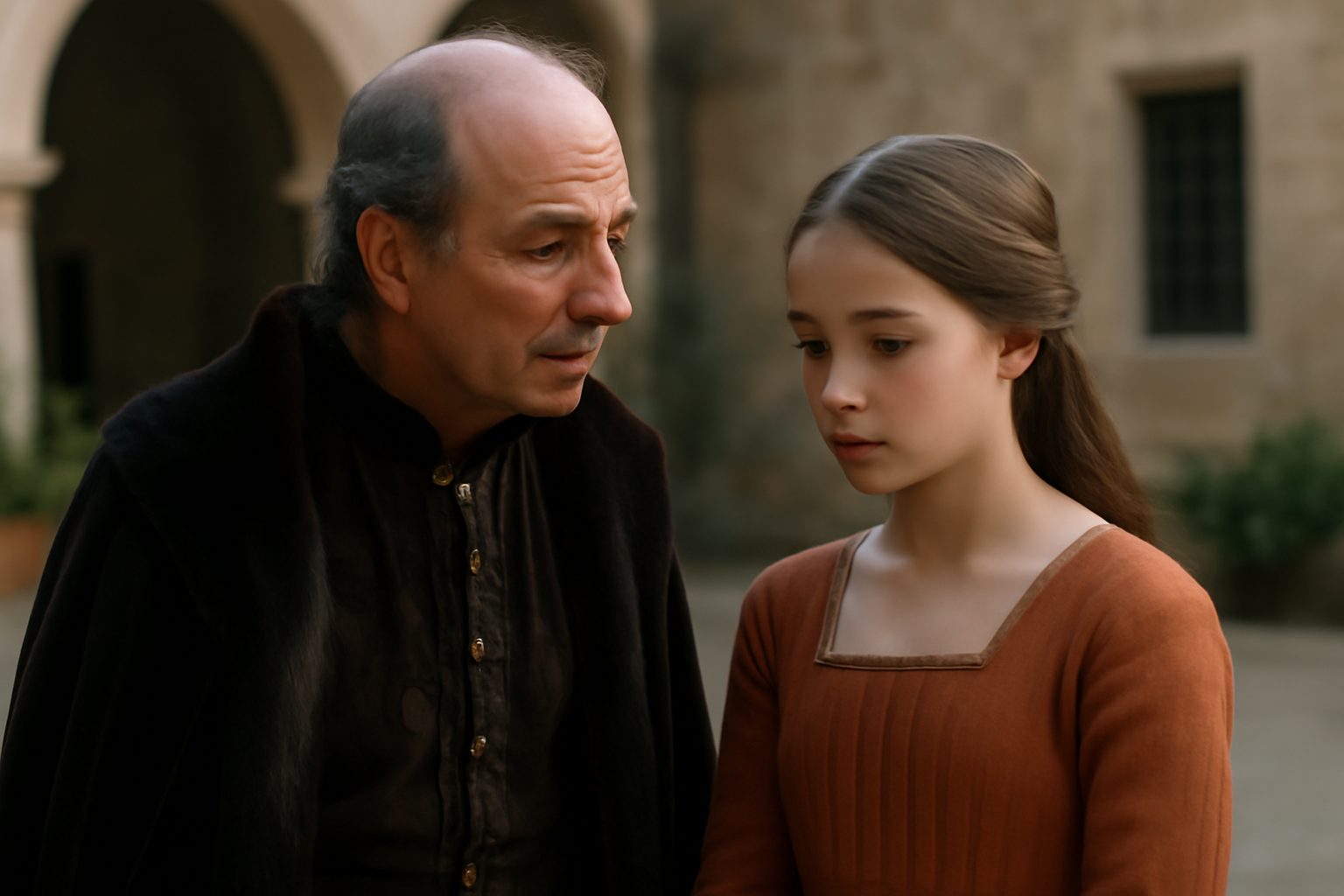
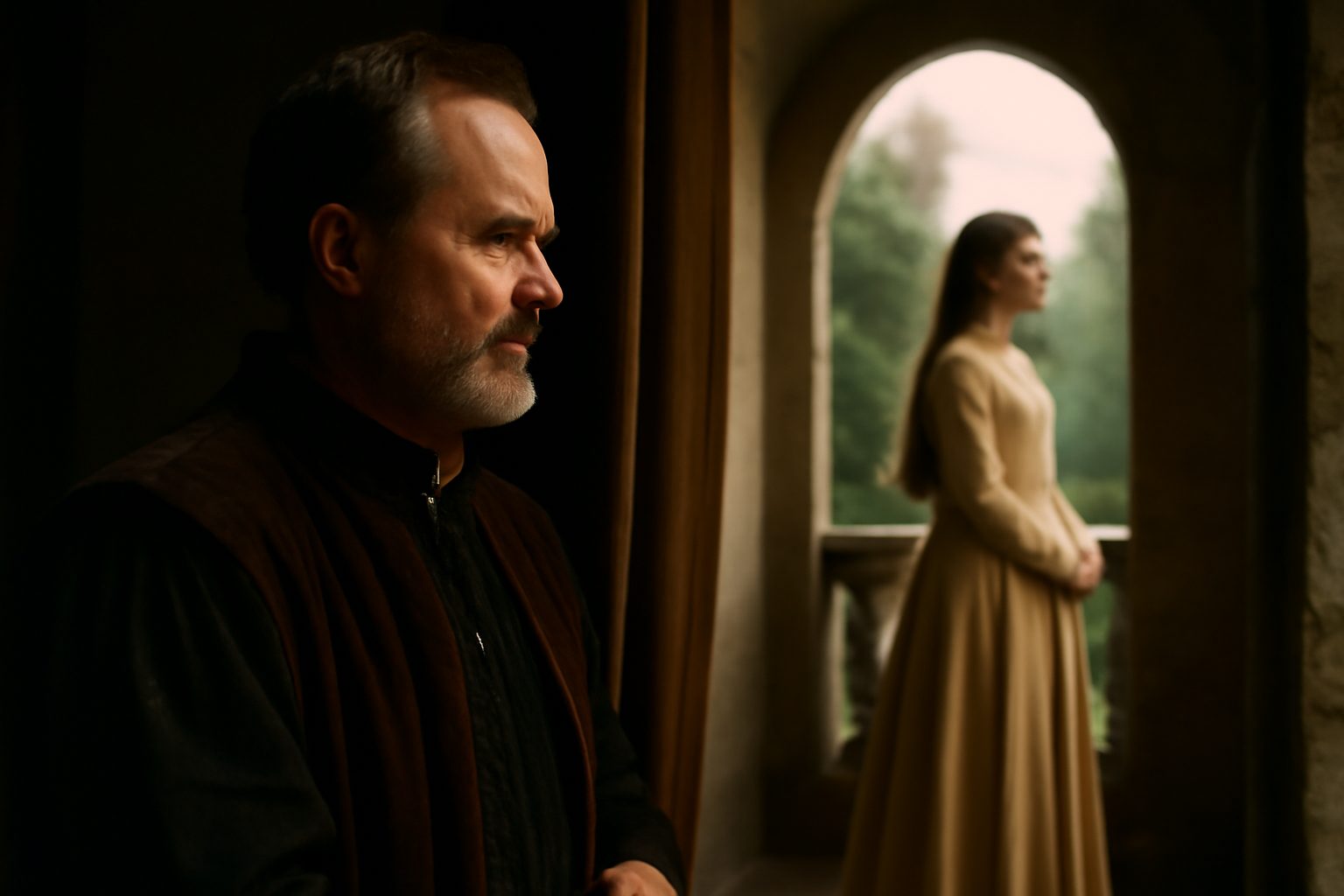
In Act 1, Scene 2 of Romeo and Juliet, Paris speaks to Lord Capulet about marrying Juliet, who is still very young. Capulet, cautious about rushing the union, suggests waiting two more years until Juliet is older and more mature. This line reflects his protective nature and the societal expectations of the time regarding marriageable age.
Capulet: "Let two more summers wither in their pride,"
In modern day english, we would say:
Wait another two years to let her grow up.
Frequently Asked Questions
Who is speaking in this line from Romeo and Juliet?
Capulet
What does Capulet mean by two more summers wither in their pride?
He means two more years must pass
In which act and scene does this line appear?
Act 1, Scene 2
Connections to other verses:
Parental Concern and Juliet's Youth
Capulet's line "Let two more summers wither in their pride" reflects his protective stance on Juliet's youth, directly connecting to his earlier statement "My child is yet a stranger in the world" and "She hath not seen the change of fourteen years". This caution contrasts with Paris's perspective in "Younger than she are happy mothers made", highlighting the tension between youthful marriage and paternal protectiveness.
Consent and Courtship
Capulet’s insistence on waiting two years ties to his emphasis on Juliet’s consent, as seen in "My will to her consent is but a part" and "An she agree, within her scope of choice". This theme of mutual agreement is reinforced by his promise in "Lies my consent and fair according voice", showing his conditional support for Paris’s suit.
The Capulet Feast and Future Opportunities
The mention of time ("two more summers") also anticipates the immediate social event—the feast—where Paris can begin courting Juliet. This connects to Capulet’s invitation in "This night I hold an old accustom'd feast" and his description of the guests in "Such as I love; and you, among the store". The feast serves as a setting for romantic possibilities, echoed in "Among fresh female buds shall you this night", suggesting Juliet is one of many young women Paris might consider.
Foreshadowing and Irony
Capulet’s plan to delay marriage ironically foreshadows the rapid progression of events in the play. His hope that time will allow Juliet to mature ("wither in their pride") contrasts with the haste that ultimately leads to tragedy. This connects subtly to the theme of premature love discussed by Benvolio and Romeo later in the scene, such as in "And too soon marr'd are those so early made", underscoring the dangers of rushed relationships.
Natural Imagery and Time
The phrase "wither in their pride" employs seasonal imagery, paralleling other natural references in the scene, like "When well-apparell'd April on the heel" and "Of limping winter treads". These images evoke cycles of growth and decay, emphasizing Capulet’s desire for natural maturation before marriage.