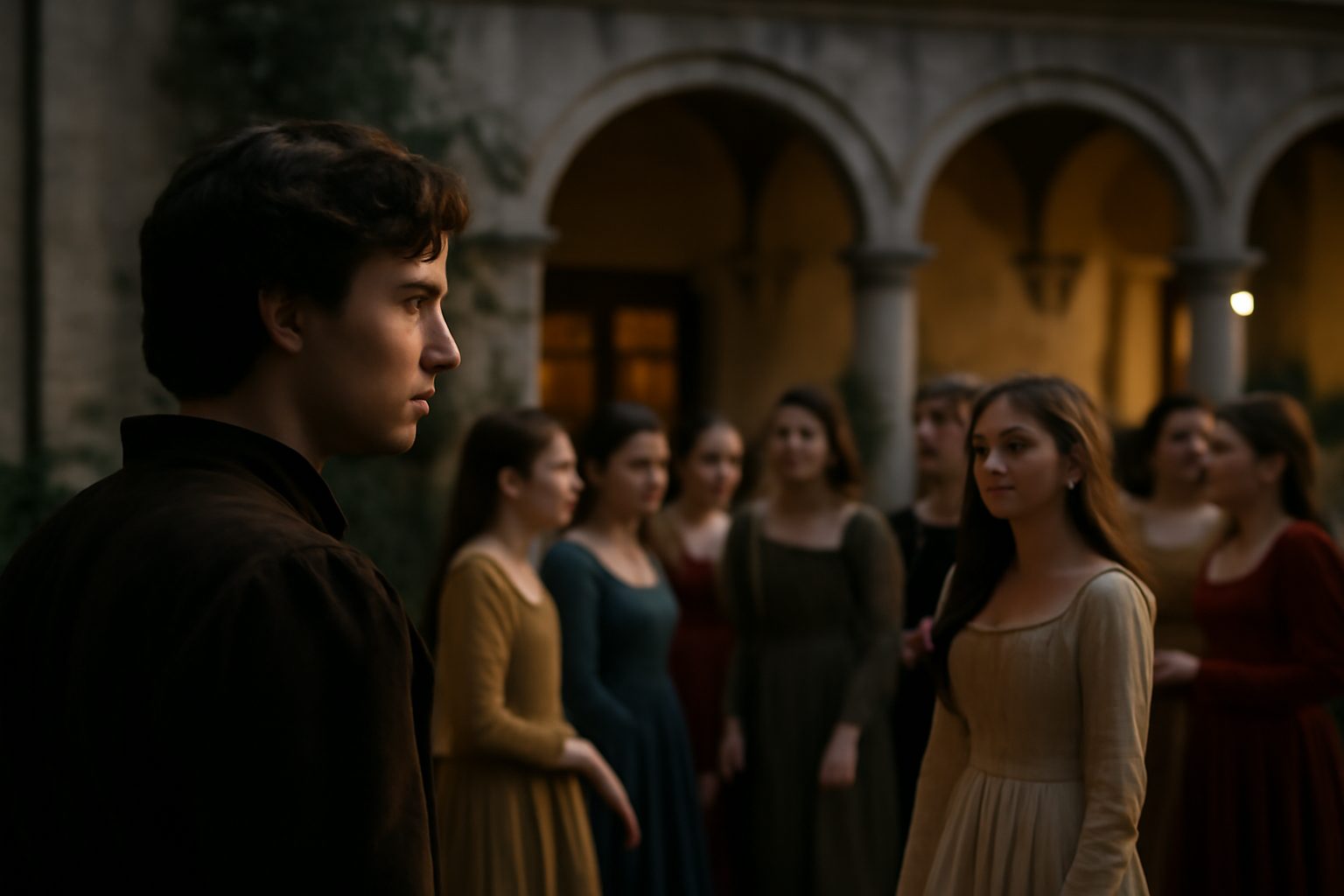
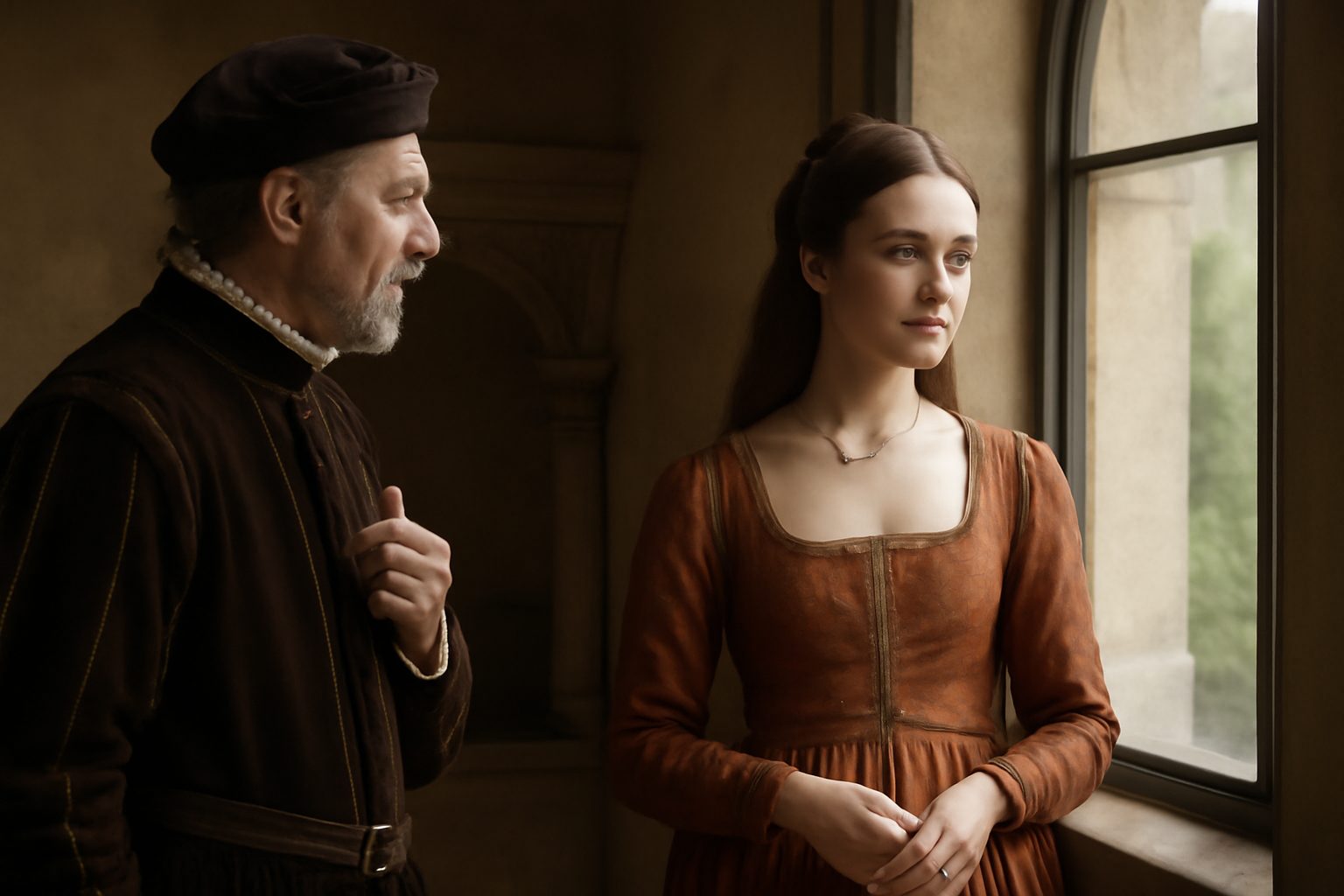
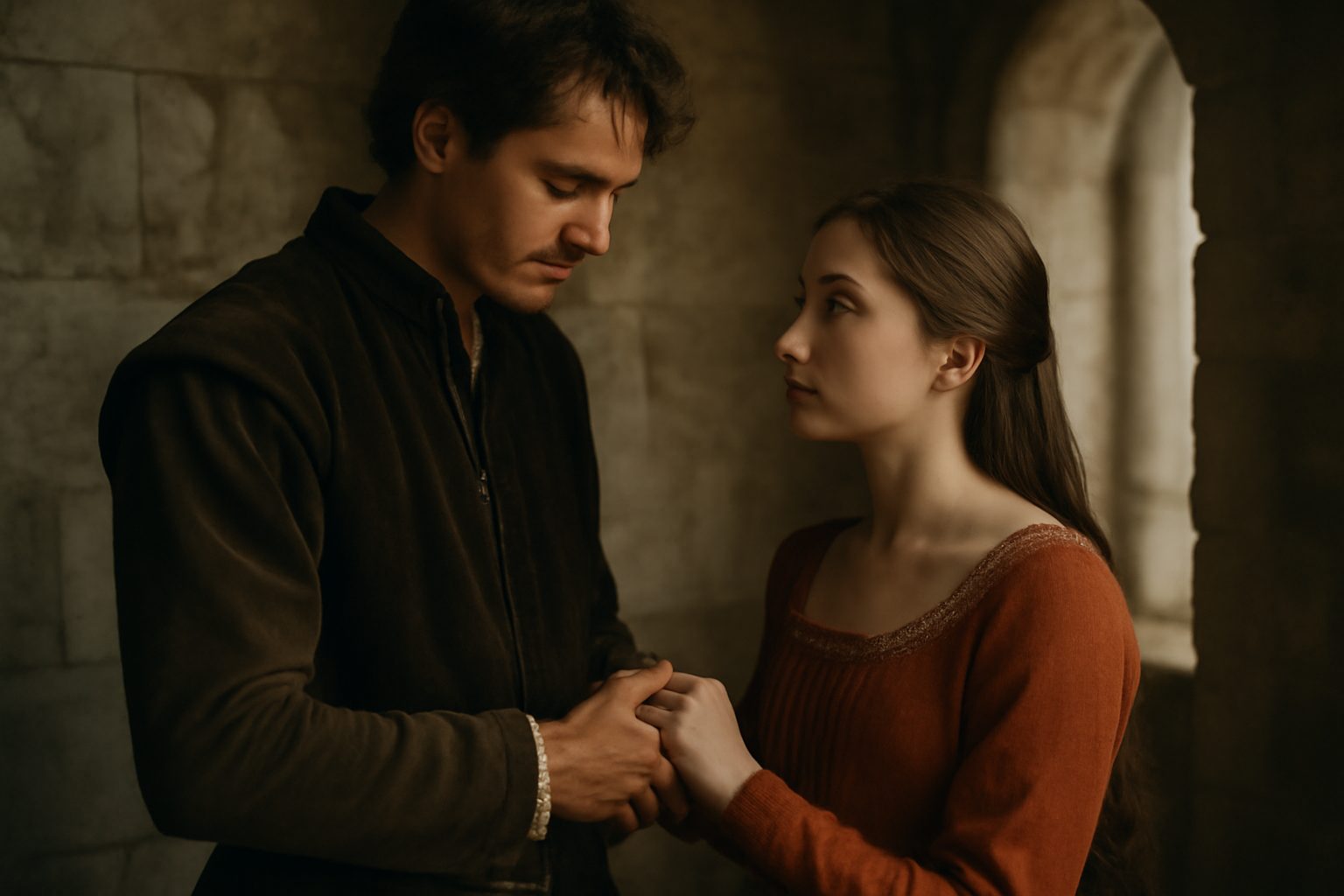
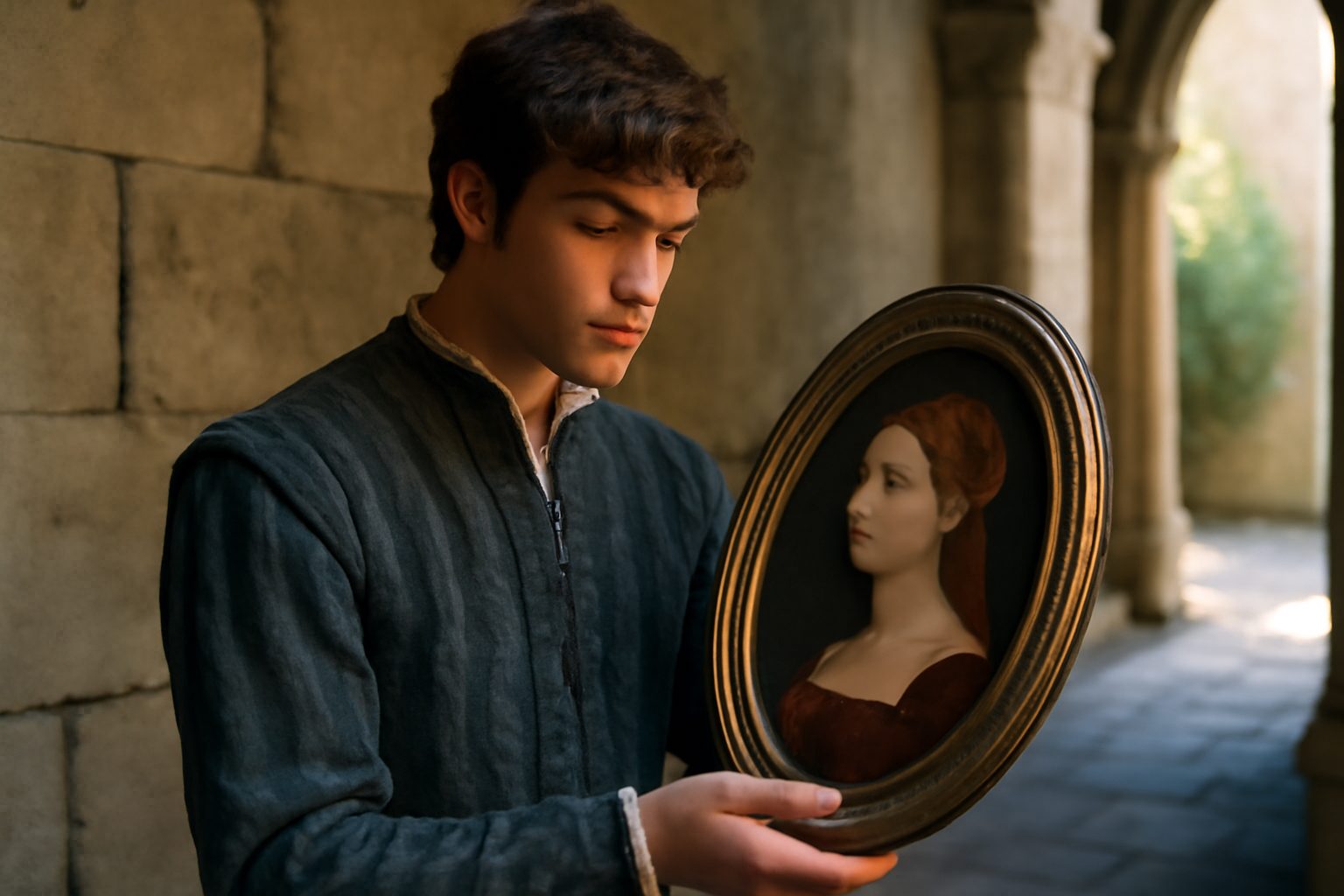
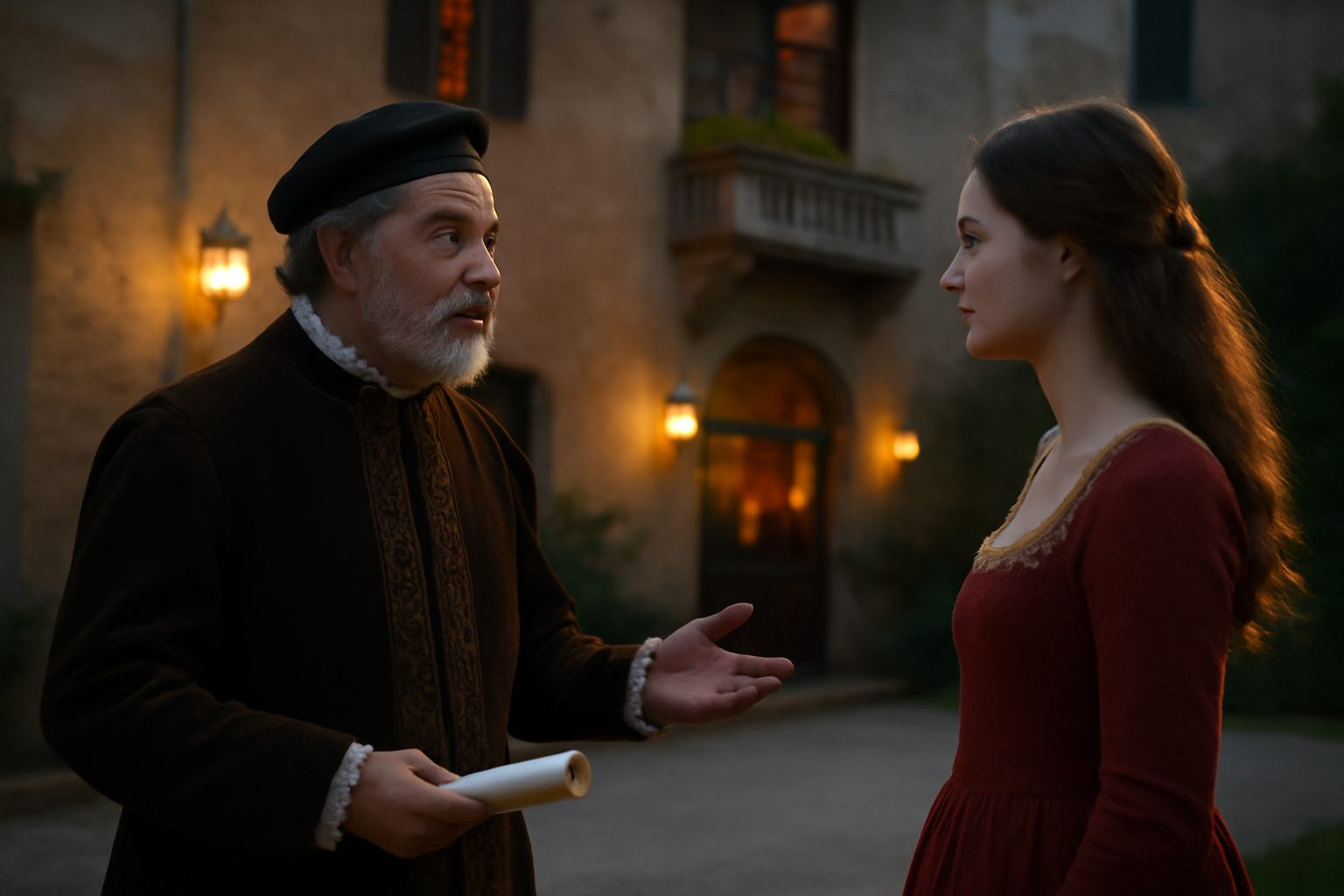
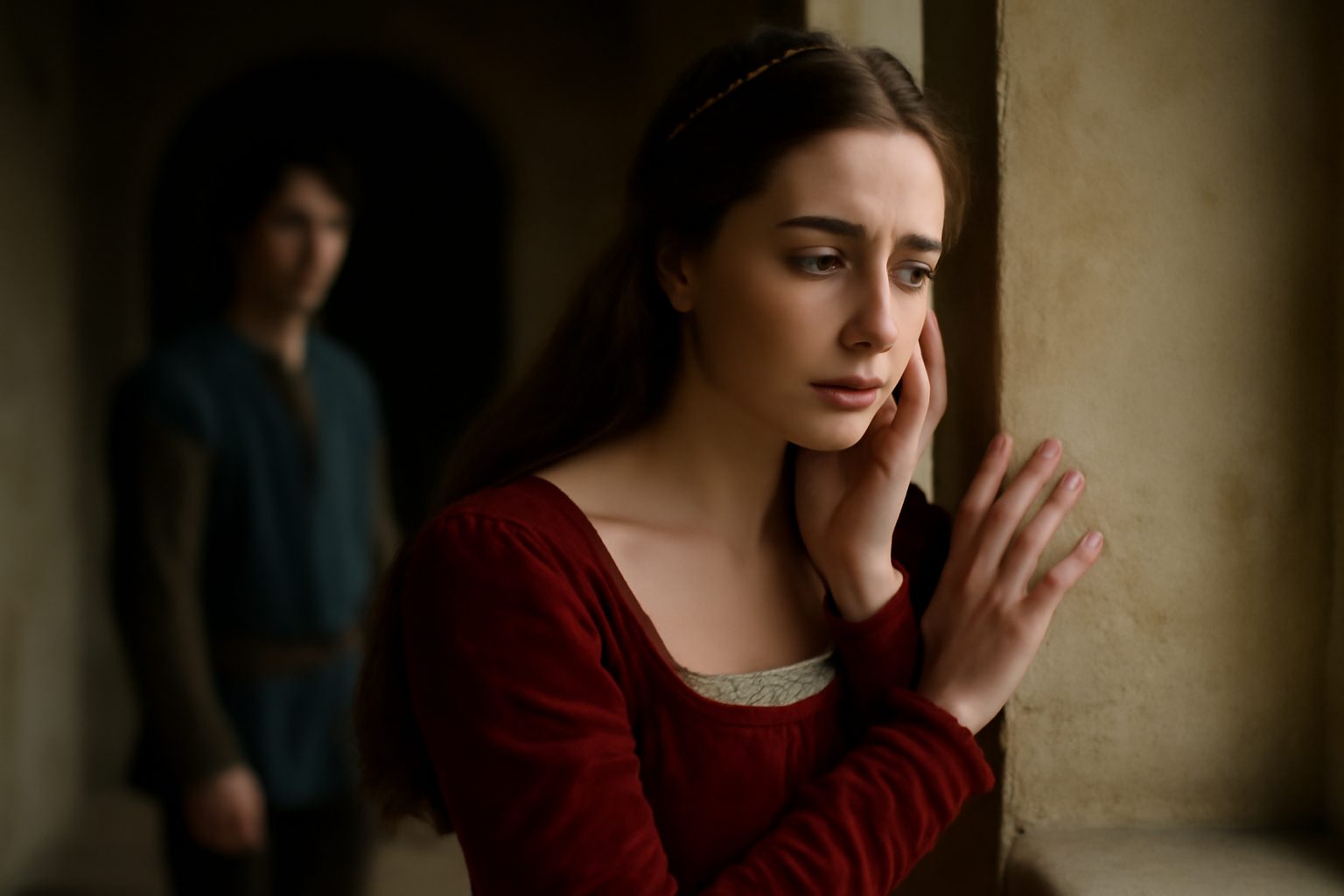
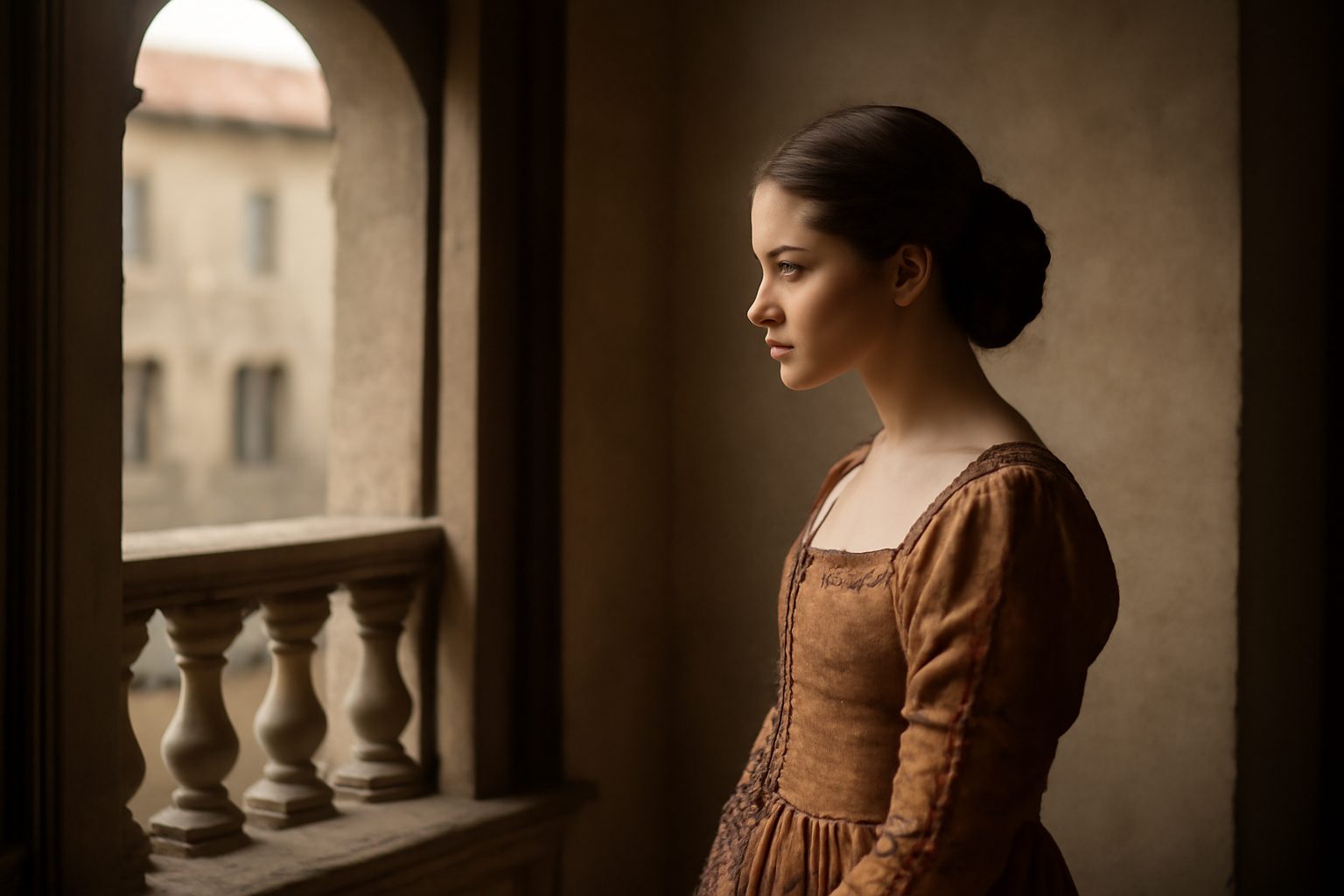
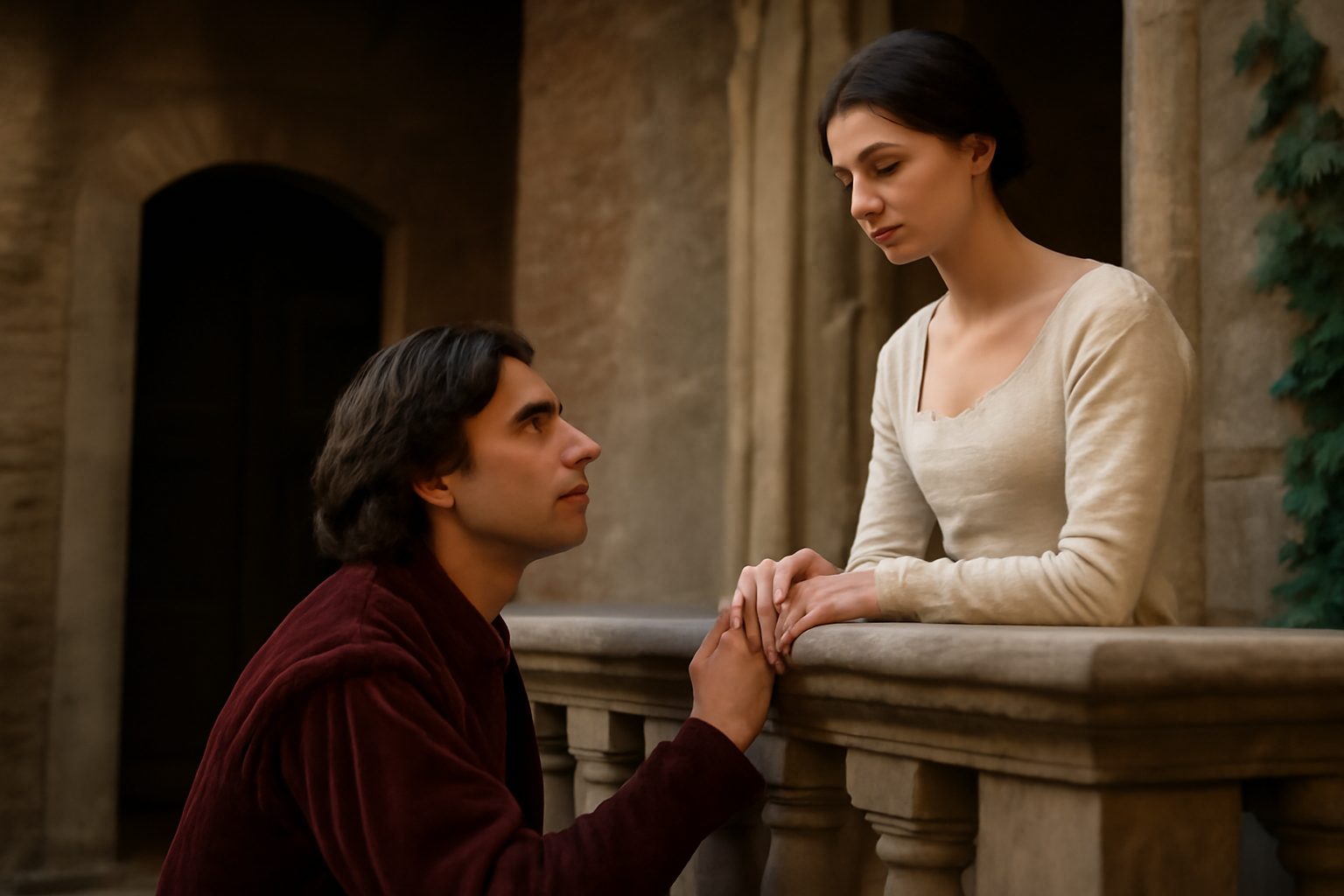
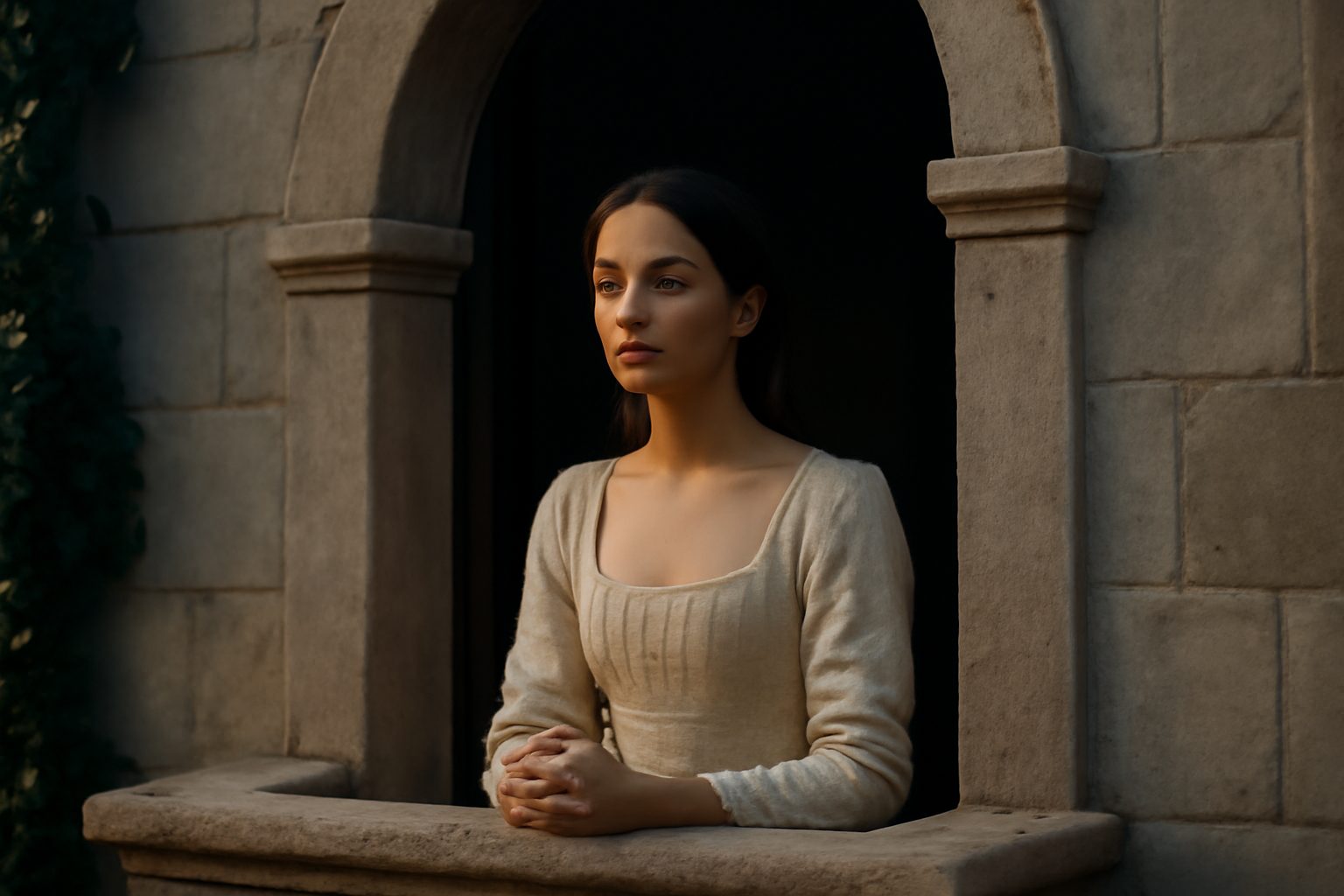
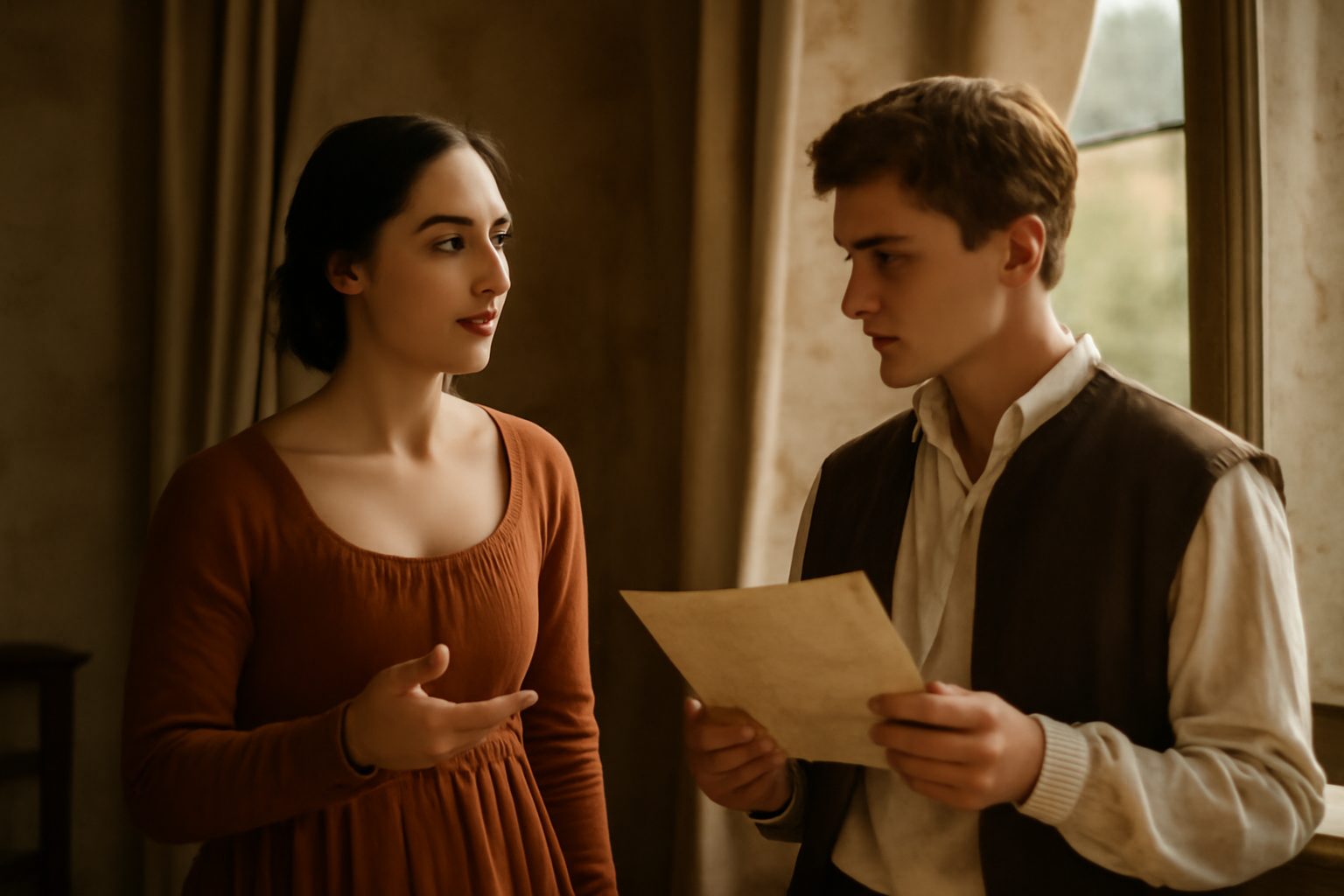
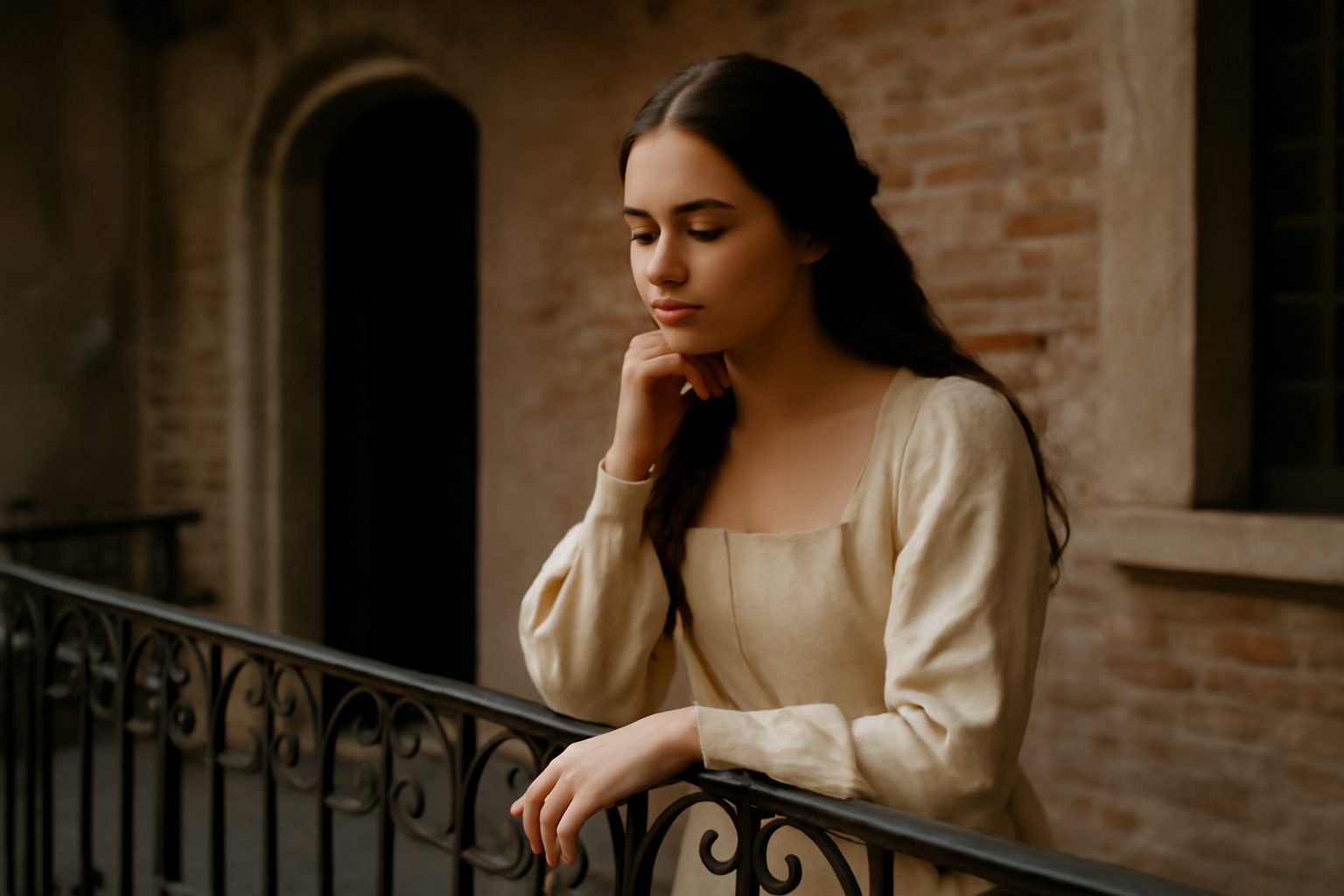
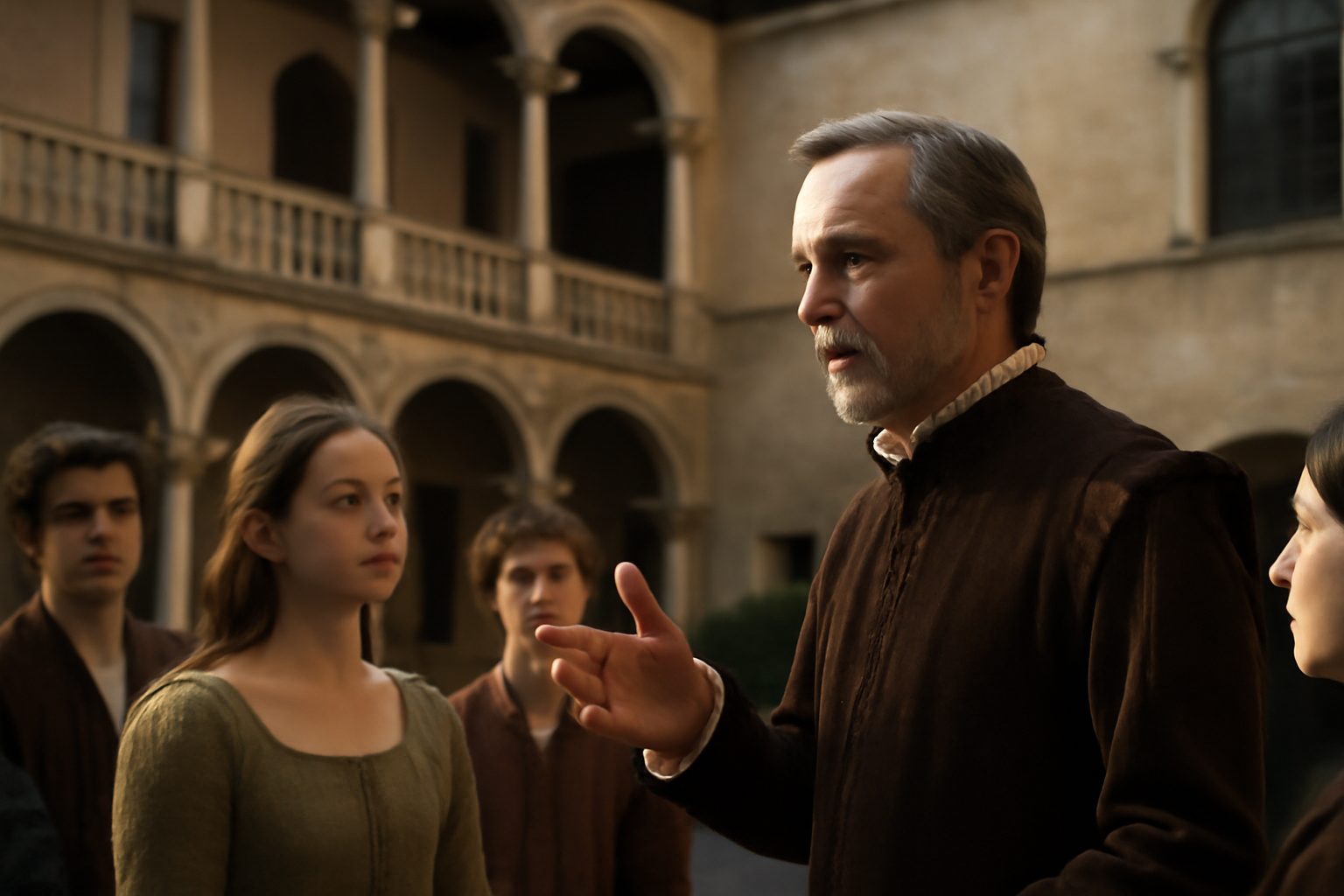
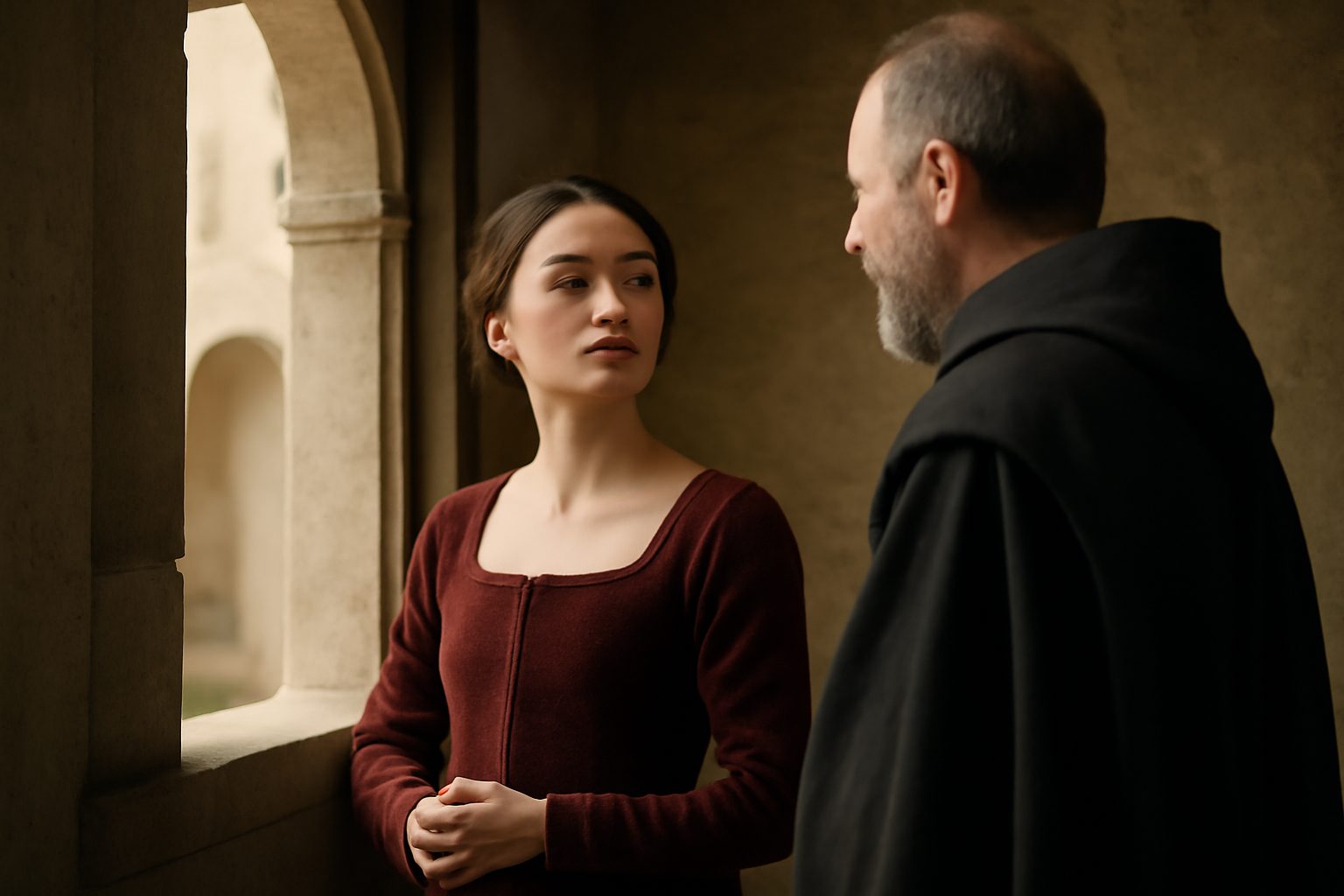
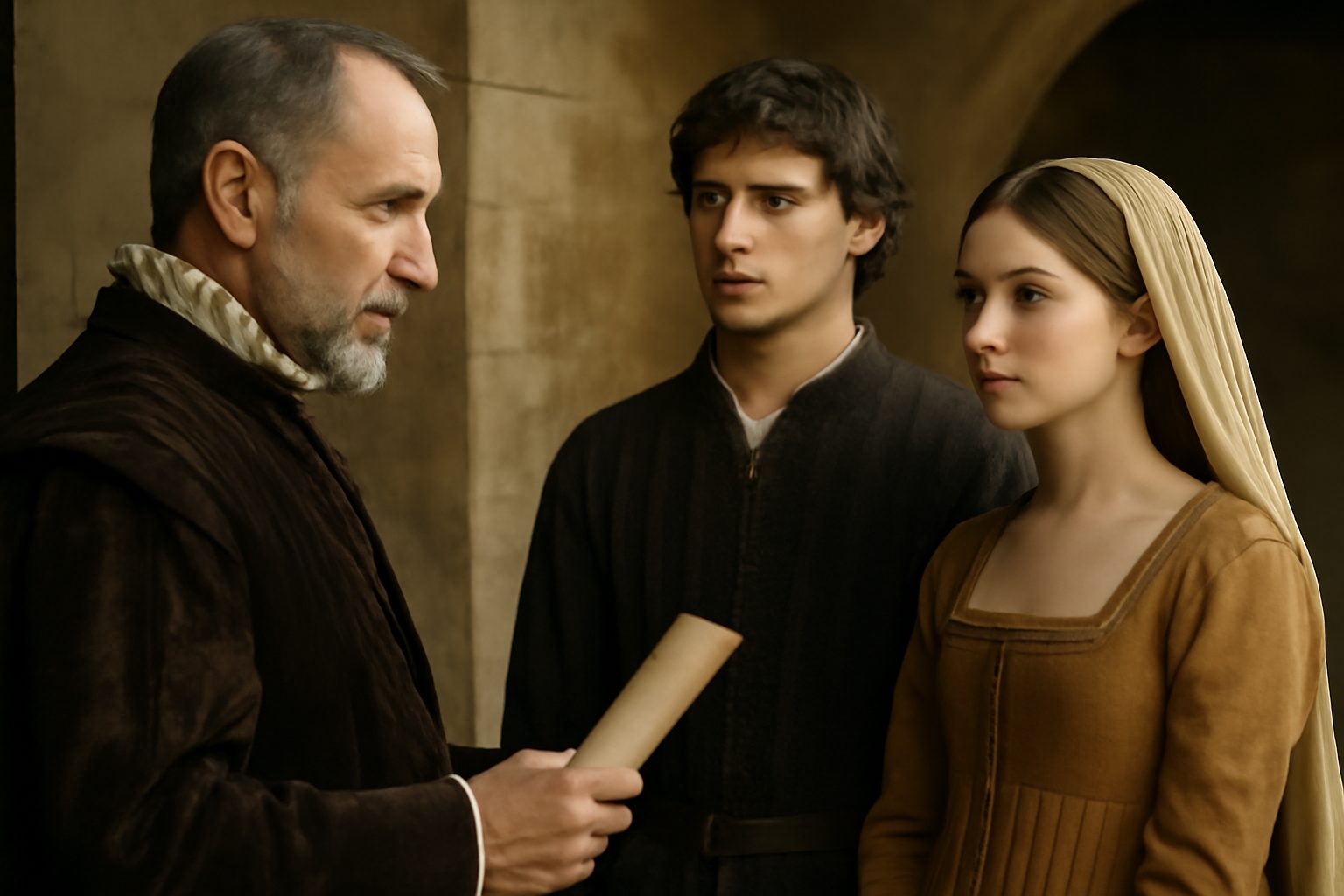
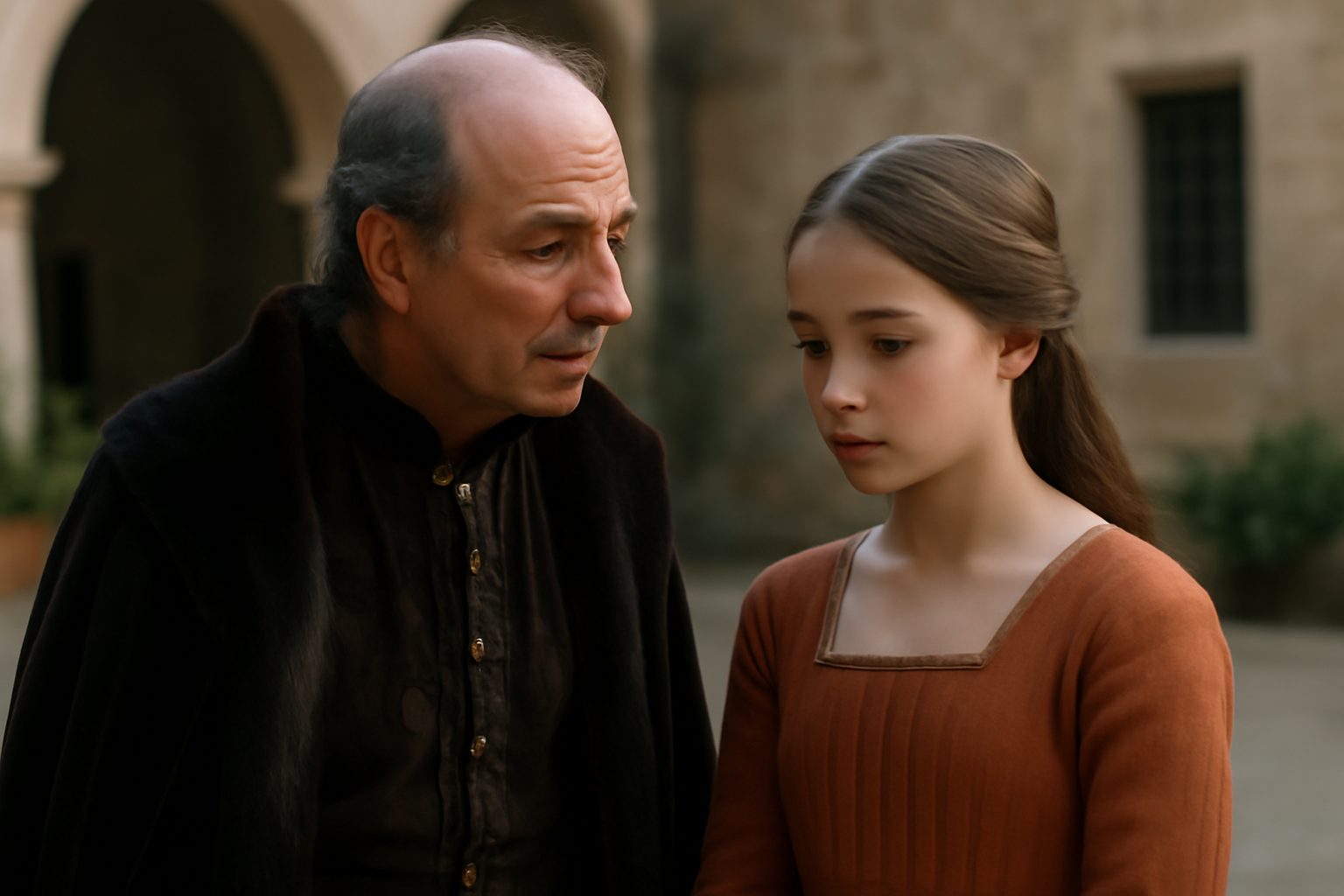
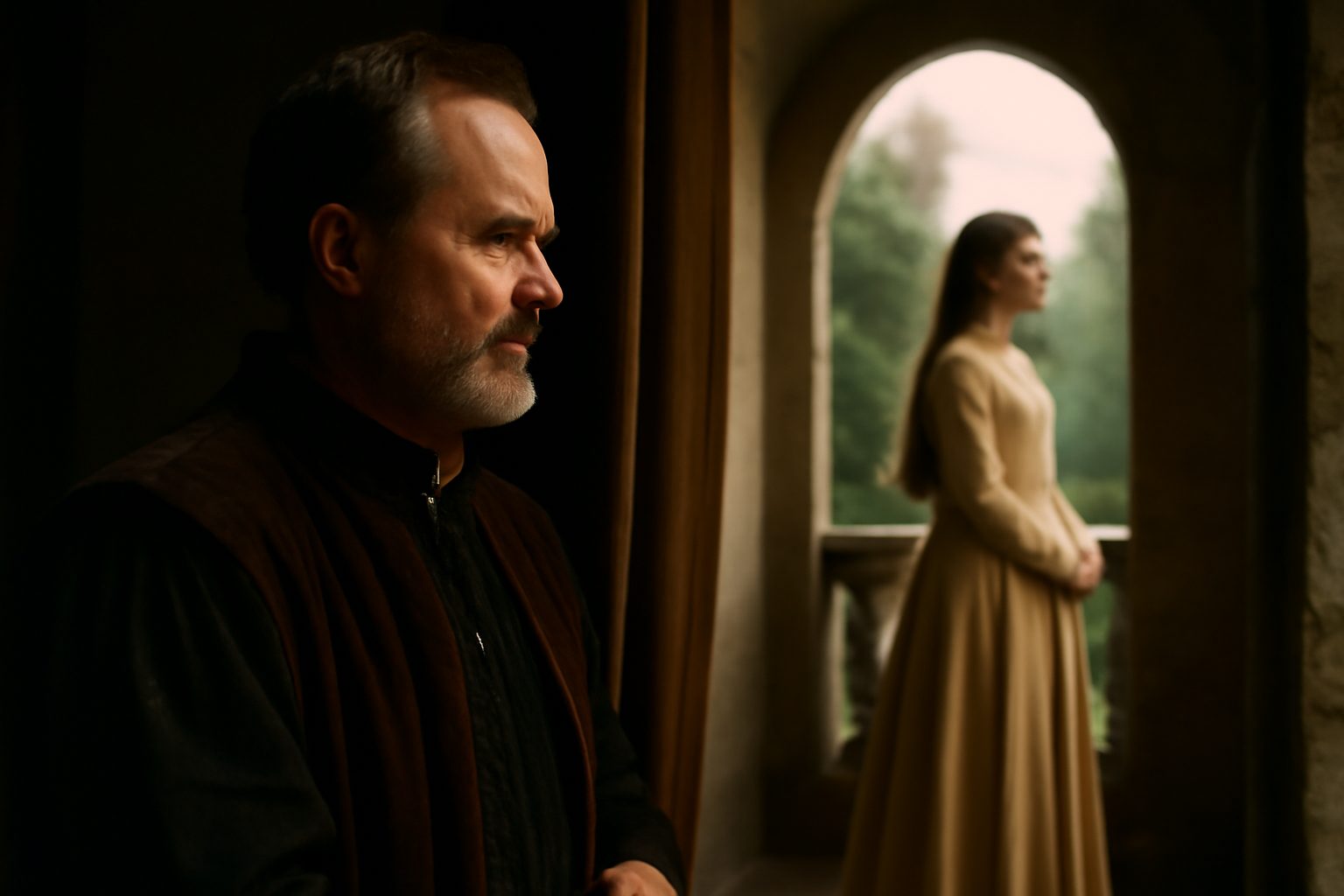
In Act 1, Scene 2 of Romeo and Juliet, Paris speaks to Lord Capulet about marrying Juliet, who is not yet fourteen. Capulet initially urges patience, suggesting that Juliet is too young for marriage, but Paris counters with this line, arguing that girls younger than her have already become mothers. The exchange highlights the societal expectations of the time, where early marriages were common, and foreshadows the pressure Juliet will face regarding her future.
Paris: "Younger than she are happy mothers made."
In modern day english, we would say:
Girls even younger than her have become happy mothers.
Frequently Asked Questions
What does Paris mean when he says that girls younger than Juliet are already happy mothers?
Paris is suggesting that Juliet is old enough to get married and have children, since even younger girls have become mothers.
Connections to other verses:
Connections to "Younger than she are happy mothers made"
The line "Younger than she are happy mothers made" (from Romeo & Juliet Act 1 Scene 2 – Younger than she are happy mothers made) is spoken by Paris as he argues for Juliet's readiness for marriage, despite her youth. This theme of youth, marriage, and societal expectations connects to several other verses in the same scene.
Parental Concerns and Juliet's Youth
Capulet expresses hesitation about Juliet's age in Romeo & Juliet Act 1 Scene 2 – My child is yet a stranger in the world, emphasizing her inexperience. He further notes, "She hath not seen the change of fourteen years" (Romeo & Juliet Act 1 Scene 2 – She hath not seen the change of fourteen years), underscoring her youth. His caution is evident in "Ere we may think her ripe to be a bride" (Romeo & Juliet Act 1 Scene 2 – Ere we may think her ripe to be a bride), which directly contrasts with Paris's assertion about young mothers. Capulet also warns, "And too soon marr'd are those so early made" (Romeo & Juliet Act 1 Scene 2 – And too soon marr'd are those so early made), highlighting the risks of early marriage.
Juliet's Value and Choice
Despite his reservations, Capulet acknowledges Juliet's importance in "She is the hopeful lady of my earth" (Romeo & Juliet Act 1 Scene 2 – She is the hopeful lady of my earth). He insists that her consent is crucial: "My will to her consent is but a part" (Romeo & Juliet Act 1 Scene 2 – My will to her consent is but a part) and "An she agree, within her scope of choice" (Romeo & Juliet Act 1 Scene 2 – An she agree, within her scope of choice), showing a nuanced view of marriage arrangements.
The Feast and Future Possibilities
Capulet invites Paris to a feast where he can compare Juliet to other young women: "Among fresh female buds shall you this night" (Romeo & Juliet Act 1 Scene 2 – Among fresh female buds shall you this night) and "And like her most whose merit most shall be" (Romeo & Juliet Act 1 Scene 2 – And like her most whose merit most shall be). This setting introduces the possibility of new romantic connections, subtly challenging Paris's focus on Juliet alone.
Broader Themes of Love and Comparison
Later, Benvolio advises Romeo to overcome his infatuation by comparing Rosaline to others: "Compare her face with some that I shall show" (Romeo & Juliet Act 1 Scene 2 – Compare her face with some that I shall show) and "And I will make thee think thy swan a crow" (Romeo & Juliet Act 1 Scene 2 – And I will make thee think thy swan a crow). This mirrors Capulet's suggestion to Paris and reinforces the scene's exploration of youthful love and perception.