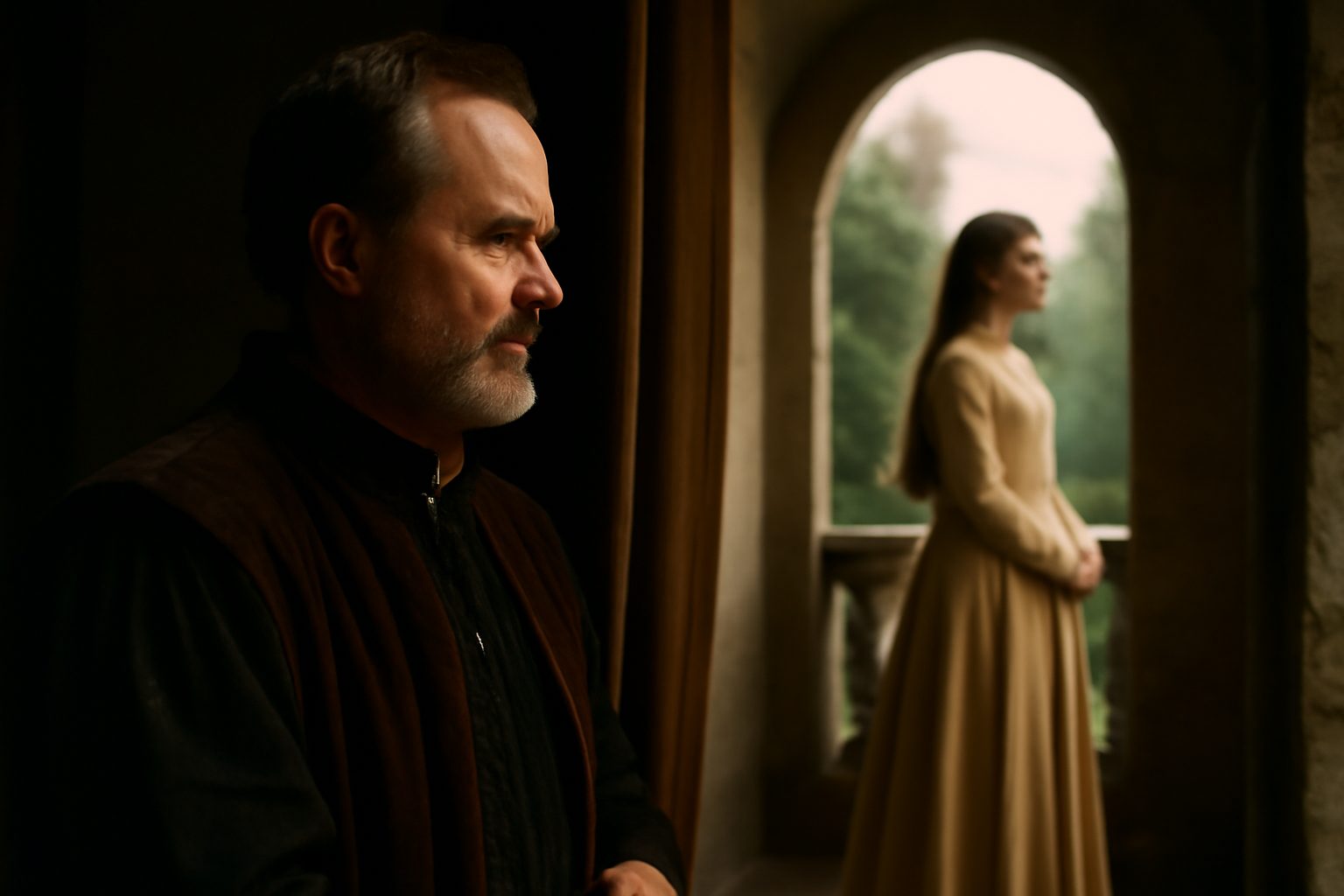
In Act 1, Scene 2 of Romeo and Juliet, Lord Capulet speaks to Paris, a nobleman who wishes to marry Juliet. Though Capulet initially urges Paris to wait, he encourages him to win Juliet's affection, suggesting she must agree to the match. This moment highlights Capulet's seemingly protective stance toward his daughter, though his attitude shifts later in the play.
Capulet: "But woo her, gentle Paris, get her heart,"
In modern day english, we would say:
Go win her over gently, Paris, make her love you.
Frequently Asked Questions
What does Capulet tell Paris to do in this line?
Capulet tells Paris to gently win Juliet's love.
Connections to other verses:
Connections to "But woo her, gentle Paris, get her heart"
This line, spoken by Lord Capulet to Paris, reflects his conditional consent to the marriage proposal, emphasizing Juliet's agency in choosing her partner.
Related Verses on Juliet's Consent and Youth
- Directly preceding this, Capulet states My will to her consent is but a part, reinforcing that his approval is secondary to Juliet's agreement.
- He further clarifies in An she agree, within her scope of choice, underscoring that the final decision rests with Juliet.
- Capulet expresses concern about Juliet's youth in My child is yet a stranger in the world and Ere we may think her ripe to be a bride, indicating his hesitation despite Paris's suit.
Connections to the Feast and Social Context
- The instruction to woo Juliet is set against the backdrop of Capulet's feast, mentioned in This night I hold an old accustom'd feast, where Paris can interact with her.
- Capulet’s description of the guests, including Earth-treading stars that make dark heaven light, highlights the festive atmosphere intended for courtship.
- Paris is urged to compare Juliet with others, as in And like her most whose merit most shall be, aligning with the theme of measured choice.
Thematic Links to Love and Perception
- Benvolio’s advice to Romeo in Compare her face with some that I shall show parallels Capulet’s encouragement for Paris to woo Juliet among others.
- The idea of gaining affection through comparison is echoed in And I will make thee think thy swan a crow, suggesting that perspective alters love’s object.