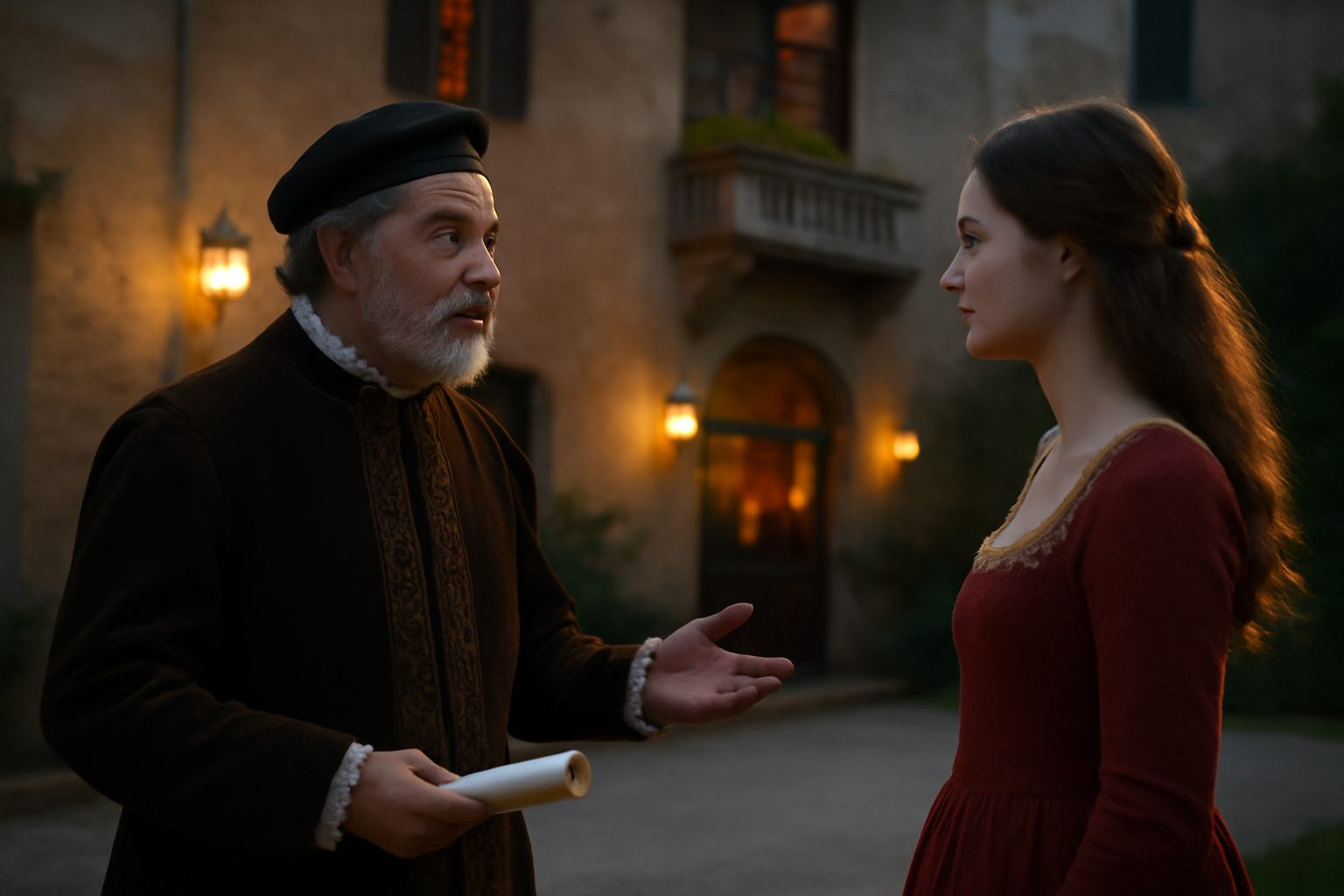
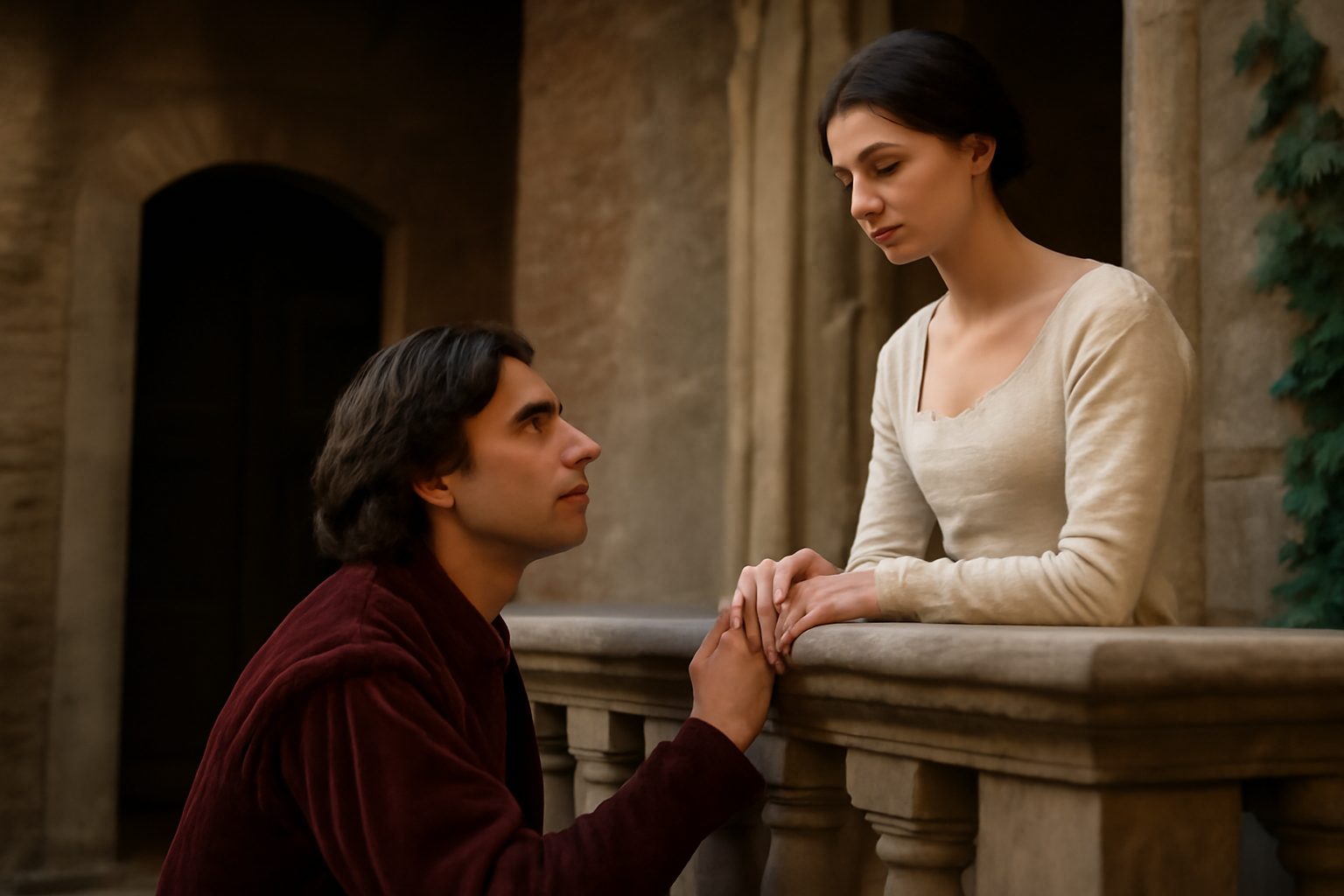
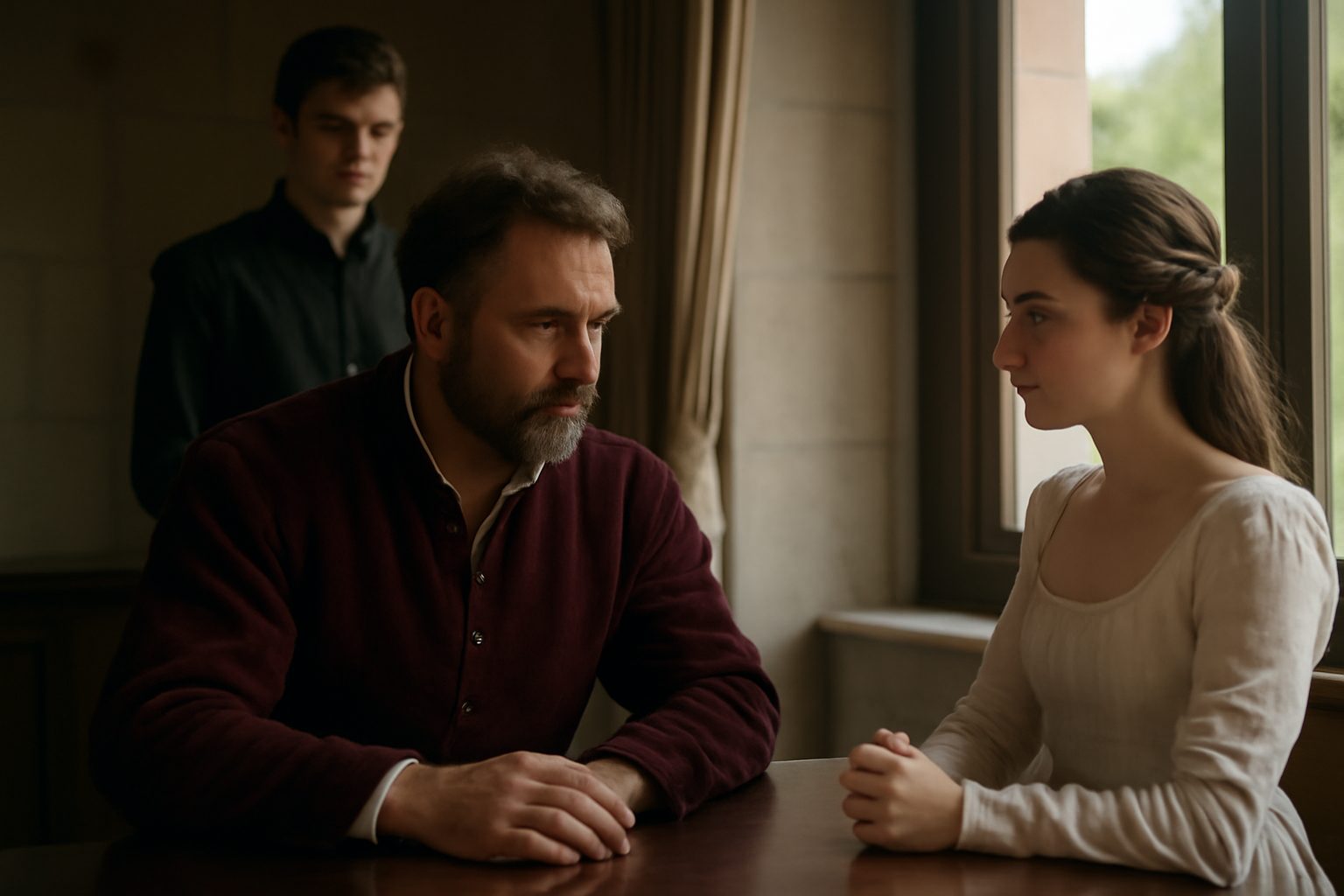
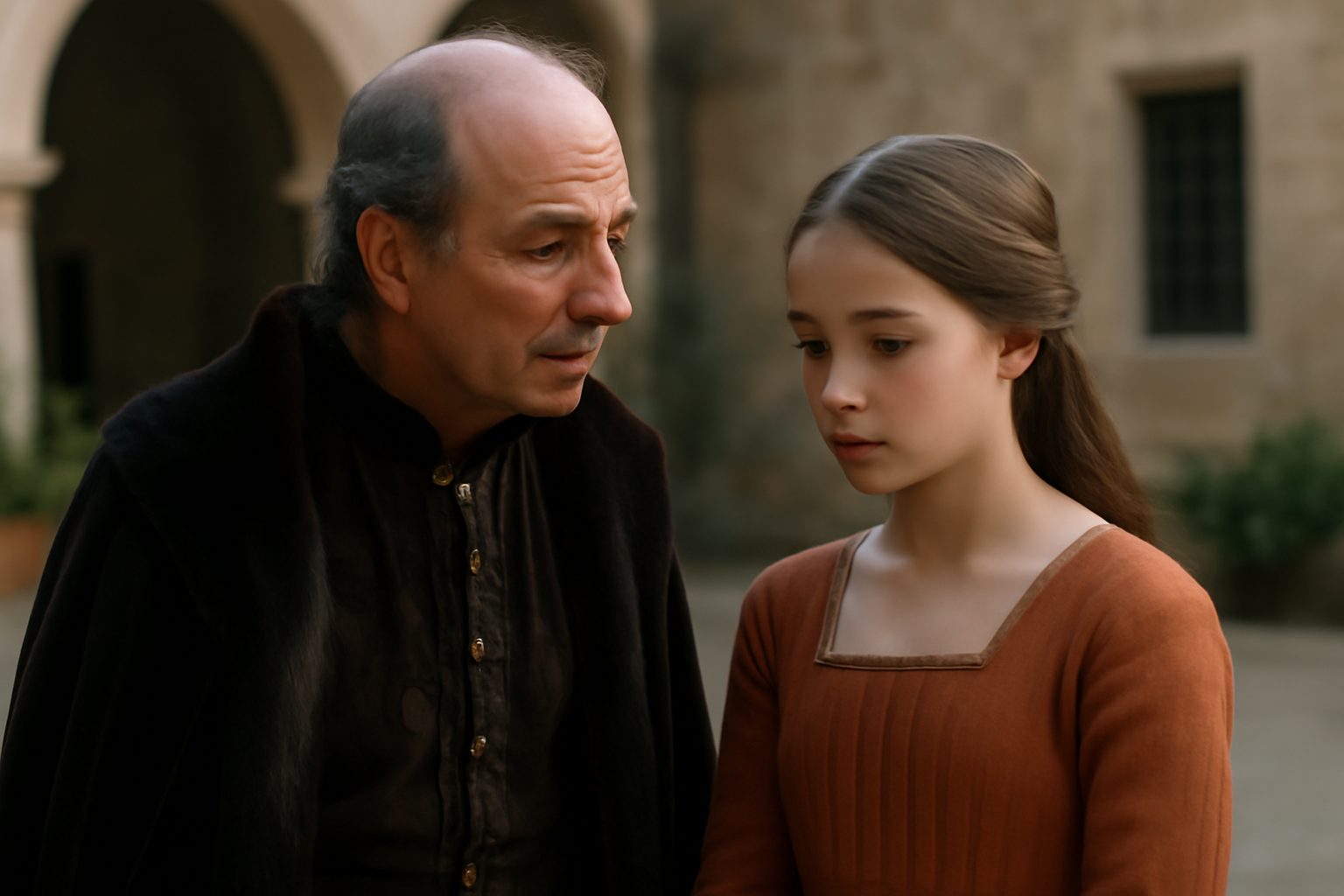
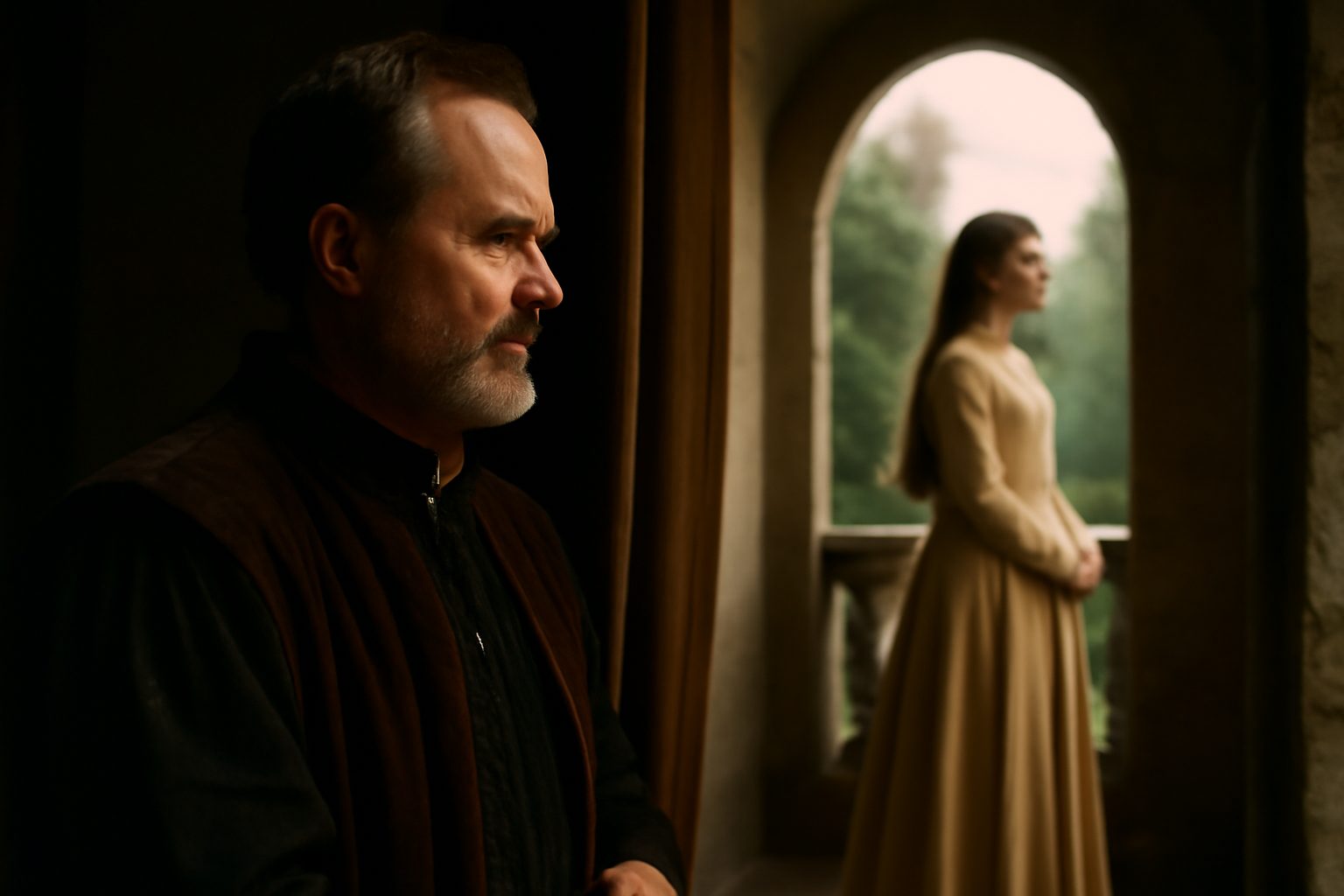
In Act 1, Scene 2 of Romeo and Juliet, Paris speaks to Lord Capulet about marrying Juliet. Capulet, though cautious, agrees to consider the match if Juliet consents, emphasizing that her approval matters within the bounds of his own judgment. This line reflects Capulet's initial stance as a seemingly reasonable father, though his attitude shifts later in the play.
Capulet: "An she agree, within her scope of choice"
In modern day english, we would say:
If she agrees, she can choose from the available options.
Frequently Asked Questions
What does Capulet mean when he says that Juliet can choose within her scope of choice?
Capulet means that Juliet has some freedom to choose her husband, but her options are still limited to suitable and approved candidates.
Connections to other verses:
Connections to "An she agree, within her scope of choice"
The verse "An she agree, within her scope of choice" is spoken by Lord Capulet to Paris, emphasizing Juliet's agency in choosing a husband. This idea is directly linked to My will to her consent is but a part, where Capulet clarifies that his approval is secondary to Juliet's agreement. It also connects to But woo her, gentle Paris, get her heart, underscoring the importance of winning Juliet's affection rather than imposing a marriage.
Parental Concern and Juliet's Youth
Capulet's allowance for Juliet's choice is framed by his protective nature, evident in My child is yet a stranger in the world and Ere we may think her ripe to be a bride, where he expresses caution about her youth. This contrasts with Younger than she are happy mothers made, highlighting societal pressures that Capulet resists by prioritizing Juliet's consent.
The Feast as a Setting for Choice
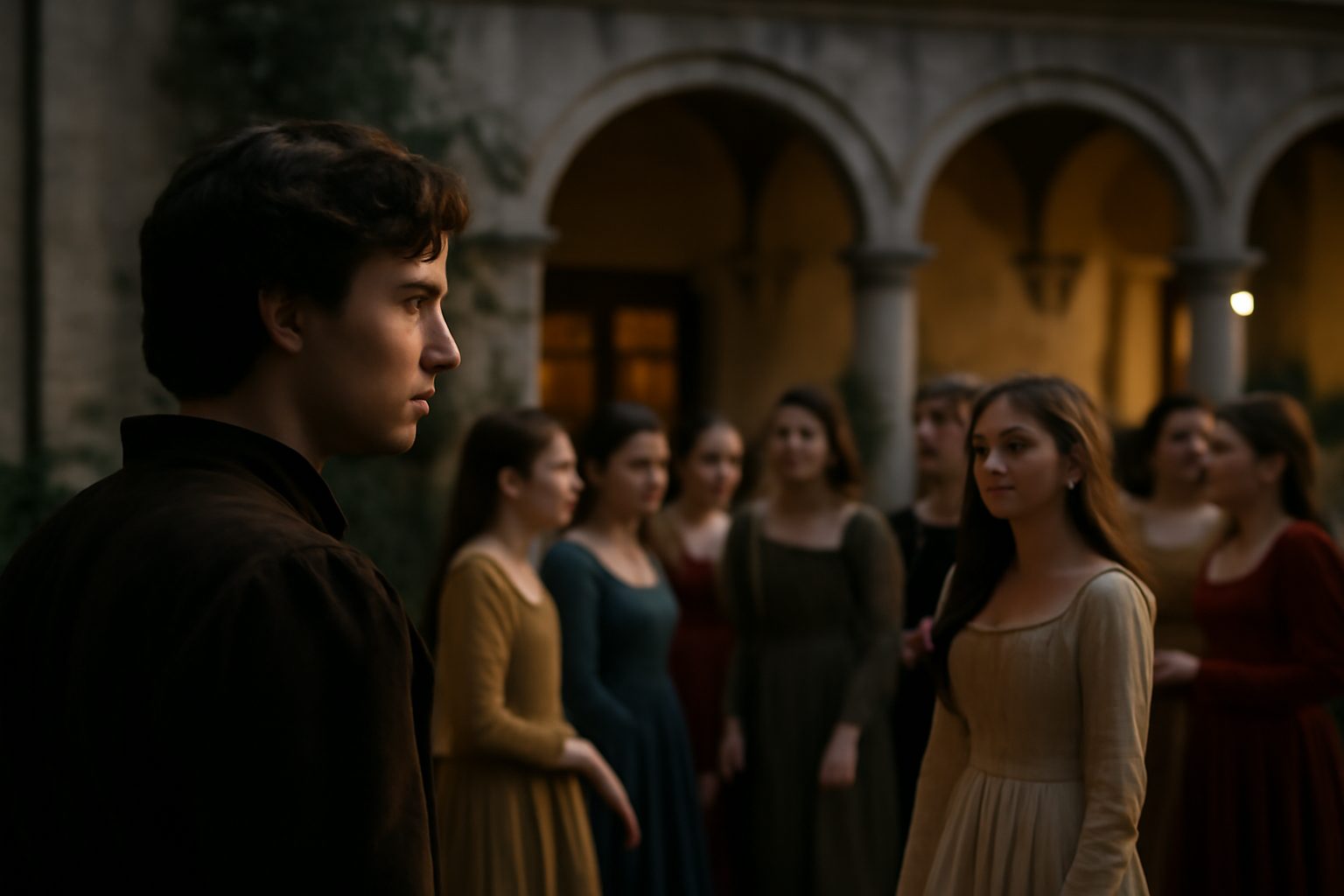
The scene's central event, the feast, serves as a backdrop for romantic possibilities. This night I hold an old accustom'd feast and At my poor house look to behold this night introduce the gathering where Paris can court Juliet. The phrase Among fresh female buds shall you this night suggests Juliet is one of many options, reinforcing the idea of "scope of choice."
Broader Themes of Love and Comparison
Later in the scene, Benvolio advises Romeo to compare Rosaline to other women, echoing the theme of choice: Compare her face with some that I shall show and Your lady's love against some other maid. This mirrors Capulet's permission for Juliet to evaluate suitors, though Romeo's situation is one of personal infatuation rather than parental guidance.