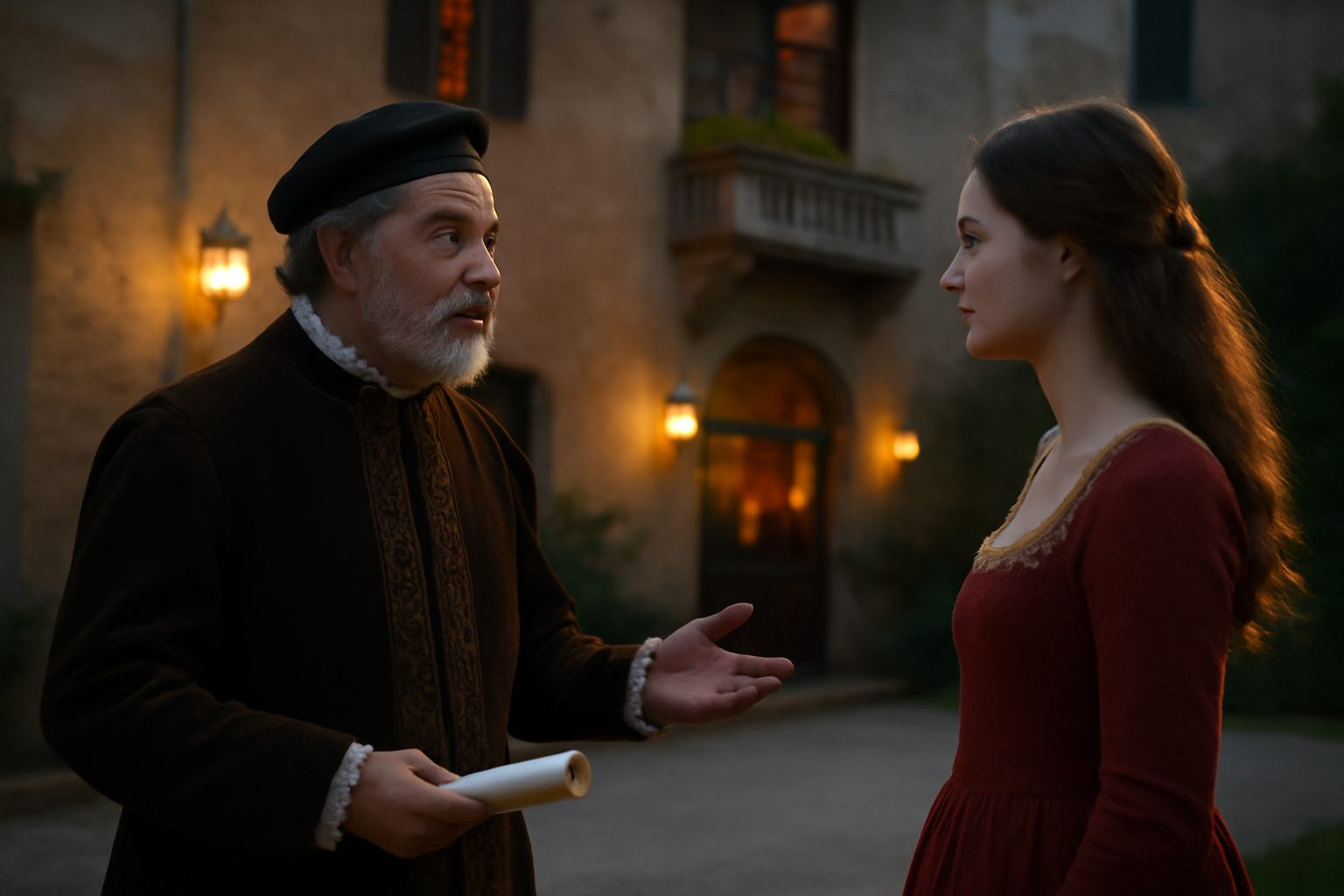
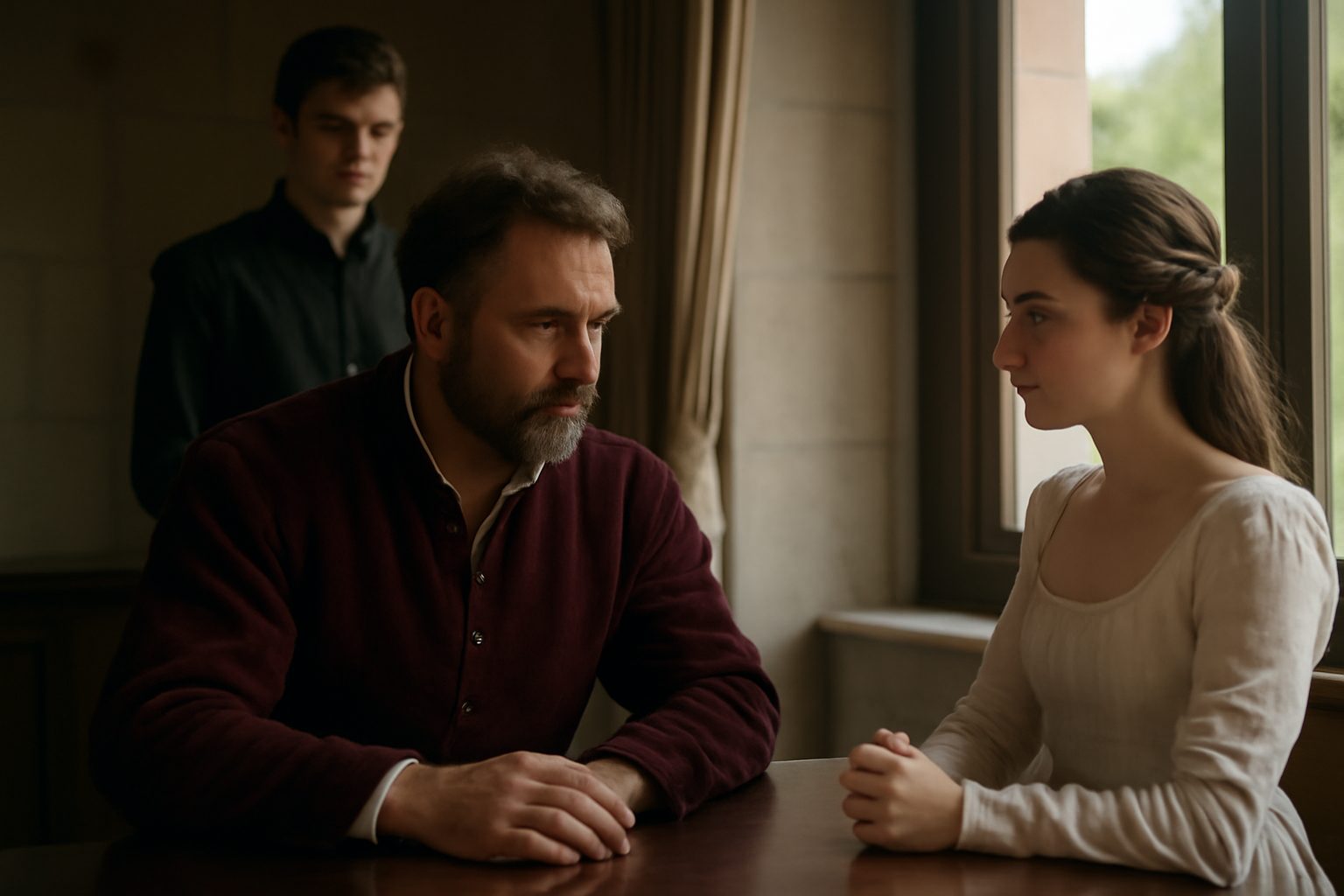
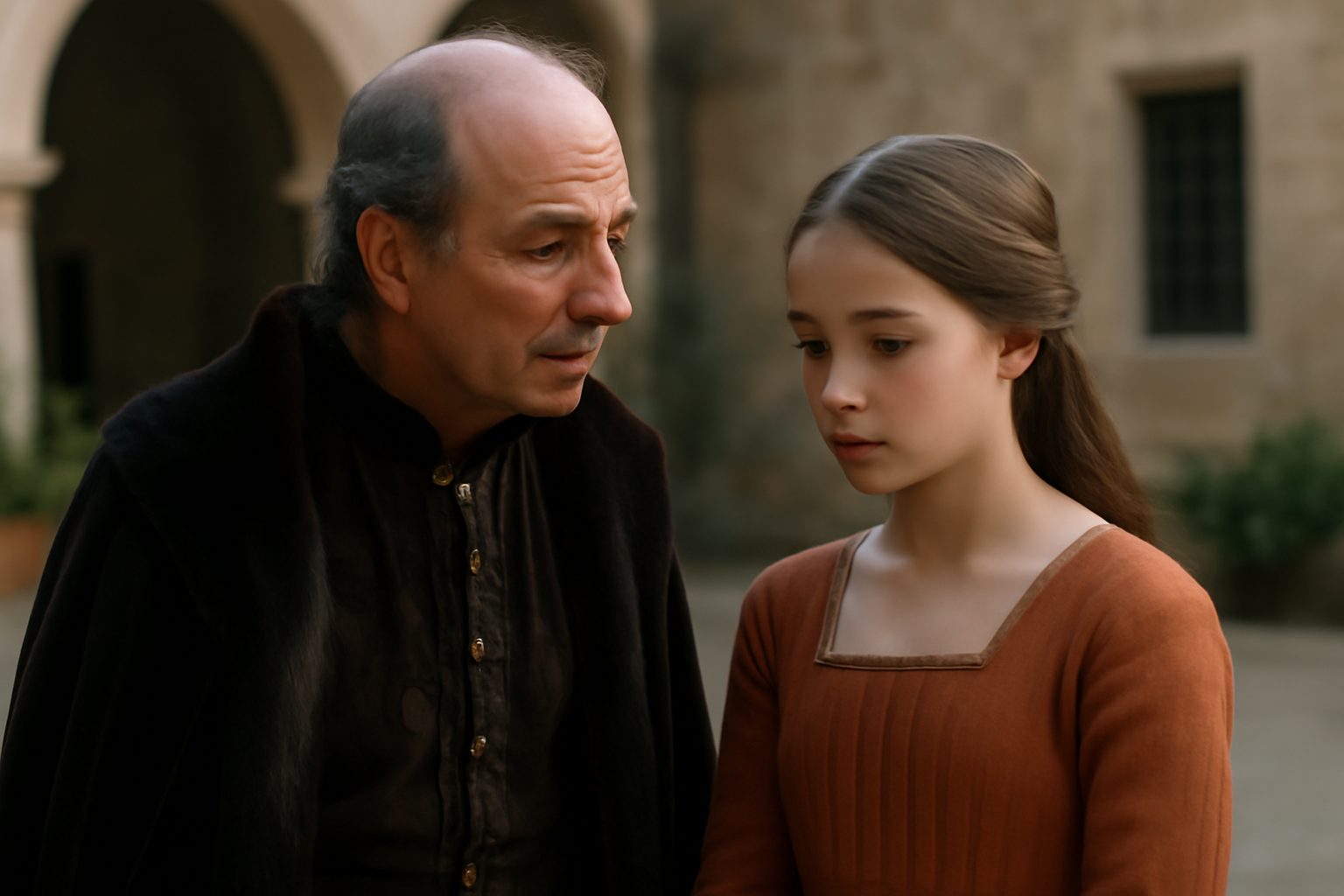
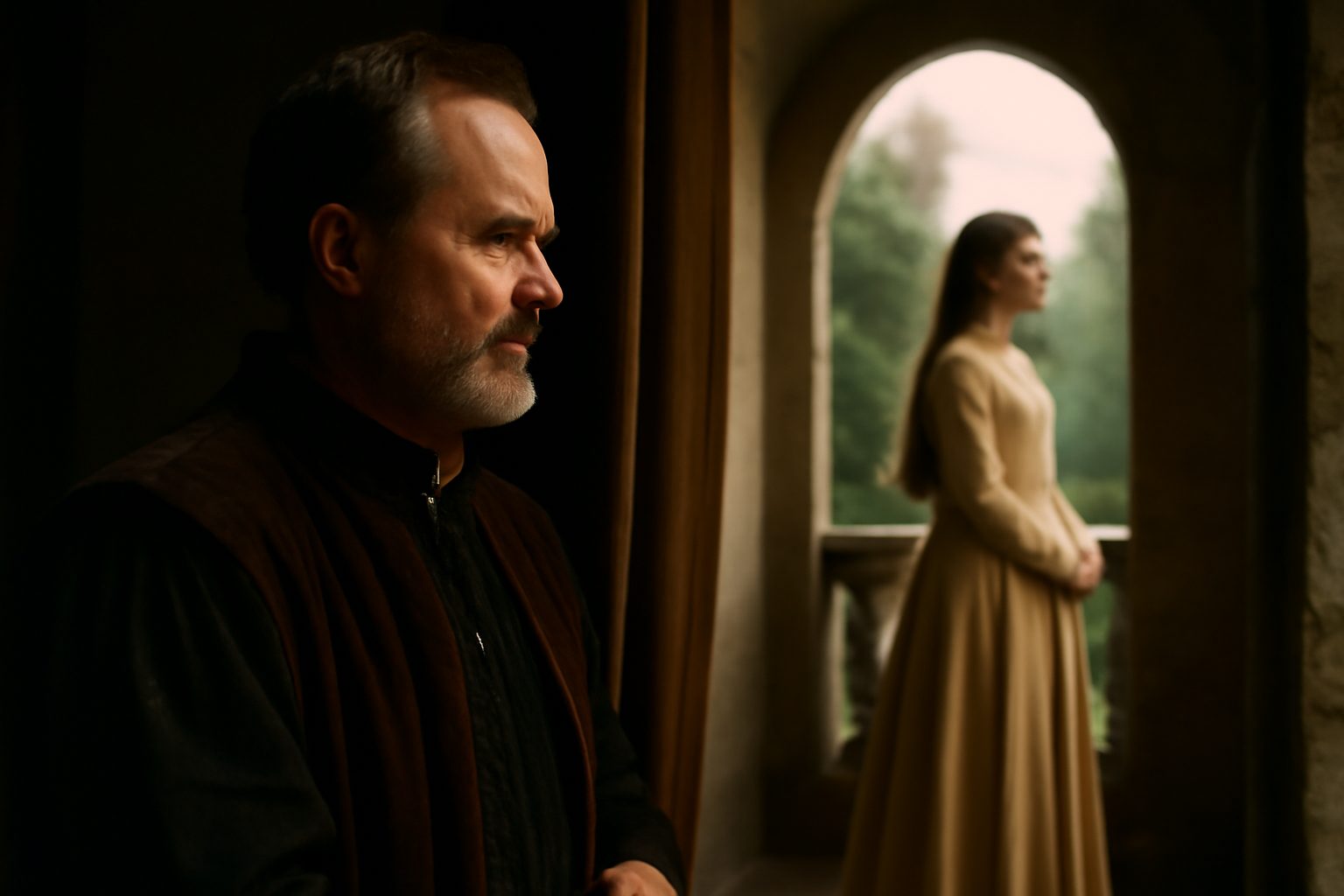
In Act 1, Scene 2 of Romeo and Juliet, Paris presses Lord Capulet for permission to marry Juliet. Capulet, though initially hesitant, suggests that if Paris can win Juliet's affection, he will give his approval. This line reflects Capulet's conditional agreement, emphasizing that his support depends on Juliet's willingness.
Capulet: "Lies my consent and fair according voice."
In modern day english, we would say:
I give my approval and agree wholeheartedly.
Frequently Asked Questions
What does Capulet mean when he says that his agreement and approval will go along with something?
He means that he fully supports and agrees with the decision being discussed.
Connections to other verses:
Connections to "Lies my consent and fair according voice"
Parental Consent and Juliet's Agency
This verse directly connects to "My will to her consent is but a part", where Capulet acknowledges Juliet's agency in marriage decisions. It also relates to "An she agree, within her scope of choice", reinforcing that Juliet's agreement is essential despite patriarchal norms.
Youth and Readiness for Marriage
Capulet's conditional consent reflects his concerns about Juliet's youth, expressed in "My child is yet a stranger in the world" and "Ere we may think her ripe to be a bride". This contrasts with Paris's perspective in "Younger than she are happy mothers made".
The Capulet Feast as Opportunity
The consent is tied to the feast introduced in "This night I hold an old accustom'd feast", where Paris can woo Juliet among other guests ("Among fresh female buds shall you this night"). The feast becomes the setting where Romeo's presence ironically undermines Capulet's plans.
Foreshadowing and Irony
Capulet's promise of consent creates dramatic irony when juxtaposed with Romeo's later presence at the feast ("Sups the fair Rosaline whom thou so lovest"), where he will abandon Rosaline for Juliet—the very match Capulet would never consent to freely.