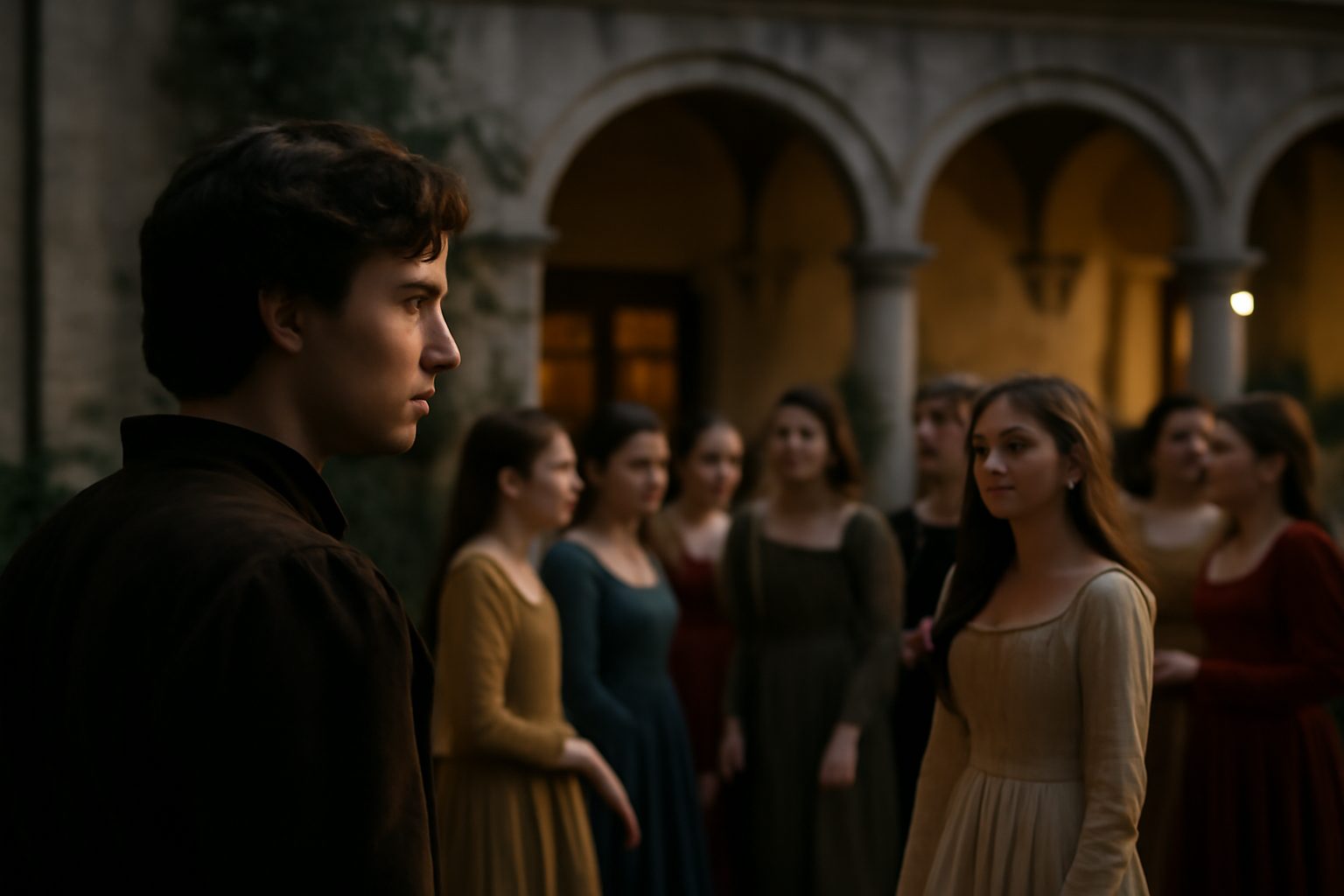
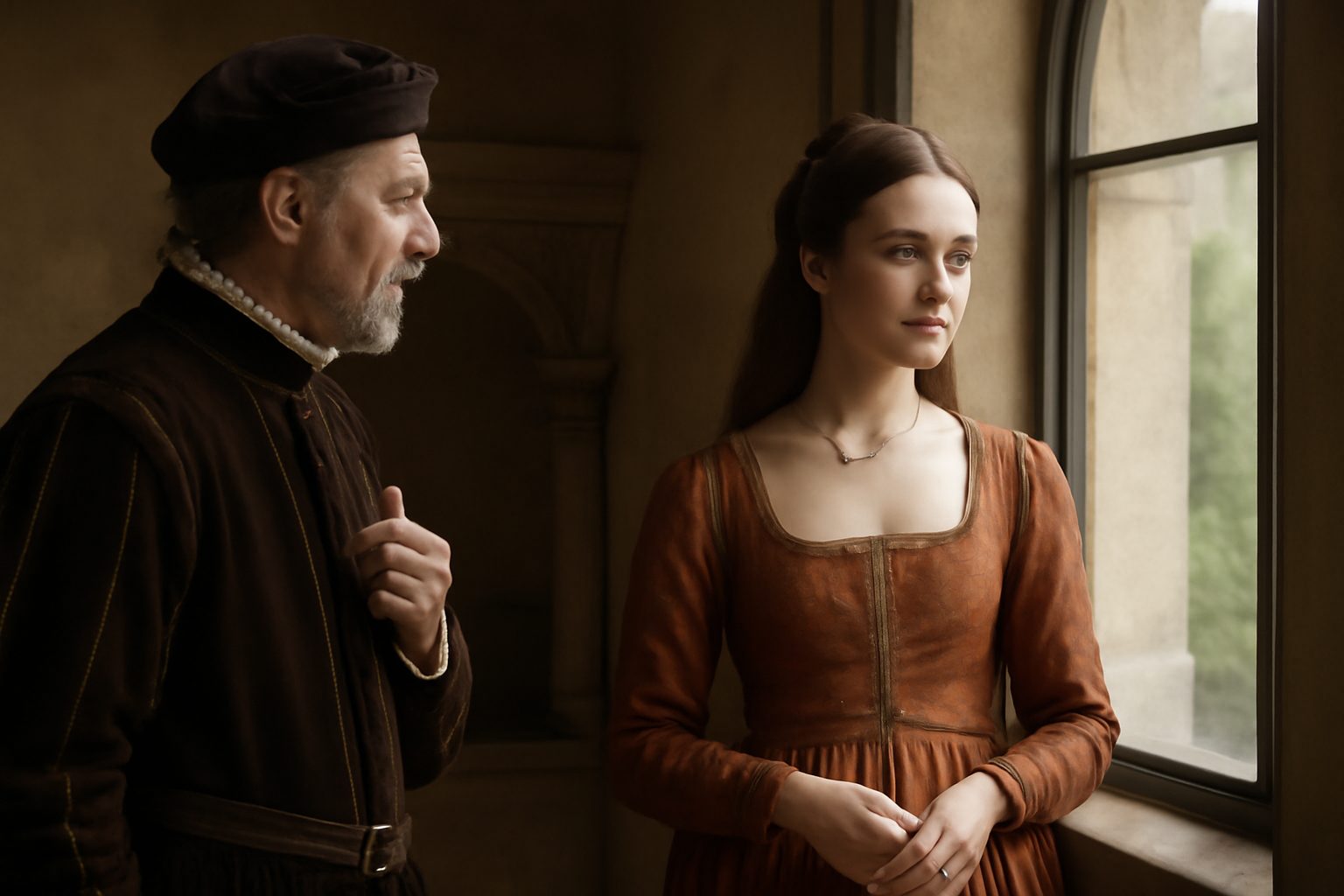
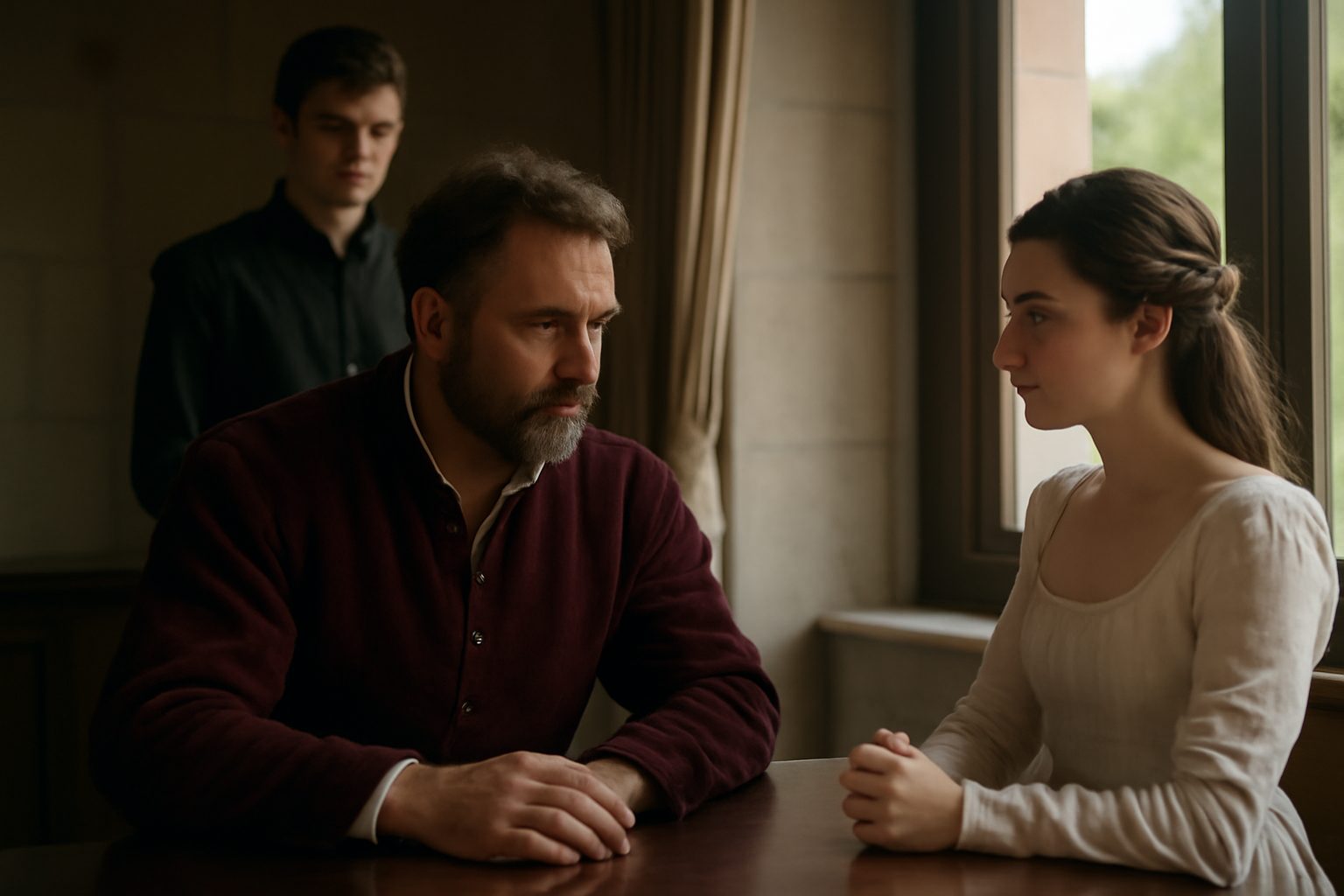
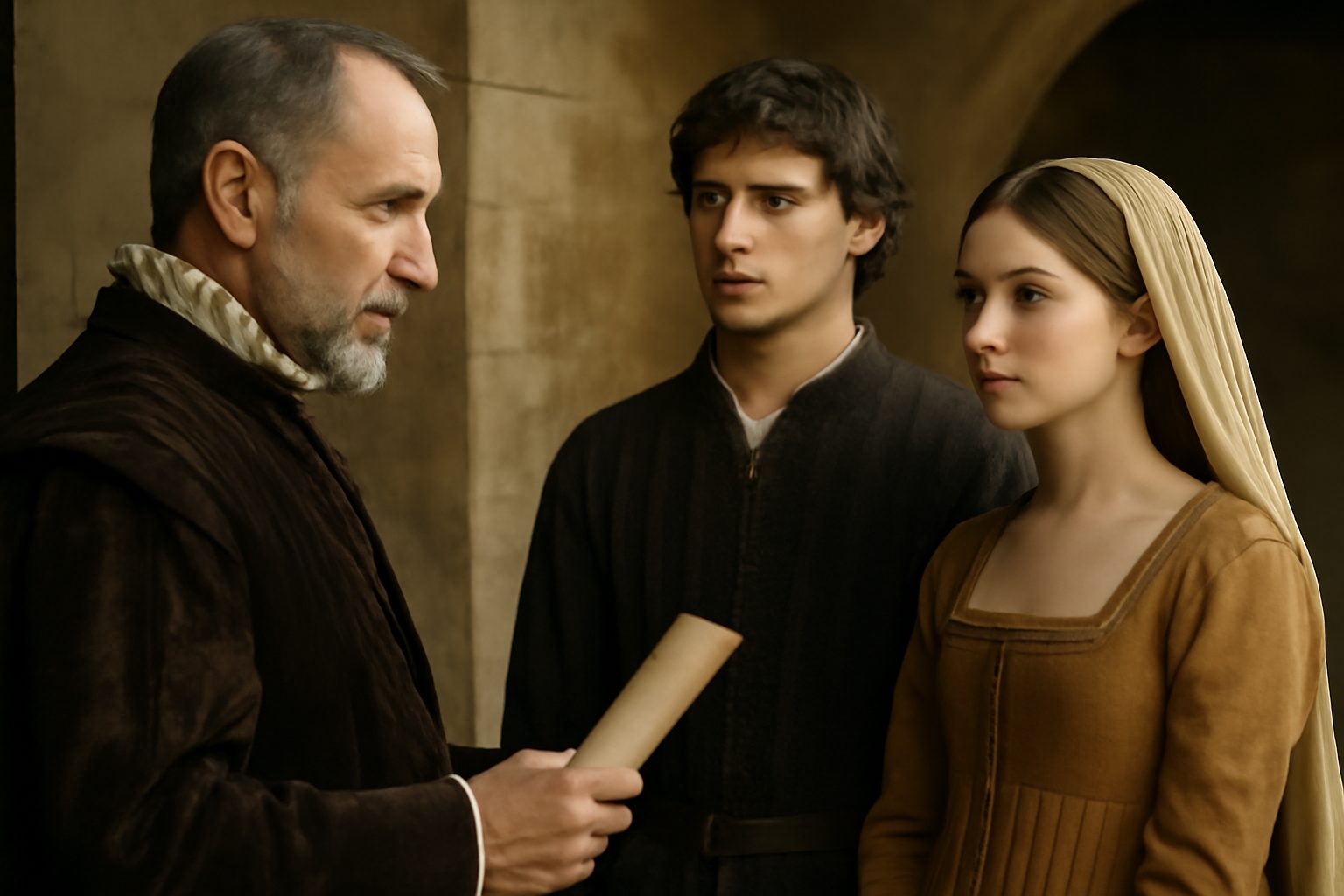
In Act 1, Scene 2 of Romeo and Juliet, Count Paris discusses with Lord Capulet his desire to marry Juliet. Capulet, while cautious, uses vivid imagery to describe the passage of time, suggesting that Paris should wait as young Juliet is not yet ready for marriage. The line in question paints a picture of spring’s fleeting beauty, reinforcing Capulet’s argument for patience.
Capulet: "When well-apparell'd April on the heel"
In modern day english, we would say:
In early spring, when April is dressed in its finest weather and follows right after winter.
Frequently Asked Questions
What month is Capulet referring to in this line?
April
How does Capulet describe April in this line?
Well-dressed or finely clothed
Connections to other verses:
Connections to "When well-apparell'd April on the heel"
The verse "When well-apparell'd April on the heel / Of limping winter treads" (/romeo-and-juliet/one/1-2/act-1-scene-2-27/) uses seasonal imagery to symbolize renewal and transition, which connects thematically and structurally to other parts of the scene.
Seasonal and Natural Imagery
This metaphor of April replacing winter echoes the idea of new beginnings and youth, paralleling Capulet's description of the young women at his feast as "Among fresh female buds" (/romeo-and-juliet/one/1-2/act-1-scene-2-29/), where "buds" suggest potential and beauty in early stages of life. Similarly, the phrase "Earth-treading stars that make dark heaven light" (/romeo-and-juliet/one/1-2/act-1-scene-2-25/) employs celestial imagery to elevate the beauty of the guests, complementing the natural renewal theme introduced by the April reference.
Youth and Transition
The transition from winter to April mirrors the dialogue about Juliet's youth, such as Capulet's remark that "My child is yet a stranger in the world" (/romeo-and-juliet/one/1-2/act-1-scene-2-8/) and his caution to "Let two more summers wither in their pride" (/romeo-and-juliet/one/1-2/act-1-scene-2-10/) before she is ready for marriage. This seasonal metaphor underscores the natural progression of time and growth.
Feast and Celebration
The imagery of April's arrival also sets a festive tone, aligning with Capulet's announcement of "This night I hold an old accustom'd feast" (/romeo-and-juliet/one/1-2/act-1-scene-2-20/), where the renewal of spring parallels the social gathering intended to introduce Paris to Juliet. The promise of seeing "With all the admired beauties of Verona" (/romeo-and-juliet/one/1-2/act-1-scene-2-86/) further ties the seasonal change to the occasion's splendor.
Contrast and Hyperbole
Benvolio later uses similar comparative language, urging Romeo to "Compare her face with some that I shall show" (/romeo-and-juliet/one/1-2/act-1-scene-2-88/) at the feast, suggesting that other women will outshine Rosaline just as April outshines winter. This connects to the idea that "she shall scant show well that now shows best" (/romeo-and-juliet/one/1-2/act-1-scene-2-101/), emphasizing how new perspectives can alter perceptions, much like the changing seasons.