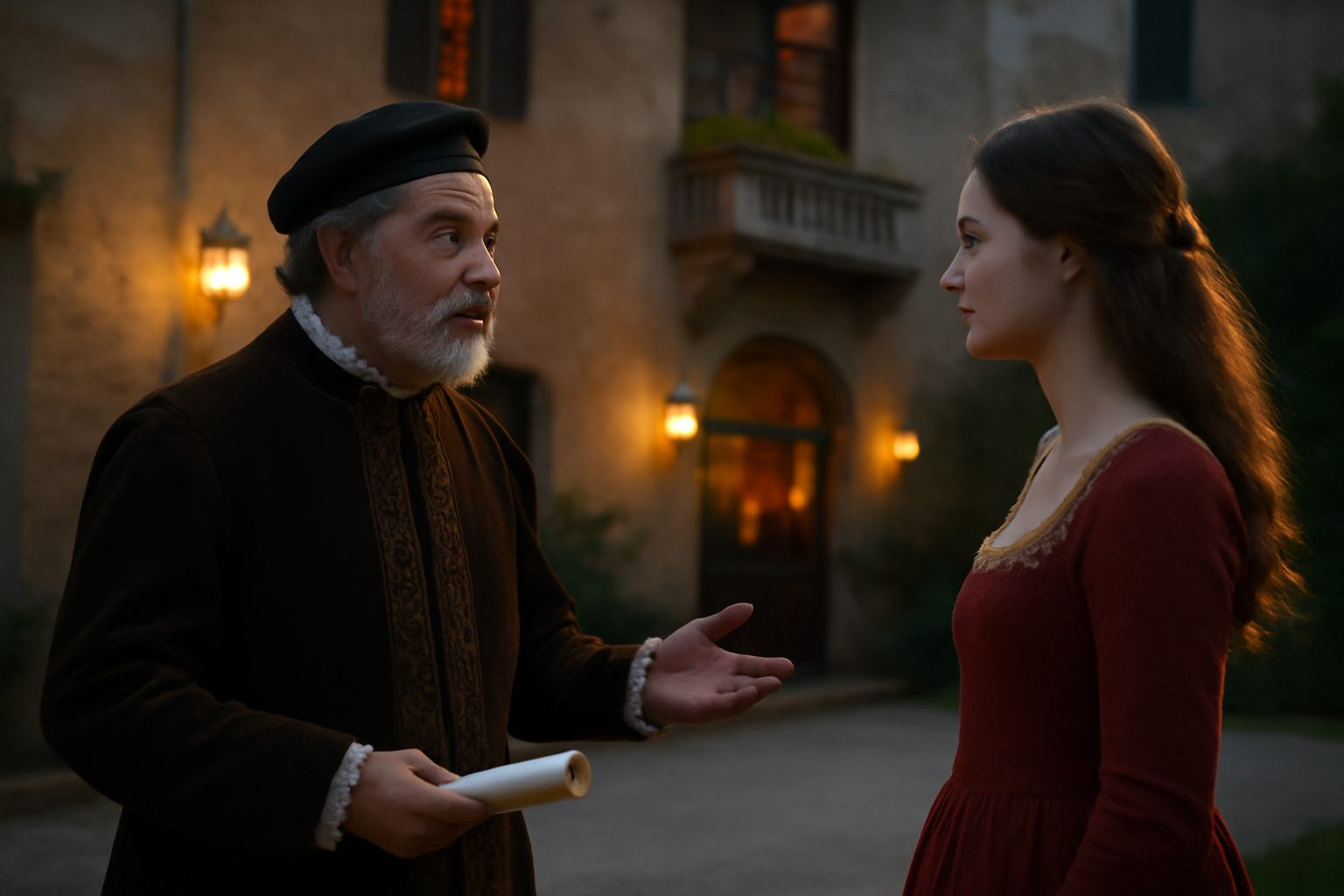
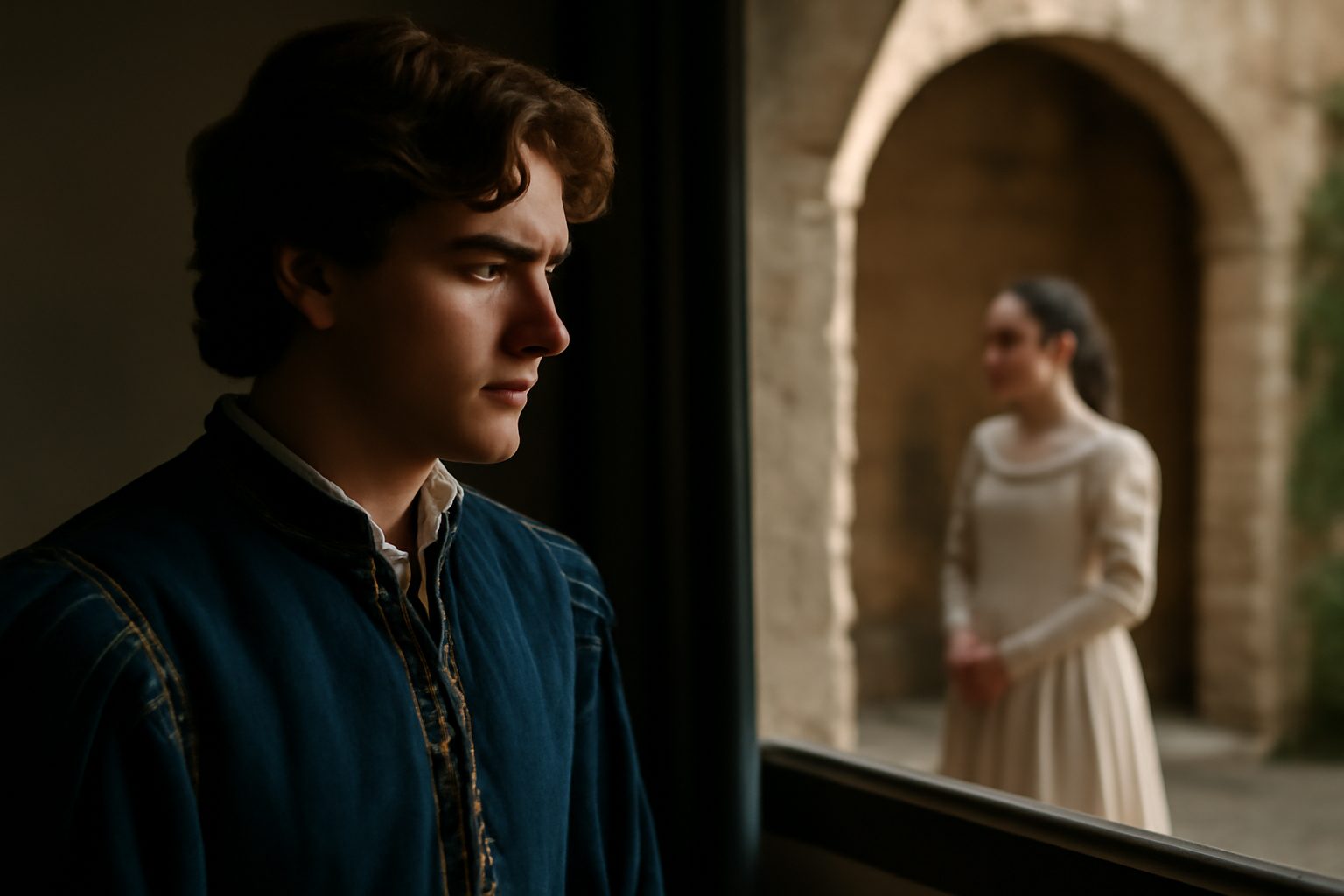
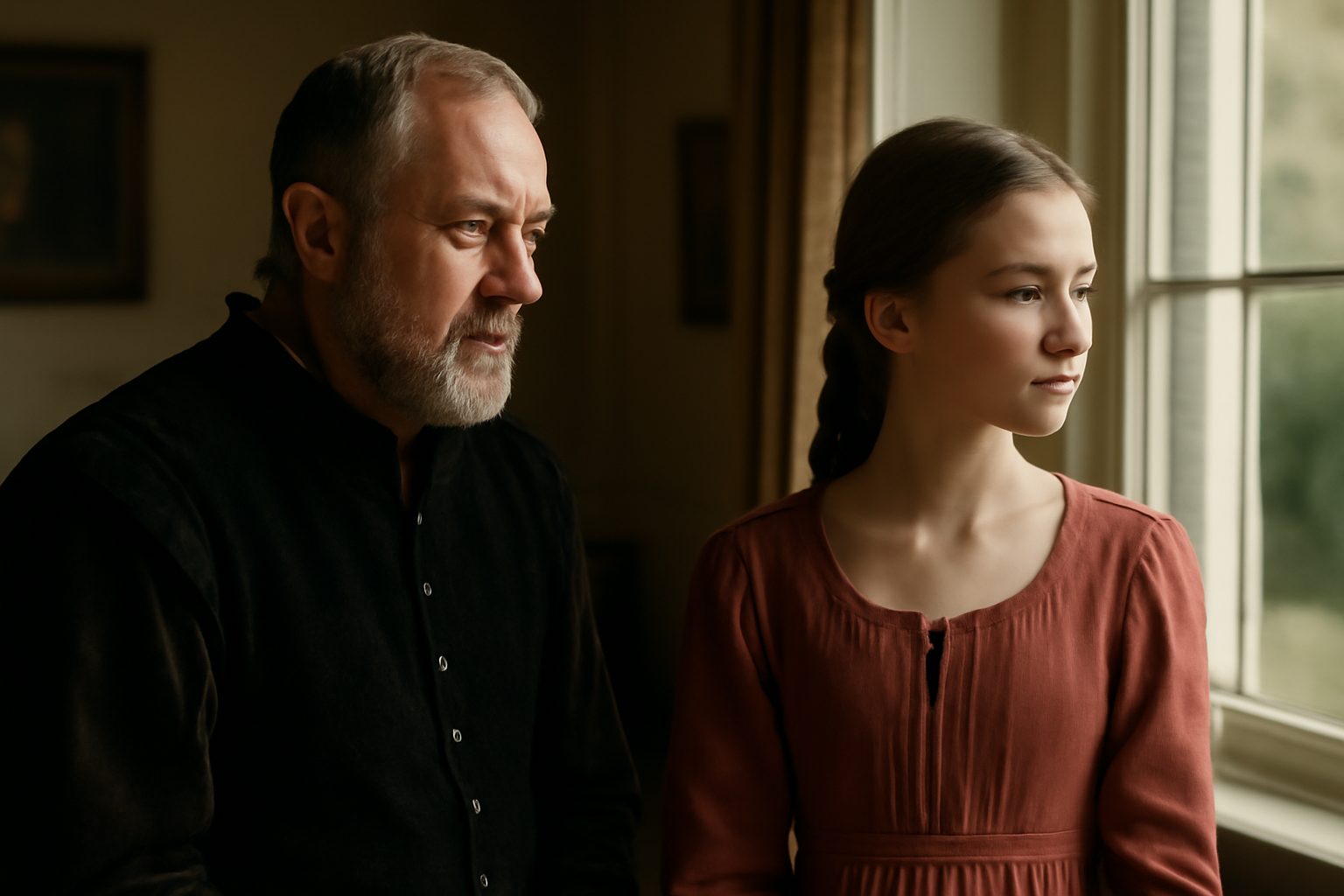
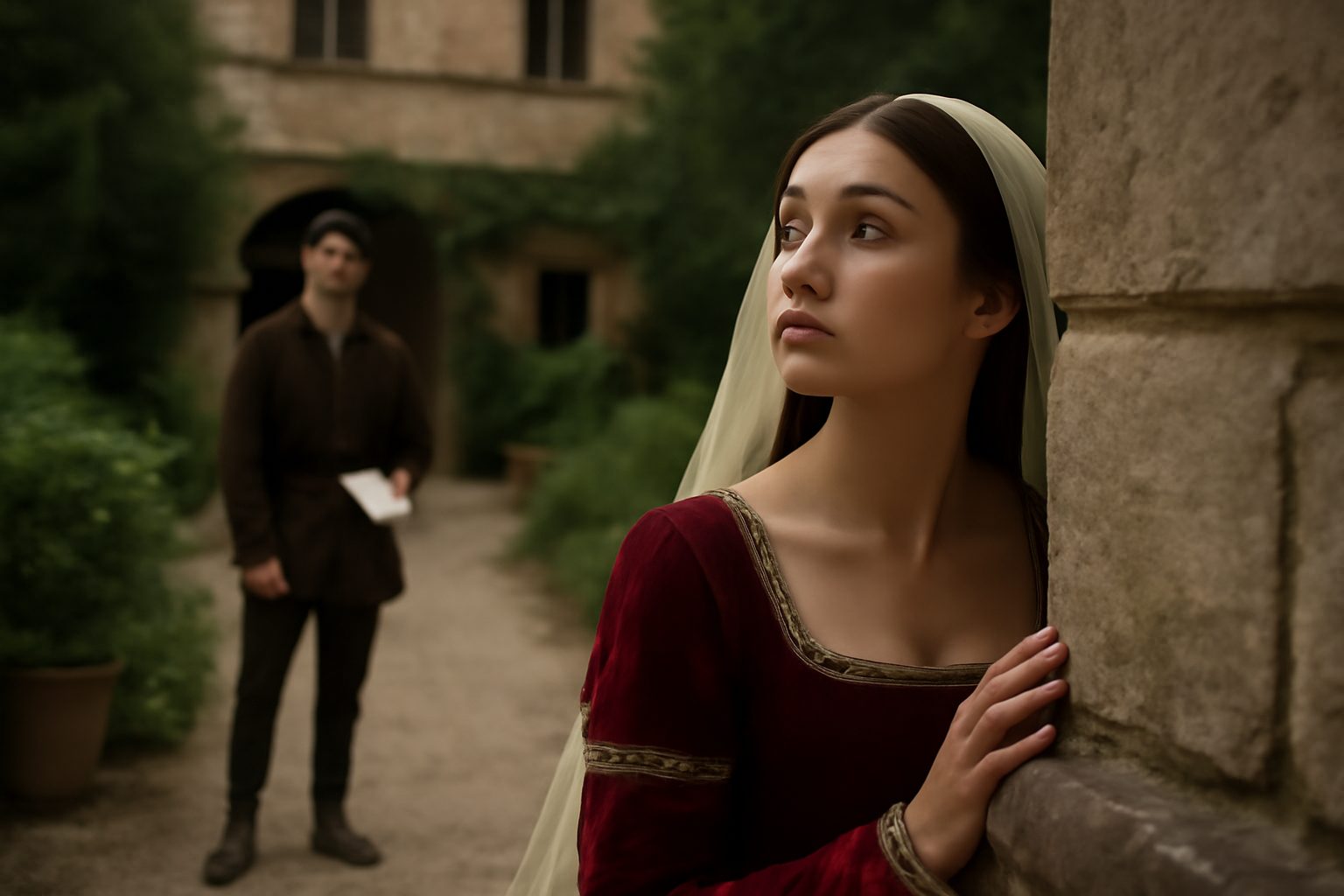
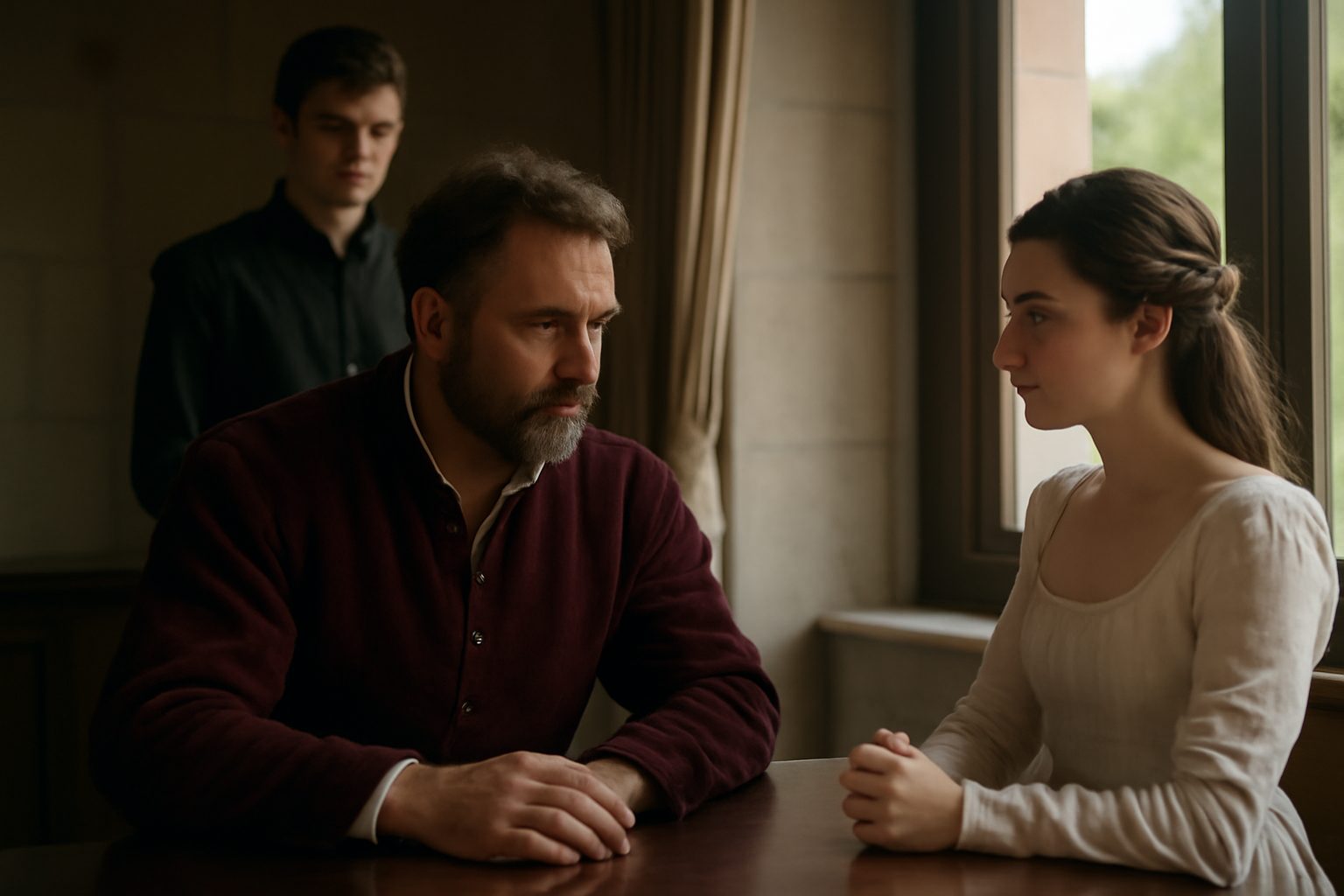
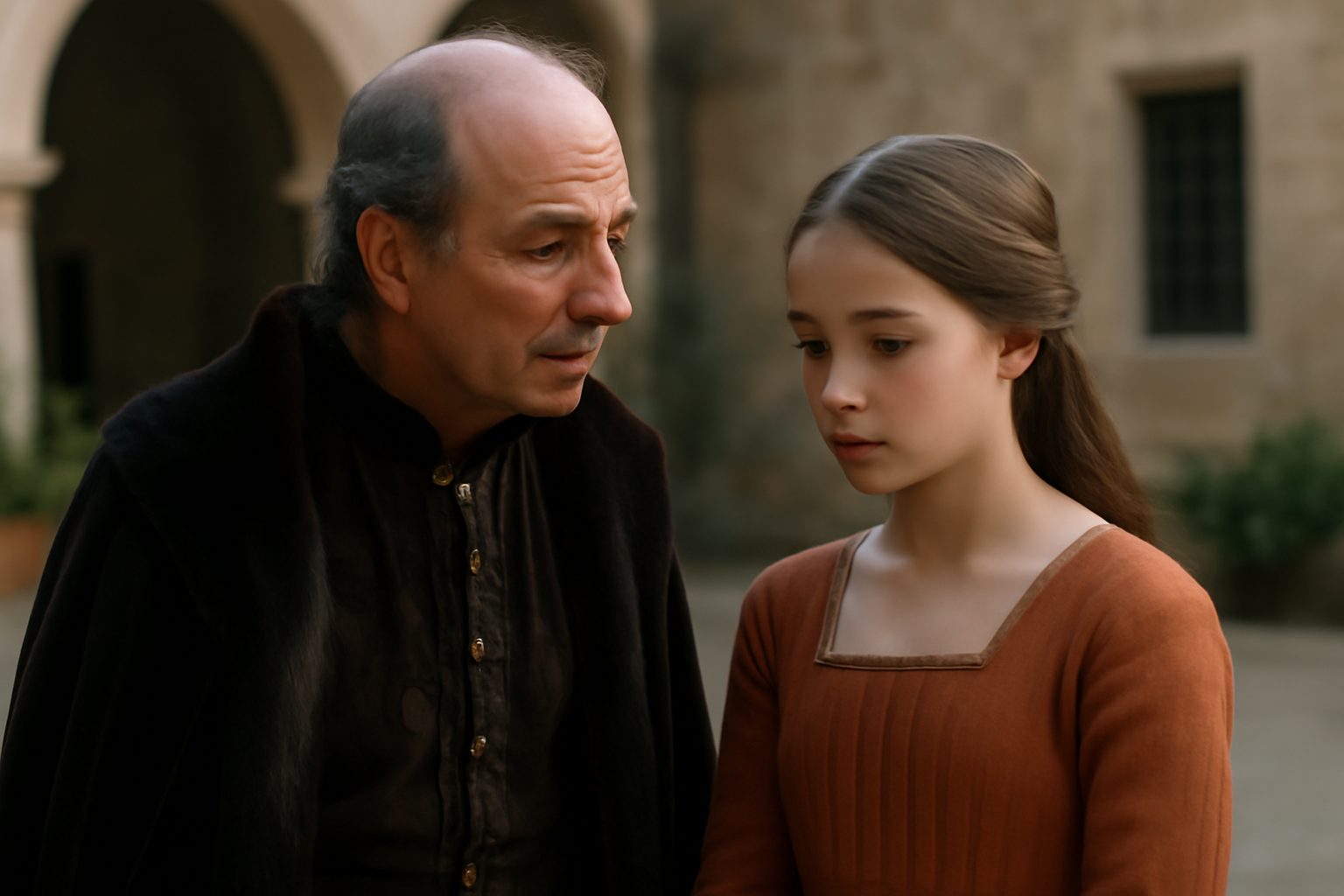
In Act 1, Scene 2 of Romeo and Juliet, Paris, a nobleman seeking Juliet's hand in marriage, speaks this line to Capulet as they leave together. The scene takes place after Capulet agrees to consider Paris as a suitor, provided Juliet consents. This brief exchange underscores the arranged marriage negotiations that set the stage for the coming conflict.
Capulet: "Come, go with me."
In modern day english, we would say:
Let’s leave together.
Frequently Asked Questions
Who is speaking in this line from Romeo and Juliet?
Capulet is speaking.
What is Capulet telling someone to do in this line?
He is telling someone to come with him.
Connections to other verses:
Connections to "Come, go with me."
The line "Come, go with me." is spoken by Benvolio to Romeo, urging him to attend the Capulet feast. This invitation is a pivotal moment that sets the stage for Romeo meeting Juliet and connects to several other verses in the scene.
Invitation to the Feast
Benvolio's invitation directly relates to "This night I hold an old accustom'd feast," where Capulet announces the event. Additionally, "At my poor house look to behold this night" reinforces the location and timing, emphasizing the significance of the gathering Romeo is being persuaded to attend.
Persuasion and Comparison
Benvolio's intent is to show Romeo other beauties, as seen in "Compare her face with some that I shall show," and "And I will make thee think thy swan a crow." These lines highlight Benvolio's strategy to cure Romeo's lovesickness by exposing him to new prospects.
Romeo's Reluctance and Resolution
Despite initial hesitation, Romeo agrees, linking to "I'll go along, no such sight to be shown," where he resigns himself to attending, albeit skeptically. This decision ultimately leads him to Juliet, fulfilling Benvolio's plan to divert his affections.
Feast Preparations and Invitations
The servant's task of delivering invitations, as in "Through fair Verona; find those persons out," parallels Benvolio's effort to bring Romeo to the feast, both serving to gather guests for the event that catalyzes the play's central romance.