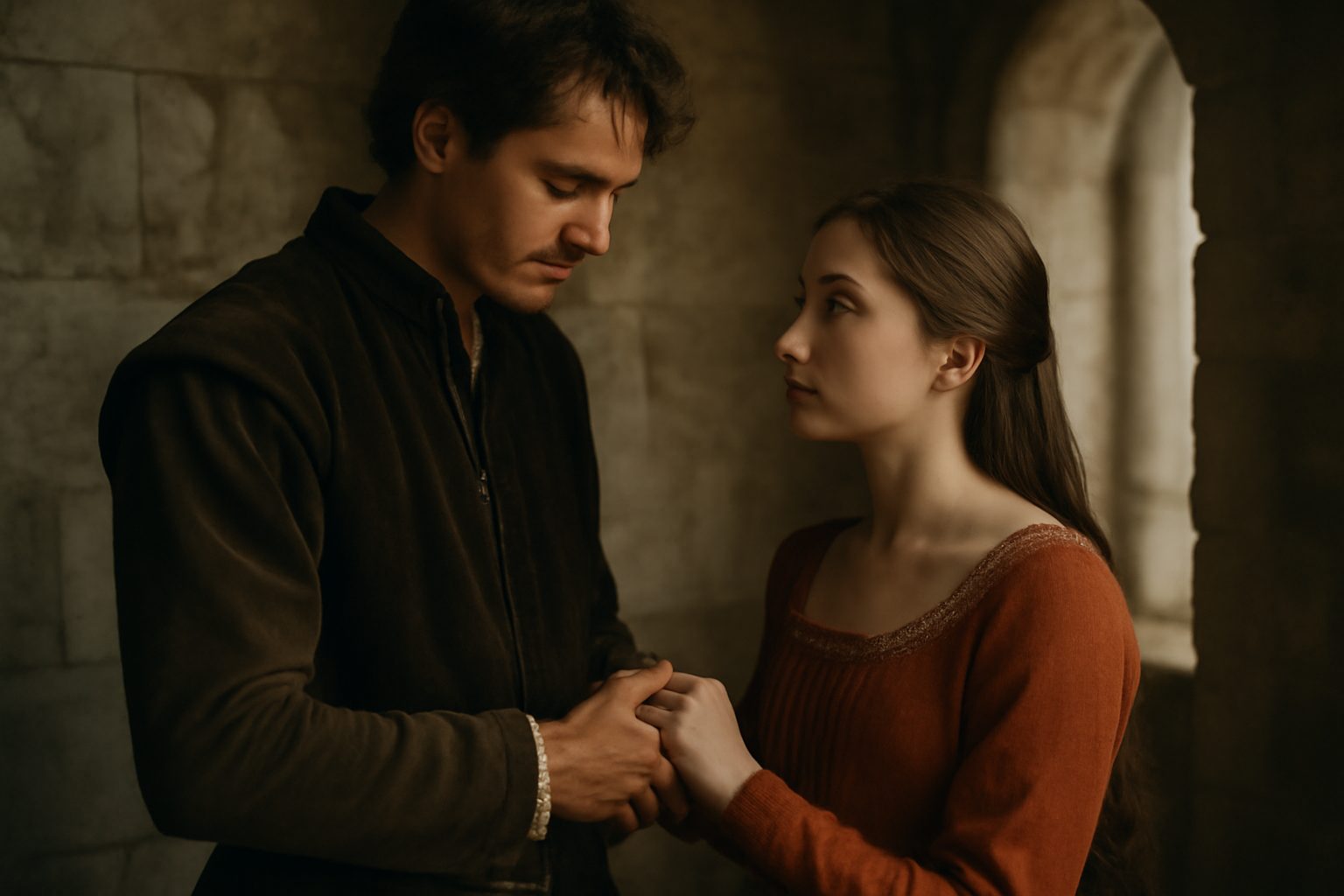
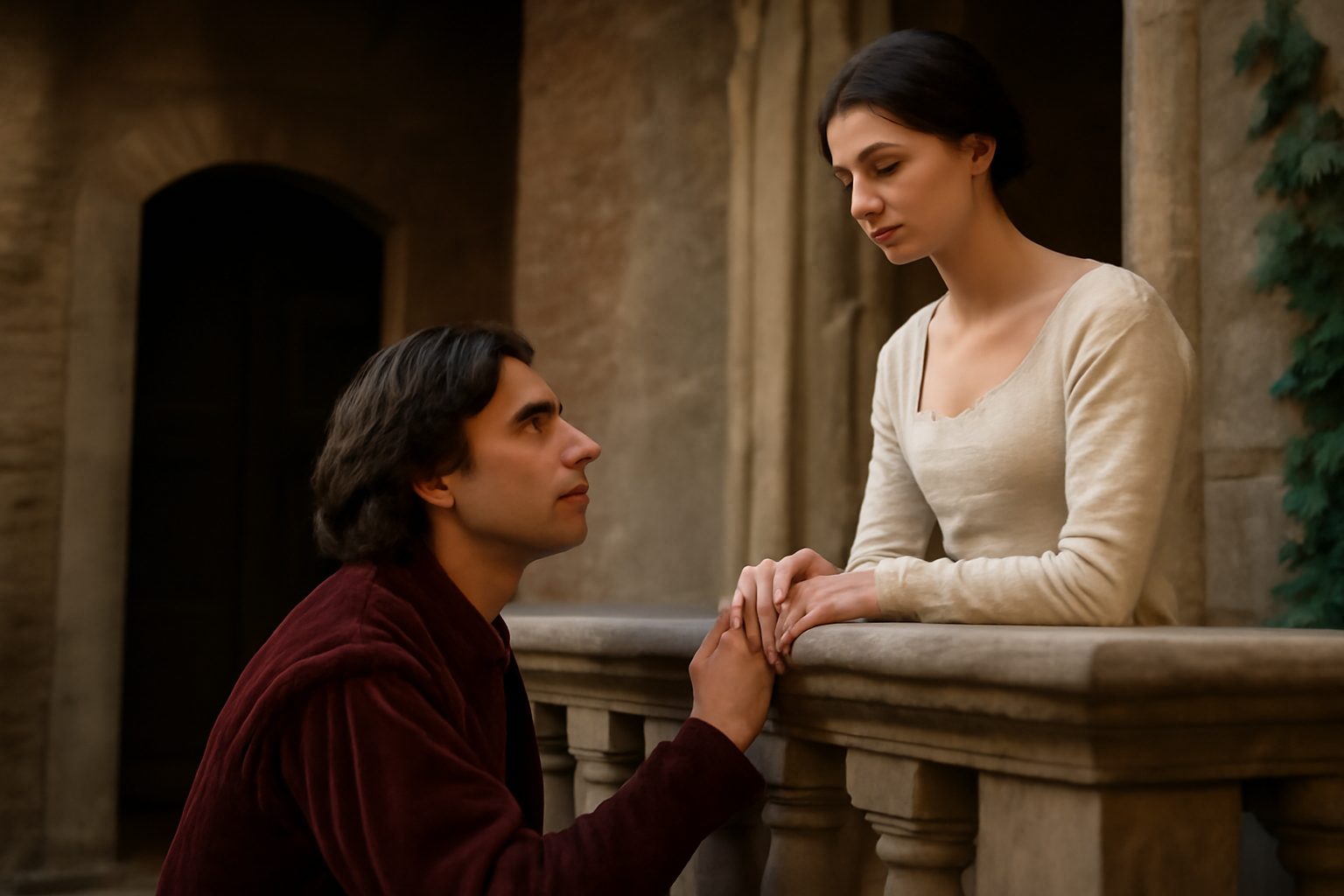
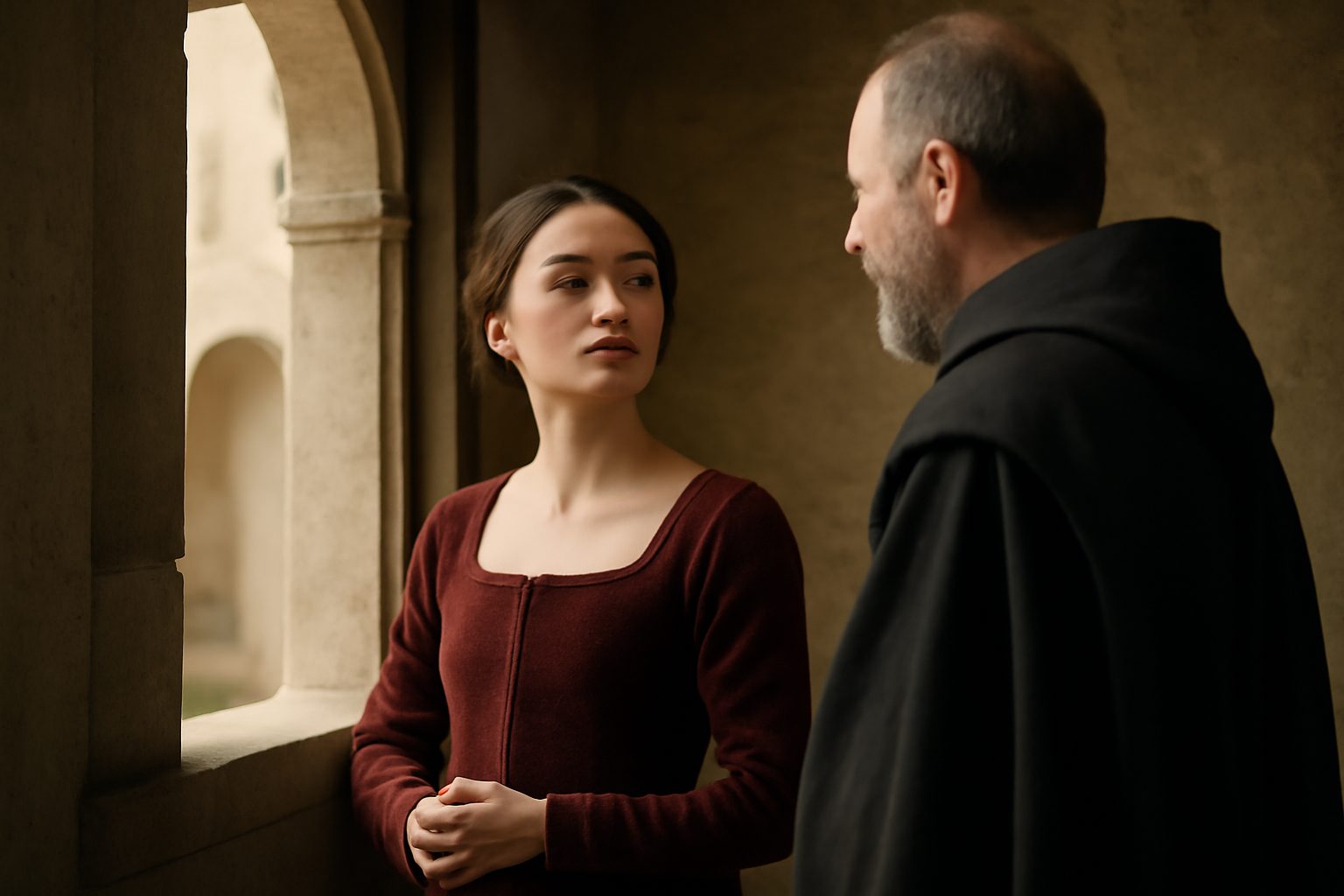
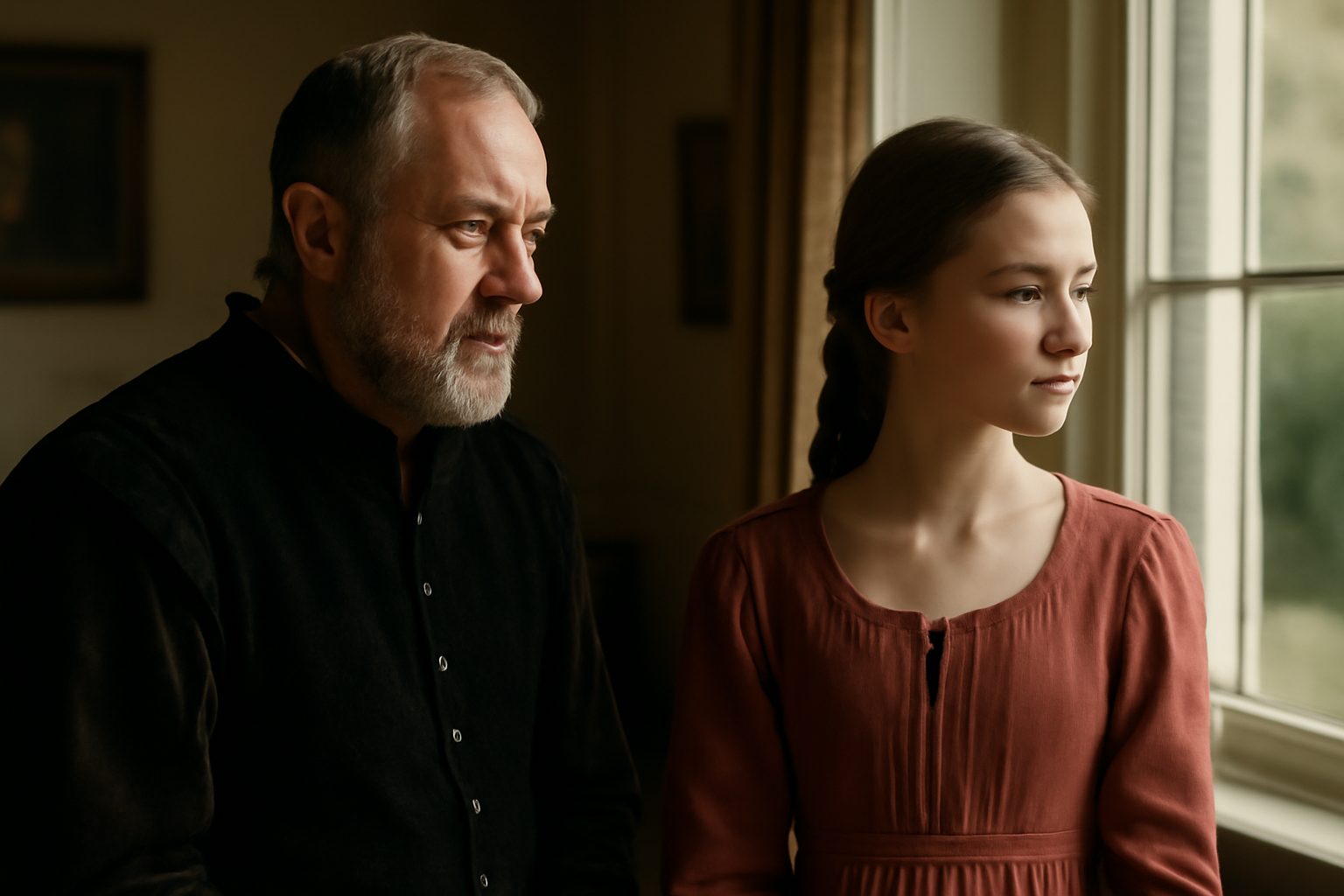
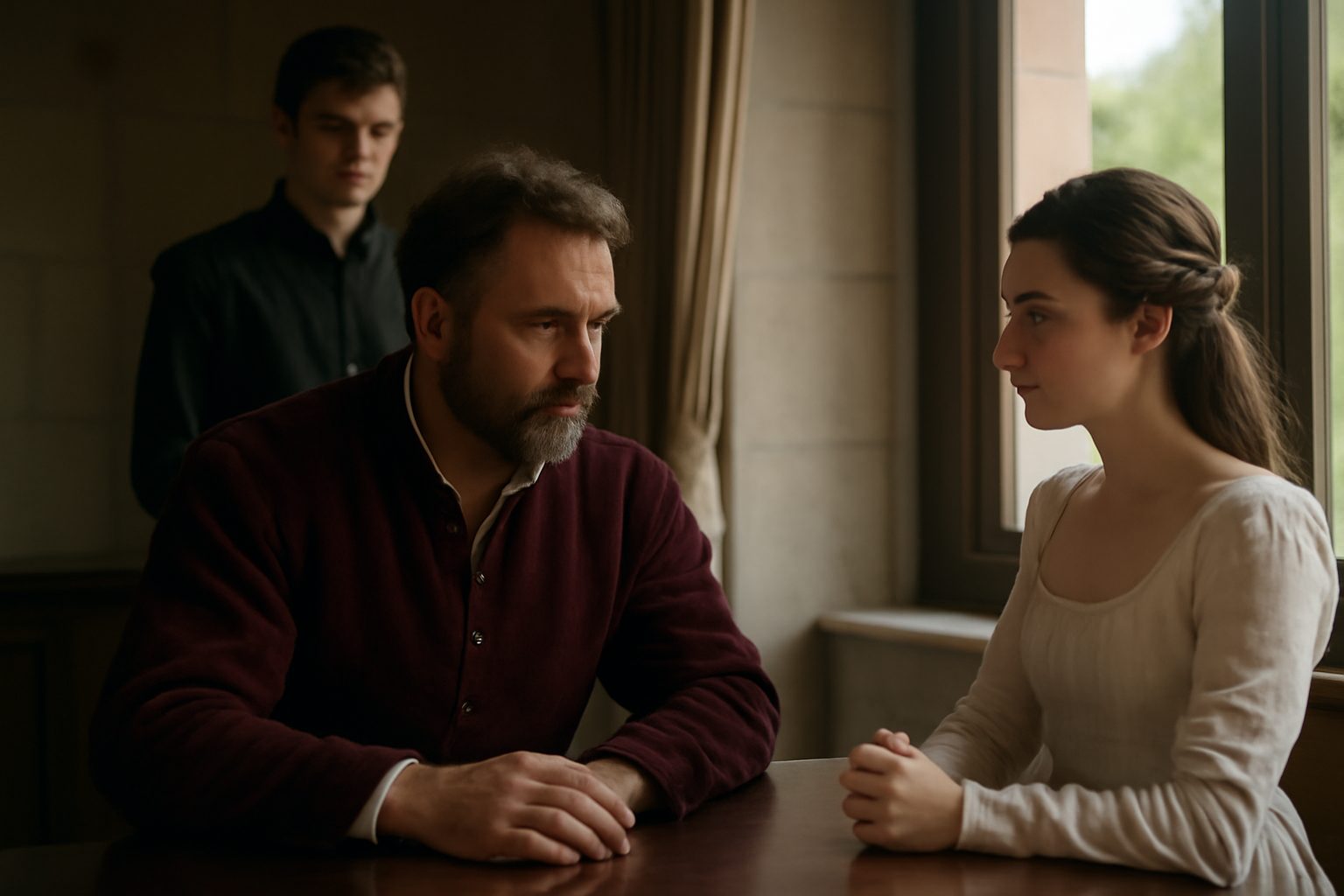
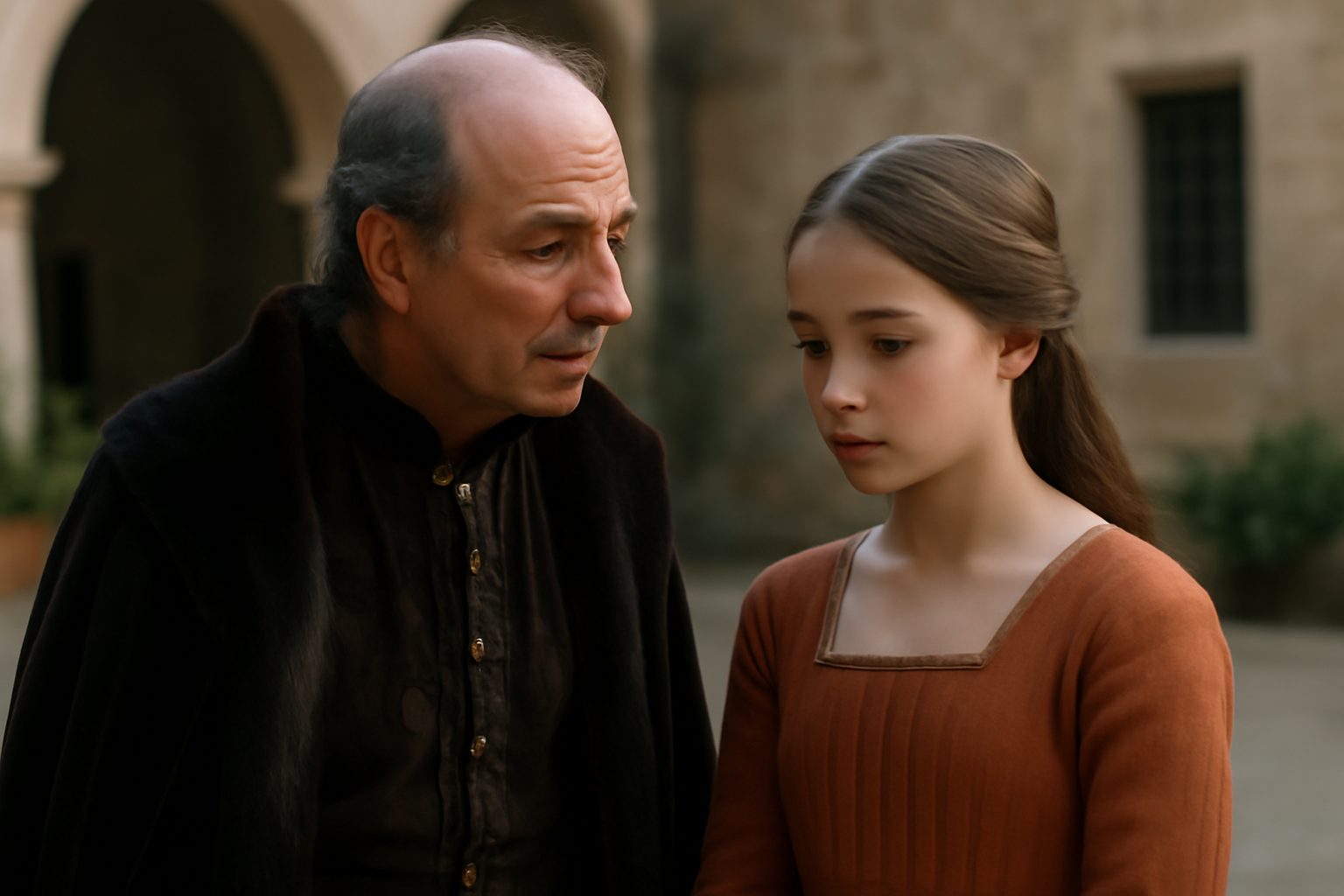
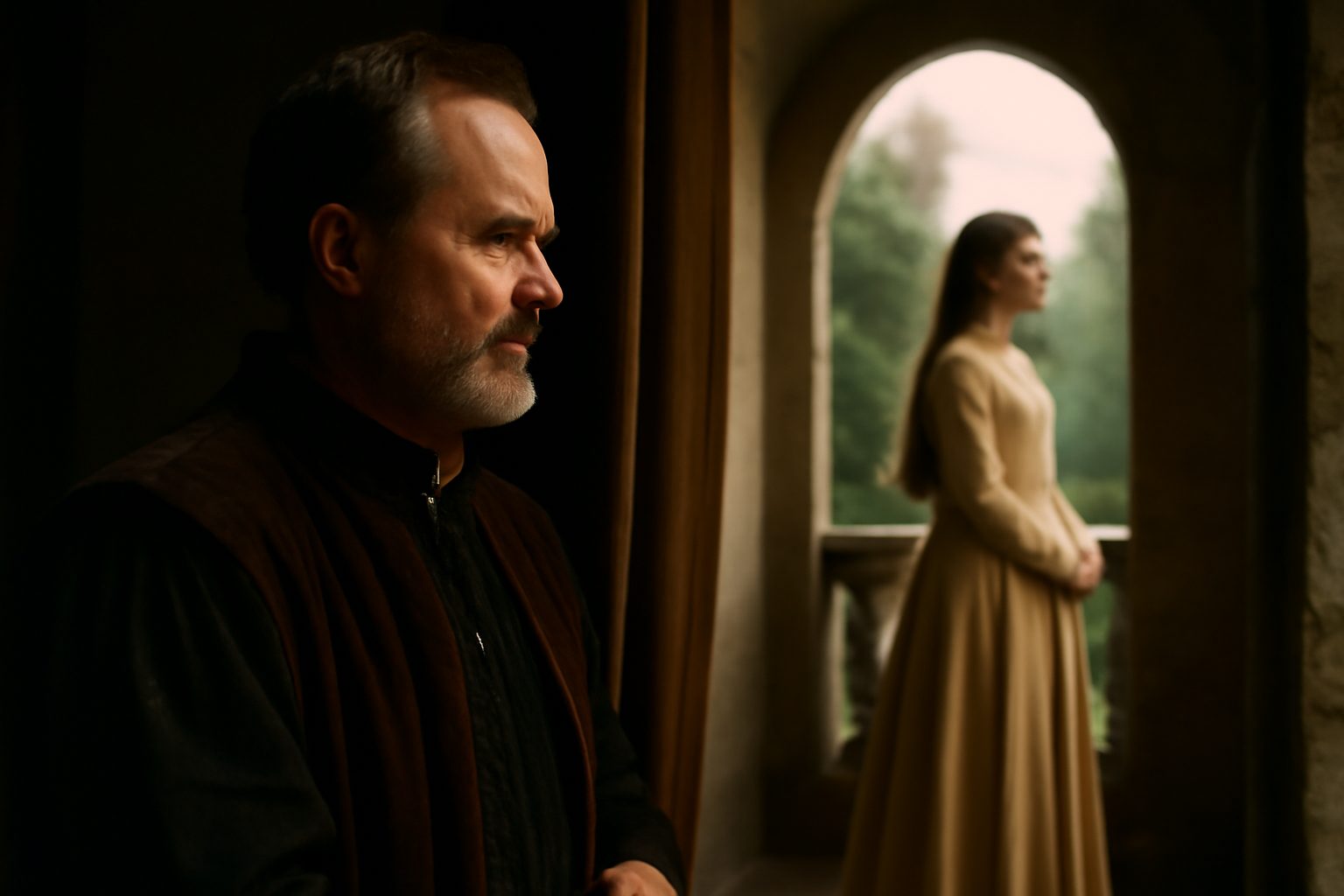
In Act 1, Scene 2 of Romeo and Juliet, Romeo speaks these words while lamenting his unrequited love for Rosaline. He has just learned of Capulet's feast from the illiterate servant, and though he is heartbroken, he agrees to attend—unknowingly setting fate in motion. The line reflects his belief that his sorrow is his own doing, a self-inflicted misfortune.
Romeo: "Ay, mine own fortune in my misery."
In modern day english, we would say:
Yes, even in my sadness, I’m responsible for my own bad luck.
Frequently Asked Questions
What does Romeo mean when he says his fortune is in his misery?
Romeo means that his bad luck or misfortune is his own doing, as he is unhappy in love.
Connections to other verses:
Connections to "Ay, mine own fortune in my misery"
This line, spoken by Romeo in response to the illiterate servant's request for help reading the guest list, reflects his self-absorbed melancholy and belief that his sorrow is a personal fate he must endure. It connects thematically and contextually to several other verses in the scene.
Links to Romeo's Melancholy and Misfortune
Romeo's declaration of his "fortune in misery" echoes his earlier despairing lines, such as when he states "Why, Romeo, art thou mad?", highlighting his emotional turmoil. His sense of being trapped in sorrow is further emphasized in "Not mad, but bound more than a mad-man is", where he describes his lovesick state as a form of imprisonment.
Contrast with Benvolio's Advice
Benvolio's attempts to pull Romeo from his misery provide a direct contrast. In "Go thither; and, with unattainted eye", he urges Romeo to objectively compare Rosaline to other women. Similarly, "And I will make thee think thy swan a crow" promises that exposure to others will diminish Rosaline's appeal, directly challenging Romeo's fixation on his "fortune in misery."
Foreshadowing and Irony
The servant’s unknowing role in altering Romeo’s fortune is ironic. His request, "God gi' god-den. I pray, sir, can you read?", sets in motion the events that lead Romeo to the Capulet feast—and ultimately to Juliet. This accidental encounter contrasts with Romeo’s belief in a predetermined miserable fate, suggesting fortune is more mutable than he thinks.
Connection to the Feast and New Beginnings
Capulet’s feast, mentioned in "This night I hold an old accustom'd feast", becomes the catalyst for change. Romeo’s attendance, prompted by this interaction, leads him away from his self-proclaimed misery and toward a new, albeit tragic, fortune. The servant’s list in "Find them out whose names are written here!" symbolically ties Romeo’s name (though uninvited) to an event that reshapes his destiny.