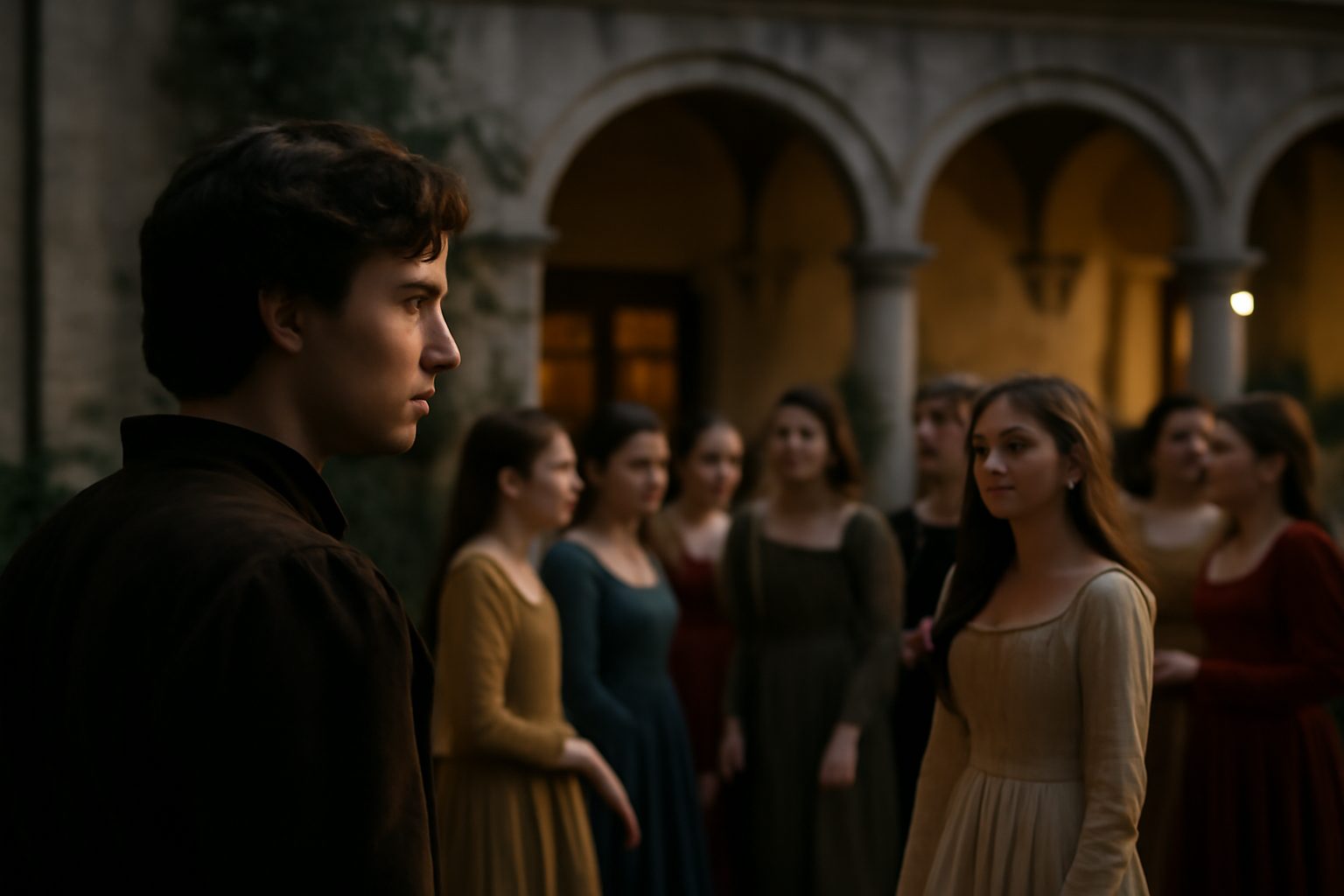
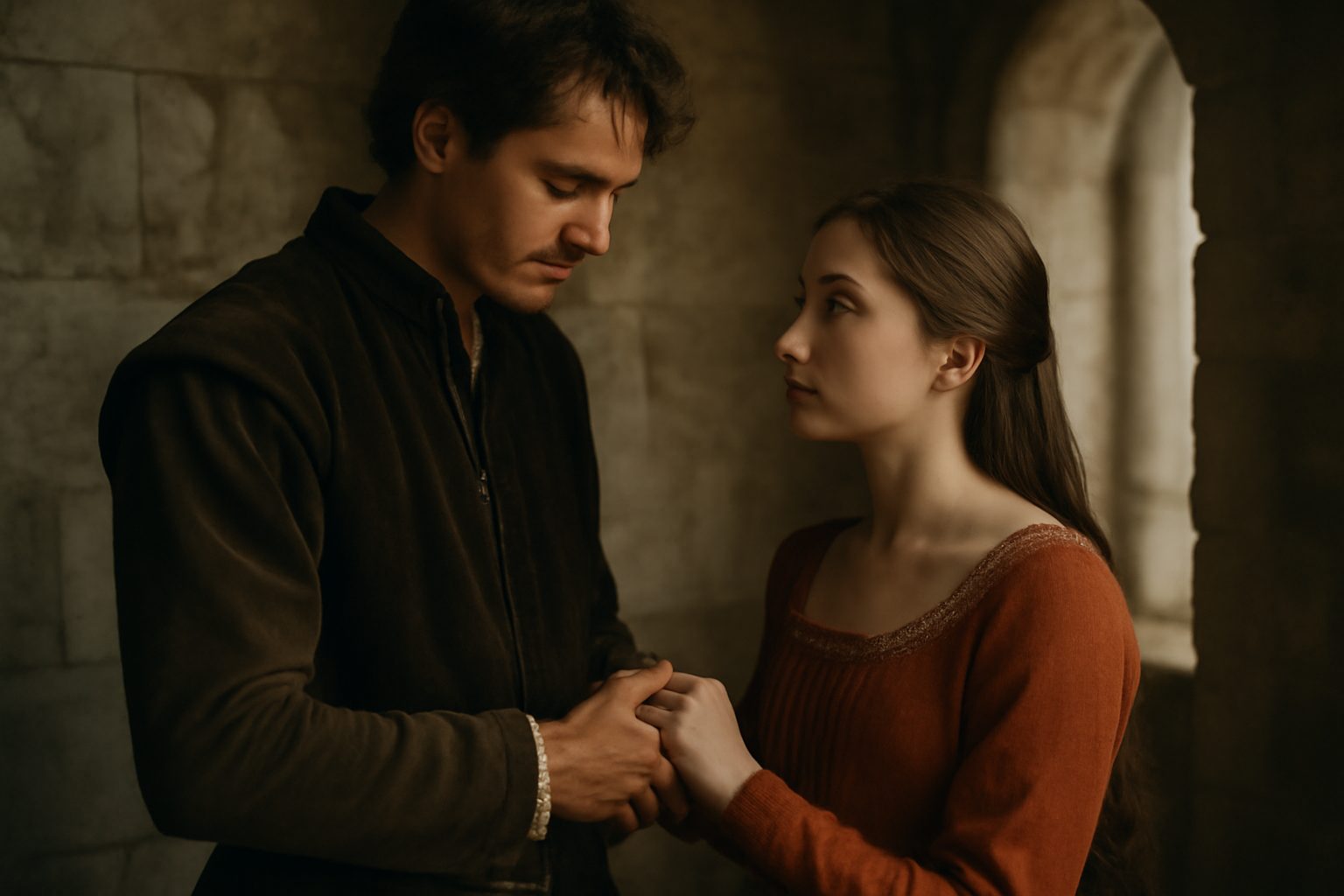
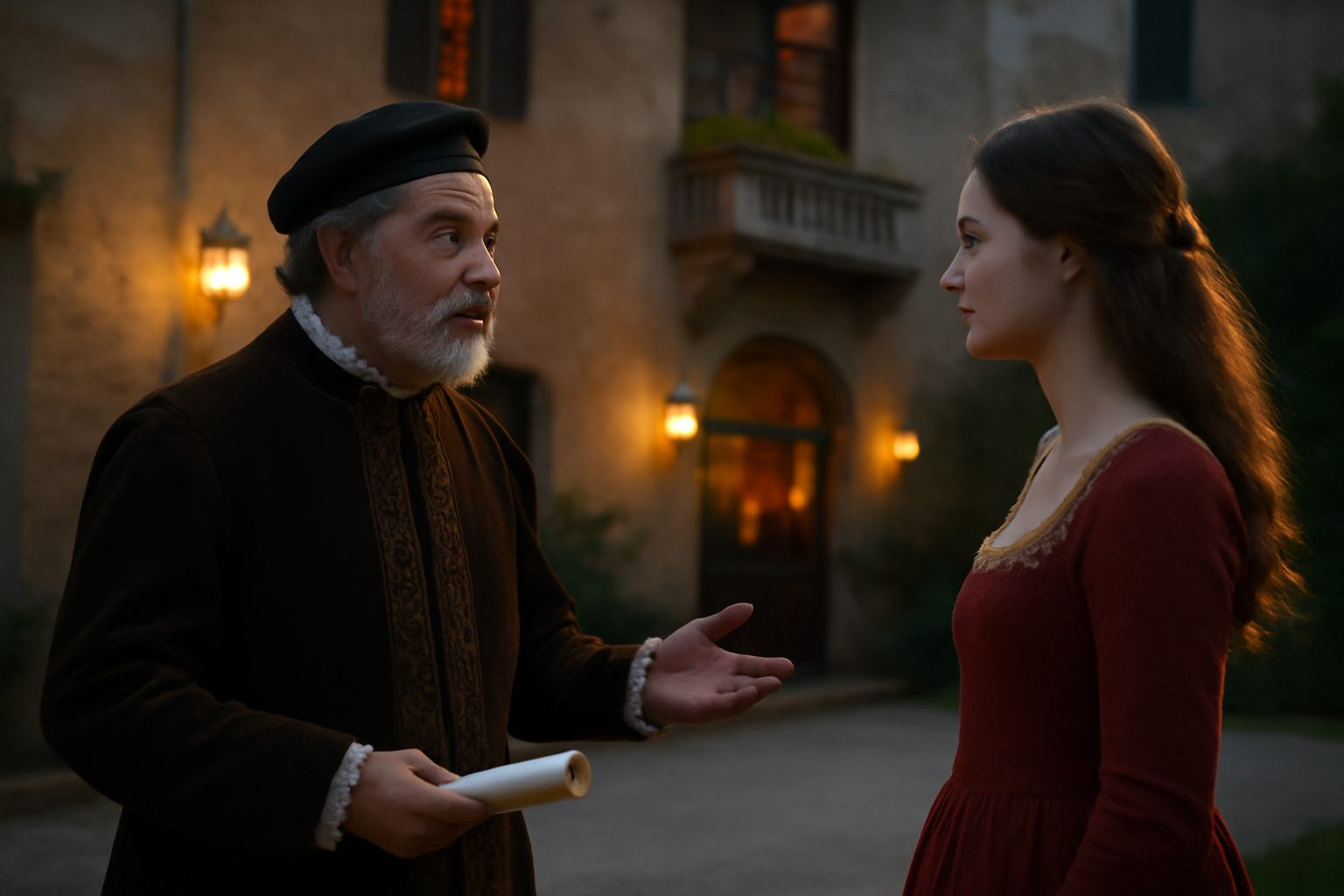
In Act 1, Scene 2 of Romeo and Juliet, Paris, a nobleman, presses Capulet for permission to marry Juliet. Capulet, though hesitant, invites Paris to a feast to woo her, suggesting that Juliet might already be familiar with Paris's intentions. This line reveals Capulet's playful skepticism about whether Paris has rehearsed his courtship in advance.
Servant: "Perhaps you have learned it without book: but, I"
In modern day english, we would say:
Maybe you’ve memorized it without studying, but I haven’t.
Frequently Asked Questions
What does the servant mean when he says he hasn't learned something without book?
He means he hasn't memorized it and needs to read it from paper.
Connections to other verses:
Connections to Other Verses in Act 1 Scene 2
The verse "Perhaps you have learned it without book: but, I" is spoken by the illiterate servant to Romeo, as he struggles to read the guest list for Capulet's feast. This moment highlights themes of literacy, social class, and fate, as it inadvertently leads Romeo to the party where he meets Juliet.
Literacy and Social Class
This verse connects to God gi' god-den. I pray, sir, can you read?, where the servant first asks Romeo for help, emphasizing the divide between educated nobility and the common people. It also relates to pray, can you read any thing you see?, reinforcing the servant's dependence on others for information.
Fate and the Feast
The servant's inability to read the list ties to Find them out whose names are written here!, as Romeo’s assistance sets in motion the events that bring him to the feast. This echoes Sups the fair Rosaline whom thou so lovest, where Benvolio encourages Romeo to compare Rosaline to other beauties, foreshadowing Romeo’s shift in affection.
Contrast with Capulet's Authority
Capulet’s command in Go, sirrah, trudge about contrasts with the servant’s helplessness, underscoring the hierarchical structure. Meanwhile, Capulet’s invitation in Such as I love; and you, among the store shows his welcoming attitude, ironically extending to Romeo, a Montague.
Irony and Dramatic Foreshadowing
The servant’s struggle ironically facilitates the meeting of the lovers, linking to That I will show you shining at this feast, where Benvolio promises Romeo a new perspective. This also aligns with Compare her face with some that I shall show, hinting at Romeo’s impending change of heart.