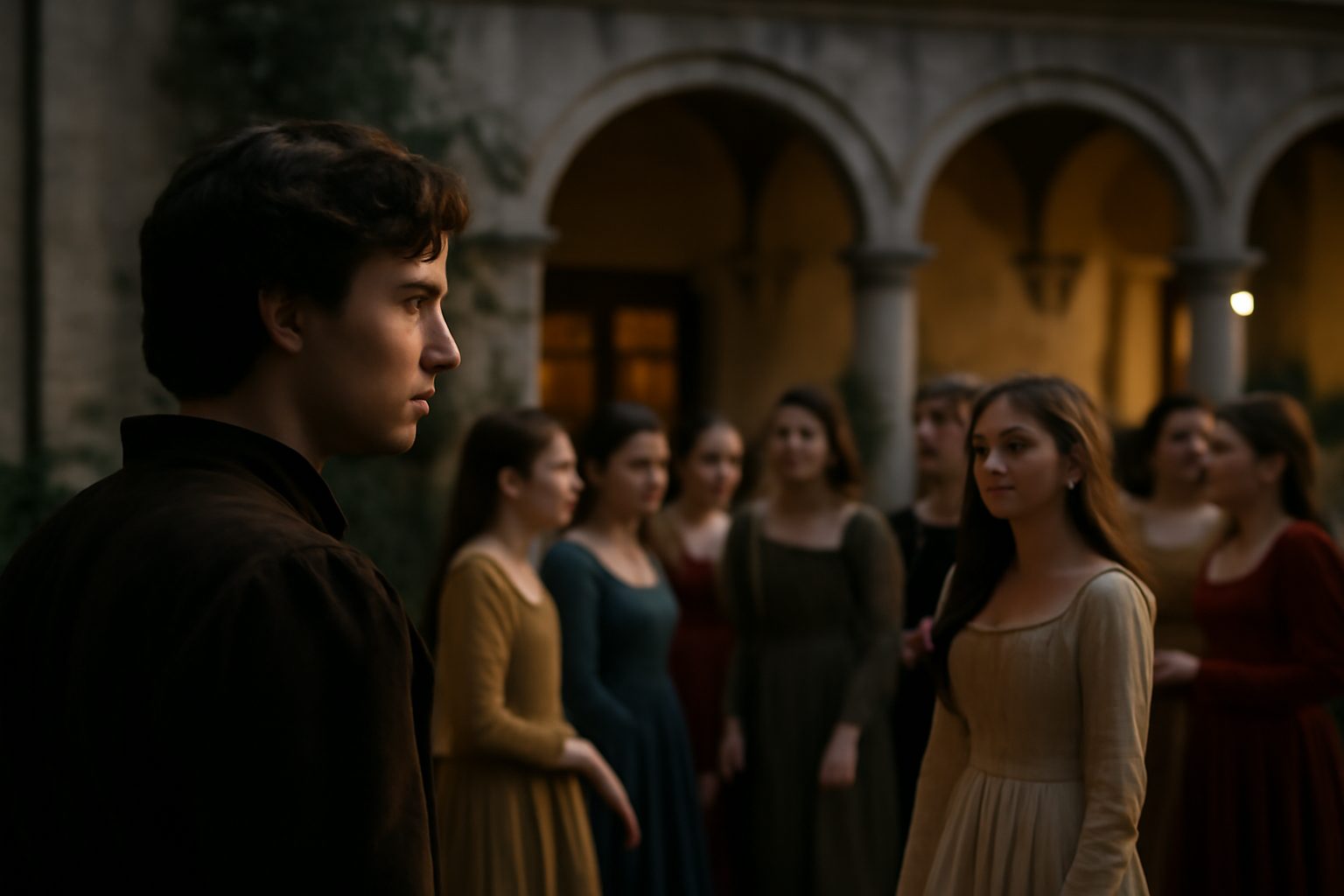
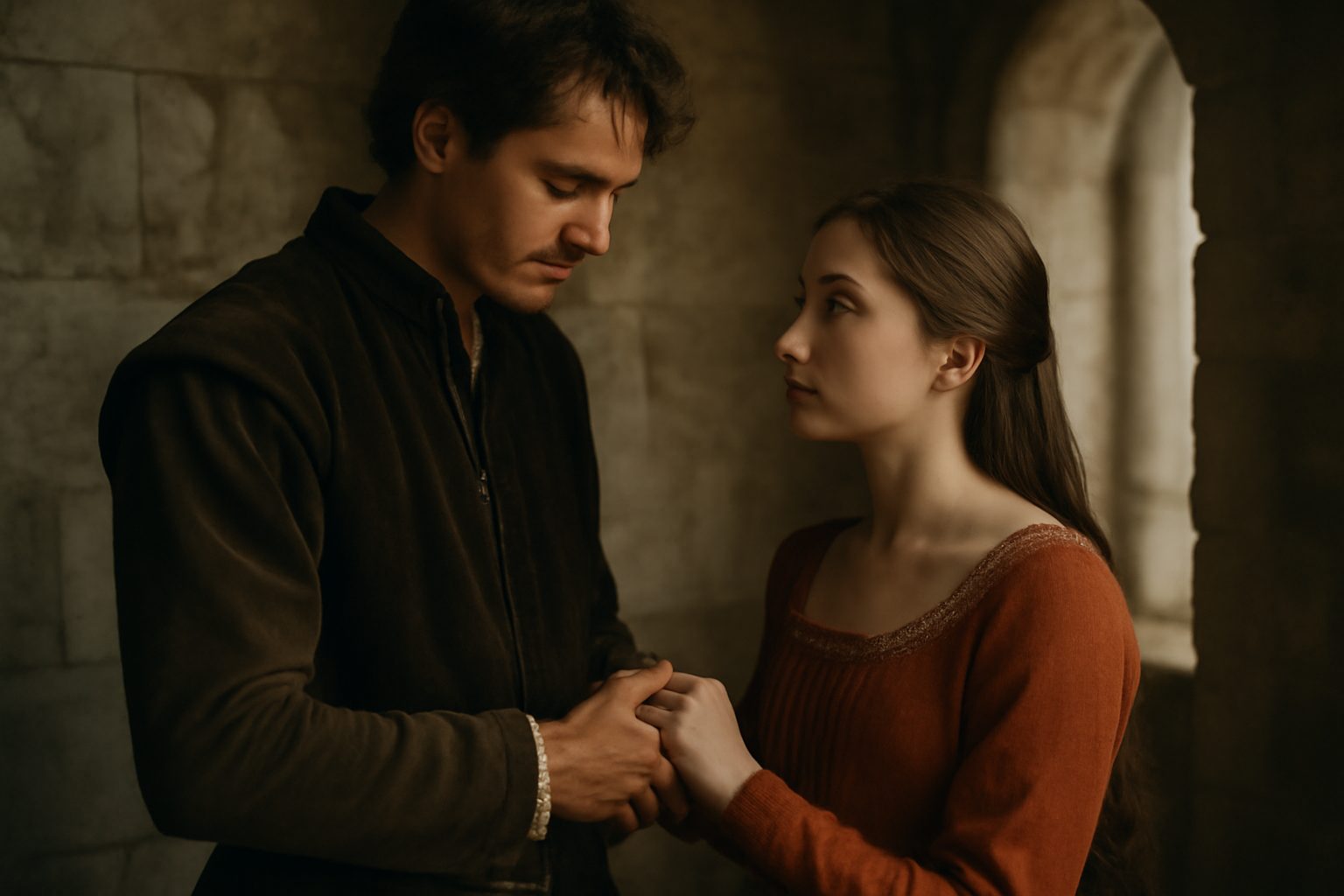
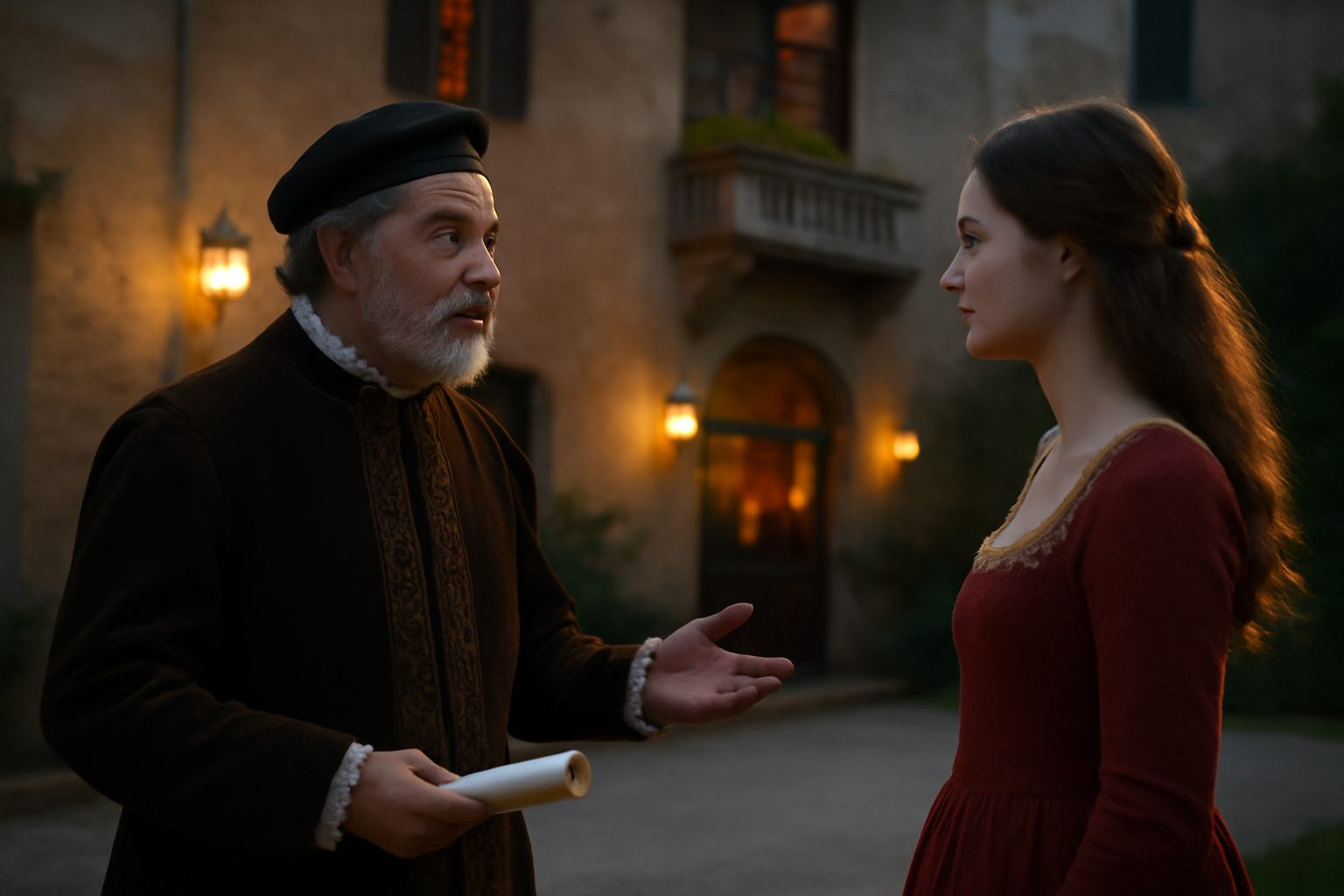
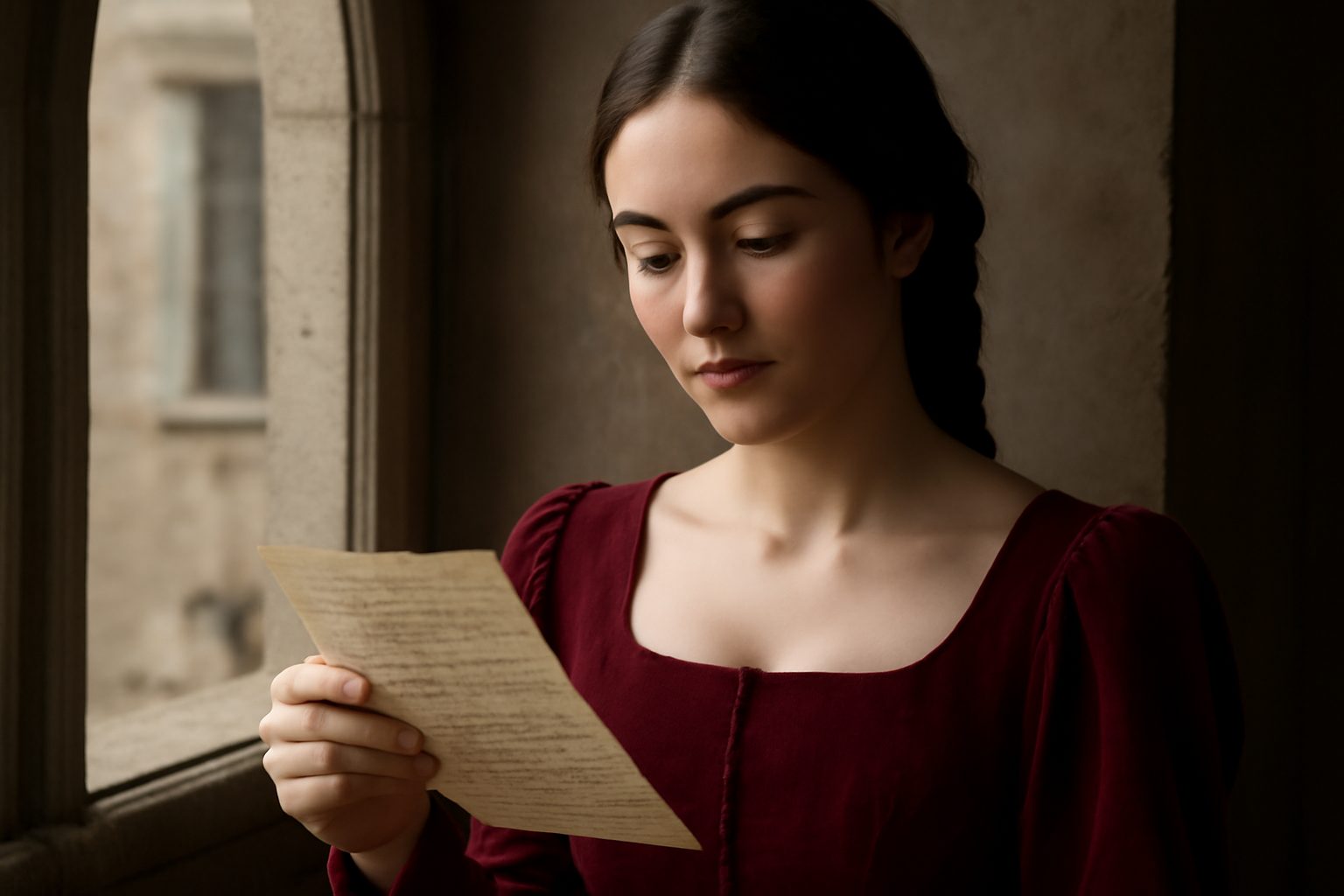
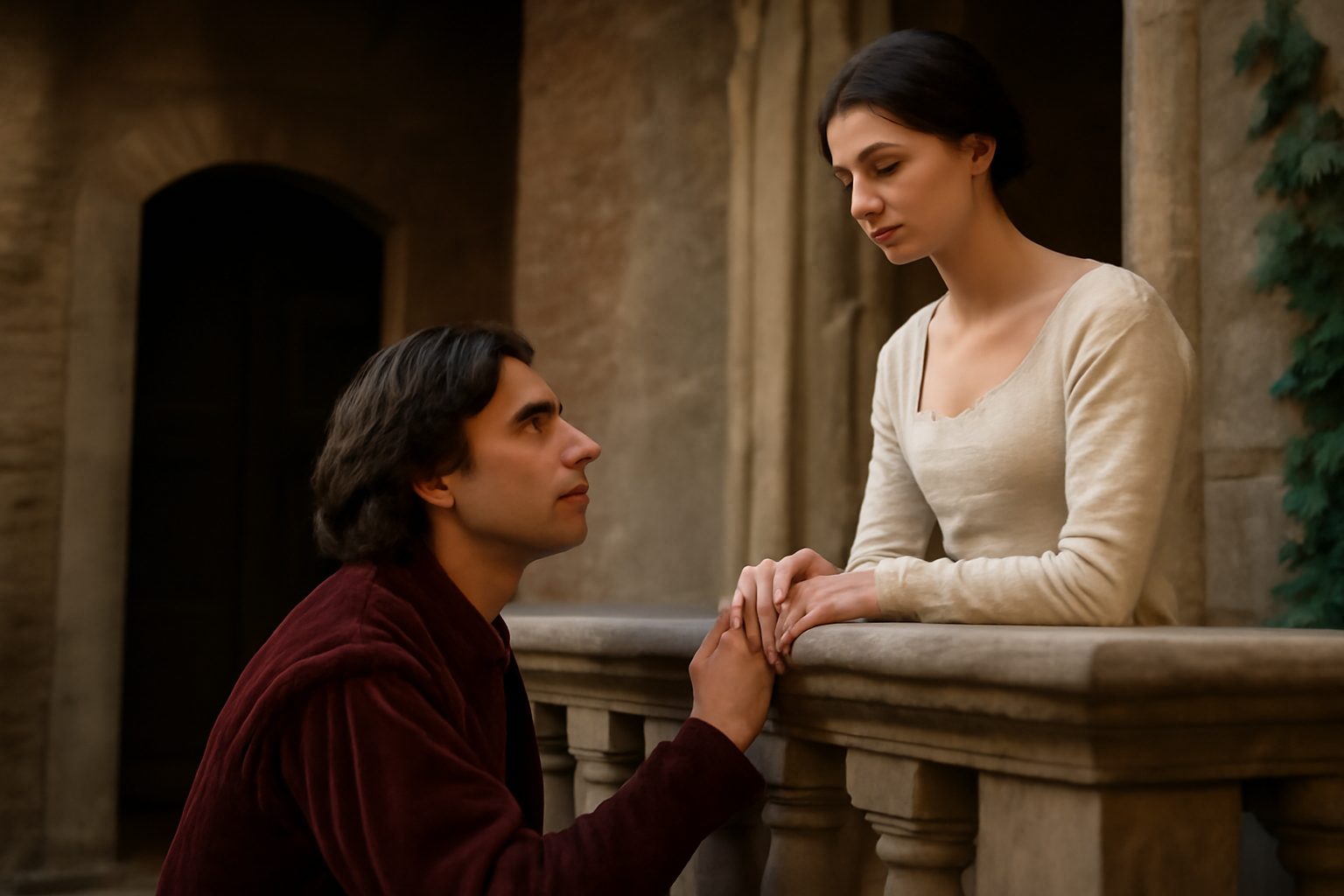
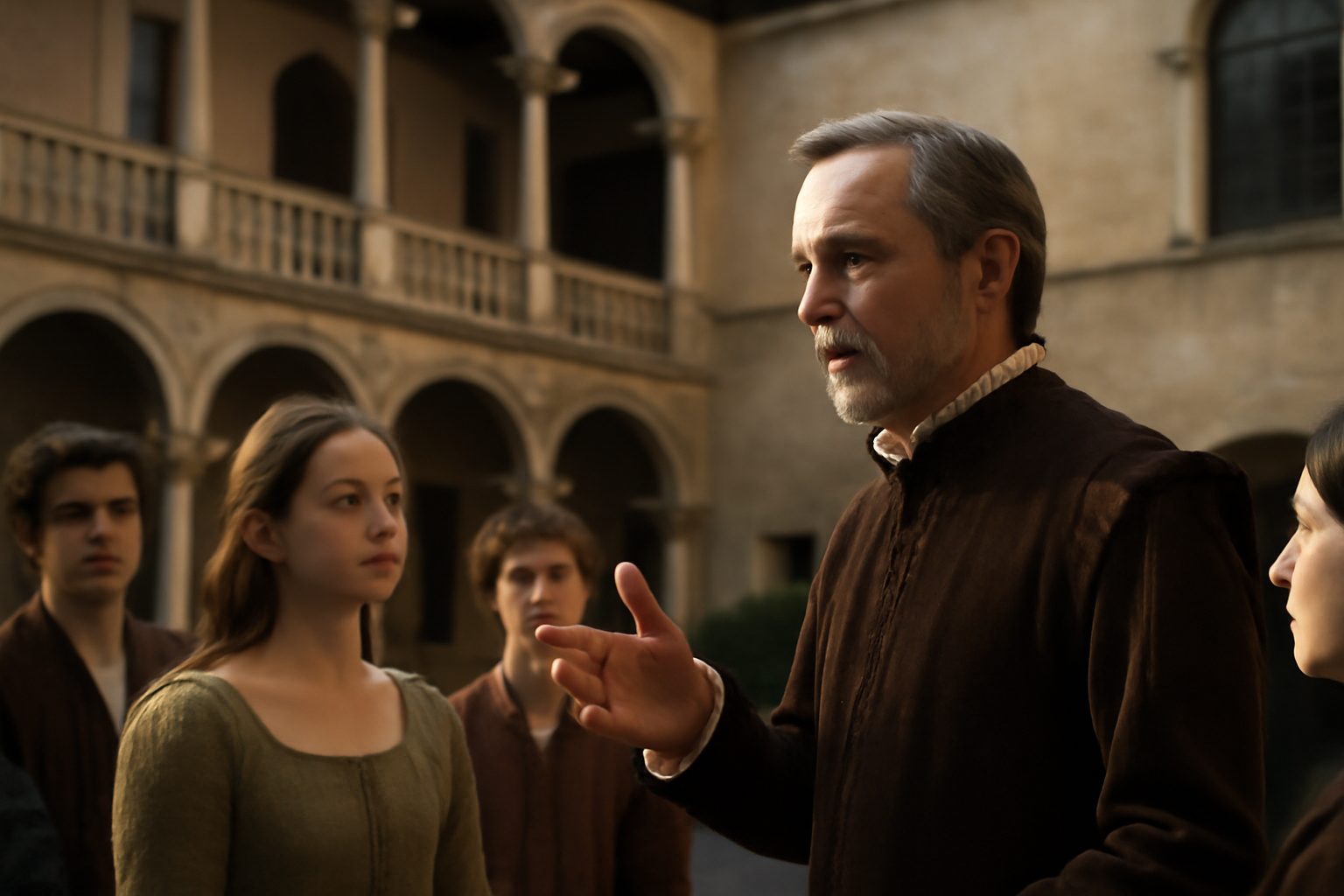
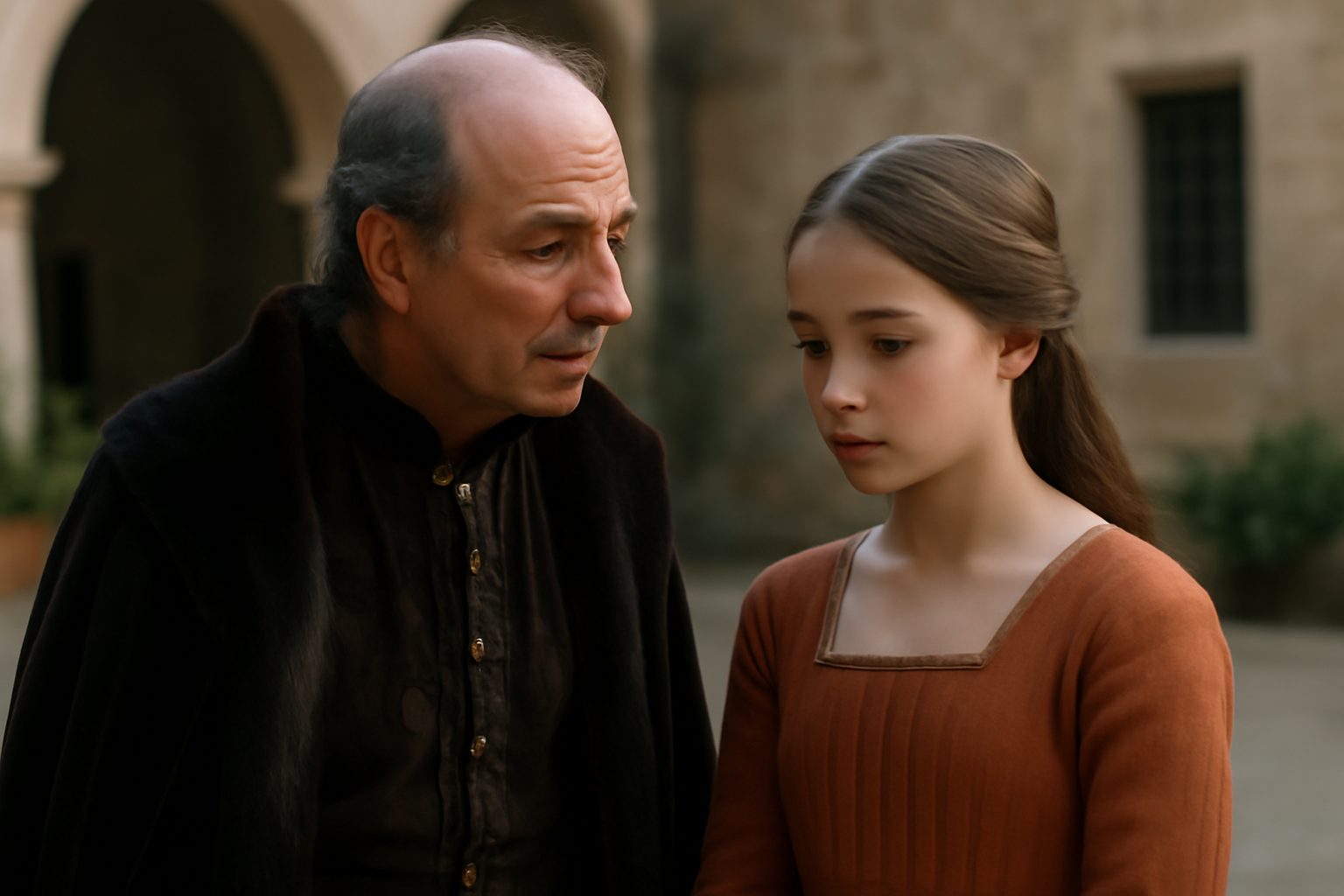
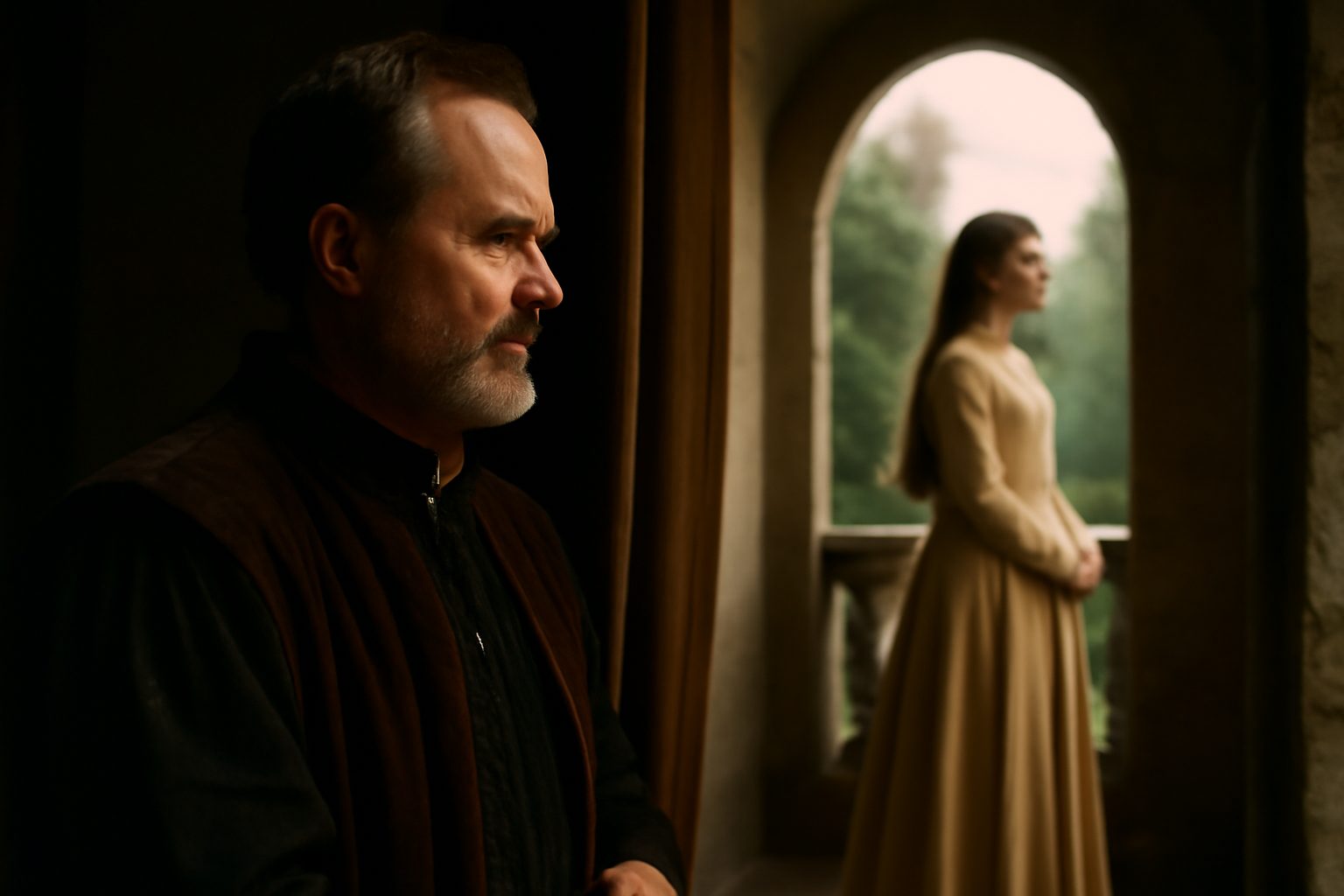
In Act 1, Scene 2 of Romeo and Juliet, Paris, a nobleman, presses Lord Capulet for permission to marry Juliet. Capulet, though initially hesitant, invites Paris to a feast to woo her, then realizes he should have confirmed whether Paris actually wants to attend. This line reveals Capulet's casual oversight in the midst of their negotiation.
Romeo: "Indeed, I should have ask'd you that before."
In modern day english, we would say:
I really should have asked you that earlier.
Frequently Asked Questions
What does Romeo realize he forgot to do earlier?
Romeo realizes he forgot to ask a question that was on his mind before.
Connections to other verses:
Connections to "Indeed, I should have ask'd you that before."
The verse "Indeed, I should have ask'd you that before." is spoken by the servant in response to Romeo's question about whose guest list he is reading. This moment highlights the servant's lack of awareness and sets up a chain of interactions that drive the plot forward.
Link to Literacy and Inquiry
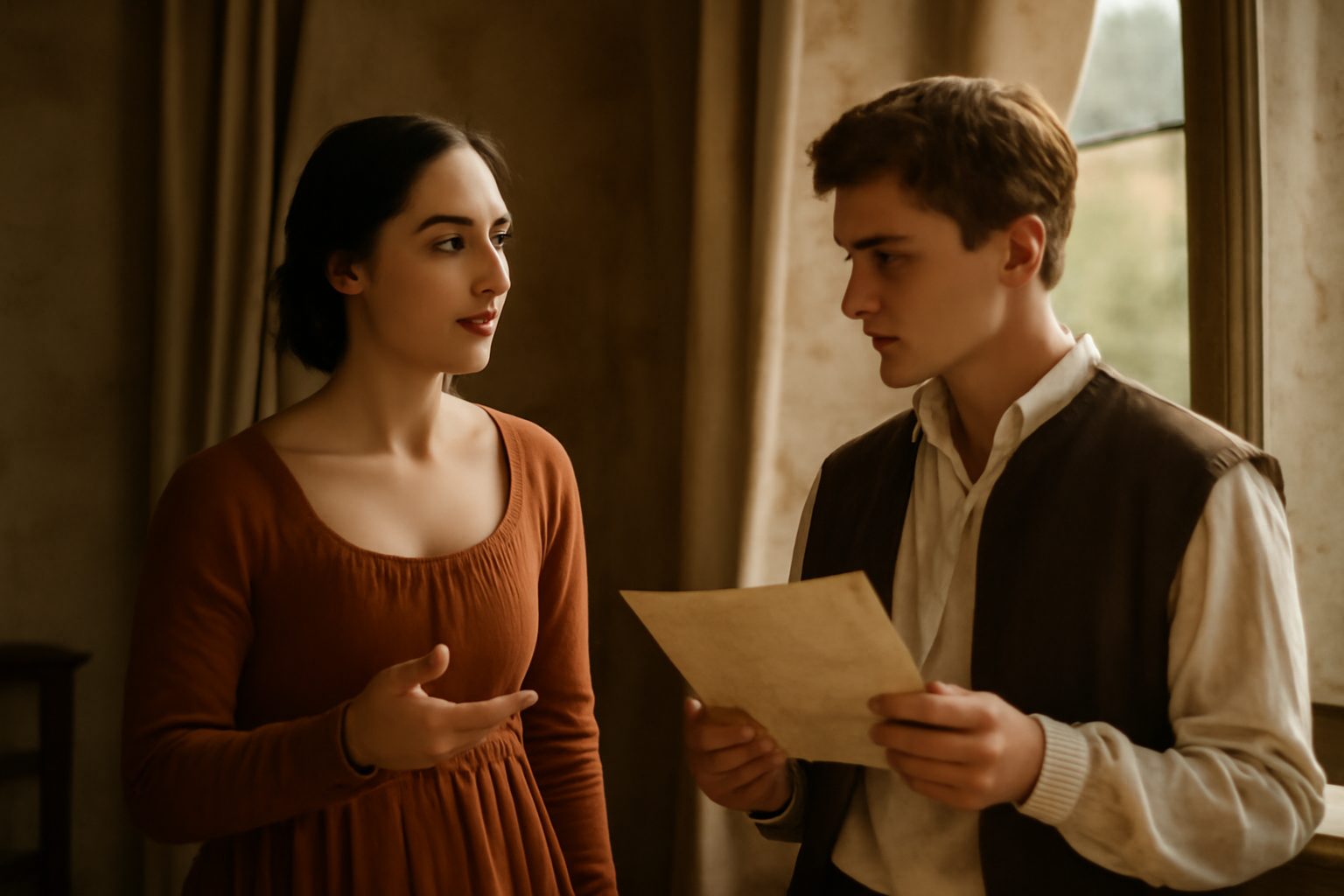
This line connects to earlier inquiries about literacy, such as when the servant says, "God gi' god-den. I pray, sir, can you read?" and "pray, can you read any thing you see?" These emphasize the servant's dependence on others to interpret the written word, underscoring themes of communication and social hierarchy.
Relationship to the Feast Invitation
The servant's admission relates directly to his mission: he has been "sent to find those persons whose names are here" written. His forgetfulness in asking whose list it is contrasts with Capulet’s detailed instructions about the feast at "This night I hold an old accustom'd feast", highlighting the disarray that inadvertently brings Romeo and Juliet together.
Contrast with Social Graces
Capulet’s hospitality, as seen in lines like "Such as I love; and you, among the store" and "My house and welcome on their pleasure stay", stands in stark contrast to the servant's bumbling, yet this very mishap allows Romeo to learn of the feast and decide to attend, altering the story’s course.
Foreshadowing and Irony
The servant’s lapse—needing to ask whose list he carries—ironically enables the meeting of Romeo and Juliet, fulfilling Capulet’s wish that Paris "woo her, gentle Paris, get her heart", though with unintended consequences. It also ties into the theme of fate, as the servant’s error seems a small but crucial twist of destiny.