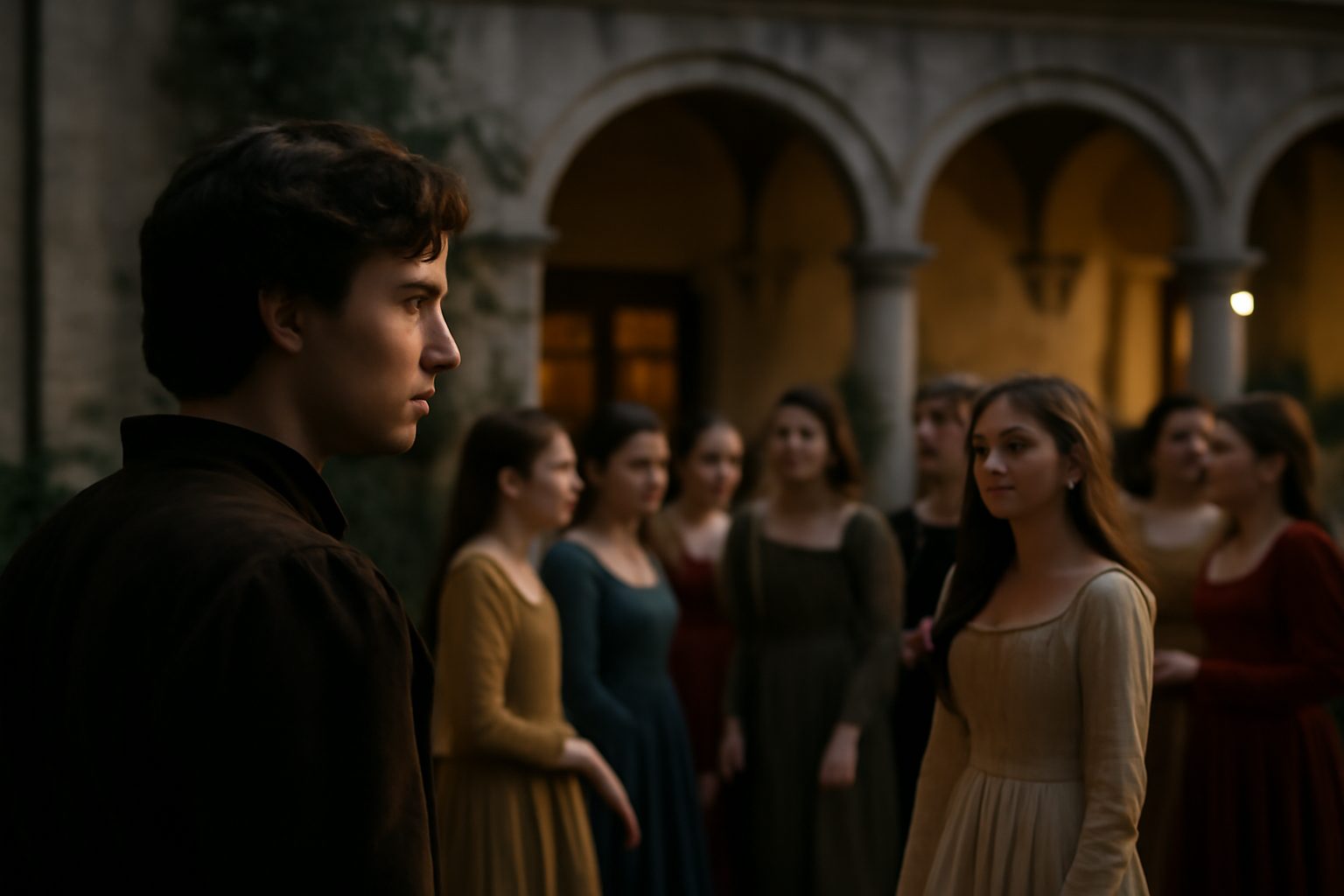
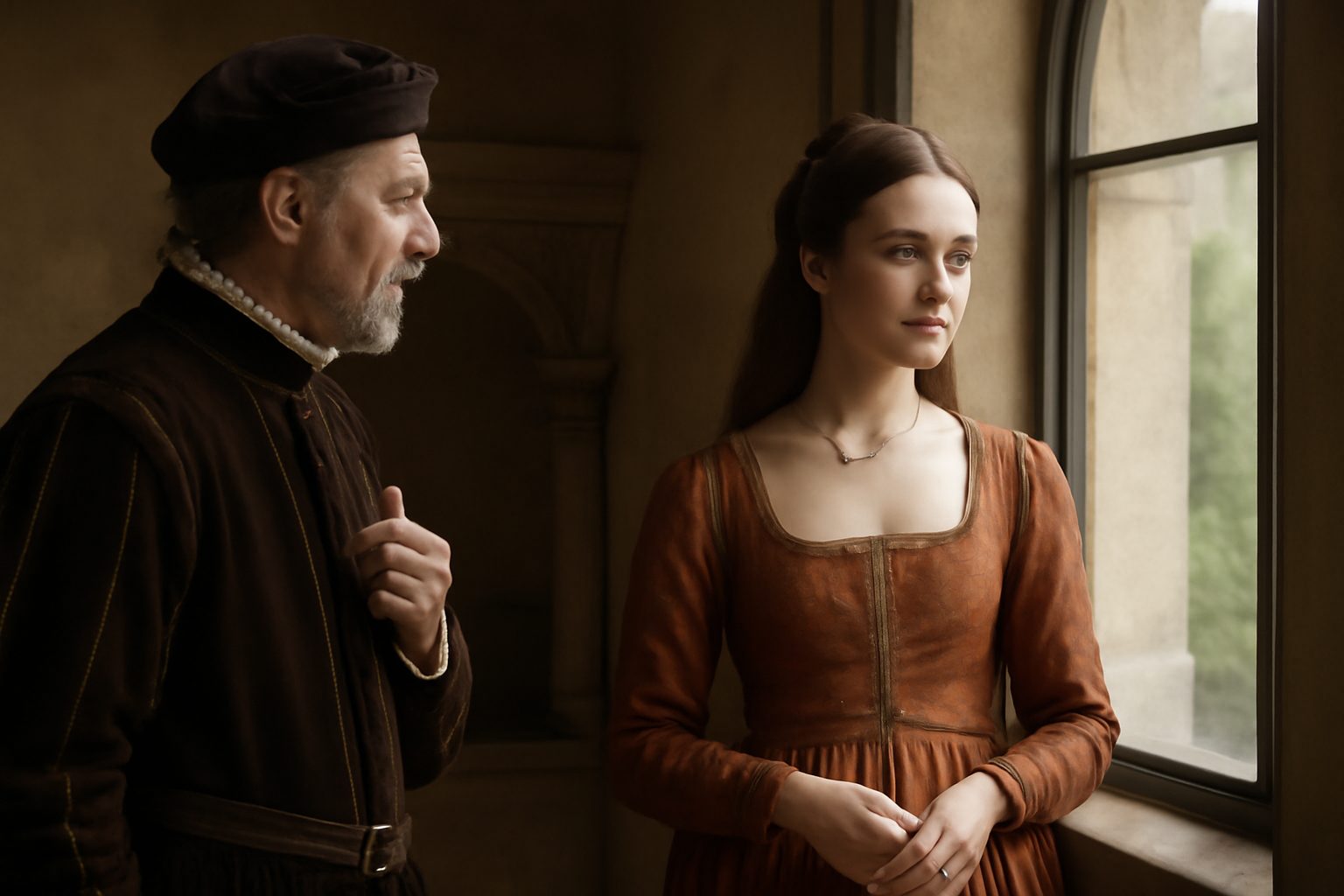
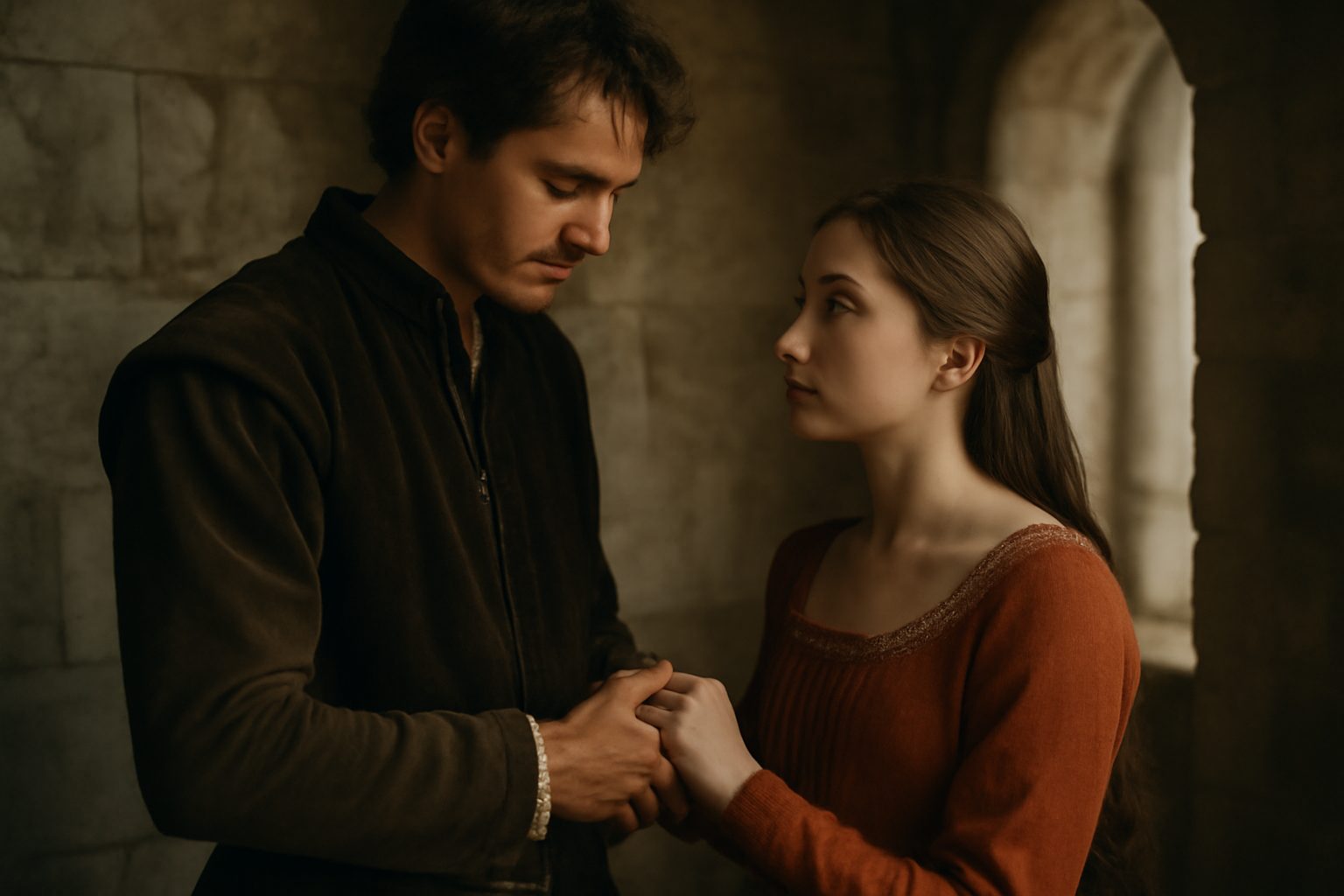
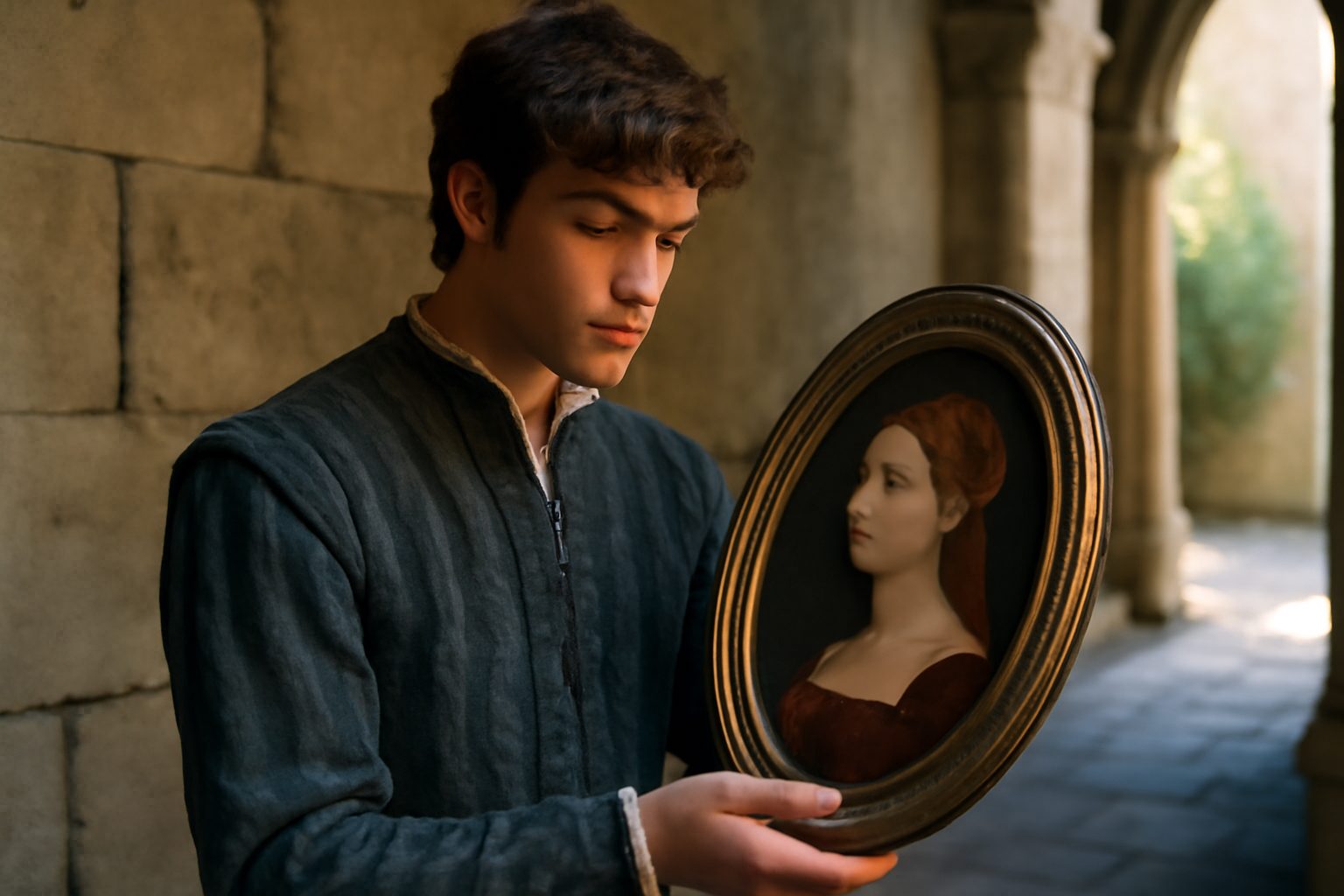
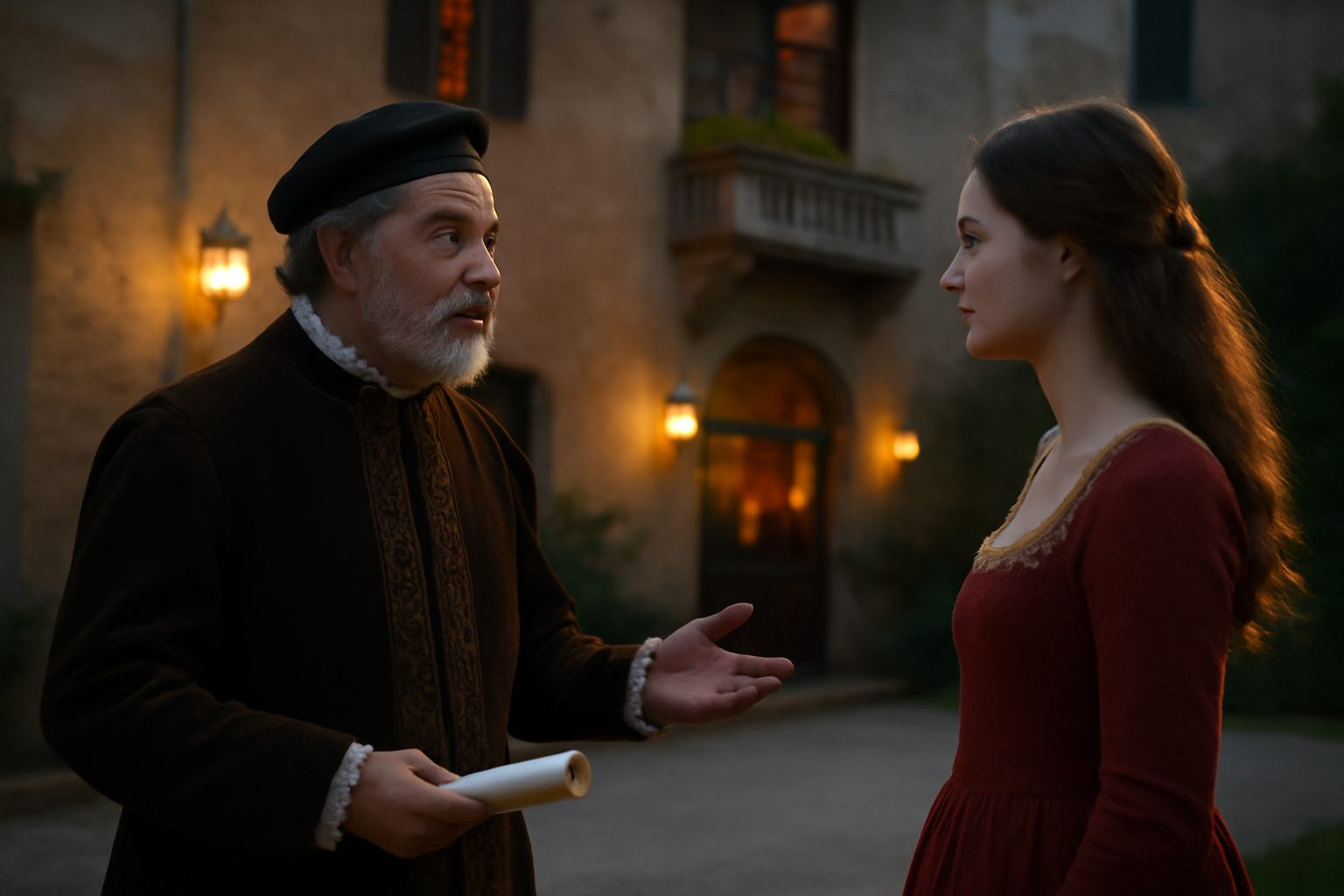
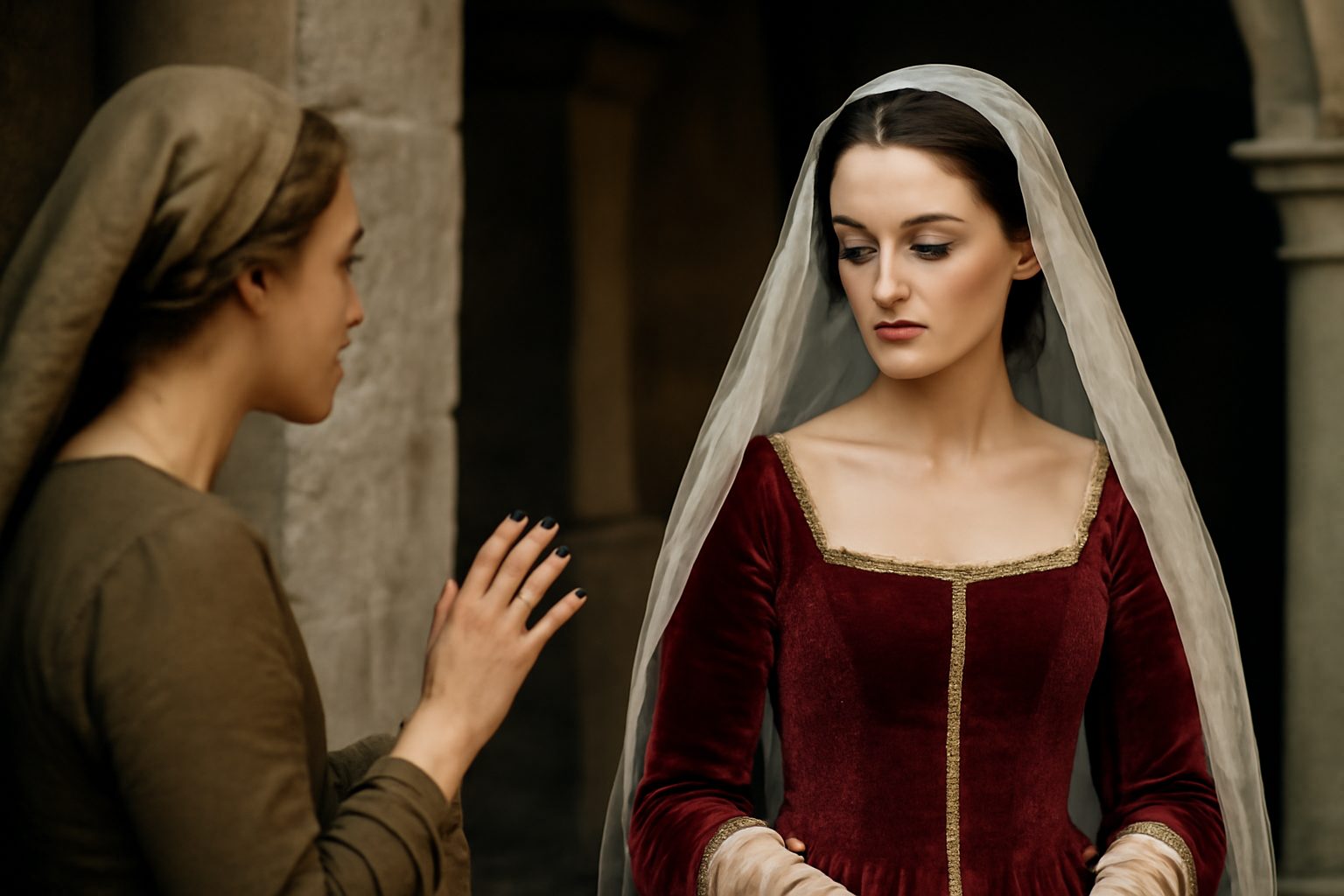
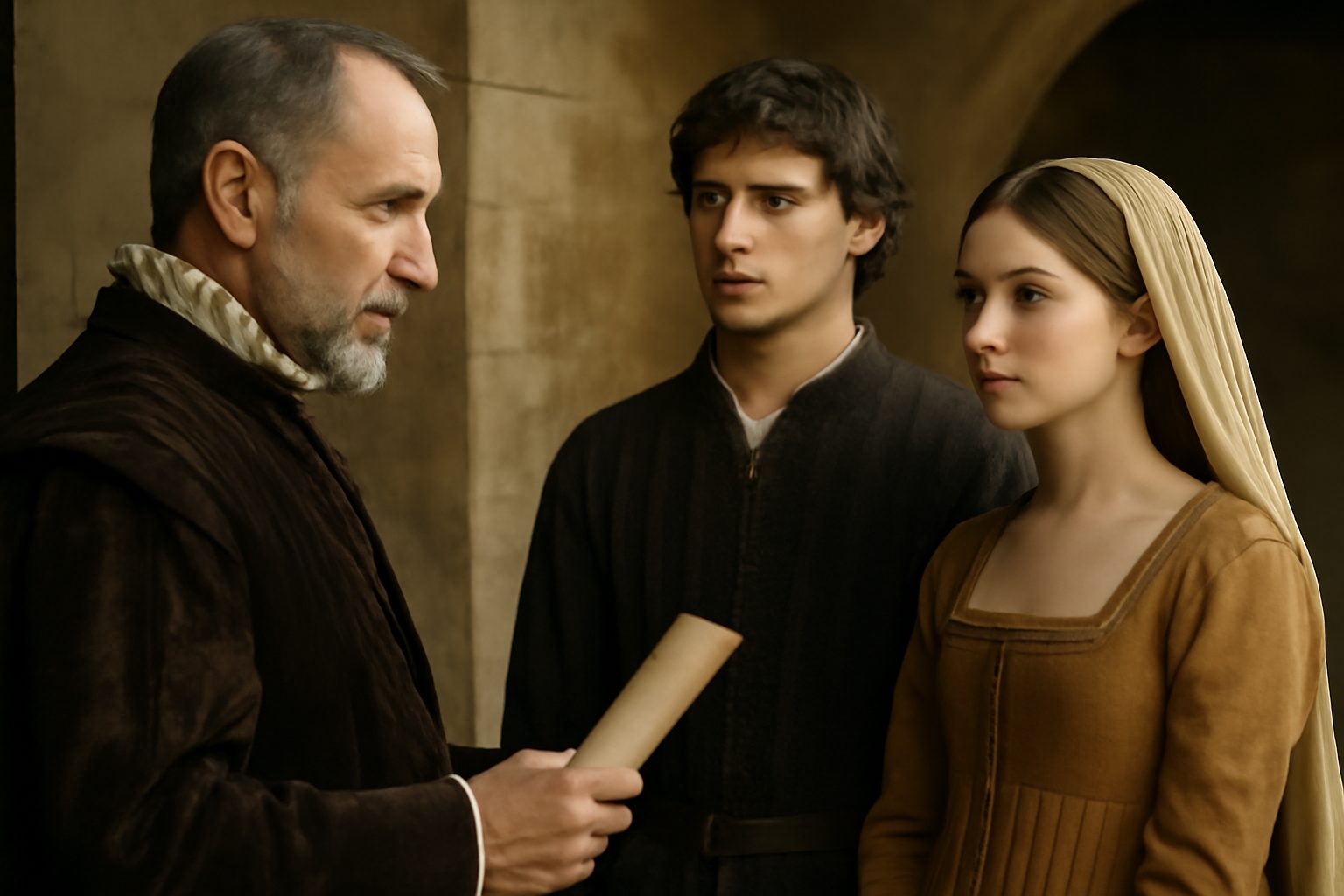
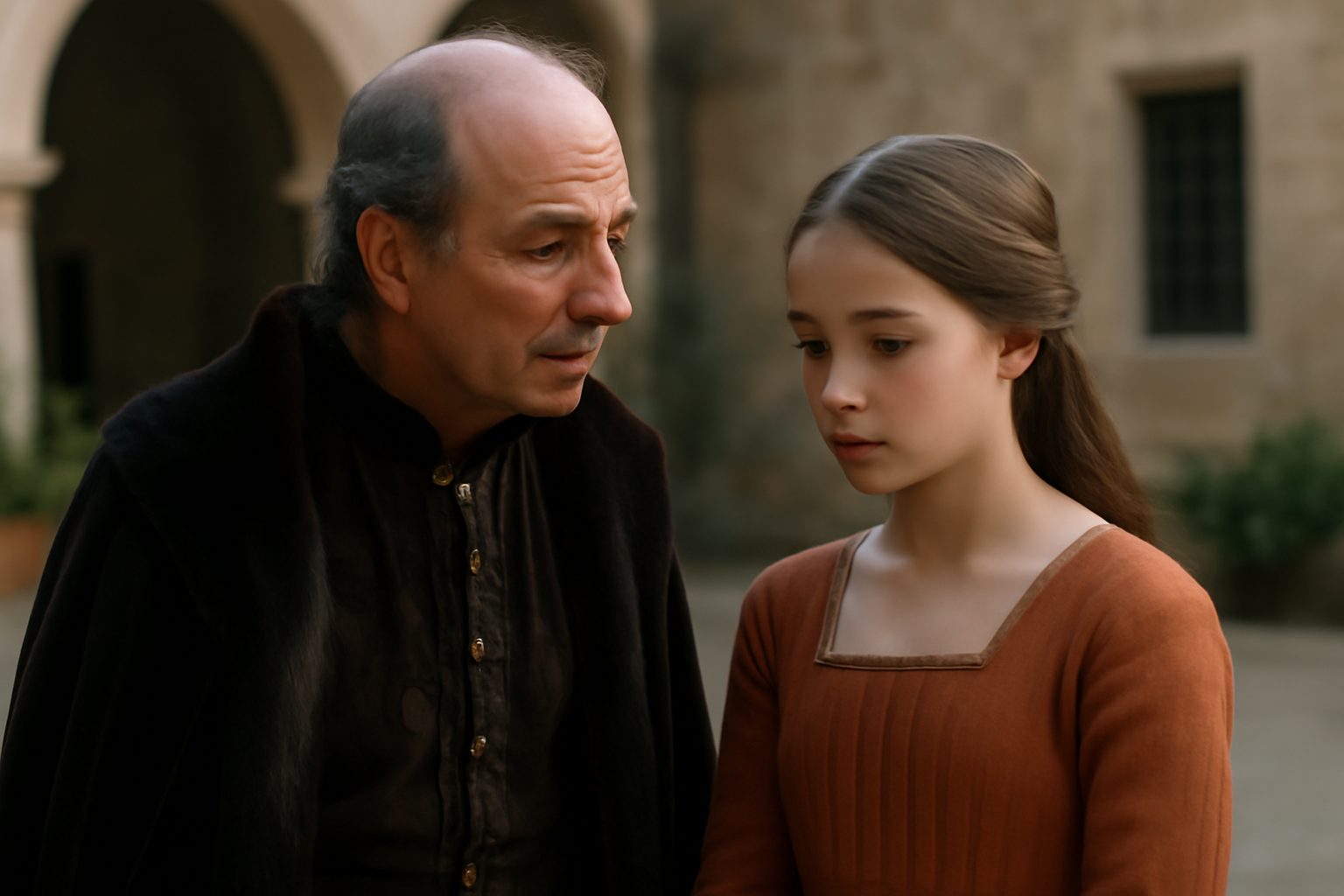
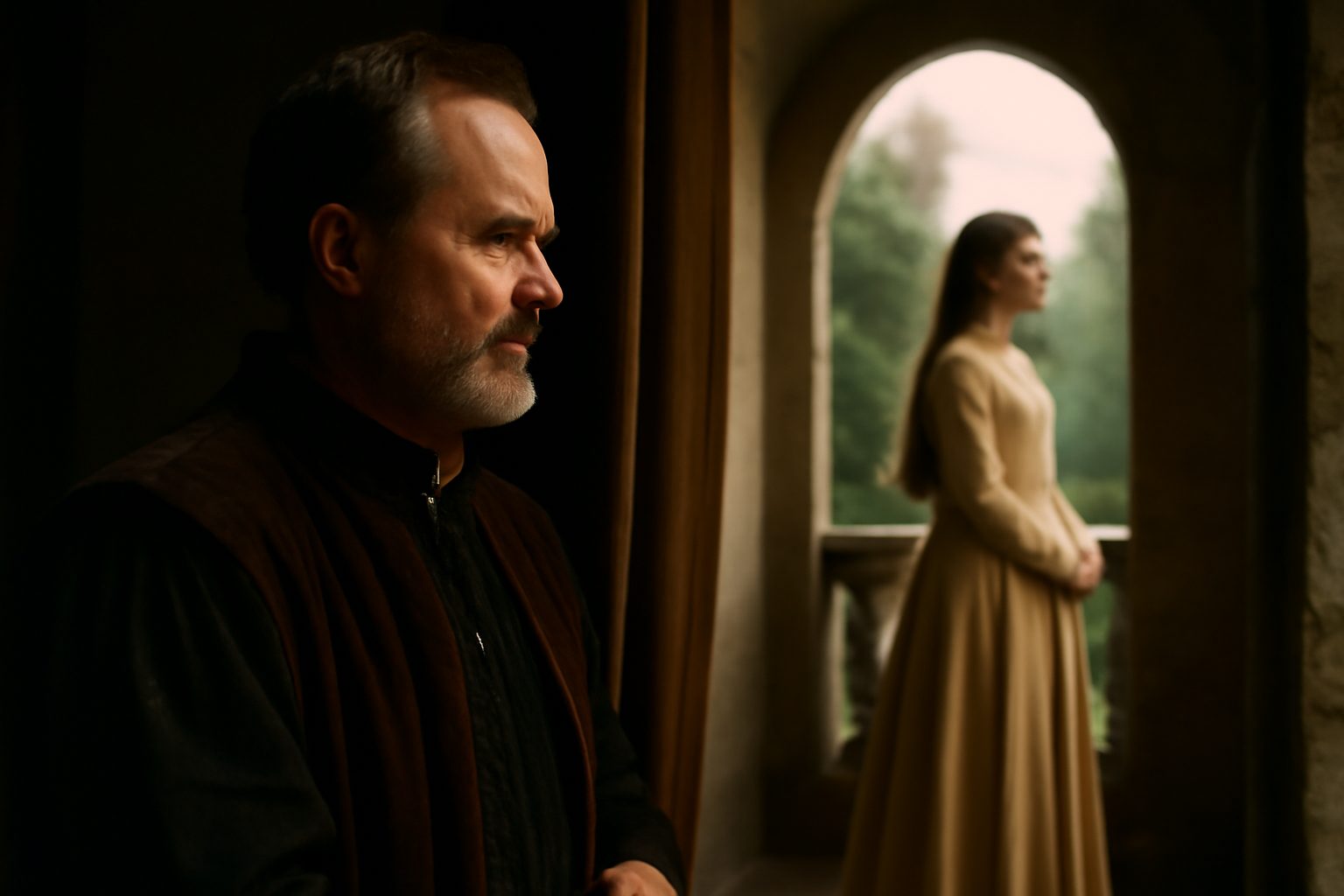
In Act 1, Scene 2 of Romeo and Juliet, Paris presses Lord Capulet for Juliet's hand in marriage, but Capulet urges patience, suggesting Paris woo her gently. When the conversation shifts to the ongoing feud between the Montagues and Capulets, Capulet expresses frustration, implying that if deceit perpetuates the conflict, sorrow will ignite into rage. This line reflects the tension and simmering emotions that underpin the play's central conflict.
Romeo: "Maintains such falsehood, then turn tears to fires;"
In modern day english, we would say:
If you keep lying like this, then your tears will turn into flames.
Frequently Asked Questions
What does Romeo mean when he says tears will turn to fires?
Romeo means that if the lies continue, his sadness (tears) will turn into anger (fires).
Connections to other verses:
Connections to "Maintains such falsehood, then turn tears to..."
The verse Maintains such falsehood, then turn tears to... is part of Benvolio's counsel to Romeo, urging him to move past his unrequited love for Rosaline. It connects thematically and contextually with several other verses in Act 1, Scene 2.
Theme of Love and Perception
Benvolio's advice to Romeo about overcoming false perceptions of love is echoed in Compare her face with some that I shall show, where he suggests comparing Rosaline to other beauties to diminish her appeal. Similarly, Tut, you saw her fair, none else being by critiques Romeo's idealized view, reinforcing the idea that absence of comparison breeds false admiration.
Metaphorical Language
The imagery of tears and emotional transformation in the verse relates to Turn giddy, and be holp by backward turning, which uses a similar concept of reversal for healing. The idea of emotional remedy is further supported by Tut, man, one fire burns out another's burning, advocating for replacing one passion with another to ease pain.
Contrast and Hyperbole
Benvolio's hyperbolic assurance in And I will make thee think thy swan a crow parallels the dramatic shift implied in "turn tears to...", emphasizing how a change in perspective can alter emotions drastically. The notion of falsehood in love is also challenged in Transparent heretics, be burnt for liars!, where Romeo dismisses the idea that any could surpass Rosaline, yet Benvolio's plan aims to expose this as a misconception.
Narrative Progression
This verse sets the stage for the invitation to Capulet's feast, referenced in Sups the fair Rosaline whom thou so lovest, where Benvolio tempts Romeo to attend and see other women. The plan culminates in I'll go along, no such sight to be shown, showing Romeo's reluctant agreement, which ultimately leads to his encounter with Juliet.