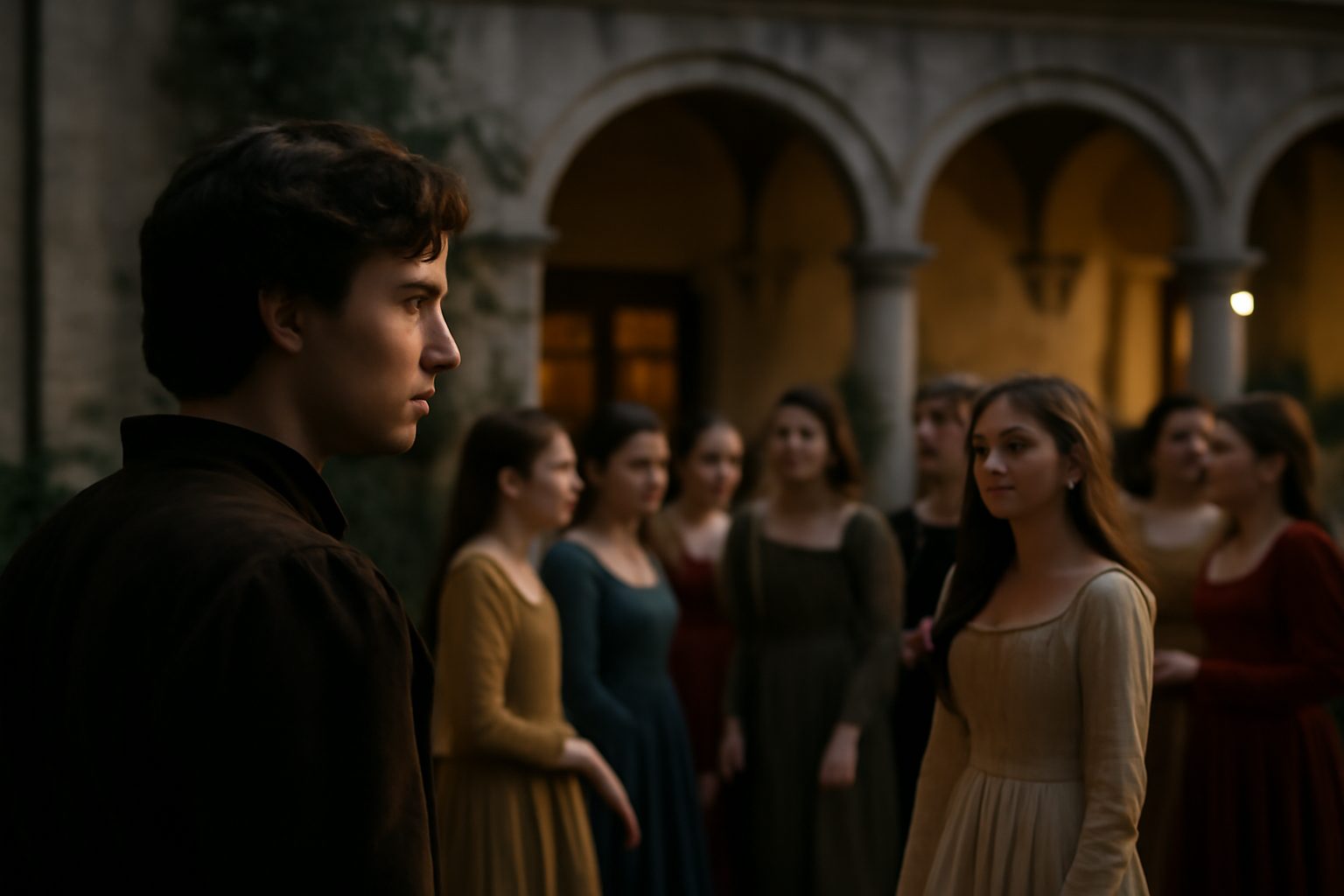
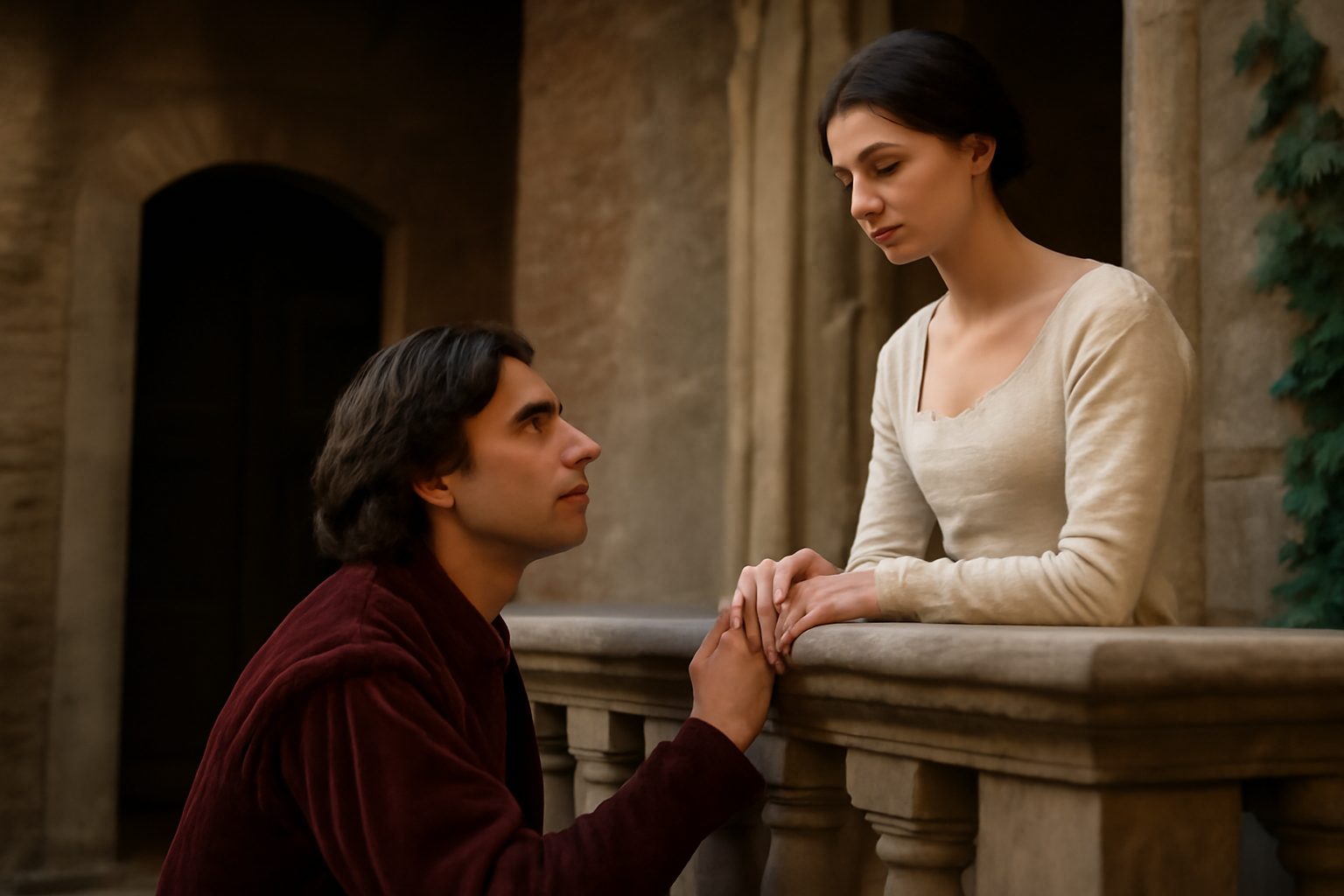
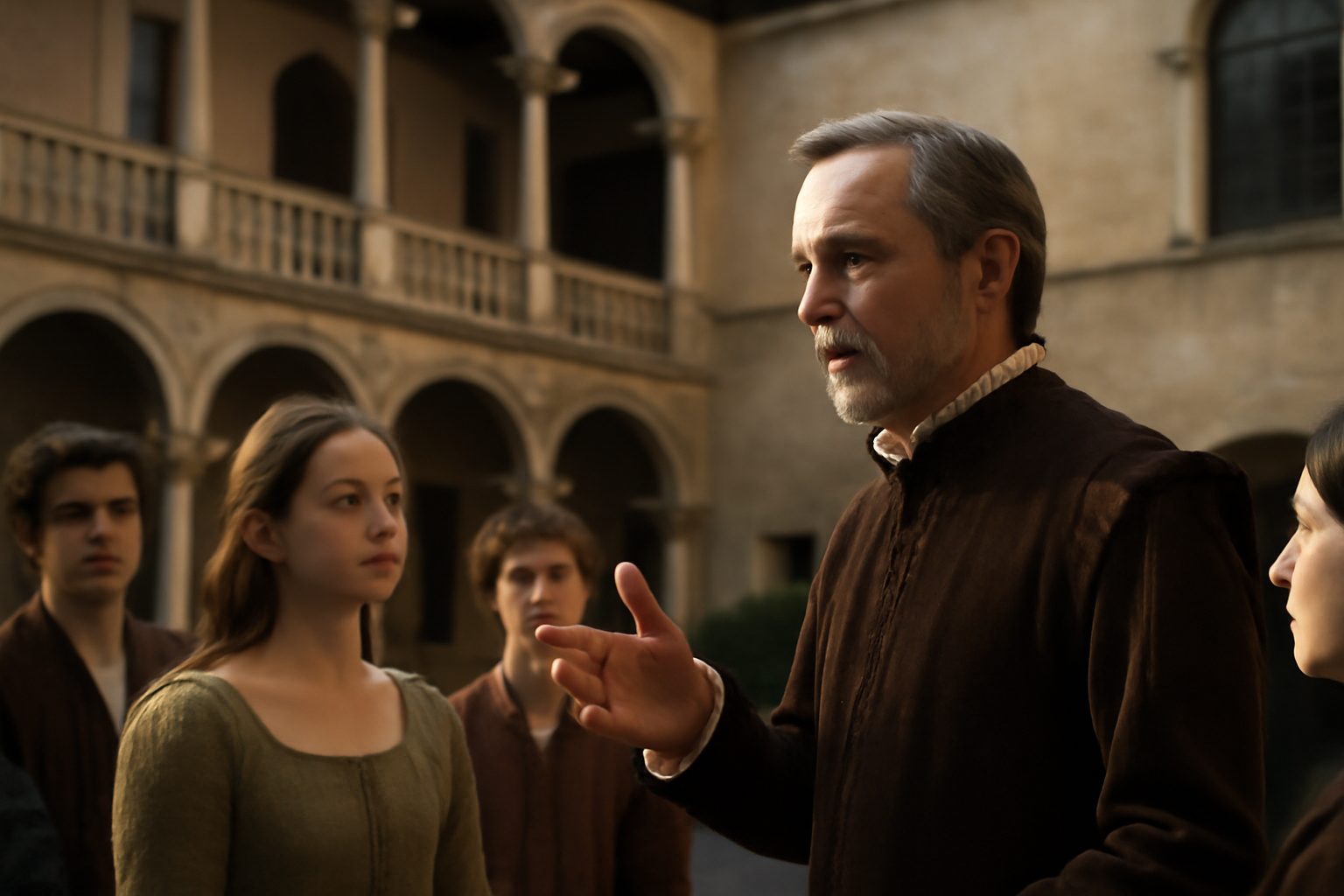
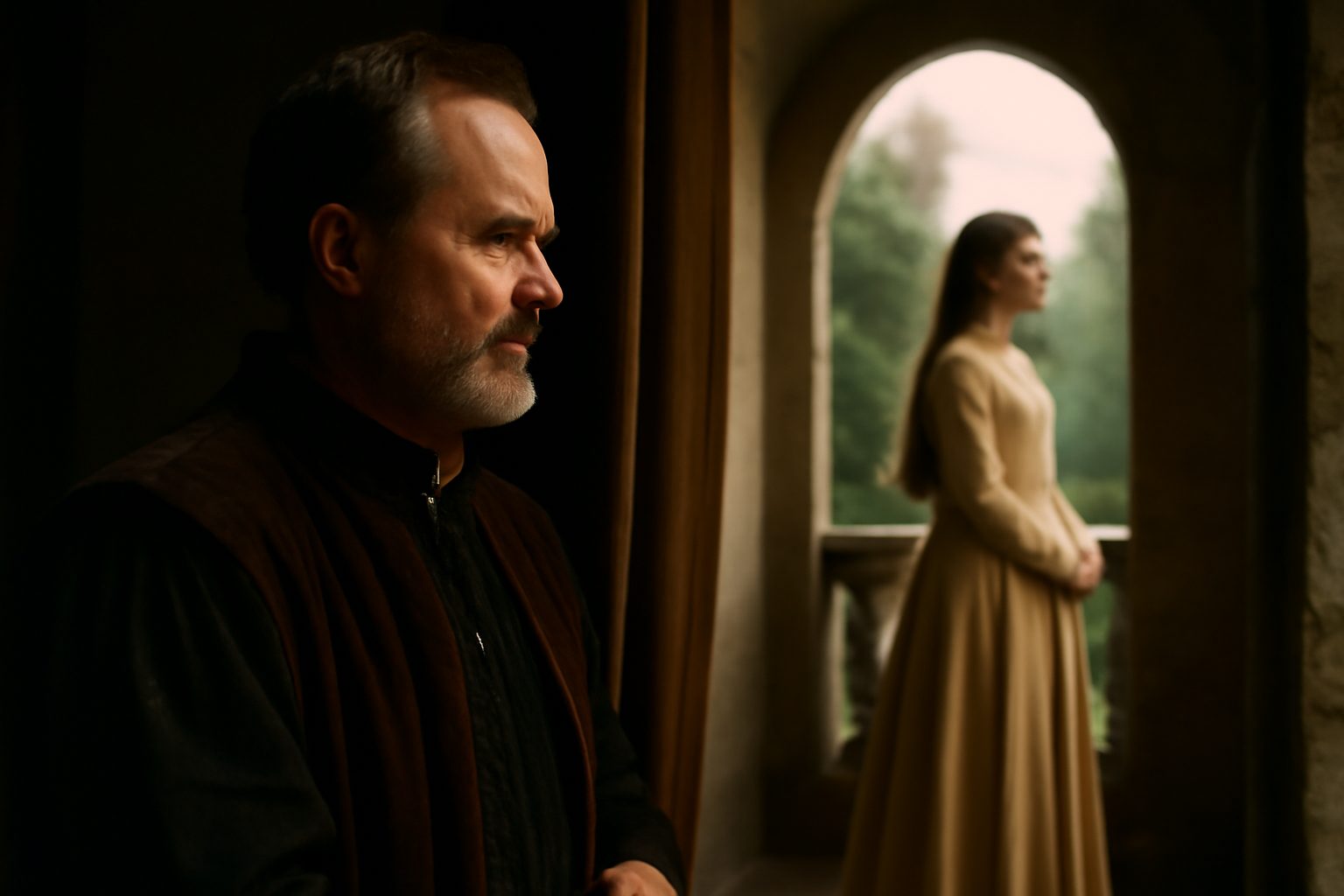
In Act 1, Scene 2 of Romeo and Juliet, Paris presses Capulet for permission to marry Juliet, but Capulet hesitates, urging him to wait. When Paris insists that younger girls have already become happy mothers, Capulet dismissively mocks the idea, suggesting those who claim so are deceitful and deserve punishment. This sharp remark reflects Capulet's protective yet dismissive attitude toward Paris's persistence.
Romeo: "Transparent heretics, be burnt for liars!"
In modern day english, we would say:
People who pretend to be honest but are clearly deceitful deserve to be exposed and punished.
Frequently Asked Questions
What does Romeo mean when he calls someone a transparent heretic?
Romeo is saying that people who pretend to be honest but are actually deceitful deserve to be punished.
Connections to other verses:
Connections to "Transparent heretics, be burnt for liars!"
The line "Transparent heretics, be burnt for liars!" is spoken by Romeo in a passionate declaration about the beauty of Rosaline, whom he believes surpasses all others. This hyperbolic statement reflects his intense, almost religious devotion to her, framing any denial of her beauty as heresy punishable by fire.
Related to Romeo's Idealization of Love
Romeo's claim that those who disagree are heretics connects to his earlier idealization of Rosaline. In "One fairer than my love! the all-seeing sun", he asserts that even the sun has never seen anyone as fair as Rosaline, reinforcing the idea that denying her beauty is a form of blasphemy. Similarly, "Ne'er saw her match since first the world begun" emphasizes her unparalleled beauty, making the "heretics" line a natural extension of this exaggerated praise.
Contrast with Benvolio's Practical Advice
Benvolio's attempts to counsel Romeo provide a stark contrast to Romeo's fervent declarations. In "And I will make thee think thy swan a crow", Benvolio suggests that comparing Rosaline to other women will diminish Romeo's infatuation, directly opposing Romeo's claim that such a comparison is heretical. Likewise, "Tut, you saw her fair, none else being by" implies that Romeo's perception is biased and isolated, further undermining the absolutism of the "heretics" statement.
Foreshadowing and Thematic Links
The intensity of Romeo's language here foreshadows his capacity for swift emotional shifts, which becomes central to the play. This is subtly echoed in "One desperate grief cures with another's languish", hinting that his current dogmatic devotion may be replaced by another passion, as indeed happens when he meets Juliet. The idea of "burning" also metaphorically ties to the play's themes of passionate, destructive love, later realized in the tragic conclusion.
Connection to Capulet's Party
The scene's focus on Capulet's feast, where Romeo is destined to meet Juliet, adds irony to his words. Invitations like "This night I hold an old accustom'd feast" and "With all the admired beauties of Verona" set the stage for Romeo to encounter others who may challenge his fixed views, making his "heretics" proclamation an instance of dramatic irony, as he will soon abandon this devotion for Juliet.