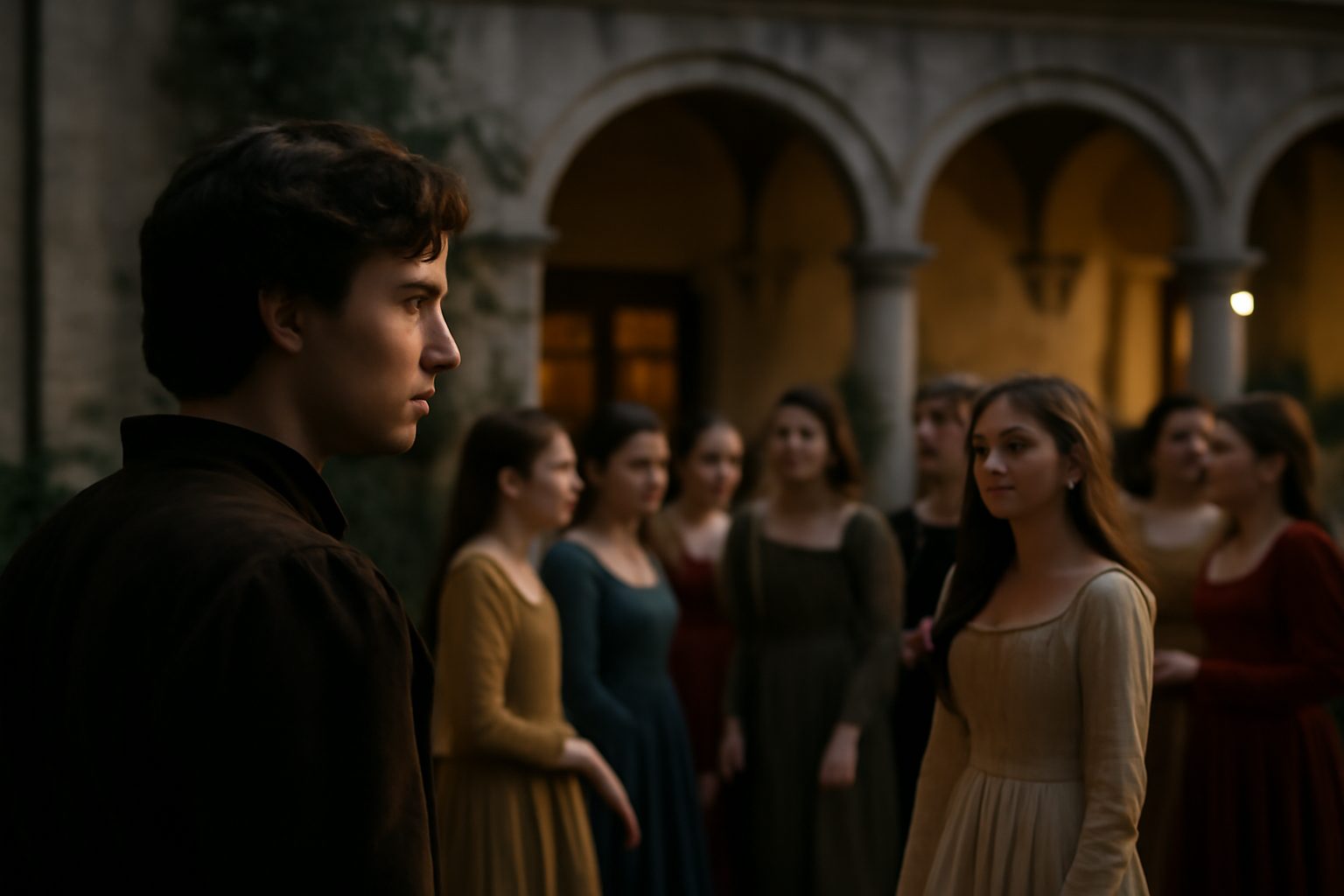
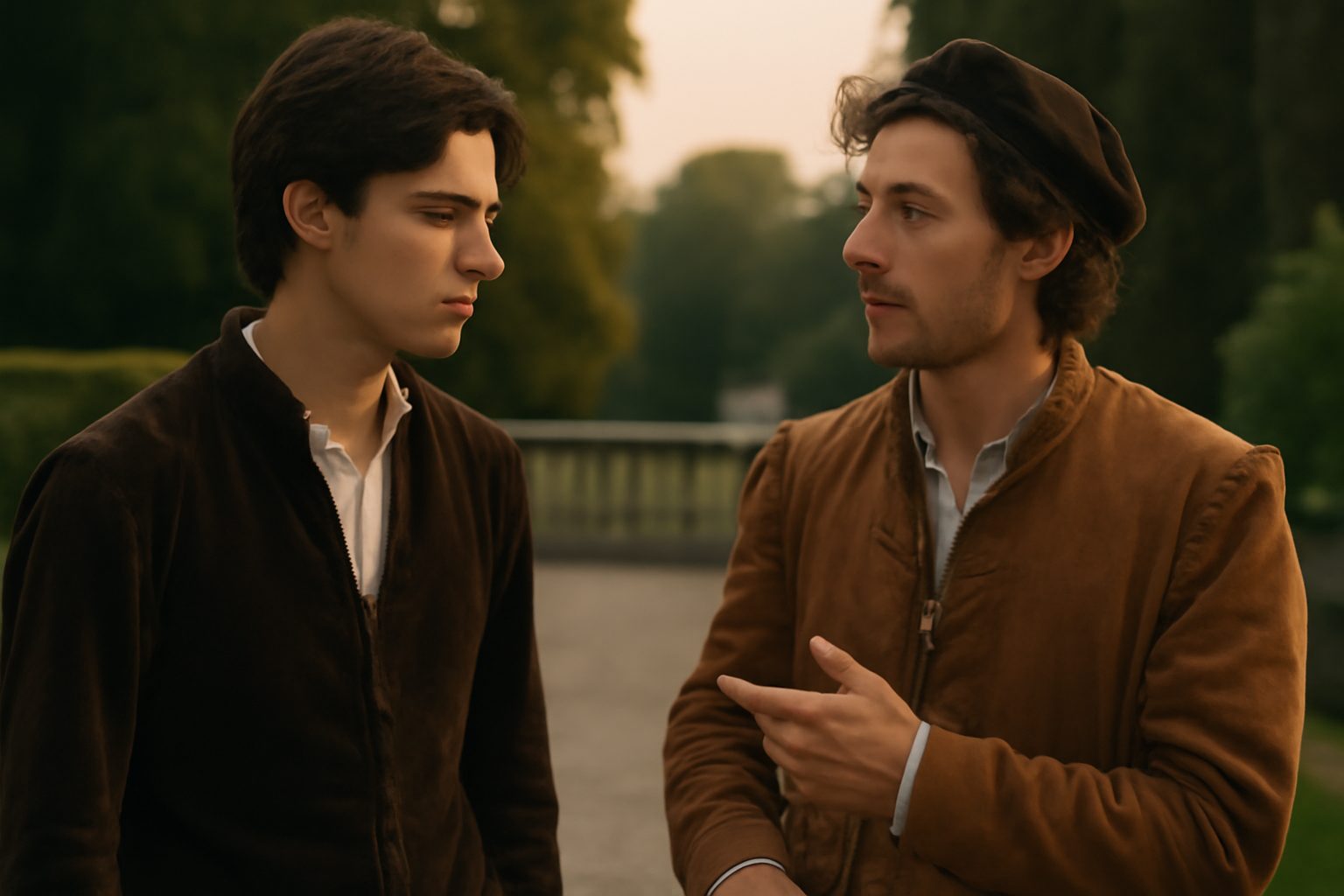
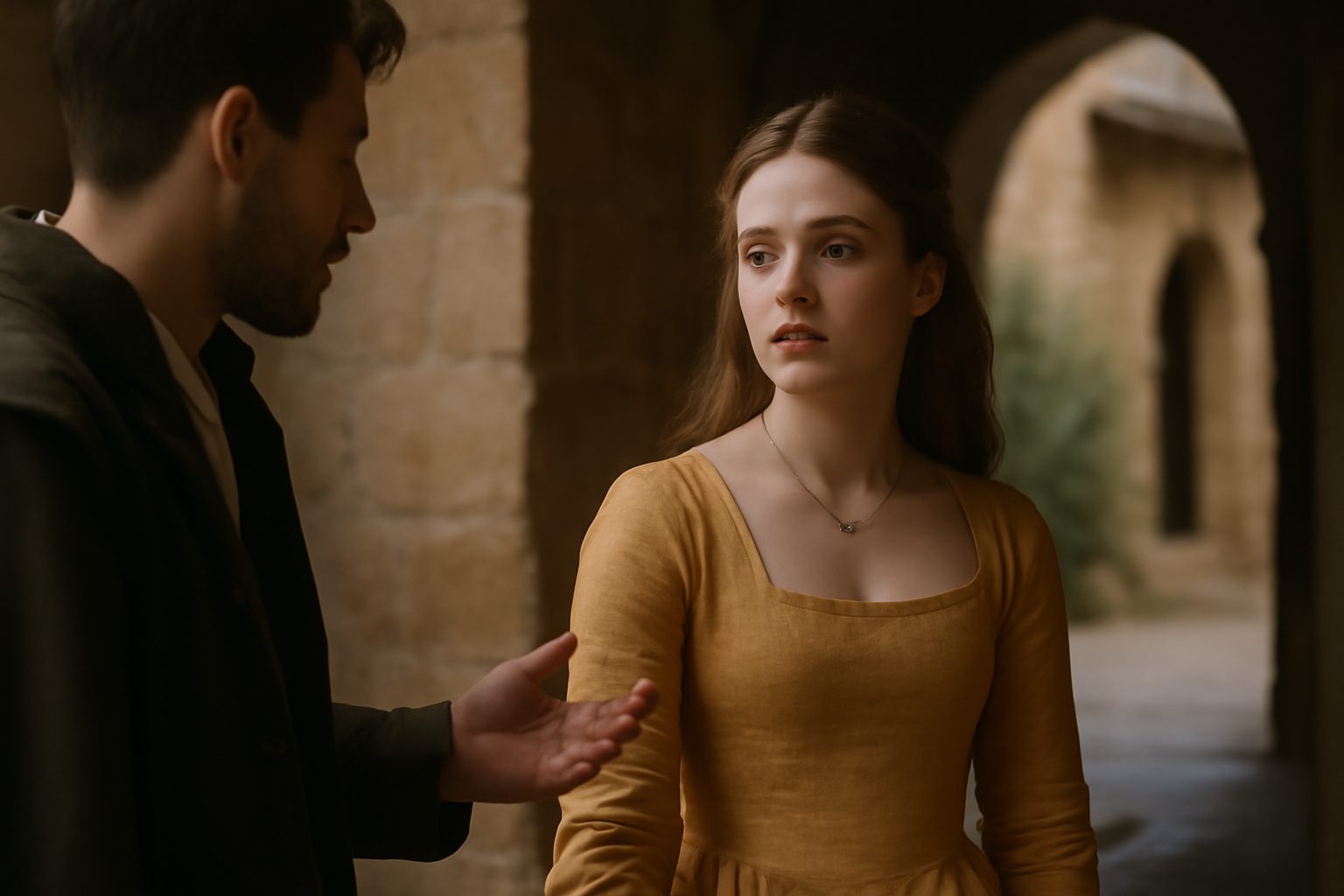
In Act 1, Scene 2 of Romeo and Juliet, Benvolio urges Romeo to move on from his unrequited love for Rosaline by seeking out other beauties. This line suggests that Romeo should let a new attraction replace his old infatuation, as if curing one ailment with another. The moment highlights Benvolio's pragmatic advice, contrasting with Romeo's stubborn melancholy.
Benvolio: "Take thou some new infection to thy eye,"
In modern day english, we would say:
Go infect your eyes with someone else’s beauty instead.
Frequently Asked Questions
What does Benvolio suggest Romeo should do to get over his sadness?
Benvolio suggests that Romeo should look at other beautiful women to forget about his current sadness.
Connections to other verses:
Connections to "Take thou some new infection to thy eye"
The verse "Take thou some new infection to thy eye" is spoken by Benvolio as part of his advice to Romeo, who is lovesick over Rosaline. This line suggests replacing one infatuation with another as a cure for heartache, a theme echoed throughout the scene.
Related Themes and Advice
Benvolio's counsel is part of a broader pattern of suggesting distraction or replacement to alleviate emotional pain. For instance, he earlier states "Tut, man, one fire burns out another's burning", using the metaphor of fire to convey how a new love can extinguish the old. Similarly, "One pain is lessen'd by another's anguish" reinforces the idea of countering sorrow with a new focus, while "Turn giddy, and be holp by backward turning" implies that a change in perspective can bring relief. The culmination of this advice is summarized in "One desperate grief cures with another's languish", directly paralleling the "infection" metaphor in the queried verse.
Contrast with Capulet's Perspective
While Benvolio advocates for shifting affections, Capulet expresses caution about premature love in "And too soon marr'd are those so early made", referring to young marriages. This creates a thematic tension between reckless emotional change and measured maturity.
Invitation to the Feast
Benvolio's advice leads directly to the plan of attending Capulet's feast to find a new object of affection. He urges Romeo to "Go thither; and, with unattainted eye", encouraging an unbiased look at other women. He promises to "Compare her face with some that I shall show", and even claims "And I will make thee think thy swan a crow", emphasizing how new sights can diminish old attachments.
Romeo's Reluctance and Irony
Romeo resists this idea, insisting in "One fairer than my love! the all-seeing sun" that no one surpasses Rosaline, and in "Ne'er saw her match since first the world begun" hyperbolically affirming her uniqueness. The irony, of course, is that at the feast he will see Juliet and experience the very "new infection" Benvolio prescribed.