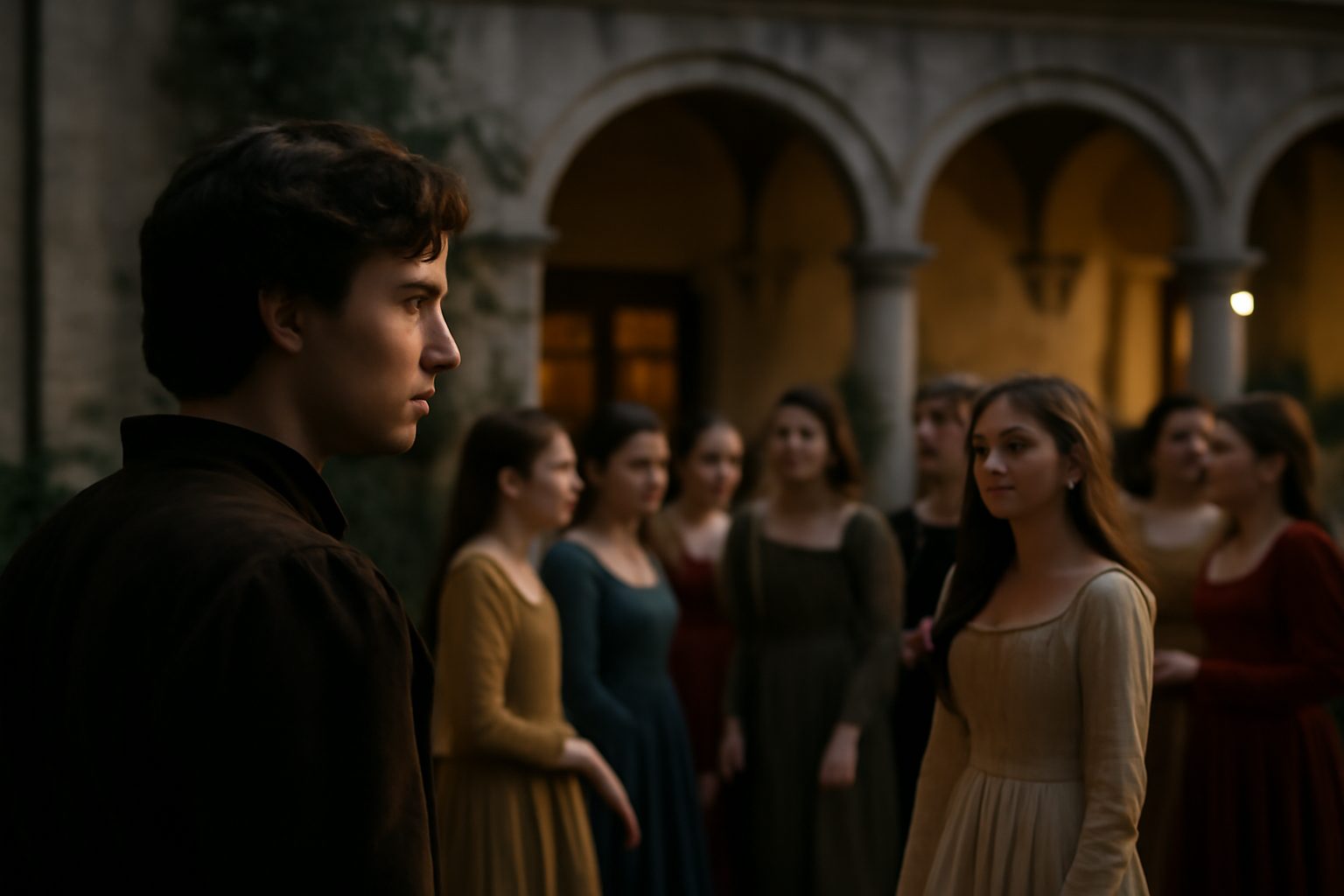
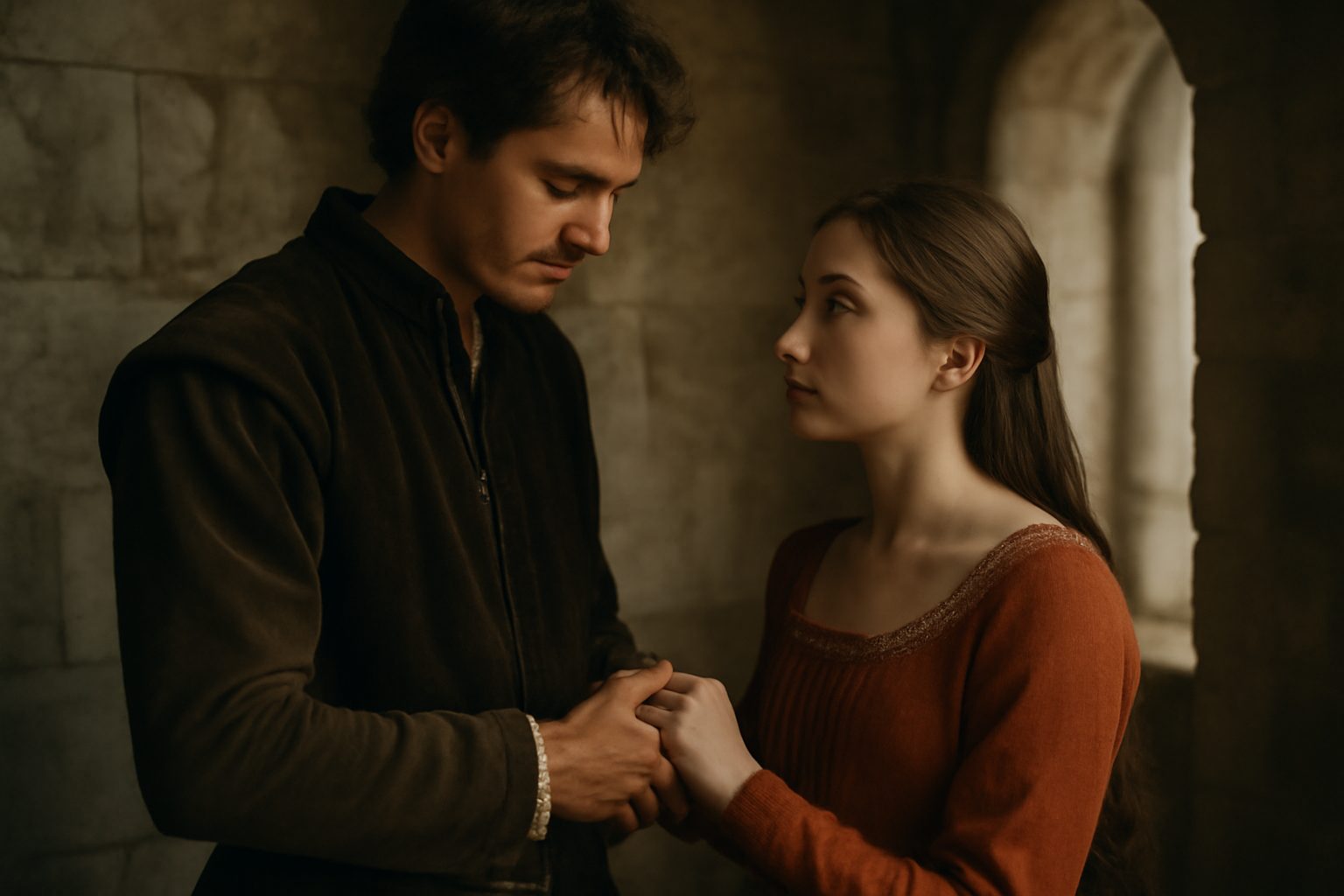
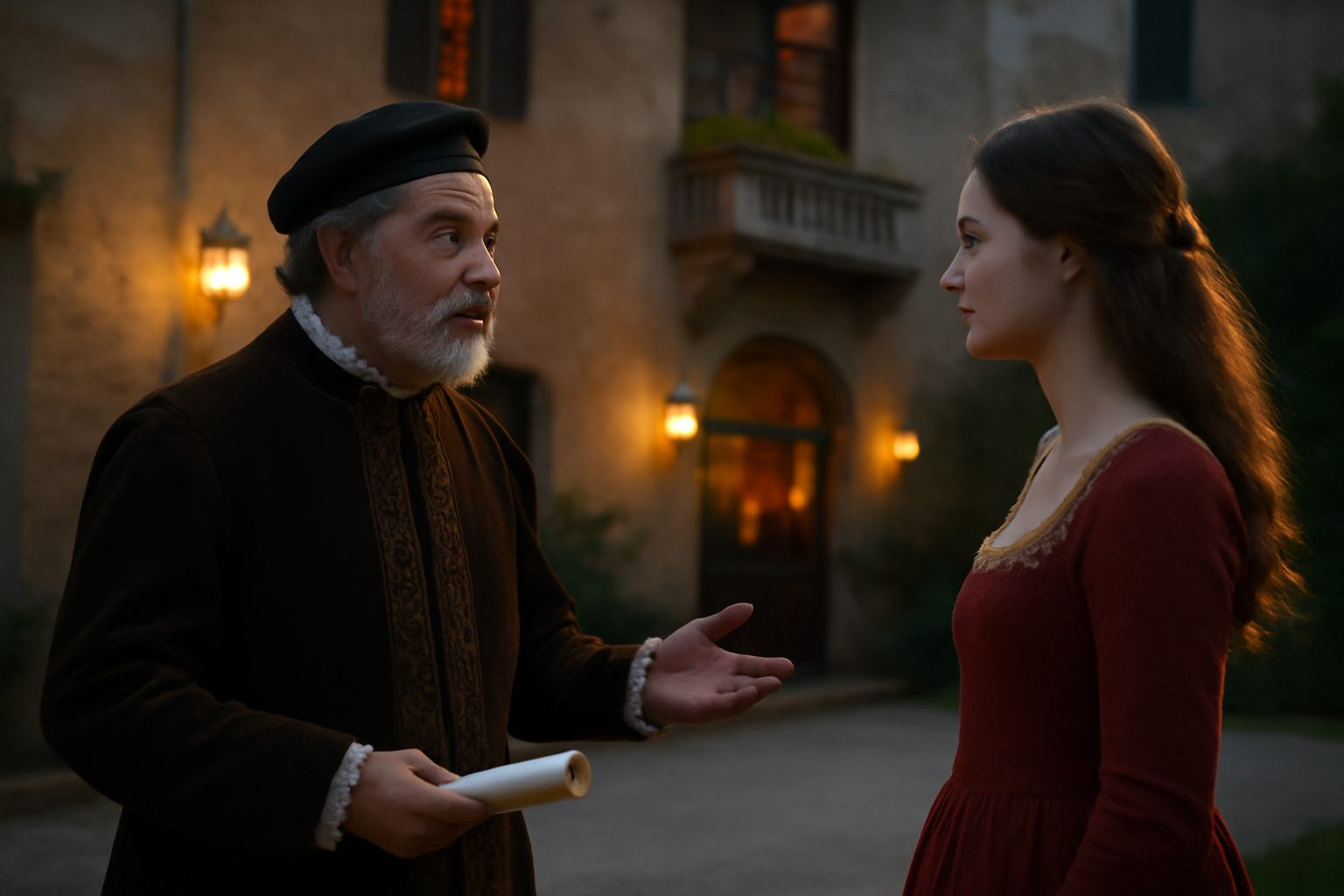
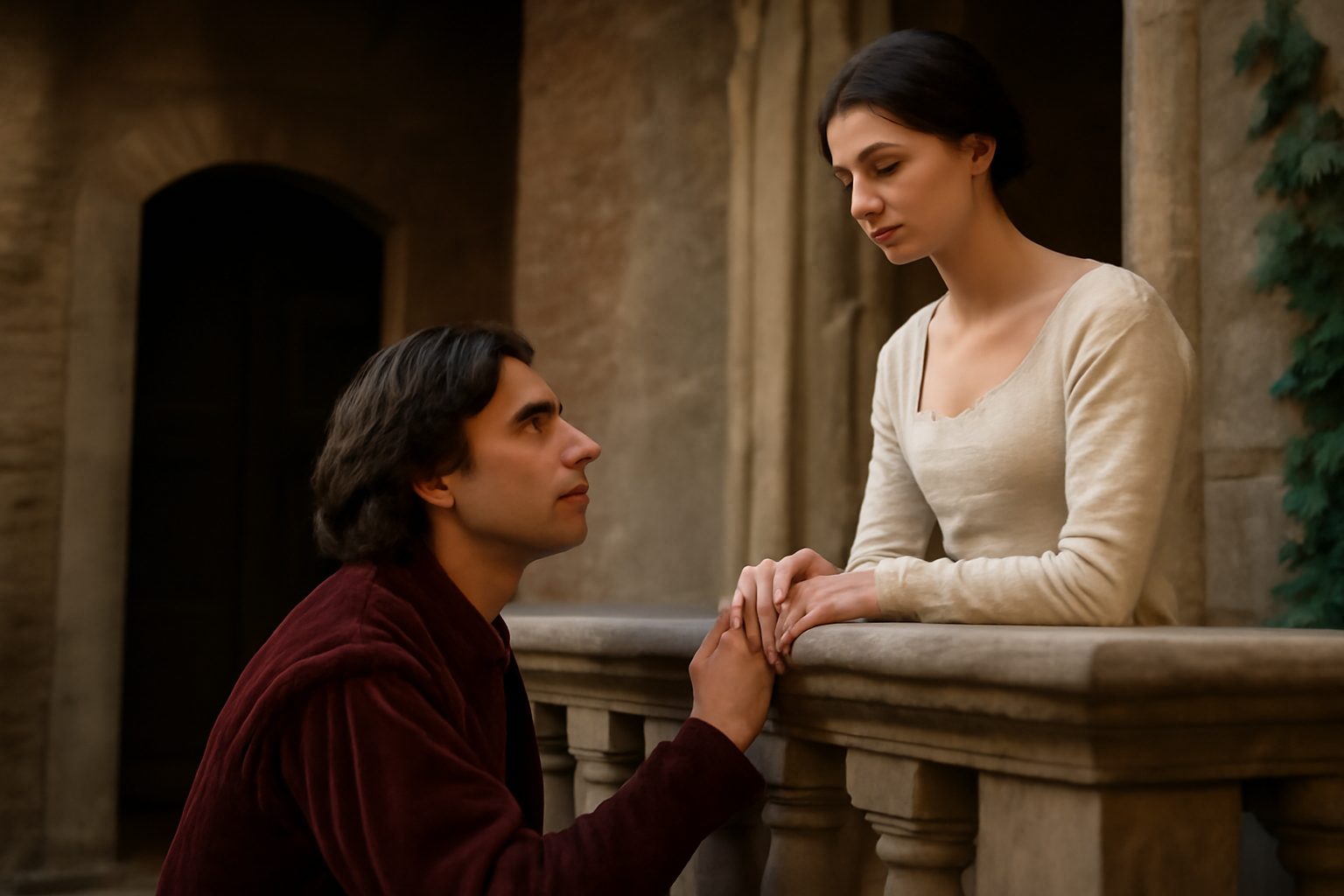
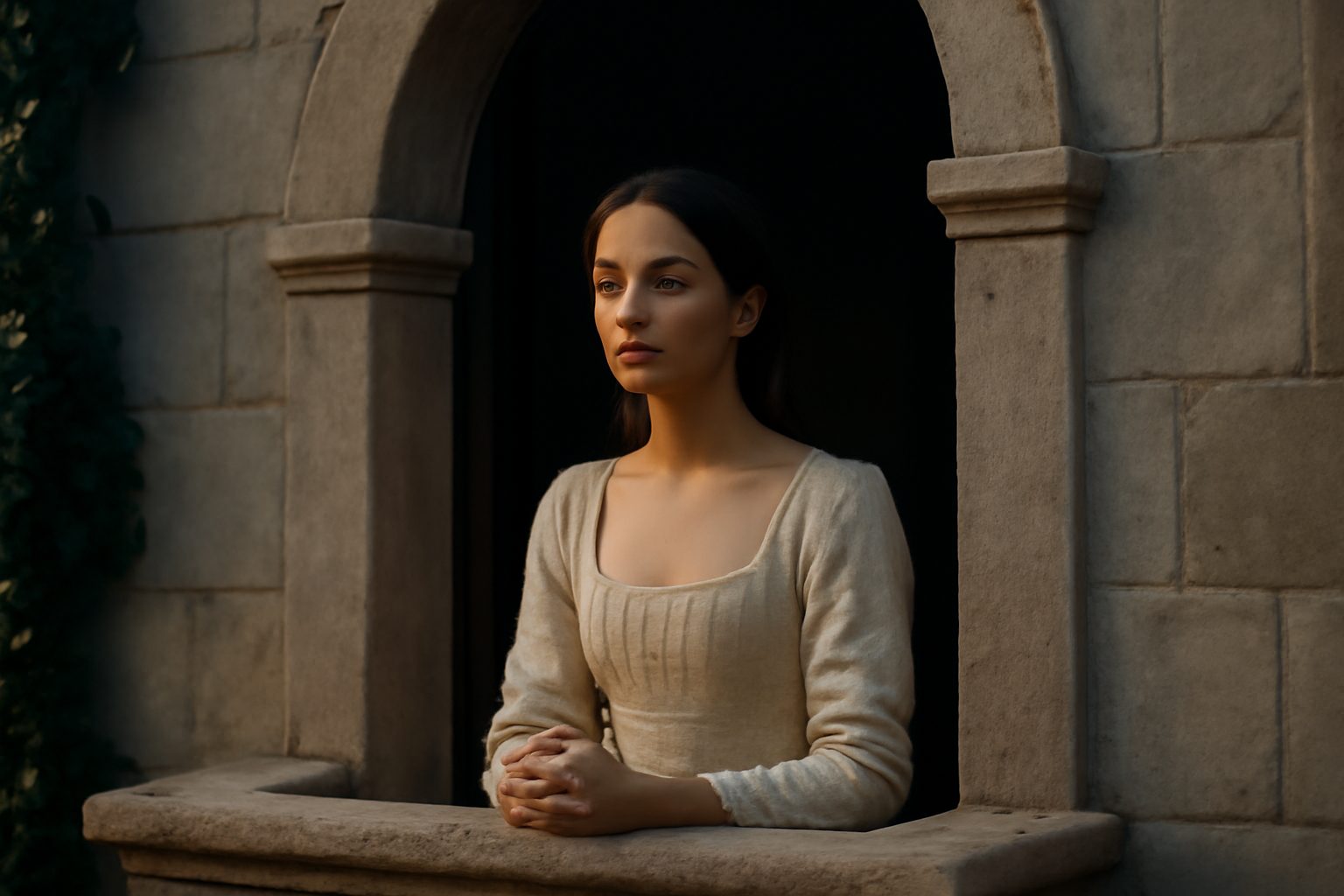
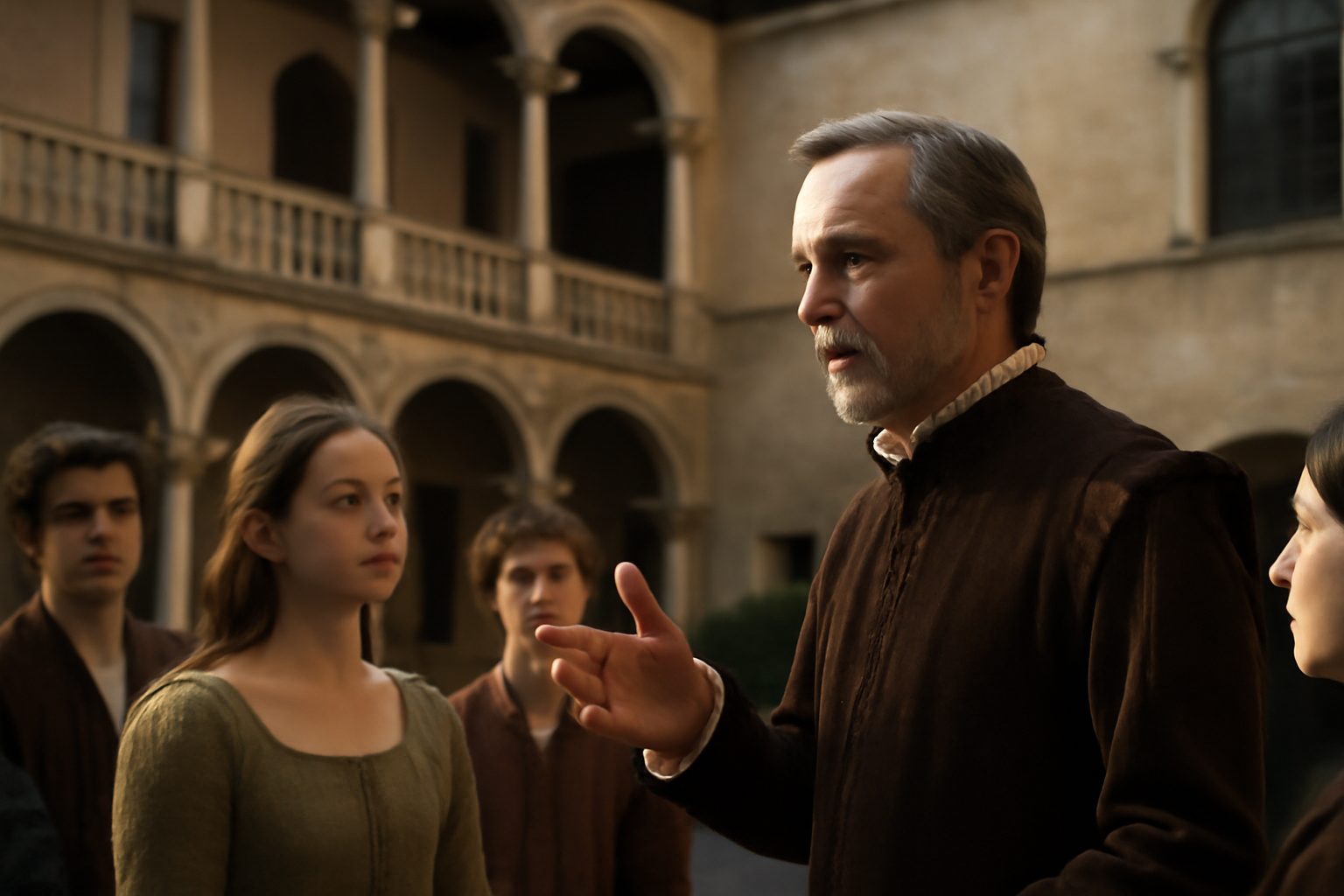
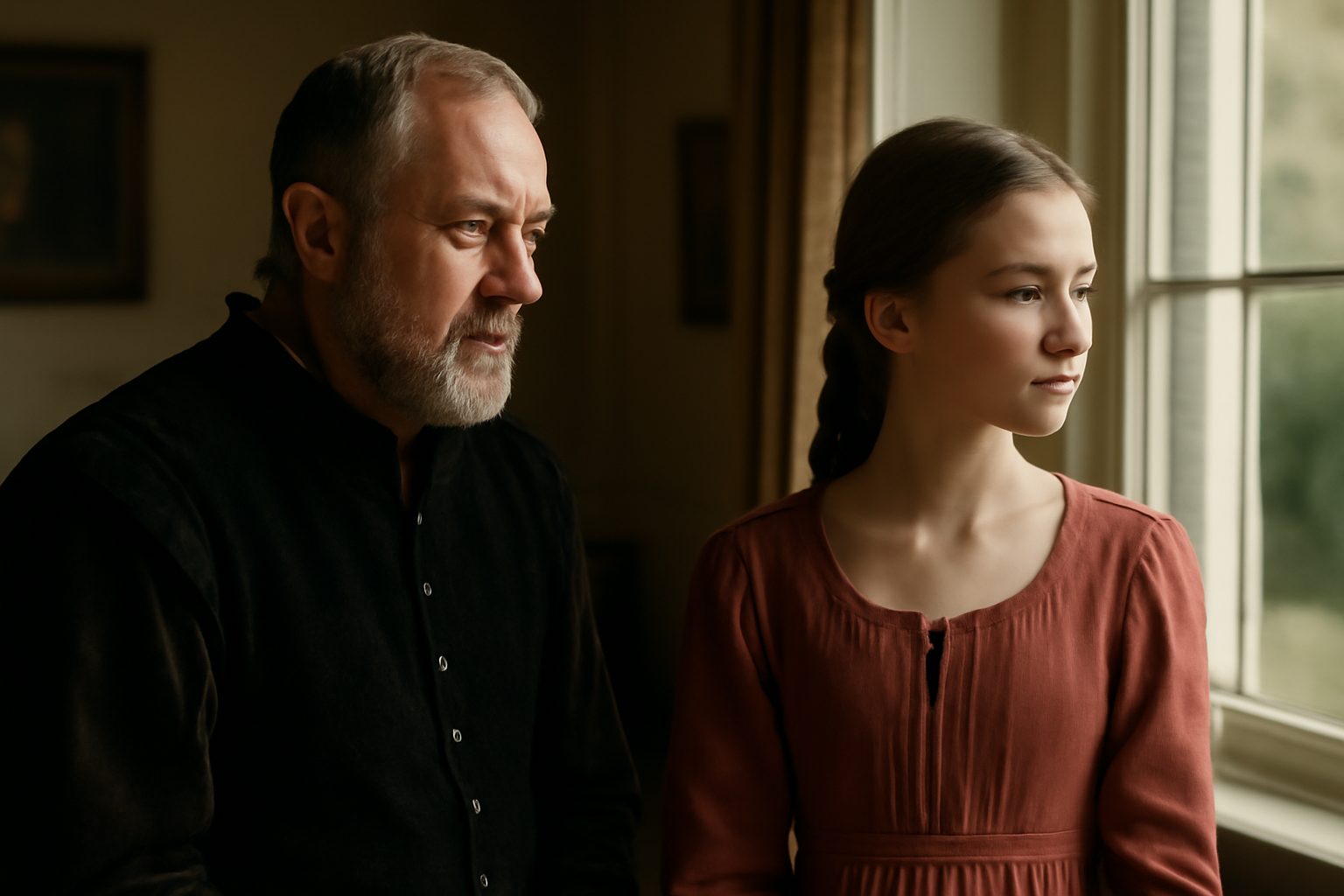
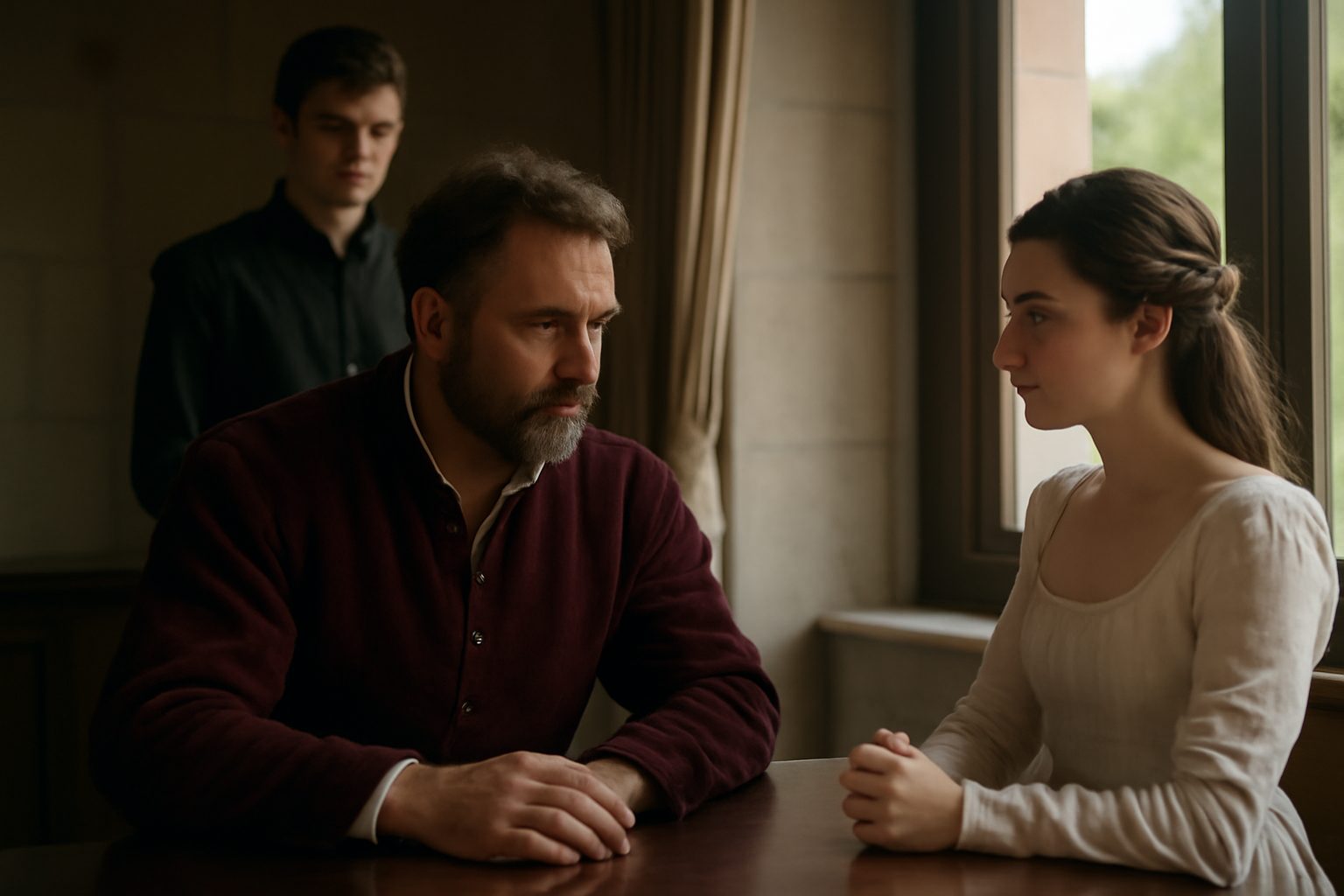
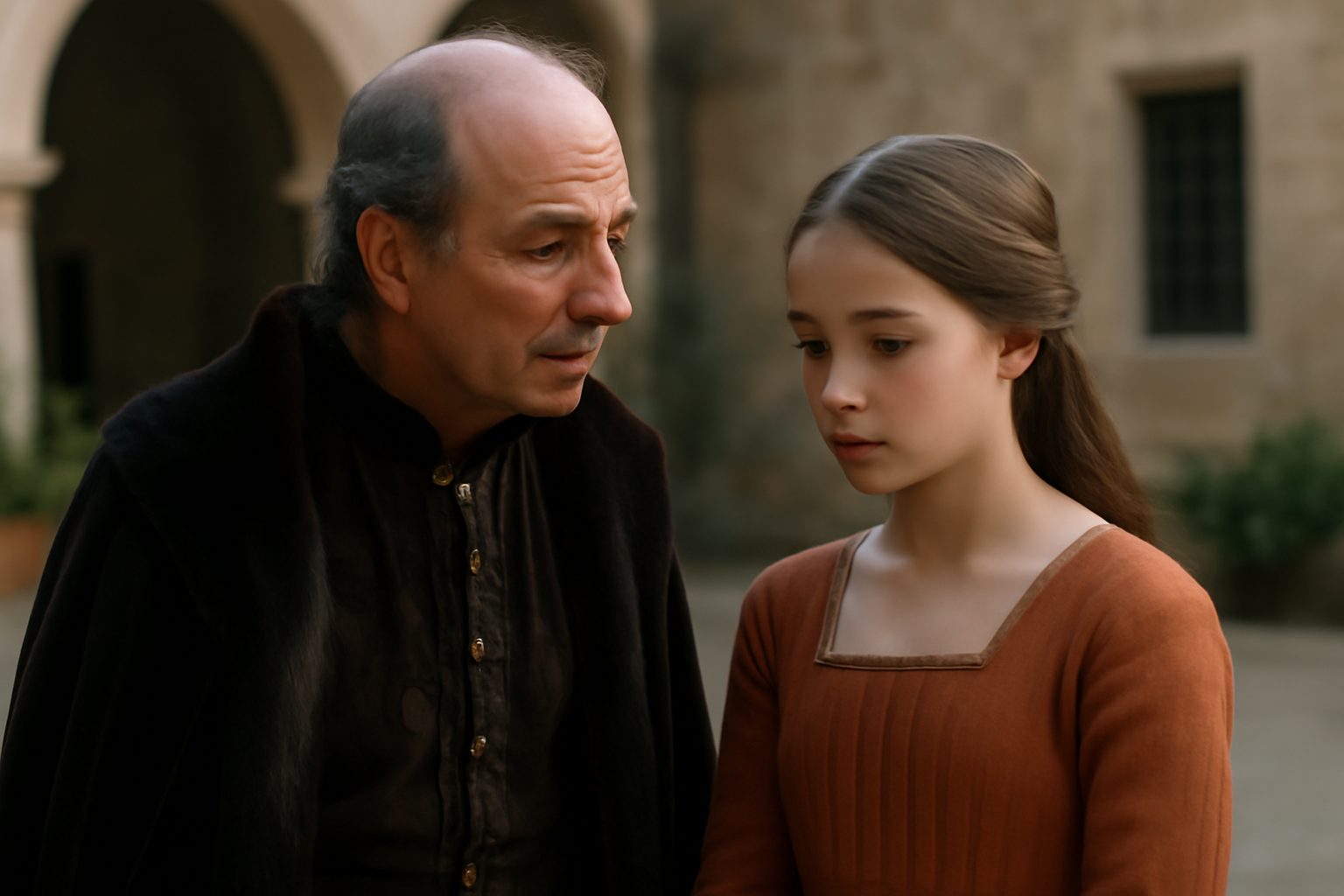
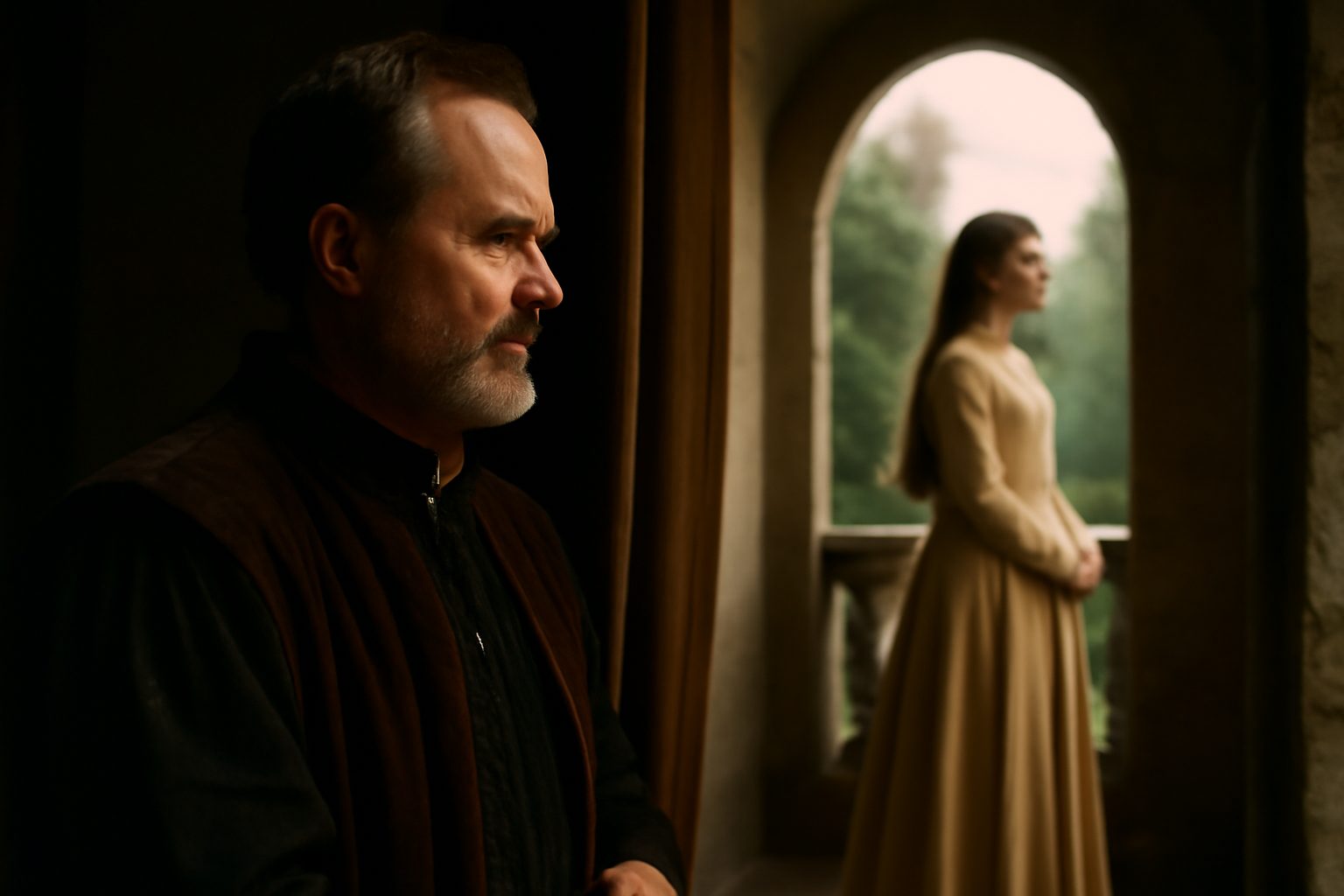
In Act 1, Scene 2 of Romeo and Juliet, Paris, a nobleman, speaks to Lord Capulet about marrying Juliet. He expresses his eagerness, suggesting that all his aspirations rest on her acceptance. This line reveals his single-minded devotion, contrasting with the more complex emotions of other characters in the play.
Capulet: "The earth hath swallow'd all my hopes but she,"
In modern day english, we would say:
Life has taken away all my hopes except for her.
Frequently Asked Questions
What does Capulet mean when he says that the earth has swallowed all his hopes except for his daughter?
Capulet means that all his other children have died, and his only remaining hope is his daughter Juliet.
Connections to other verses:
Connections to "The earth hath swallow'd all my hopes but she"
This verse, spoken by Capulet about his daughter Juliet, reveals his deep emotional investment in her as his sole surviving hope. It connects thematically and narratively to several other lines in the scene.
Parental Concern and Juliet's Youth
Capulet's protective attitude is echoed in My child is yet a stranger in the world, where he emphasizes Juliet's innocence and inexperience. He further elaborates on her age in She hath not seen the change of fourteen years, showing his hesitation to marry her off too young. This concern is reinforced by And too soon marr'd are those so early made, warning against premature marriage.
Juliet as Capulet's Heir
The idea of Juliet as his hope aligns with She is the hopeful lady of my earth, underscoring her role as his heir and the future of his lineage. Despite his affection, Capulet makes it clear in My will to her consent is but a part that he values her choice, indicating a nuanced view of her autonomy.
Invitation to the Feast
Capulet's plans for Juliet are tied to the feast he is hosting, mentioned in This night I hold an old accustom'd feast and Whereto I have invited many a guest. He hopes Paris will compare Juliet to other women there, as suggested in And like her most whose merit most shall be and Your lady's love against some other maid.
Broader Context of the Scene
Capulet's focus on Juliet contrasts with the scene's opening, where he and Paris discuss peace and mutual respect in For men so old as we to keep the peace. The servant's comedic struggle with the guest list, such as in Find them out whose names are written here, provides a lighter counterpoint to Capulet's solemn reflection on his daughter.