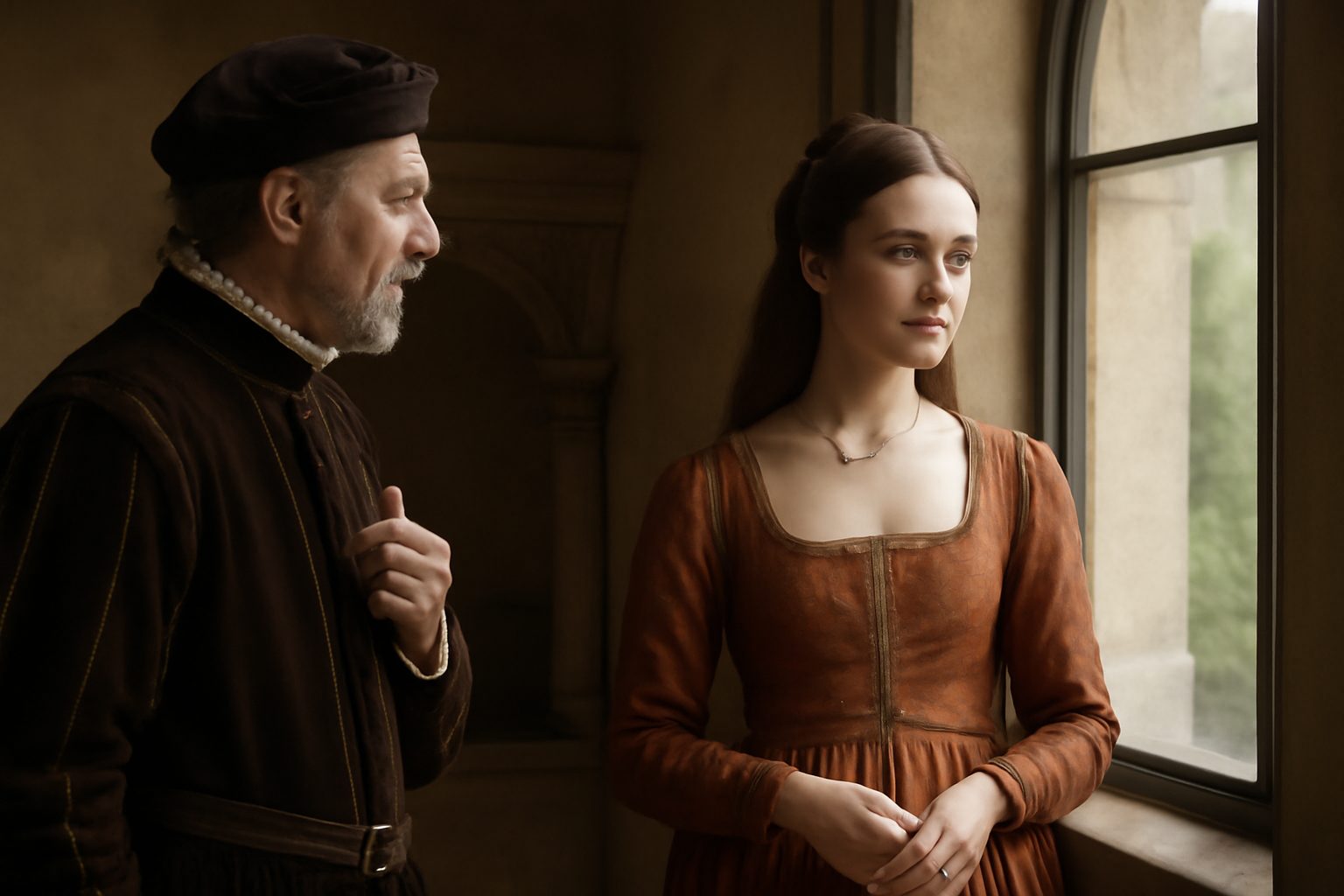
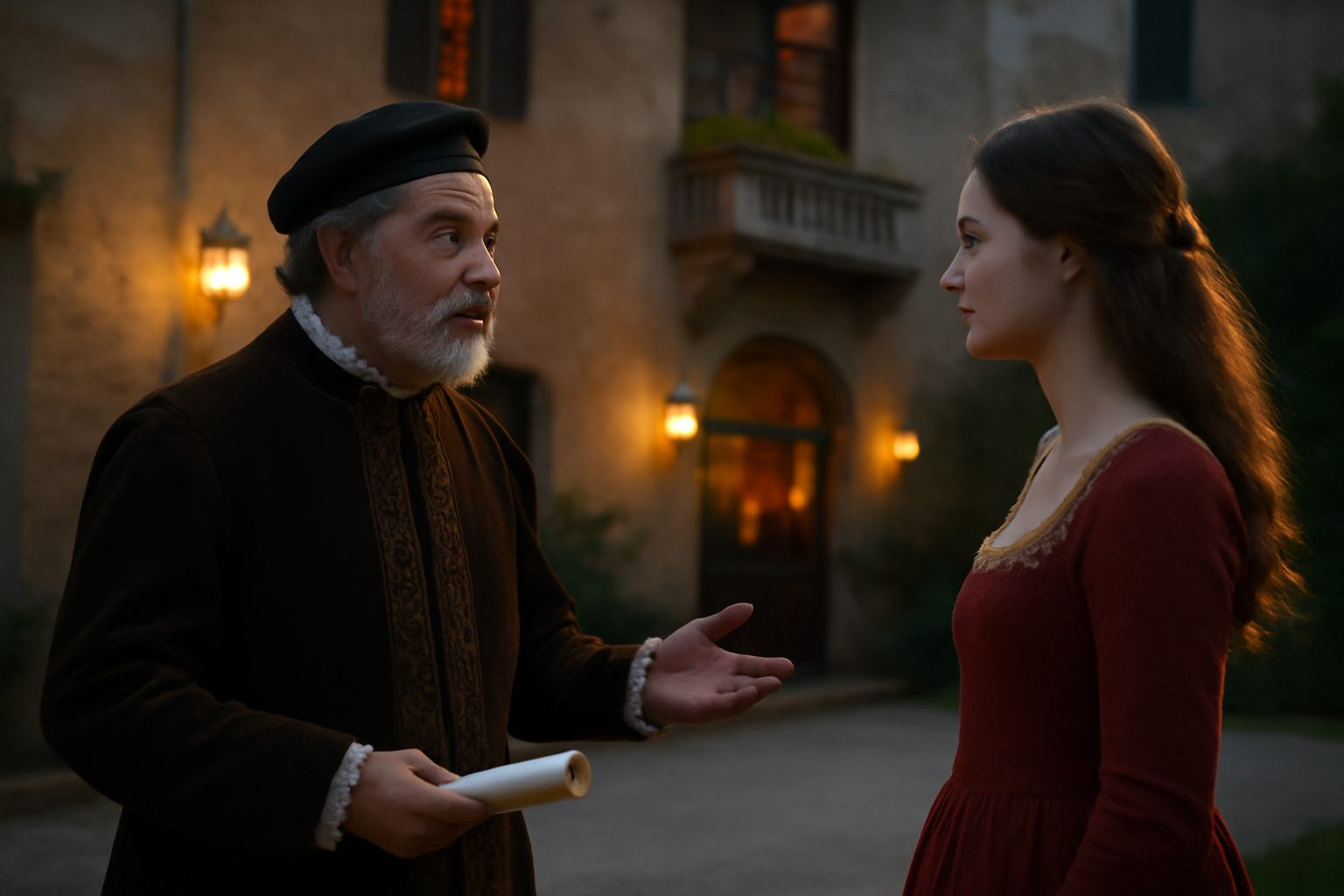
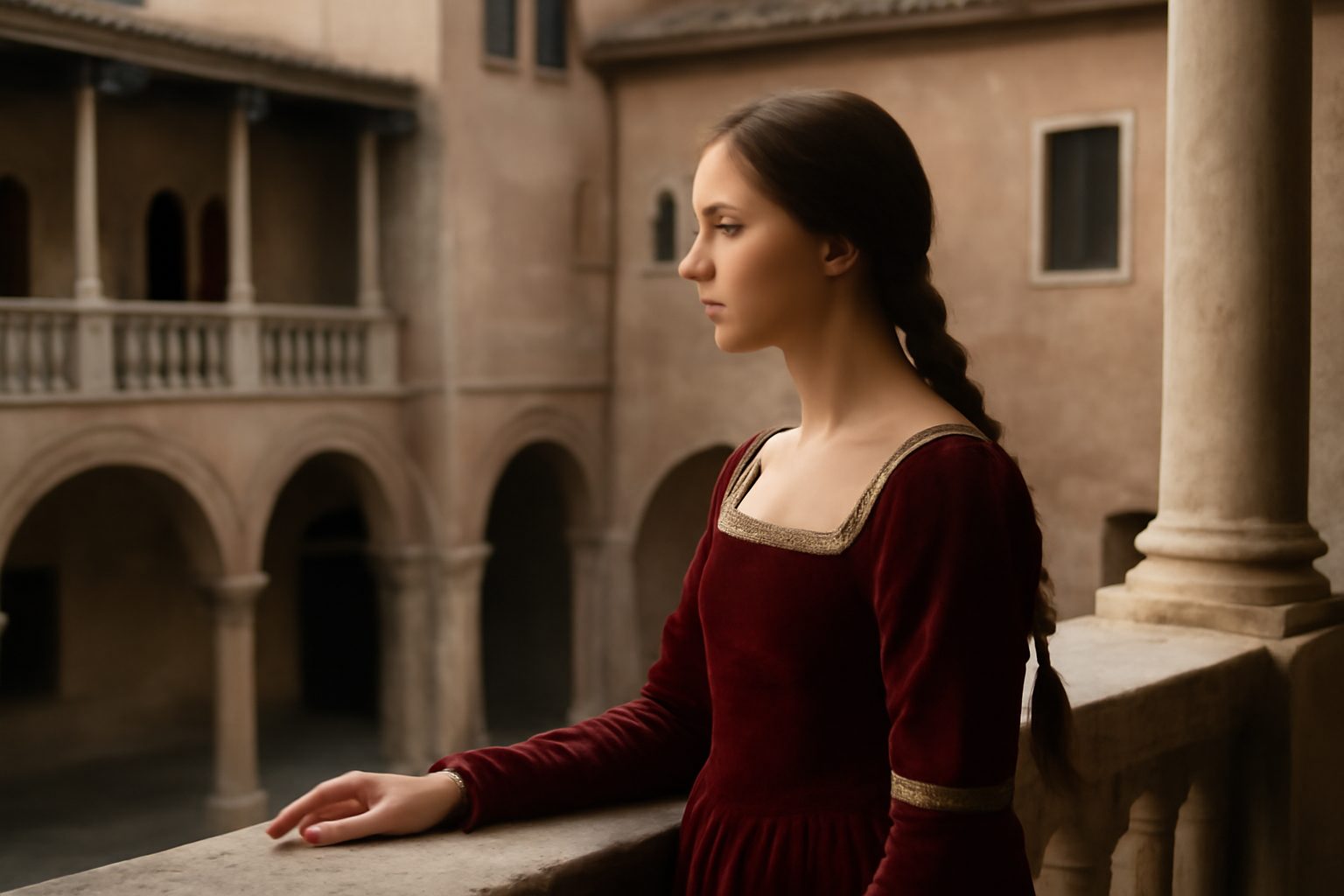
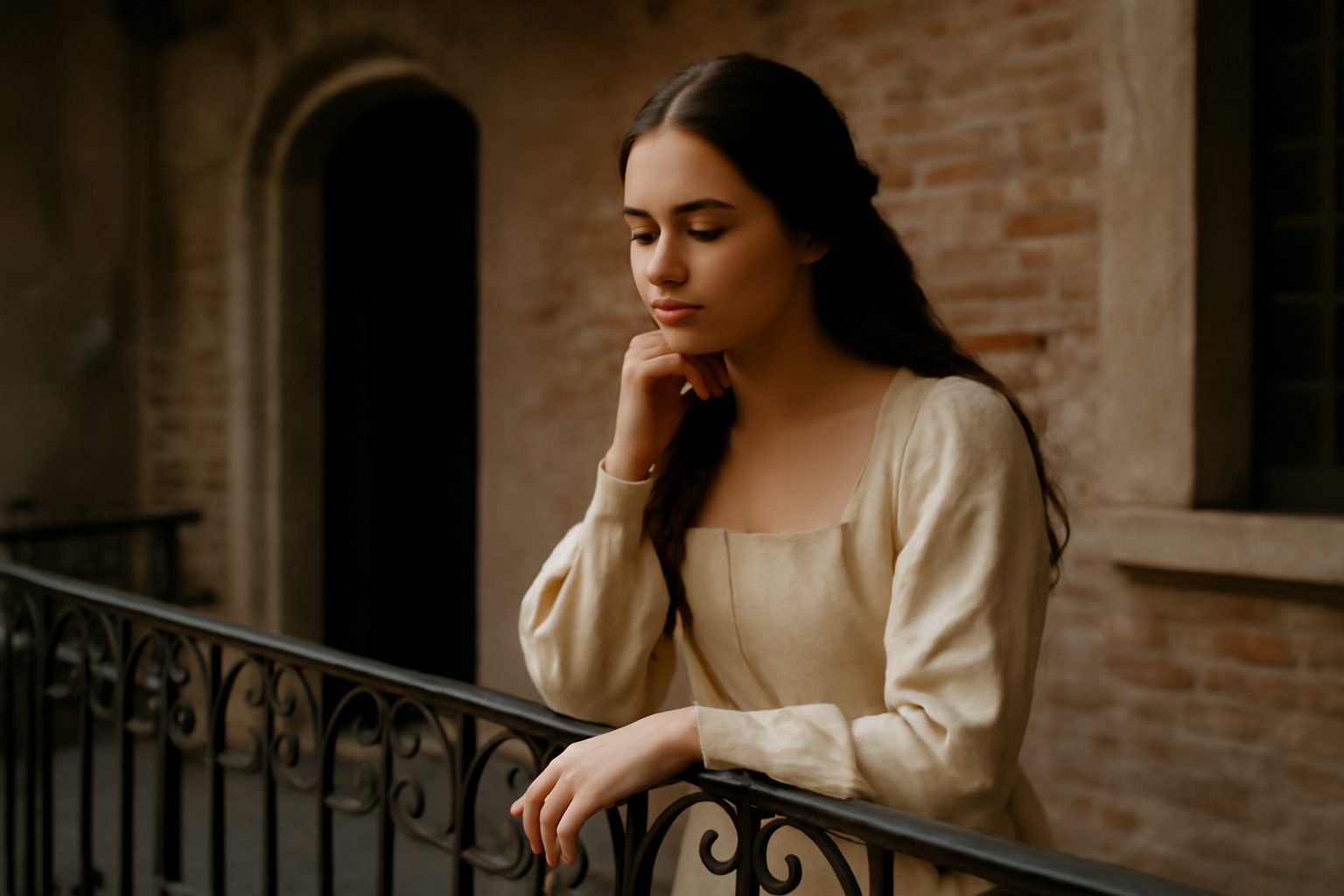
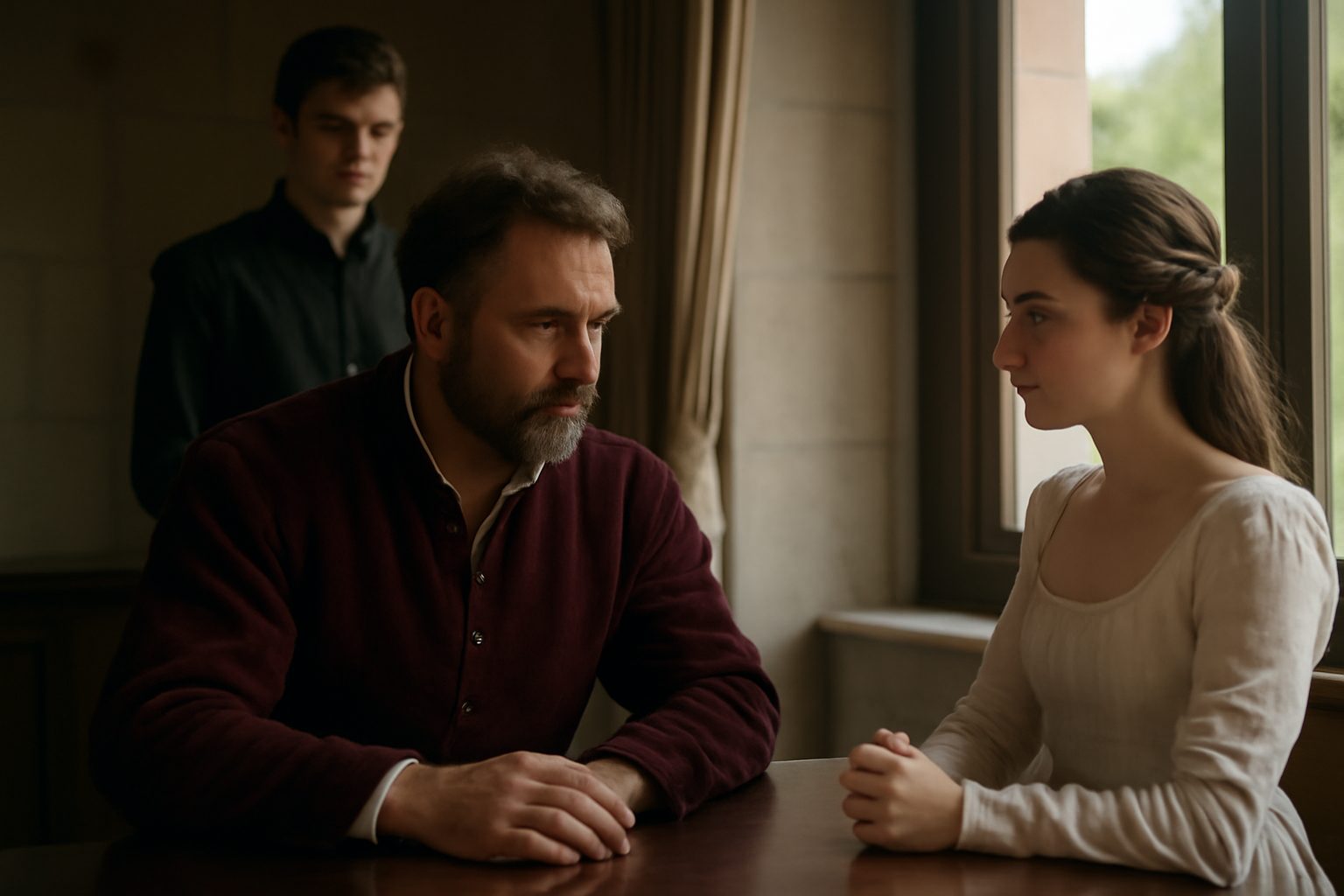
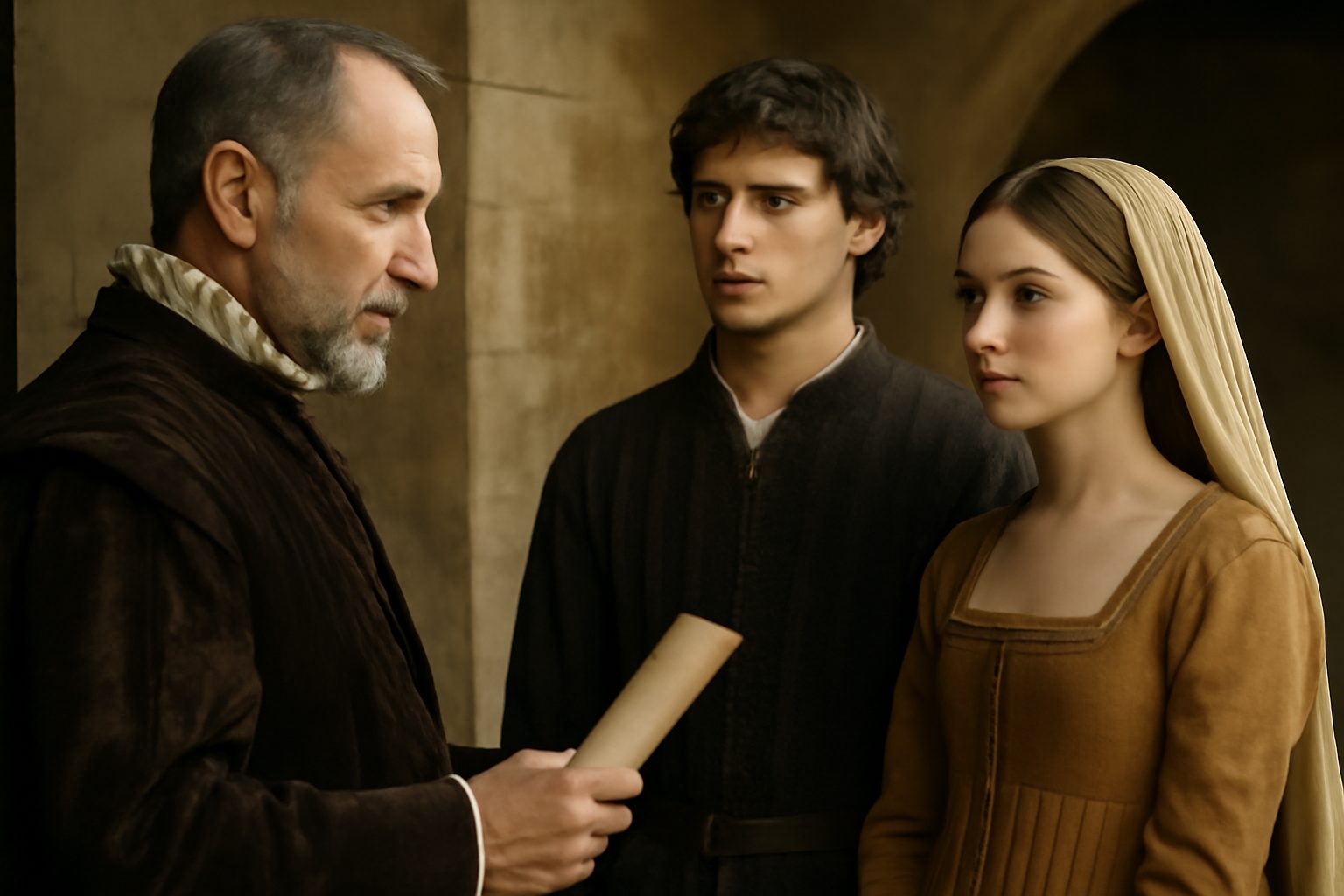
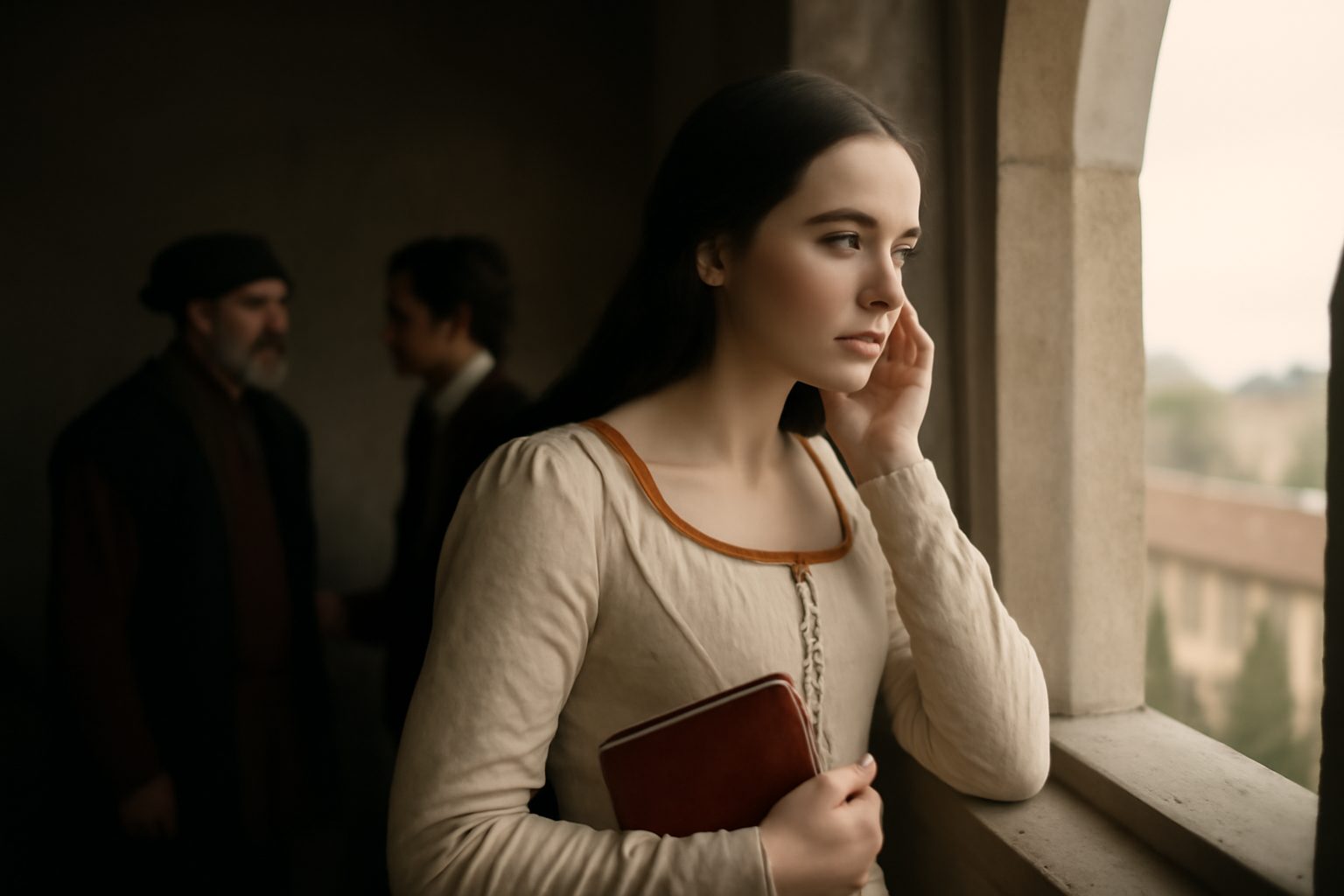
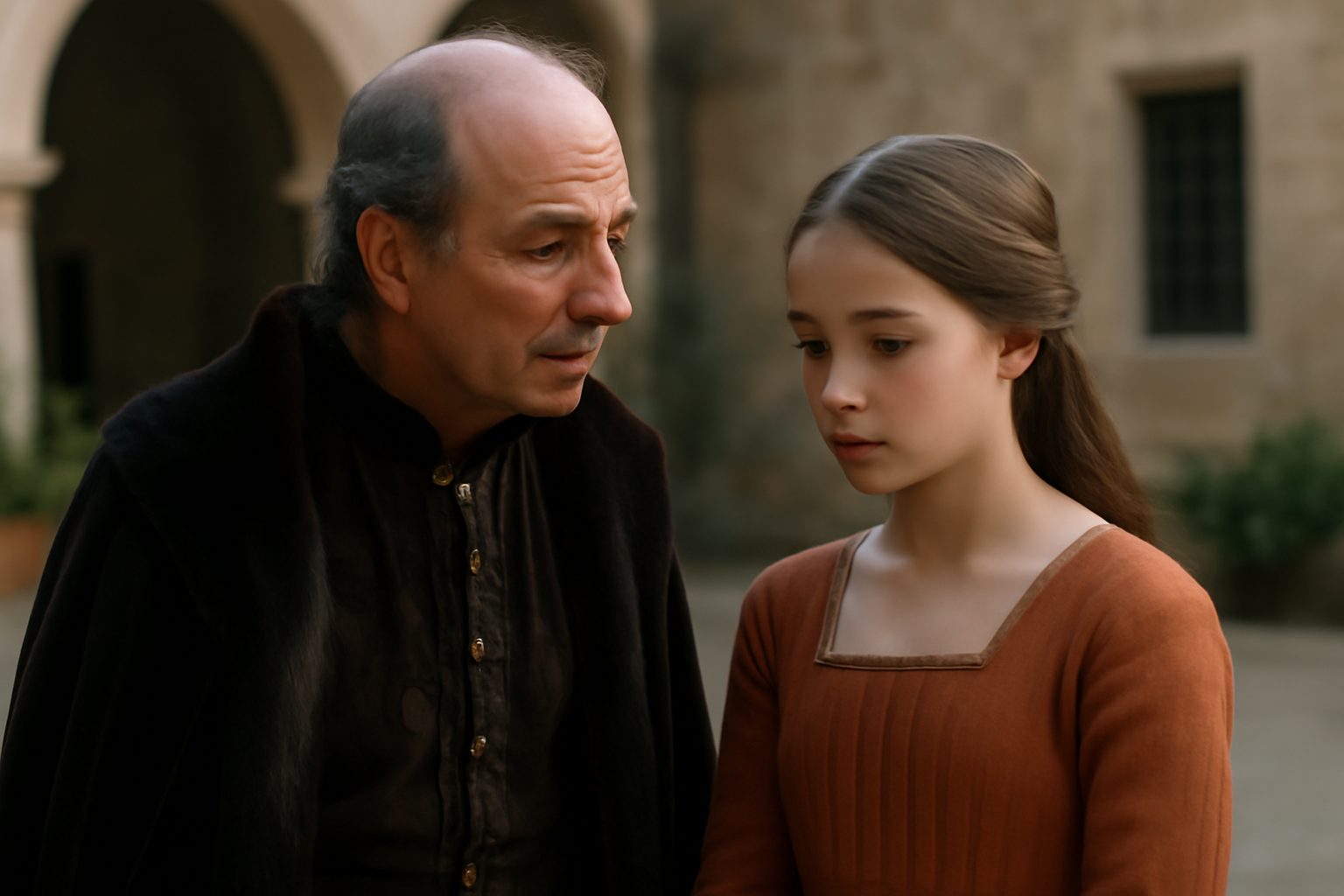
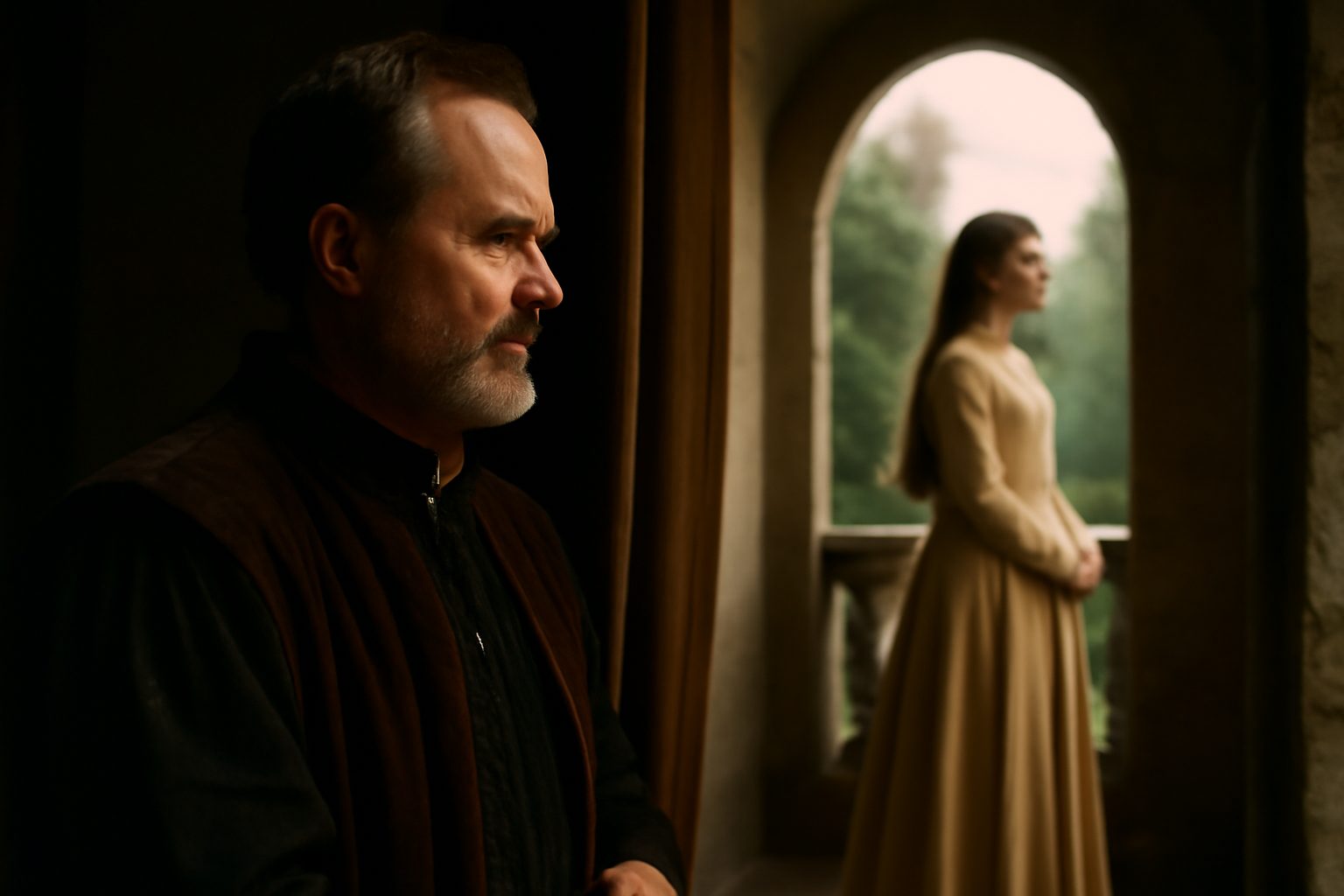
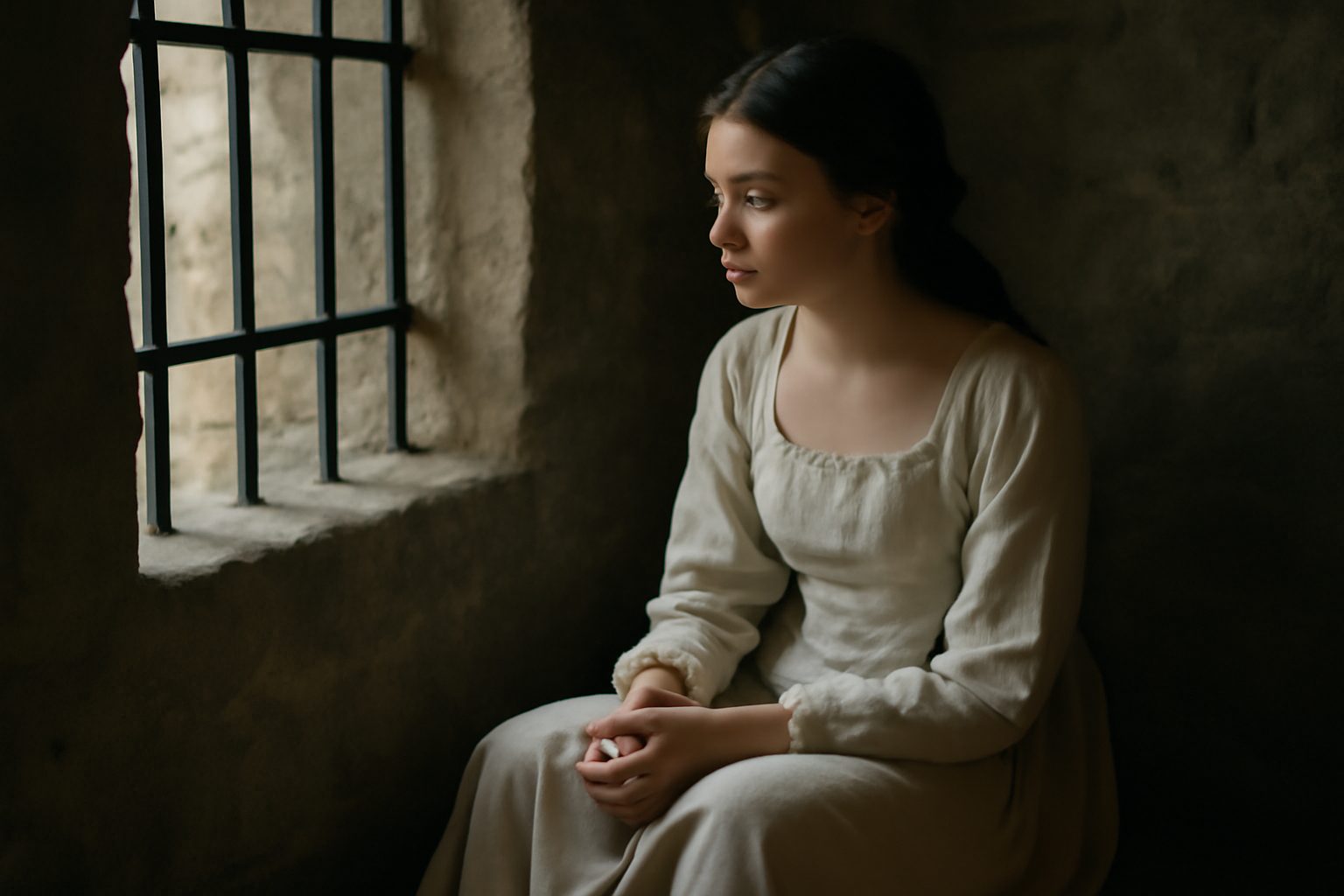
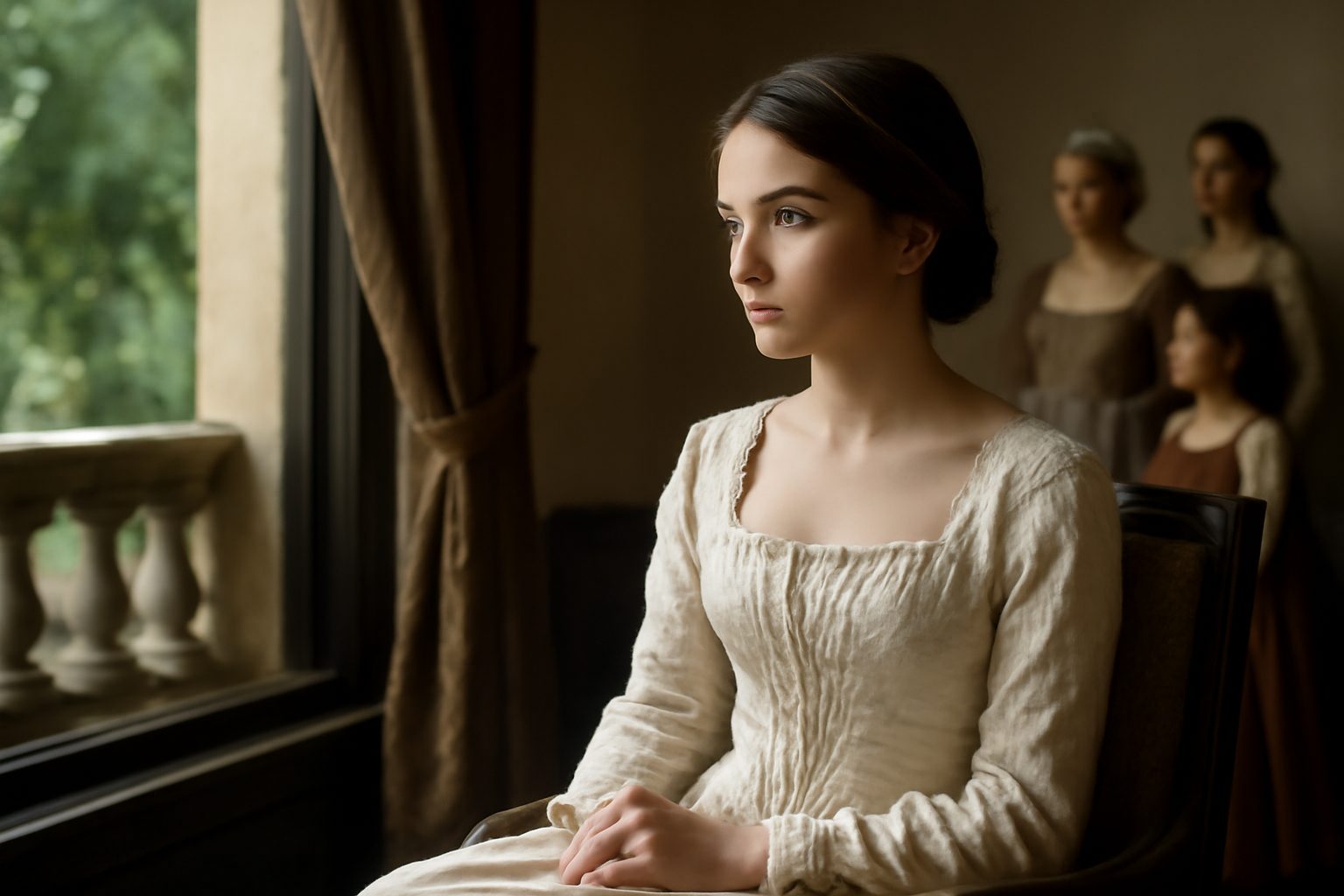
In Act 1, Scene 2 of Romeo and Juliet, Lord Capulet speaks these words to Paris, who has asked for Juliet's hand in marriage. Capulet suggests that Juliet is still young and inexperienced, not yet acquainted with the ways of the world. His hesitation reflects both paternal concern and the societal expectations of the time regarding marriageable age.
Capulet: "My child is yet a stranger in the world;"
In modern day english, we would say:
My daughter is still young and inexperienced in life.
Frequently Asked Questions
What does Capulet mean when he says his child is a stranger in the world?
He means that his daughter, Juliet, is still young and inexperienced in life.
Connections to other verses:
Connections to "My child is yet a stranger in the world"
This line, spoken by Lord Capulet, introduces his protective and cautious stance regarding his daughter Juliet's youth and readiness for marriage. It connects thematically and narratively to several other verses in the scene.
Parental Concern and Juliet's Youth
Capulet's description of Juliet as a "stranger in the world" is immediately followed by "She hath not seen the change of fourteen years", emphasizing her tender age. He further expresses his wish to delay her marriage in "Let two more summers wither in their pride" and "Ere we may think her ripe to be a bride", reinforcing his protective attitude. However, he acknowledges societal norms in "Younger than she are happy mothers made", showing a tension between caution and convention.
Juliet's Significance and Capulet's Hopes
Despite his reservations, Capulet reveals Juliet's importance to him in "The earth hath swallow'd all my hopes but she" and "She is the hopeful lady of my earth", indicating she is his heir and sole source of legacy. This deep affection underpins his cautious approach to her marriage.
Courtship and the Feast
Capulet invites Paris to court Juliet properly at the feast, as seen in "But woo her, gentle Paris, get her heart" and "Lies my consent and fair according voice", making his approval contingent on Juliet's agreement. The feast itself is described in "This night I hold an old accustom'd feast" and "Among fresh female buds shall you this night", setting the stage for the encounter between Romeo and Juliet.
Contrast with Romeo's Perspective
Meanwhile, Romeo's despair over Rosaline contrasts with Capulet's parental concerns. Benvolio advises Romeo to compare other beauties at the feast in "Compare her face with some that I shall show" and "And I will make thee think thy swan a crow", foreshadowing how Romeo's affections will shift upon meeting Juliet, the very "stranger in the world" Capulet seeks to protect.