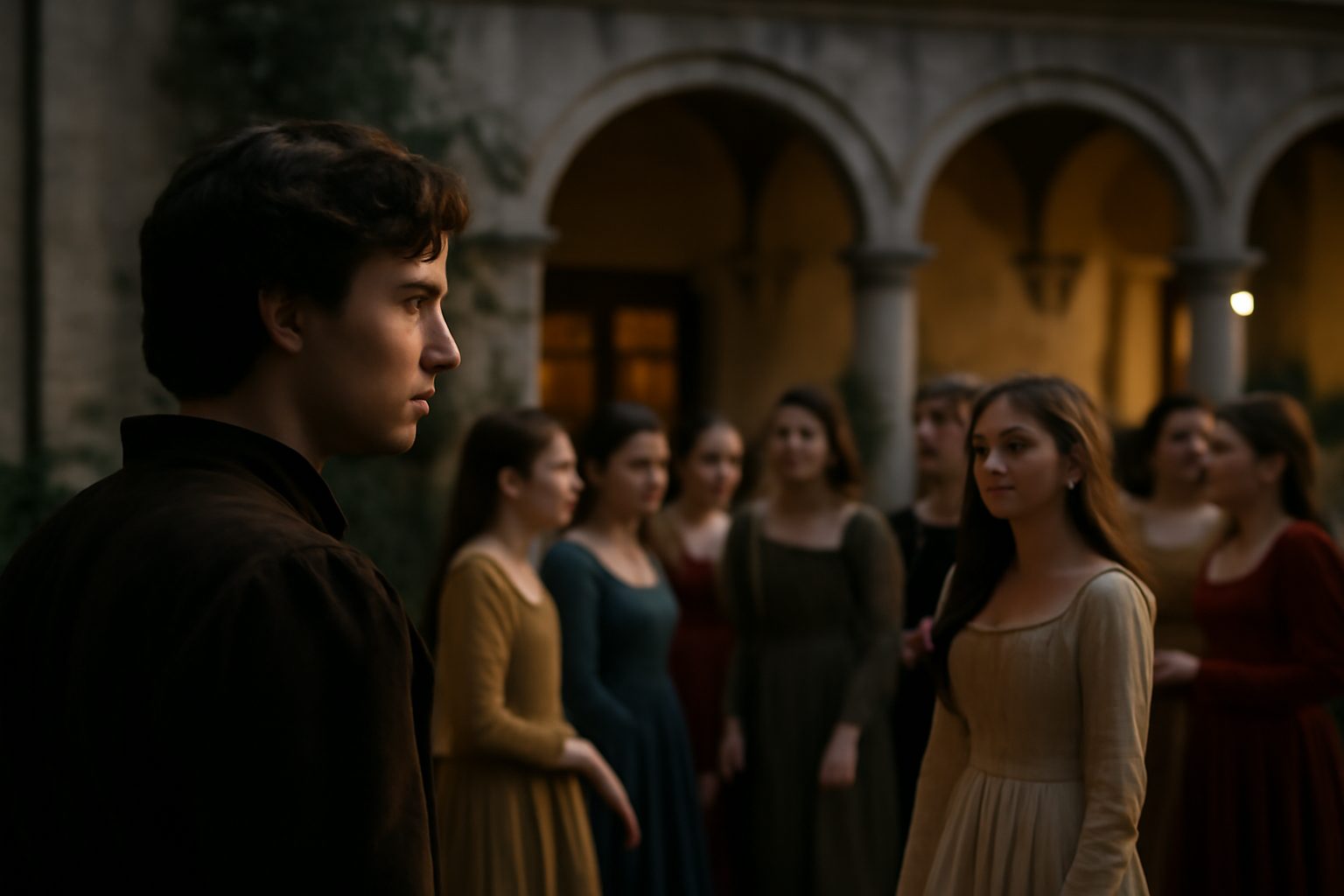
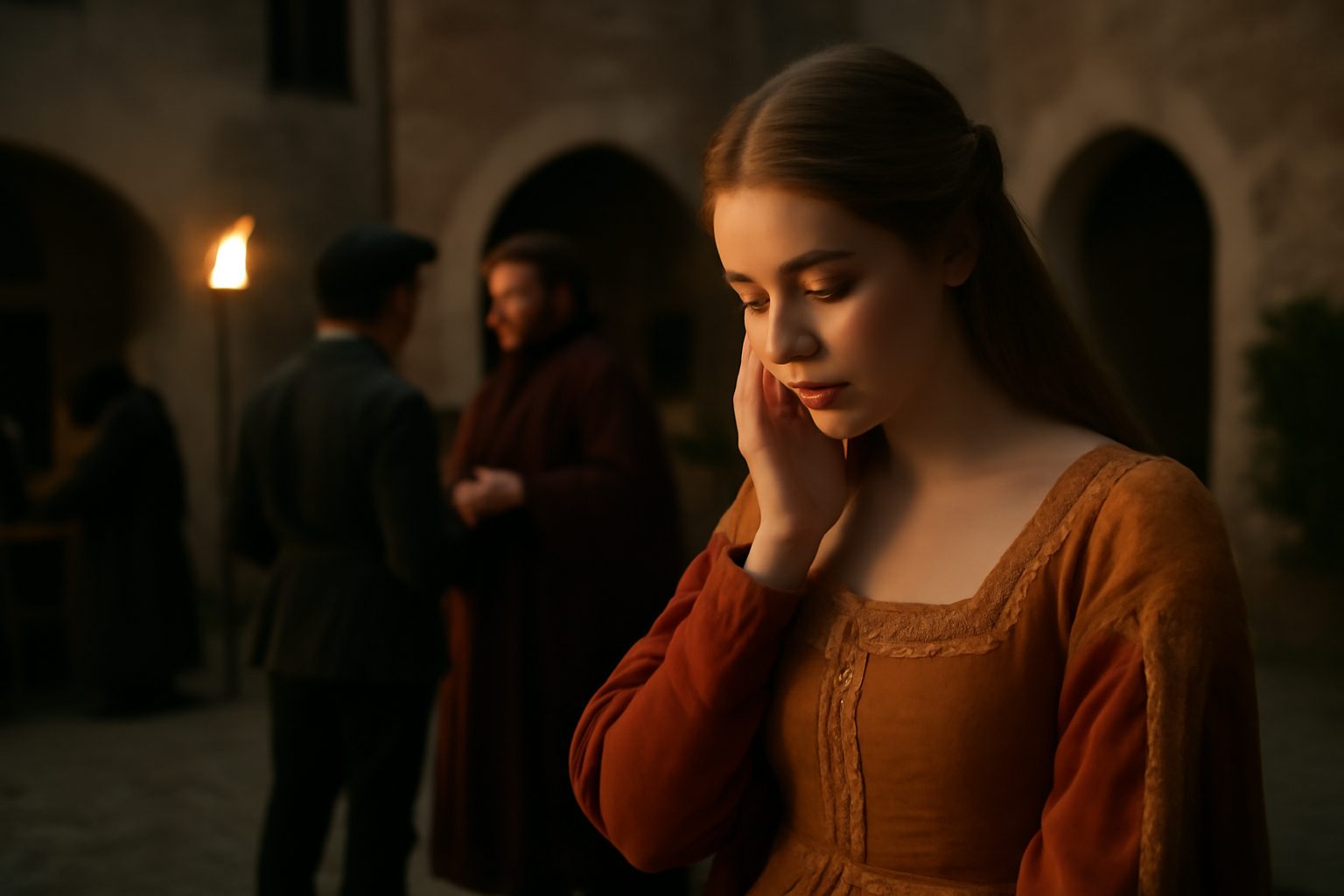
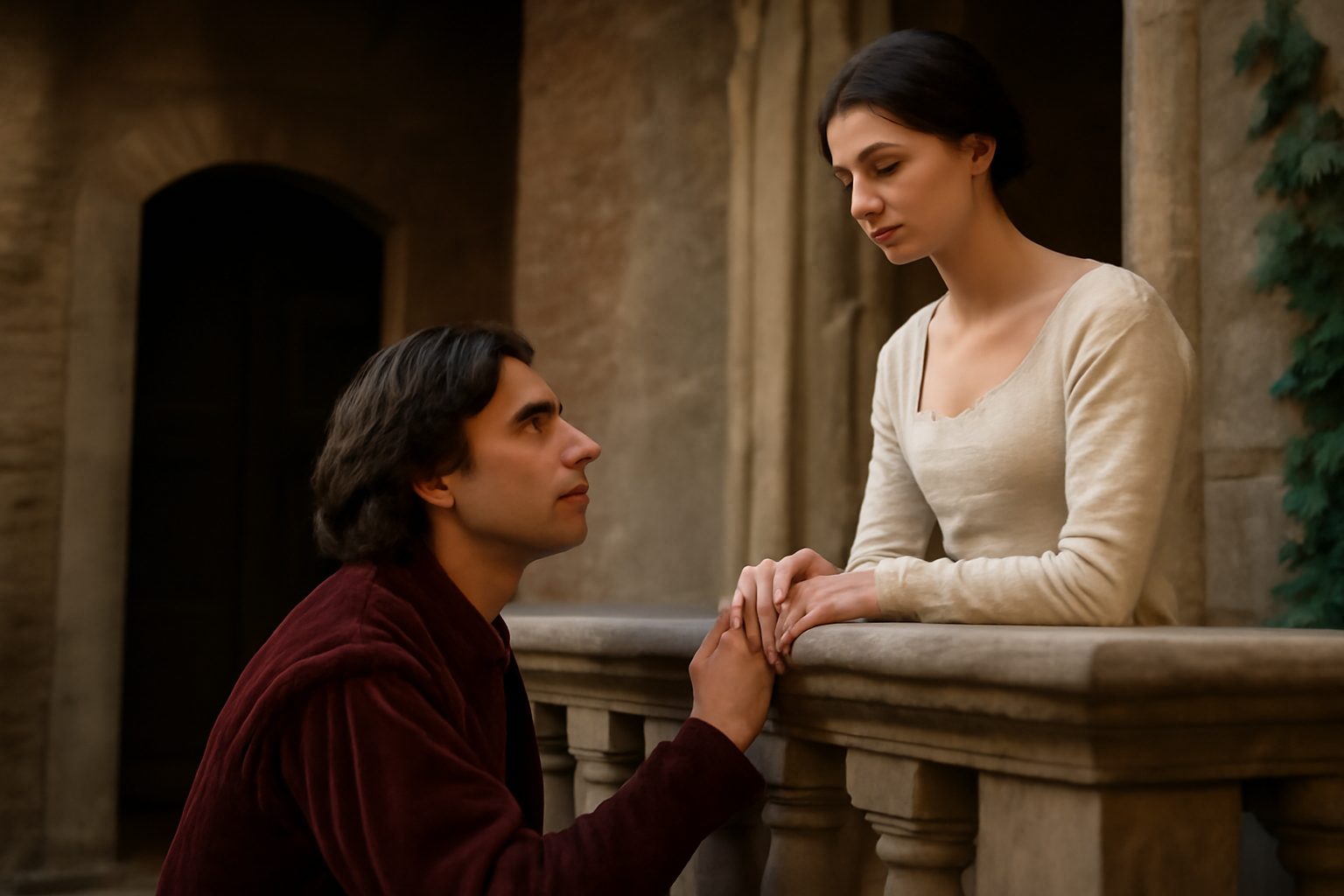
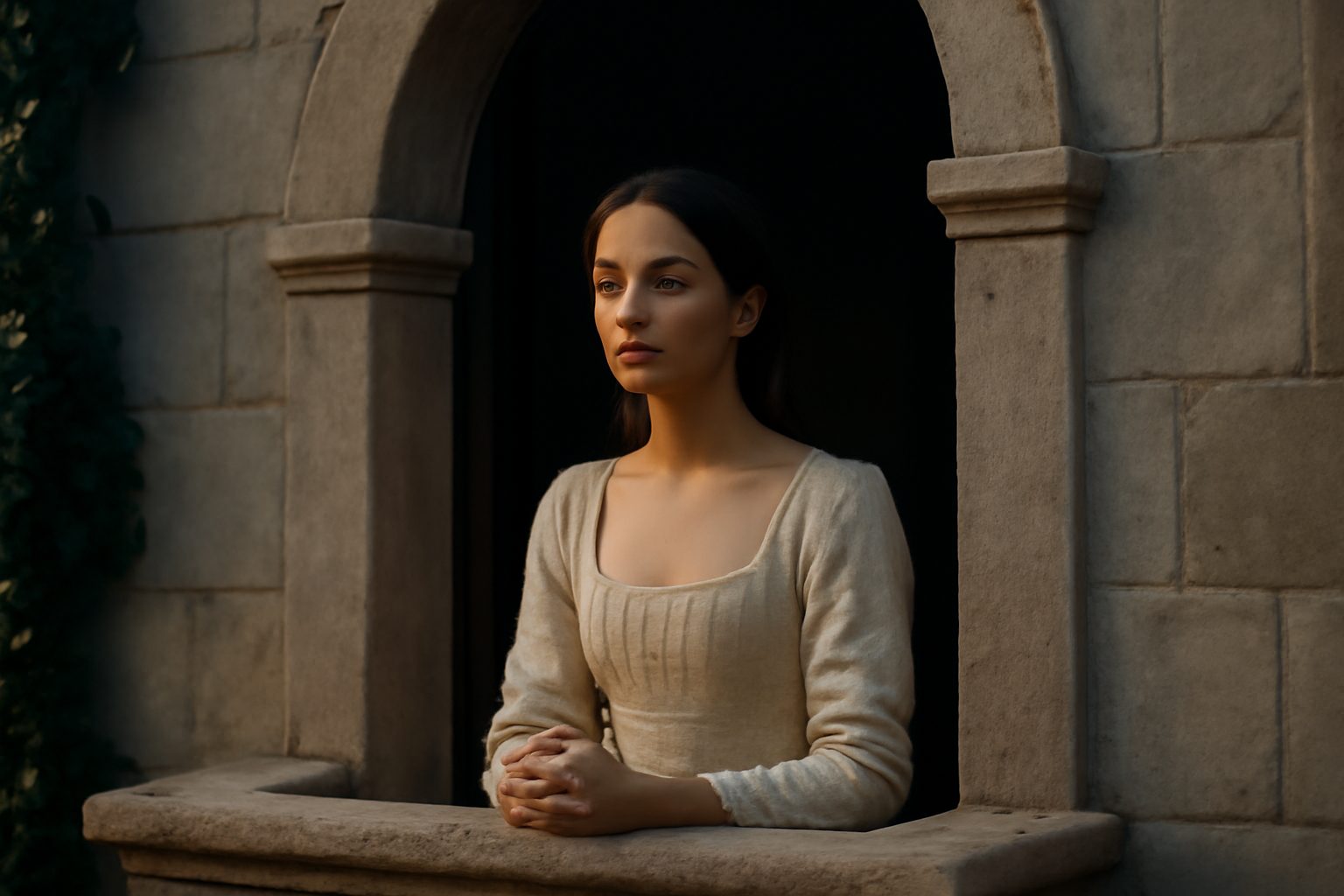
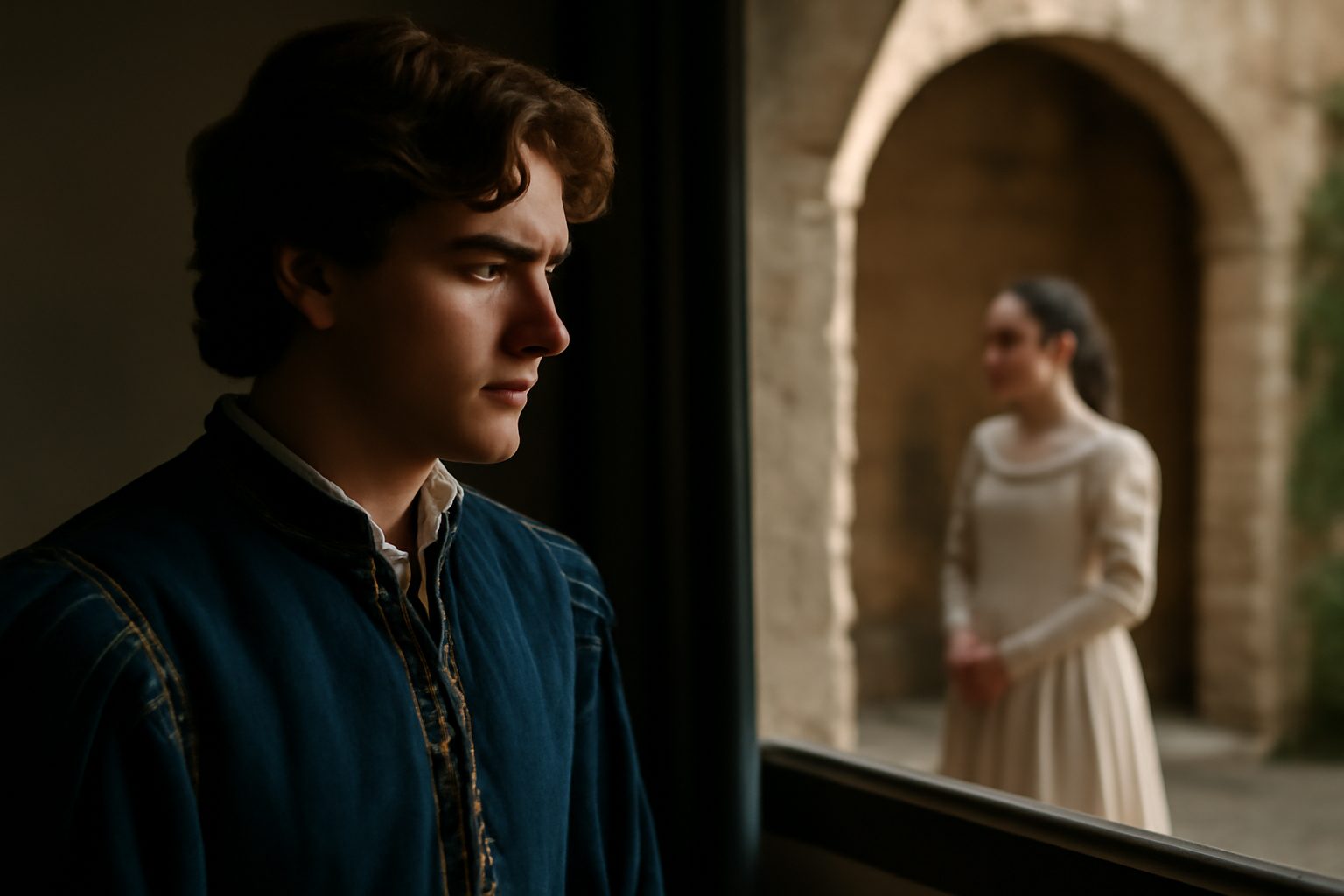
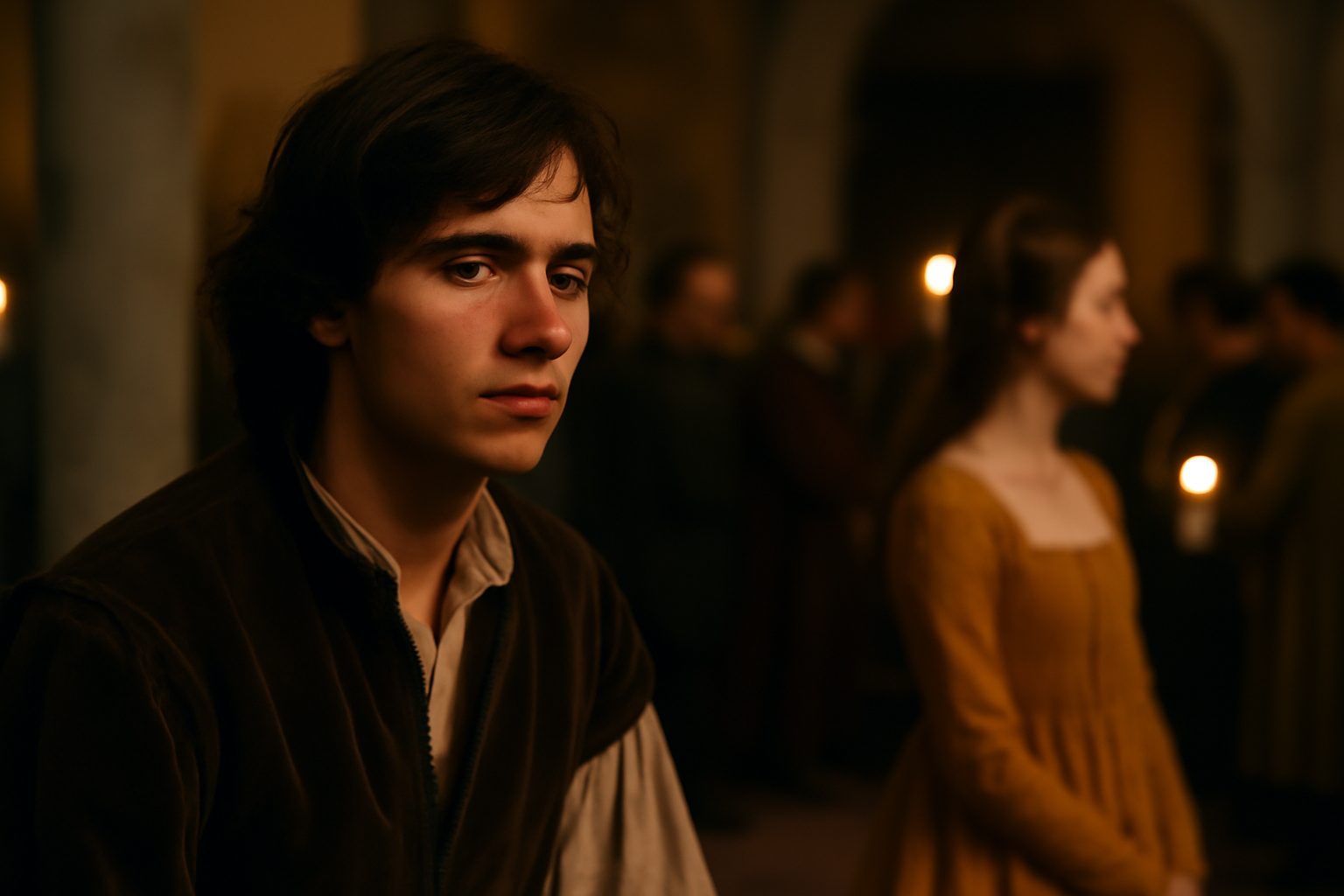
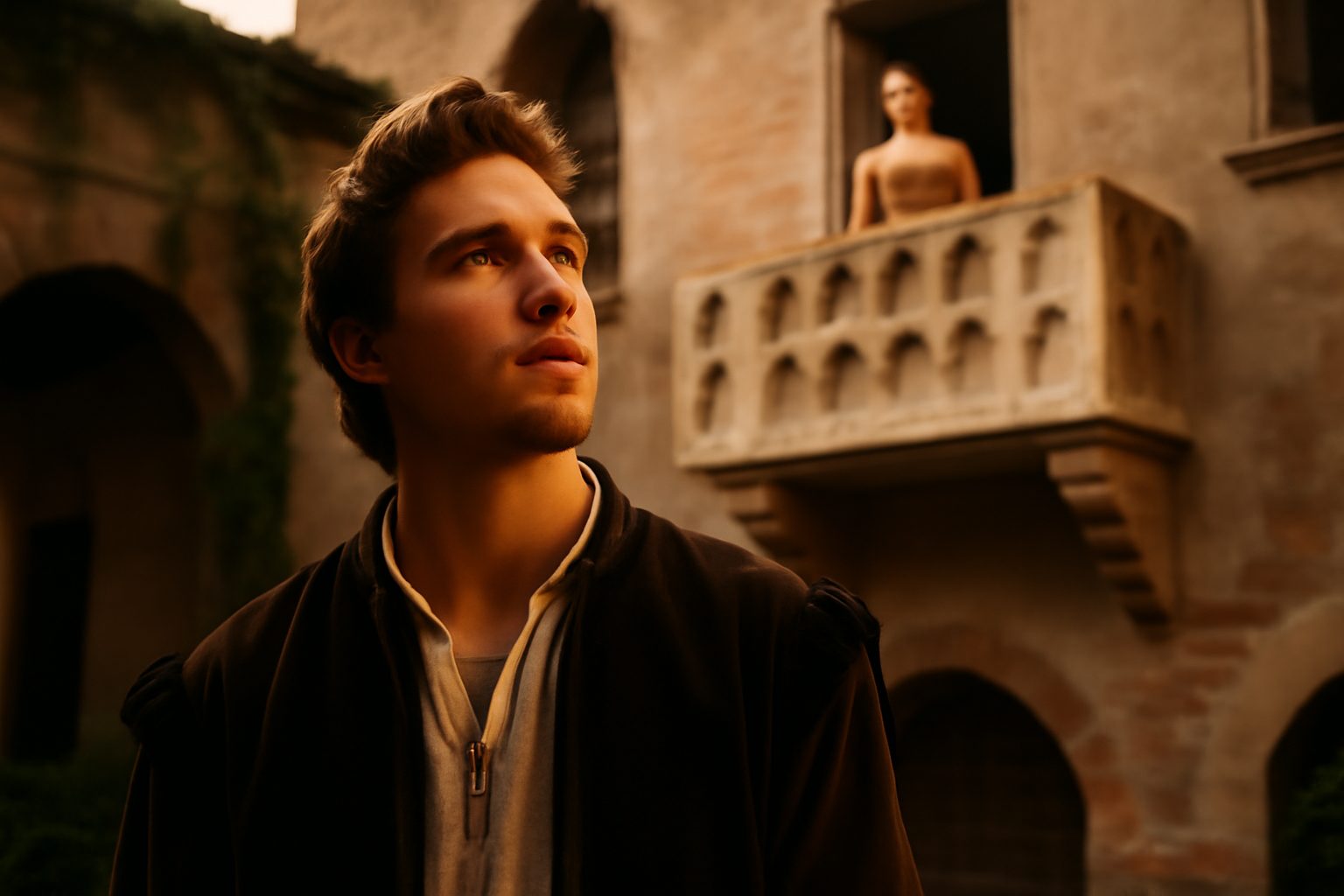
In Act 1, Scene 2 of Romeo and Juliet, Capulet speaks these words while describing the beauty of the women at his feast. He compares them to stars that light up the night, suggesting their radiance outshines even the darkness of the sky. This poetic imagery sets the scene for the masked ball where Romeo will first see Juliet.
Capulet: "Earth-treading stars that make dark heaven light:"
In modern day english, we would say:
The beautiful women at the party shine so brightly they light up the night like stars walking on earth.
Frequently Asked Questions
What does Capulet compare to stars in this line?
Capulet compares beautiful women to stars that light up the earth.
Connections to other verses:
Connections to "Earth-treading stars that make dark heaven light"
Imagery of Light and Beauty
The phrase "Earth-treading stars that make dark heaven light" poetically describes the radiant beauty of the women at Capulet's feast, likening them to stars that illuminate the earthly realm. This celestial imagery connects to "That I will show you shining at this feast", where "shining" reinforces the theme of brilliance and allure. Similarly, "With all the admired beauties of Verona" emphasizes the gathering of esteemed, luminous figures, echoing the idea of earthly stars.
Feast and Celebration Context
The verse is part of Capulet's invitation to his feast, referenced in "This night I hold an old accustom'd feast" and "Whereto I have invited many a guest". The "earth-treading stars" are the guests whose presence glorifies the event, much like "Such as I love; and you, among the store", where Capulet includes Paris among the valued attendees.
Youth and Freshness
The metaphor of stars treads on earth also ties to youthful vitality, as seen in "Among fresh female buds shall you this night", where "buds" symbolizes young women in bloom. This connects to Juliet's youth in "She hath not seen the change of fourteen years", highlighting the theme of nascent beauty that the "stars" represent.
Contrast and Hyperbole
The hyperbole of stars lighting heaven from earth parallels other exaggerated comparisons in the scene, such as "And I will make thee think thy swan a crow", where Benvolio promises to eclipse Romeo's current love with someone fairer. Both verses use stark contrasts to emphasize transcendent beauty or value.