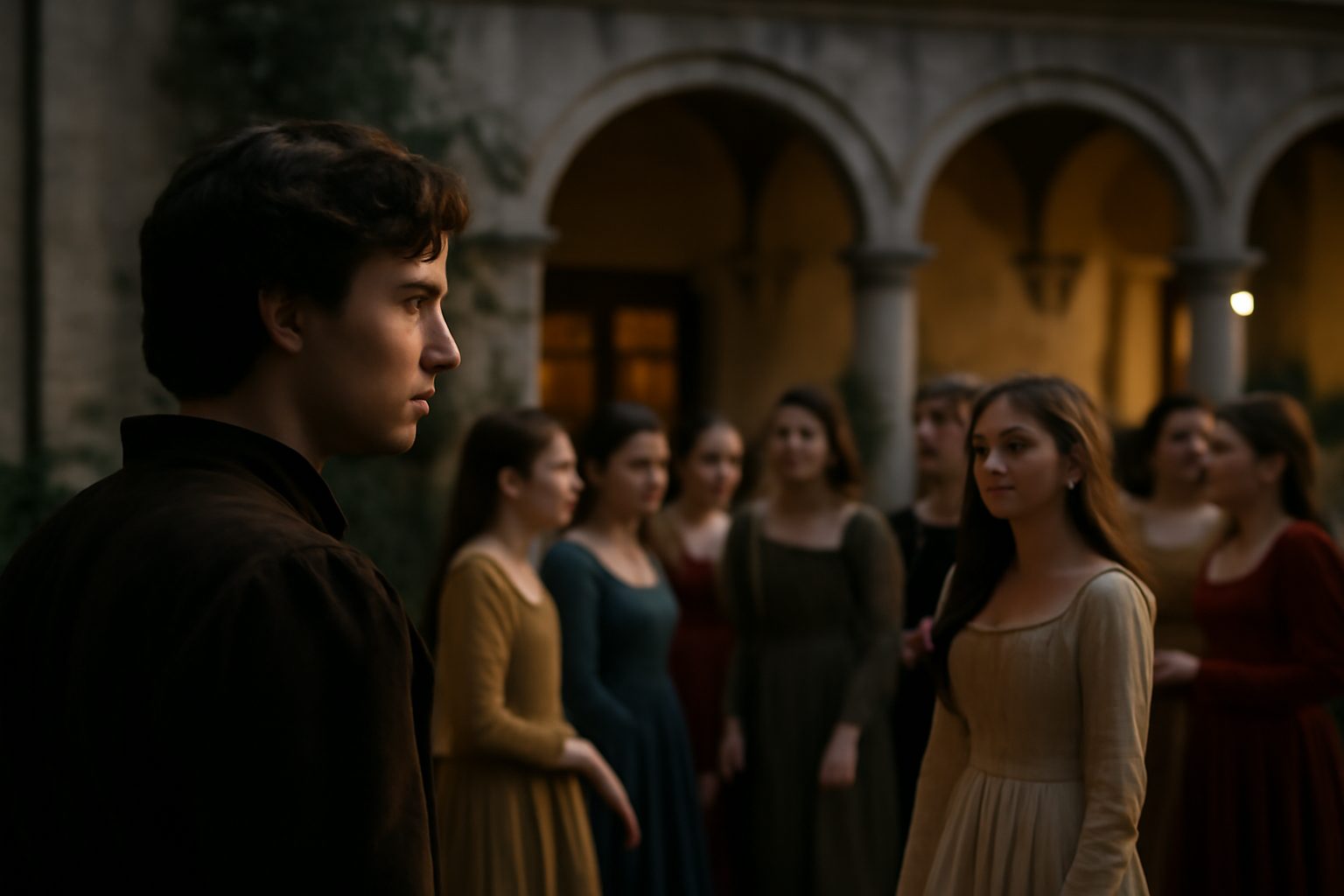
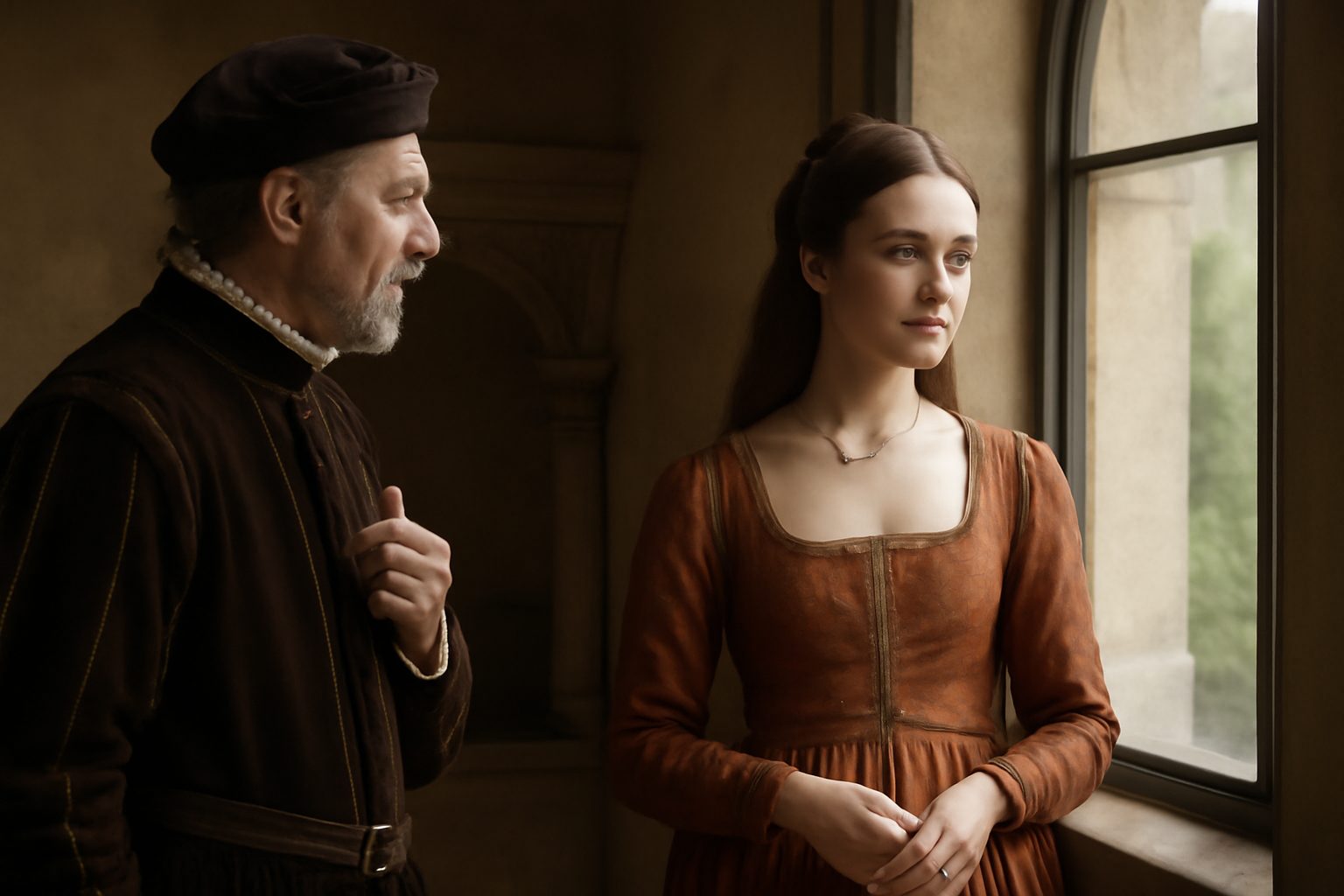
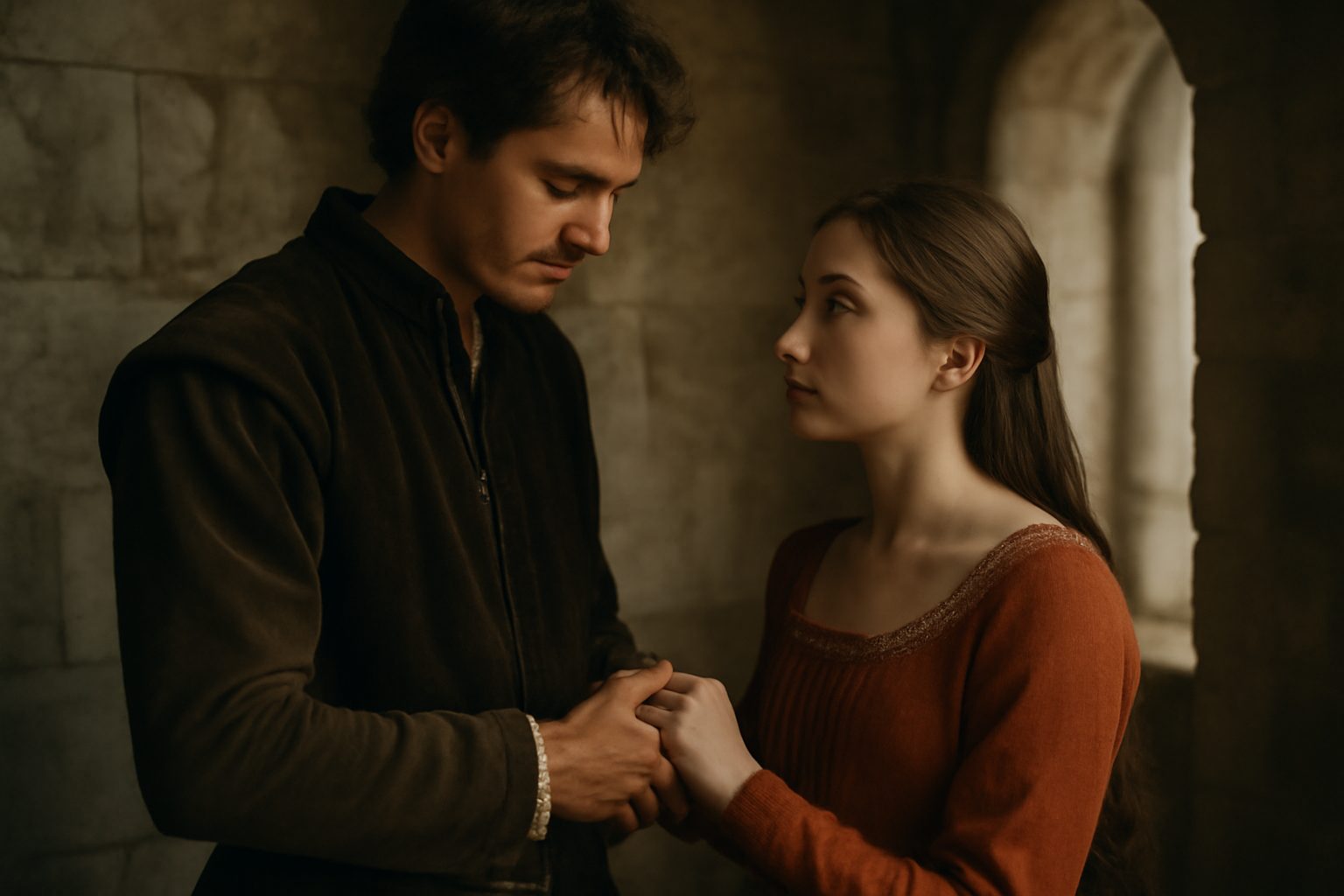
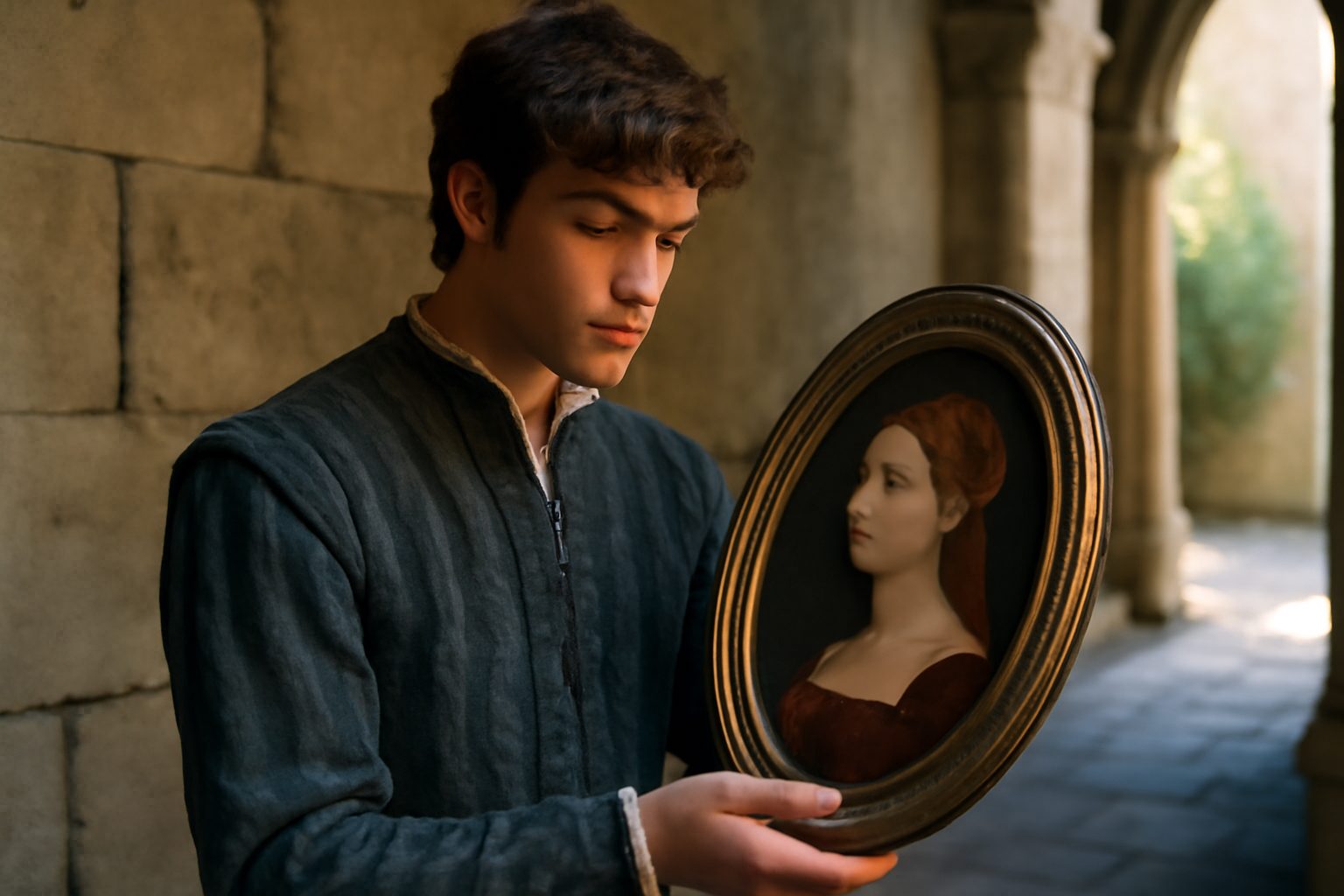
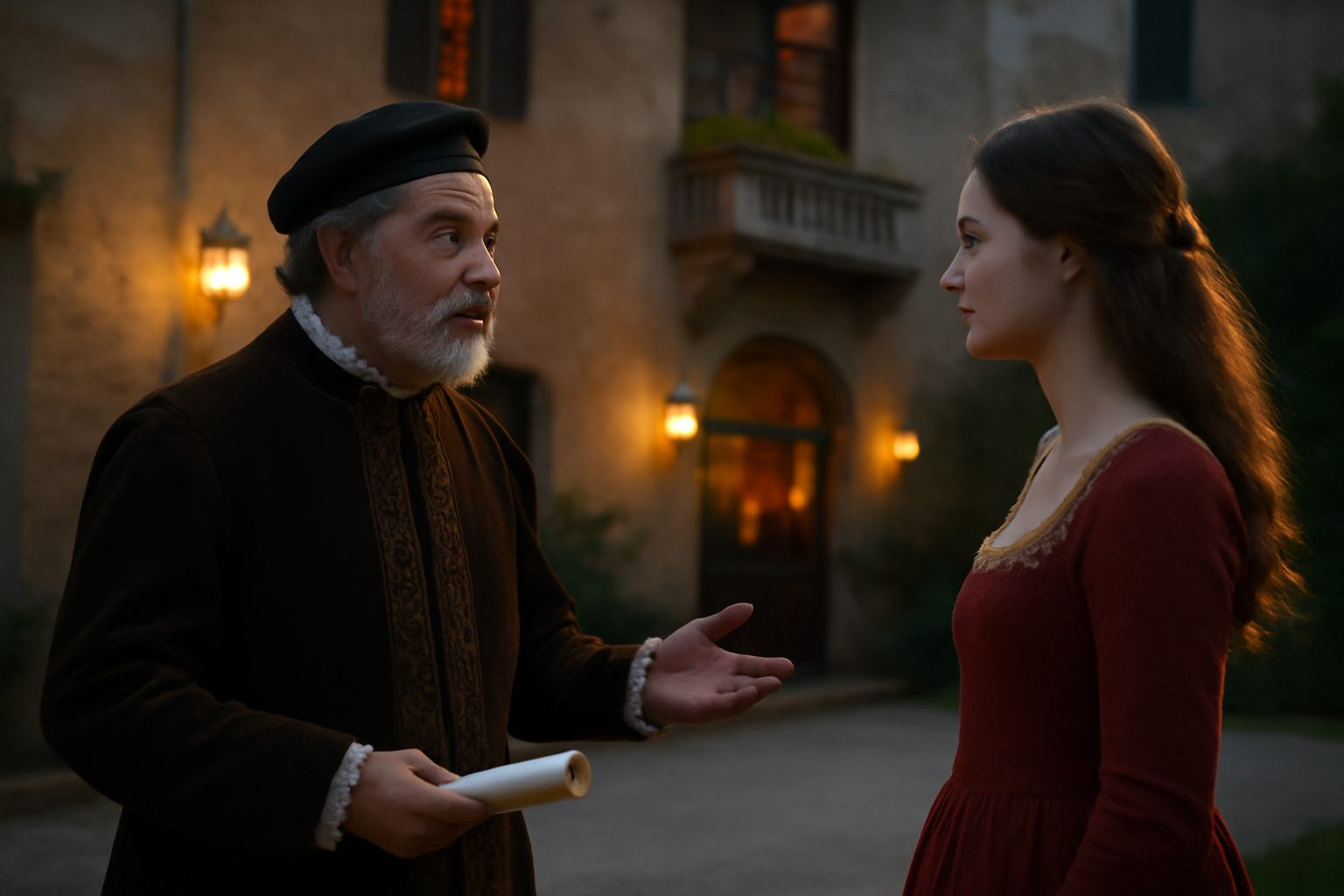
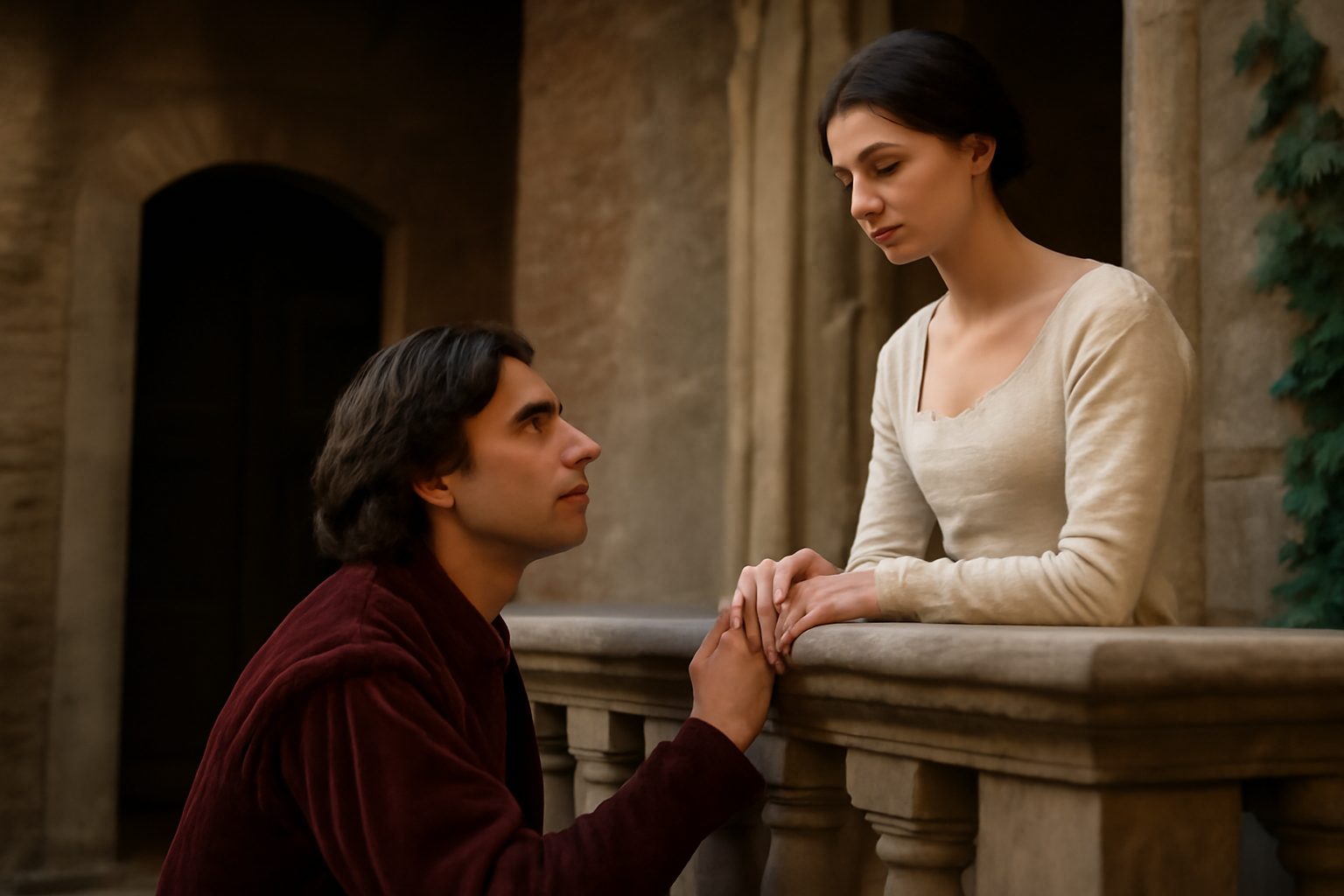
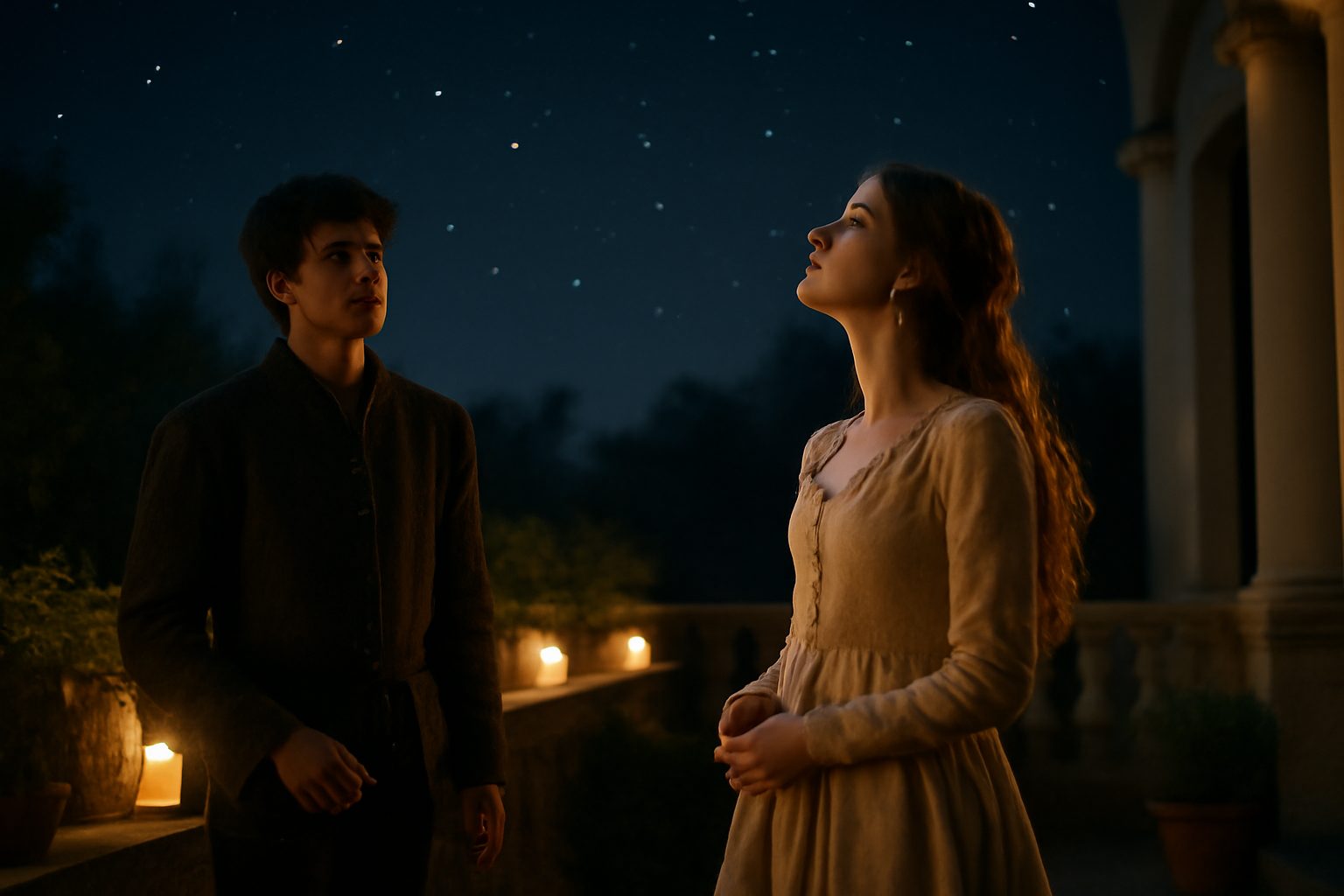
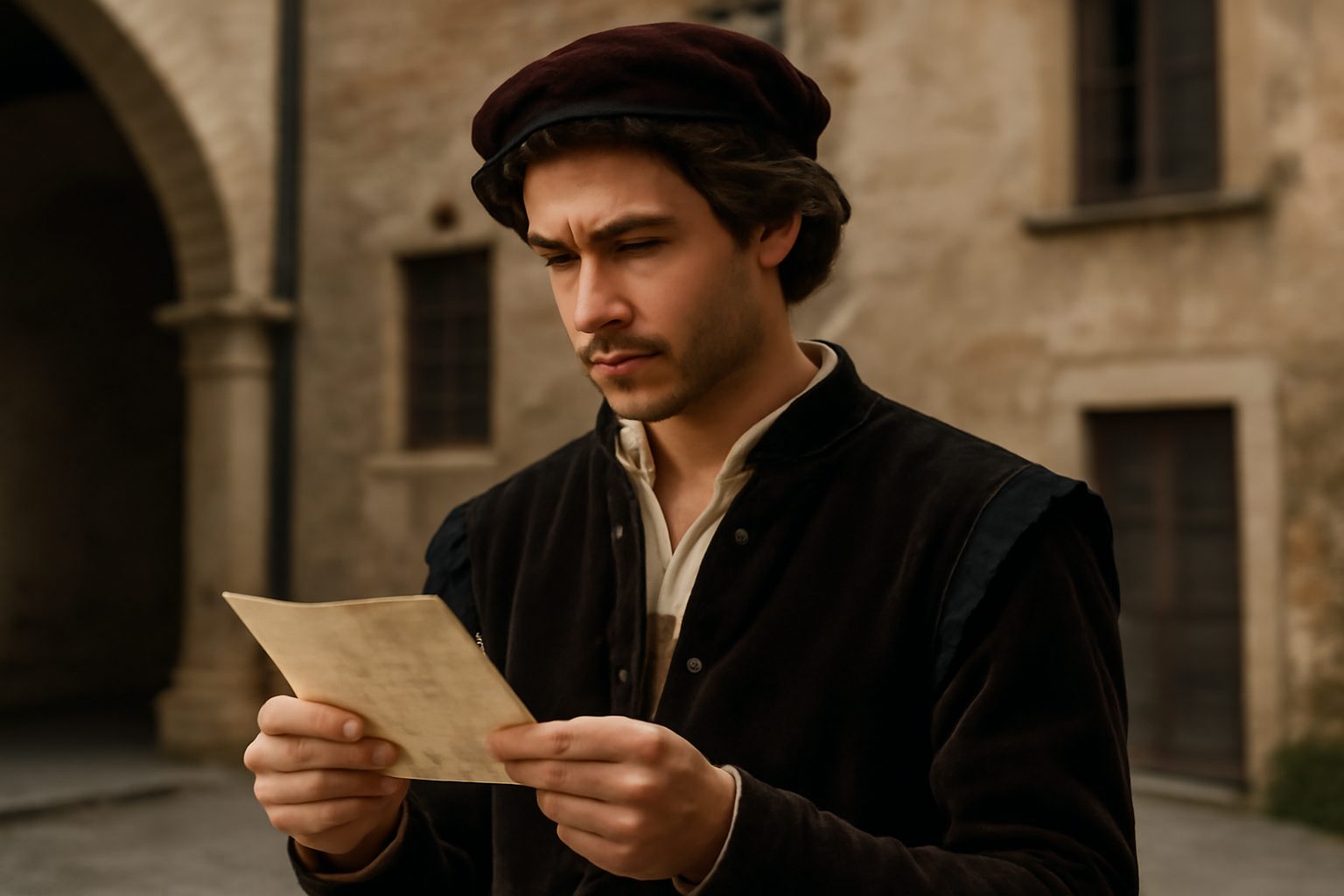
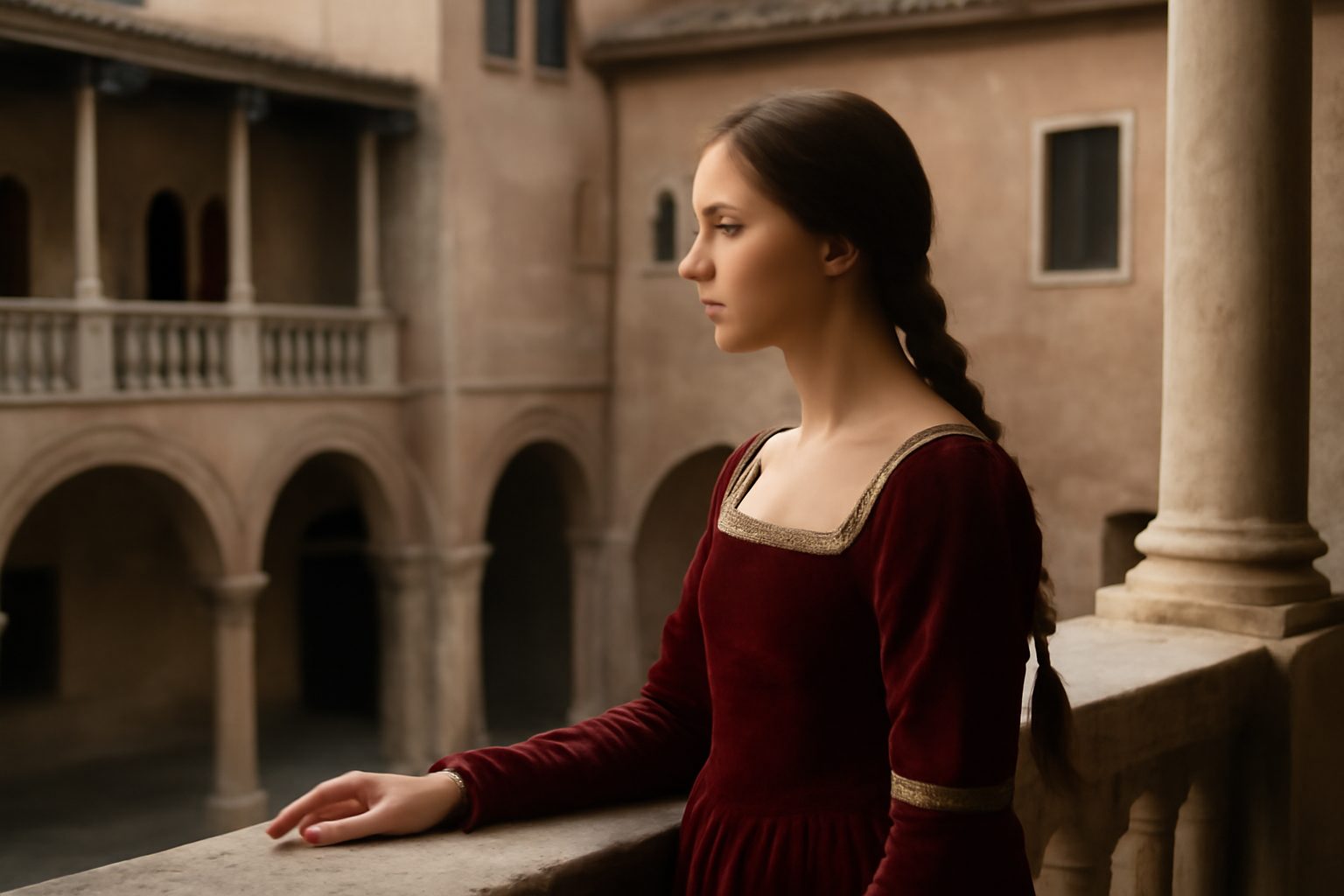
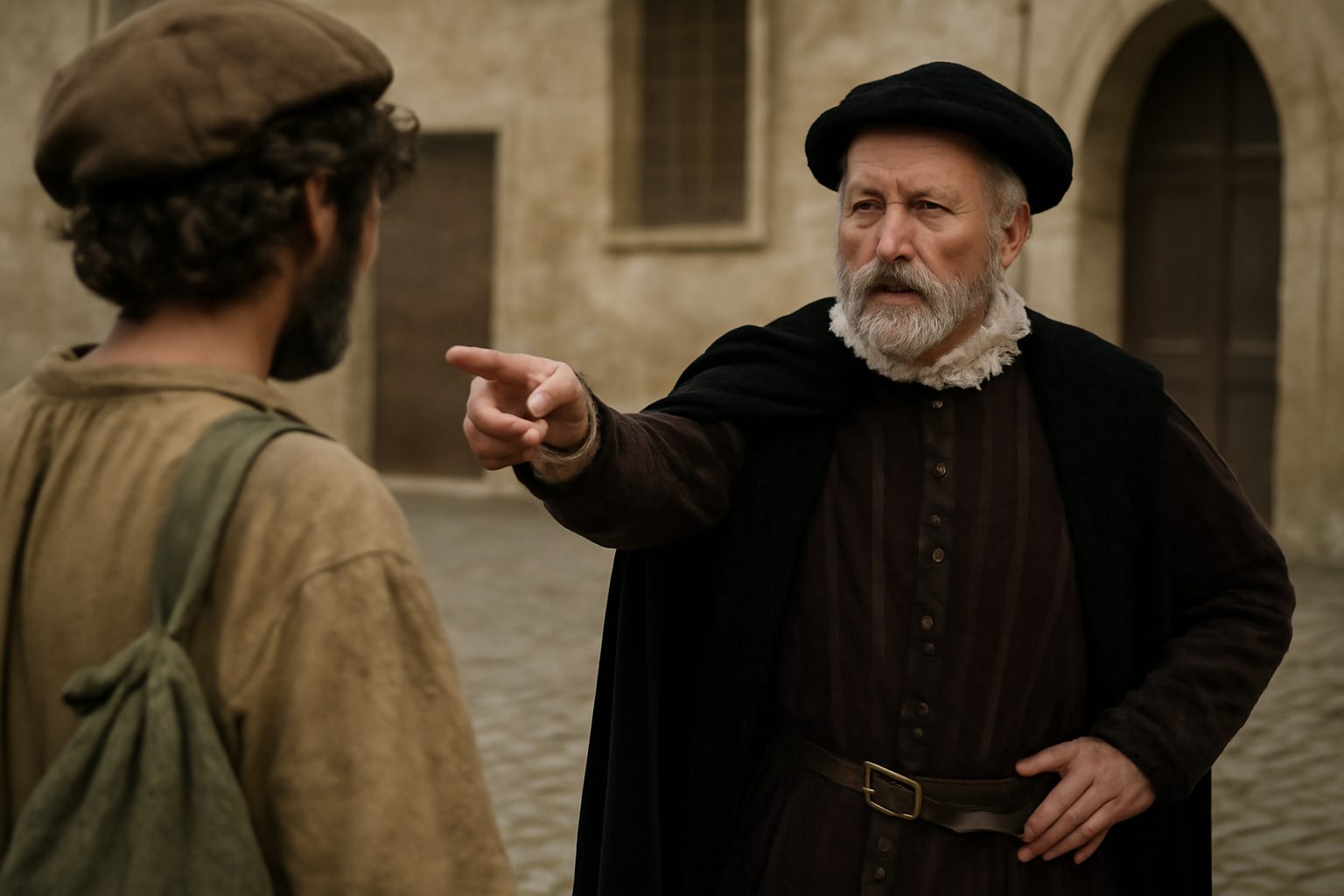
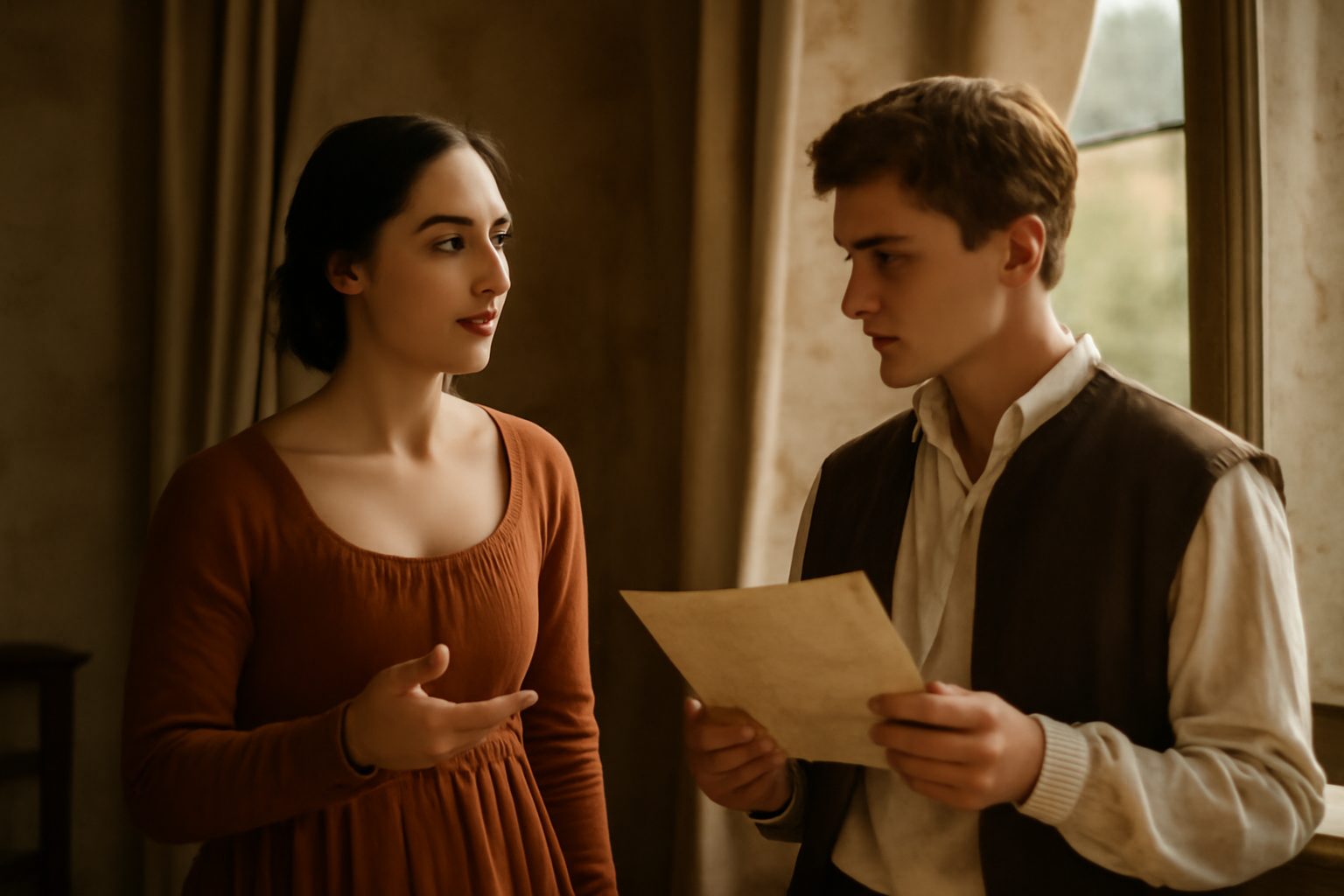
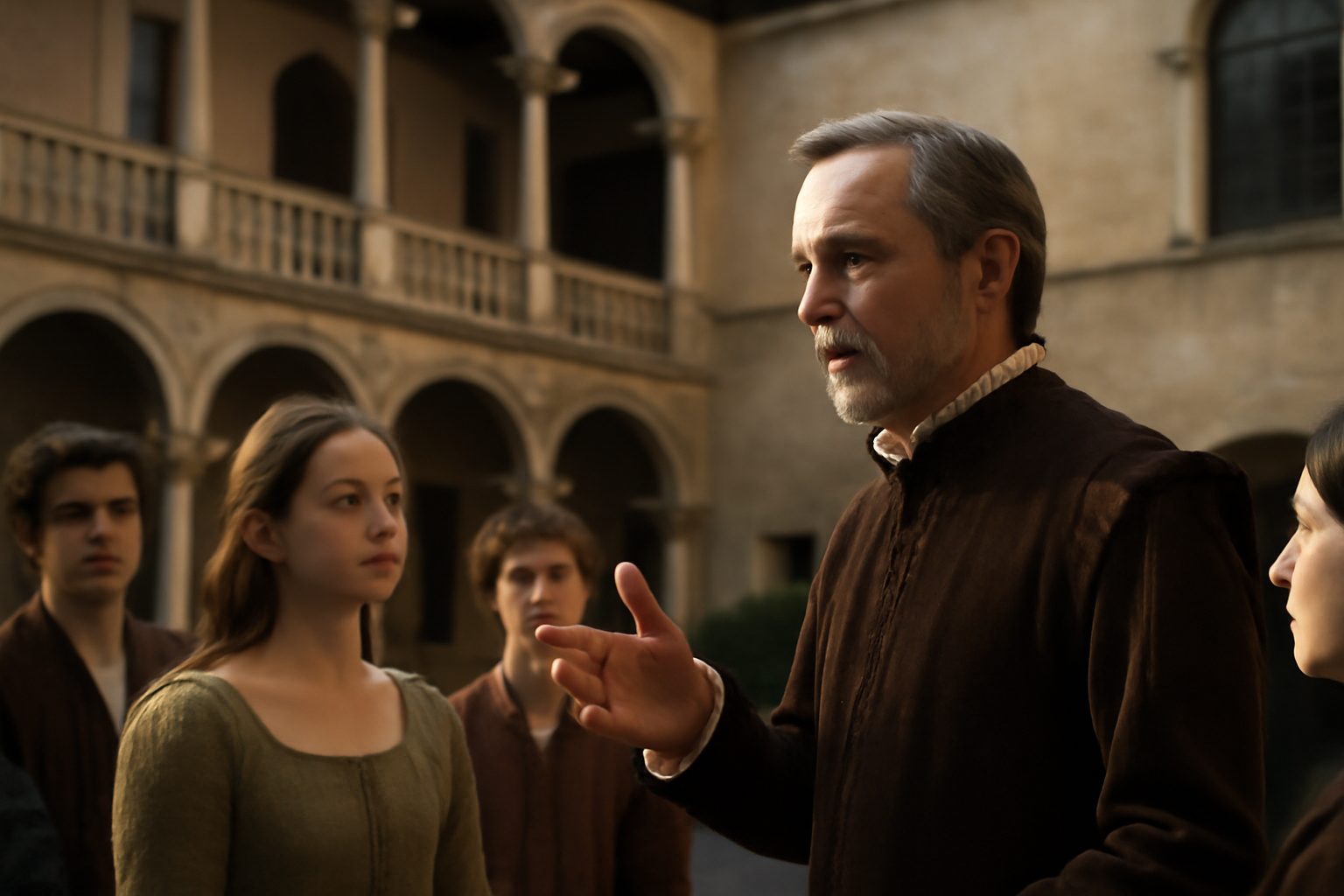
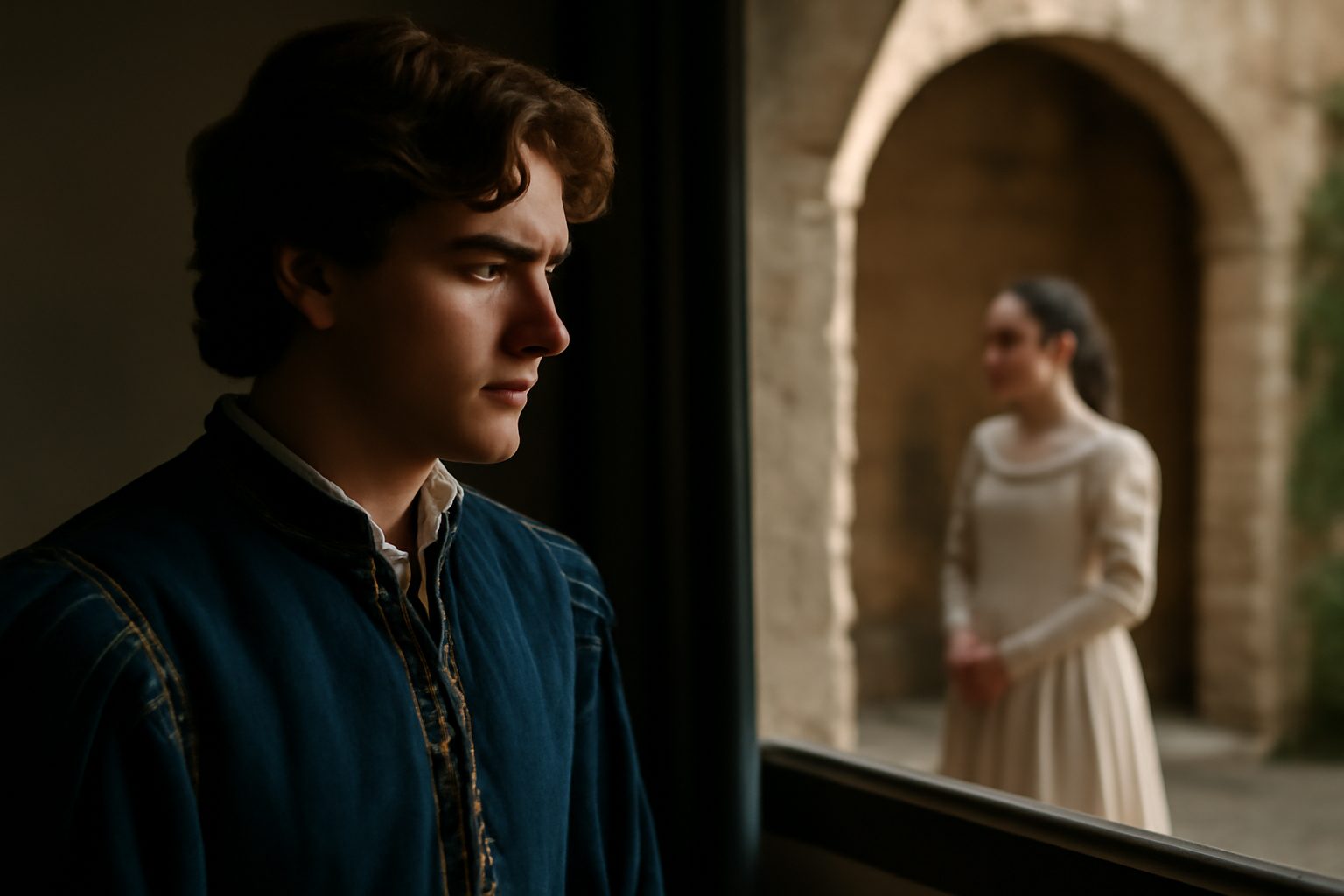
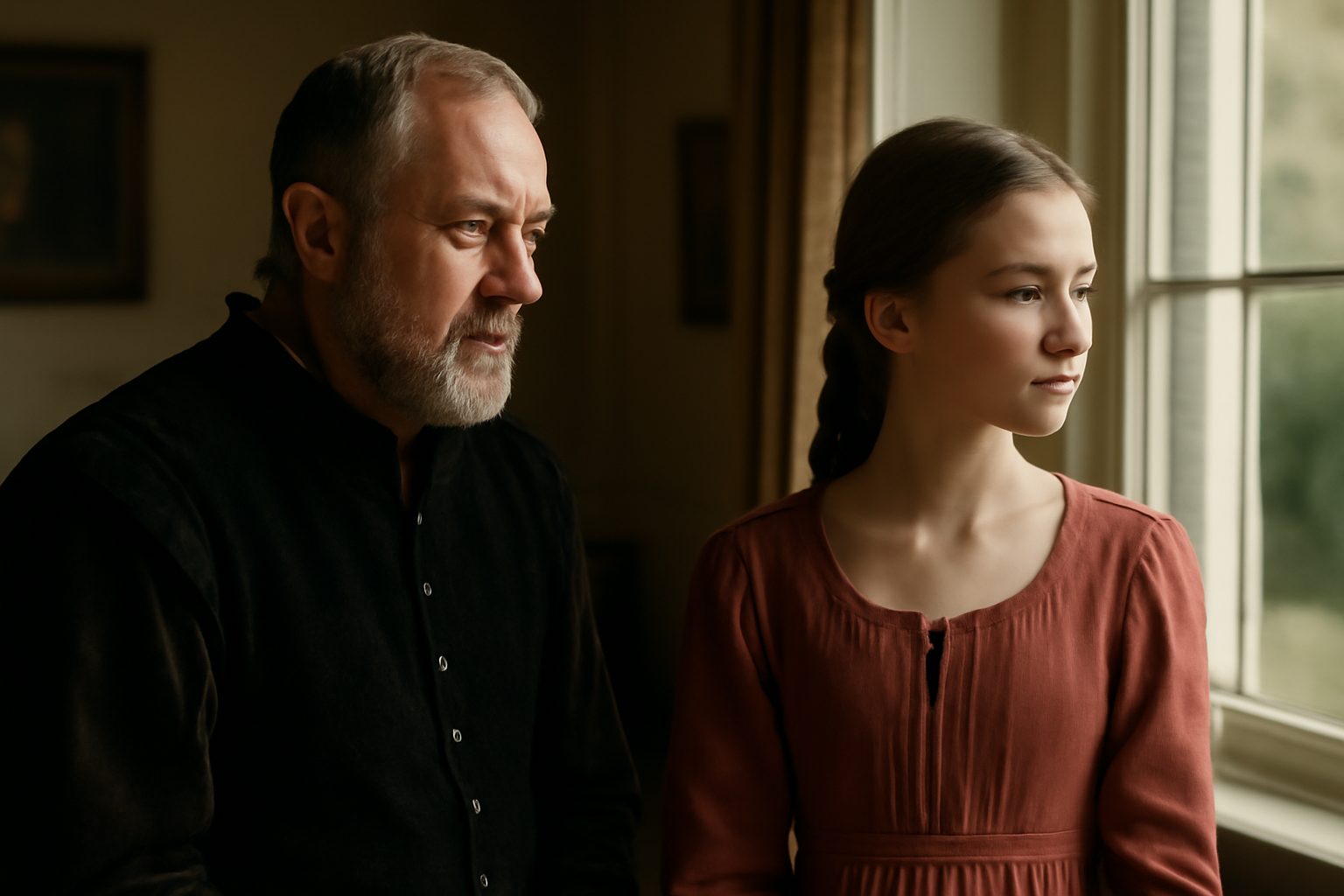
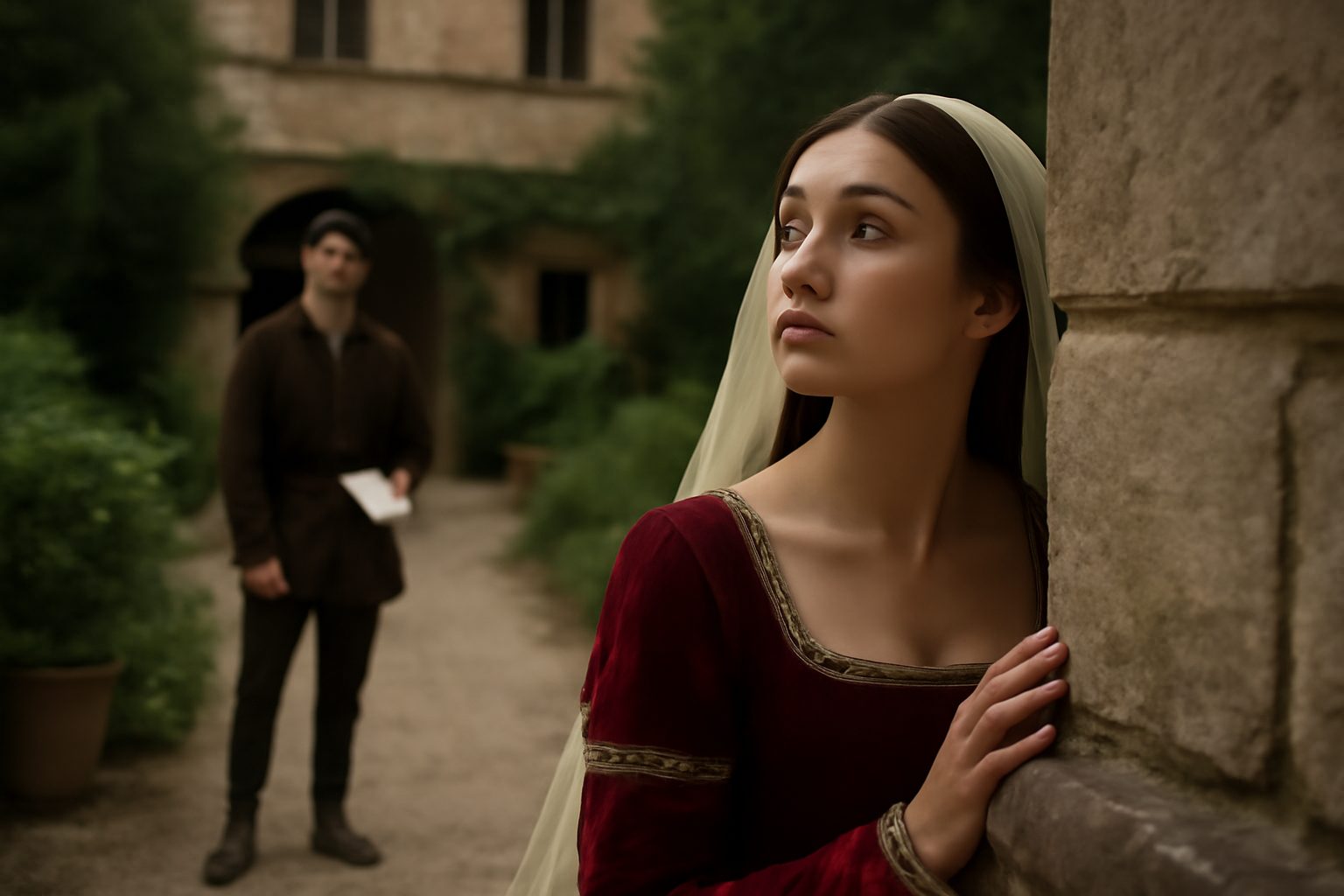
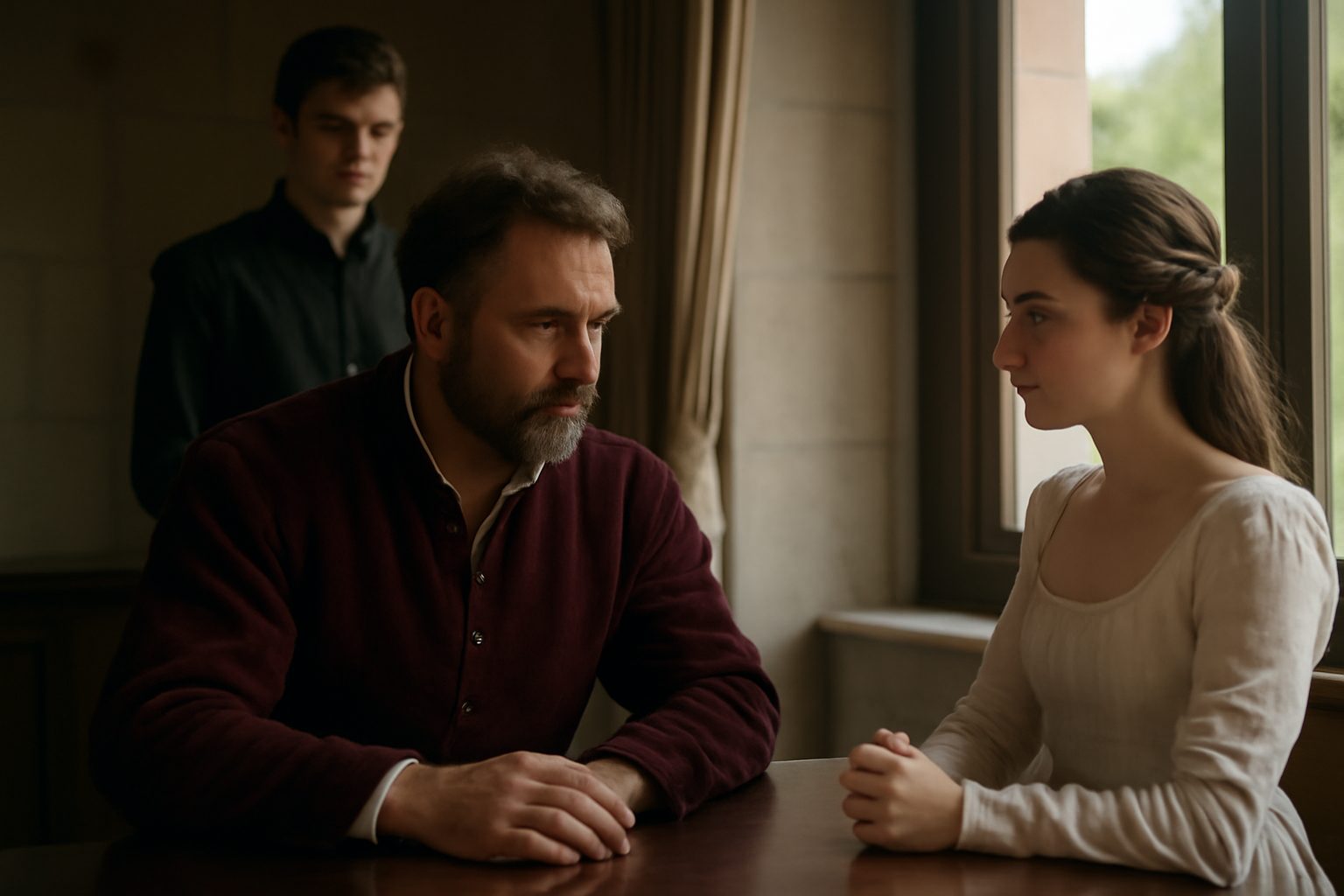
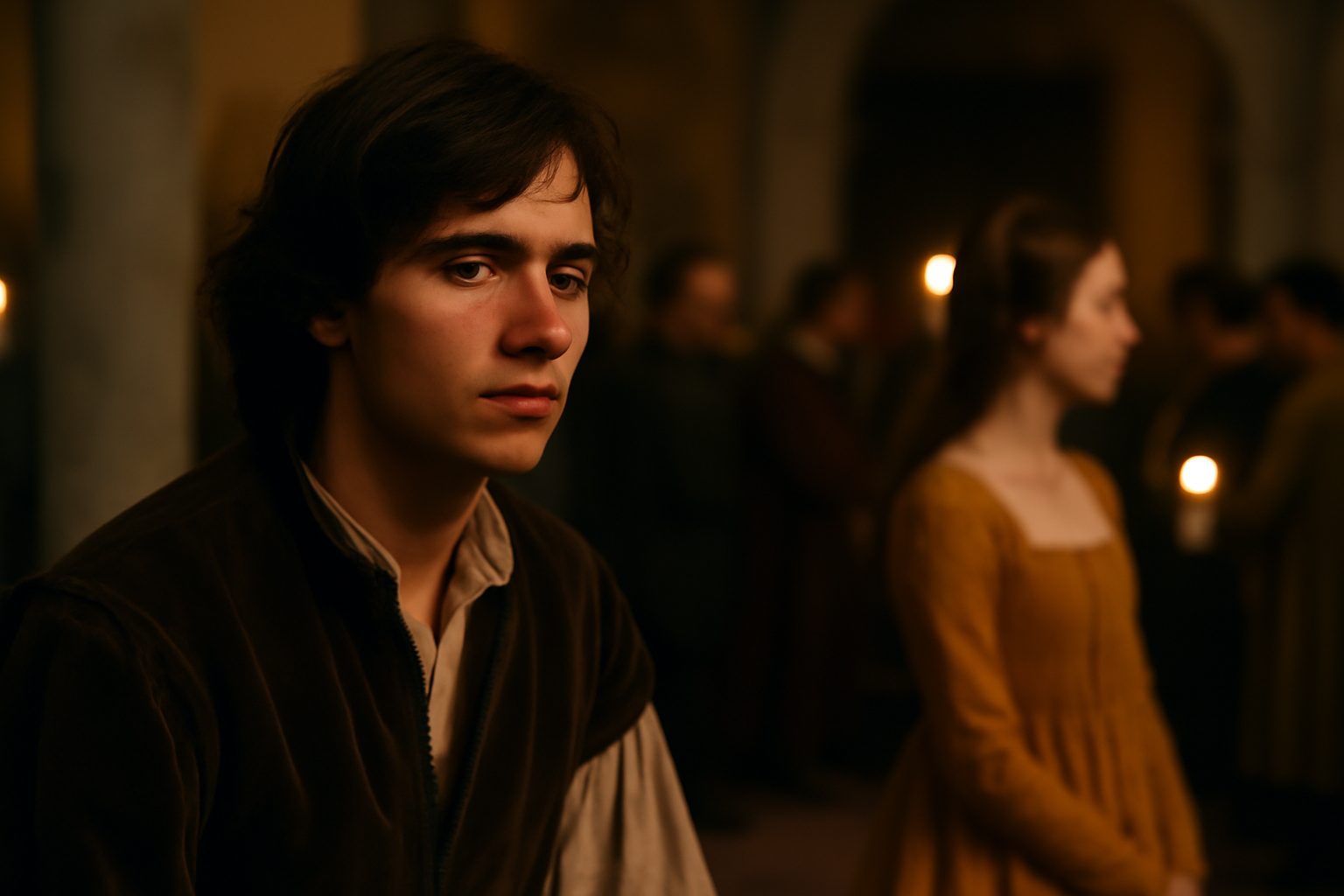
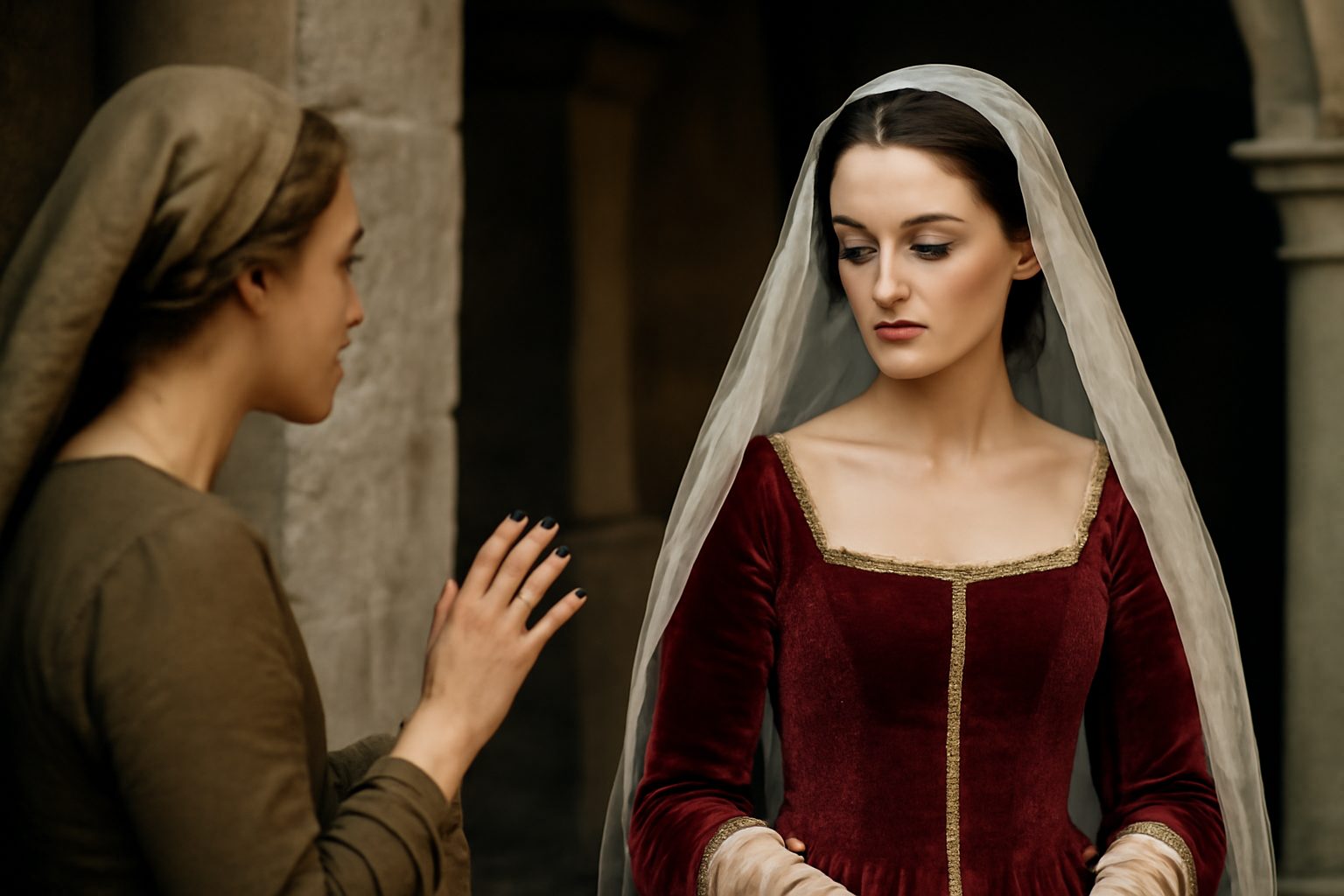
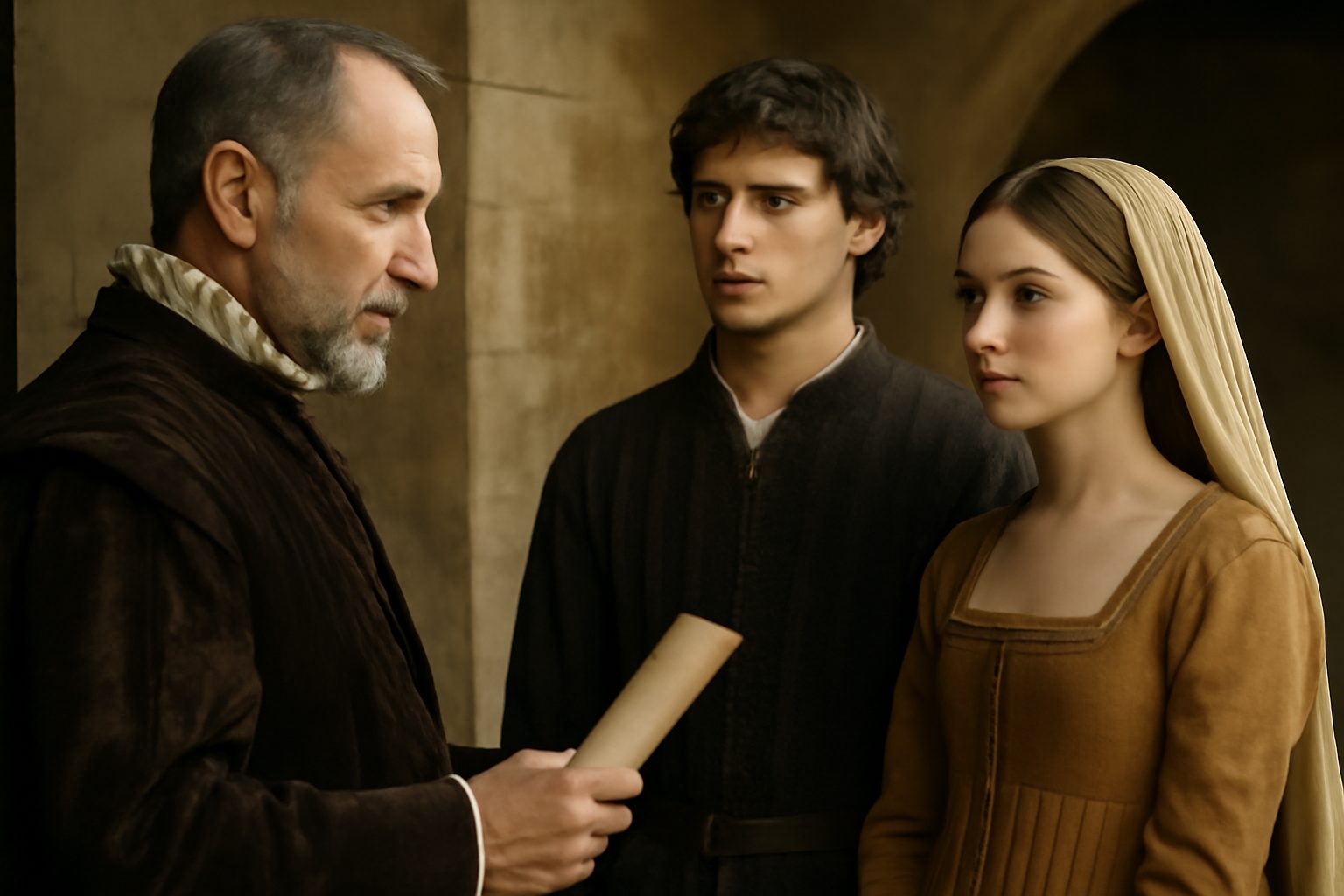
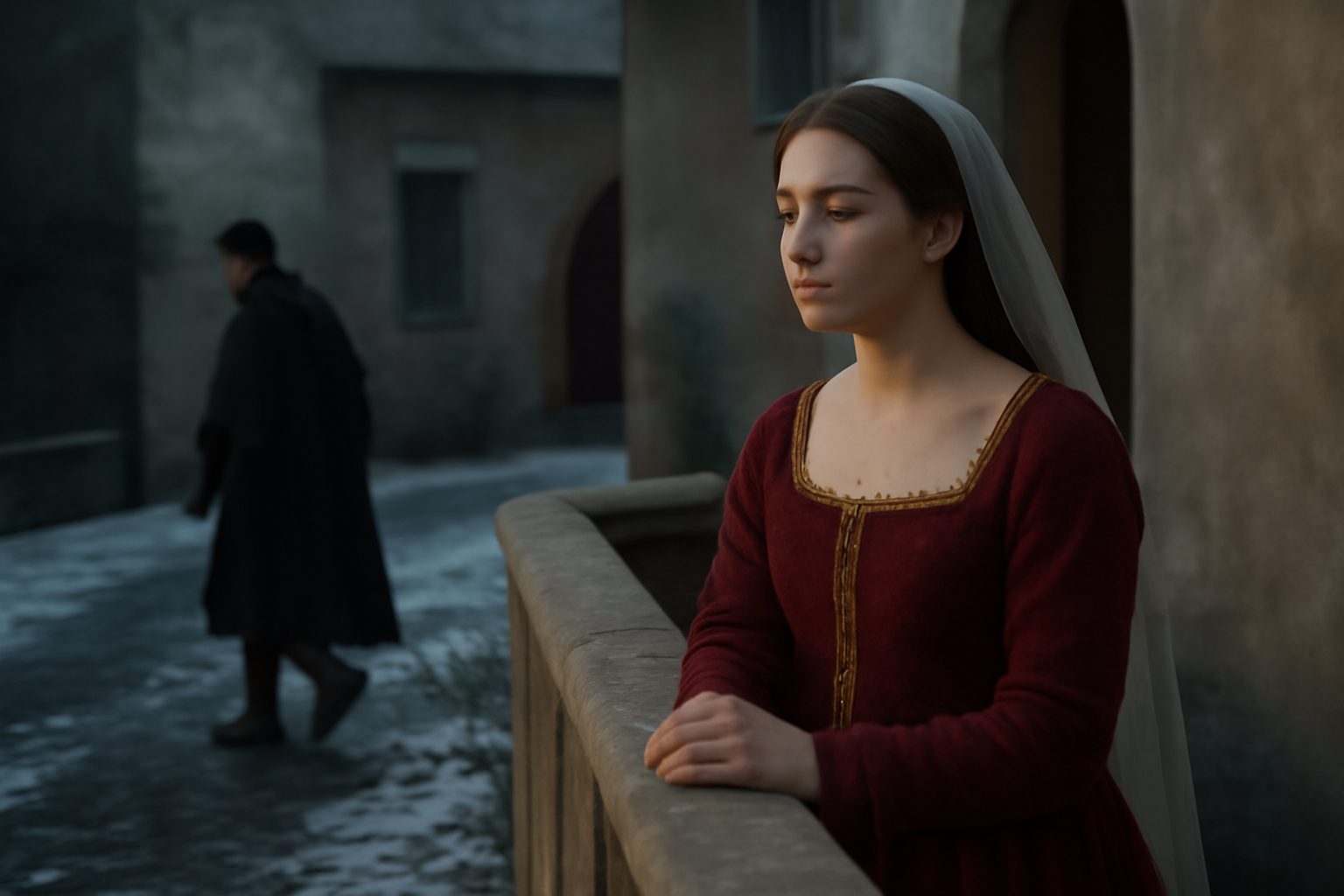
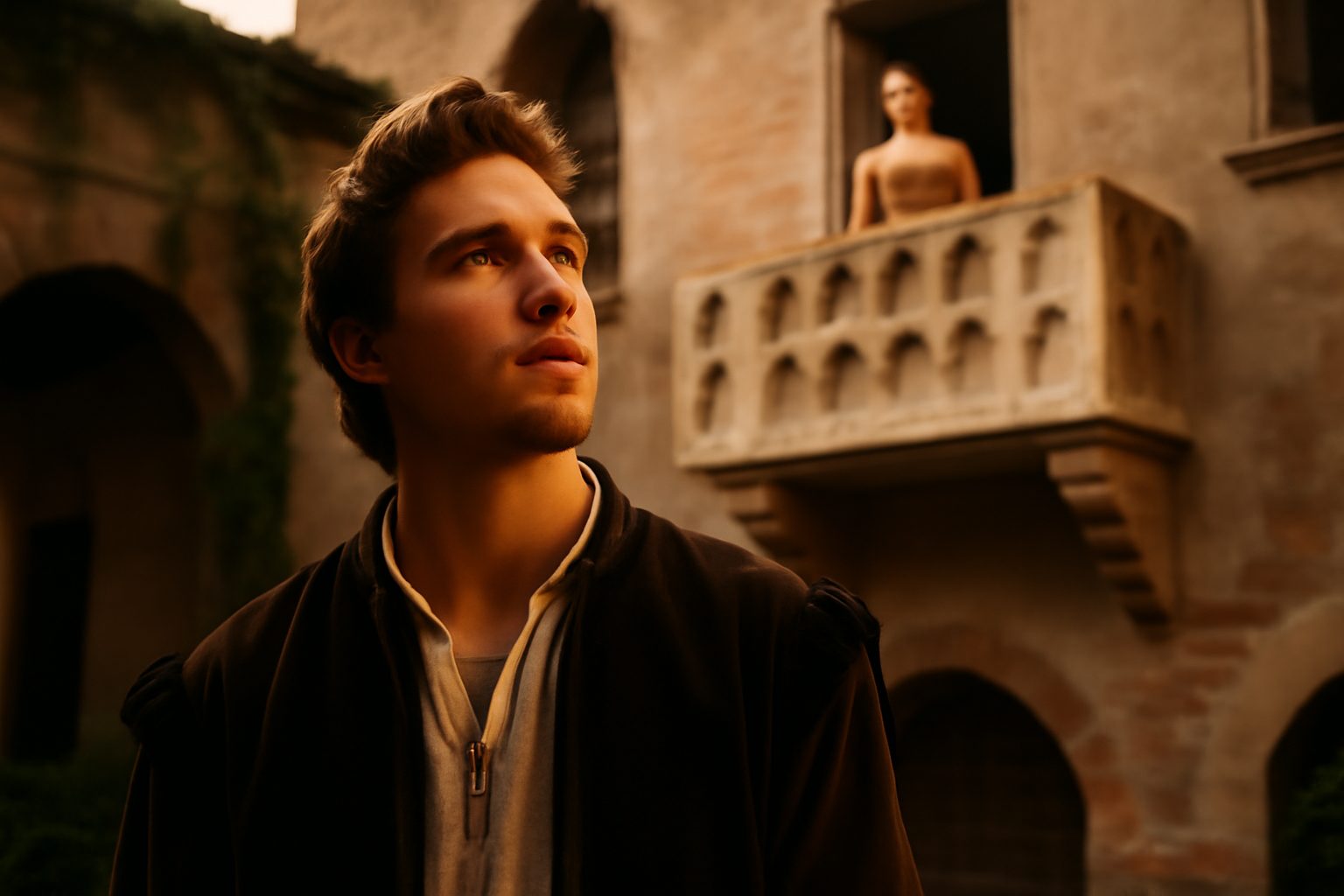
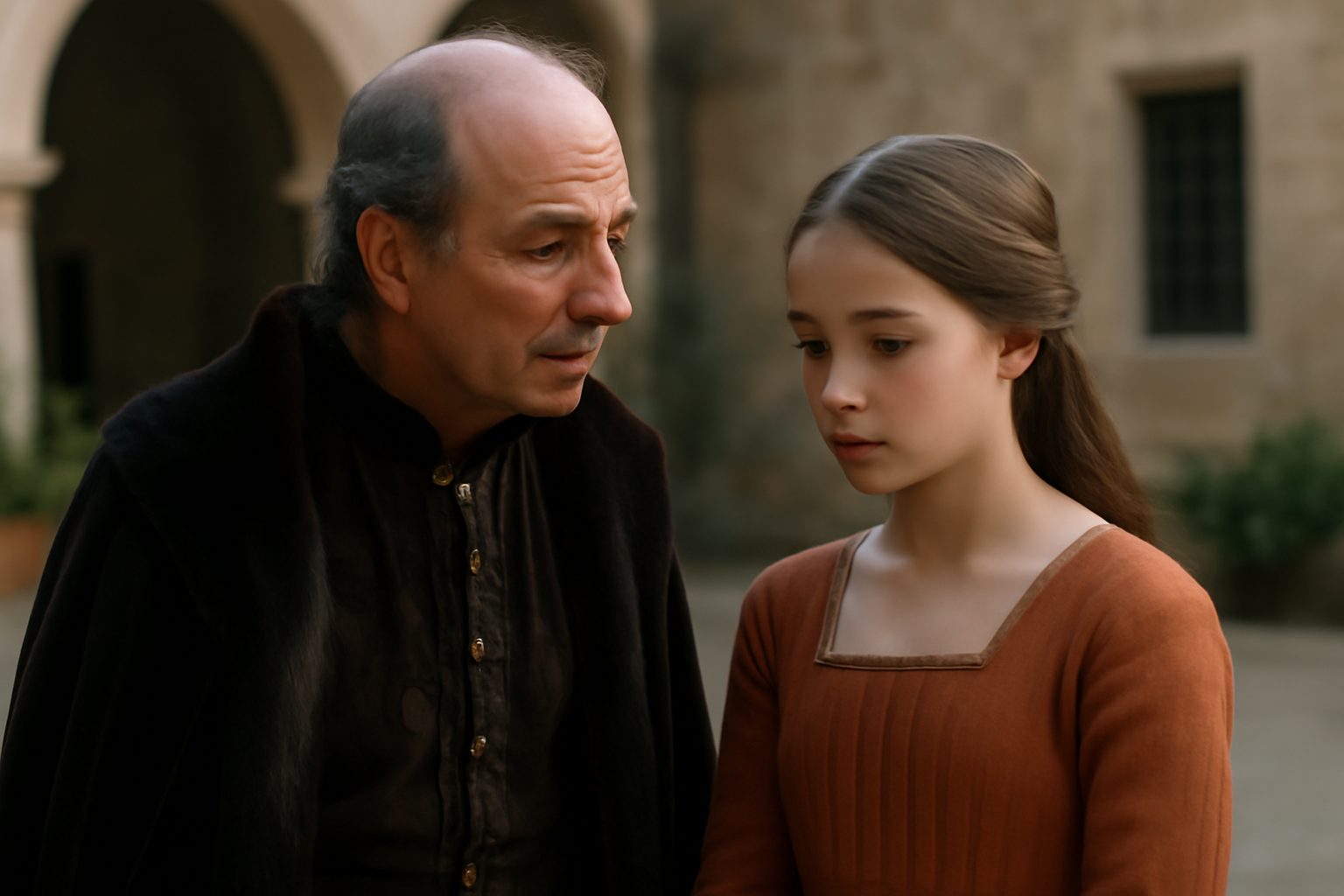
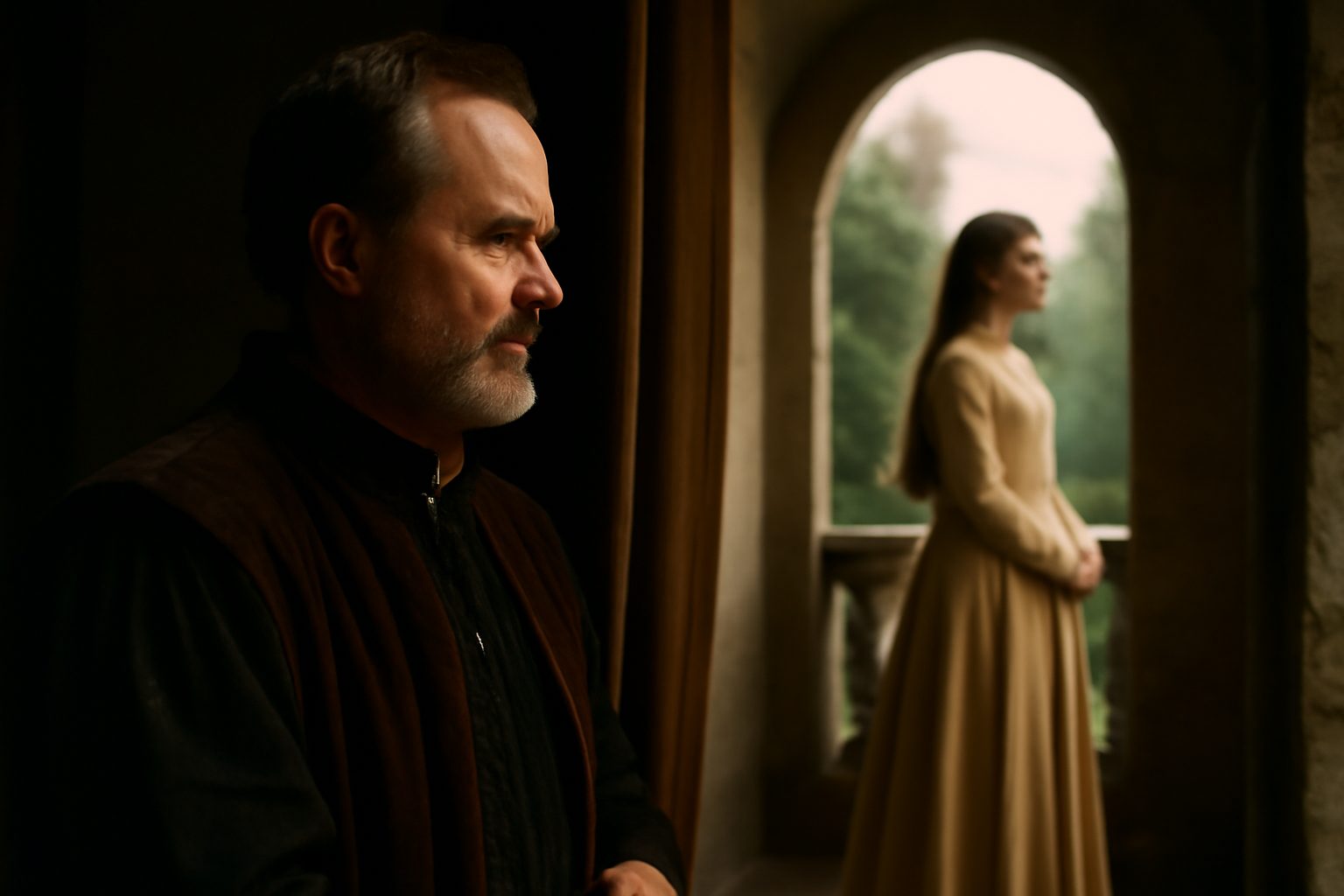
In Act 1, Scene 2 of Romeo and Juliet, Paris asks Capulet for permission to marry Juliet. Capulet, though hesitant, invites him to a feast that evening to woo her, handing a servant a list of guests to summon. The servant, who cannot read, later encounters Romeo and Benvolio, setting the scene for the fateful meeting between Romeo and Juliet.
Capulet: "Whose names are written there, and to them say,"
In modern day english, we would say:
Tell the people whose names are on this list.
Frequently Asked Questions
What does Capulet want someone to do with the names written there?
He wants someone to tell the people whose names are written there.
Connections to other verses:
Connections to "Whose names are written there, and to them say"
This verse from Romeo & Juliet Act 1 Scene 2 – Whose names are written there, and to them say is part of Capulet's instructions to his servant regarding the guest list for his feast. It connects thematically and narratively with several other verses in the same scene.
Direct Context and Task Assignment
The verse immediately follows Through fair Verona; find those persons out, which initiates the servant's task. It is also directly linked to Find them out whose names are written here! It is, reinforcing the command to identify and invite the guests on the list.
Literacy and Communication
The servant's inability to read the list connects to verses where literacy is questioned, such as God gi' god-den. I pray, sir, can you read? and pray, can you read any thing you see?, highlighting the servant's dependence on others, which leads him to seek Romeo's help.
Feast and Invitations
The purpose of identifying the names is Capulet's feast, referenced in This night I hold an old accustom'd feast and Whereto I have invited many a guest. The list includes notable attendees, as seen in verses like County Anselme and his beauteous sisters; the lady and Rosaline; Livia; Signior Valentio and his cousin.
Narrative Consequences
This task sets the stage for Romeo's encounter with Juliet, as the servant's interaction with Romeo (Stay, fellow; I can read) leads to Romeo learning of the feast and deciding to attend, despite his lovesick state, which is discussed in verses like Tut, man, one fire burns out another's burning.