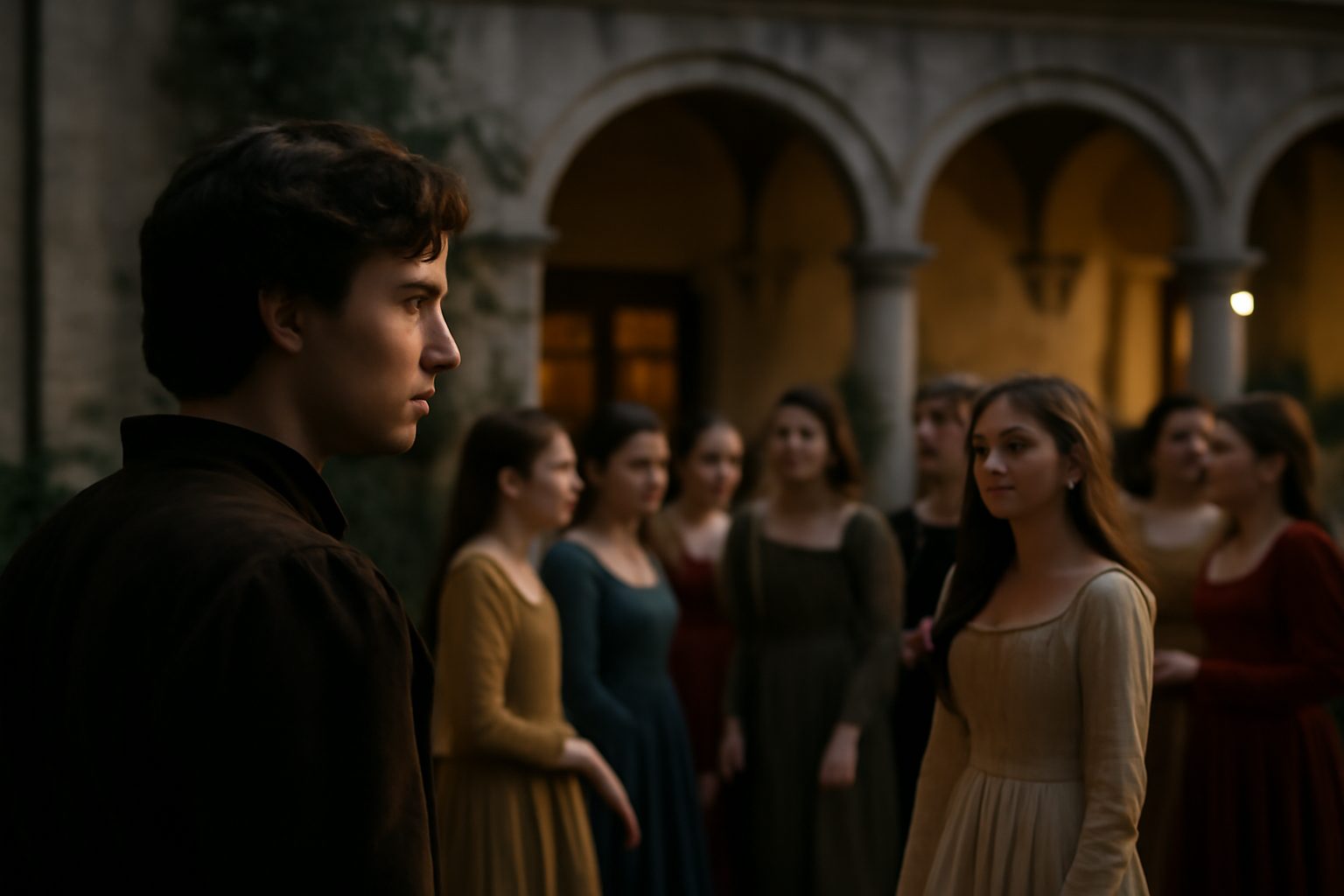
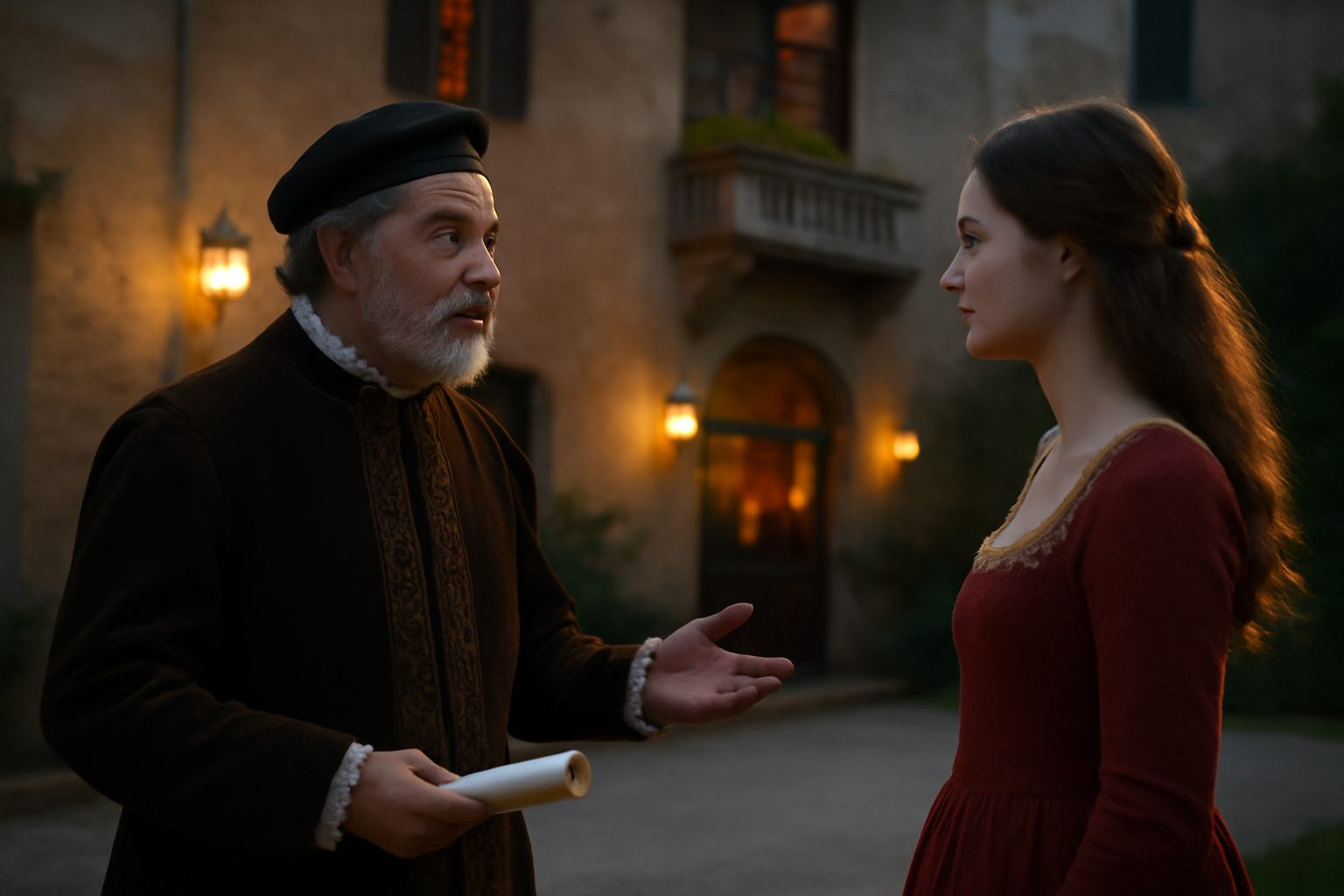
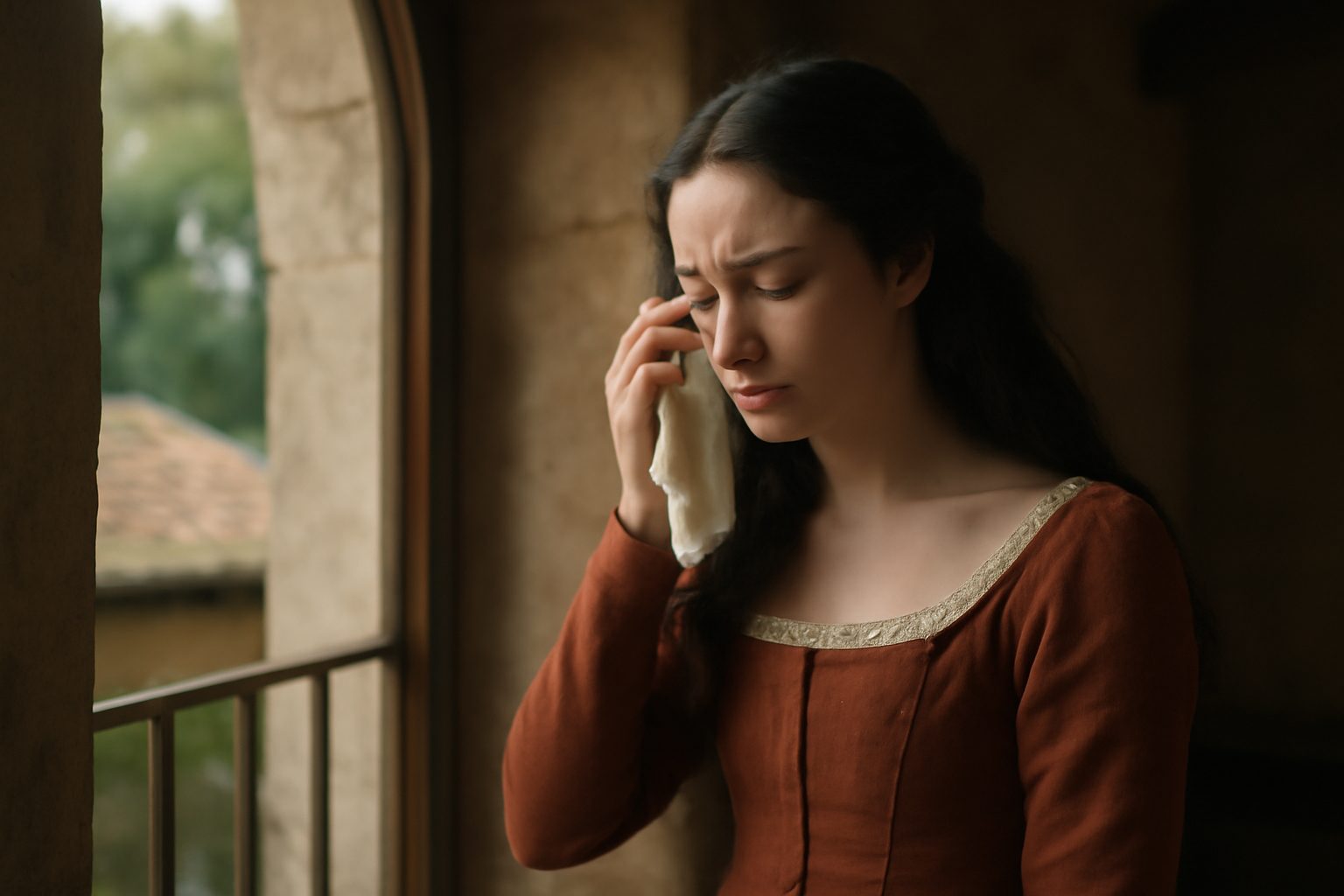
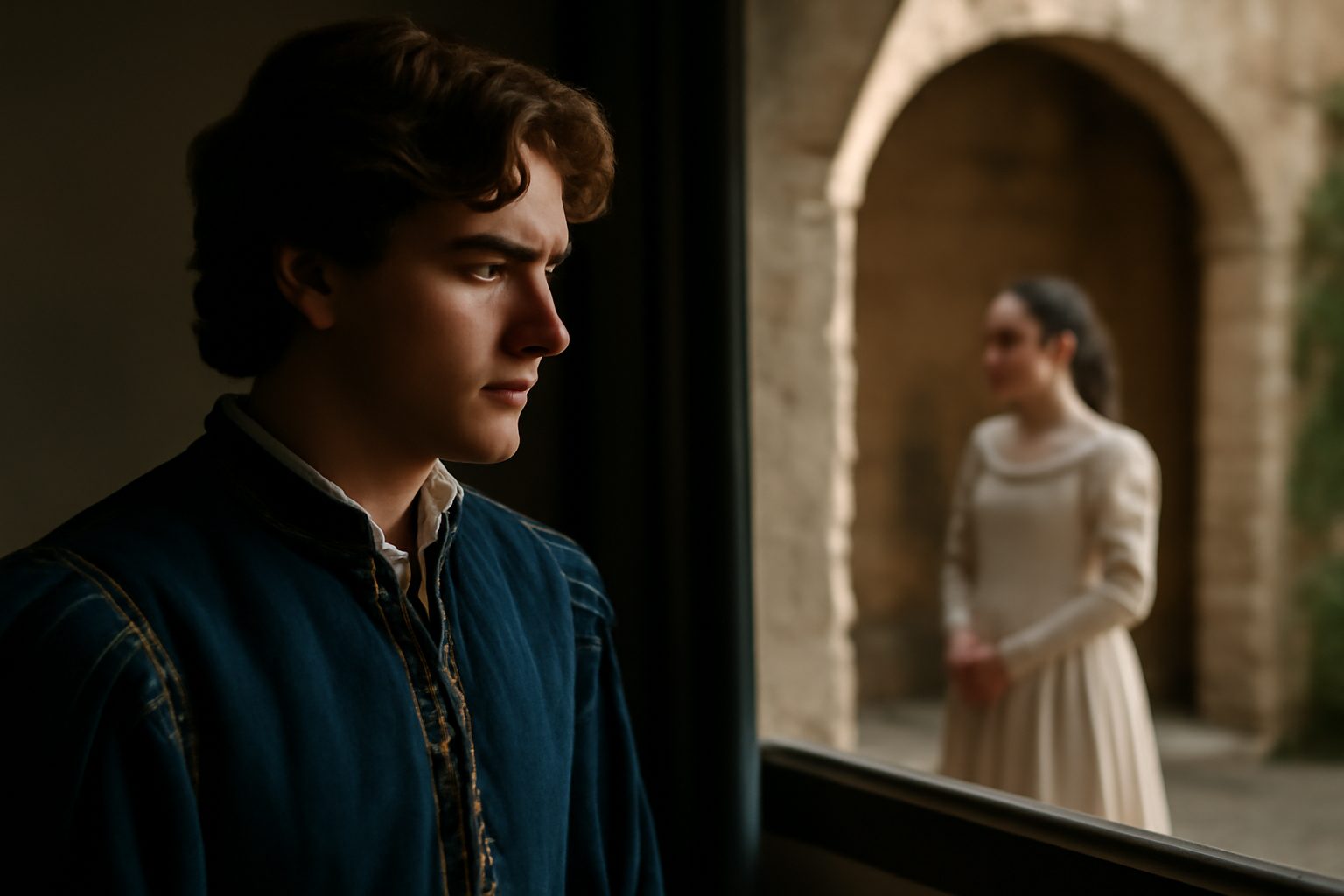
In Act 1, Scene 2 of Romeo and Juliet, Romeo speaks these words as he laments his unrequited love for Rosaline. He compares his heartache to being imprisoned and starved, emphasizing his emotional torment. This moment highlights Romeo's melodramatic nature before he meets Juliet, setting up his transformation later in the play.
Romeo: "Shut up in prison, kept without my food,"
In modern day english, we would say:
Locked away in prison, starving and deprived of food.
Frequently Asked Questions
What does Romeo compare his sadness to in this line?
Romeo compares his sadness to being locked in prison without food.
Connections to other verses:
Connections to "Shut up in prison, kept without my food"
The verse "Shut up in prison, kept without my food," spoken by Romeo, expresses his self-imposed emotional confinement due to unrequited love for Rosaline. This metaphorical imprisonment connects thematically and contextually with several other verses in Act 1, Scene 2.
Connection to Romeo's Despair and Love
Romeo's sense of being trapped aligns with his earlier declaration in "Not mad, but bound more than a mad-man is", emphasizing his emotional bondage. His suffering is further echoed in "Ay, mine own fortune in my misery", where he accepts his wretched state as his fate.
Connection to Benvolio's Advice
Benvolio's counsel to Romeo provides a direct counterpoint to Romeo's imprisonment metaphor. In "Tut, man, one fire burns out another's burning", he suggests replacing one love with another to alleviate pain, a idea reinforced by "Take thou some new infection to thy eye", urging Romeo to find a new object of affection. Benvolio's promise in "And I will make thee think thy swan a crow" aims to break Romeo's fixation by showing him other beauties.
Connection to the Feast Invitation
The scene's central event, Capulet's feast, serves as the setting for Romeo's liberation from his emotional prison. Invitations like "This night I hold an old accustom'd feast" and "At my poor house look to behold this night" set the stage for Romeo's encounter with Juliet. Benvolio's encouragement in "Go thither; and, with unattainted eye" directly challenges Romeo's confined perspective, urging him to see others objectively.
Connection to Themes of Comparison and Choice
Romeo's imprisonment in love for Rosaline is contrasted with the freedom of choice emphasized elsewhere. Paris's suit to Capulet involves "An she agree, within her scope of choice", highlighting Juliet's autonomy. The idea of comparing loves appears in "Compare her face with some that I shall show" and "Your lady's love against some other maid", reinforcing Benvolio's strategy to free Romeo from his narrow devotion.