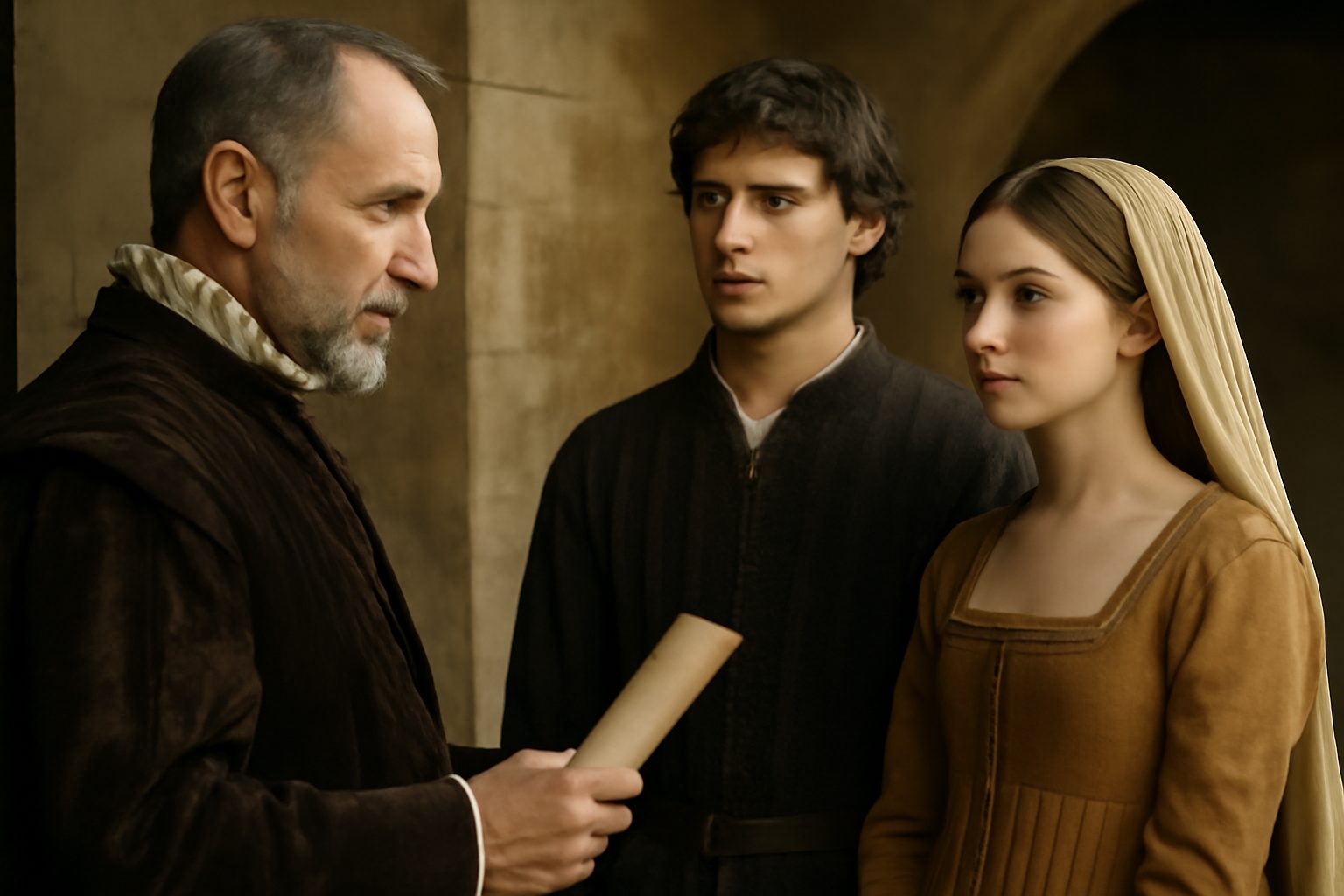
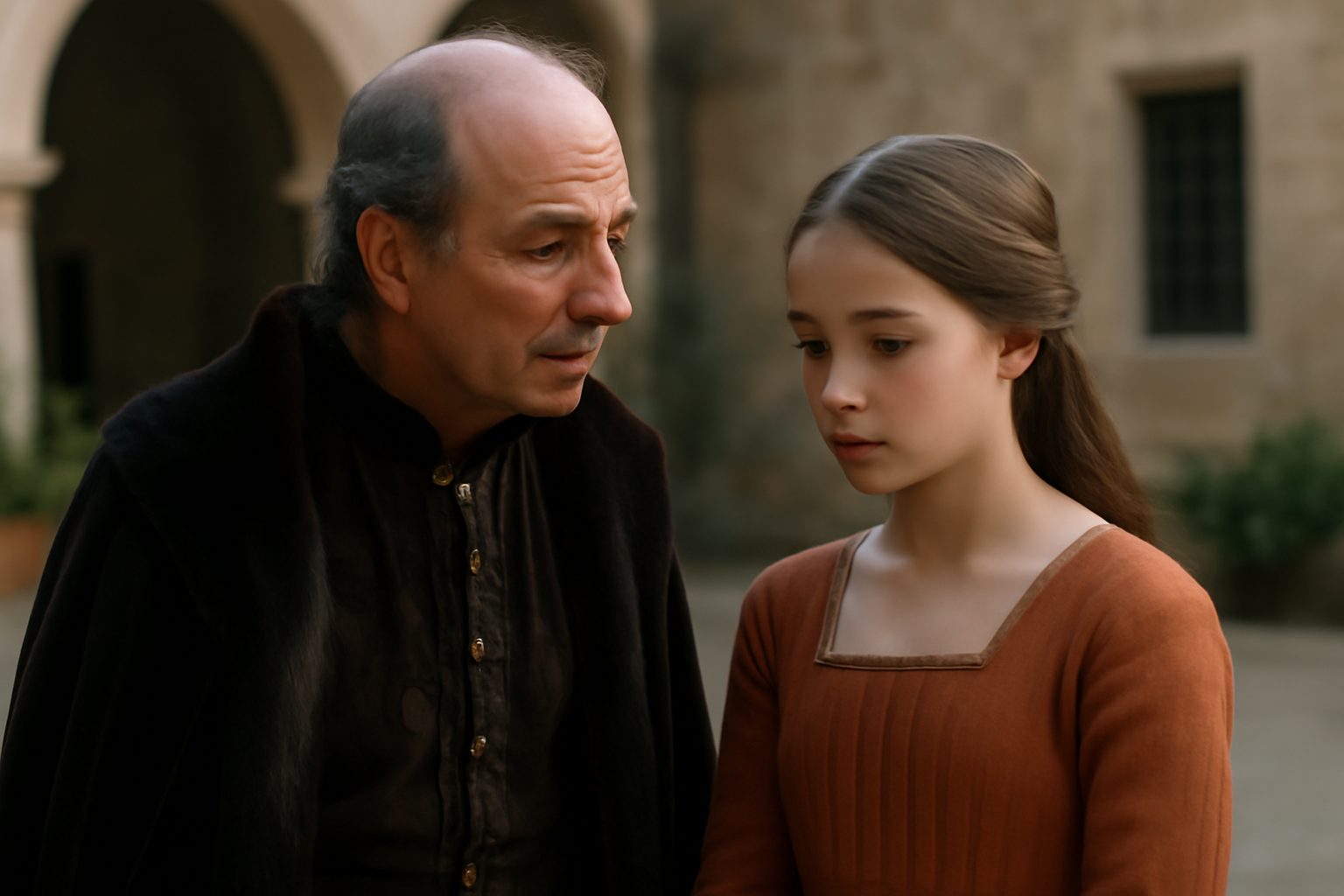
In Act 1, Scene 2 of Romeo and Juliet, Capulet and Paris discuss Juliet's potential marriage. A servant enters with a list of guests for Capulet's feast but cannot read it, leading to confusion about who is invited. This line reflects the servant's uncertainty as he questions where the invited guests should gather.
Romeo: "assembly: whither should they come?"
In modern day english, we would say:
The servant is asking where the guests should go for the party.
Frequently Asked Questions
What is Romeo asking about in this line?
Romeo is asking where a group of people should gather or meet.
Who is Romeo talking to in this line?
Romeo is speaking to a servant or someone who mentioned an assembly.
Connections to other verses:
Connections to "assembly: whither should they come?"
The verse "assembly: whither should they come?" is part of a dialogue between the servant and Romeo, where the servant is seeking directions for delivering invitations. This line directly connects to several other verses in the scene that revolve around the Capulet feast and the guest list.
Direct Context and Invitation Details
This question follows the servant's instruction to "Through fair Verona; find those persons out" whose names are on the list. It is immediately preceded by Romeo's inquiry "Whither?", showing the natural flow of their conversation about the feast's location.
Link to the Feast and Guest List
The assembly refers to Capulet's feast, introduced earlier when Capulet says, "This night I hold an old accustom'd feast", and "Whereto I have invited many a guest". The servant's task is tied to delivering invitations to those on the list, as indicated in "Whose names are written there, and to them say" and "Find them out whose names are written here!".
Character Interactions and Plot Development
This exchange leads Romeo to learn about the feast where "Sups the fair Rosaline whom thou so lovest", prompting his decision to attend. It also ties to Benvolio's advice to "Go thither; and, with unattainted eye" compare Rosaline to other beauties, setting up the central meeting of Romeo and Juliet.
Thematic and Social Context
The question highlights the bustling social atmosphere of Verona and the importance of the feast, which Capulet describes as having "With all the admired beauties of Verona". It underscores the scene's focus on youth, love, and social gatherings, contrasting with the earlier discussion of the feud in "And pity 'tis you lived at odds so long".