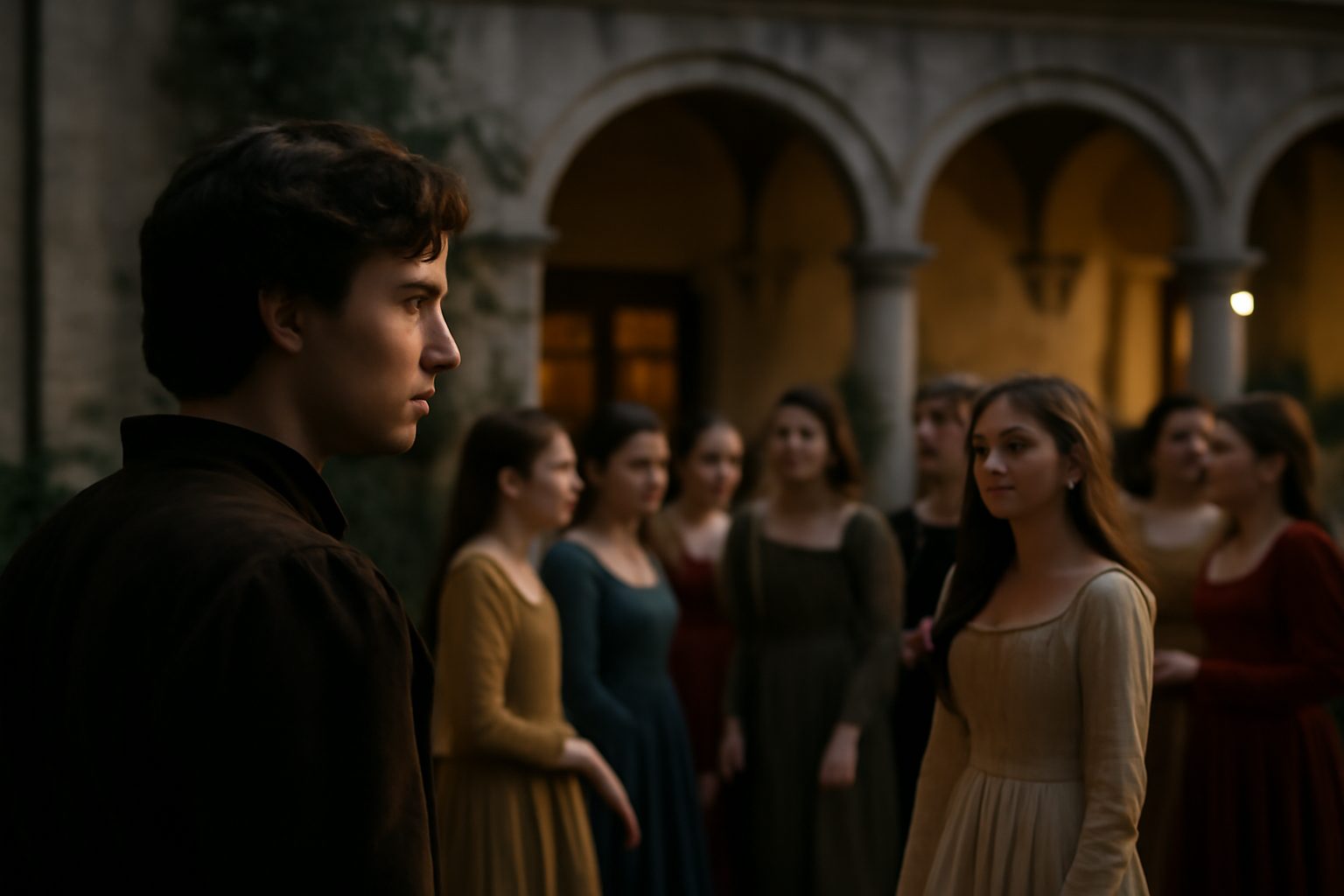
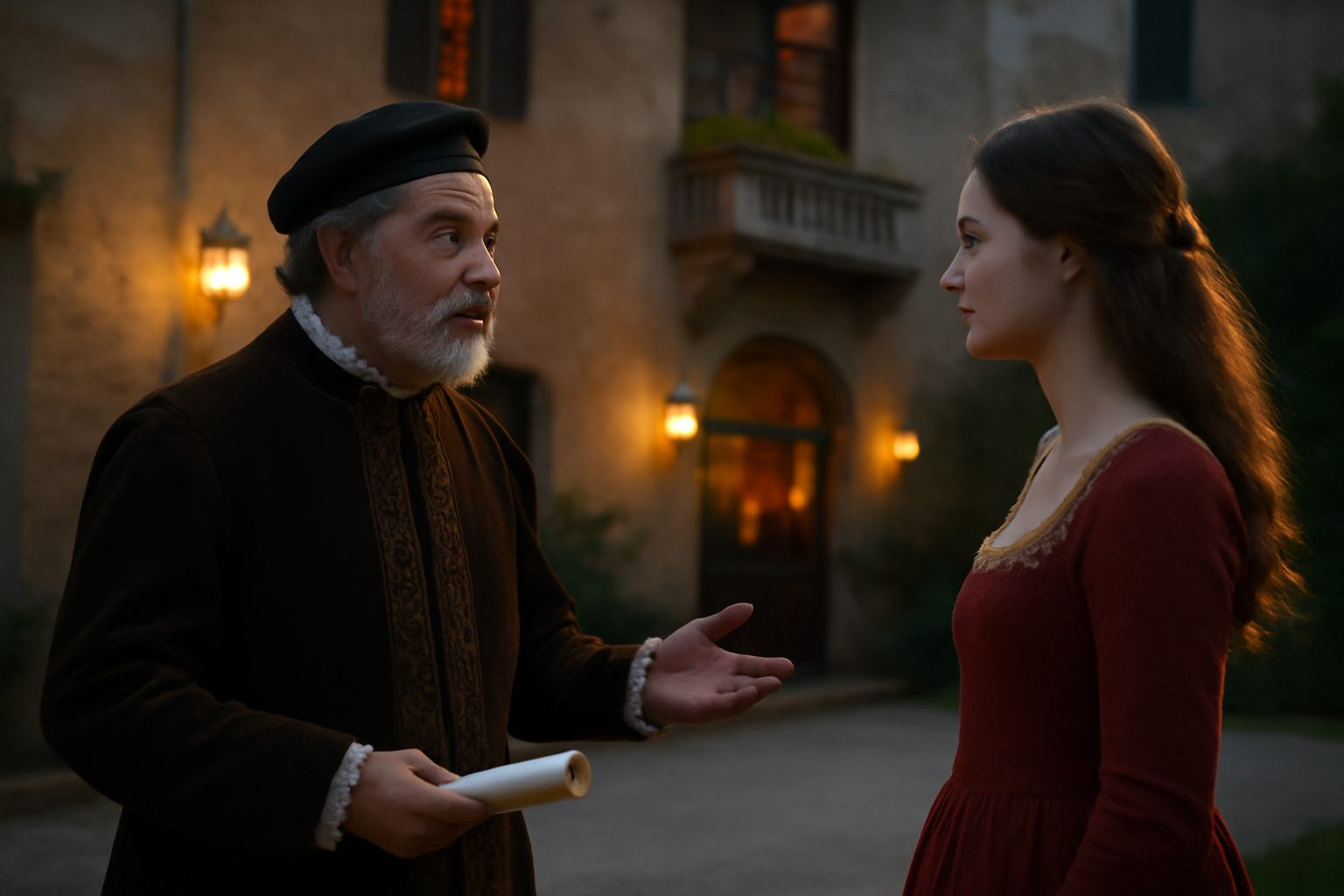
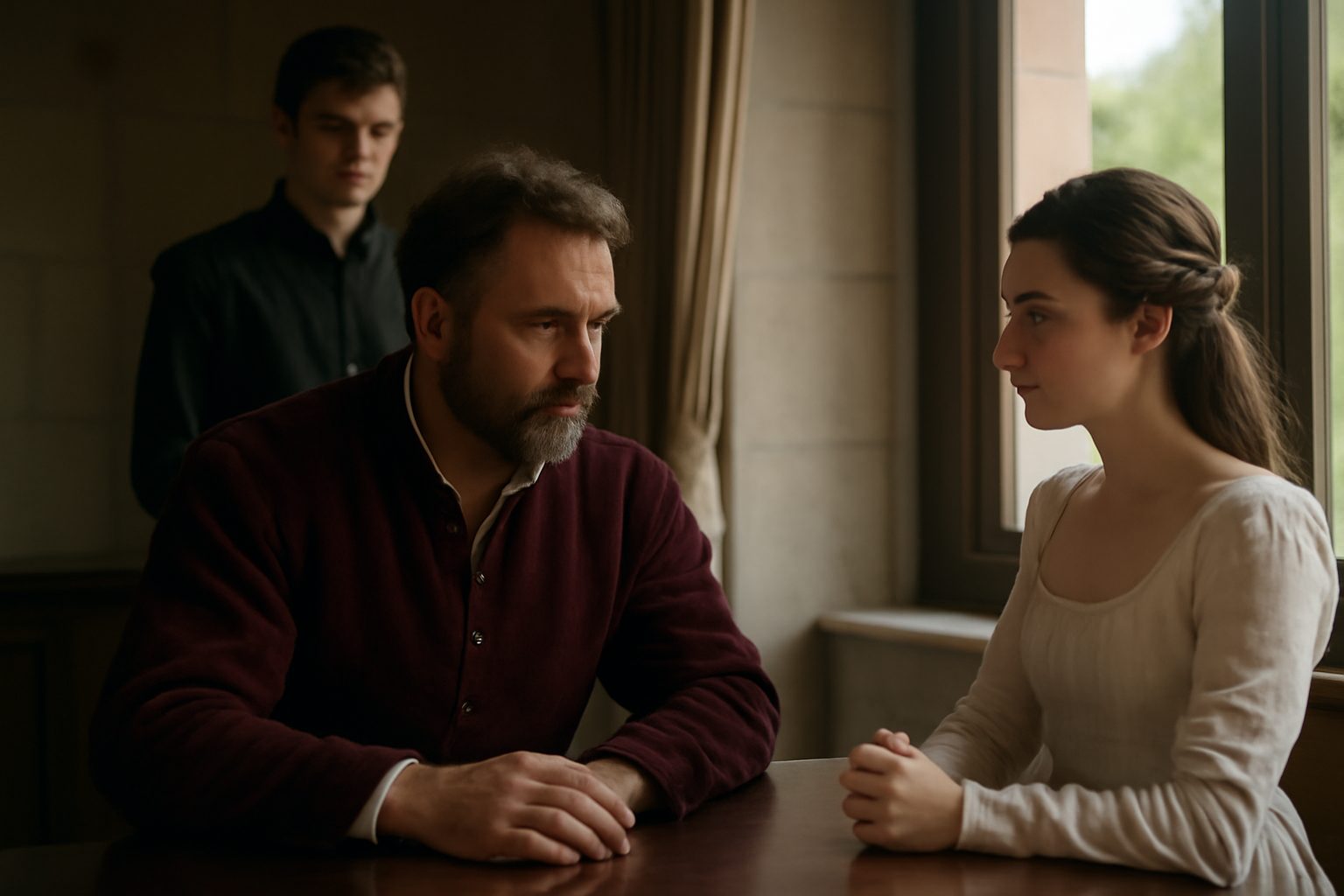
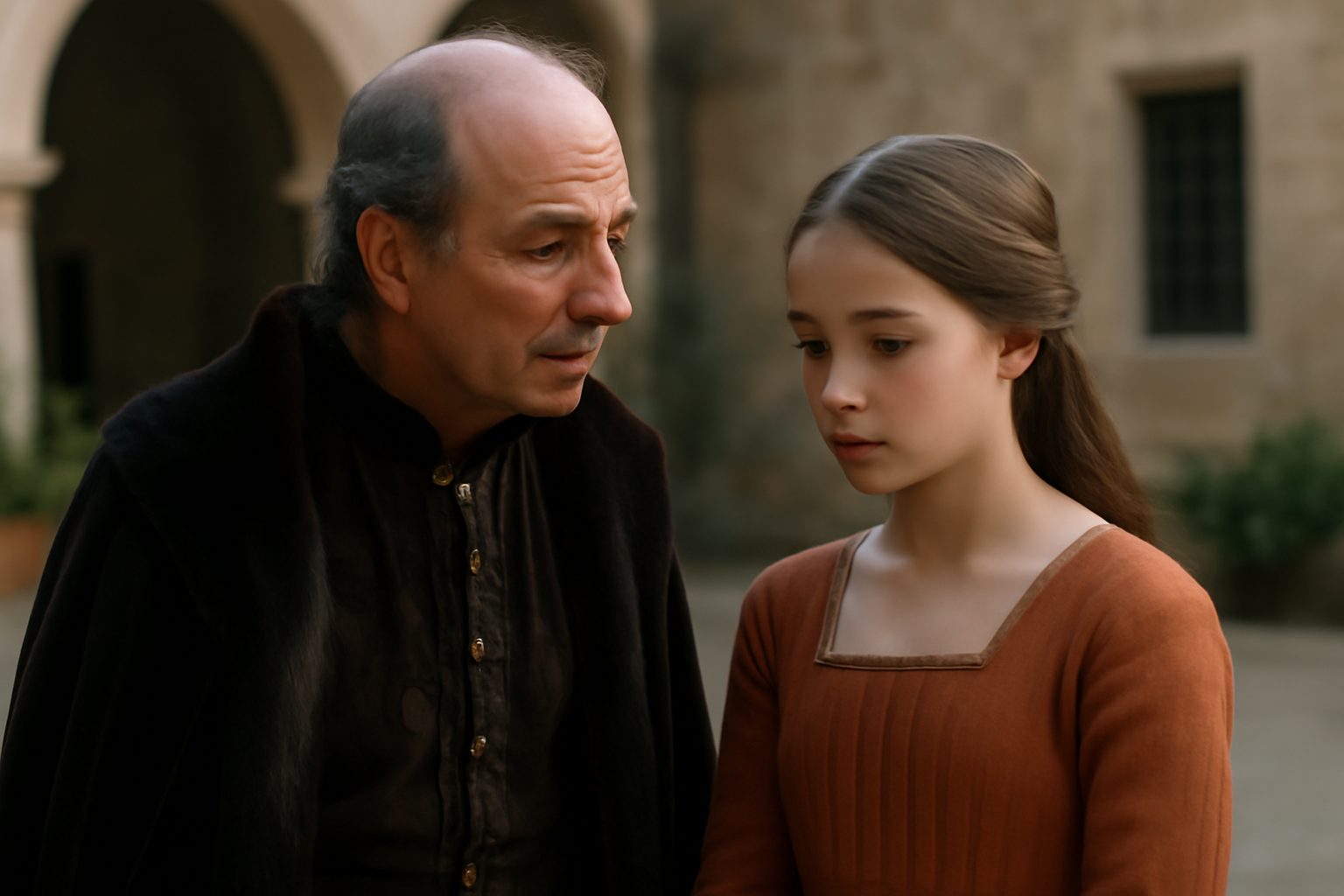
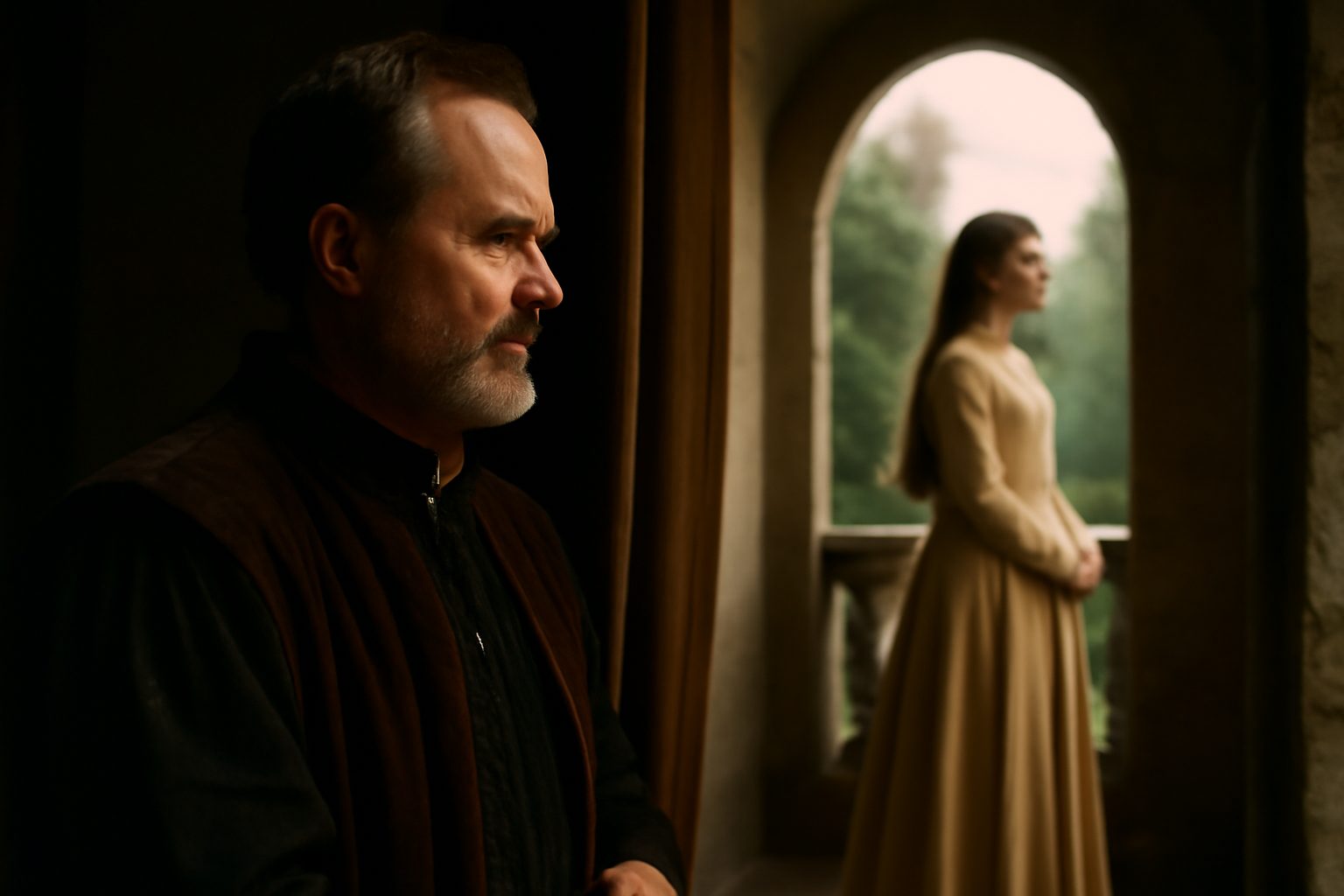
In Act 1, Scene 2 of Romeo and Juliet, Paris discusses with Lord Capulet his desire to marry Juliet. Capulet, though initially hesitant, invites Paris to a feast at his home that evening, hoping the young man might win Juliet's affection. The line is part of Capulet's warm yet somewhat casual invitation, reflecting his hospitality and the social customs of the time.
Servant: "To supper; to our house."
In modern day english, we would say:
Let’s go to dinner at my place.
Frequently Asked Questions
Who is inviting someone to supper in Act 1 Scene 2 of Romeo and Juliet?
A servant is inviting someone to supper at their house.
Connections to other verses:
Connections to "To supper; to our house."
The verse "To supper; to our house." is spoken by the servant in Act 1, Scene 2, inviting guests to the Capulet feast. This line is directly connected to several other verses in the same scene that elaborate on the nature, purpose, and attendees of this event.
Invitation and Feast Details
This invitation is part of Capulet's plan for the feast, as indicated in "This night I hold an old accustom'd feast," which establishes the tradition and timing. The guest list is extensive, including many notable figures of Verona, as seen in "Whereto I have invited many a guest," and specific names like "County Anselme and his beauteous sisters" and "Signior Martino and his wife and daughters." The servant's task is to deliver these invitations, as instructed in "Whose names are written there, and to them say," reinforcing the direct link to "To supper; to our house."
Atmosphere and Significance
The feast is portrayed as a vibrant gathering, with "Earth-treading stars that make dark heaven light" metaphorically describing the beautiful attendees. It is also a key setting for romantic developments, particularly for Paris's courtship of Juliet, as Capulet mentions in "But woo her, gentle Paris, get her heart," and for Romeo's unexpected encounter with Juliet, hinted at in "Sups the fair Rosaline whom thou so lovest," though Romeo's affections will shift.
Servant's Role and Interactions
The servant's confusion and need for assistance in reading the list, as in "God gi' god-den. I pray, sir, can you read?" lead to Romeo's involvement. This interaction culminates in Benvolio's encouragement for Romeo to attend, as in "Go thither; and, with unattainted eye," which directly ties the invitation to the central plot of Romeo seeing other beauties and forgetting Rosaline.