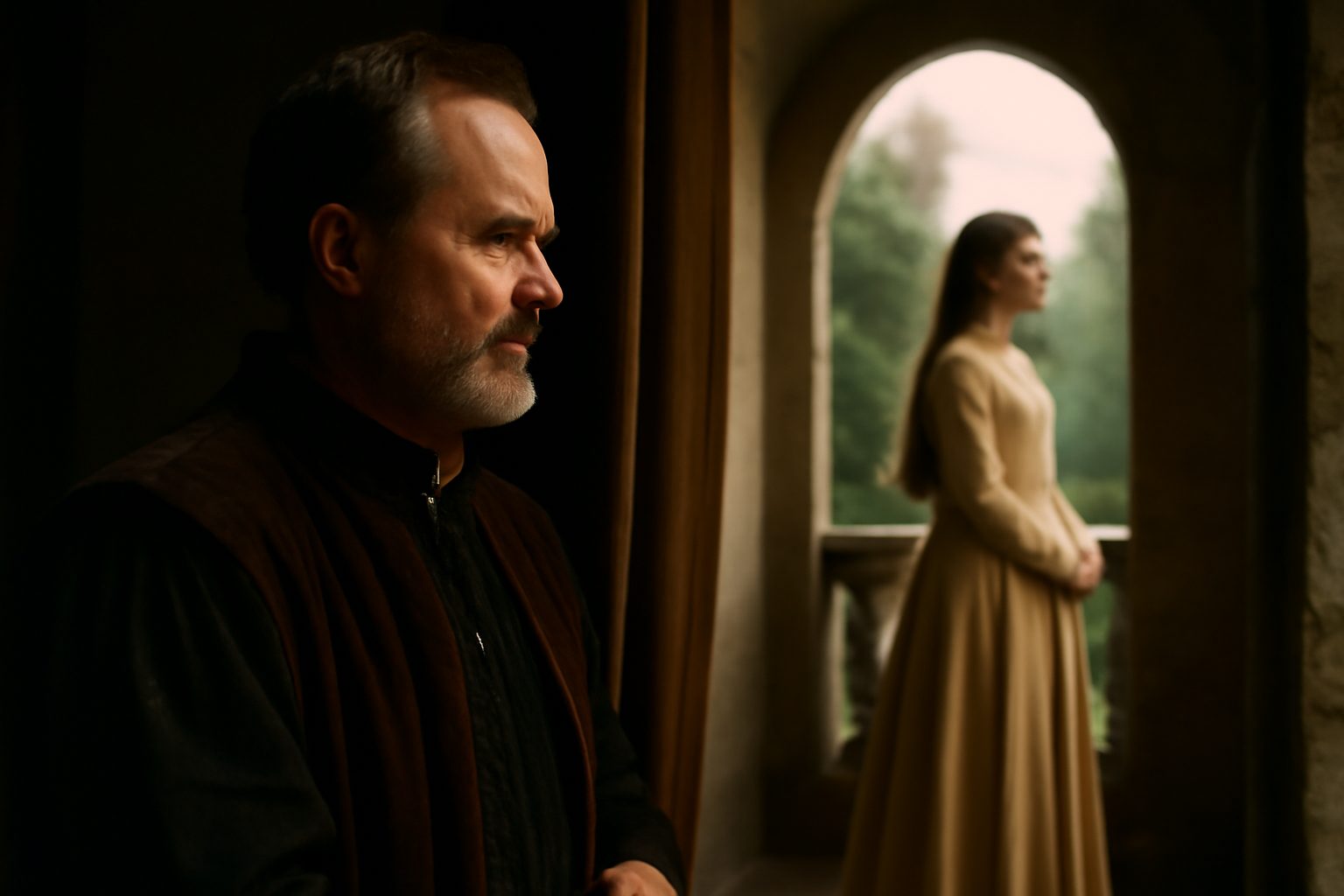
In Act 1, Scene 2 of Romeo and Juliet, Benvolio and Romeo discuss Romeo's unrequited love for Rosaline. This line is spoken by Benvolio as he reminds Romeo of his infatuation with Rosaline, urging him to move on. The moment highlights Romeo's melodramatic despair and sets the stage for his later encounter with Juliet.
Benvolio: "Sups the fair Rosaline whom thou so lovest,"
In modern day english, we would say:
Is the beautiful Rosaline, the one you love so much, eating dinner?
Frequently Asked Questions
Who is Benvolio talking about in this line?
Benvolio is talking about Rosaline, the woman Romeo loves.
What does Benvolio ask Romeo in this line?
Benvolio asks if Romeo is having dinner with Rosaline, the woman he loves.
Connections to other verses:
Connections to "Sups the fair Rosaline whom thou so lovest"
Feast Invitations and Social Context
The mention of Rosaline at supper directly relates to Capulet's announcement of his "old accustom'd feast" and his invitation to "many a guest". This establishes the social gathering where Romeo will encounter Juliet.
Beauty Comparisons and Romantic Rivalry
Benvolio's reference to Rosaline connects to his earlier advice to "Compare her face with some that I shall show" and his promise that "I will make thee think thy swan a crow", foreshadowing how Juliet's beauty will eclipse Rosaline's.
Guest Lists and Social Setting
Rosaline appears in the context of other guests mentioned in Capulet's list, including "Rosaline; Livia; Signior Valentio" and other Verona beauties described as "all the admired beauties of Verona" who will be present.
Thematic Connections to Love and Perception
The verse connects to Benvolio's larger argument about love's fickleness, particularly "Tut, you saw her fair, none else being by" and the idea that "she shall scant show well that now shows best" when compared to other women.
Narrative Foreshadowing
This specific mention of Rosaline at supper sets up the crucial moment when Benvolio will "show you shining at this feast" the woman who will replace Rosaline in Romeo's affections, fulfilling his earlier promise to demonstrate that "One fairer than my love" exists.