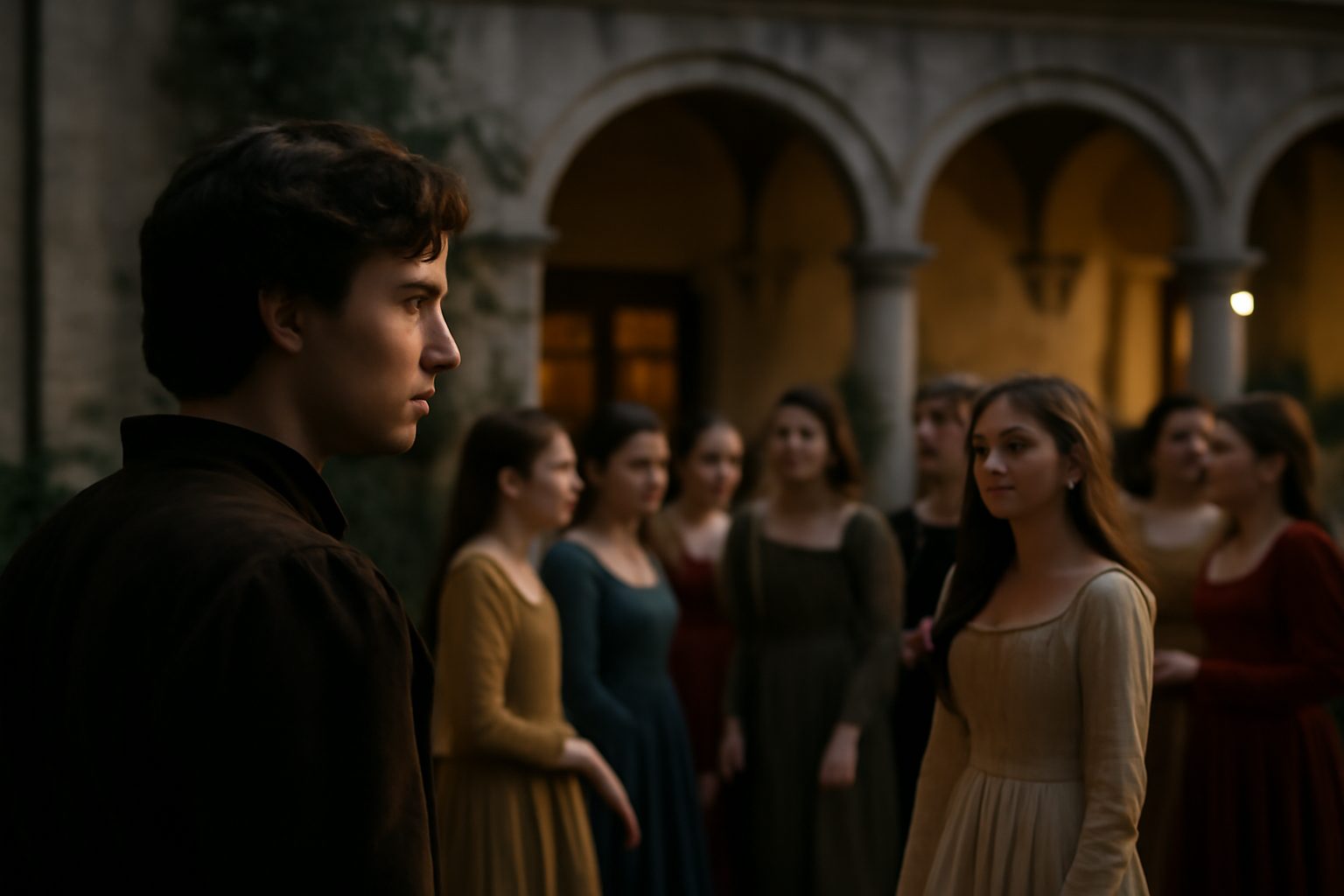
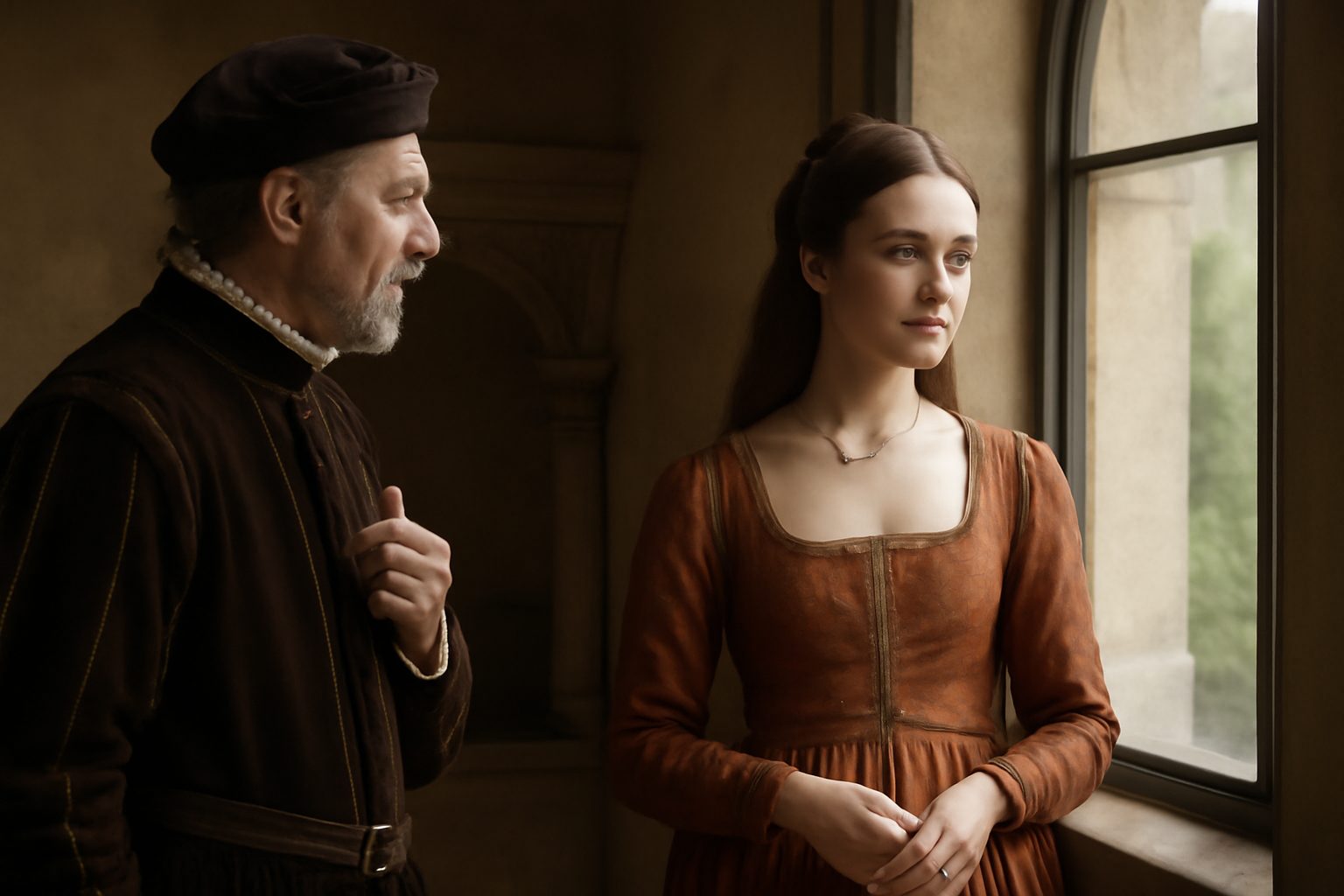
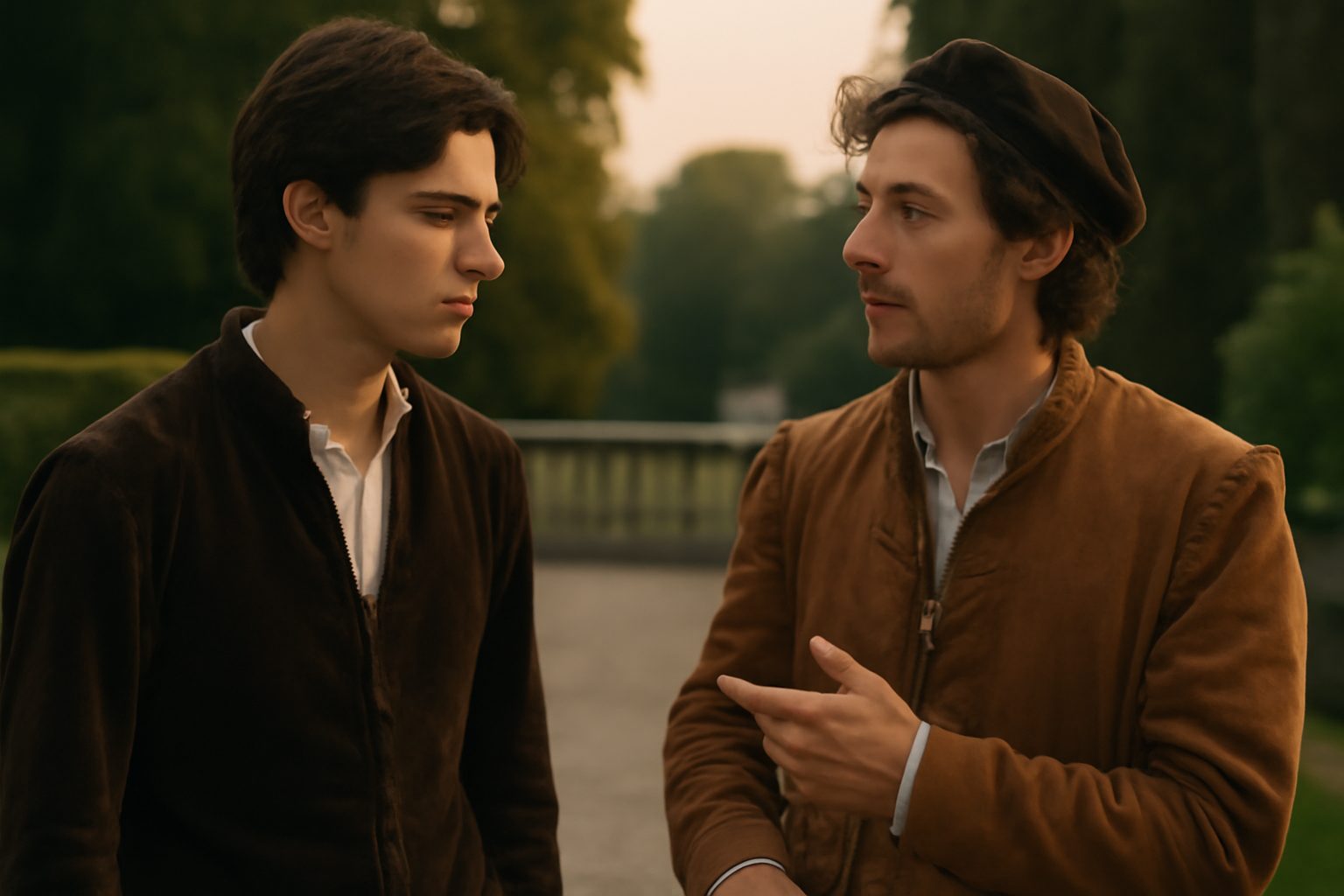
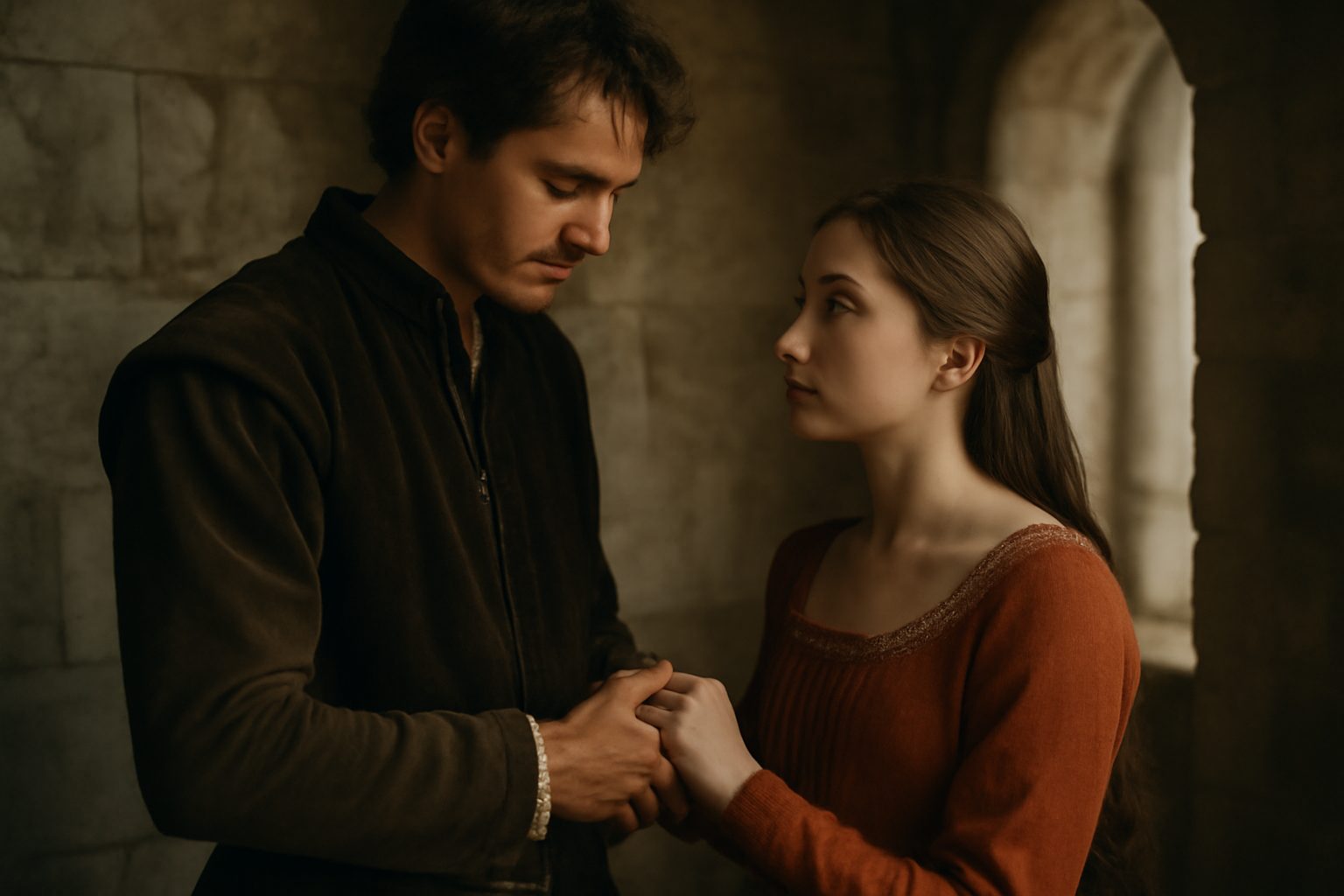
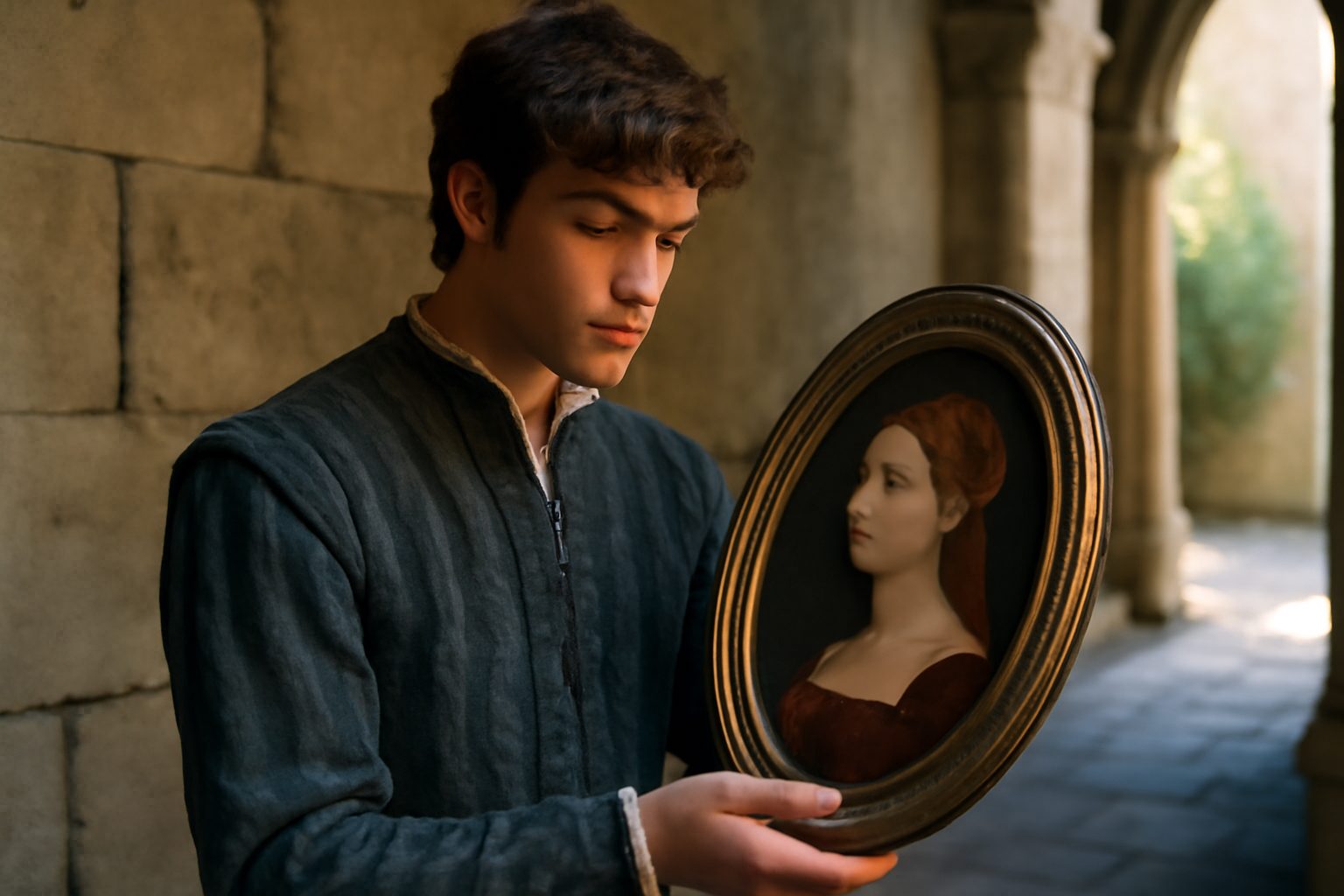
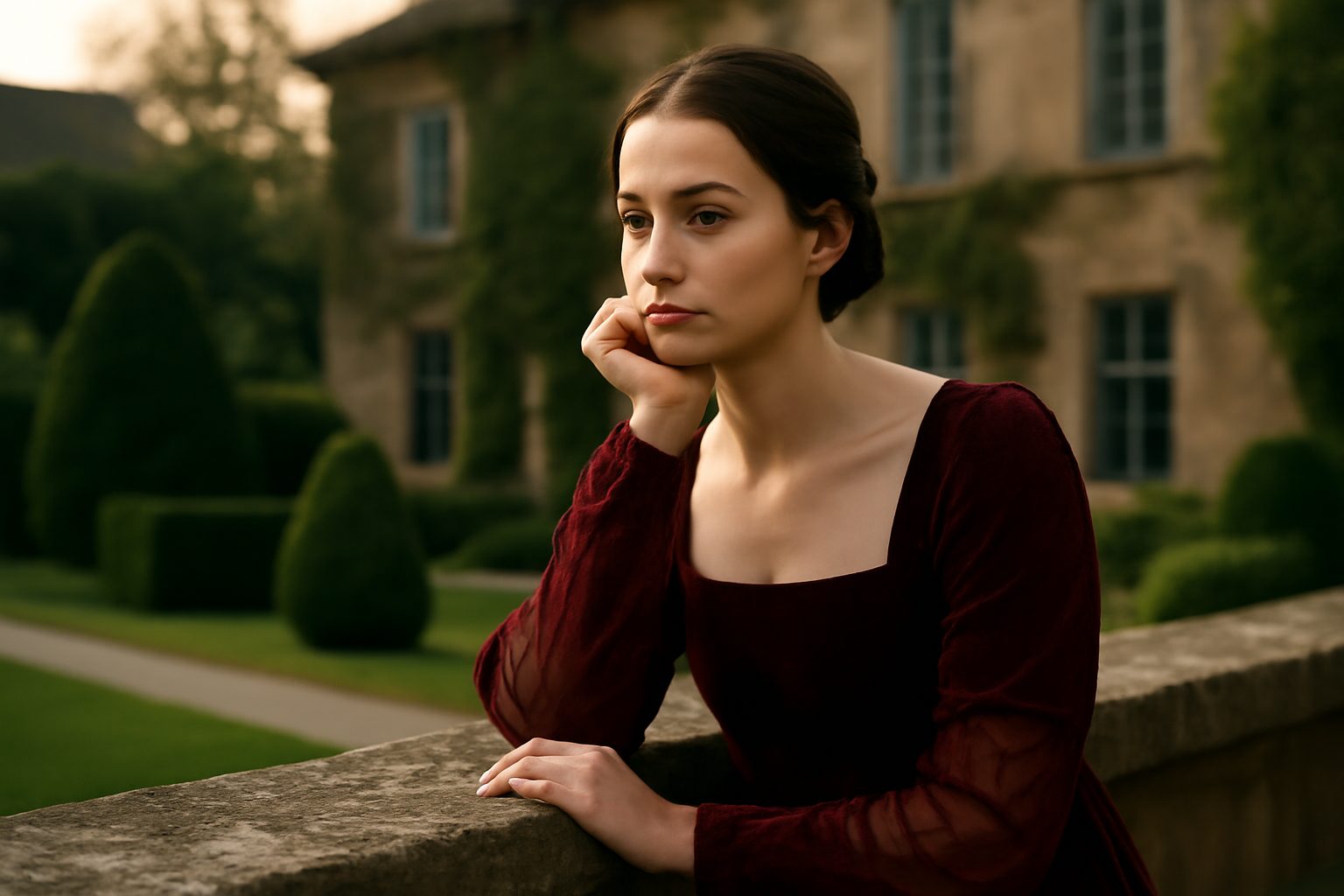
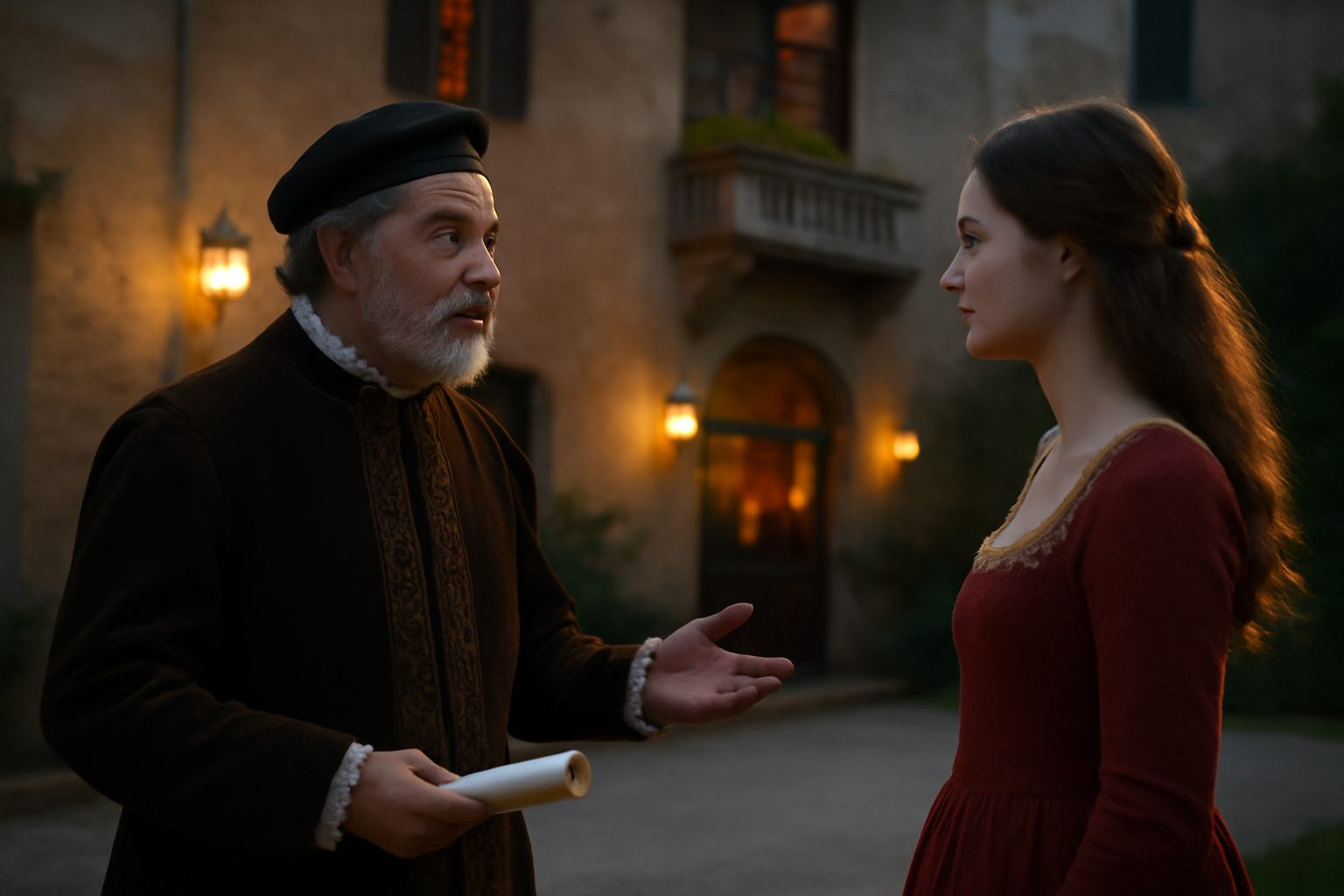
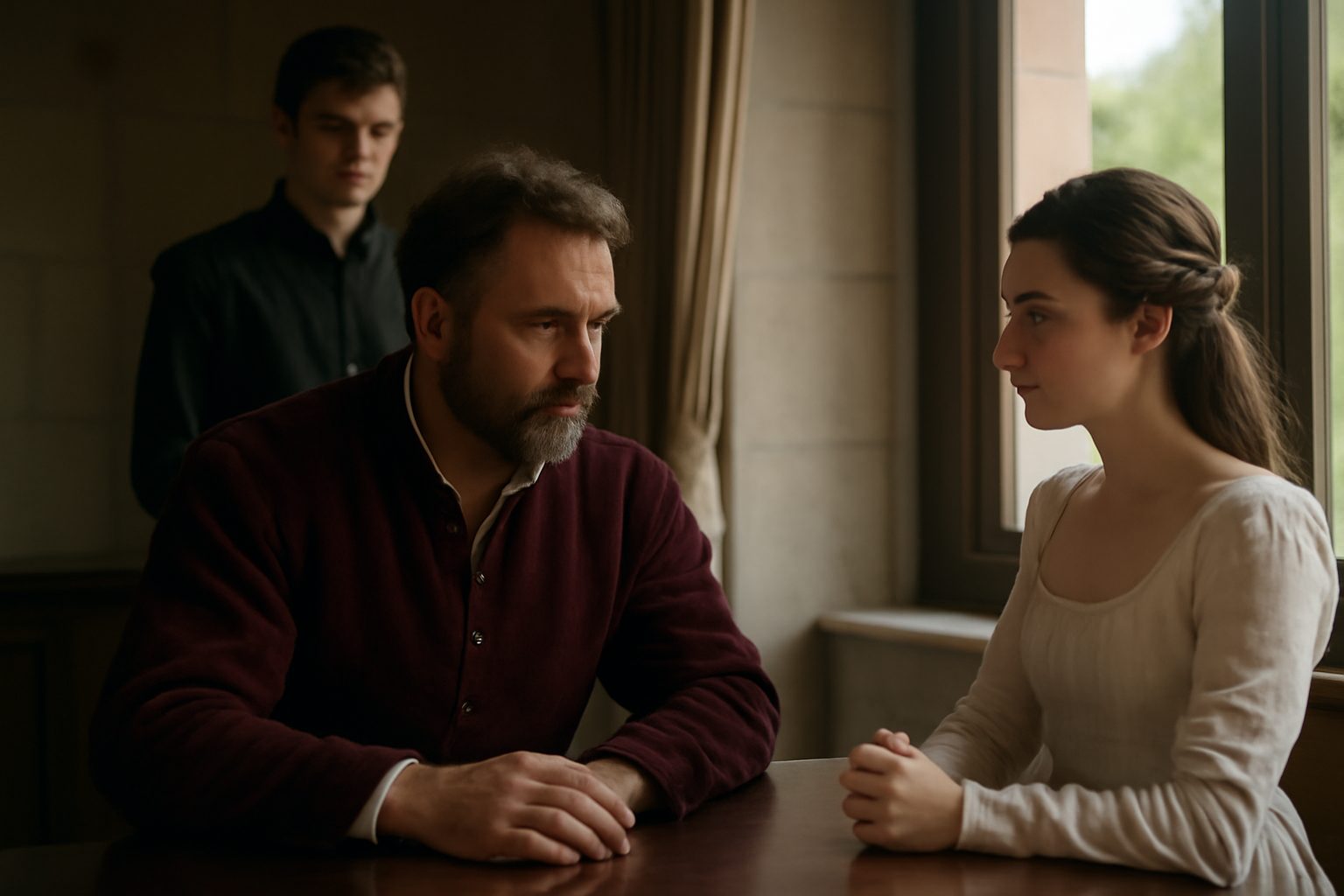
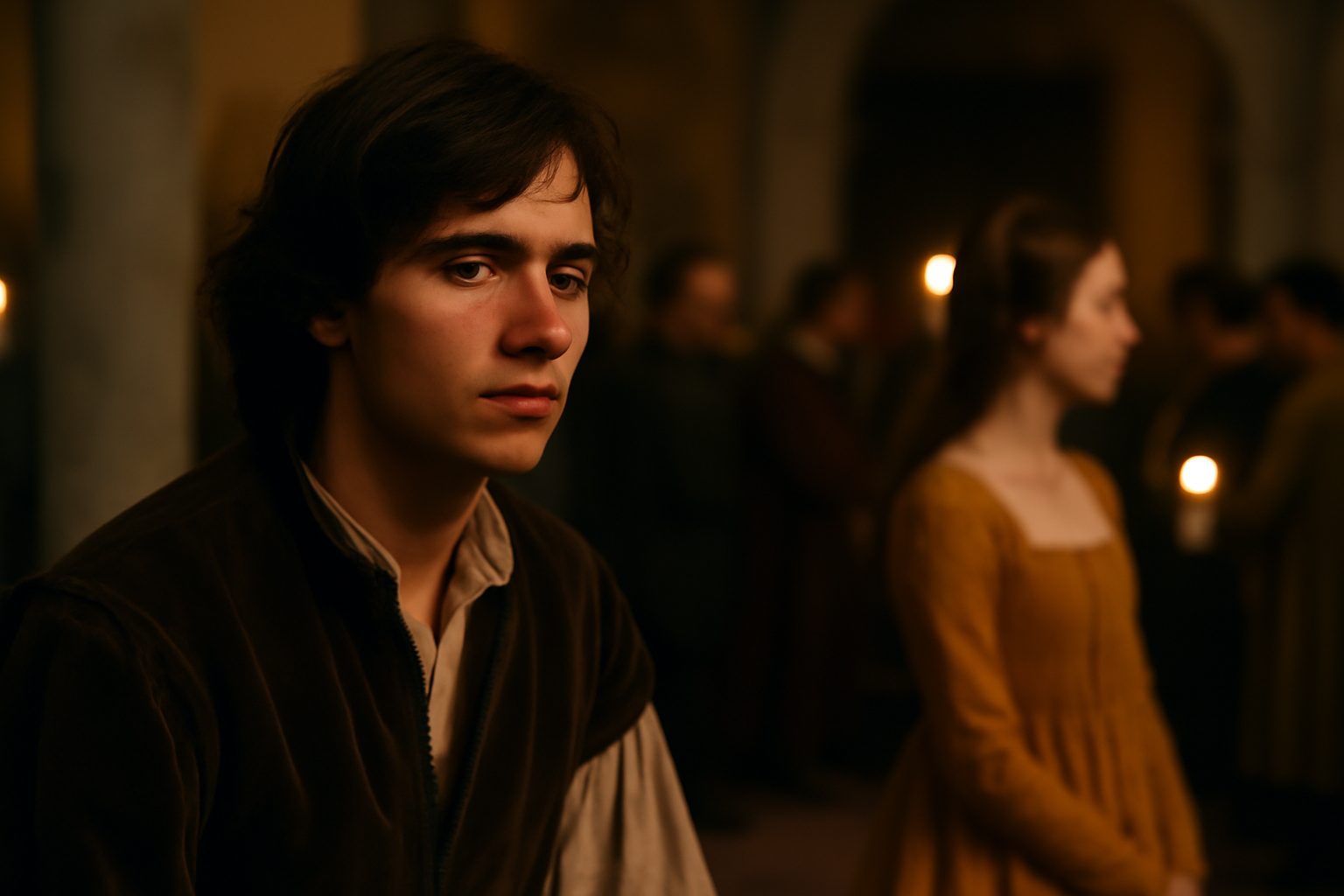
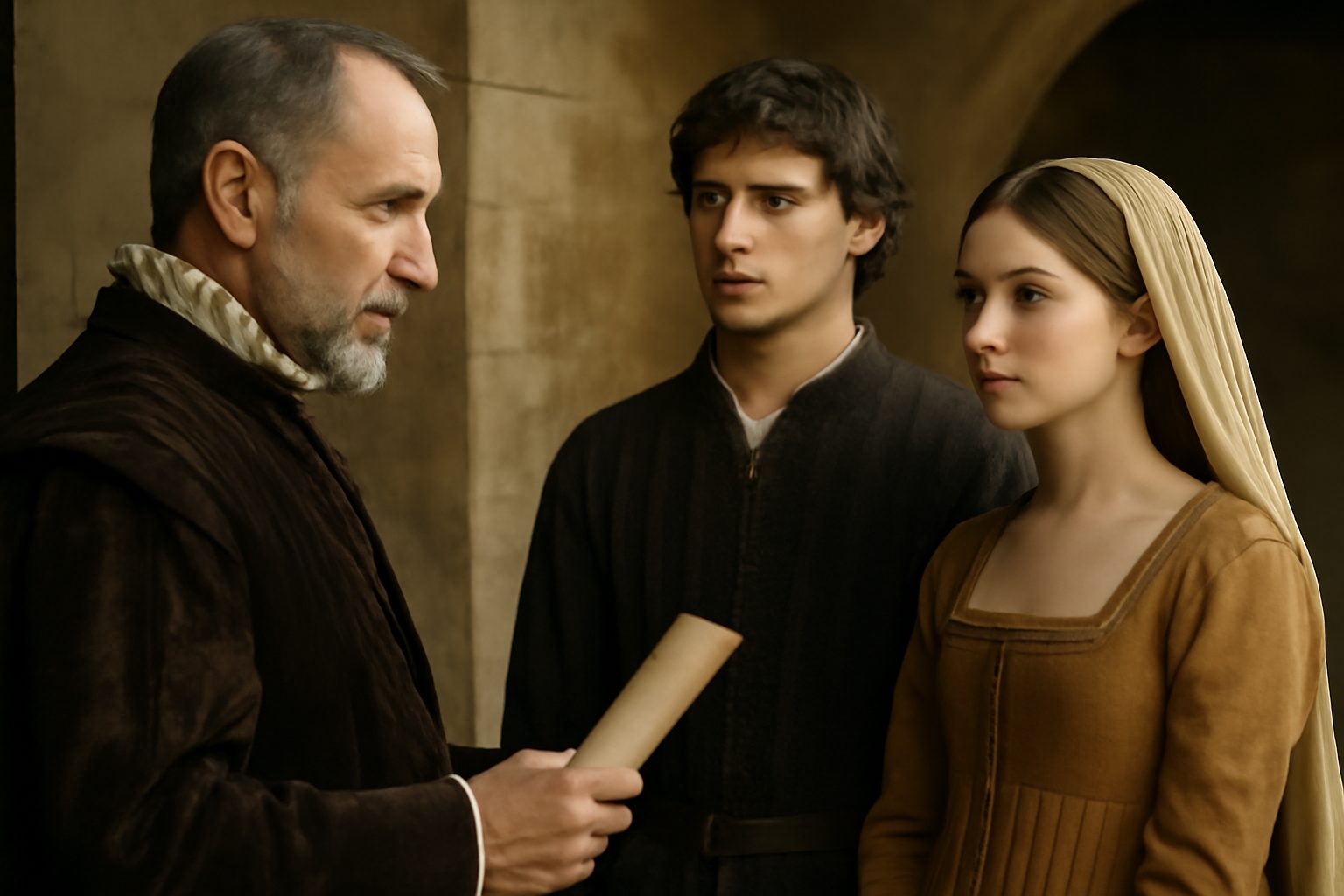
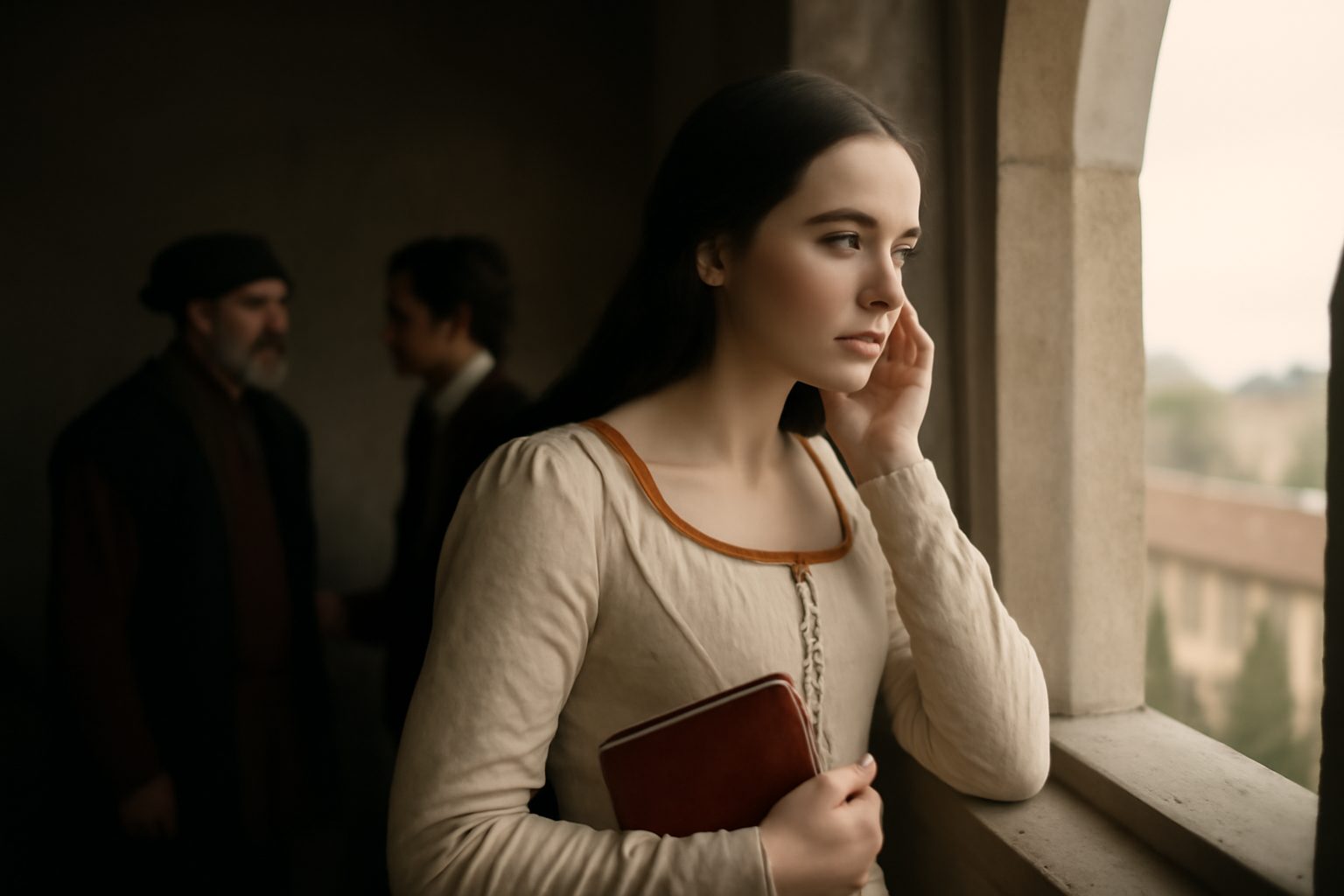
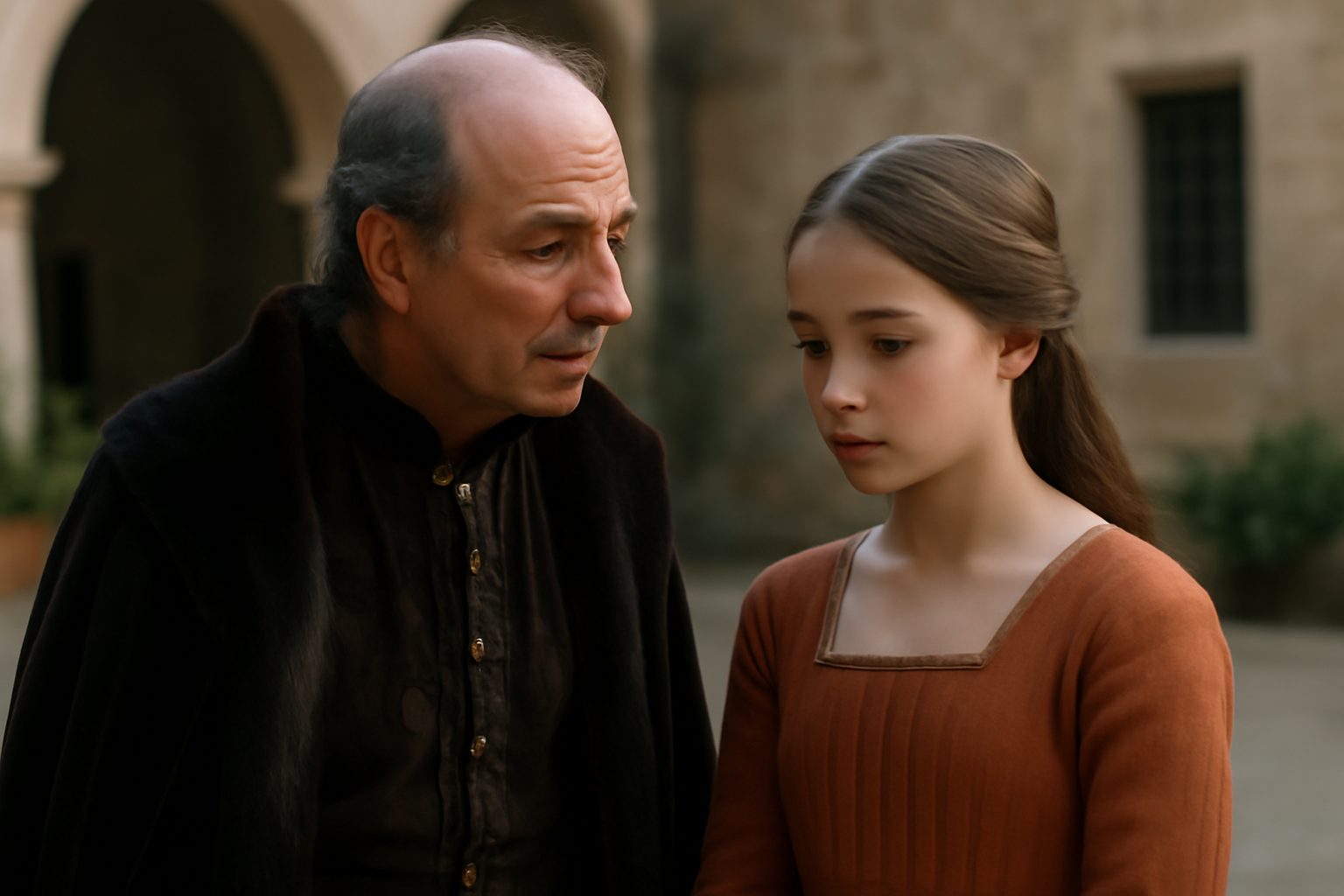
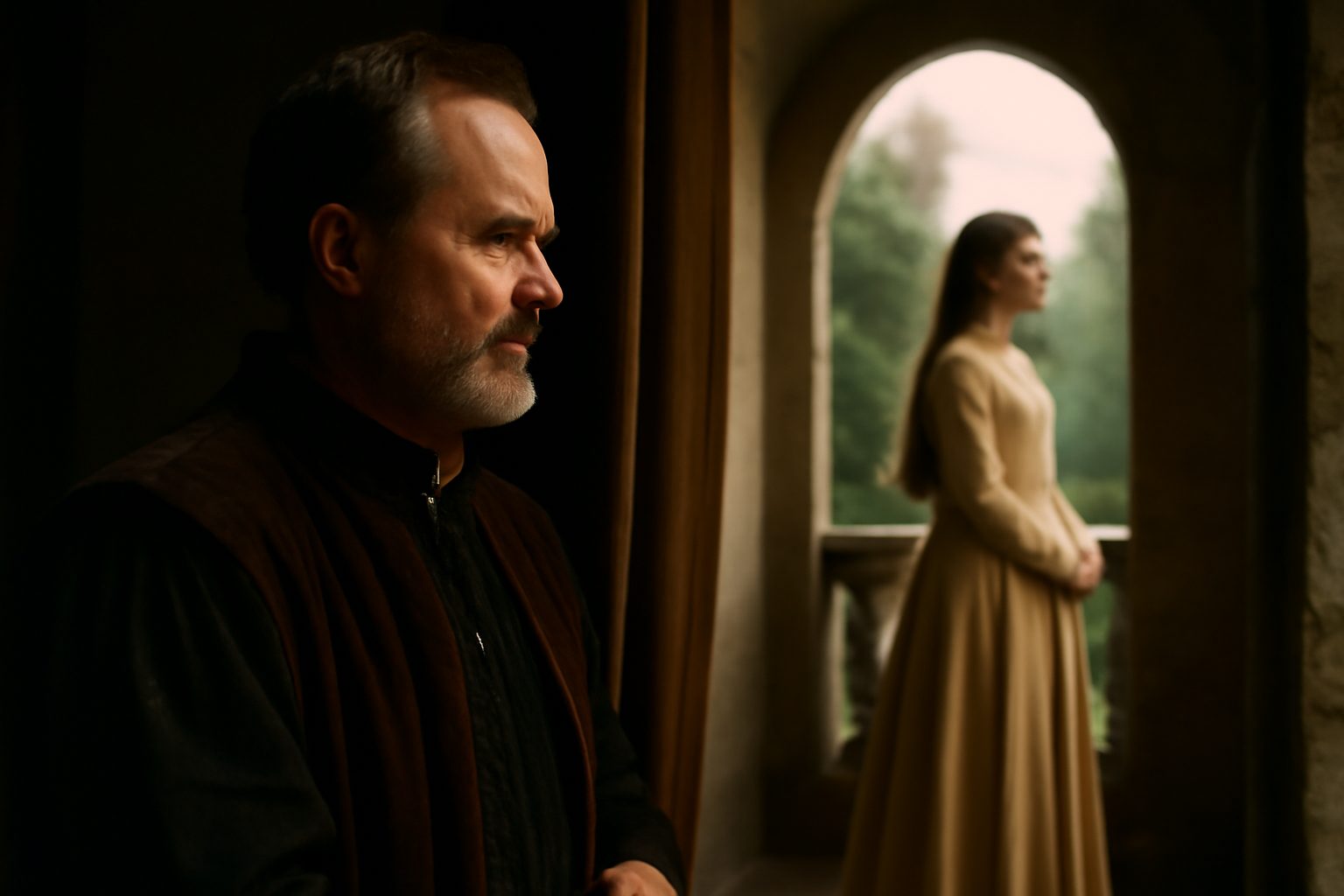
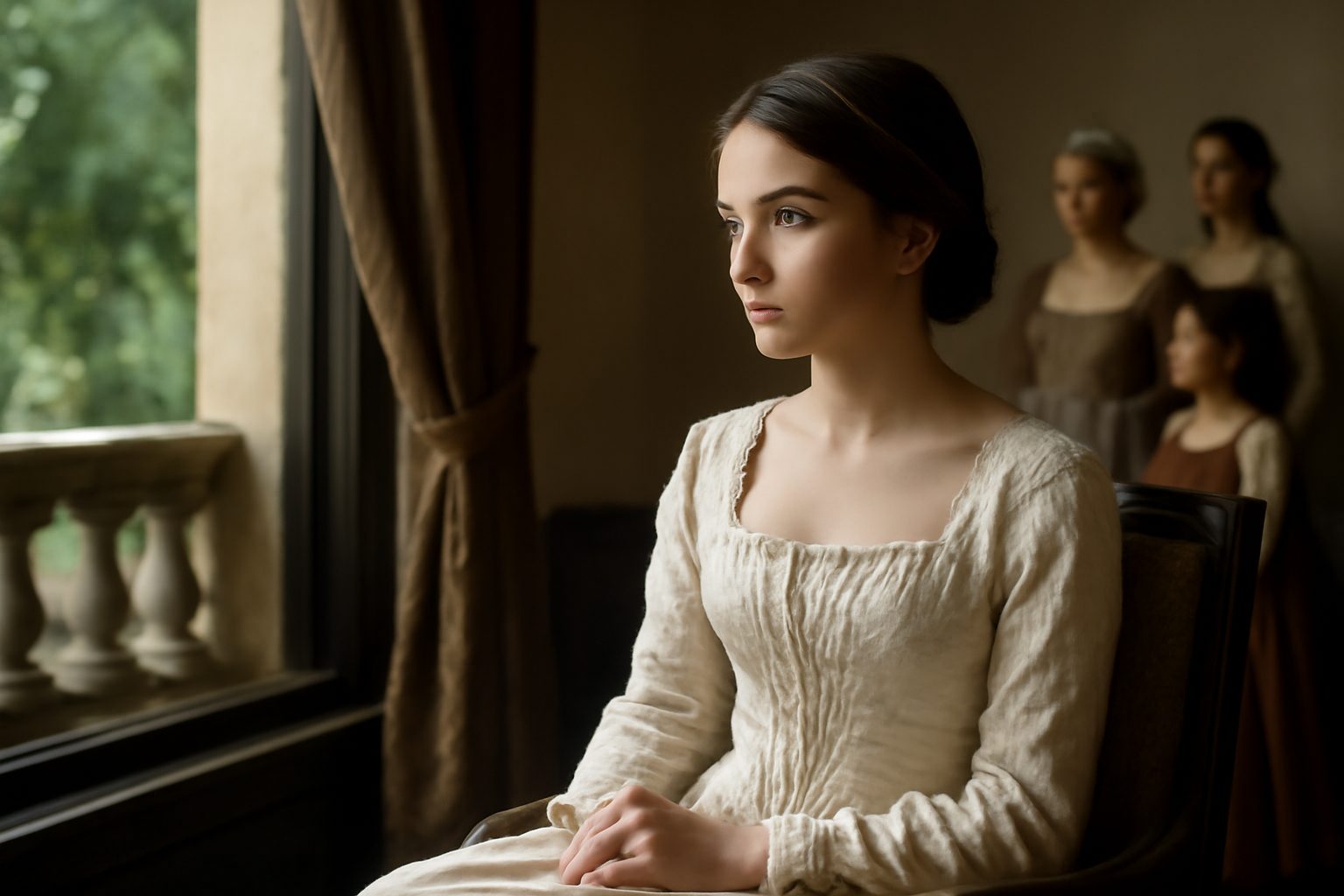
In Act 1, Scene 2 of Romeo and Juliet, Paris asks Capulet for permission to marry Juliet, but Capulet suggests he wait and first see her at the upcoming feast. He encourages Paris to go and observe Juliet among the other guests with an unbiased perspective, implying that she may not stand out as he expects. This moment subtly foreshadows the instant connection Romeo and Juliet will later share, contrasting Paris's calculated approach to love.
Benvolio: "Go thither; and, with unattainted eye,"
In modern day english, we would say:
Go there and look with a fresh, unbiased perspective.
Frequently Asked Questions
What does Benvolio suggest Romeo should do when he says to go and look with an untainted eye?
Benvolio is suggesting that Romeo should go to the party and look at other girls without any preconceived notions or biases, to see if he can find someone new to love.
Connections to other verses:
Connections to "Go thither; and, with unattainted eye"
This line, spoken by Benvolio, encourages Romeo to attend the Capulet feast with an unbiased perspective. It connects thematically and narratively to several other verses in the scene.
Invitation to the Feast
Benvolio's suggestion to "Go thither" directly references the feast mentioned in This night I hold an old accustom'd feast, where Capulet invites guests. The idea of seeing other beauties is echoed in With all the admired beauties of Verona, emphasizing the abundance of potential romantic interests at the event.
Unbiased Comparison
The phrase "with unattainted eye" underscores the importance of impartial judgment, a theme reinforced in Compare her face with some that I shall show, where Benvolio urges Romeo to objectively evaluate Rosaline against others. This idea of fair comparison is further supported by Herself poised with herself in either eye, which suggests a balanced perspective in judging beauty.
Curing Love's Pain
Benvolio's advice ties into the notion of overcoming infatuation through new experiences, as seen in One desperate grief cures with another's languish and Take thou some new infection to thy eye, both advocating for replacing one affection with another to heal emotional pain.
Feast and Foreshadowing
The directive to go to the feast aligns with Sups the fair Rosaline whom thou so lovest, hinting at Romeo's initial motive for attending, while That I will show you shining at this feast foreshadows Juliet's appearance, which ultimately leads Romeo to abandon his "unattainted eye."