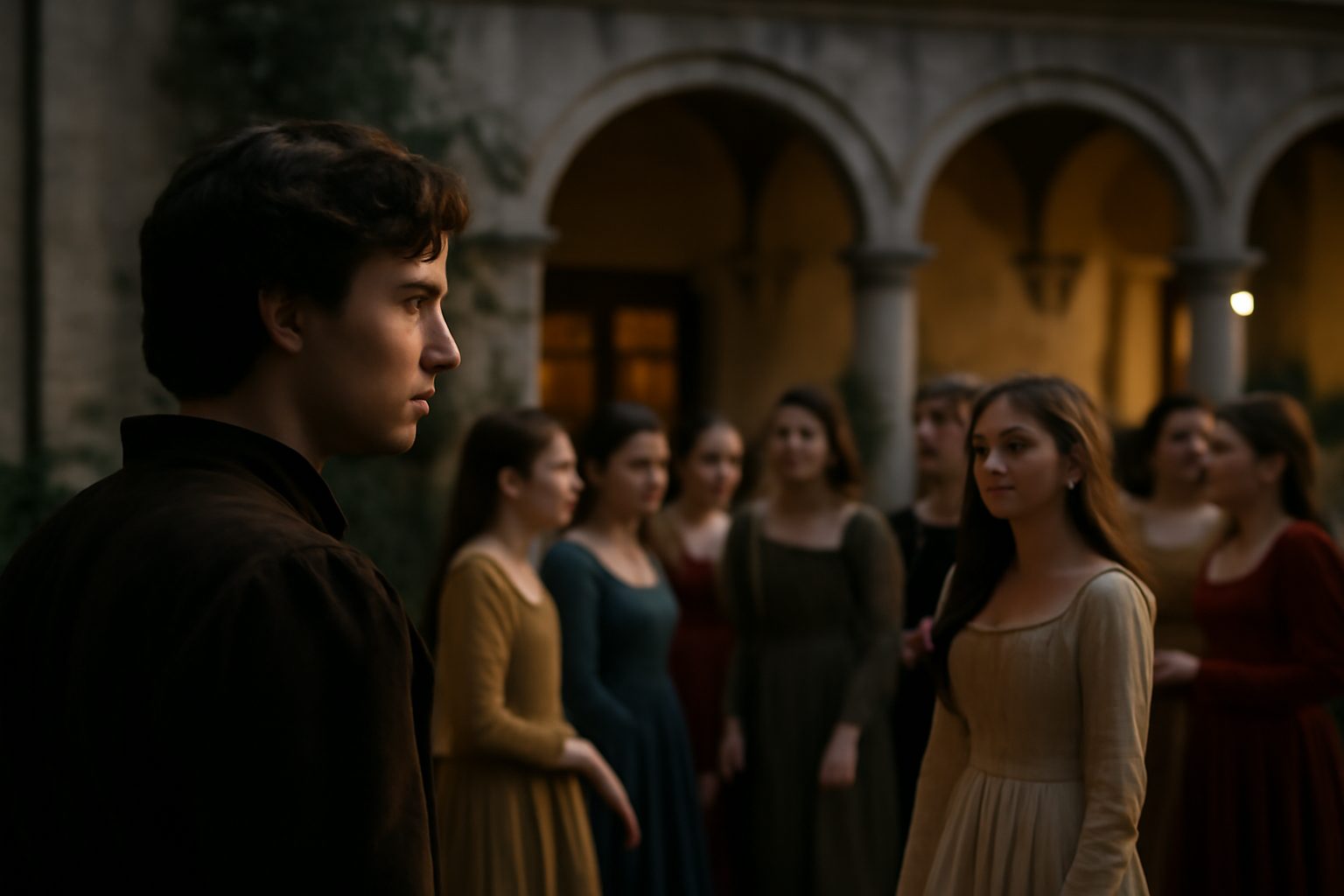
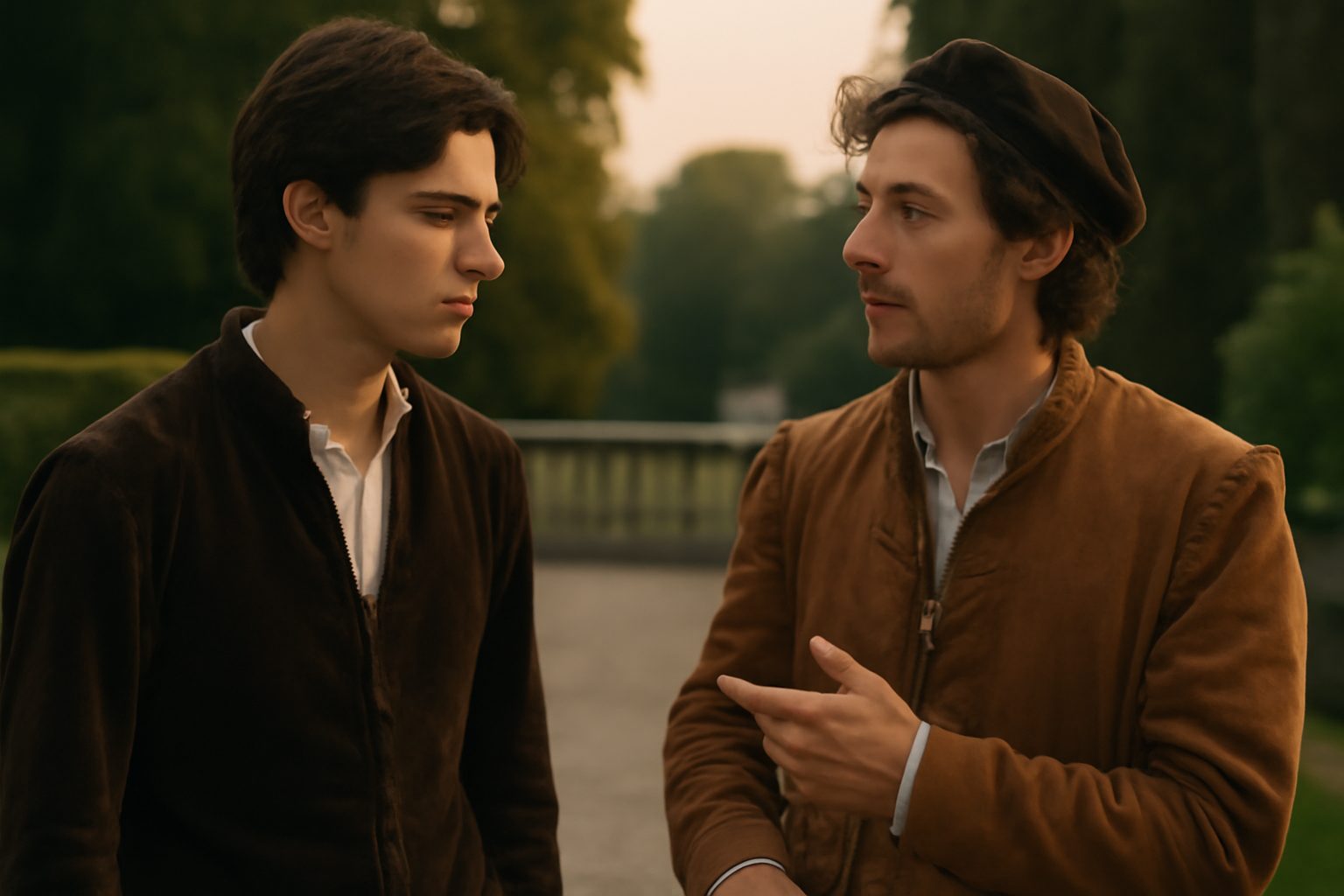
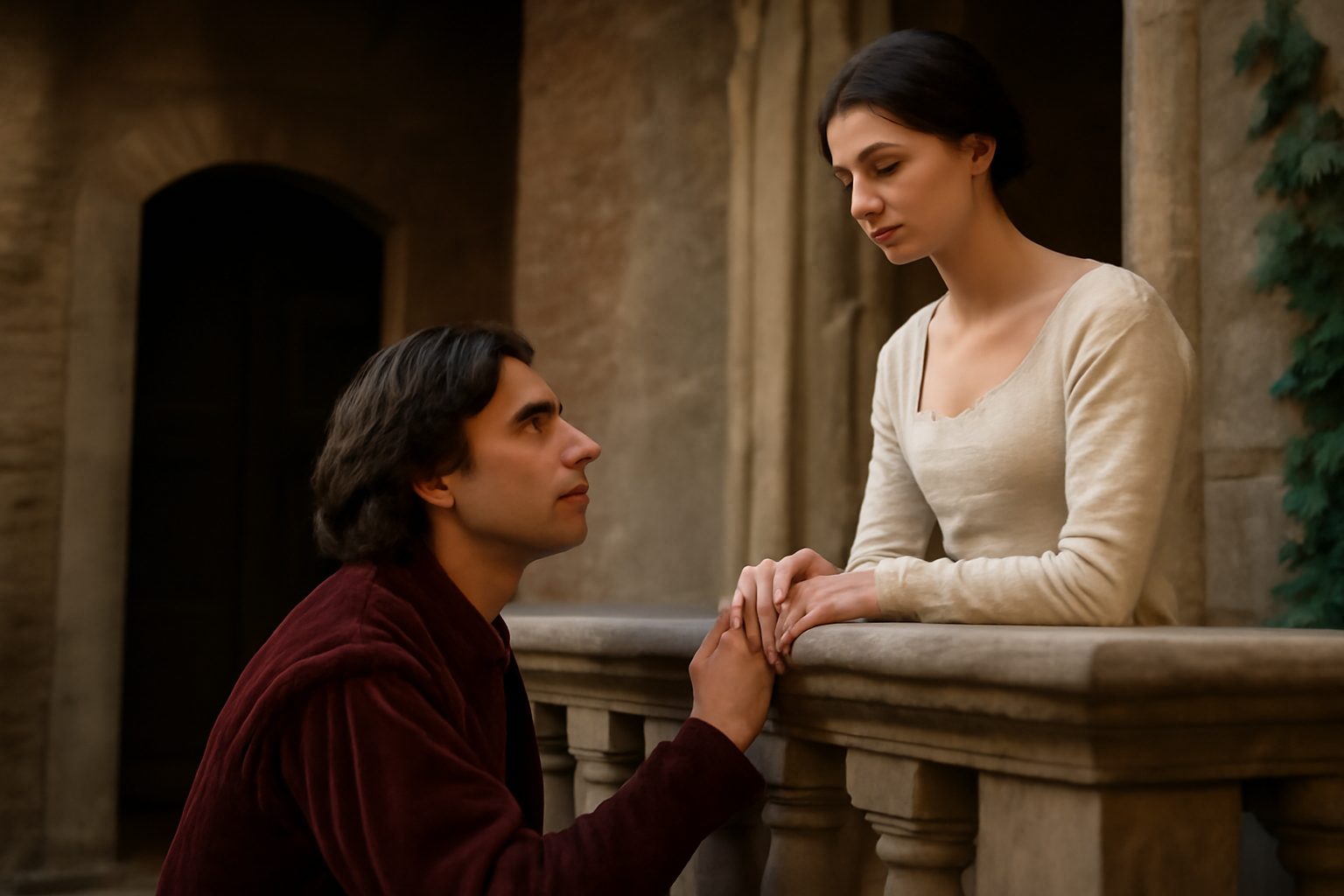
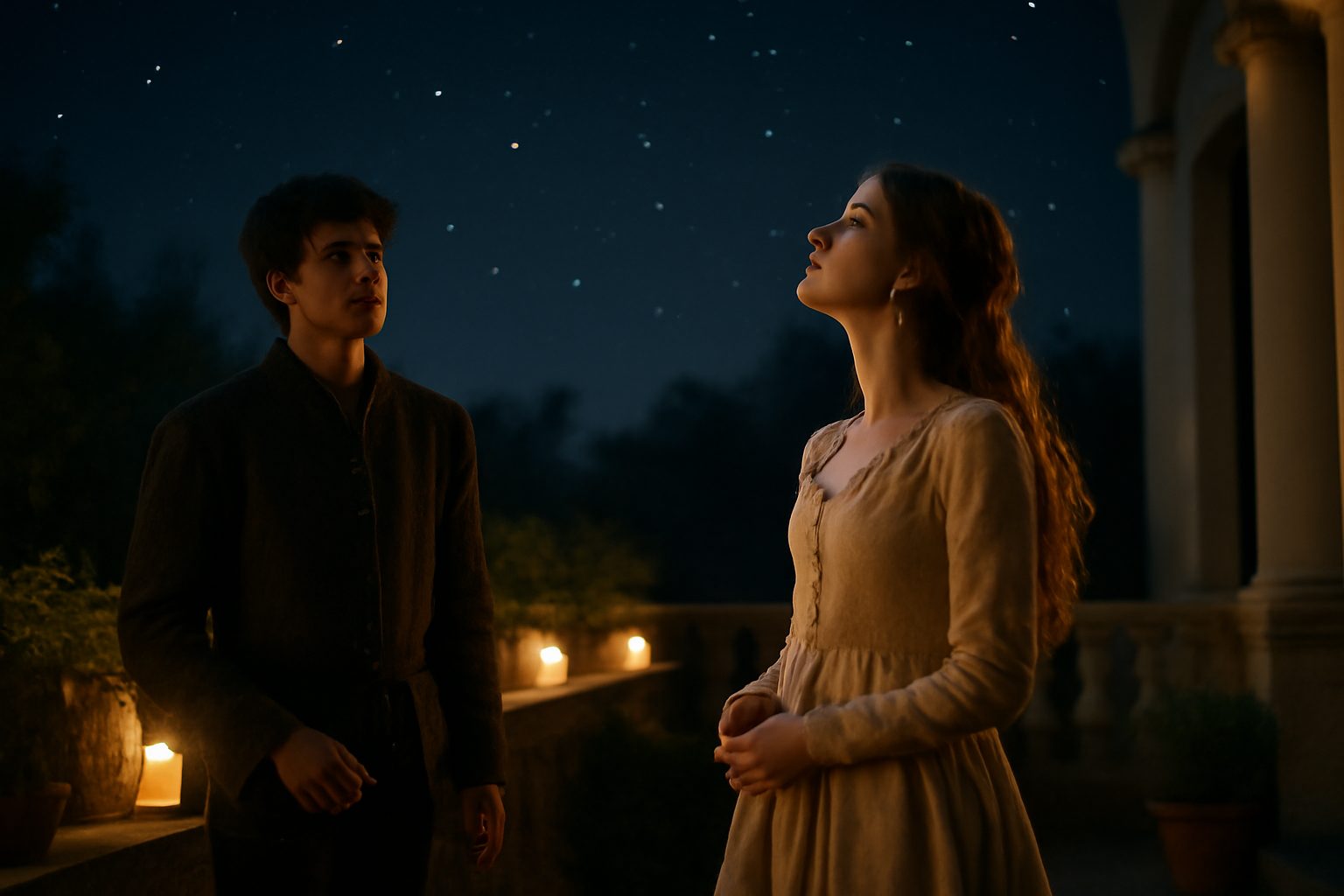
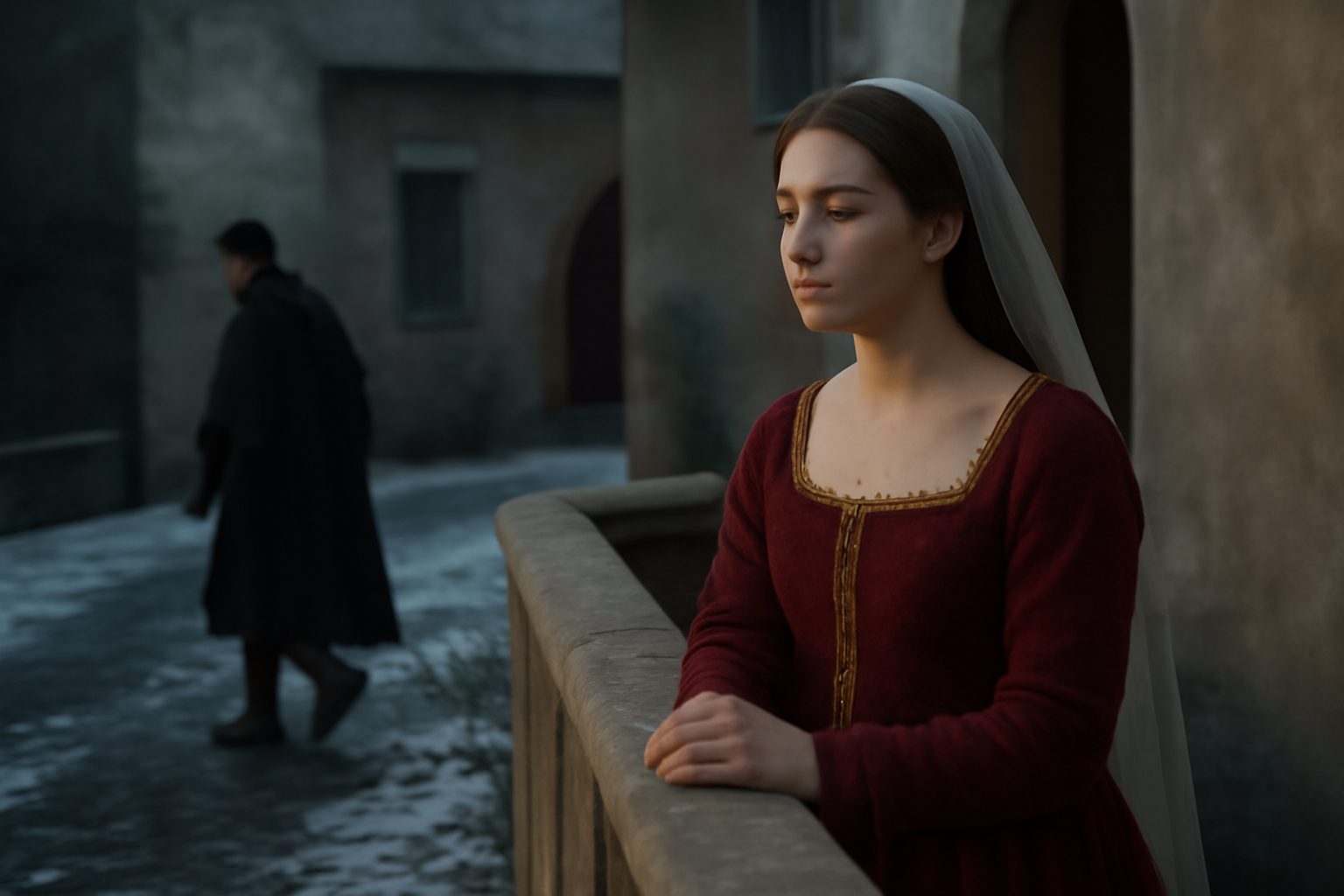
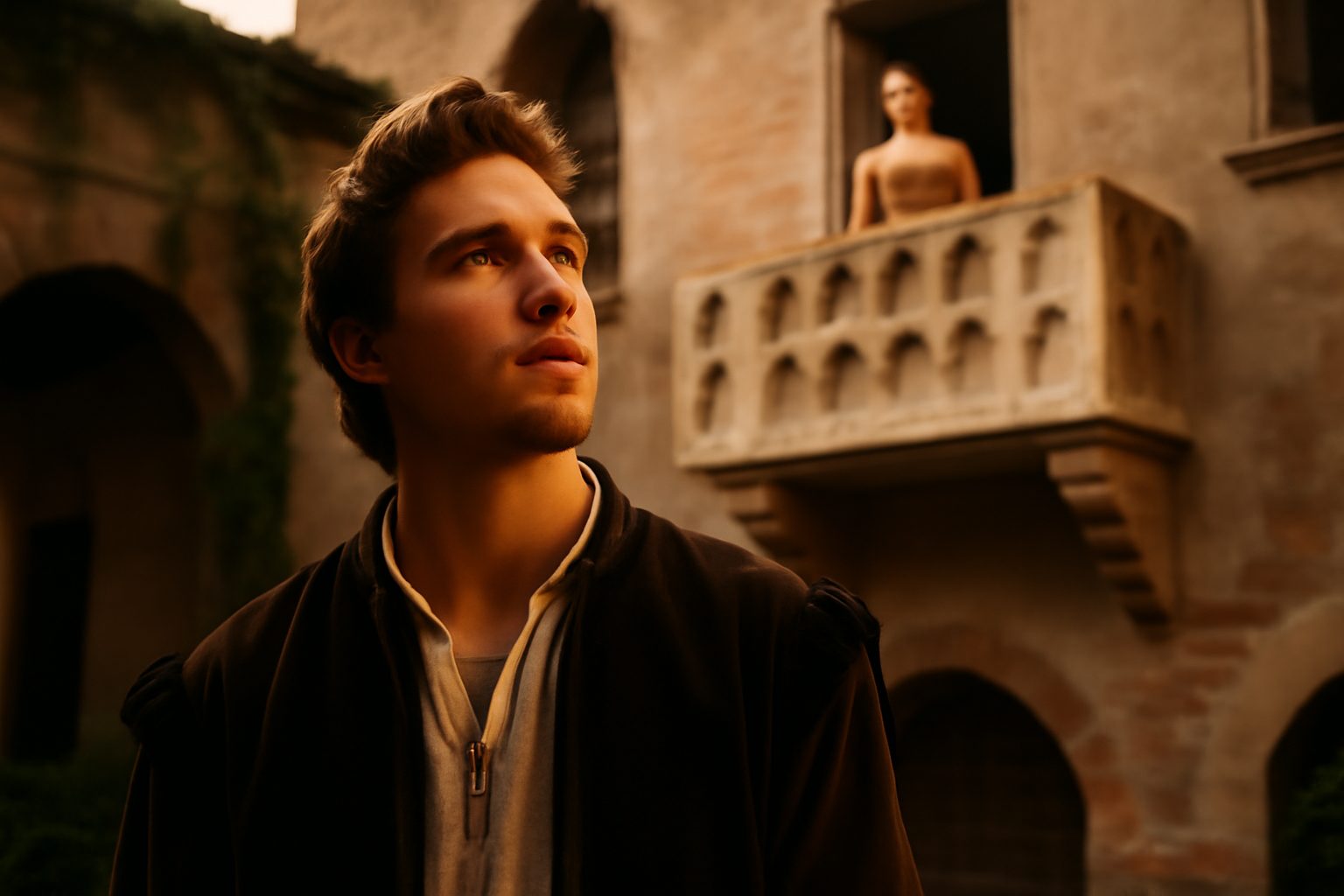
In Act 1, Scene 2 of Romeo and Juliet, Romeo is still pining for Rosaline when Benvolio encourages him to compare her to other beauties at the Capulet's feast. This line reflects Romeo's exaggerated devotion to Rosaline, portraying love as a kind of religious worship. It captures his tendency to idealize romance, even before meeting Juliet.
Romeo: "When the devout religion of mine eye"
In modern day english, we would say:
Romeo is saying that his eyes worship like a religion, and the beautiful sight of someone can make him reject all other beliefs.
Frequently Asked Questions
What does Romeo compare his love to in this line?
Romeo compares his love to a religious devotion.
Connections to other verses:
Connections to "When the devout religion of mine eye"
The verse "When the devout religion of mine eye" (/romeo-and-juliet/one/1-2/act-1-scene-2-90/) expresses Romeo's idealistic view of love, framing his admiration for Rosaline as a form of worship. This connects thematically and structurally to several other verses in the scene.
Idealization and Comparison
Romeo's devotion to Rosaline is challenged by Benvolio's advice to "Compare her face with some that I shall show", suggesting that Romeo's current fixation is based on limited perspective. Benvolio further promises to "make thee think thy swan a crow", directly opposing Romeo's religious admiration with the idea that comparison will diminish Rosaline's appeal.
The Feast as Opportunity
The scene establishes Capulet's feast as the setting where these comparisons will occur. Capulet's invitation ("This night I hold an old accustom'd feast") and his description of "all the admired beauties of Verona" being present create the backdrop against which Romeo's "devout religion" will be tested. The feast is specifically mentioned as where "the fair Rosaline whom thou so lovest" will be present, making it the perfect setting for Benvolio's plan.
Themes of Perspective and Truth
Benvolio urges Romeo to attend the feast "with unattainted eye" (unbiased eye), contrasting with Romeo's currently "devout" perspective. The idea that "you saw her fair, none else being by" reinforces that Romeo's devotion stems from lack of comparison. Benvolio suggests that in proper context, "she shall scant show well that now shows best".
Religious Imagery Contrast
The religious imagery in Romeo's verse contrasts with Benvolio's more pragmatic view. Where Romeo speaks of devotion, Benvolio speaks of "new infection to thy eye" as a cure for love-sickness. The idea that "Transparent heretics, be burnt for liars!" continues the religious metaphor, suggesting that false comparisons should be punished, yet Benvolio is advocating exactly such comparative viewing.
Foreshadowing
This exchange foreshadows Romeo's immediate shift of devotion when he sees Juliet at the feast. The concept that "Your lady's love against some other maid" should be weighed in "crystal scales" precisely predicts what will happen when Romeo sees Juliet, making his "devout religion" for Rosaline instantly transfer to a new object of worship.