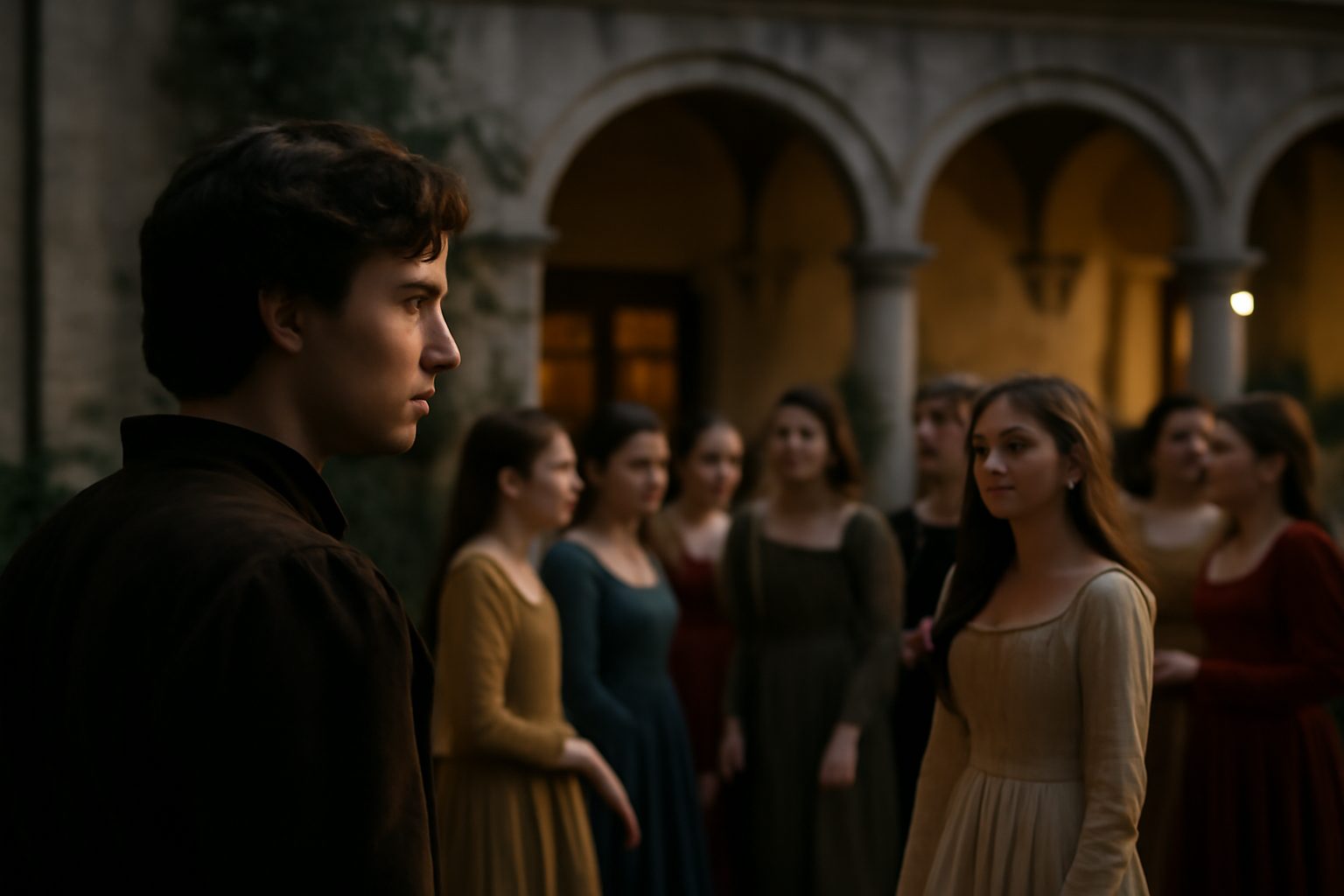
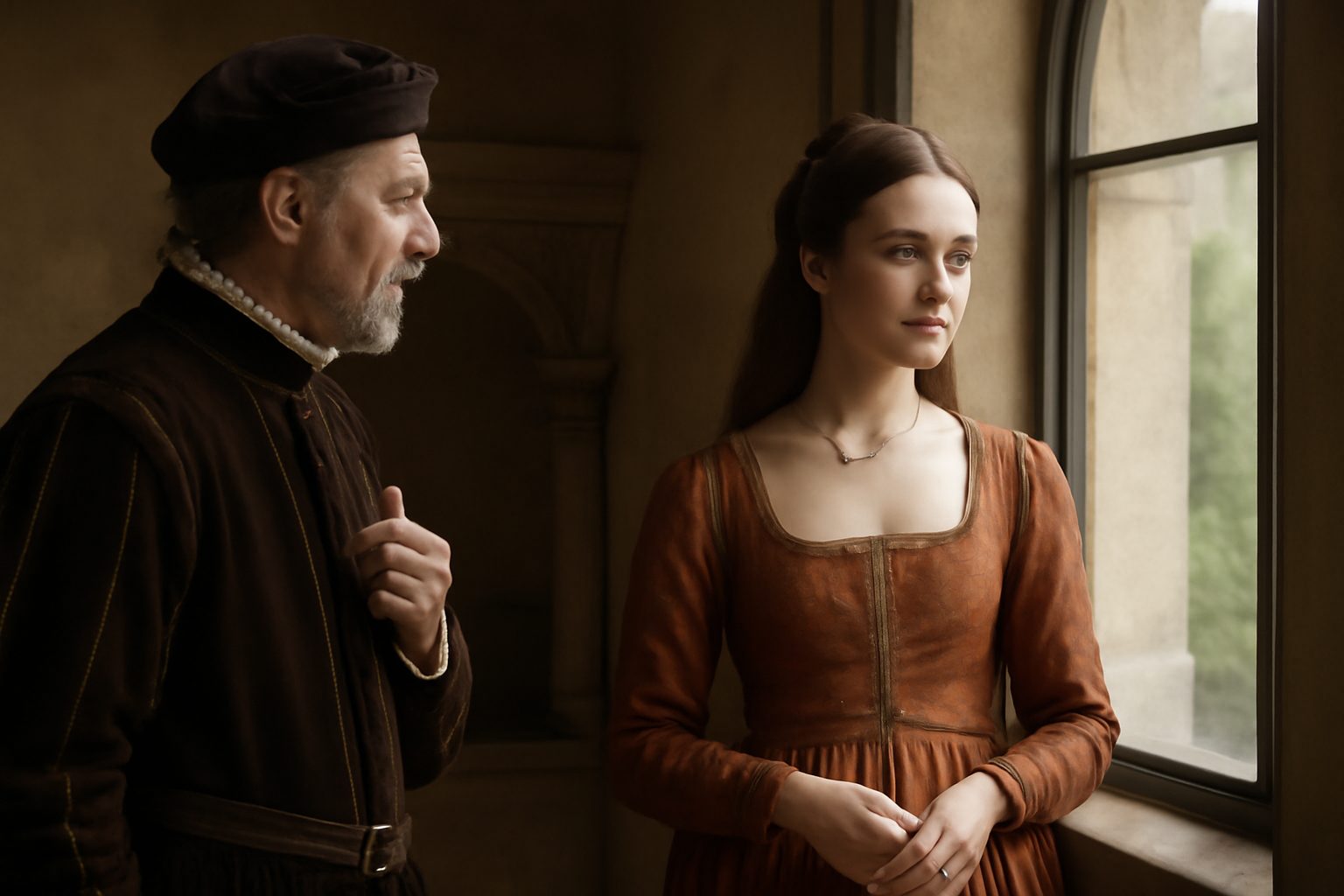
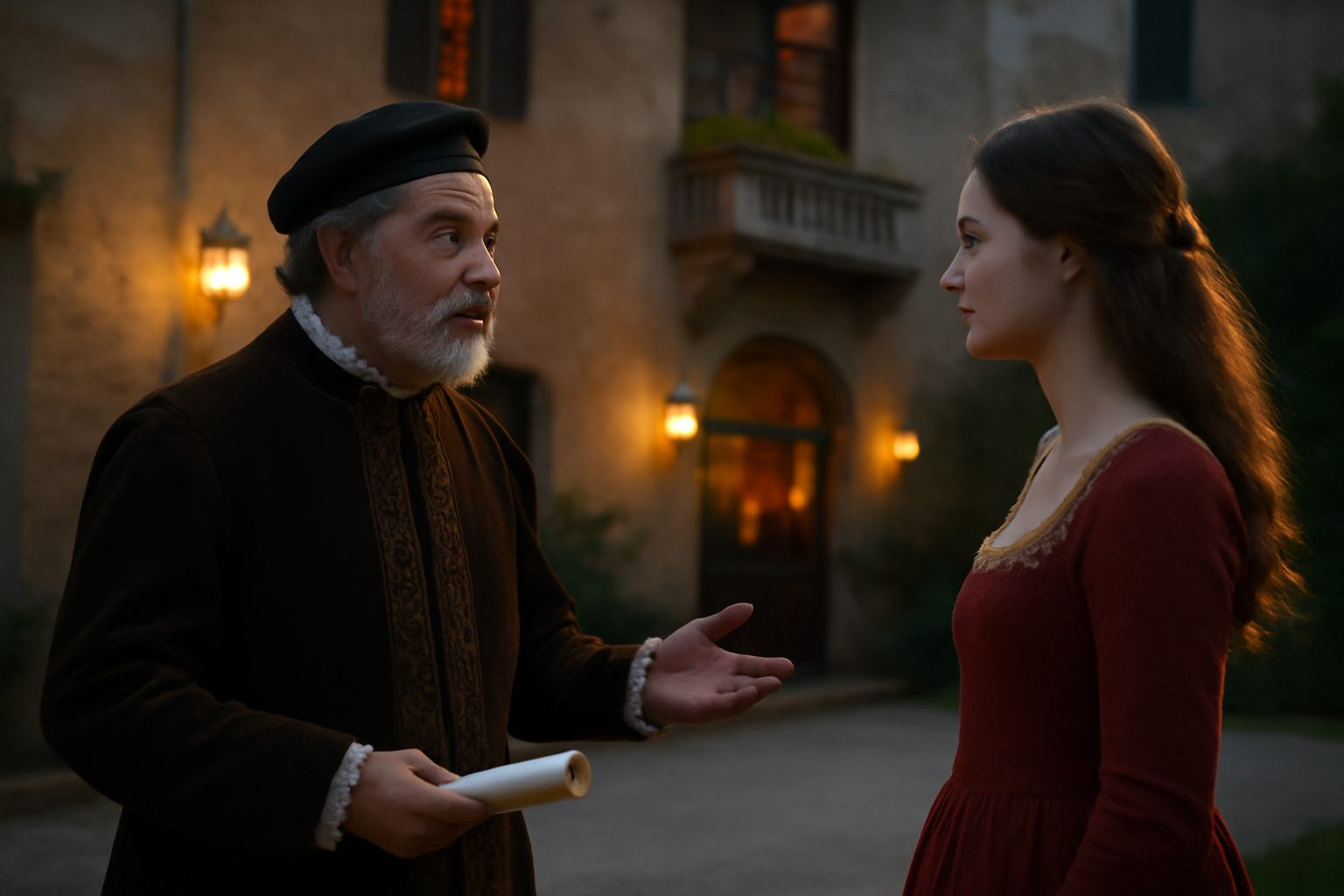
In Act 1, Scene 2 of Romeo and Juliet, Paris asks Capulet for permission to marry Juliet. Capulet, while agreeing to consider the match, insists that Paris must win Juliet's consent first. The line in question reflects Capulet's casual attitude toward the names on a guest list for his upcoming feast, suggesting he leaves such details to others.
Servant: "writ, and can never find what names the writing"
In modern day english, we would say:
He has written it down, but I can never figure out what names are on the list.
Frequently Asked Questions
What problem does the servant have in this scene?
The servant cannot read the names on the list he was given.
Connections to other verses:
Connections to "writ, and can never find what names the writing"
The verse "writ, and can never find what names the writing" occurs during the interaction between the illiterate servant and Romeo, where the servant struggles to read the guest list for Capulet's feast. This moment serves as a pivotal plot device, linking several elements within the scene.
Direct Context and Task Assignment
This line directly follows Capulet's instruction to the servant in "Find them out whose names are written here!", establishing the servant's dilemma. It also connects to "sent to find those persons whose names are here", reinforcing the servant's mission and his inability to fulfill it without assistance.
Literacy and Social Commentary
The theme of literacy is echoed in "God gi' god-den. I pray, sir, can you read?", where the servant seeks help, and in Romeo's response in "Stay, fellow; I can read.". This contrast highlights social hierarchies and the importance of education, while the servant's frustration is further emphasized in "person hath here writ. I must to the learned", showing his reliance on others.
Invitation and the Feast
The list itself ties to Capulet's preparations for his feast, mentioned in "This night I hold an old accustom'd feast" and "Whereto I have invited many a guest". The servant's task of delivering invitations is reiterated in "Whose names are written there, and to them say", which specifies the message to accompany the list.
Comic Relief and Foreshadowing
The servant's humorous struggle provides contrast to the scene's heavier themes, such as Paris's suit for Juliet. However, it also foreshadows the fateful meeting at the feast, as Romeo's assistance leads him to attend and meet Juliet. This connects to Benvolio's advice in "Go thither; and, with unattainted eye", encouraging Romeo to compare Rosaline to other beauties, which ultimately unfolds due to this encounter.