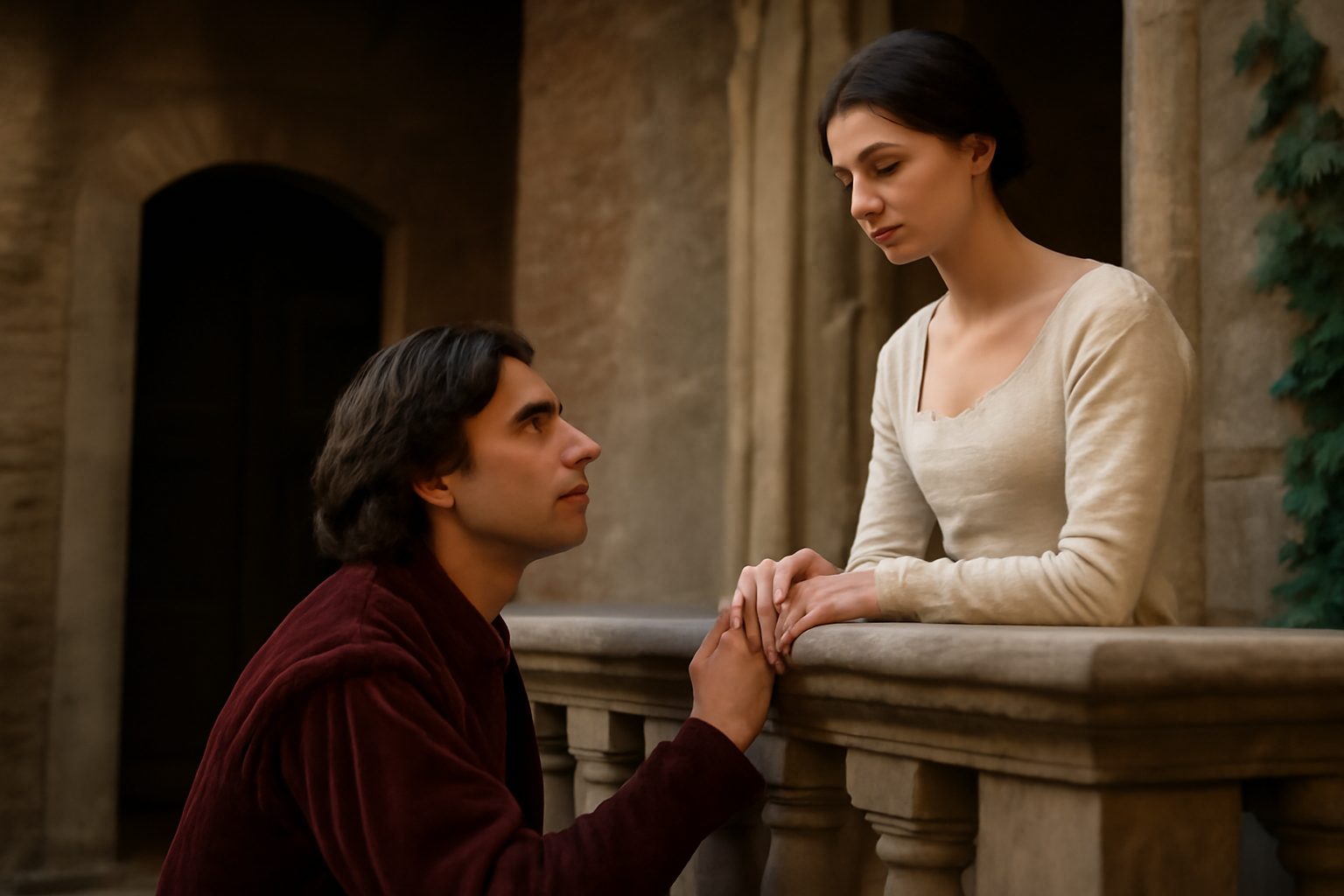
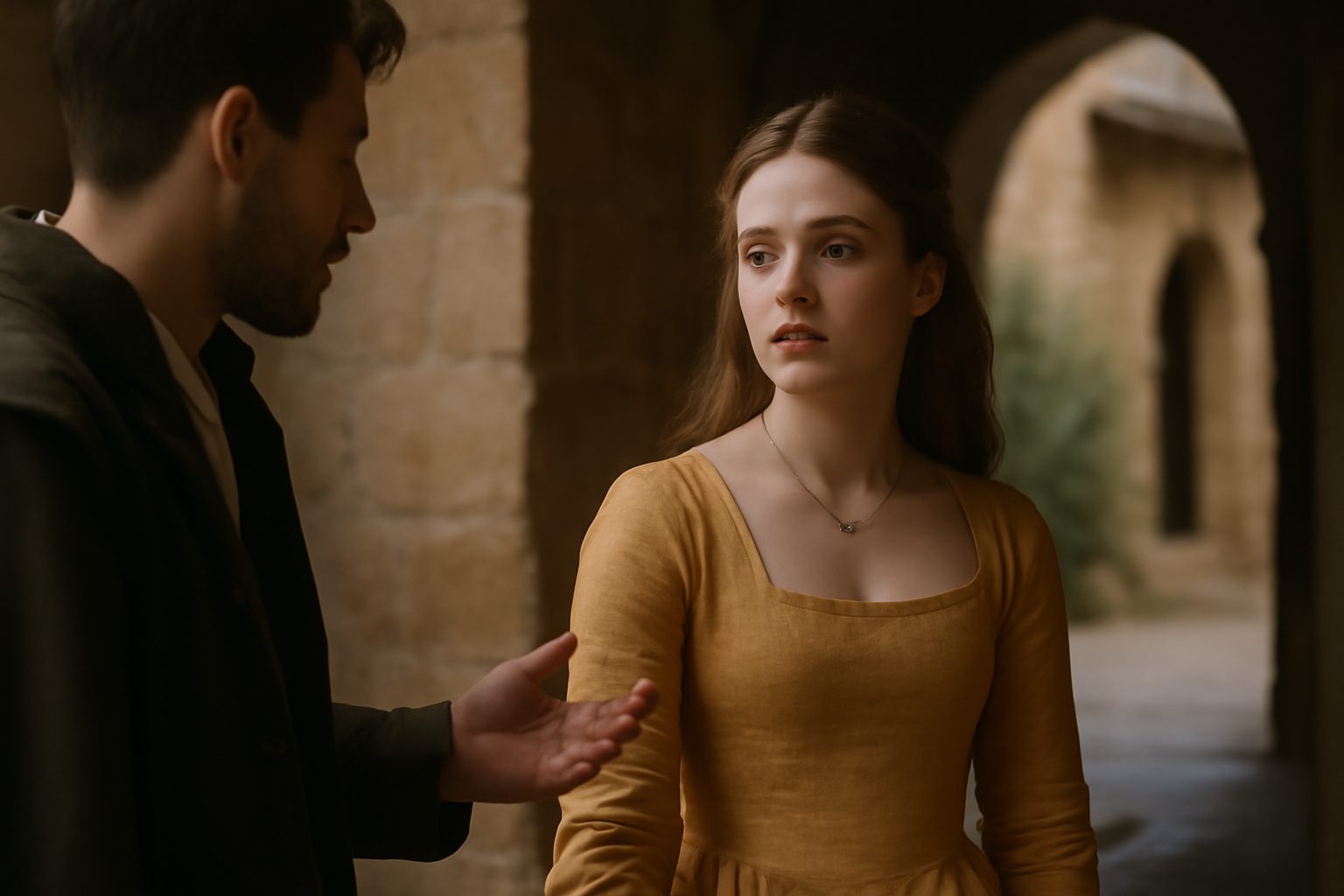
In Act 1, Scene 2 of Romeo and Juliet, Paris speaks to Capulet about his desire to marry Juliet. This line comes as Paris reassures Capulet that among the many admirers Juliet has, he considers himself just one of them. It reflects Paris's polite persistence while acknowledging Juliet's popularity.
Capulet: "Which on more view, of many mine being one"
In modern day english, we would say:
Out of all the women I've seen, she stands out as one of the most beautiful.
Frequently Asked Questions
What does Capulet mean when he says that one of the many is his?
Capulet is referring to his daughter Juliet, saying that among the many young women at the party, she is one of his.
Connections to other verses:
Connections to "Which on more view, of many mine being one"
This verse, spoken by Capulet, refers to the many guests invited to his feast and emphasizes that Paris is one among them. It connects thematically and contextually to several other lines in the scene.
Invitation and Gathering
Capulet's mention of "many mine being one" directly relates to his earlier statement: "Whereto I have invited many a guest", establishing the scale of the event. It also echoes his welcoming attitude in "One more, most welcome, makes my number more", reinforcing the idea of inclusion and abundance.
Paris's Courtship and Juliet's Introduction
The line situates Paris among the attendees, tying into Capulet’s encouragement for him to woo Juliet, as seen in "But woo her, gentle Paris, get her heart". It also connects to the description of the young women present, such as in "Among fresh female buds shall you this night", highlighting the romantic and social context of the feast.
Comparative Beauty and Choice
Capulet’s phrasing hints at the theme of comparison, which is later expanded when Benvolio advises Romeo to "Compare her face with some that I shall show". This idea of evaluating beauty among many is central to the scene’s development of romantic entanglements.
Feast and Celebration
The verse is part of Capulet’s broader discussion of the feast, referenced in lines like "This night I hold an old accustom'd feast" and "At this same ancient feast of Capulet's", situating Paris’s presence within the traditional and social framework of the event.