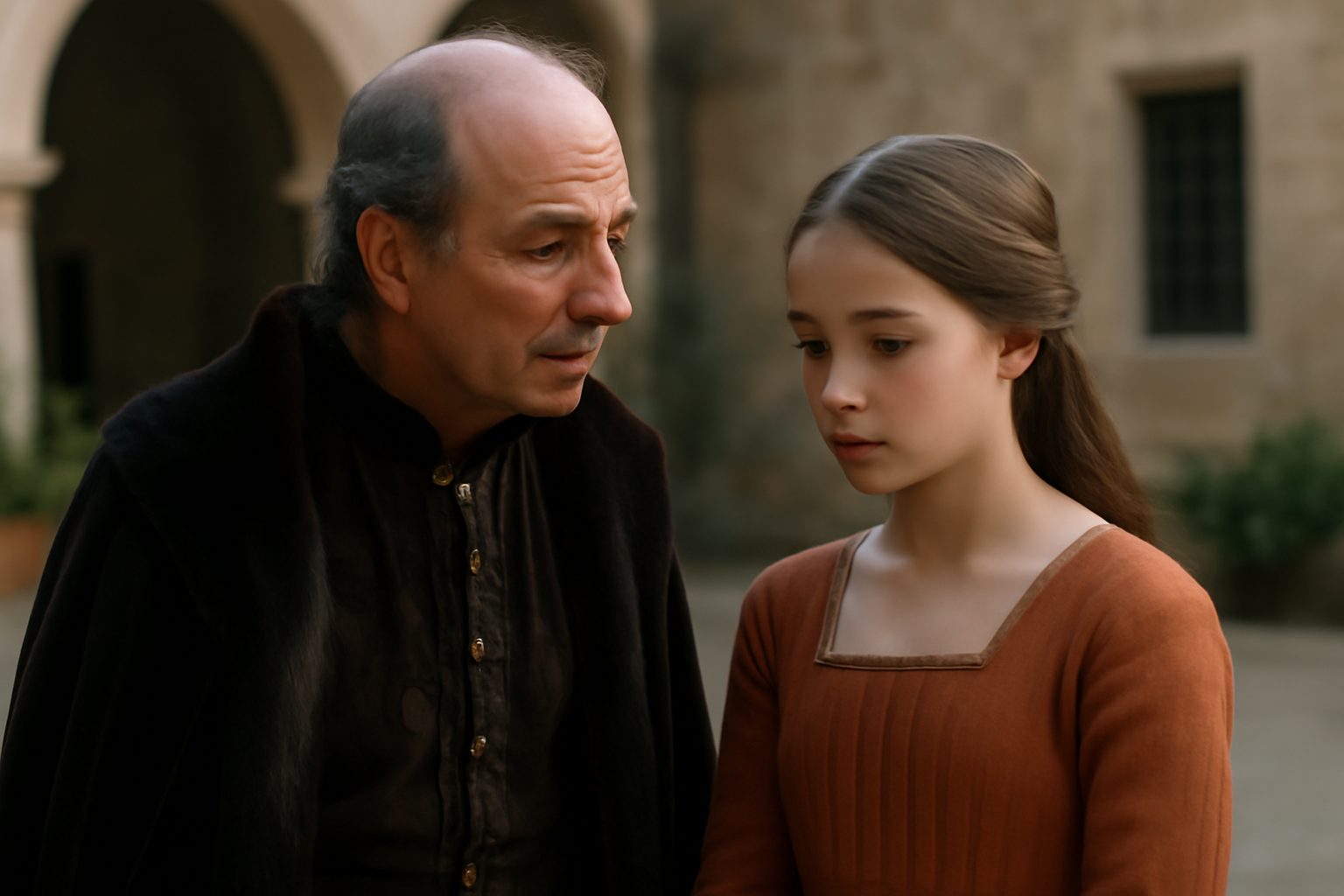
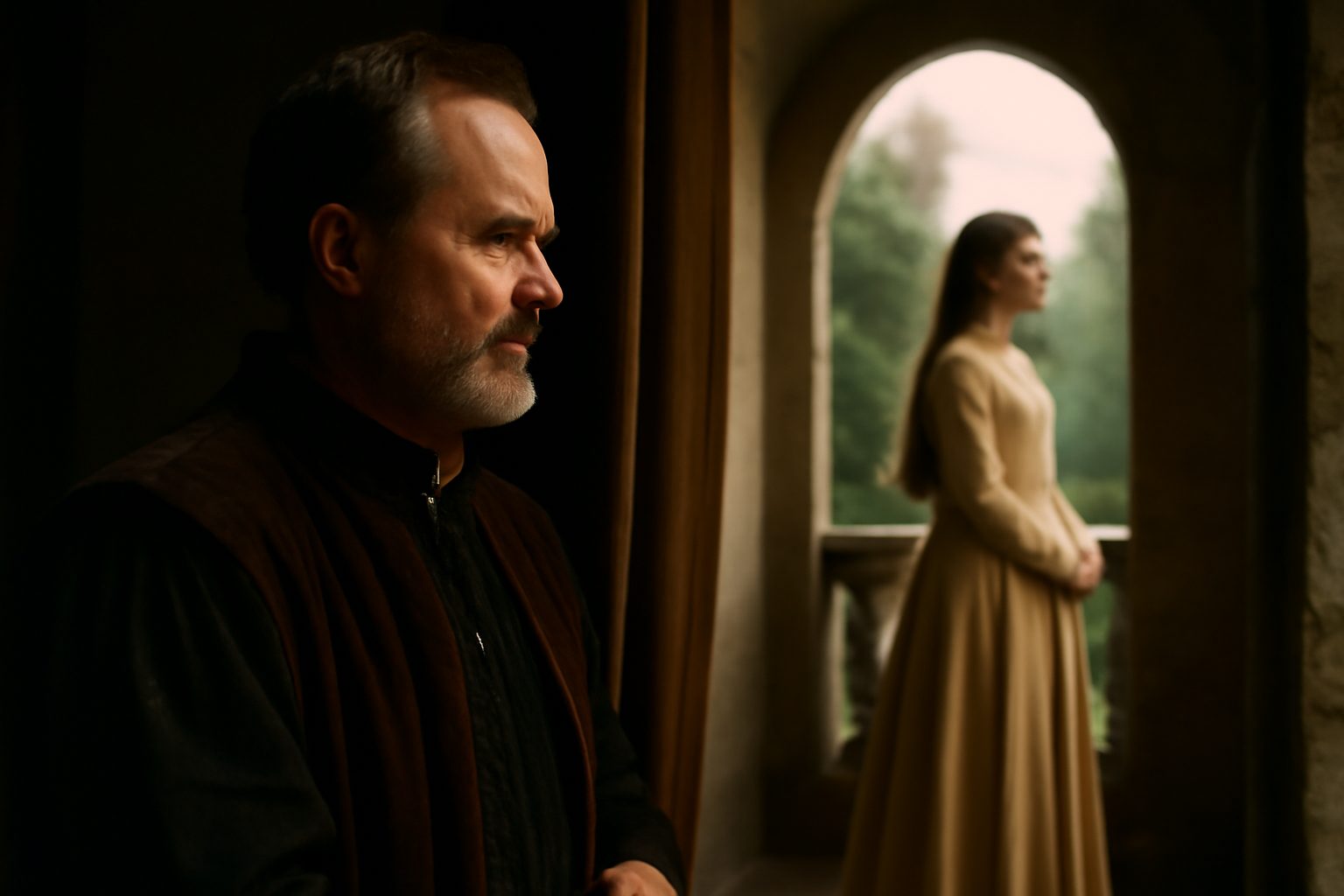
In Act 1, Scene 2 of Romeo and Juliet, Romeo is still pining for Rosaline when he and Benvolio encounter a Capulet servant struggling to read a list of names. The servant, who has clearly been overworked and mistreated, greets them with a weary and hurried tone, reflecting the strained social tensions in Verona. This brief exchange highlights the everyday struggles of lower-class characters amid the feud between the Montagues and Capulets.
Romeo: "Whipp'd and tormented and--God-den, good fellow."
In modern day english, we would say:
I've been beaten and pushed around—oh, hello there, friend.
Frequently Asked Questions
What does Romeo say has happened to him before greeting the fellow?
Romeo says he has been whipped and tormented.
Connections to other verses:
Connections to "Whipp'd and tormented and--God-den, good fellow."
The verse "Whipp'd and tormented and--God-den, good fellow." is spoken by Romeo in a conversation with Benvolio, where he describes his lovesick state. It connects to several other verses in the scene that explore themes of suffering, love, and social interactions.
Connection to Romeo's Suffering
Romeo's description of being "whipp'd and tormented" relates to his earlier lament about love's pains, such as in Not mad, but bound more than a mad-man is; and Shut up in prison, kept without my food,, emphasizing his emotional confinement.
Social Greeting and Interaction
The phrase "God-den, good fellow" is a social greeting that echoes other interactions in the scene, like God gi' god-den. I pray, sir, can you read? and Ye say honestly: rest you merry!, highlighting the casual yet formal exchanges between characters.
Love and Emotional Turmoil
Romeo's tormented state is further contextualized by verses discussing love's remedies, such as Tut, man, one fire burns out another's burning, and Take thou some new infection to thy eye,, where Benvolio suggests overcoming heartache by finding new love.
Invitation to the Feast
The conversation leads to plans involving Capulet's feast, referenced in Sups the fair Rosaline whom thou so lovest, and I'll go along, no such sight to be shown,, tying Romeo's suffering to the event where he will ultimately meet Juliet.