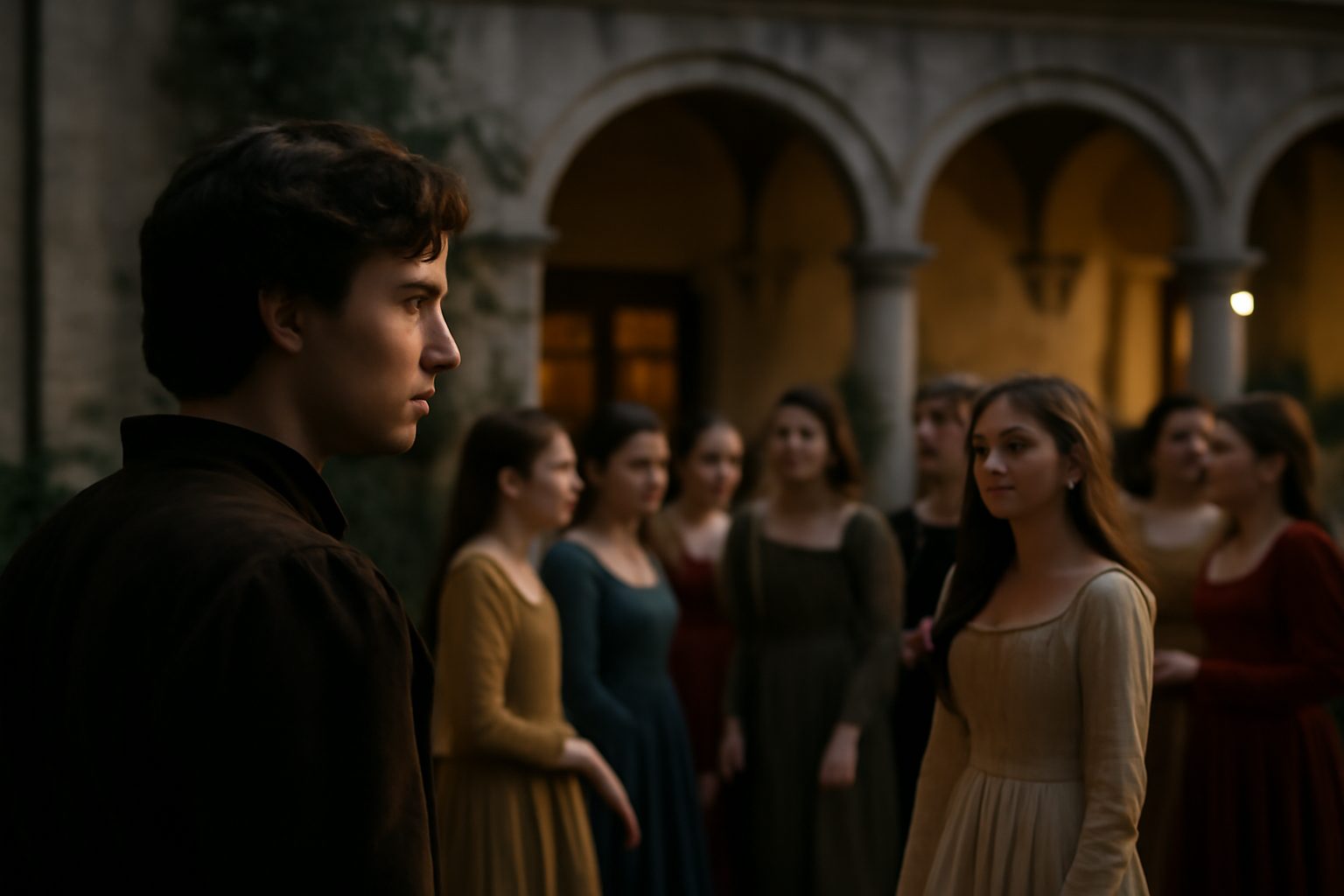
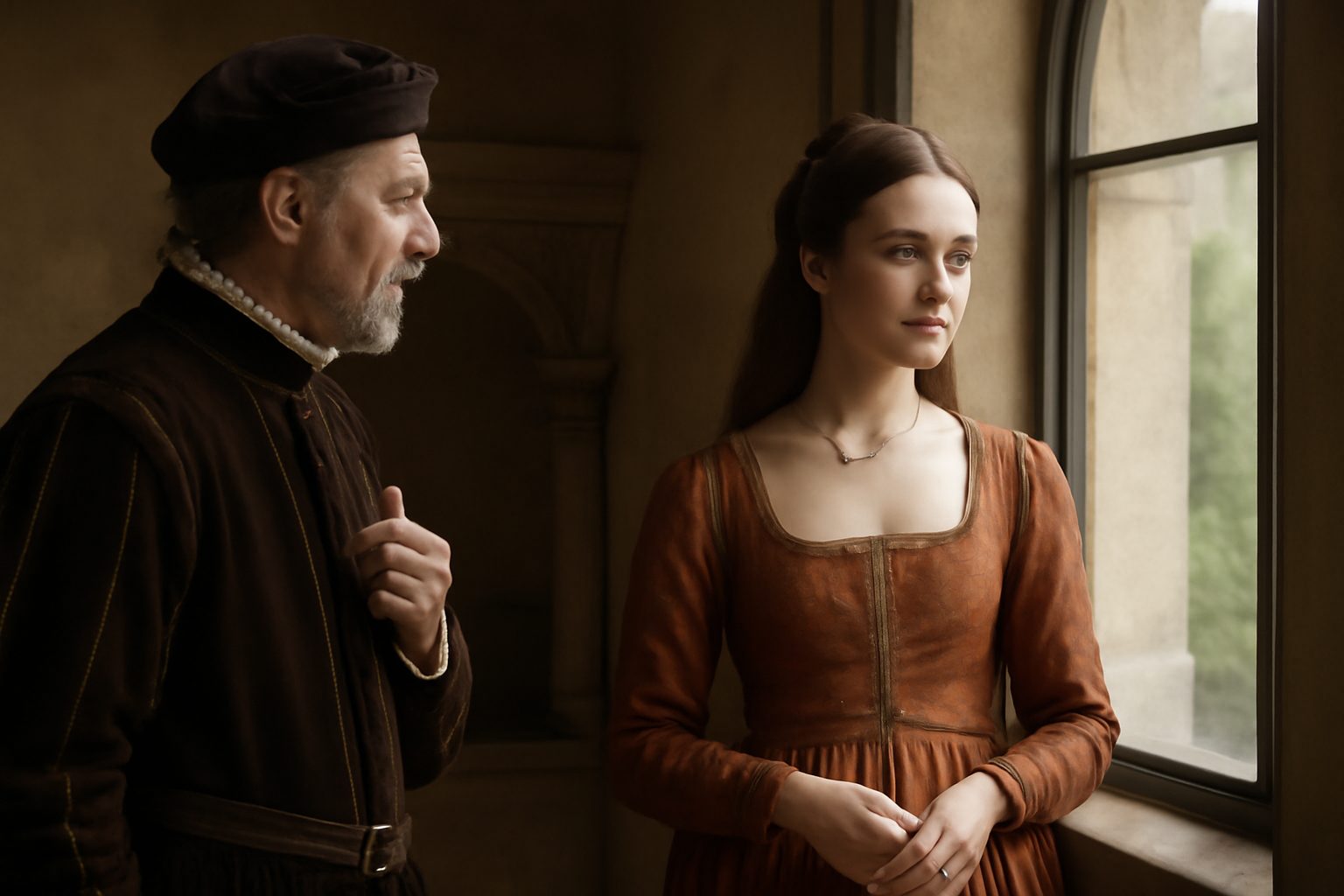
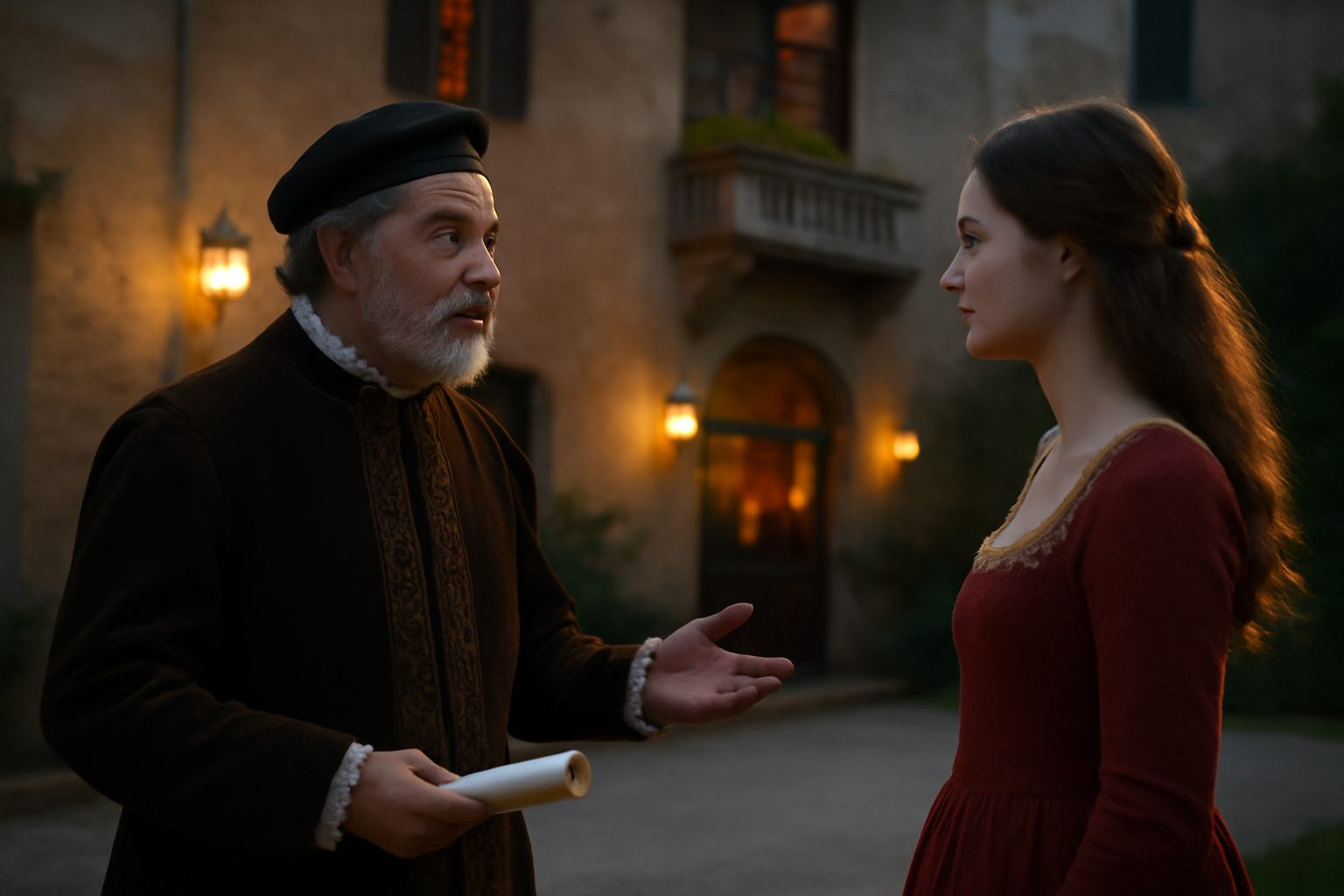
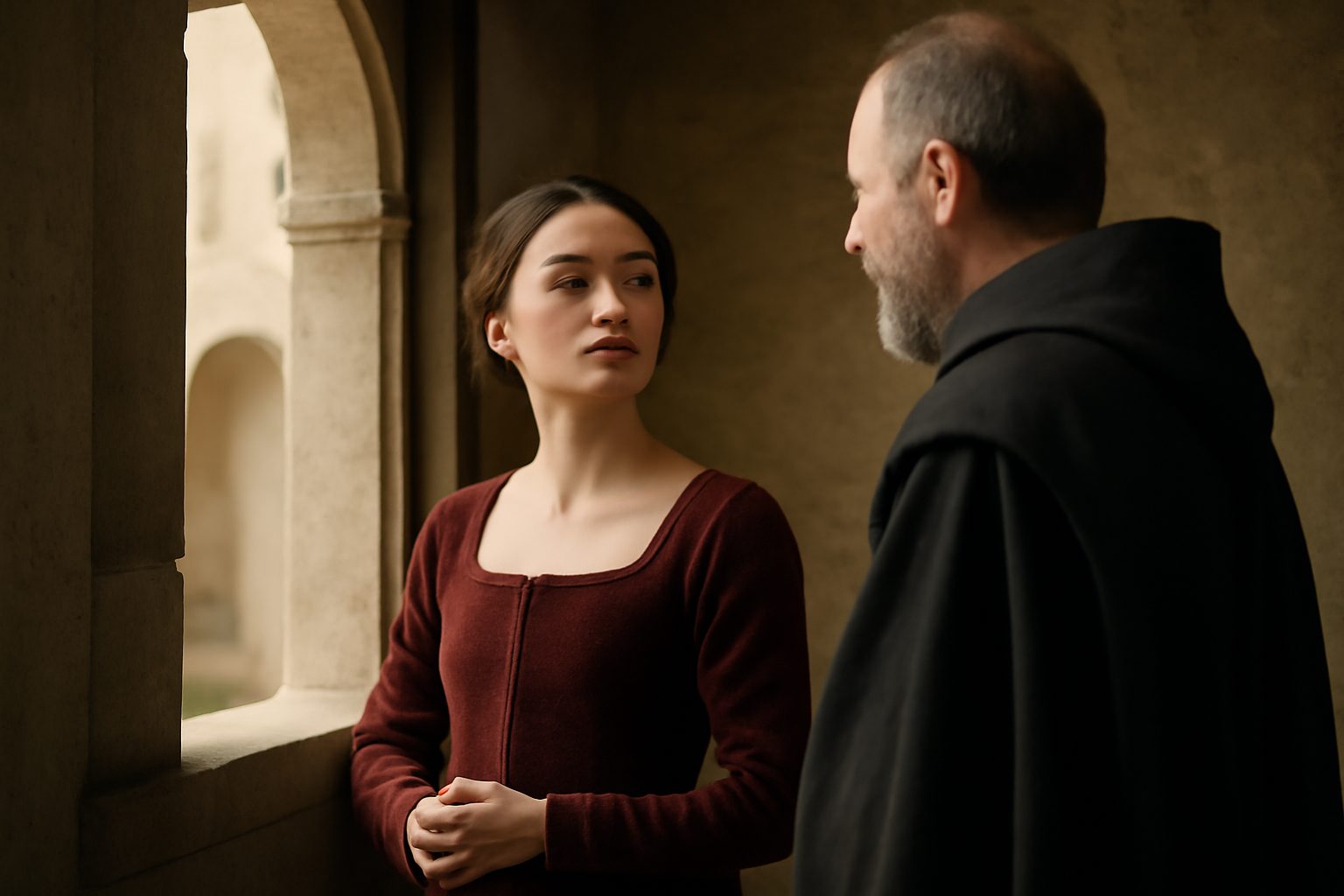
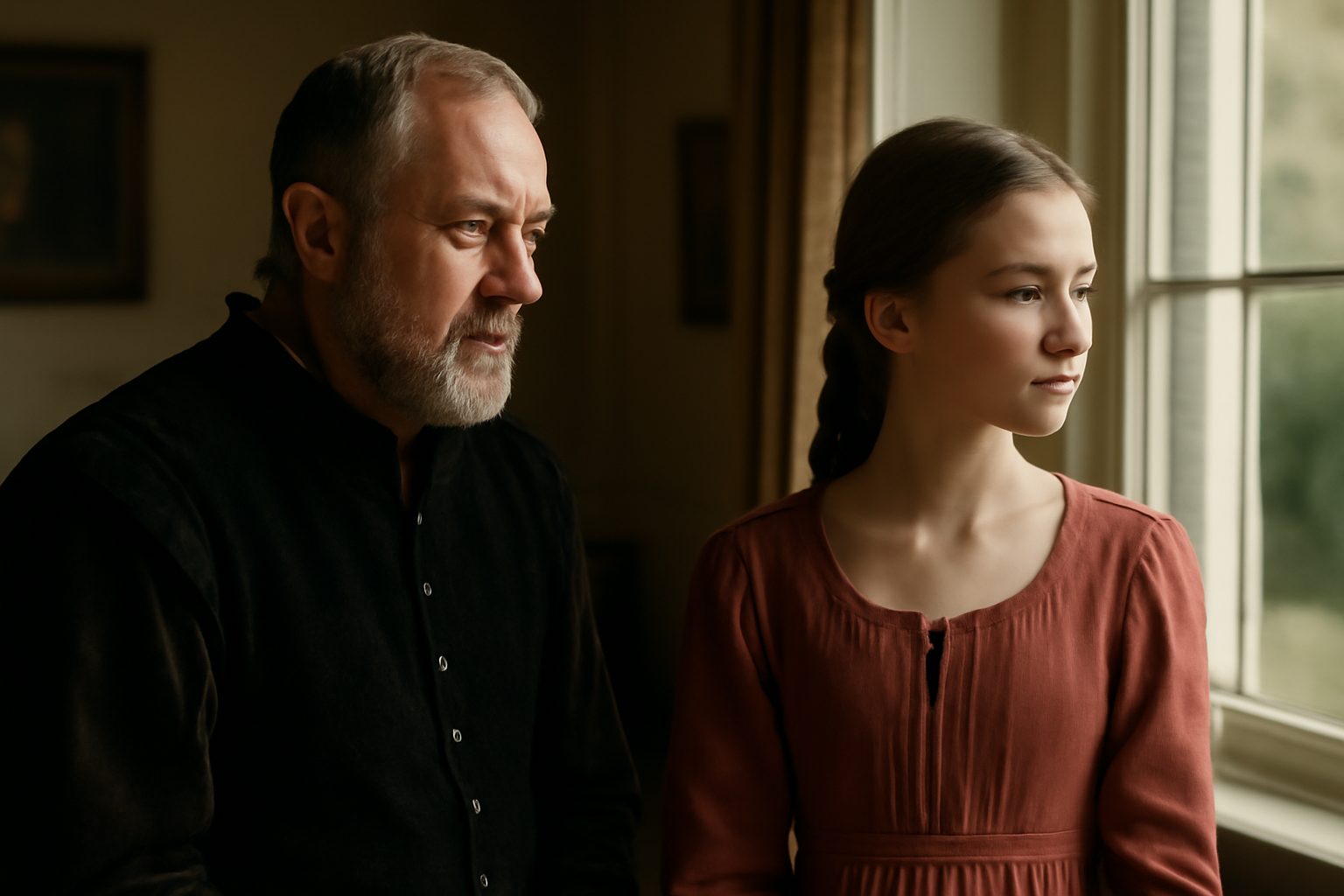
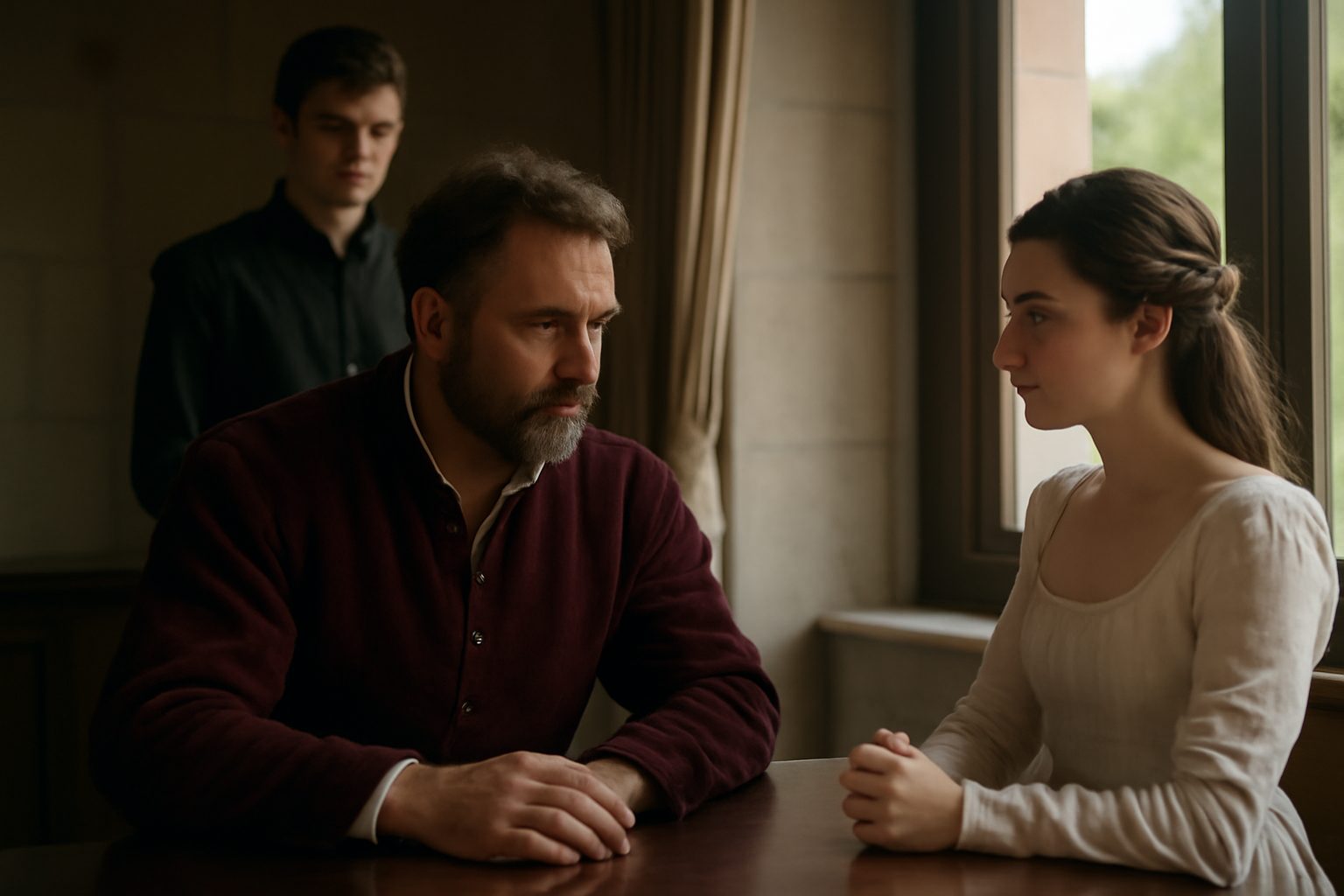
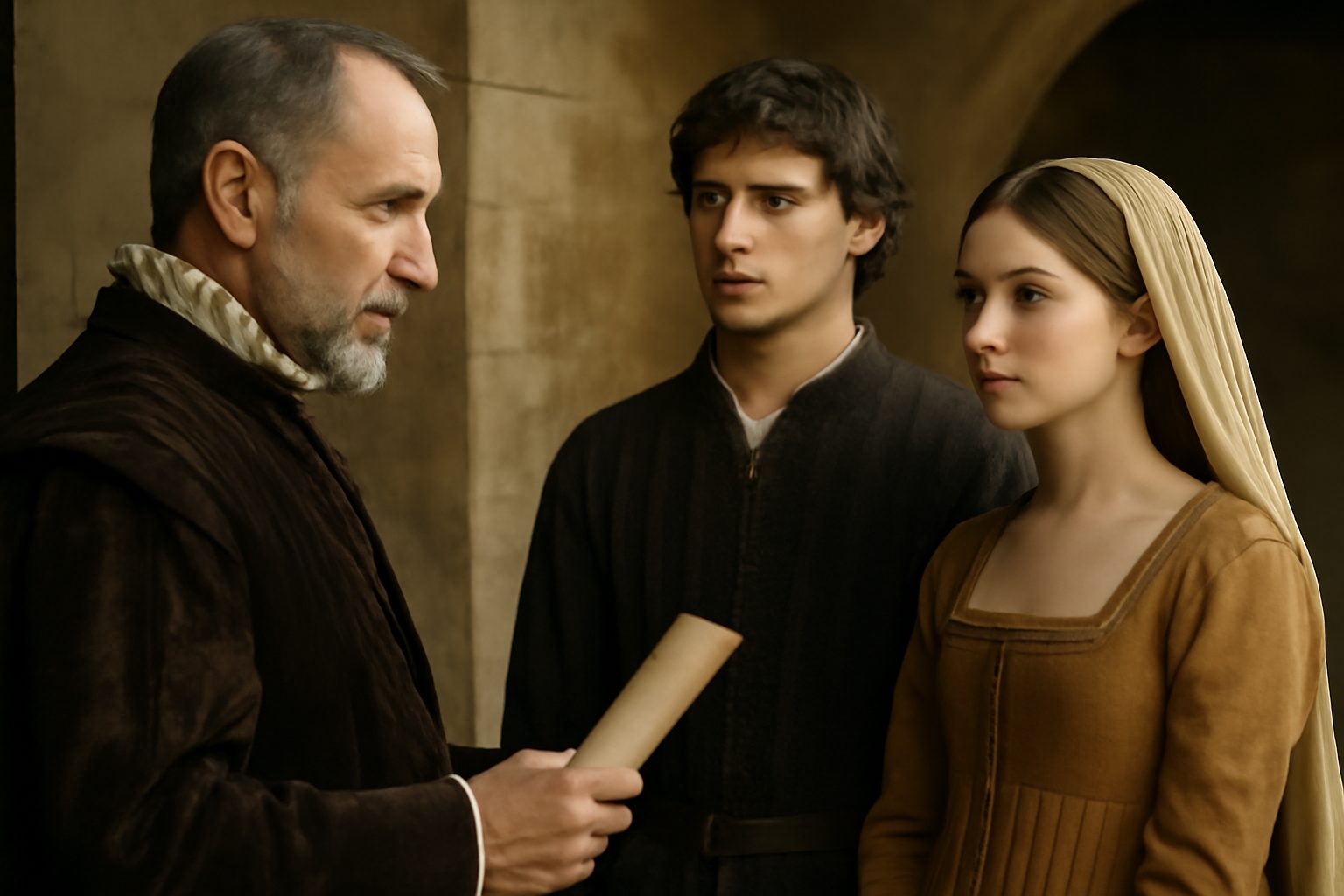
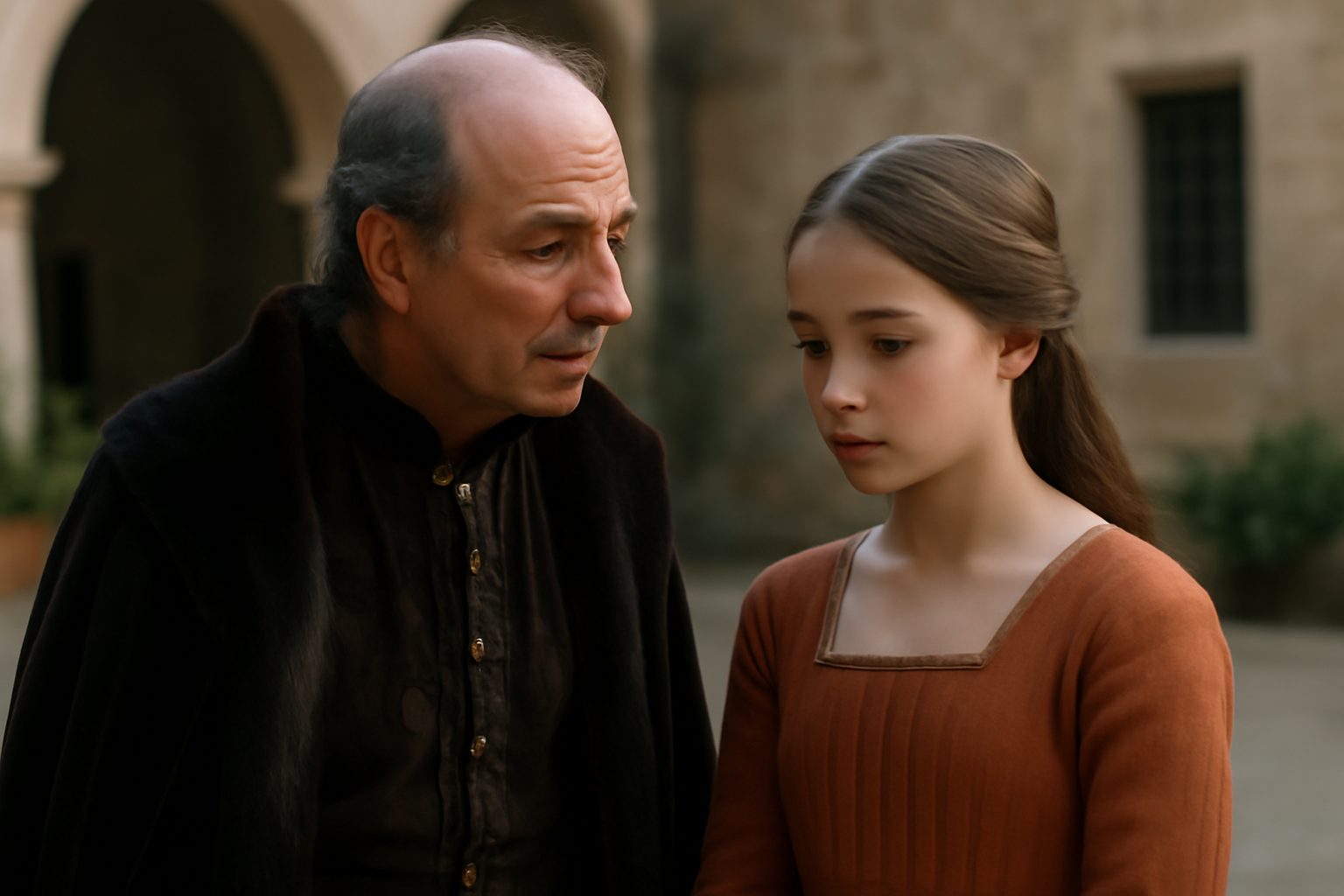
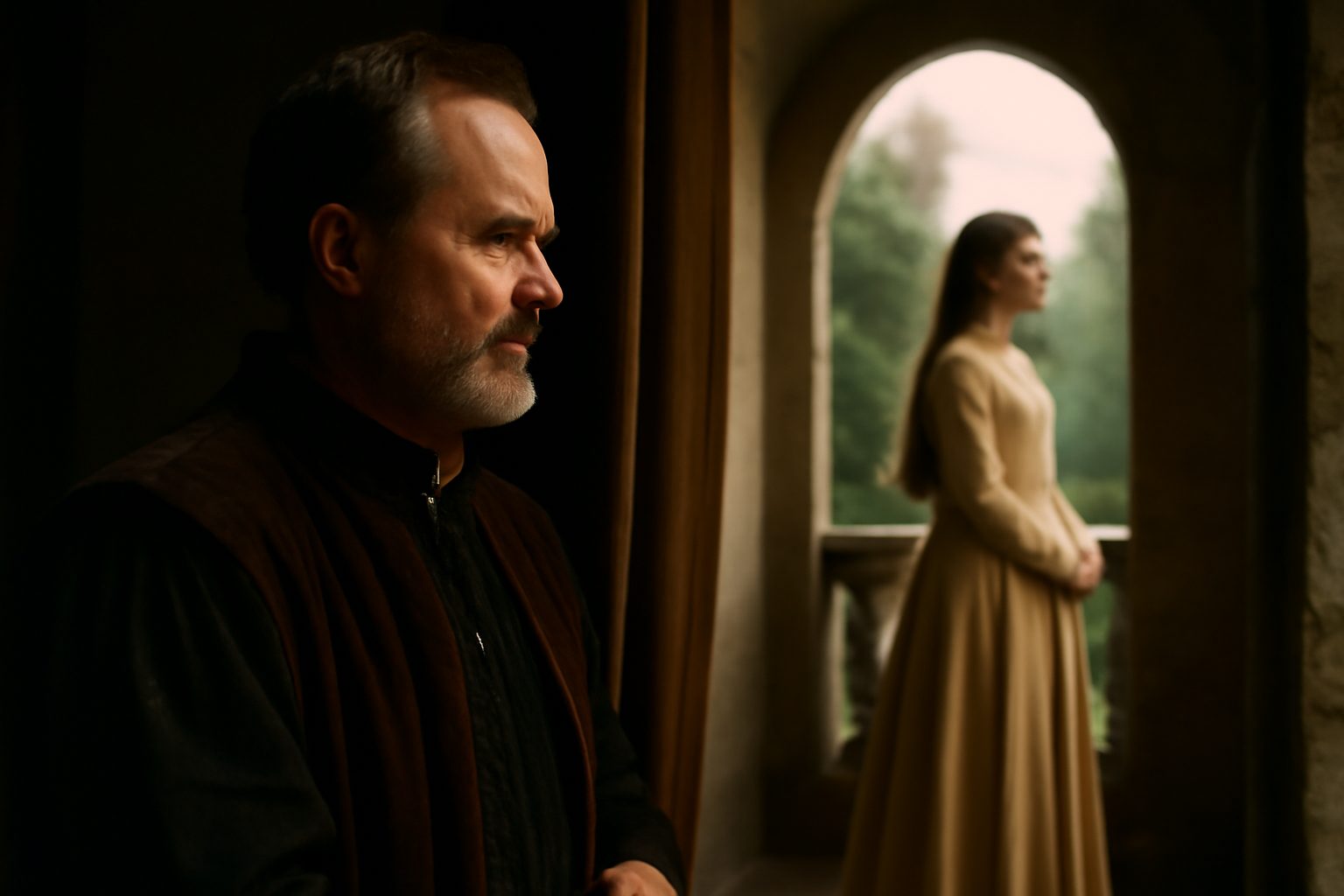
In Act 1, Scene 2 of Romeo and Juliet, Paris, a nobleman, presses Lord Capulet for an answer regarding his proposal to marry Juliet. This line reflects Paris's eagerness to secure Capulet's approval, as he seeks to advance his suit despite Capulet's initial reluctance. The moment highlights the societal expectations around marriage and the tension between parental authority and youthful desire.
Paris: "But now, my lord, what say you to my suit?"
In modern day english, we would say:
Paris is asking Capulet what he thinks about his request to marry Juliet.
Frequently Asked Questions
Who is Paris speaking to in this line?
Paris is speaking to Lord Capulet, Juliet's father.
What is Paris asking about in this line?
He is asking about his request to marry Juliet.
Connections to other verses:
Connections to "But now, my lord, what say you to my suit?"
This line, spoken by Paris, directly follows Capulet's expression of regret over the long-standing feud with the Montagues in And pity 'tis you lived at odds so long. It shifts the conversation from the public conflict to Paris's personal request to marry Juliet.
Parental Consent and Juliet's Youth
Capulet's response to Paris's suit emphasizes his cautious approach to his daughter's marriage due to her youth, as noted in My child is yet a stranger in the world and She hath not seen the change of fourteen years. He advises waiting, suggesting in Let two more summers wither in their pride that Paris should court Juliet for two more years.
Juliet's Agency and the Feast
Capulet makes it clear that his consent is conditional on Juliet's agreement, as stated in My will to her consent is but a part and An she agree, within her scope of choice. He invites Paris to a feast where he can meet Juliet among other young women, as mentioned in This night I hold an old accustom'd feast and Among fresh female buds shall you this night.
Contrast with Romeo's Situation
Meanwhile, Romeo's lovesick despair over Rosaline is highlighted in lines such as One desperate grief cures with another's languish, and Benvolio encourages him to move on by comparing Rosaline to other beauties at the feast in Compare her face with some that I shall show. This creates a thematic contrast between Paris's formal suit and Romeo's emotional turmoil.
Foreshadowing and Irony
Capulet's assurance that Juliet is his last hope in The earth hath swallow'd all my hopes but she foreshadows the tragedy to come. The invitation to the feast, extended to Romeo and his friends in of Montagues, I pray, come and crush a cup of wine, sets the stage for the fateful meeting between Romeo and Juliet, ironically undermining Paris's suit.