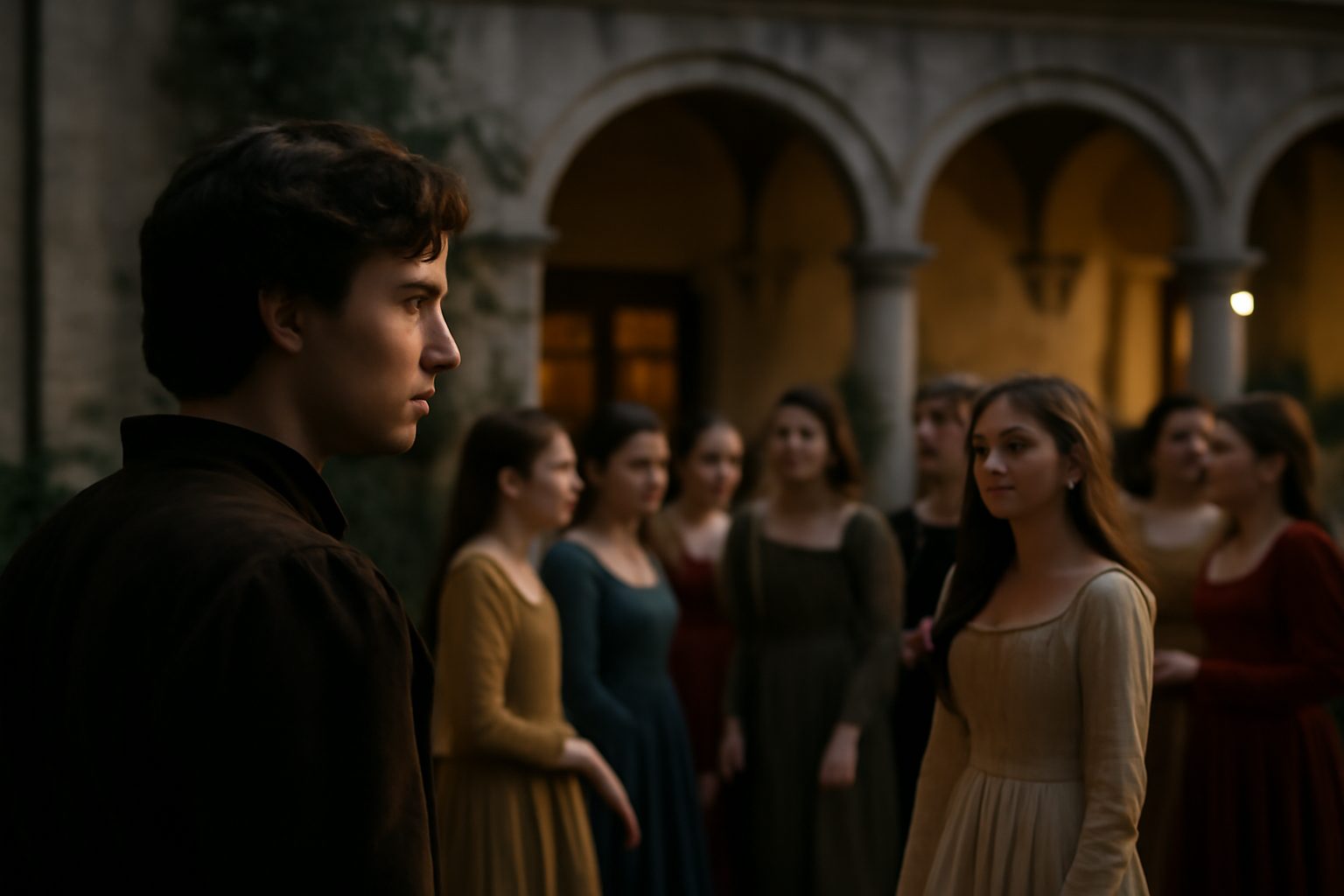
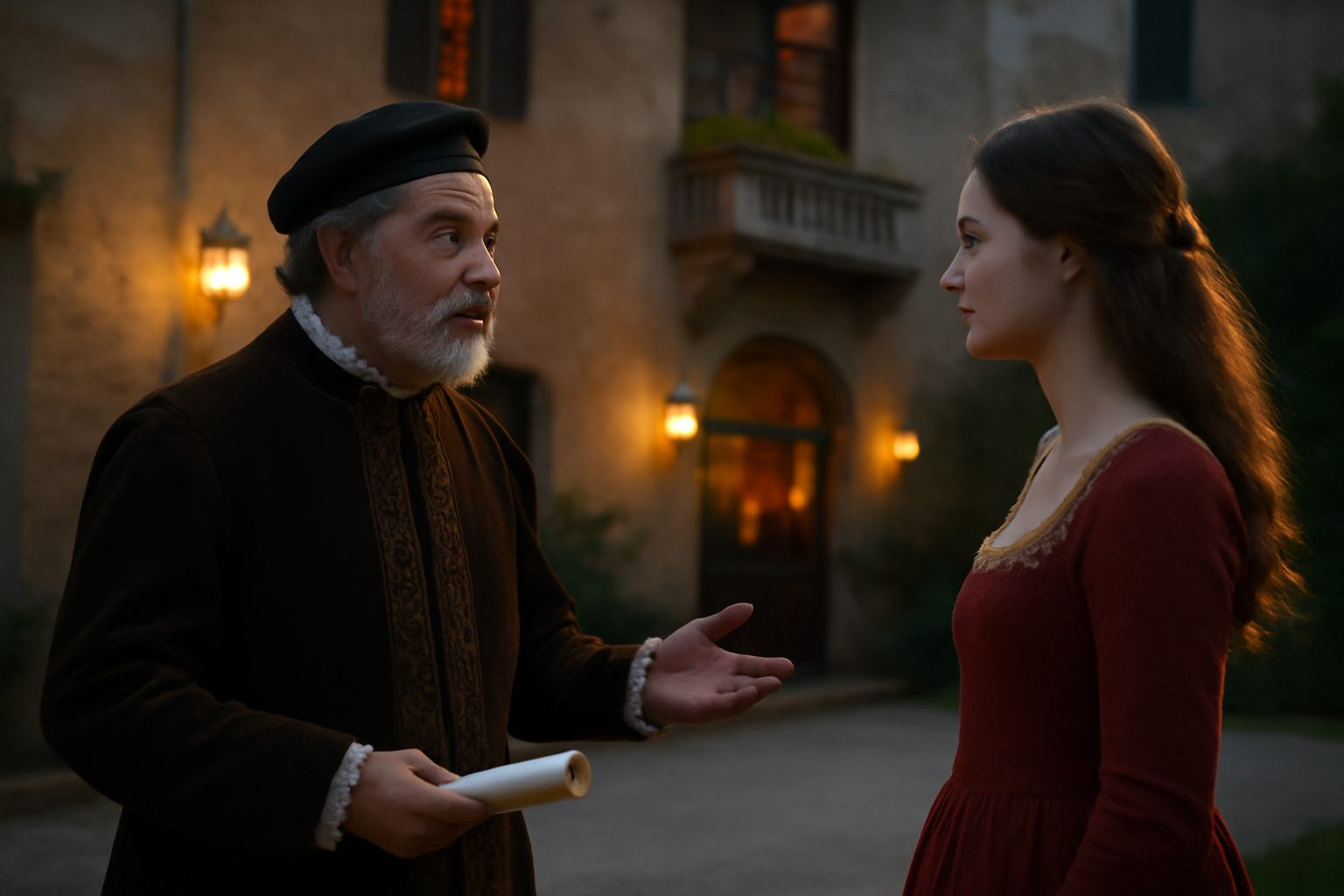
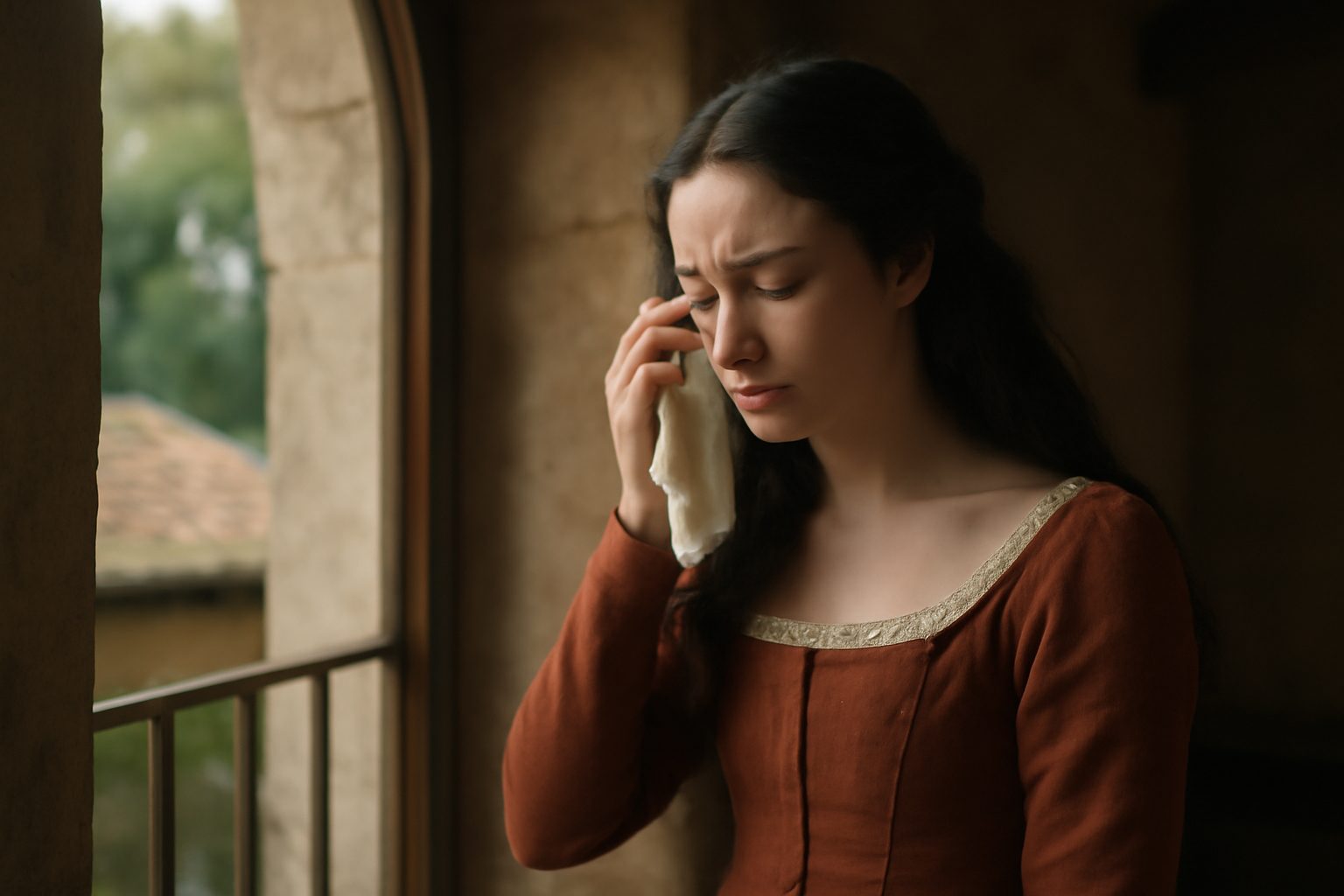
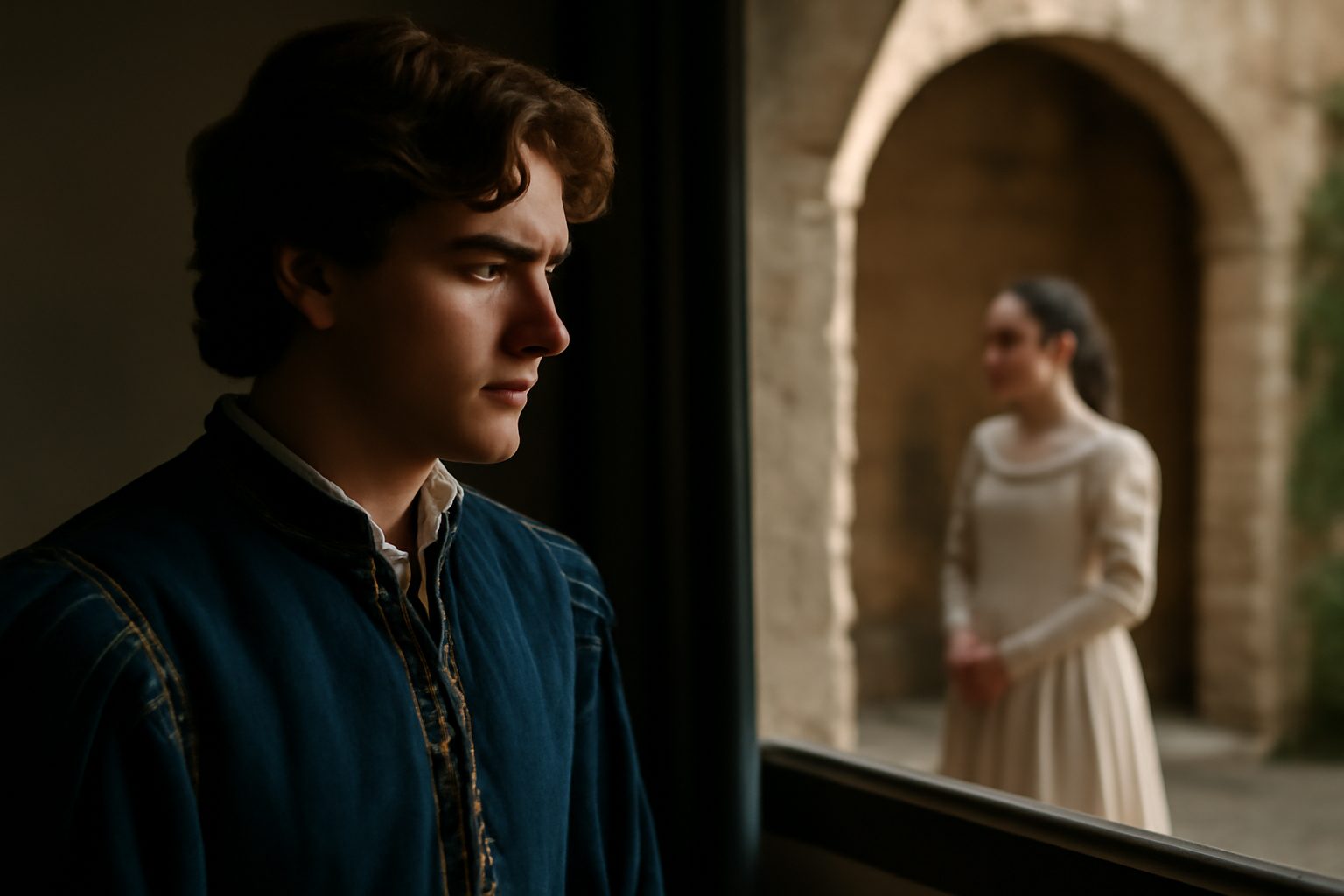
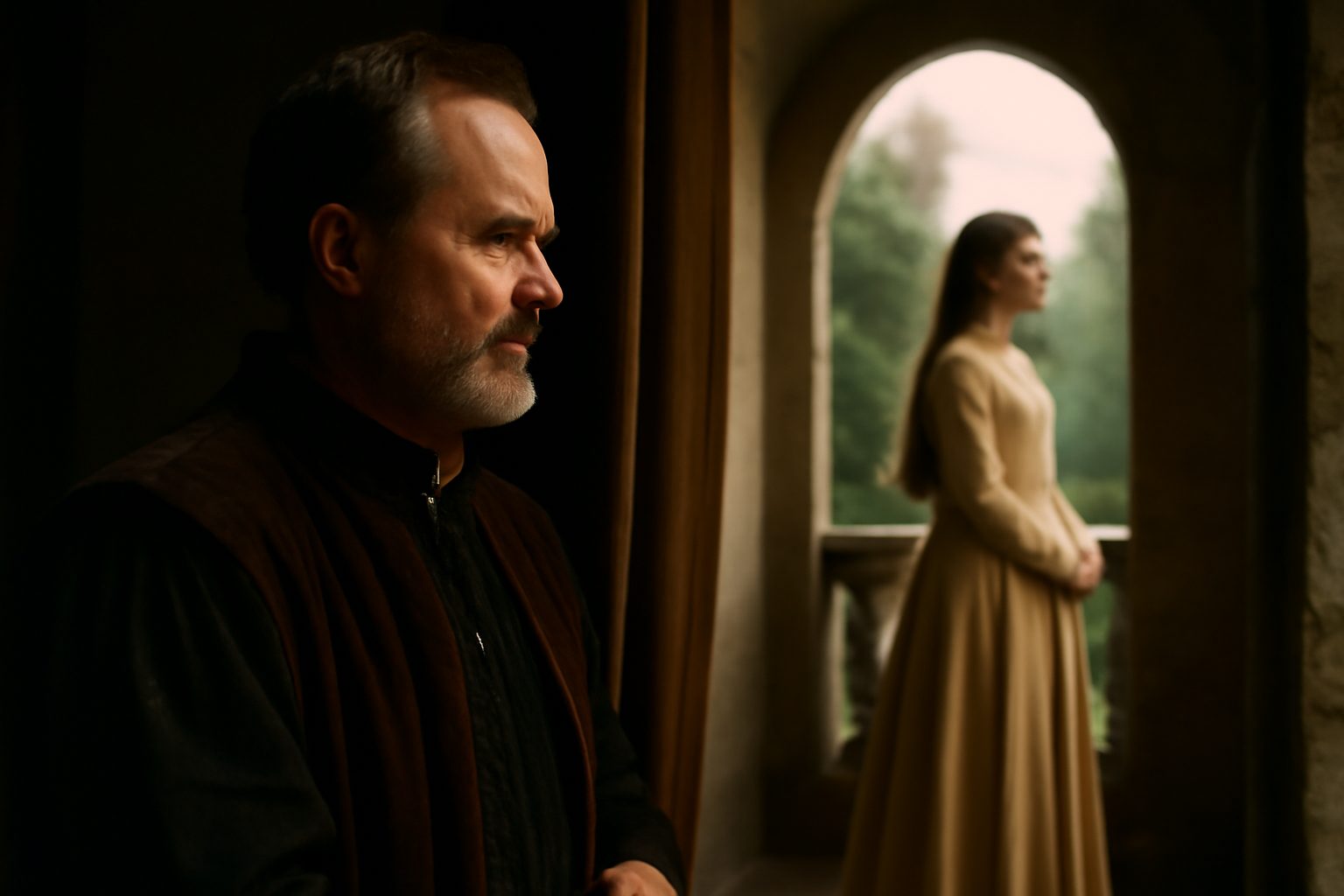
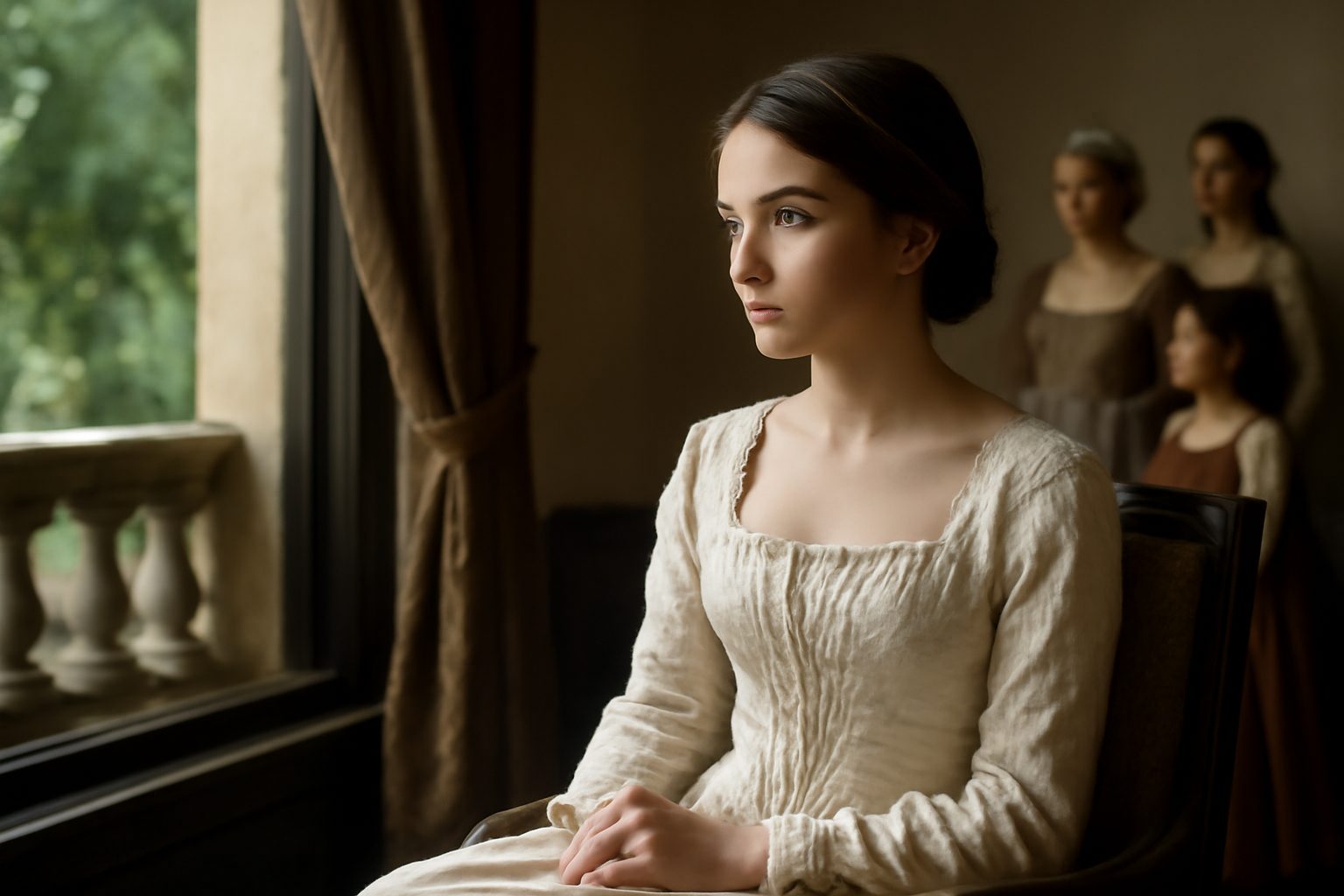
In Act 1, Scene 2 of Romeo and Juliet, Benvolio and Romeo encounter a servant carrying invitations to Capulet's feast. Benvolio, noticing Romeo's lovesick demeanor, questions his erratic behavior with this line, urging him to snap out of his melancholy. The moment highlights Romeo's emotional turmoil and sets the stage for their decision to attend the party, where Romeo will later meet Juliet.
Benvolio: "Why, Romeo, art thou mad?"
In modern day english, we would say:
Romeo, are you crazy?
Frequently Asked Questions
What is Benvolio asking Romeo in this line?
Benvolio is asking Romeo if he has gone crazy or lost his mind.
Connections to other verses:
Connections to "Why, Romeo, art thou mad?"
Romeo's State of Mind
The question "Why, Romeo, art thou mad?" directly relates to Romeo's response in Not mad, but bound more than a mad-man is, where he explains his emotional confinement. This is further emphasized by his description of suffering in Shut up in prison, kept without my food and Whipp'd and tormented, illustrating his self-perceived torment over Rosaline.
Benvolio's Counsel
Benvolio's questioning stems from his earlier advice in Tut, man, one fire burns out another's burning, advocating for distraction as a cure for heartache. He reinforces this with One desperate grief cures with another's languish and Take thou some new infection to thy eye, suggesting Romeo find a new love to replace his old sorrows.
Contrast with Other Perspectives
Romeo's fixation on Rosaline contrasts with Capulet's description of young women at the feast in Earth-treading stars that make dark heaven light and Among fresh female buds shall you this night, highlighting the abundance of potential new interests that Romeo refuses to consider due to his current despair.
Foreshadowing and Irony
Benvolio's challenge in And I will make thee think thy swan a crow and One fairer than my love! the all-seeing sun ironically foreshadows Romeo's imminent encounter with Juliet, who will indeed make Rosaline seem inferior. This connects to the idea introduced in Tut, you saw her fair, none else being by, suggesting Romeo's current love is only beautiful because he has no comparison.