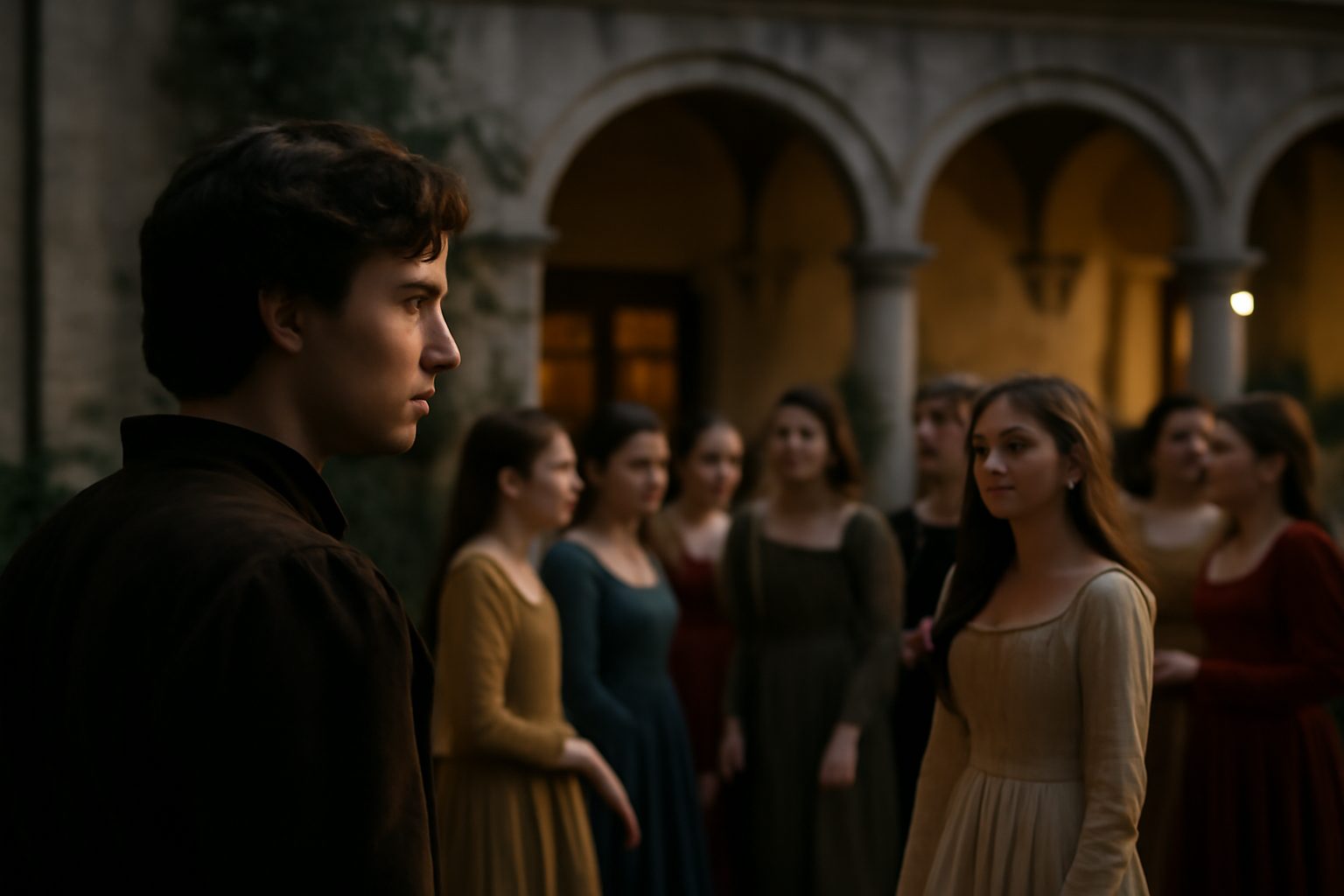
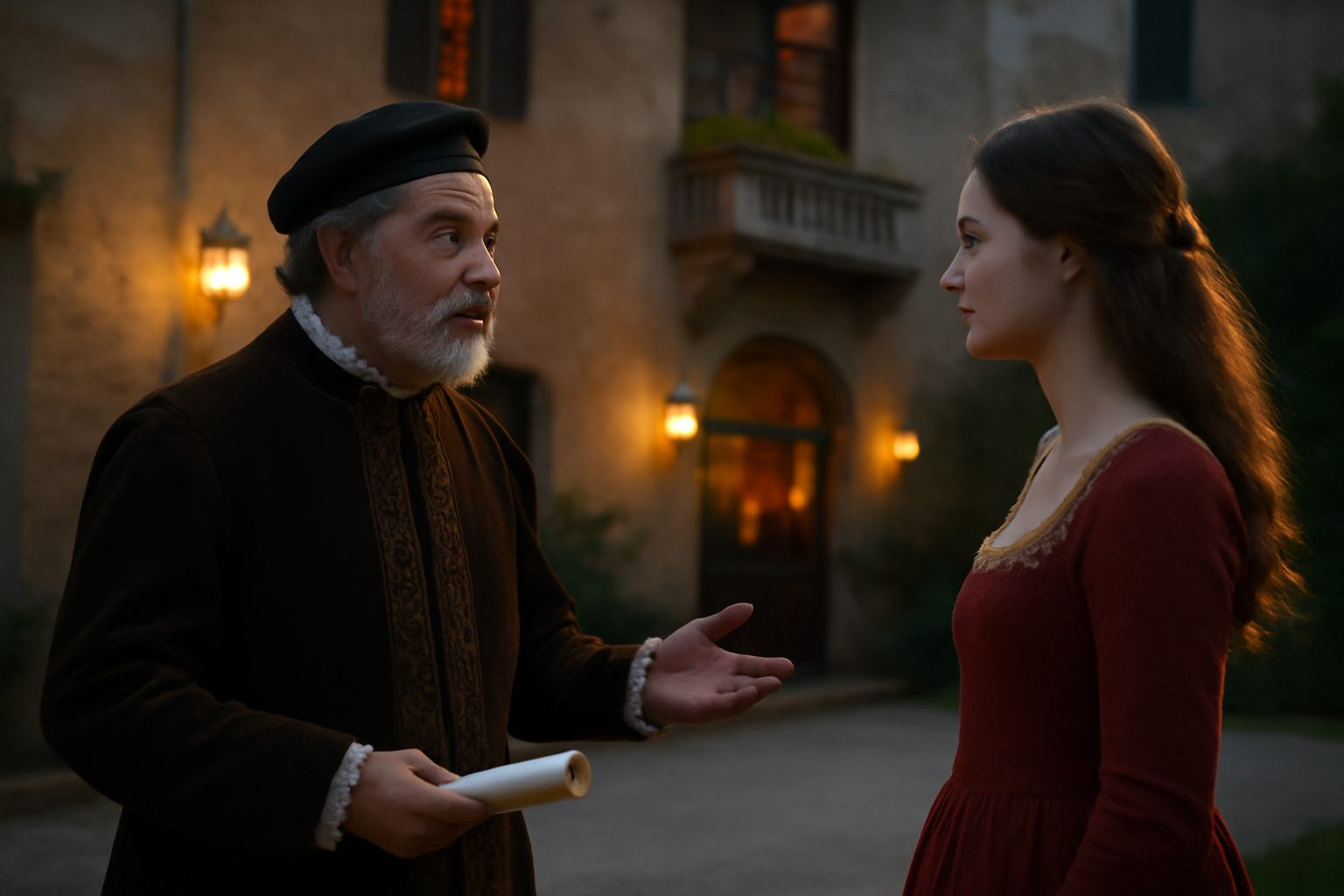
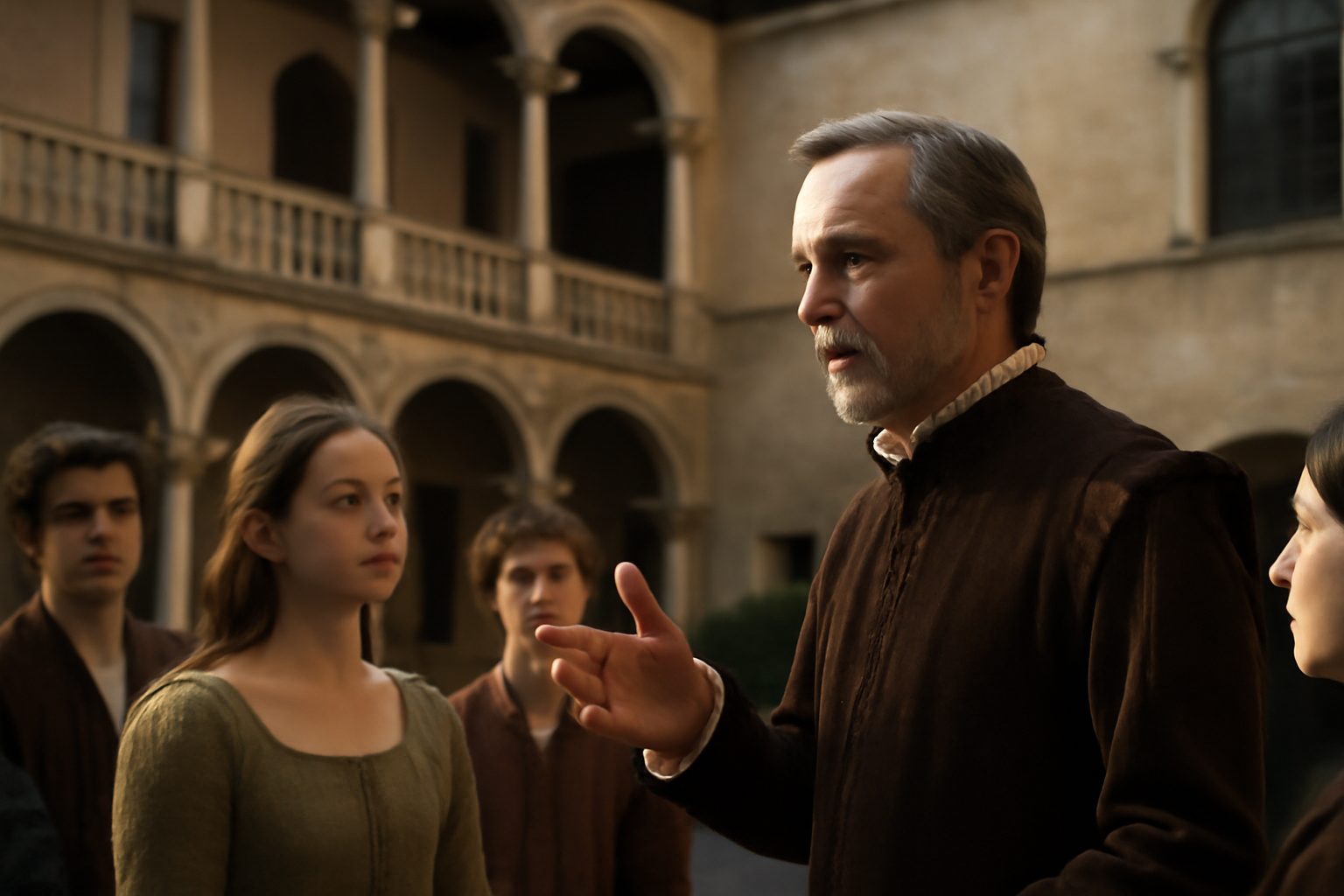
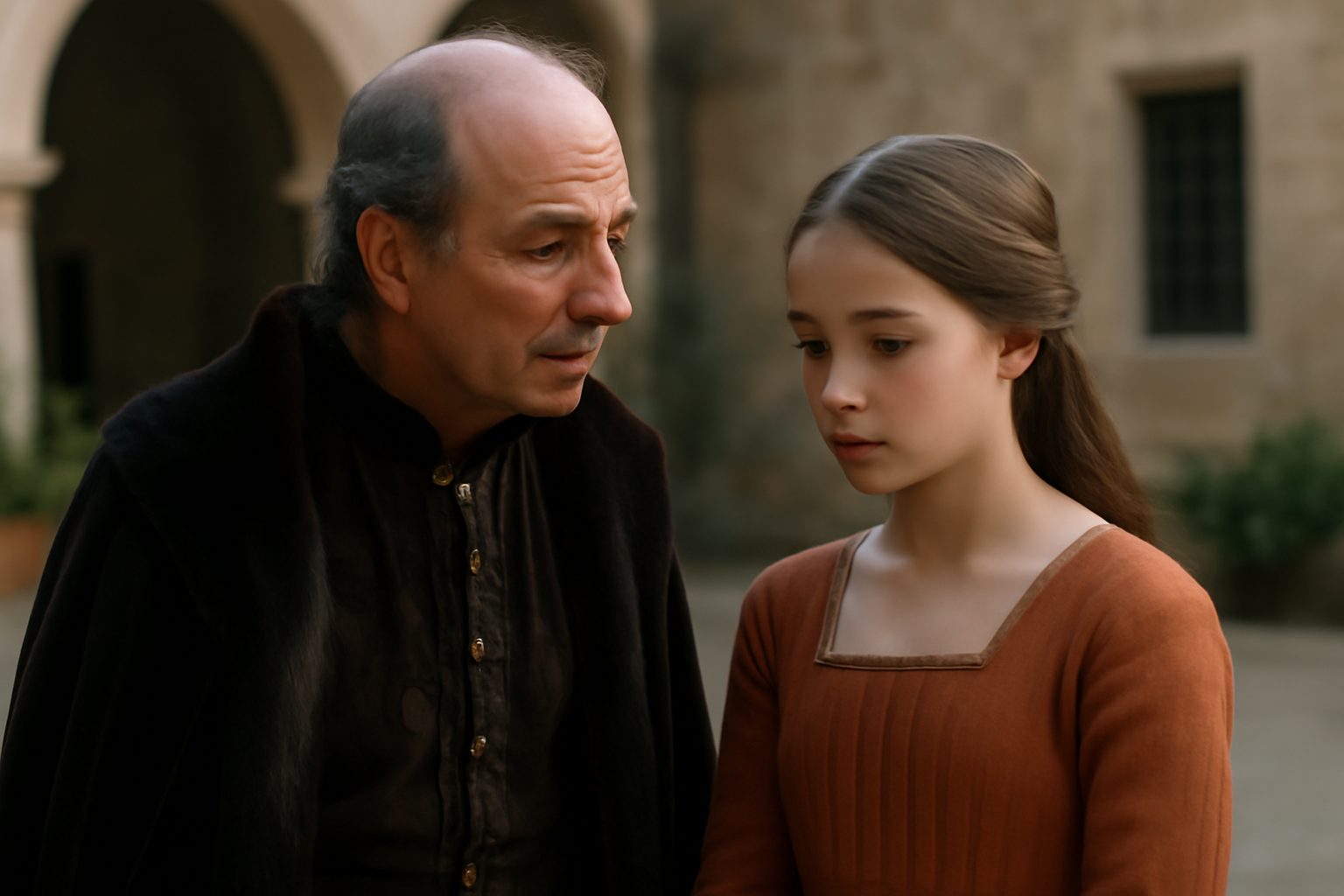
In Act 1, Scene 2 of Romeo and Juliet, a servant of the Capulet household encounters Romeo and Benvolio on the streets of Verona. Overwhelmed by his task of delivering invitations to a Capulet feast, the servant asks Romeo for help, unaware that he is a Montague. This brief exchange highlights the casual interactions between characters from feuding families, foreshadowing the tensions to come.
Servant: "God gi' god-den. I pray, sir, can you read?"
In modern day english, we would say:
God give you good evening. Tell me, sir, do you know how to read?
Frequently Asked Questions
What does the servant ask the person he meets in this scene?
The servant asks if the person can read.
Connections to other verses:
Connections to "God gi' god-den. I pray, sir, can you read?"
This line, spoken by the illiterate servant to Romeo, initiates a crucial exchange that sets the plot in motion. It connects thematically and narratively to several other verses in the scene.
Literacy and the Invitation List
The servant's inability to read the guest list for Capulet's feast (/romeo-and-juliet/one/1-2/act-1-scene-2-59/) directly leads him to seek assistance. This connects to his earlier frustration in /romeo-and-juliet/one/1-2/act-1-scene-2-44/, where he states he "can never find what names the writing" contains, emphasizing his struggle. Romeo's response, "Stay, fellow; I can read", resolves this dilemma and allows the plot to advance.
Capulet's Feast and Fate
By reading the list, Romeo learns of the feast at "this same ancient feast of Capulet's", where he is encouraged to "Go thither; and, with unattainted eye" compare Rosaline to other beauties (/romeo-and-juliet/one/1-2/act-1-scene-2-87/). This accidental discovery becomes the catalyst for Romeo and Juliet's meeting, fulfilling Capulet's earlier declaration that "Such as I love; and you, among the store" are invited (/romeo-and-juliet/one/1-2/act-1-scene-2-22/).
Servant's Character and Humor
The servant's humorous and earnest nature is evident in his initial greeting, which mirrors his later exclamation "Whipp'd and tormented and--God-den, good fellow", showcasing Shakespeare's use of commoners for comic relief. His puzzled question "pray, can you read any thing you see?" further emphasizes his illiteracy and genuine curiosity.
Irony and Dramatic Foreshadowing
Romeo's assistance, born from the servant's question, ironically leads him toward his fateful encounter with Juliet, contrasting with his earlier despair over Rosaline. This moment underscores the theme of chance versus destiny, as a simple request for literacy alters the course of the tragedy.