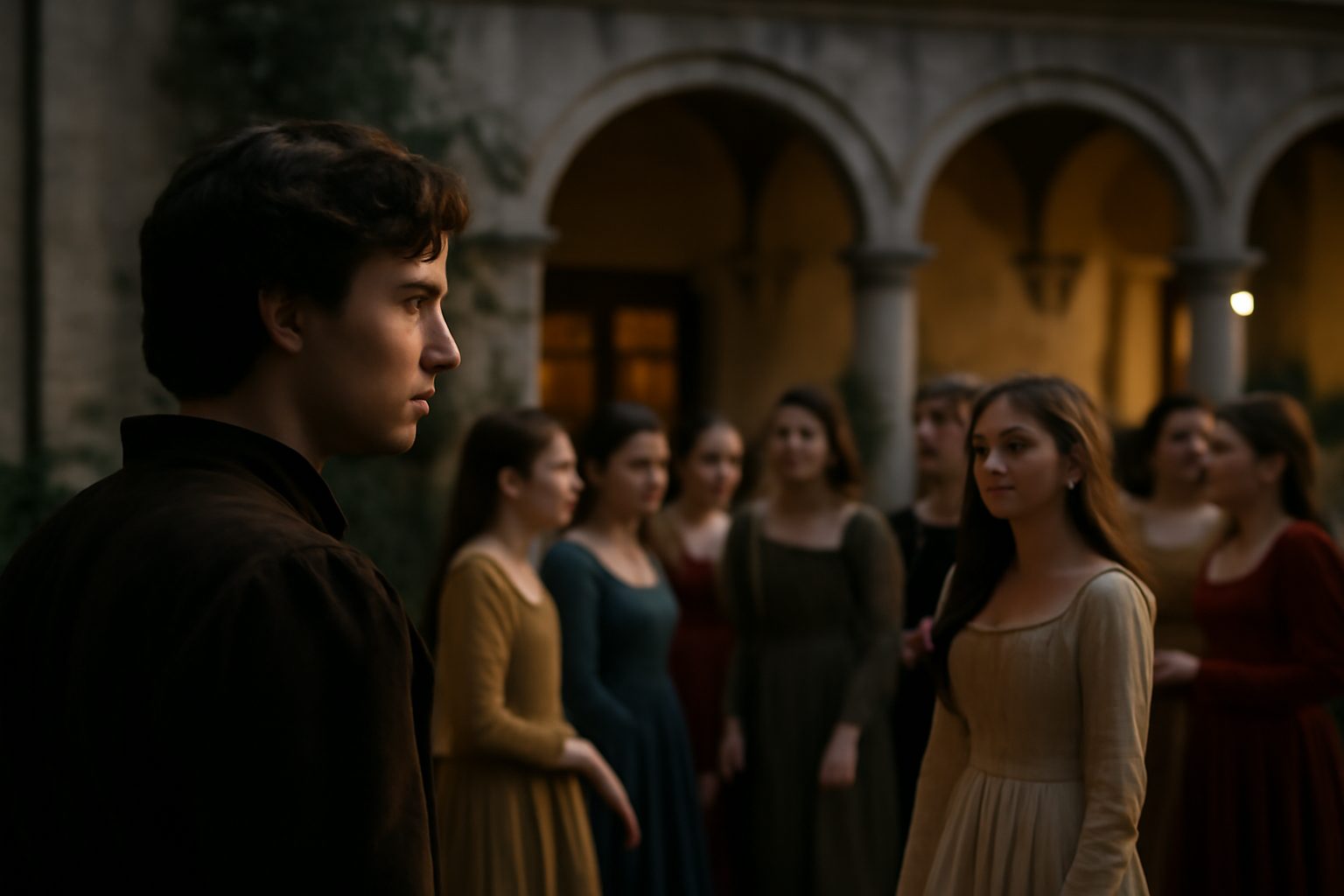
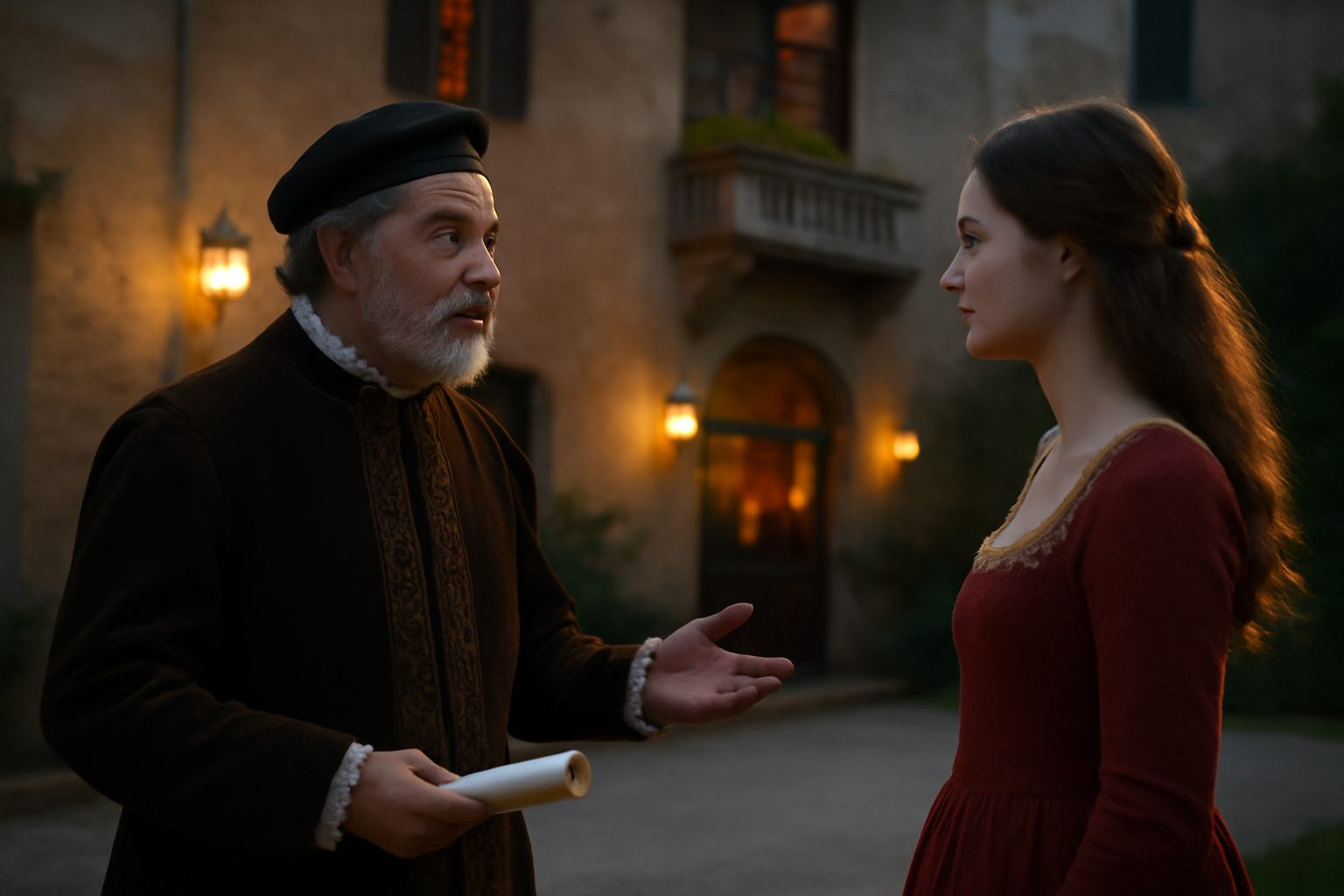
In Act 1, Scene 2 of Romeo and Juliet, Romeo and his cousin Benvolio encounter a Capulet servant who is struggling to read a list of names. The servant, unable to decipher the handwriting, asks for their help, prompting Romeo to confidently offer his assistance. This brief exchange highlights Romeo's educated background and sets the stage for his fateful decision to attend the Capulet feast, where he will first meet Juliet.
Romeo: "Stay, fellow; I can read."
In modern day english, we would say:
Hold on, man; I can read that myself.
Frequently Asked Questions
What does Romeo say to the servant in Act 1 Scene 2?
Romeo tells the servant to wait because he can read.
Connections to other verses:
Connections to "Stay, fellow; I can can read."
The line "Stay, fellow; I can read." is spoken by Romeo when he encounters the Capulet servant who is struggling to read the guest list for the feast. This moment serves as a crucial turning point in the scene, linking to several other verses that develop themes of literacy, fate, and social interaction.
Literacy and Communication
Romeo's declaration of literacy directly responds to the servant's earlier question in "God gi' god-den. I pray, sir, can you read?", highlighting the importance of written communication in a society where not everyone is educated. This exchange underscores the social divide and the servant's reliance on others, as emphasized in "writ, and can never find what names the writing", which illustrates his frustration.
Fate and the Feast
By reading the list, Romeo learns of the Capulet feast, a pivotal event that leads him to meet Juliet. This connects to "Sups the fair Rosaline whom thou so lovest", as Romeo initially plans to attend for Rosaline, but fate intervenes. The servant's task, noted in "sent to find those persons whose names are here", becomes the mechanism that draws Romeo into the Capulet world, altering his destiny.
Social Invitations and Interactions
The guest list Romeo reads includes many Verona notables, referenced in verses like "County Anselme and his beauteous sisters" and "uncle Capulet, his wife and daughters", setting the stage for the party where key interactions occur. The inclusive nature of the feast is hinted in "of Montagues, I pray, come and crush a cup of wine", though tensions persist.
Contrast with Benvolio's Advice
Romeo's decision to attend the feast after reading the list aligns with Benvolio's earlier advice in "Compare her face with some that I shall show", urging Romeo to move past his infatuation with Rosaline. This moment of literacy thus catalyzes the plot, leading to the transformative events that follow.