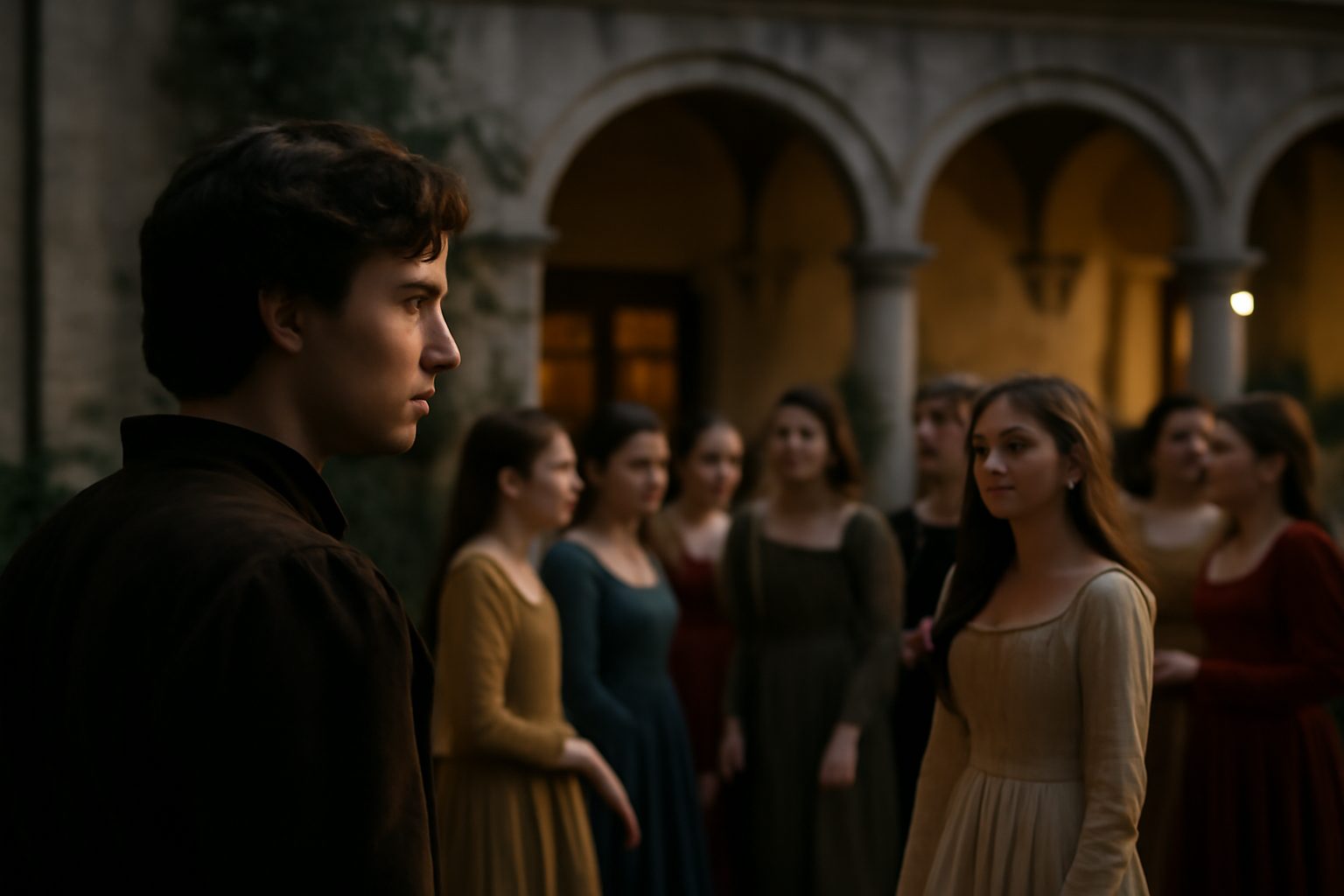
In Act 1, Scene 2 of Romeo and Juliet, Paris discusses with Capulet his desire to marry Juliet. As Capulet prepares for a feast, he lists the guests he has invited, including Signior Martino and his family, to showcase the social gathering's importance. This brief mention highlights the bustling, aristocratic world of Verona that surrounds the central love story.
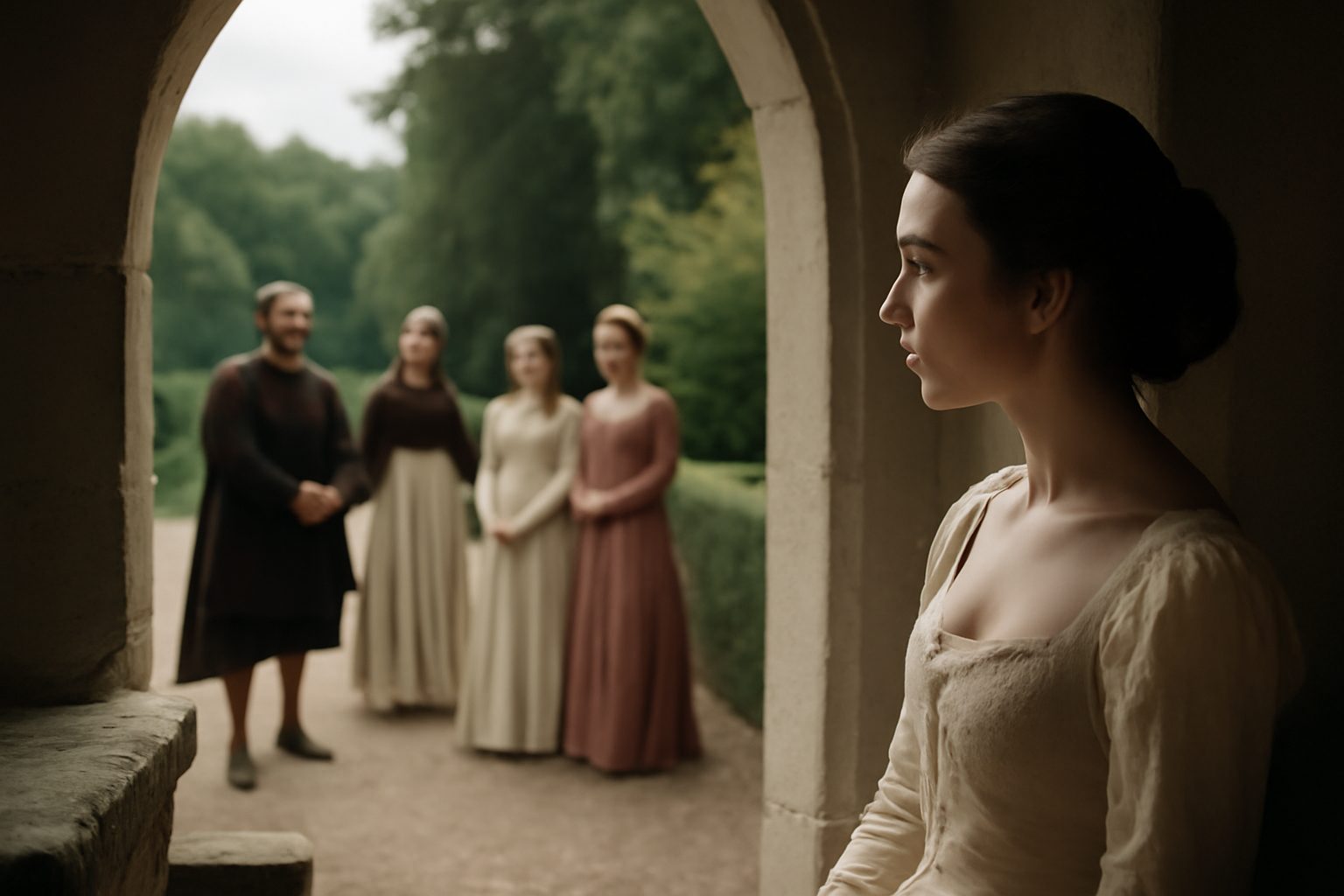
Romeo: "Signior Martino and his wife and daughters;"
In modern day english, we would say:
Mr. Martino and his wife and daughters.
Frequently Asked Questions
Who is Romeo mentioning in this line from Act 1, Scene 2?
Romeo is mentioning Signior Martino, his wife, and their daughters.
Connections to other verses:
Connections to the Guest List
The mention of "Signior Martino and his wife and daughters" (/romeo-and-juliet/one/1-2/act-1-scene-2-66/) is part of a larger list of guests invited to Capulet's feast. This list includes other notable figures such as "County Anselme and his beauteous sisters" (/romeo-and-juliet/one/1-2/act-1-scene-2-67/), "Rosaline; Livia; Signior Valentio and his cousin" (/romeo-and-juliet/one/1-2/act-1-scene-2-71/), and "Tybalt, Lucio and the lively Helena" (/romeo-and-juliet/one/1-2/act-1-scene-2-72/). These entries collectively emphasize the social breadth and significance of the event, setting the stage for the encounters that follow.
Connections to the Feast and Invitations
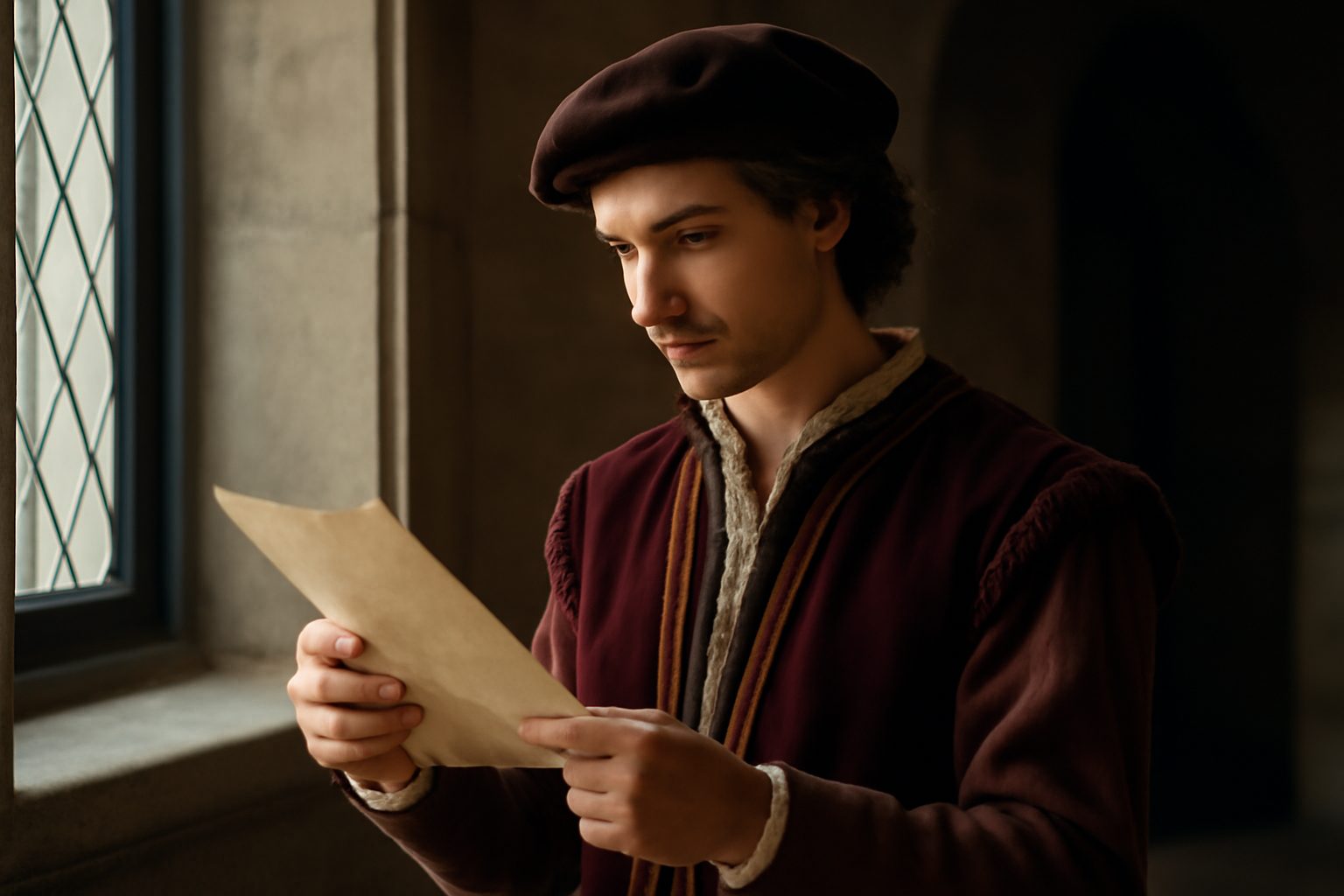
Capulet's declaration, "This night I hold an old accustom'd feast" (/romeo-and-juliet/one/1-2/act-1-scene-2-20/), and his invitation, "Whereto I have invited many a guest" (/romeo-and-juliet/one/1-2/act-1-scene-2-21/), provide context for the inclusion of Signior Martino and his family. The servant's task to "find those persons out whose names are here writ" (/romeo-and-juliet/one/1-2/act-1-scene-2-43/) directly leads to the delivery of invitations to all listed, including Martino's household.
Connections to Themes of Youth and Beauty
The presence of "daughters" in Martino's family aligns with the scene's focus on young women, such as Juliet, whom Capulet describes as "the hopeful lady of my earth" (/romeo-and-juliet/one/1-2/act-1-scene-2-15/). The feast is intended to showcase "fresh female buds" (/romeo-and-juliet/one/1-2/act-1-scene-2-29/), reinforcing the idea that Verona's youth, including Martino's daughters, are central to the social and romantic dynamics at play.
Link to the Servant's Task
The servant's confusion over the guest list—"writ, and can never find what names the writing" (/romeo-and-juliet/one/1-2/act-1-scene-2-44/)—highlights the practical challenge of delivering invitations to all named, including Signior Martino. This moment of comic relief contrasts with the gravity of the feast's implications for the plot.
Connection to Romeo's Perspective
Though Romeo is initially disinterested, Benvolio urges him to "Compare her face with some that I shall show" (/romeo-and-juliet/one/1-2/act-1-scene-2-88/) at the feast, implying that Martino's daughters and other young women present could sway Romeo's affections away from Rosaline.