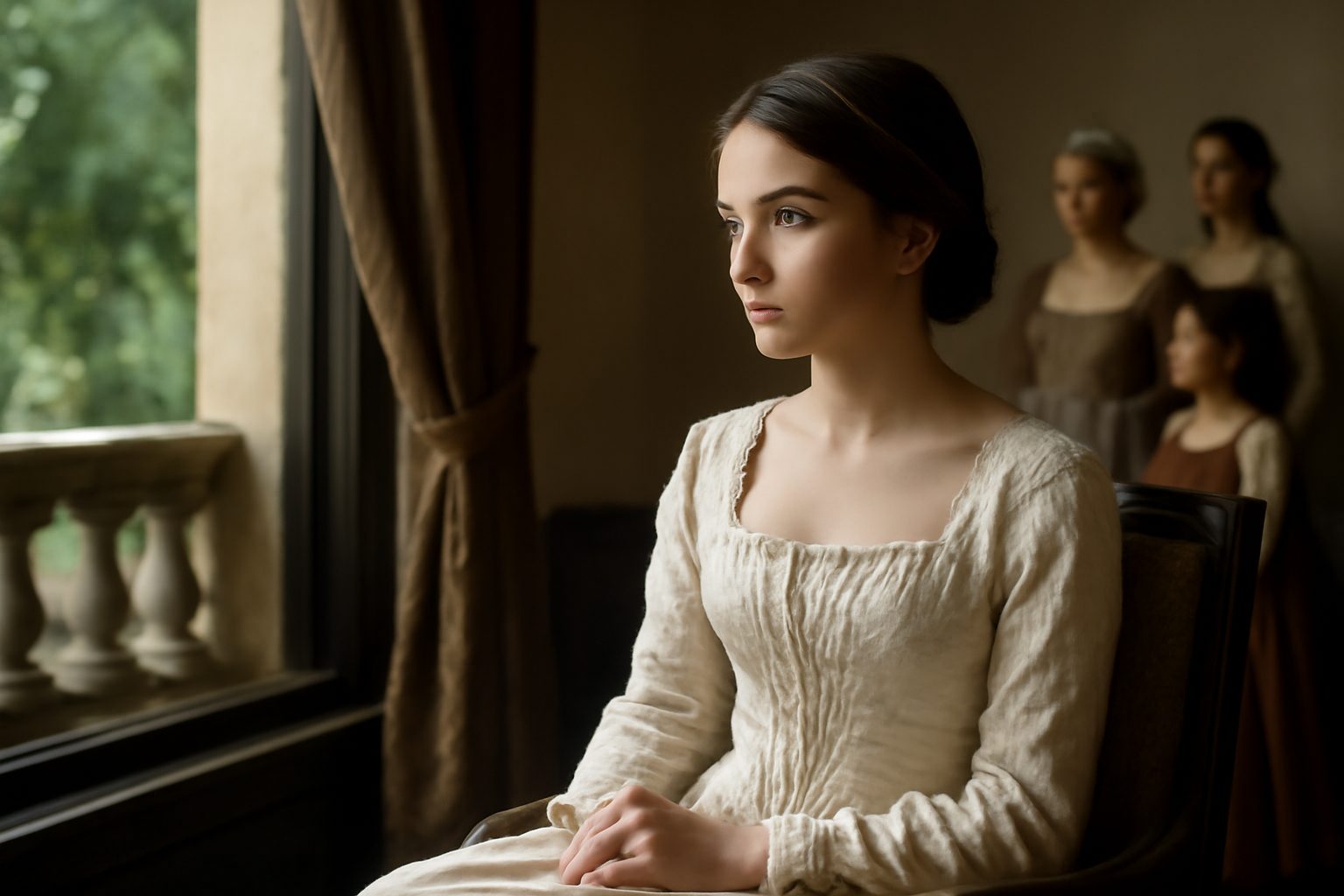
In Act 1, Scene 2 of Romeo and Juliet, Paris presses Capulet for an answer regarding his proposal to marry Juliet. Capulet, hesitant to rush his daughter into marriage, responds with this single dismissive word, brushing off Paris's persistence. The brief reply underscores Capulet's reluctance and sets the stage for the tension between parental authority and youthful desire.
Servant: "Up."
In modern day english, we would say:
Get up.
Frequently Asked Questions
What does the servant say in Act 1 Scene 2 of Romeo and Juliet?
The servant says Up.
Connections to other verses:
Connections to Other Verses in Act 1 Scene 2
Immediate Context and Dialogue Flow
The verse "Up" is part of a rapid exchange between the Servant and Romeo, following Romeo's question "Whither?" and preceding the Servant's inquiry "Whose house?". This sequence establishes the Servant's urgency and confusion, linking directly to his earlier task of "Through fair Verona; find those persons out" from Capulet's list.
Literary and Thematic Links
The brevity of "Up" contrasts with the elaborate descriptions elsewhere in the scene, such as Capulet's invitation to "This night I hold an old accustom'd feast" and his promise of "Earth-treading stars that make dark heaven light". It also echoes the Servant's earlier frustrated admission: "writ, and can never find what names the writing", highlighting his simple, direct manner amid the scene's poetic complexity.
Character and Plot Development
This terse command propels Romeo toward the fateful feast where he will see Juliet, fulfilling Benvolio's advice to "Go thither; and, with unattainted eye" and compare Rosaline to others. It sets in motion the events that lead to Romeo's exclamation "One fairer than my love! the all-seeing sun" upon seeing Juliet, thus linking the Servant's mundane instruction to the play's central romantic turning point.