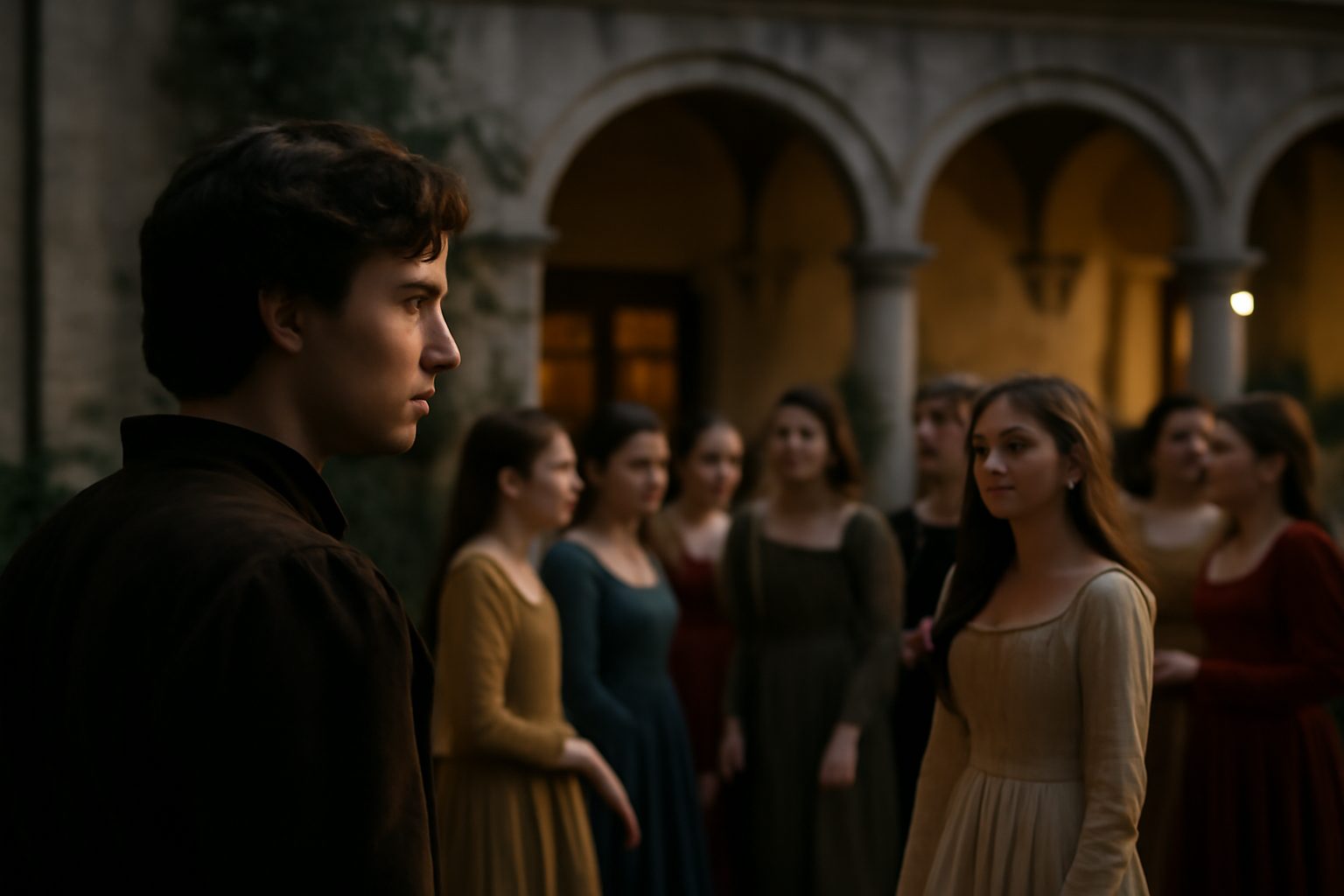
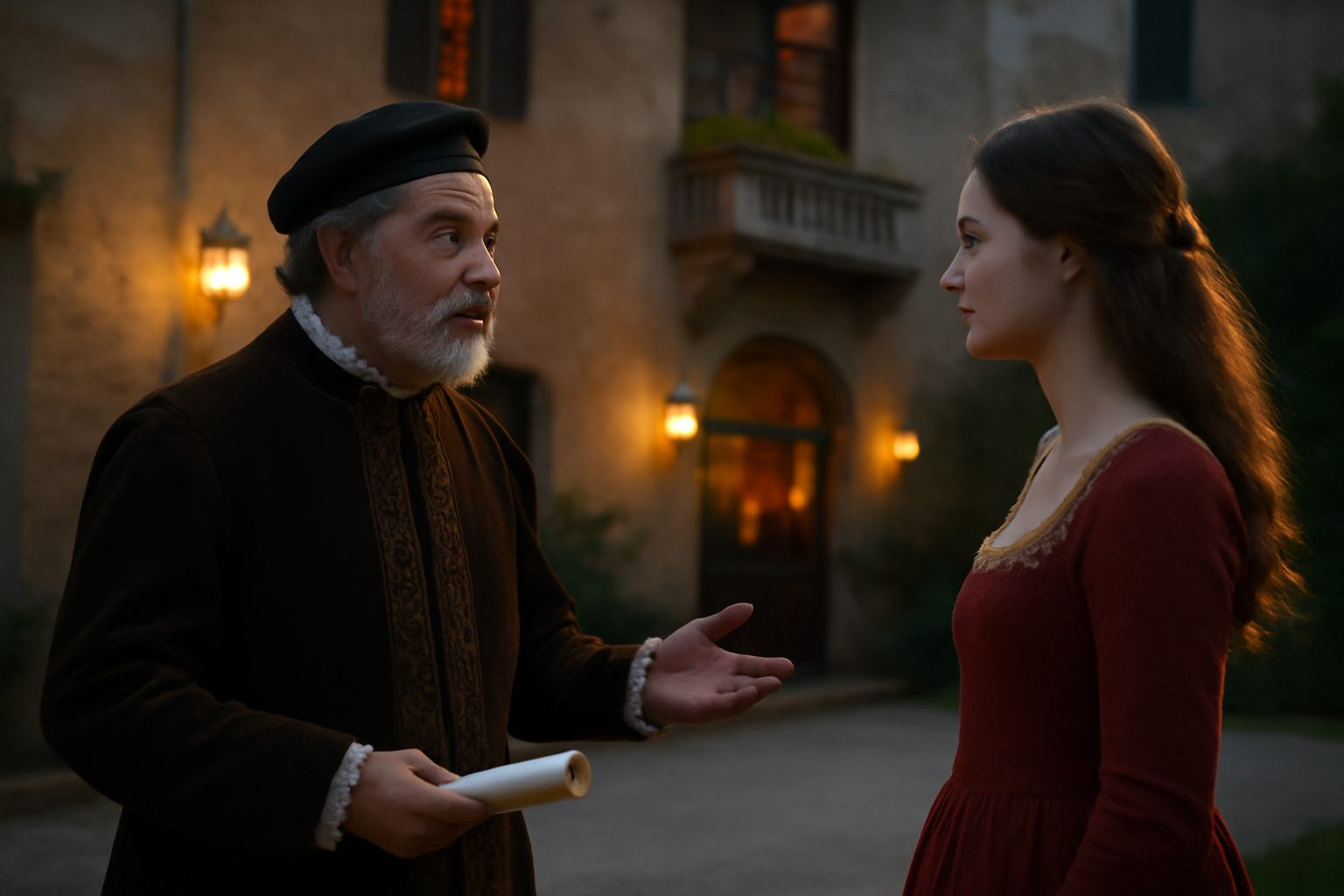
In Act 1, Scene 2 of Romeo and Juliet, Paris, a nobleman, asks Capulet for permission to marry Juliet. Capulet hesitates, citing Juliet's young age, but invites Paris to a feast to win her affection. The line in question is Paris's response, seeking clarification about which household is hosting the event, as he prepares to attend.
Romeo: "Whose house?"
In modern day english, we would say:
Capulet asks which family the servant is from.
Frequently Asked Questions
Who is Romeo asking about when he says 'Whose house?'
Romeo is asking about the Capulet household where the party is being held.
Connections to other verses:
Connections to "Whose house?" in Romeo & Juliet Act 1 Scene 2
The verse "Whose house?" is spoken by the servant, who is seeking clarification about the location of the feast. This question directly ties into the broader context of the scene, where Capulet's household and the upcoming feast are central themes.
Direct Context and Invitations
Earlier in the scene, Capulet mentions "This night I hold an old accustom'd feast," setting the stage for the event. He extends an invitation with "At my poor house look to behold this night," explicitly naming his residence as the venue. The servant's question "Whose house?" arises as he is tasked with delivering invitations, linking to "Through fair Verona; find those persons out" and "Whose names are written there, and to them say," where he is instructed to invite guests on the list.
Identity and Social Context
The question also connects to the theme of social identity and household recognition. The servant later reveals "Now I'll tell you without asking: my master is the great rich Capulet," which answers the query about whose house is hosting. This is further emphasized in "great rich Capulet; and if you be not of the house," highlighting the exclusivity and prestige associated with the Capulet name.
Feast and Gathering
The feast itself is described in "Whereto I have invited many a guest," and the servant's role in facilitating attendance is clear in "My house and welcome on their pleasure stay." The question "Whose house?" thus serves as a practical inquiry within the logistical execution of the event, tying together the invitations, the host's identity, and the social gathering that becomes a pivotal setting in the play.