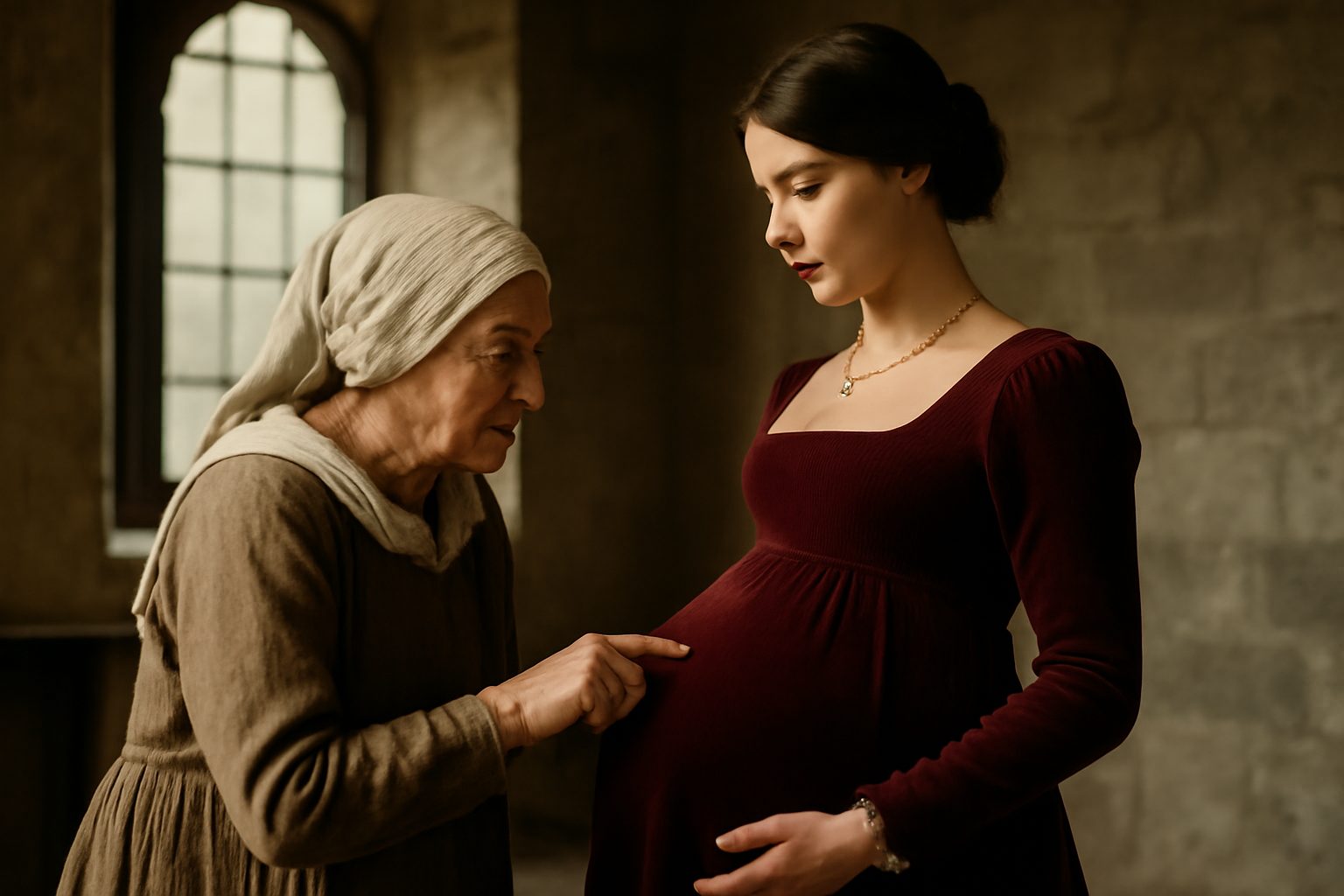
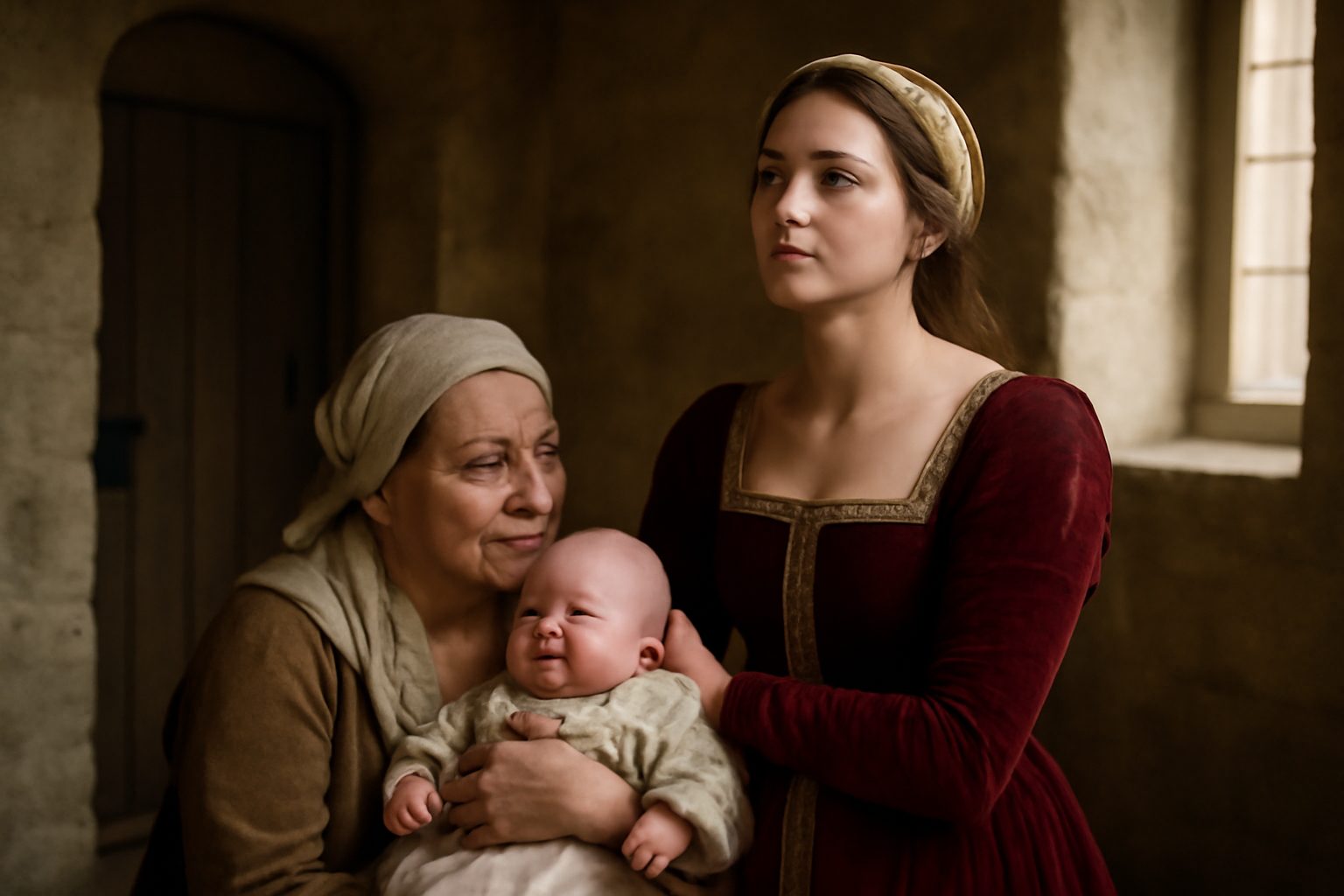
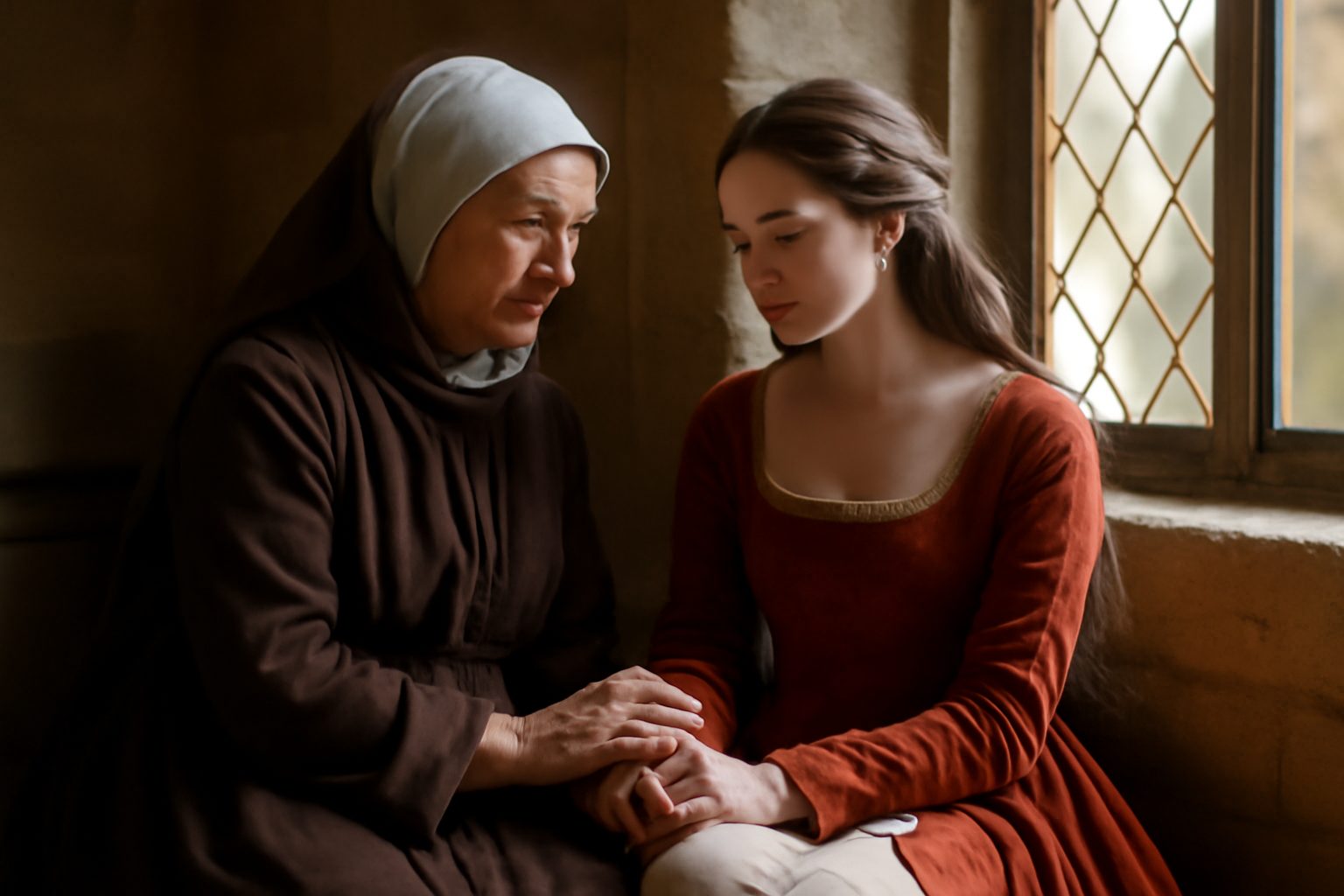
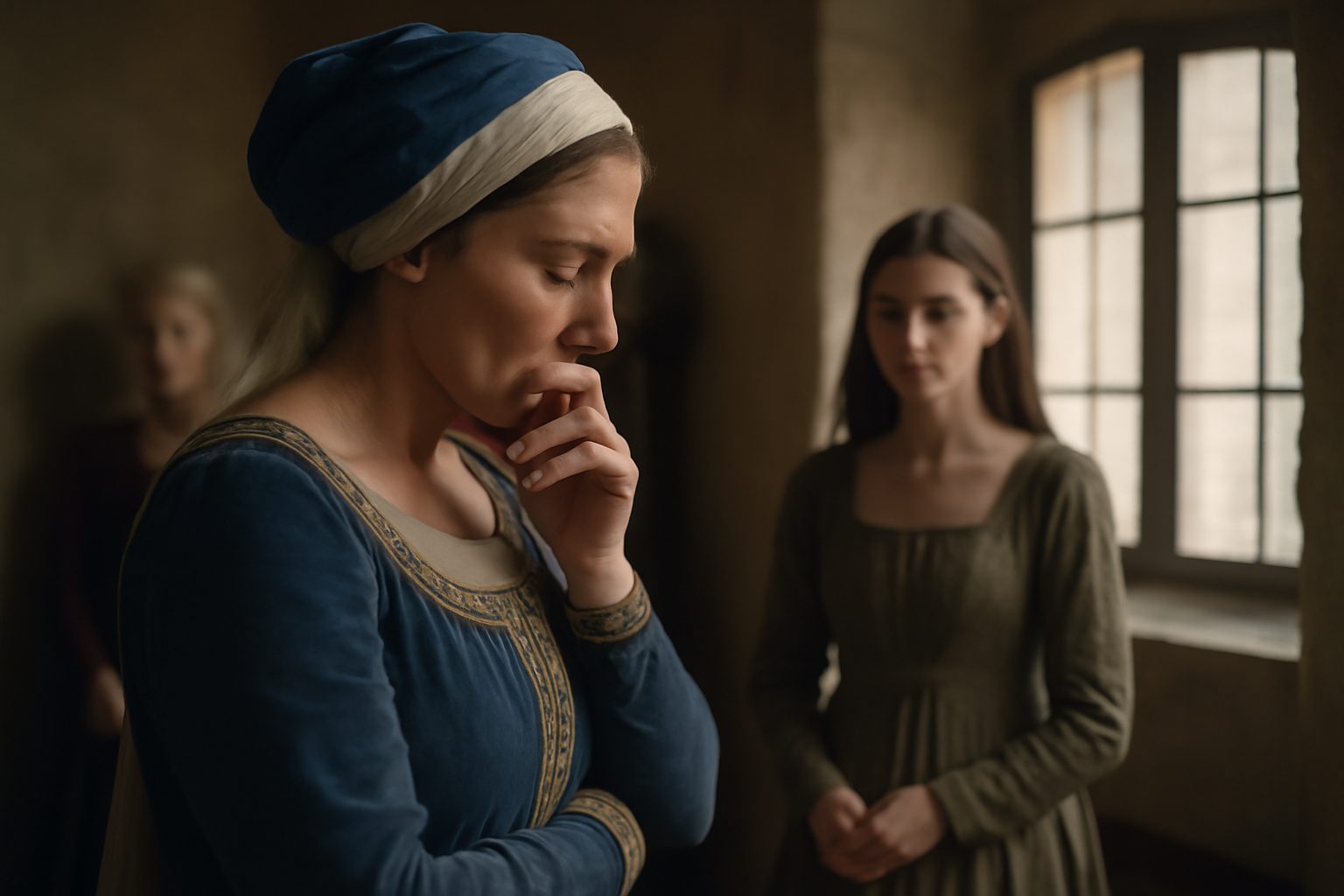
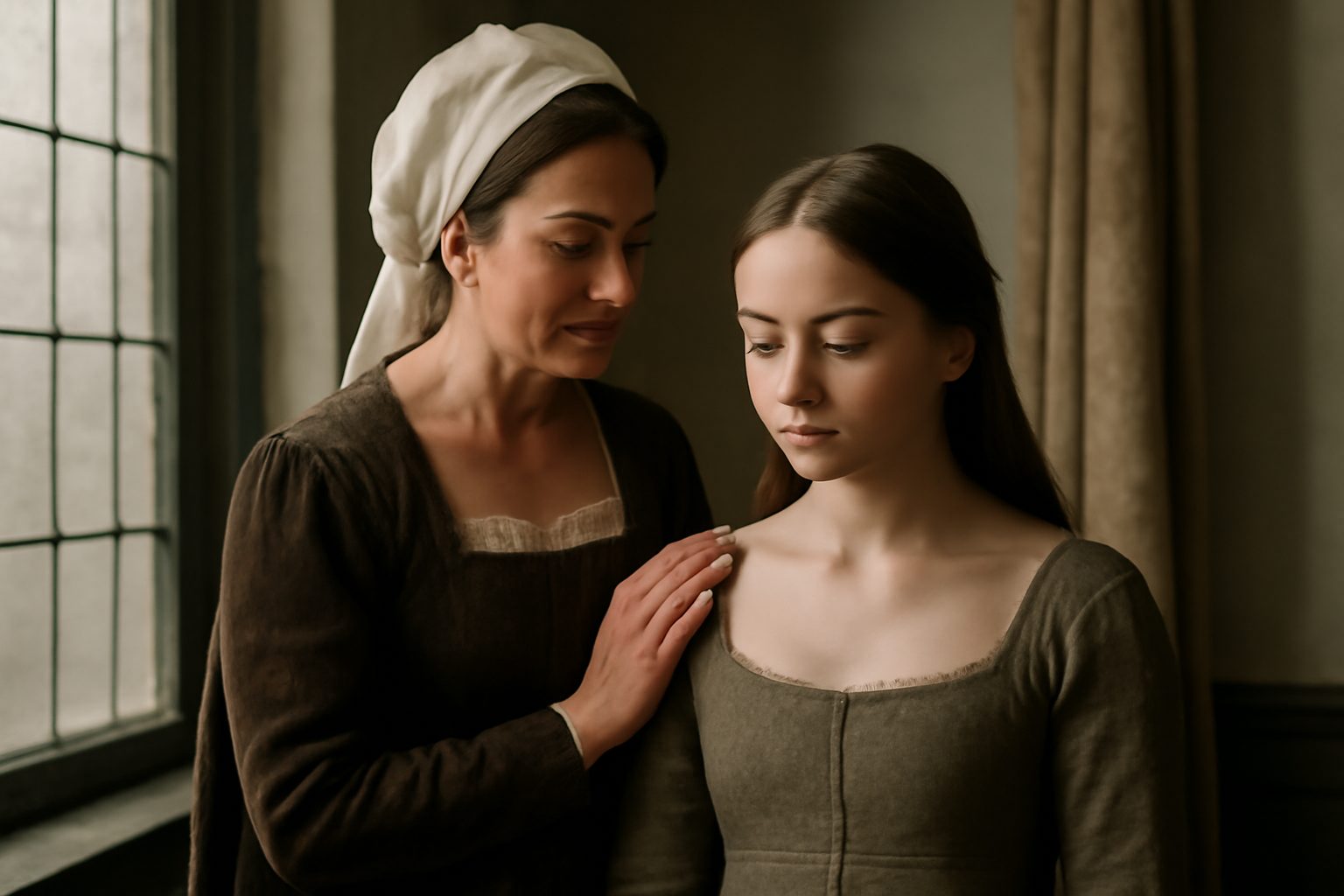
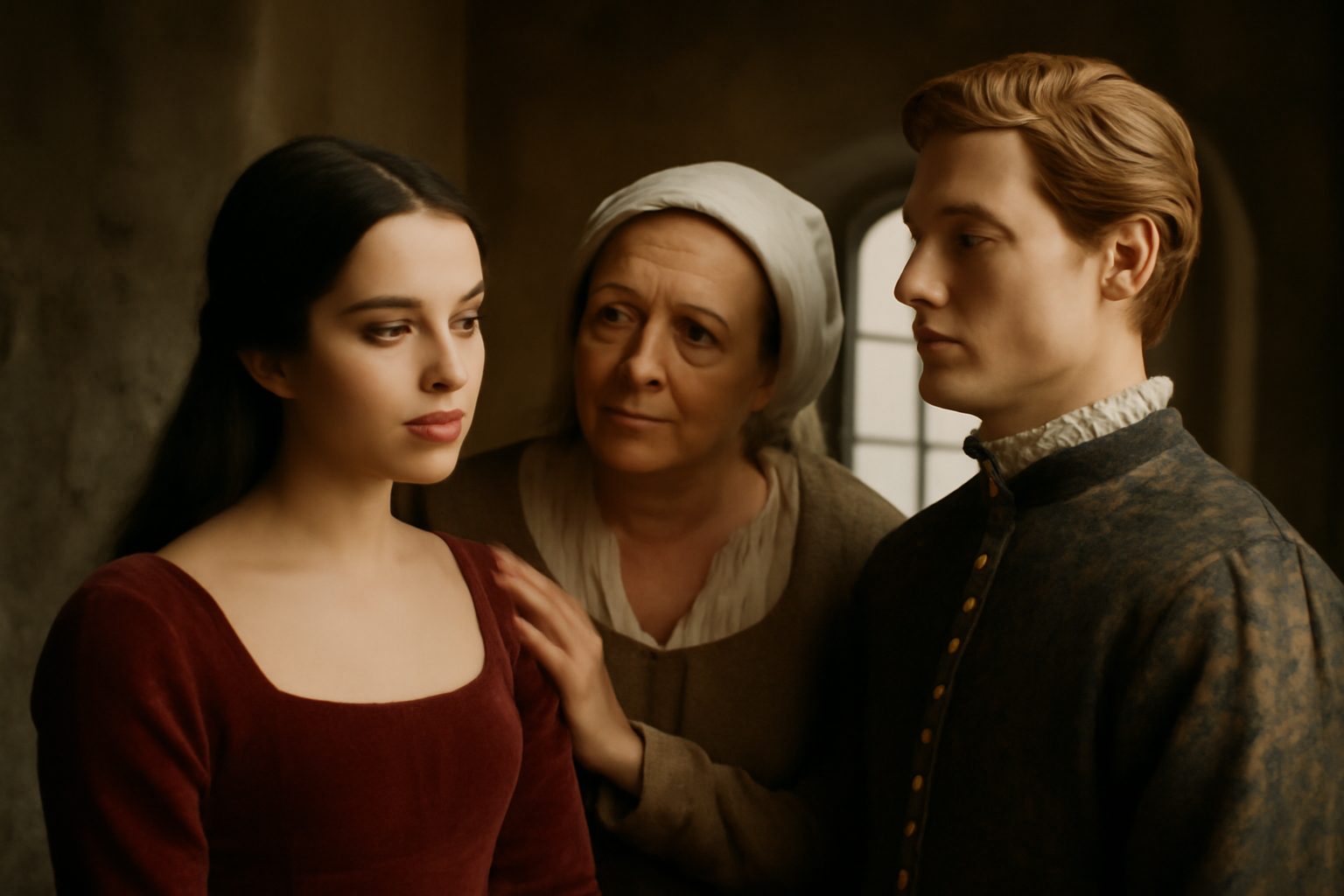
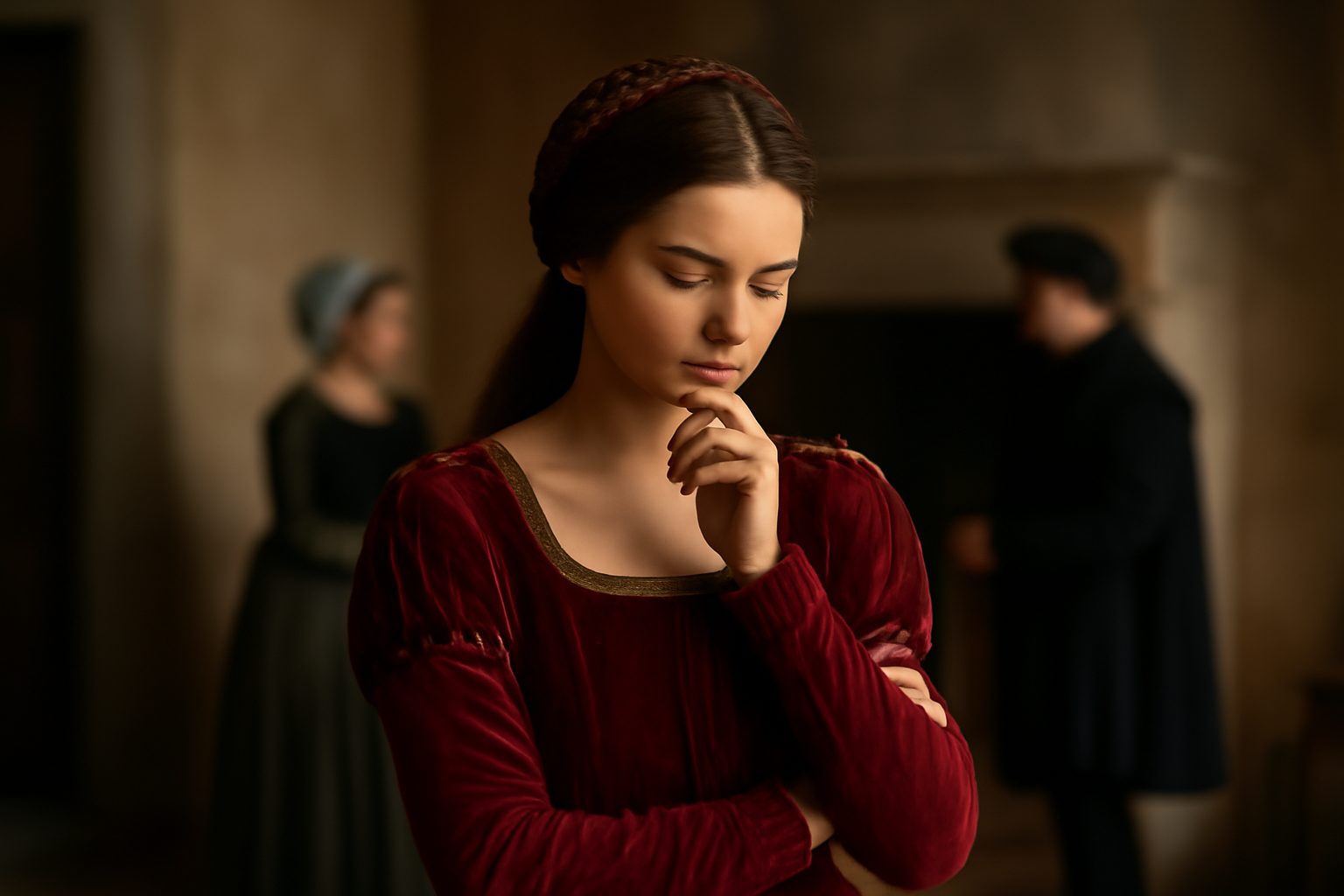
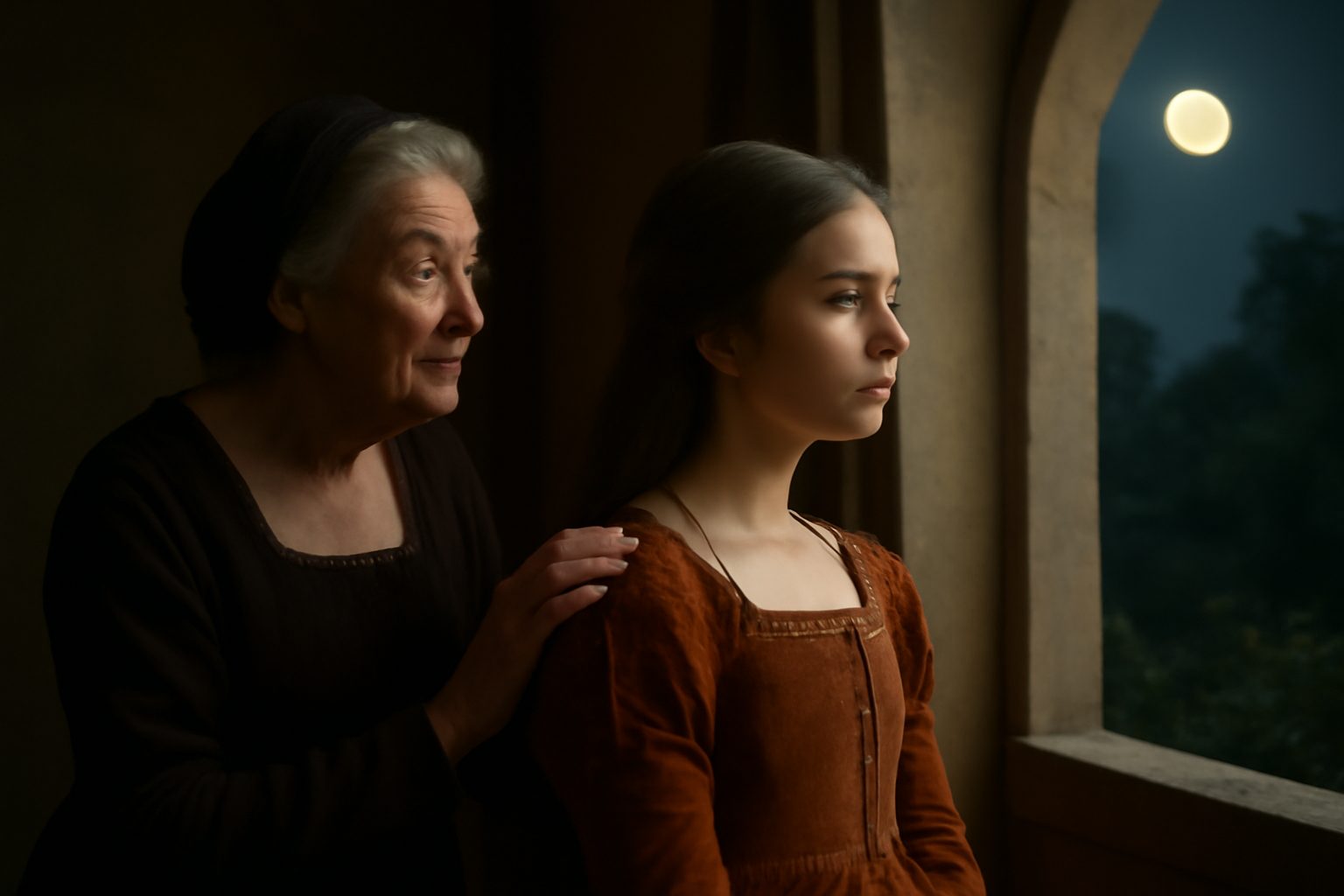
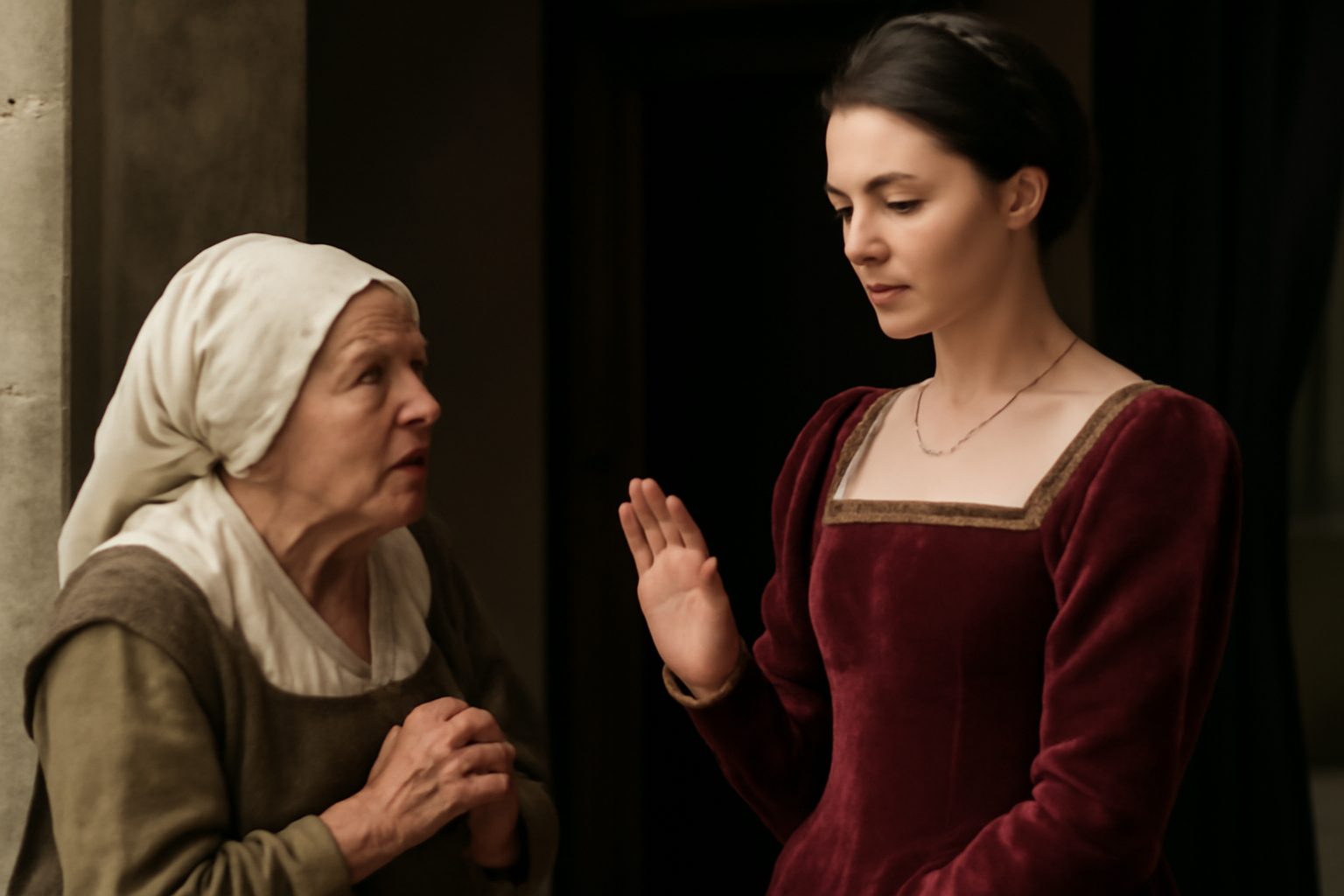
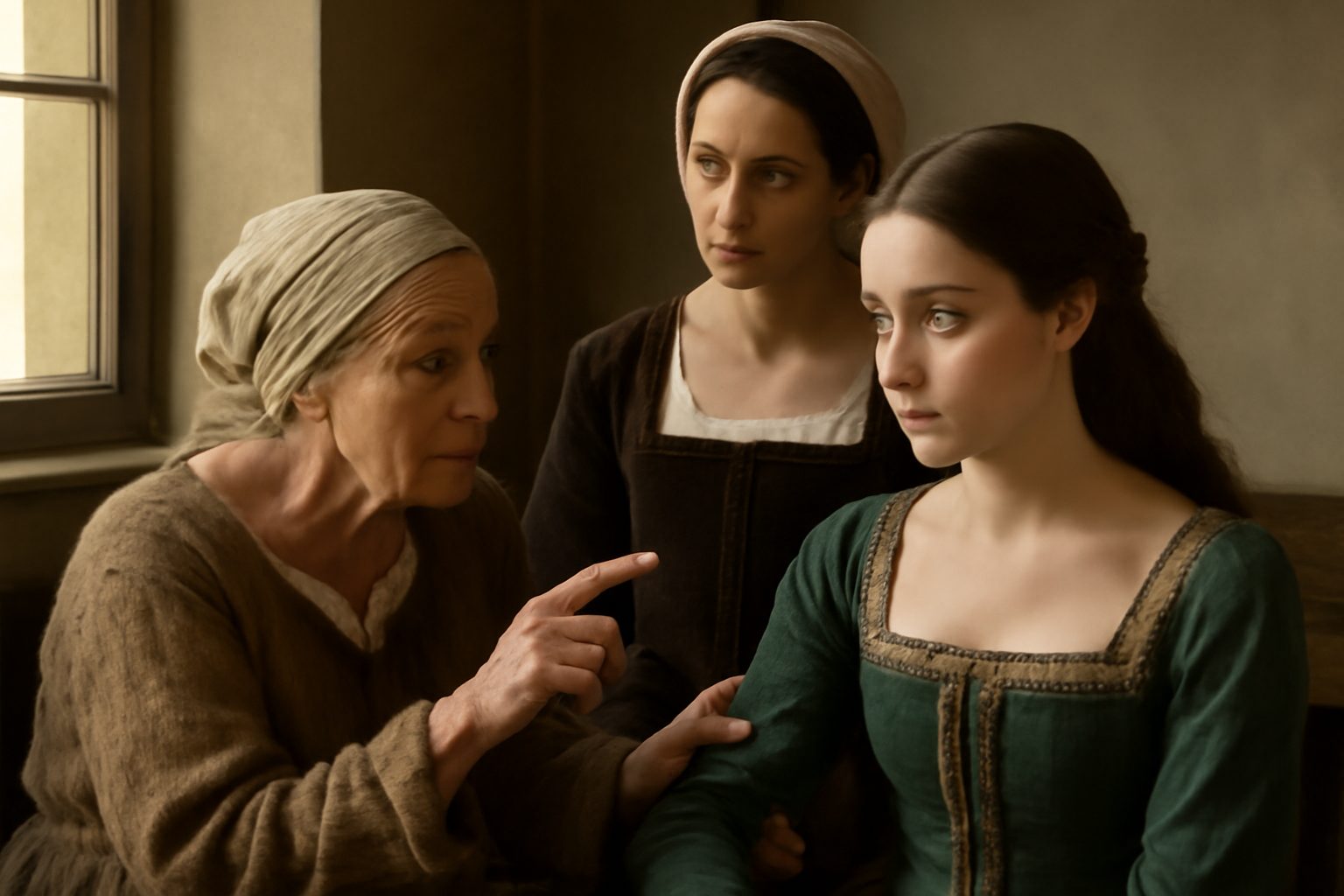
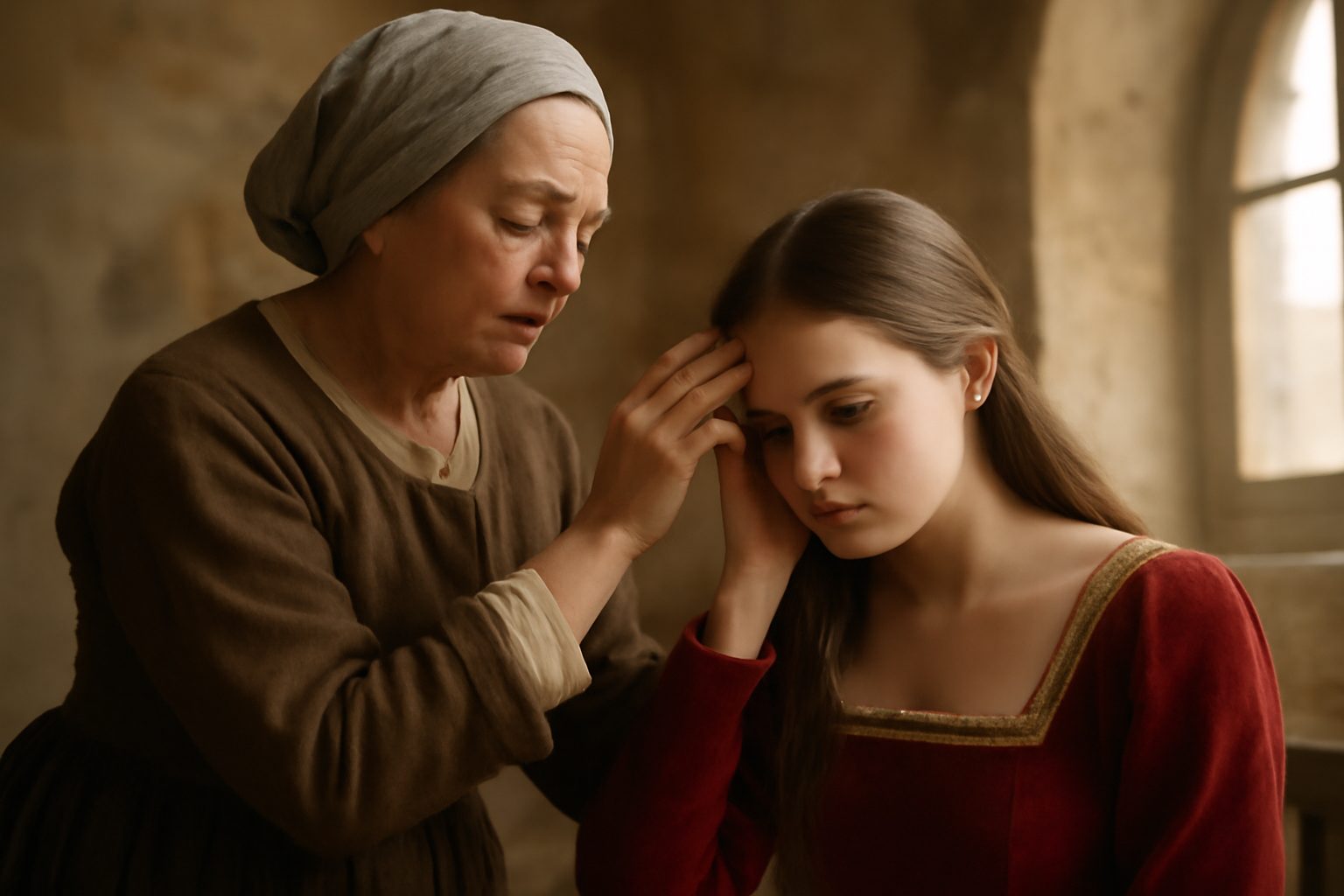
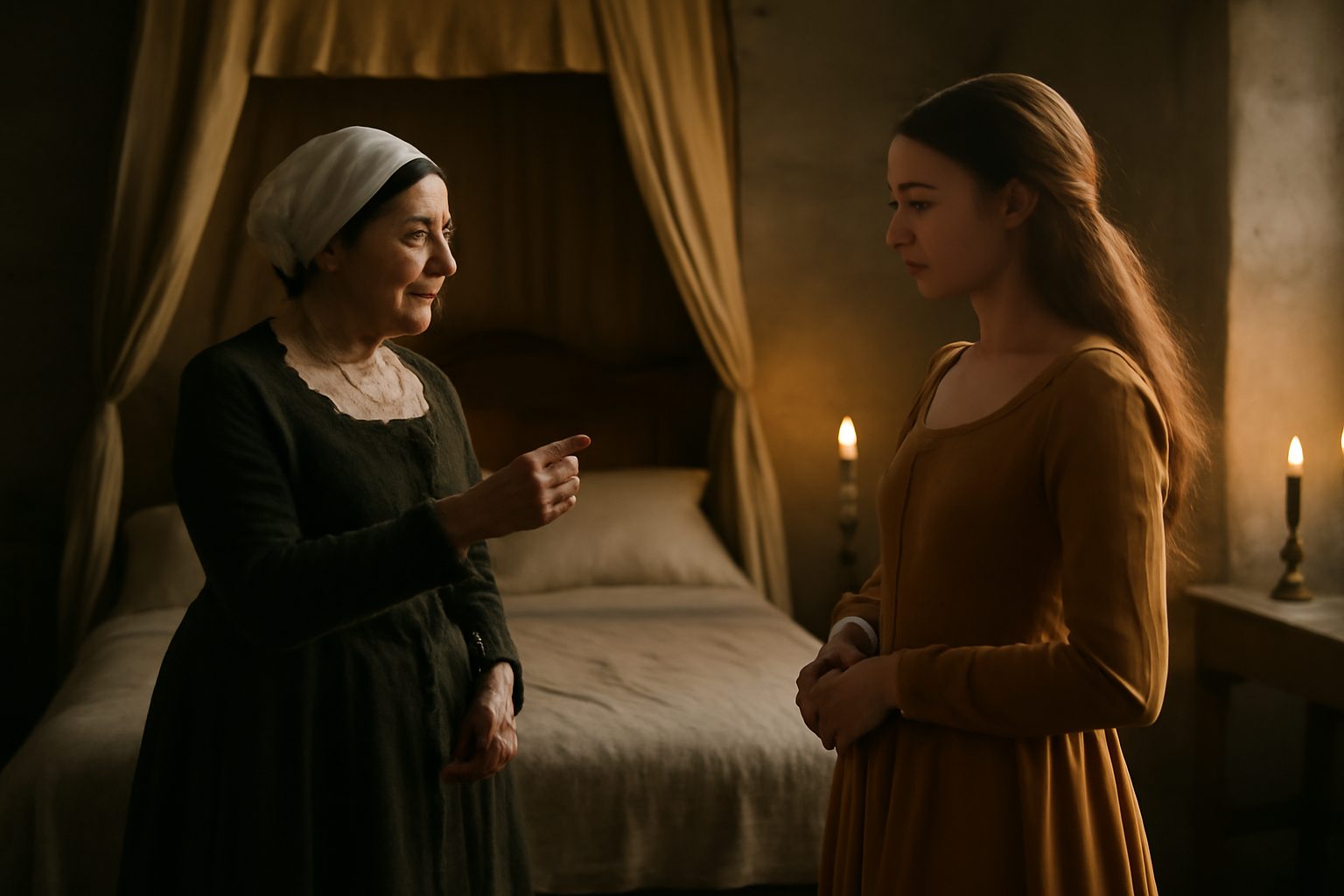
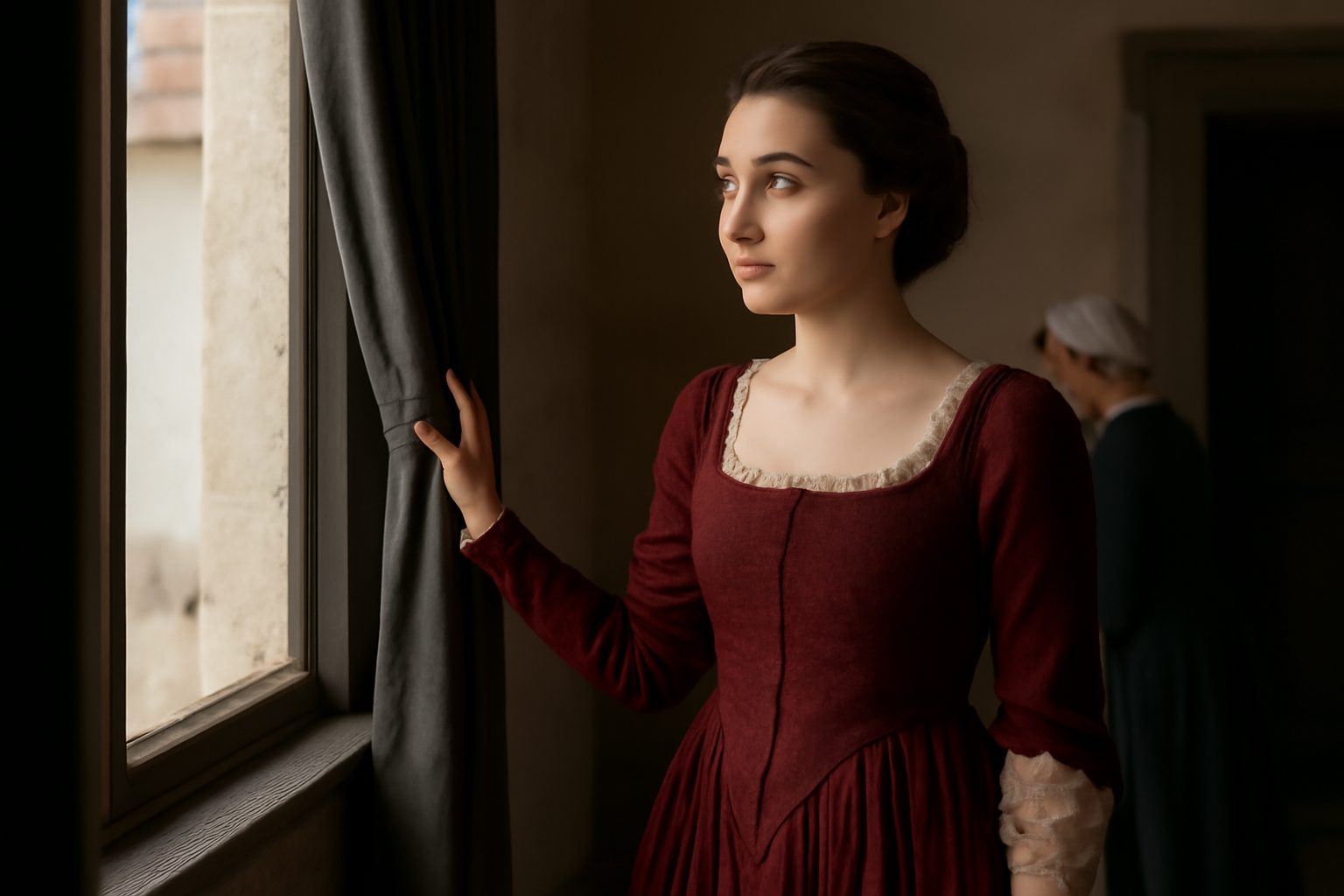
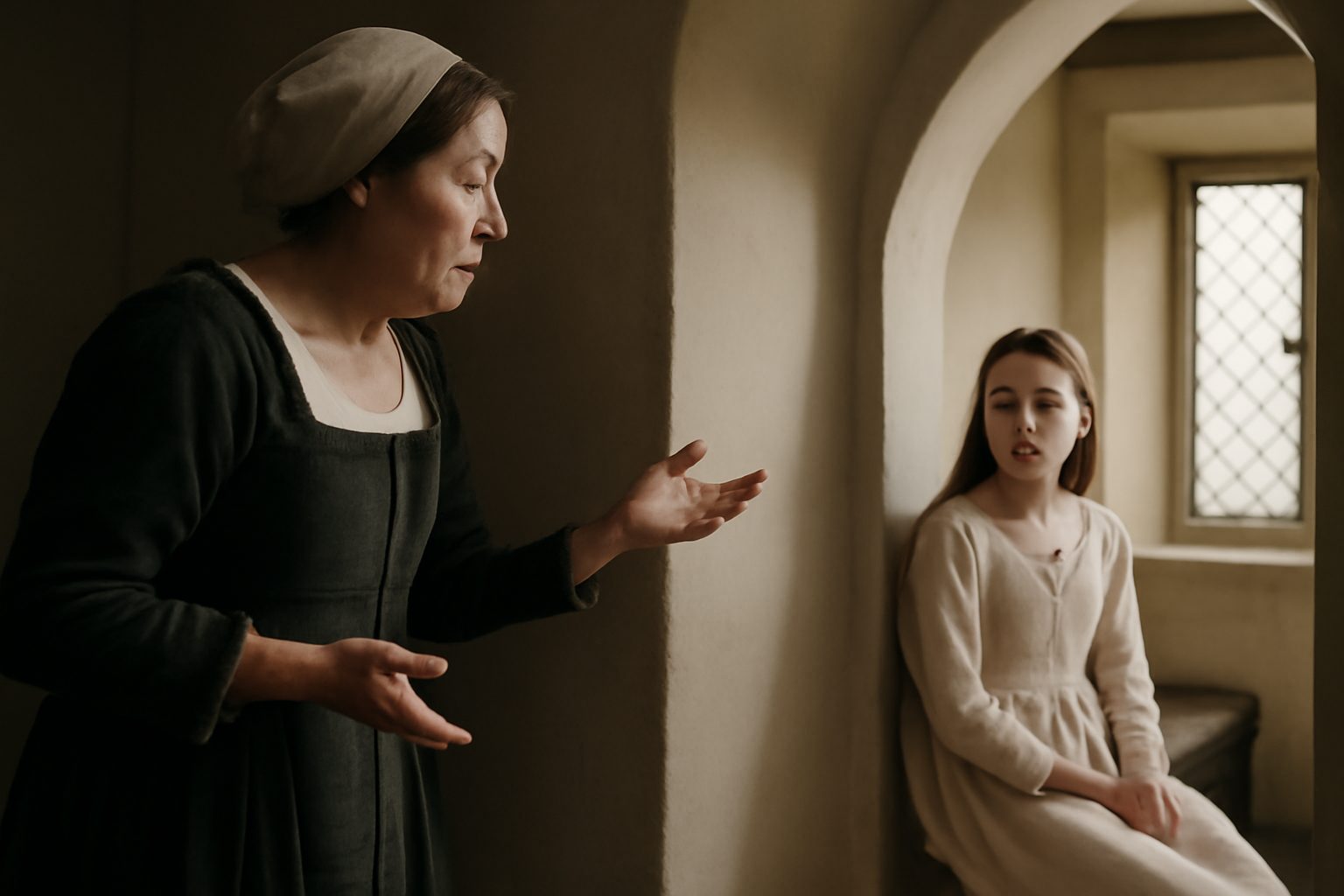
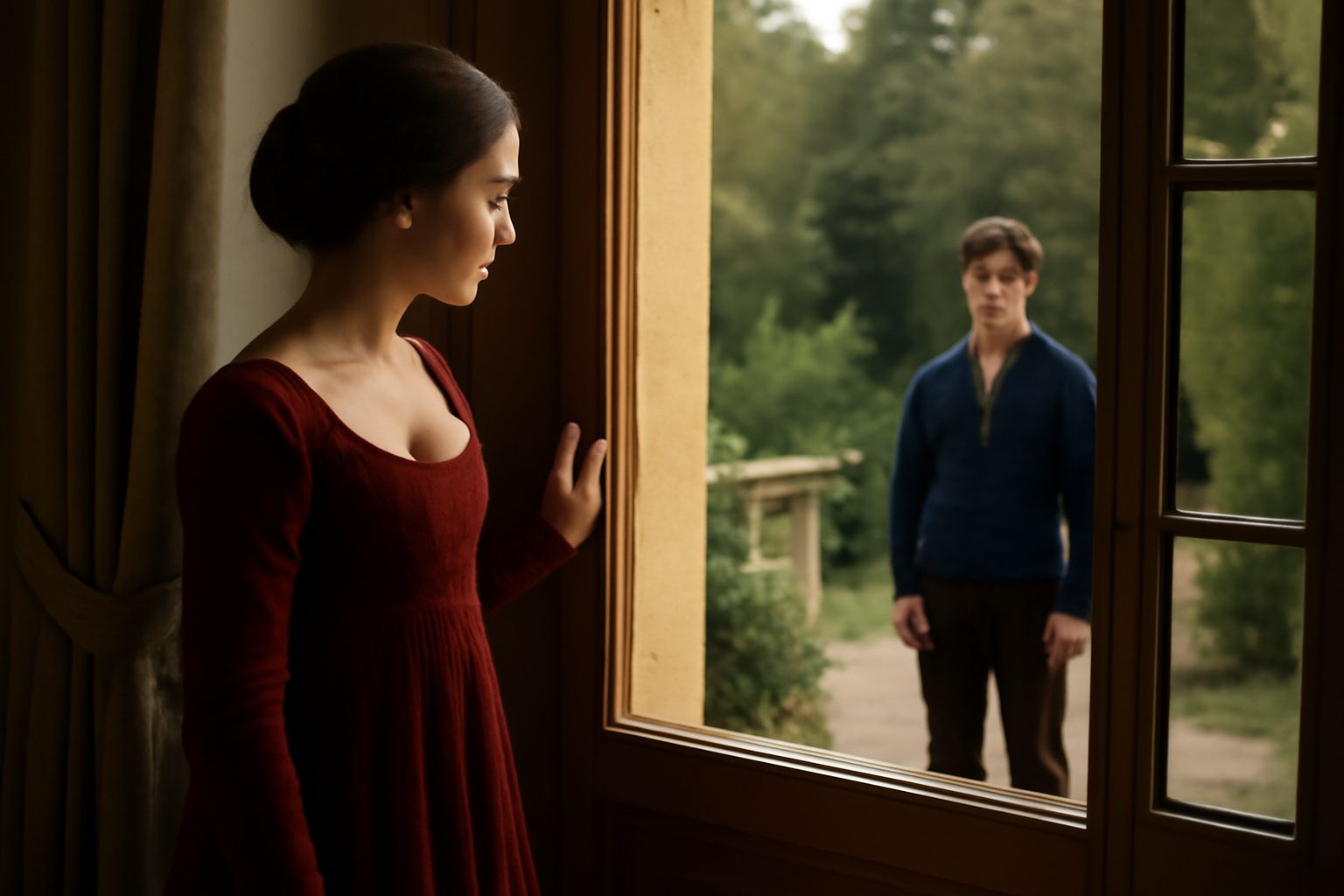
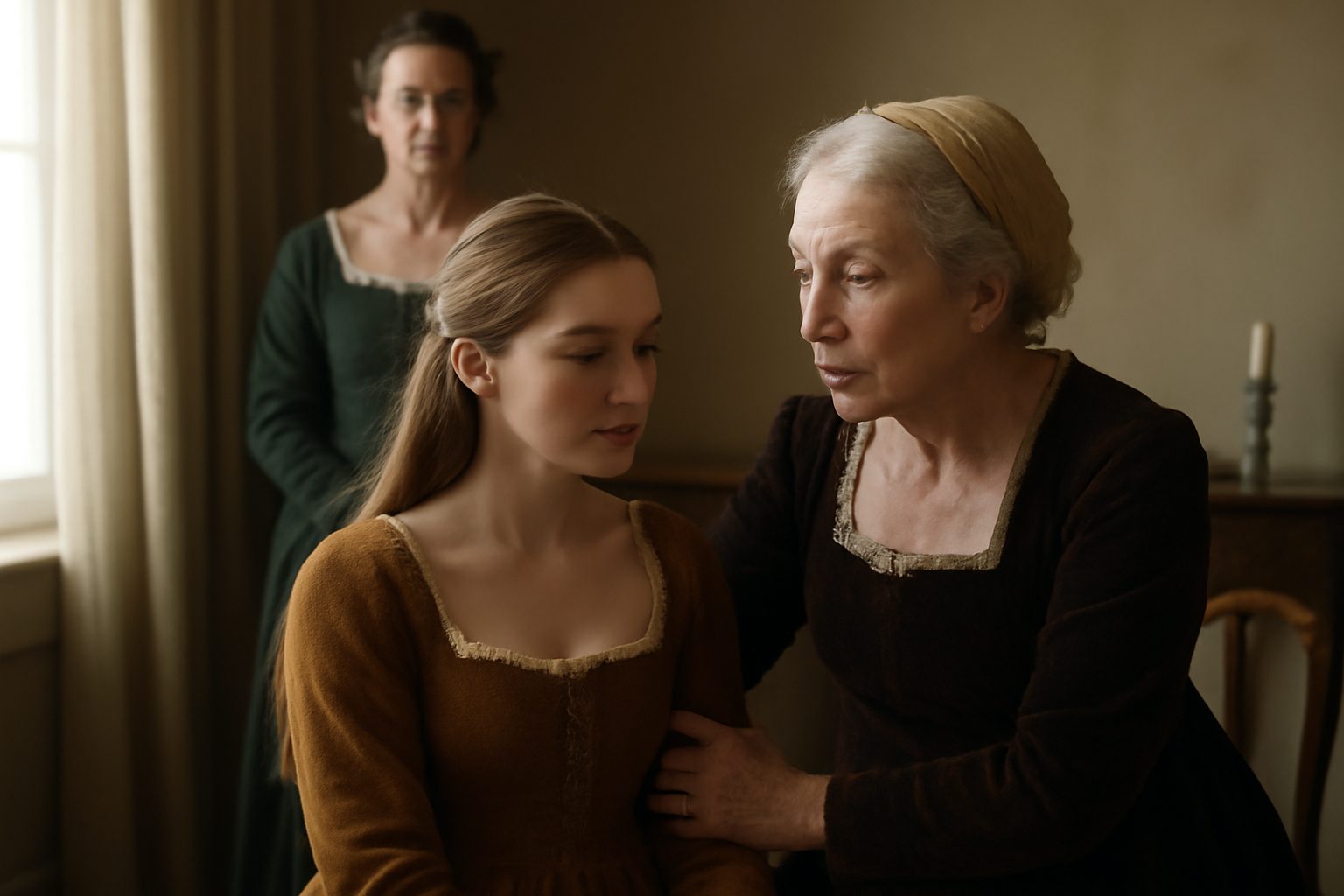
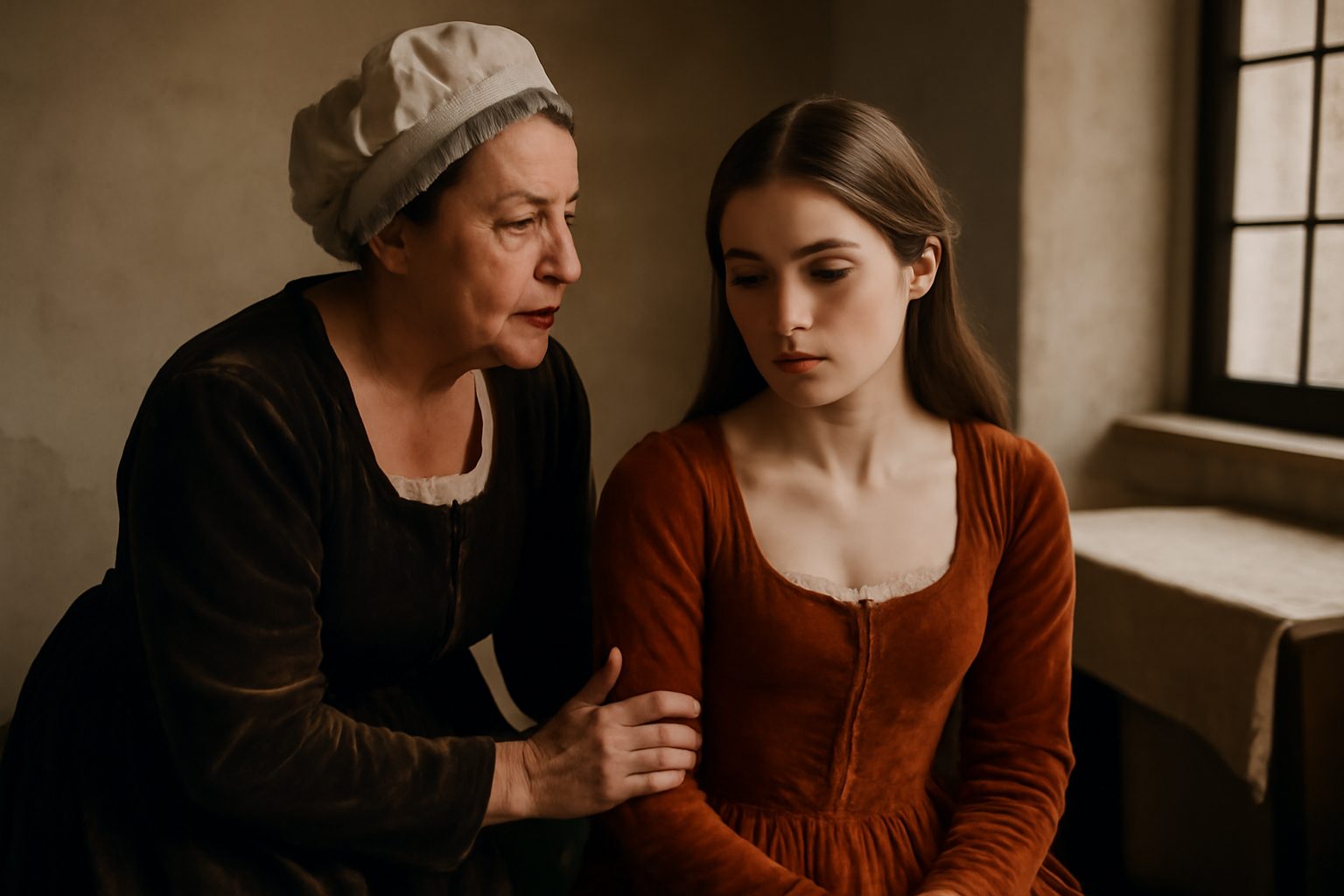
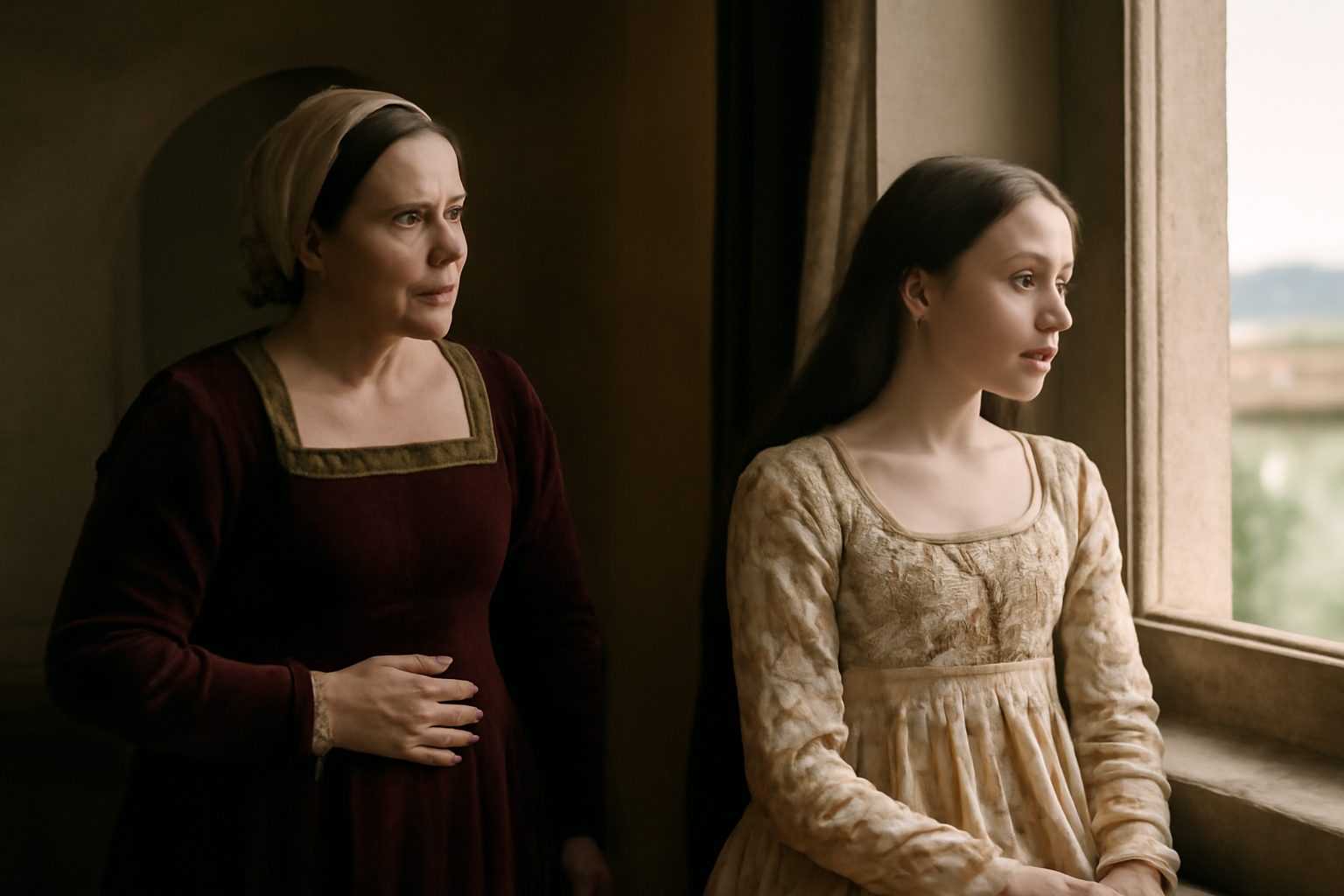
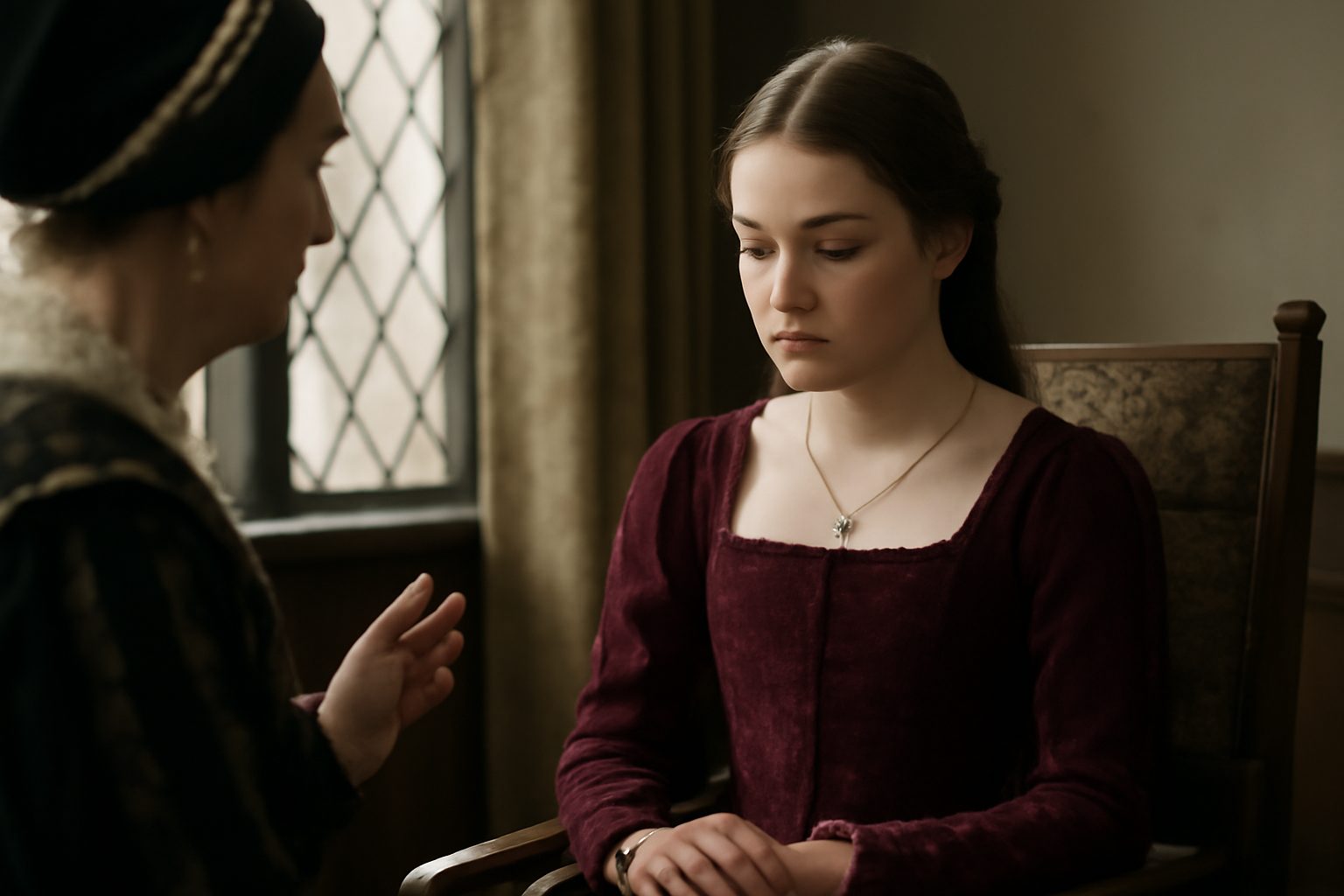
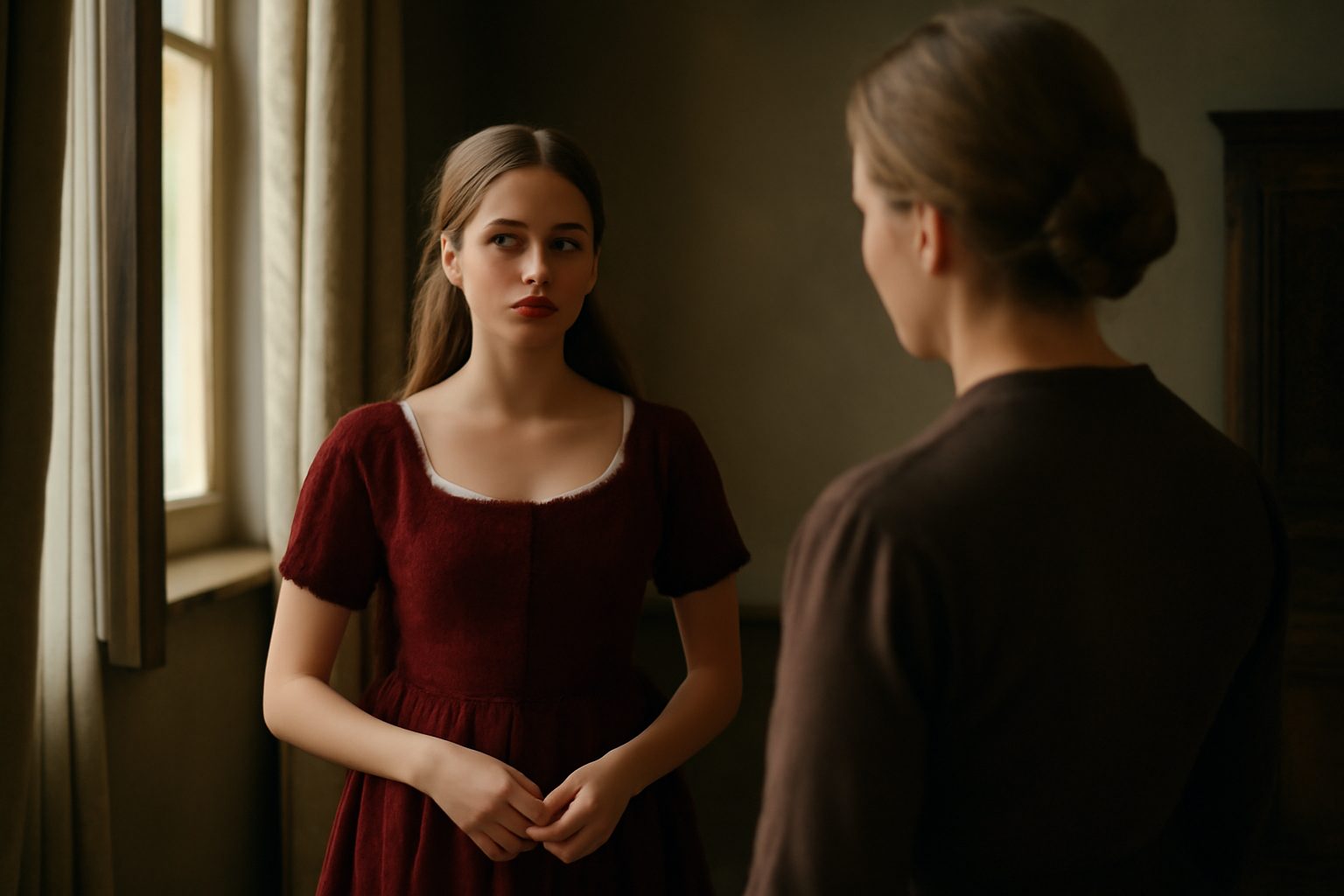
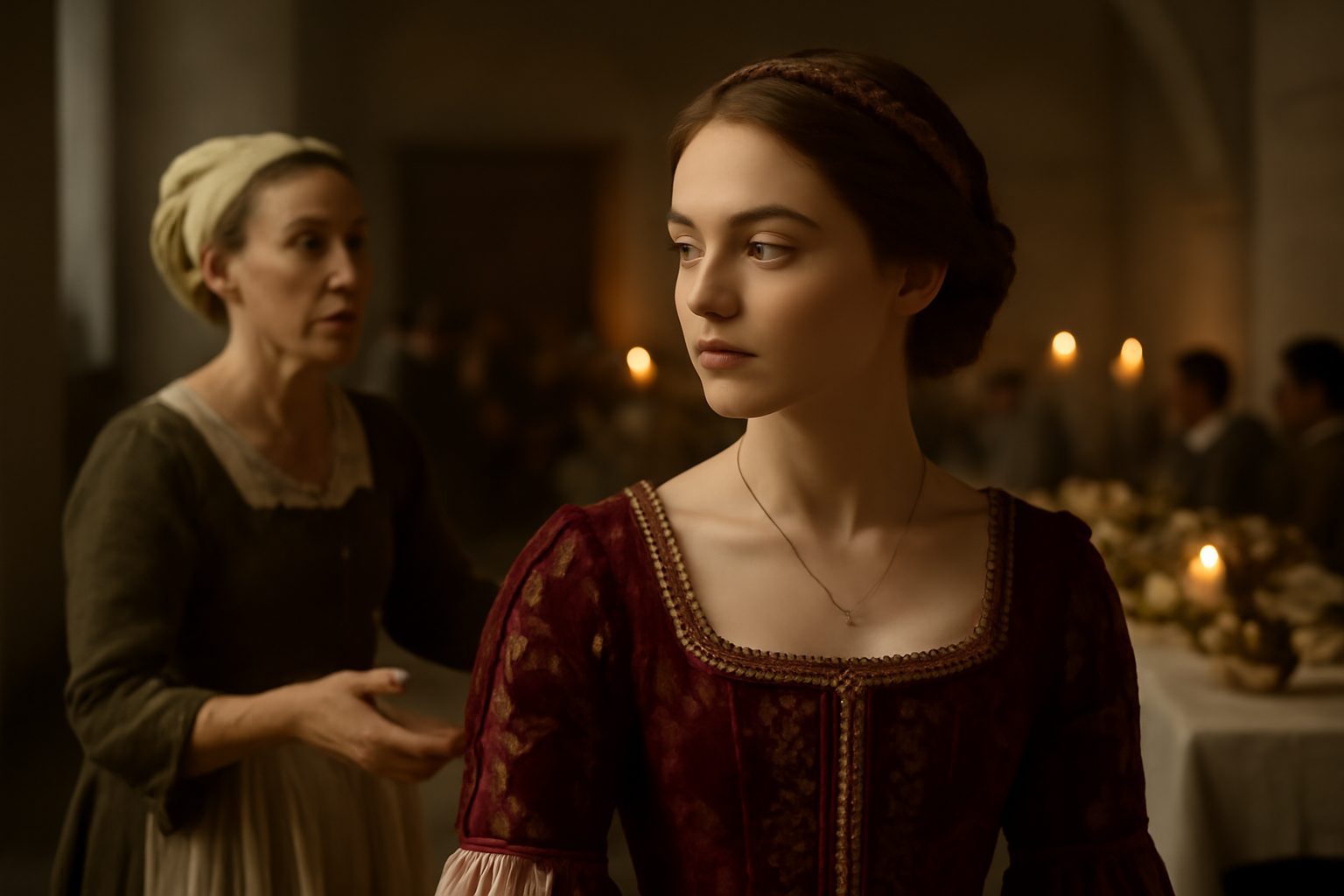
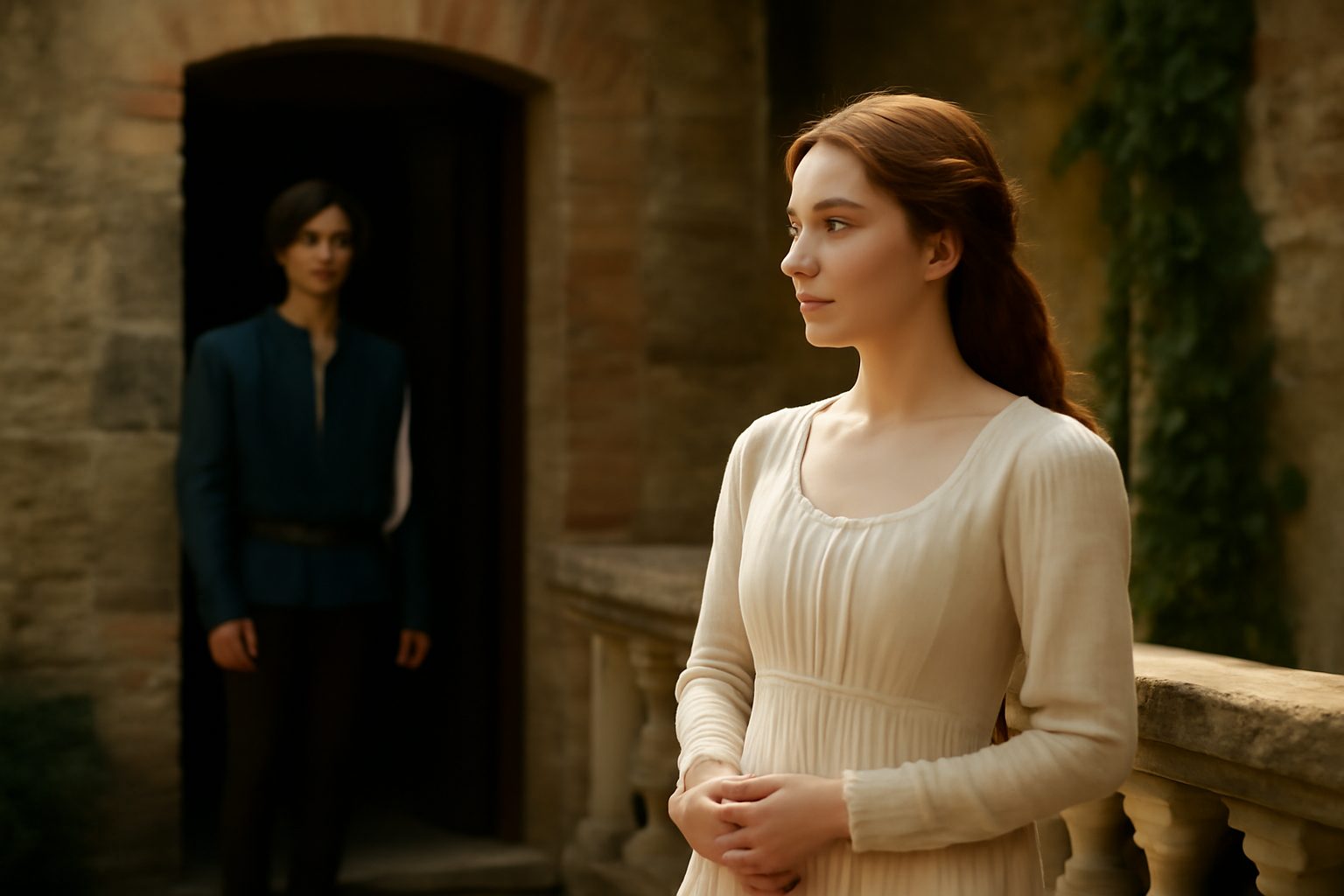
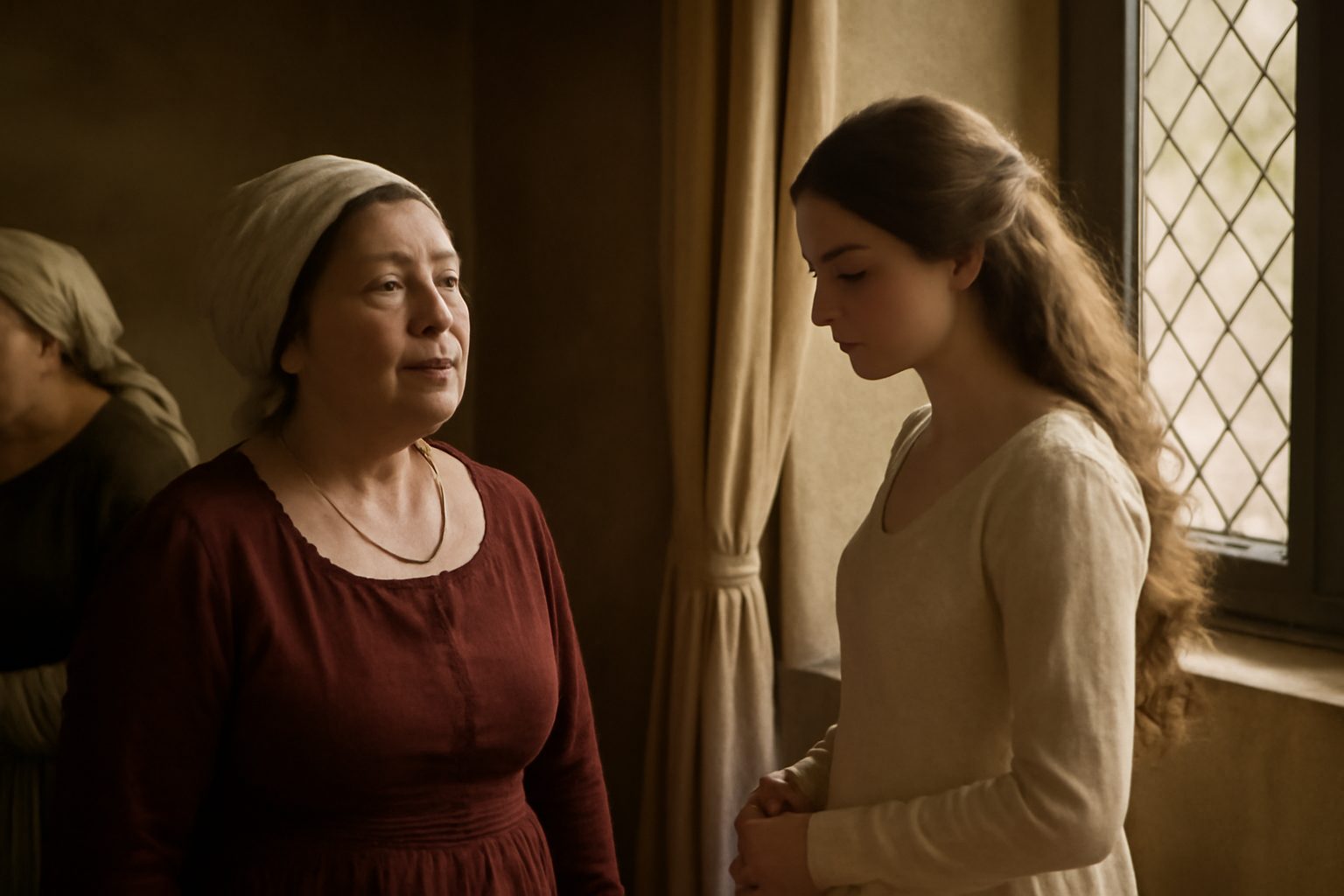
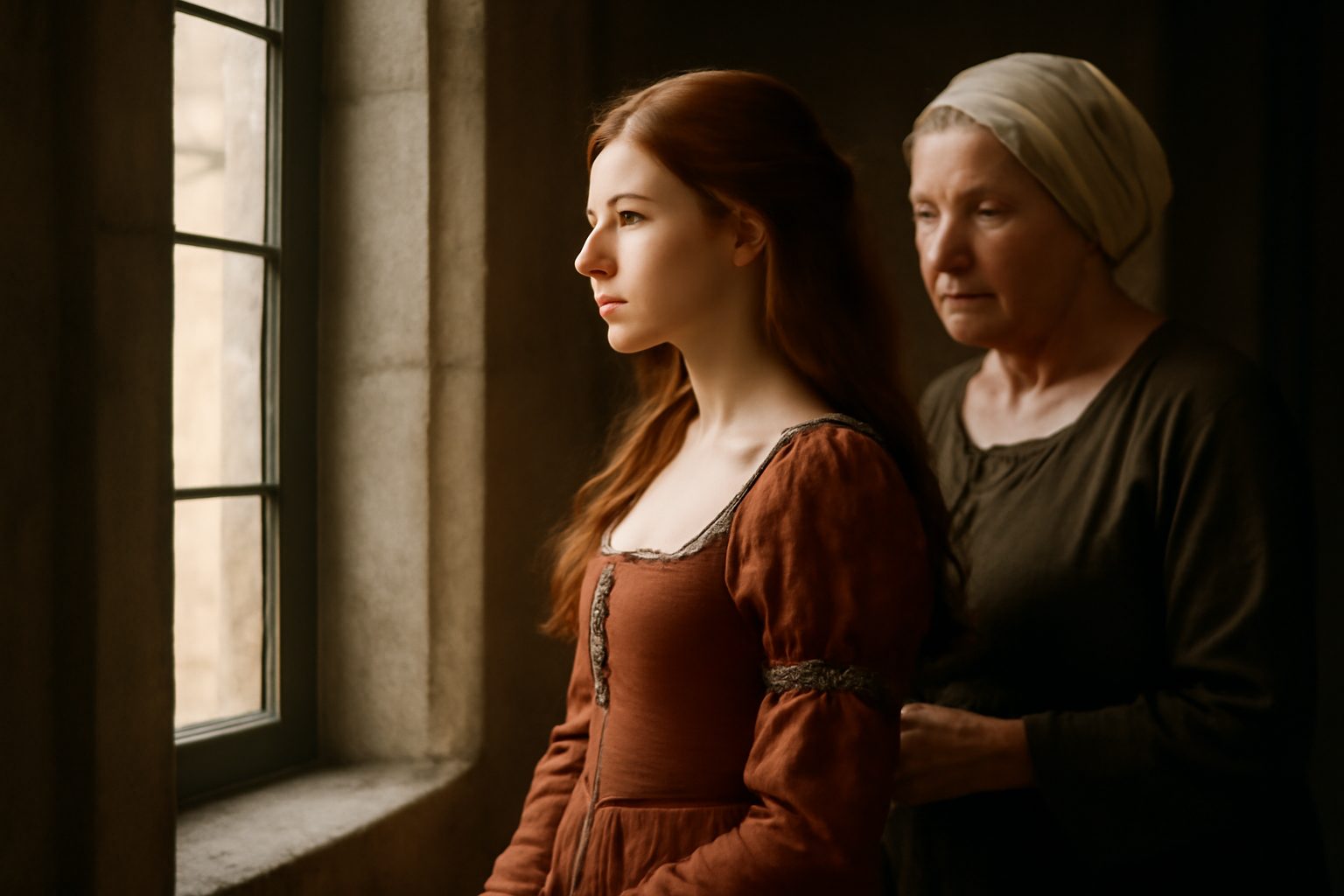
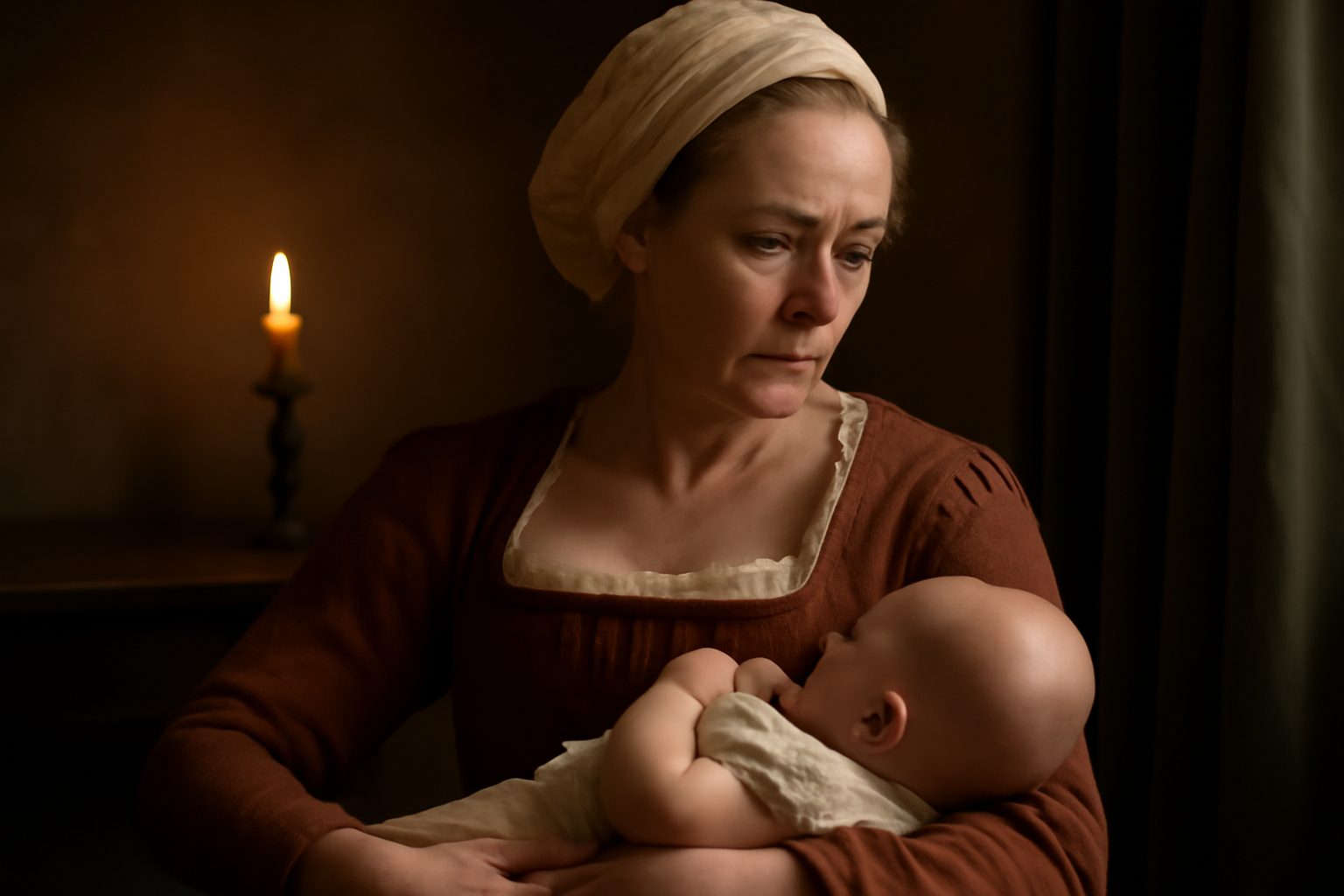
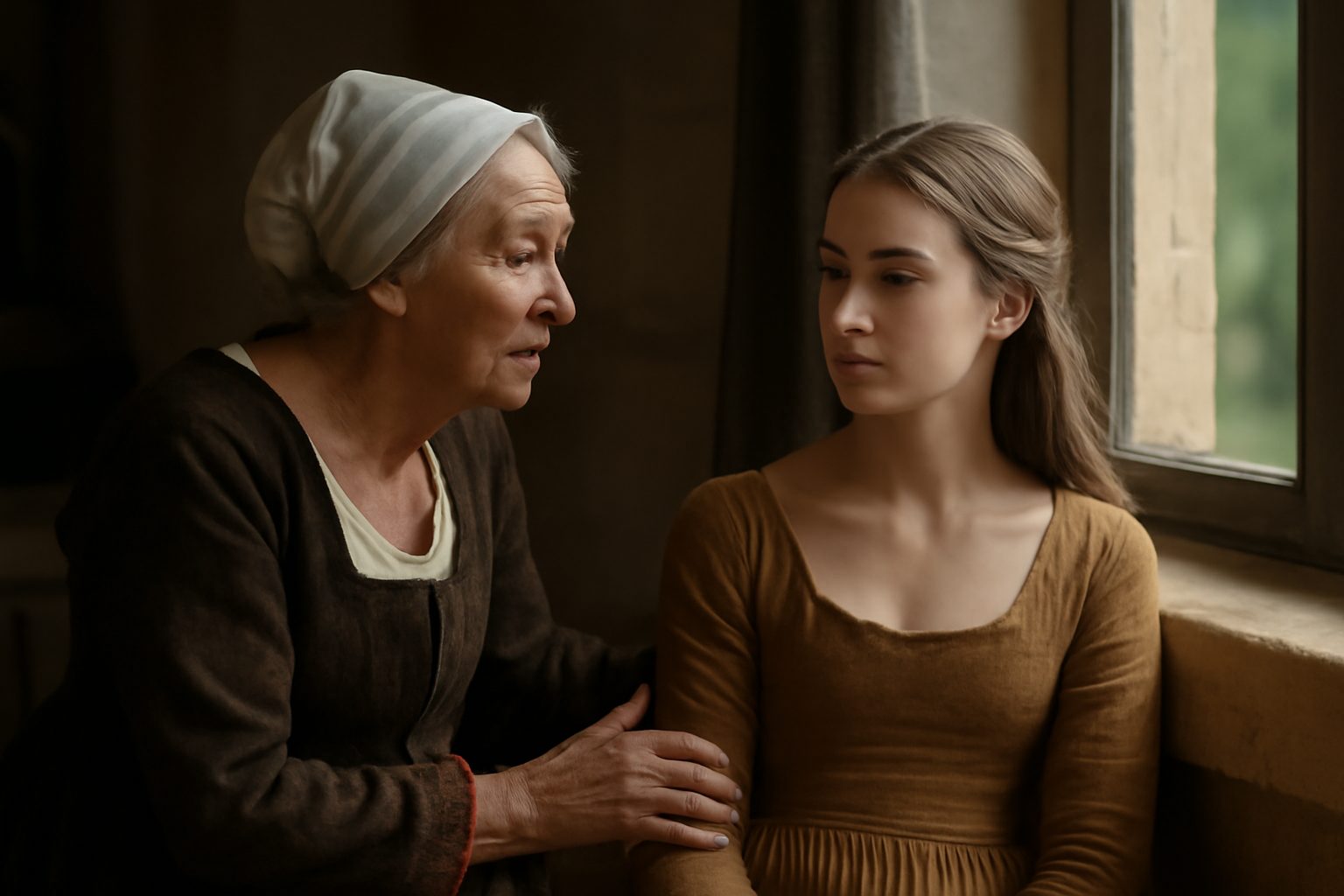
In Act 1, Scene 3 of Romeo and Juliet, Lady Capulet asks Juliet about her feelings toward marriage, probing whether she is open to the idea. This question arises as Paris, a wealthy nobleman, has expressed interest in marrying Juliet, and her parents are eager to arrange the match. The line reflects the societal expectations placed on young women in Verona, where marriage was often a practical alliance rather than a matter of personal choice.
Lady Capulet: "How stands your disposition to be married?"
In modern day english, we would say:
How do you feel about getting married?
Frequently Asked Questions
What is Lady Capulet asking in this line?
She is asking how the person feels about getting married.
Connections to other verses:
Connections to "How stands your disposition to be married?"
Lady Capulet's question about Juliet's readiness for marriage serves as the central thematic pivot of this scene, connecting to multiple verses that establish context, provide background, and reveal character attitudes toward matrimony.
Establishing Juliet's Age and Maturity
The question directly follows Lady Capulet's acknowledgment that "I came to talk of. Tell me, daughter Juliet", introducing the marriage discussion. Juliet's youth is emphasized through the Nurse's detailed recollections of her childhood, particularly "Come Lammas-eve at night shall she be fourteen" and "She is not fourteen. How long is it now", establishing she's at marriageable age by Veronese standards.
Parental Expectations and Social Pressure
Lady Capulet's question reflects the societal expectations revealed in "Are made already mothers: by my count" and "Well, think of marriage now; younger than you", highlighting that many girls Juliet's age are already married. The Nurse reinforces this with "An I might live to see thee married once", expressing her own desire to witness Juliet's wedding.
Juliet's Response and Subsequent Development
Juliet's guarded response "It is an honour that I dream not of" shows her initial reluctance, which contrasts with her eventual conditional agreement in "I'll look to like, if looking liking move". This progression from hesitation to cautious willingness demonstrates her obedient nature while preserving some autonomy.
The Paris Proposal Context
The marriage question specifically concerns Paris, whom Lady Capulet praises as "a man of wax" and "The valiant Paris seeks you for his love". The description of Paris as "a flower; in faith, a very flower" reinforces his suitability as a match, making Lady Capulet's question about Juliet's disposition specifically about accepting Paris's proposal.