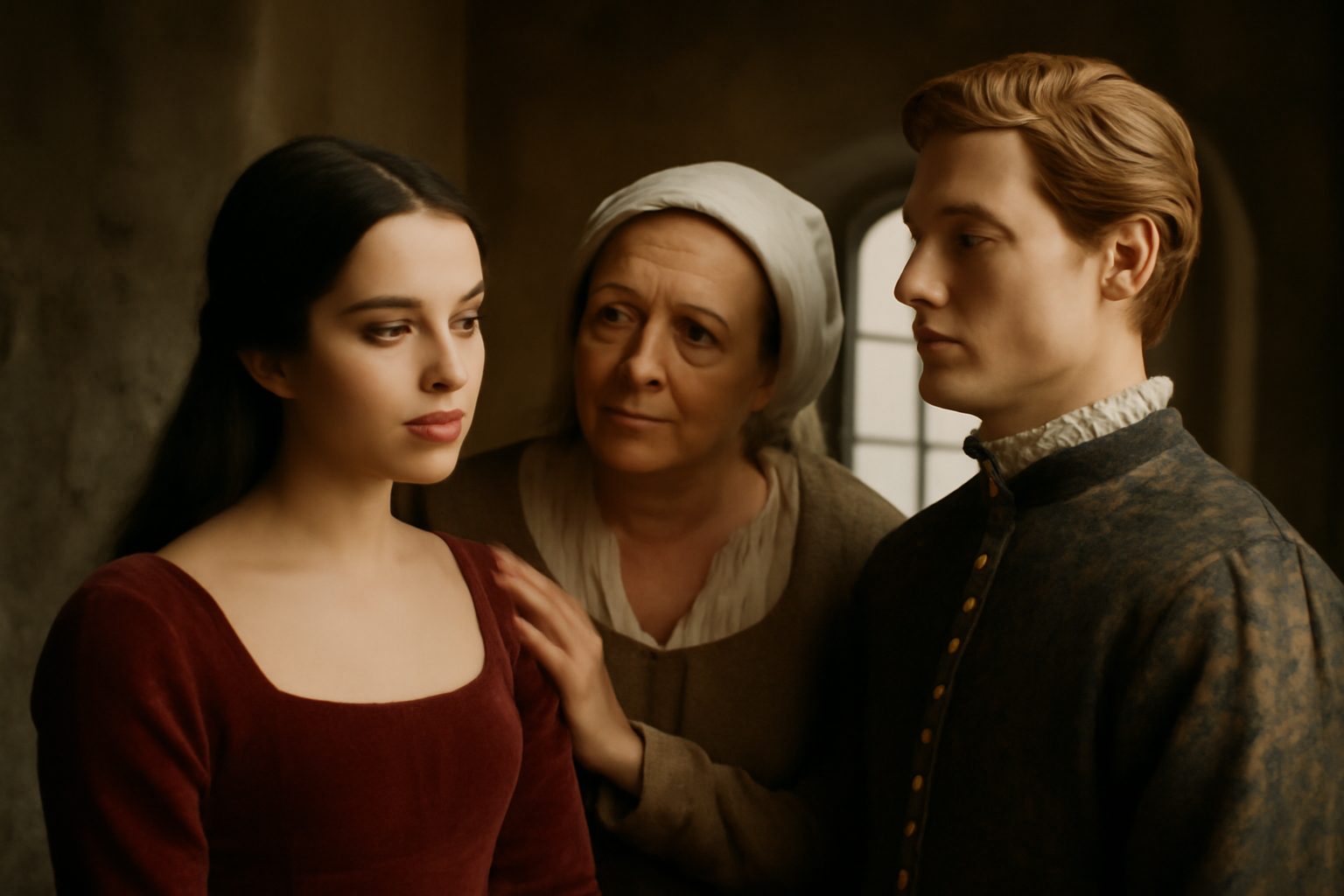
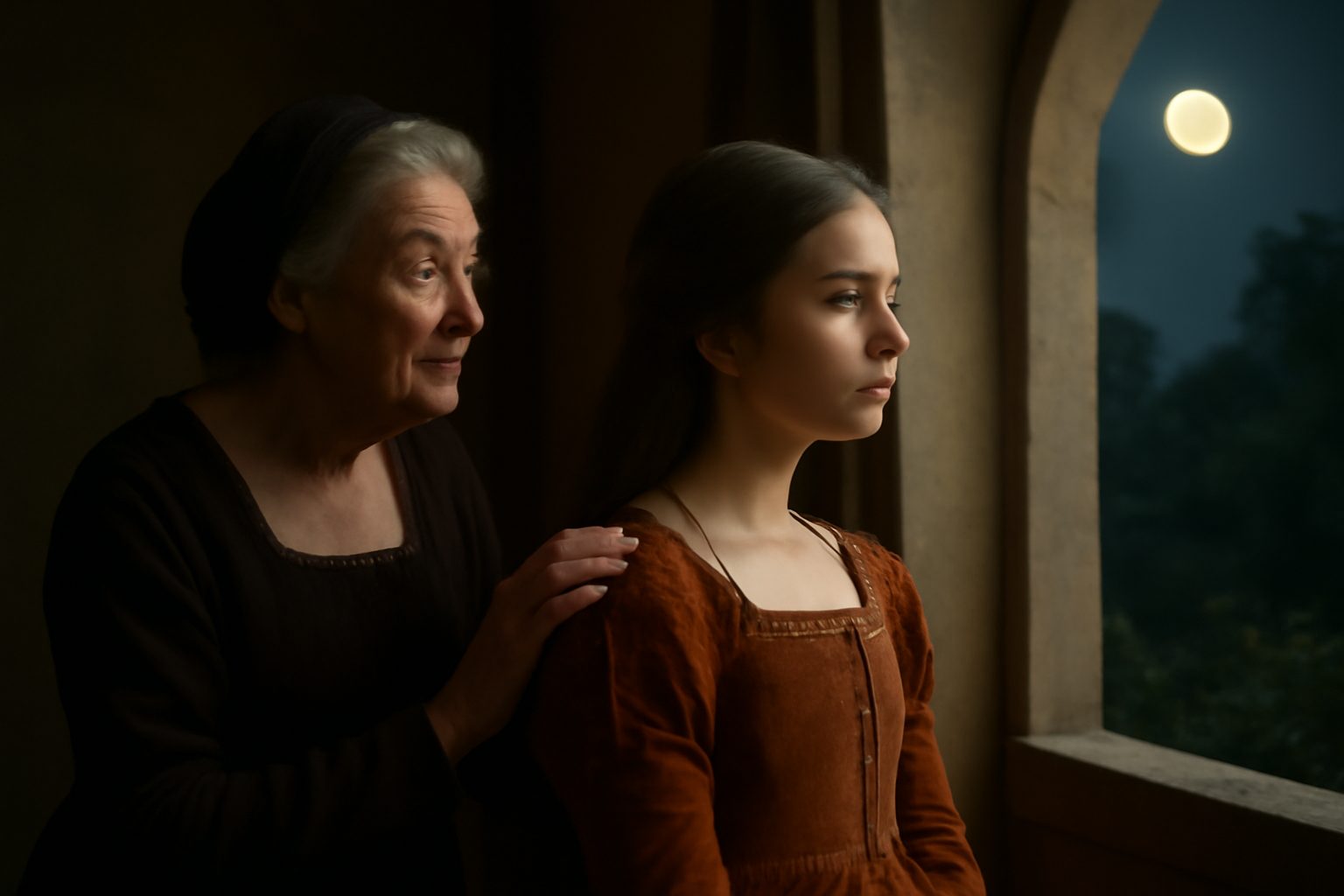
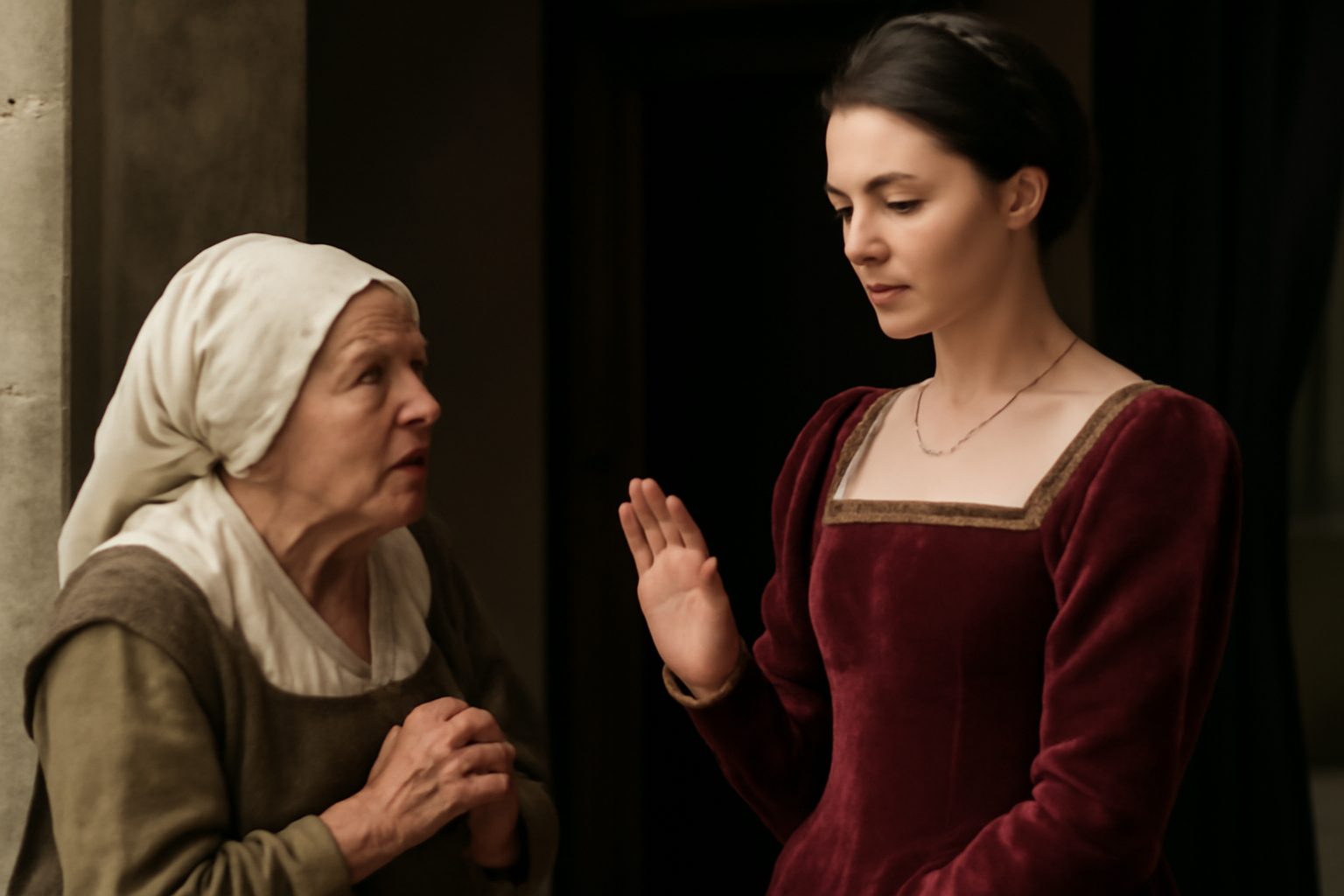
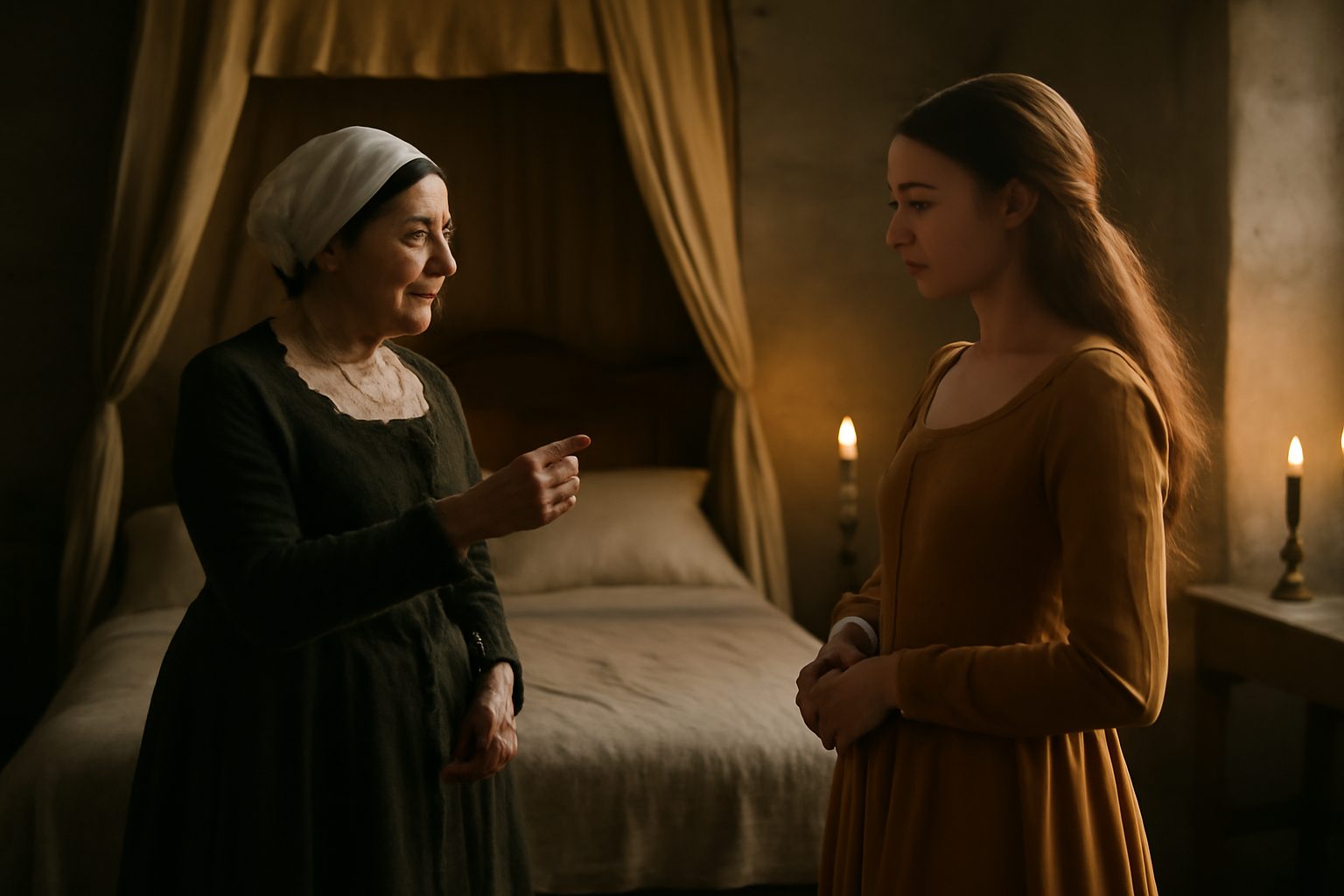
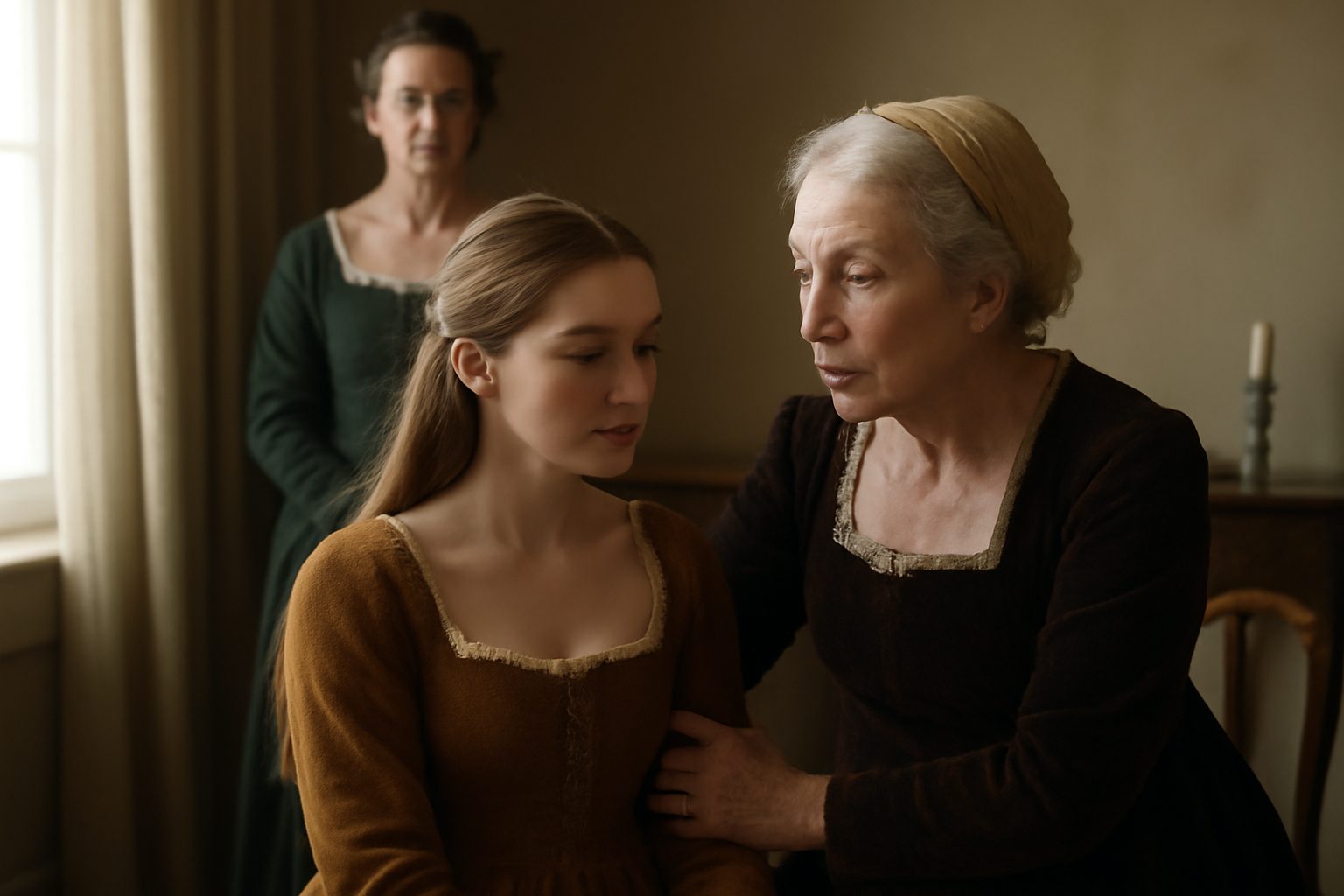
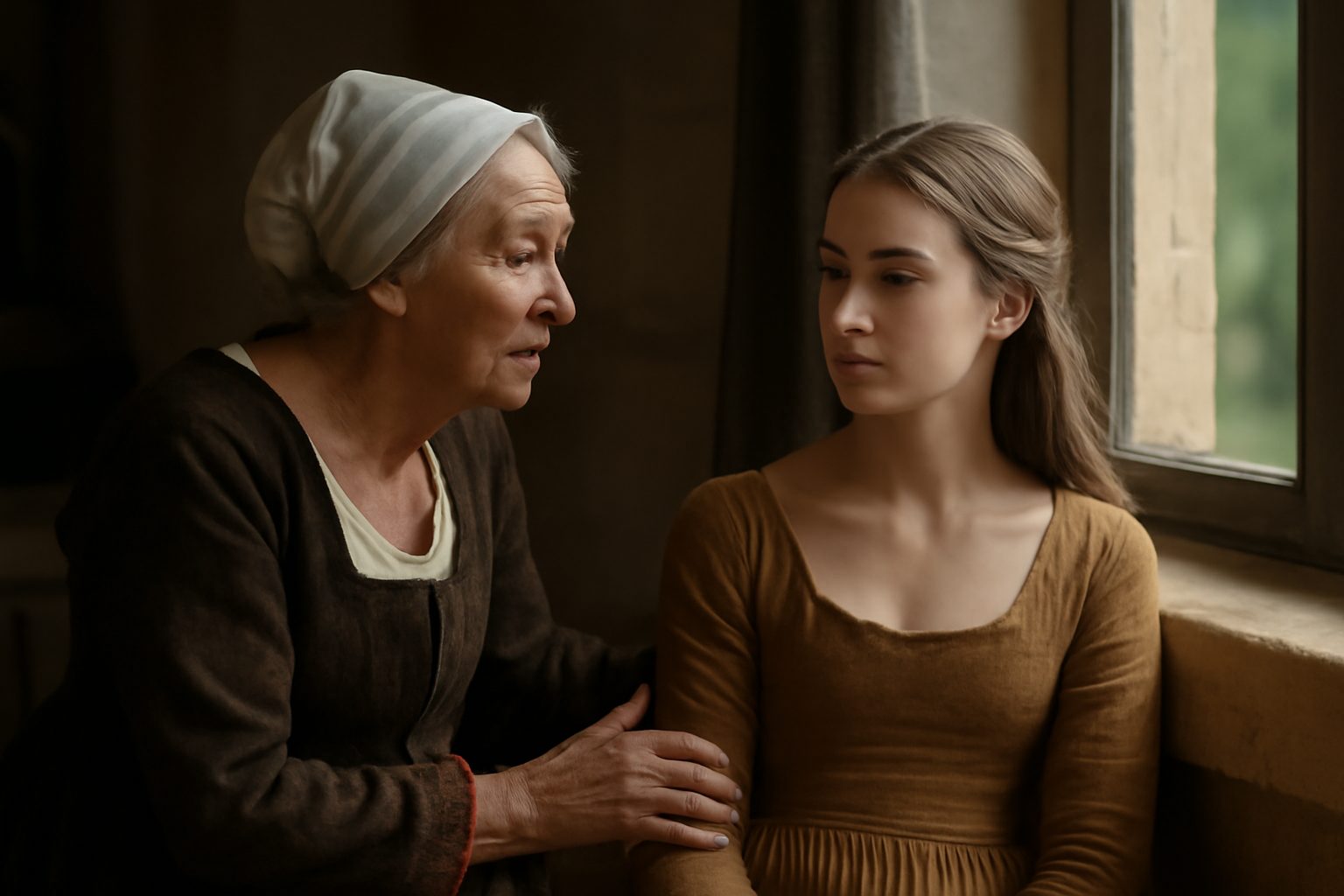
In Act 1 Scene 3 of Romeo and Juliet, Lady Capulet and the Nurse discuss Juliet's impending marriage to Paris. During their conversation, Lady Capulet praises Paris, suggesting that his outward beauty reflects his inner worth. This line underscores the societal expectation that nobility and virtue should be visibly matched in a suitable match for Juliet.
Lady Capulet: "For fair without the fair within to hide:"
In modern day english, we would say:
Her outer beauty is only a cover for the even greater beauty she has inside.
Frequently Asked Questions
What does Lady Capulet mean when she says that beauty on the outside hides beauty on the inside?
Lady Capulet is suggesting that a person's outer beauty can conceal or overshadow their inner qualities, implying that both types of beauty are present but the inner one is not as visible.
Connections to other verses:
Connections to "For fair without the fair within to hide"
The verse "For fair without the fair within to hide" is part of Lady Capulet's extended metaphor describing Paris as a beautiful, unbound book whose external beauty reflects his inner worth. This line suggests that Paris's outward fairness does not conceal but rather reveals his inner virtues.
Connection to the Book Metaphor
This verse is directly linked to "This precious book of love, this unbound lover", where Paris is metaphorically referred to as a book that Juliet should read. The idea of external beauty revealing inner qualities is reinforced in "That book in many's eyes doth share the glory", emphasizing how widely admired Paris is for both his appearance and character.
Complementary Descriptions of Paris
Lady Capulet's praise of Paris's appearance and virtues is echoed in other verses, such as "As all the world--why, he's a man of wax", which highlights his ideal, sculpted beauty, and "Nay, he's a flower; in faith, a very flower", comparing him to the finest natural beauty. These descriptions collectively build the image of Paris as a perfect match, whose external fairness is a true indicator of his inner qualities.
Juliet's Response and Inner Qualities
While Lady Capulet focuses on Paris's external and internal harmony, Juliet's response in "I'll look to like, if looking liking move" shows her cautious approach, indicating that she will not judge based solely on outward appearances. This contrasts with her mother's emphasis on the unity of fair without and fair within in Paris.
Nurse's Earthy Counterpoint
The Nurse's humorous and bawdy anecdotes, such as "Thou wilt fall backward when thou comest to age", provide a stark contrast to Lady Capulet's refined metaphor. This juxtaposition highlights different perspectives on love and marriage: one idealized and literary, the other practical and physical.