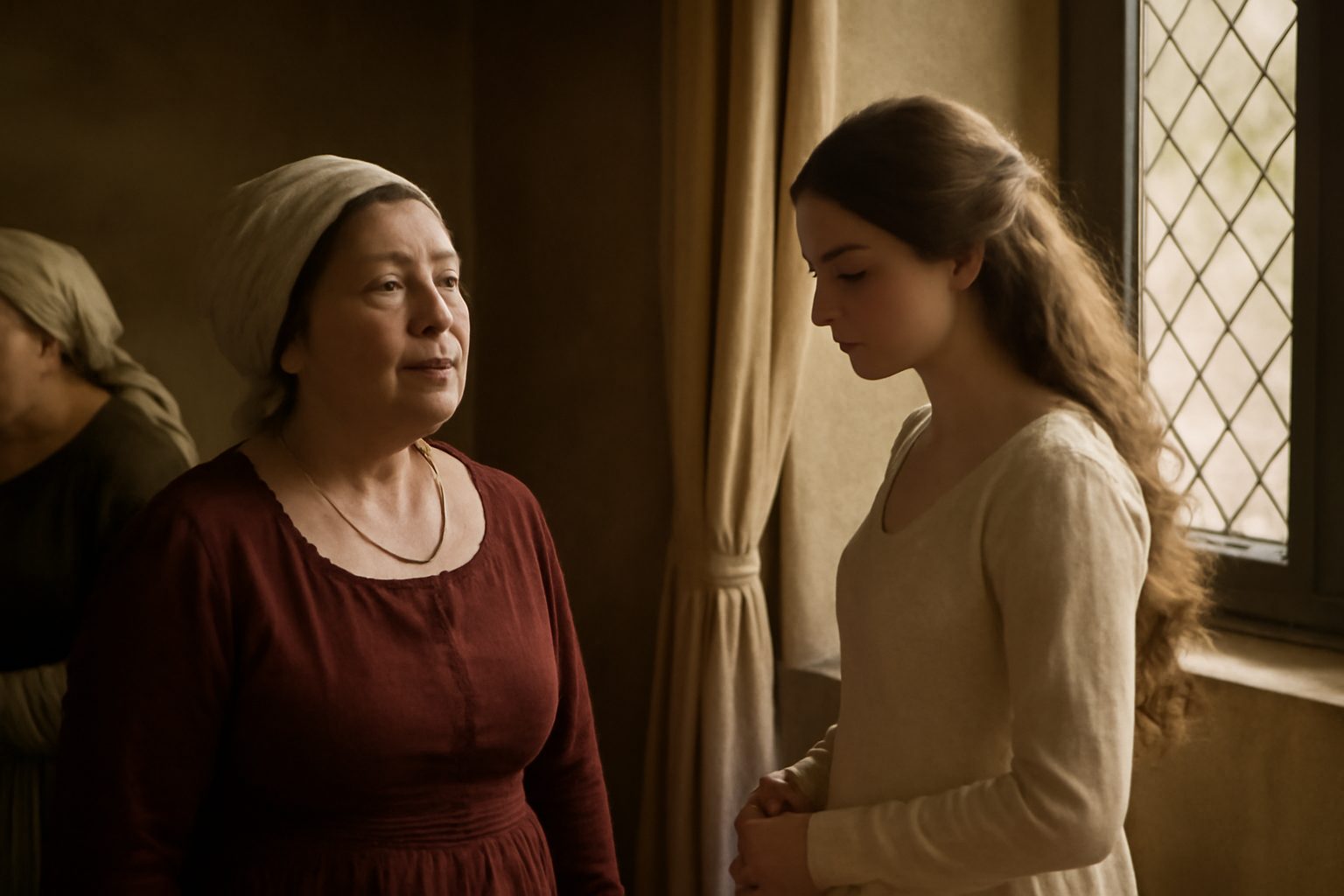
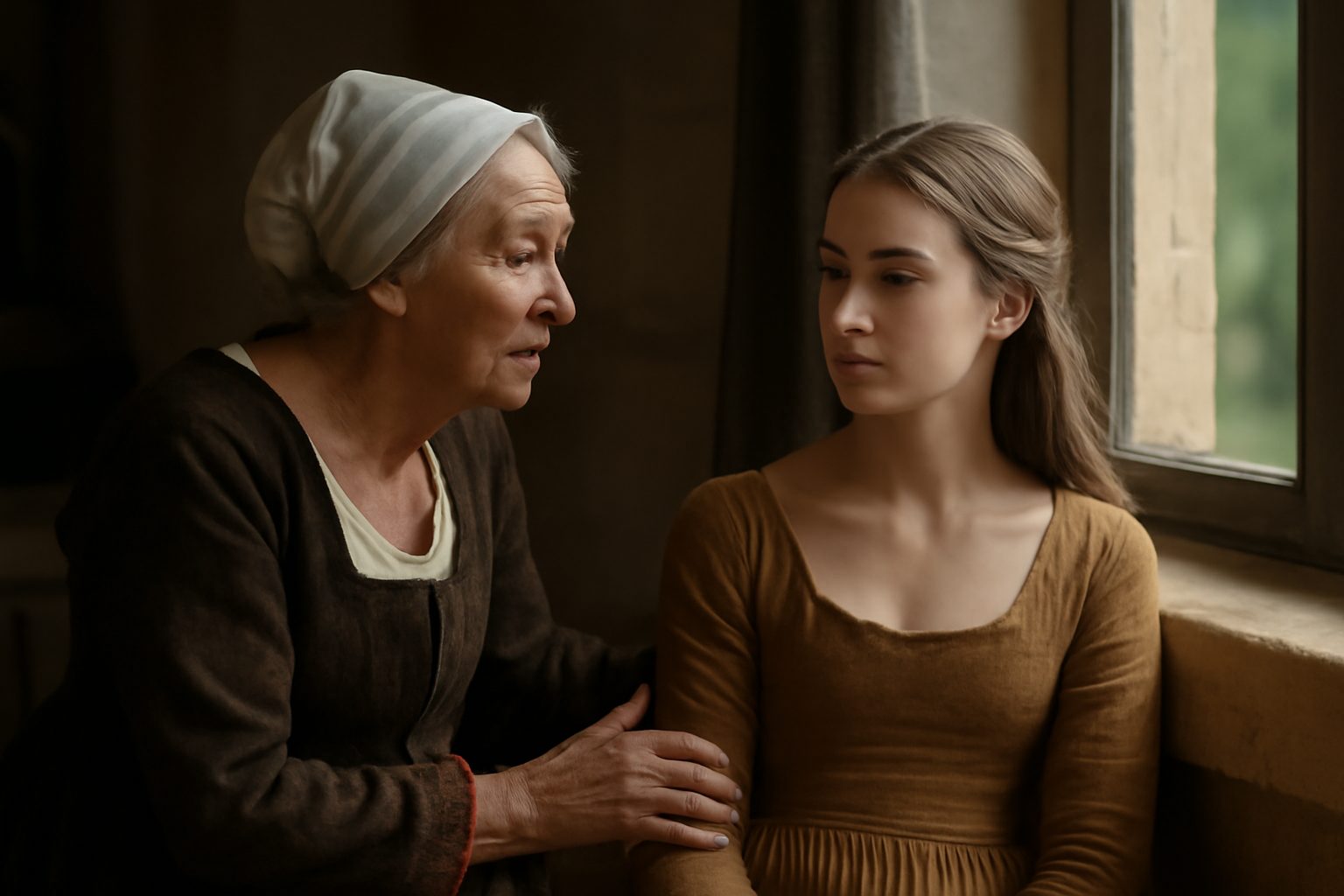
In Act 1, Scene 3 of Romeo and Juliet, the Nurse reminisces about Juliet's childhood, sharing a fond memory of her late husband. This line recalls a playful moment when he teased the young Juliet, showing the Nurse's affectionate and nostalgic tone. The scene establishes the Nurse's close bond with Juliet, contrasting with Lady Capulet's more formal relationship with her daughter.
Nurse: "I never should forget it: 'Wilt thou not, Jule?' quoth he;"
In modern day english, we would say:
The Nurse says she could never forget how her husband once joked with young Juliet, asking if she wanted to stop breastfeeding.
Frequently Asked Questions
What does the nurse remember in this line from Romeo and Juliet?
The nurse remembers someone asking Juliet if she would not do something, calling her 'Jule'.
Connections to other verses:
Connections to "I never should forget it: 'Wilt thou not, Jule?'…"
The verse I never should forget it: 'Wilt thou not, Jule?'… is part of the Nurse's nostalgic recollection of Juliet's infancy, a theme that resonates throughout the scene. It connects to several other verses that expand on this memory or contrast it with present circumstances.
Direct Continuation and Repetition
The phrase "Wilt thou not, Jule?" is echoed and completed in Wilt thou not, Jule?' it stinted and said 'Ay.', providing the full anecdote of the infant Juliet's response. This repetition emphasizes the Nurse's fondness for this memory, which she also references in And she was wean'd,--I never shall forget it,--, showing how vividly she recalls Juliet's early years.
Context of the Anecdote
The memory is part of a longer story about Juliet's weaning, which includes For I had then laid wormwood to my dug and When it did taste the wormwood on the nipple, explaining why the child was prompted to stop nursing. The humorous aspect of the anecdote is highlighted in To see, now, how a jest shall come about!, where the Nurse reflects on the irony of the situation.
Contrast with Juliet's Present
This childhood memory contrasts sharply with Lady Capulet's discussion of Juliet's marriage to Paris in verses like The valiant Paris seeks you for his love. and Speak briefly, can you like of Paris' love?, underscoring Juliet's rapid transition from infancy to adulthood. The Nurse's pride in Juliet's growth is evident in Thou wast the prettiest babe that e'er I nursed:, which directly ties back to her affectionate reminiscence.
Structural and Thematic Links
The Nurse's repetitive storytelling style, seen in Nay, I do bear a brain:--but, as I said,, mirrors her insistence on not forgetting this moment. Additionally, the theme of memory and time is reinforced in And since that time it is eleven years;, which places the anecdote within a specific timeline, further emphasizing its significance to the Nurse.