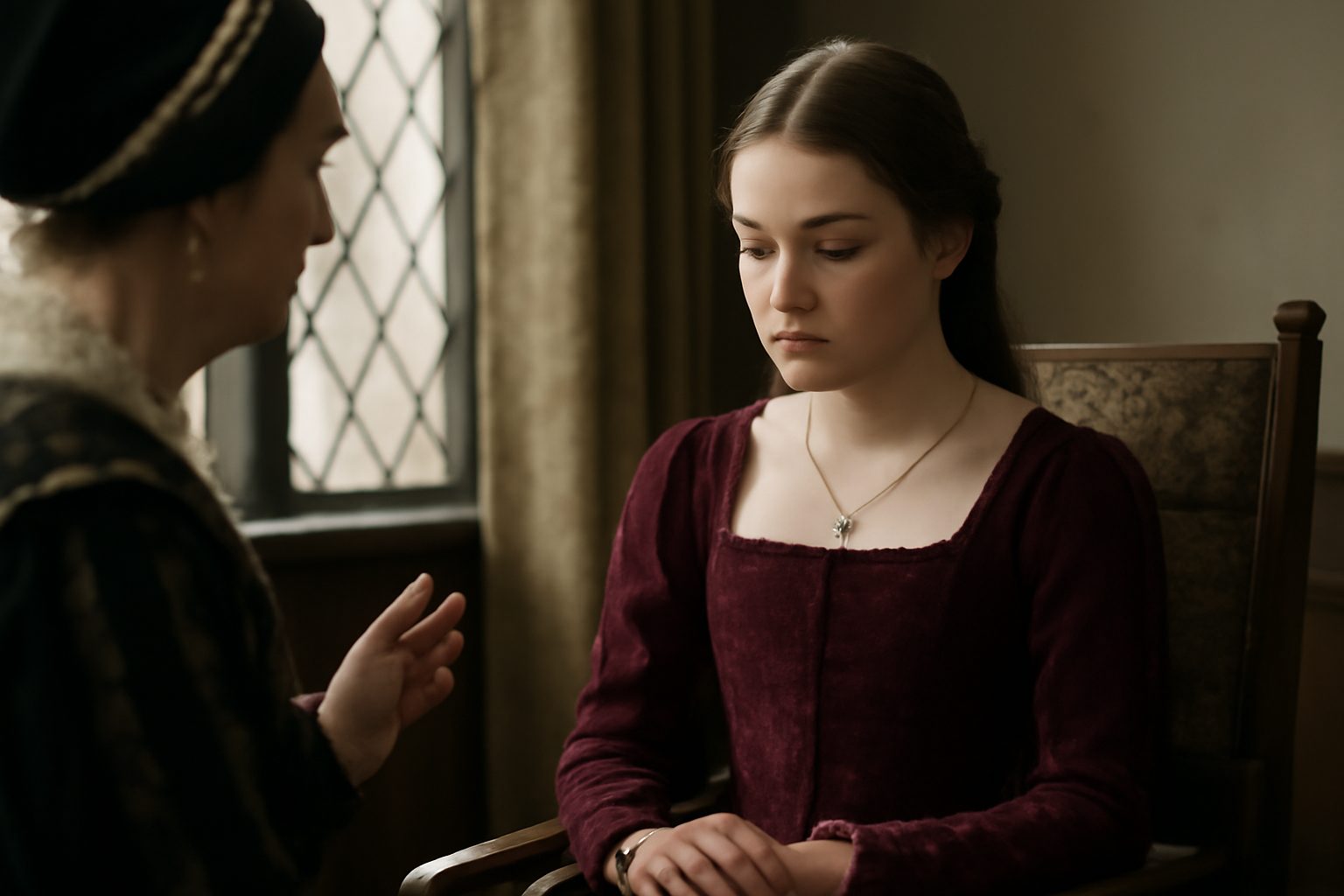
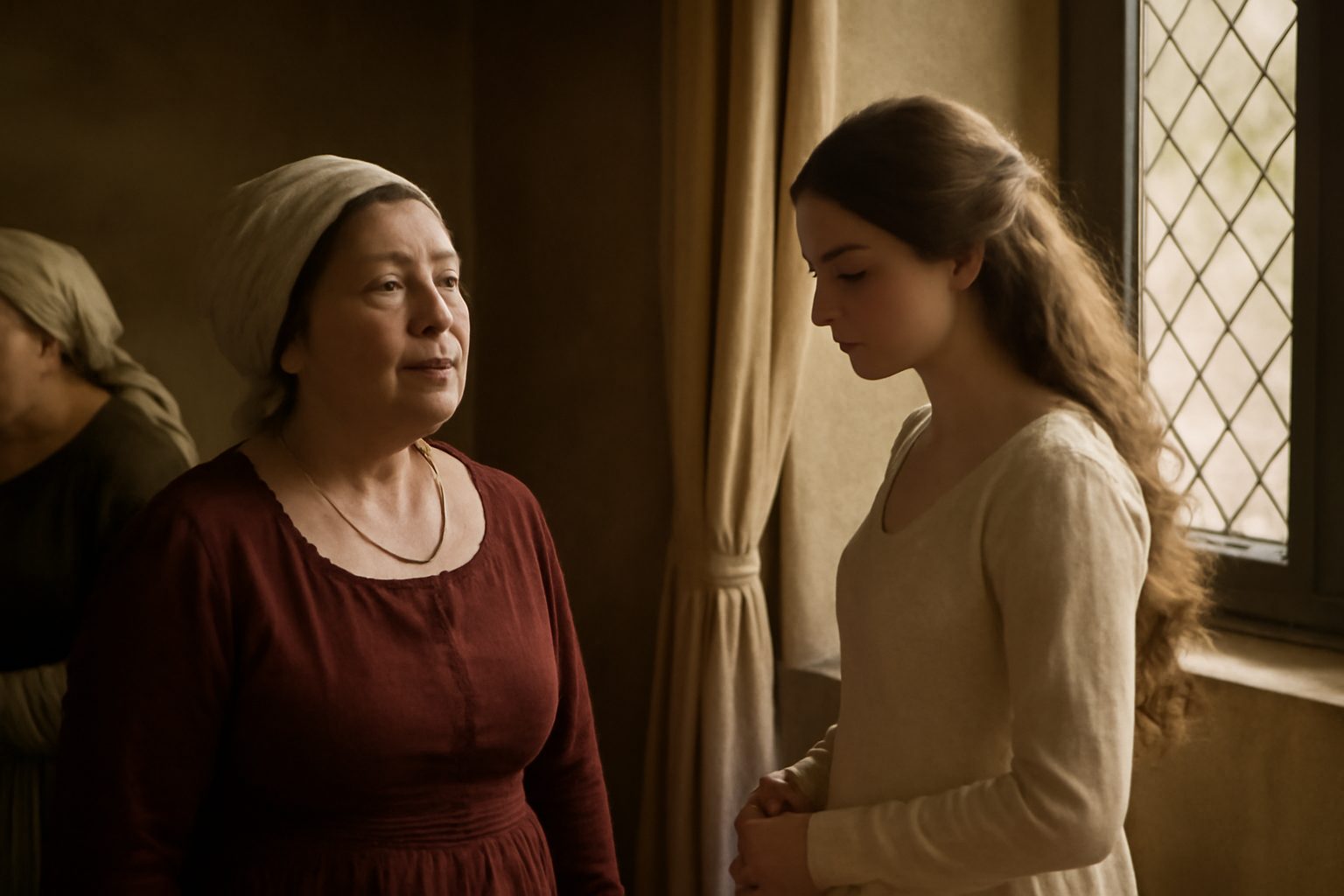
In Act 1, Scene 3 of Romeo and Juliet, the Nurse reminisces about Juliet's childhood, sharing a humorous and tender anecdote. This line refers to a playful moment when young Juliet fell and got a bump on her forehead, prompting the Nurse's husband to joke about it. The remark highlights the Nurse's affectionate, earthy personality and her long-standing bond with Juliet.
Nurse: "And yet, I warrant, it had upon its brow"
In modern day english, we would say:
And still, I’m sure it had on its forehead.
Frequently Asked Questions
What is the nurse talking about in this line from Act 1 Scene 3?
The nurse is referring to a bump or mark on someone's forehead.
Connections to other verses:
Connections to "And yet, I warrant, it had upon its brow"
The verse "And yet, I warrant, it had upon its brow" is part of the Nurse's vivid recollection of Juliet's childhood, specifically referring to a bump or injury on Juliet's forehead. This line connects thematically and narratively to several other verses in the scene, which collectively paint a picture of Juliet's infancy and the Nurse's affectionate, anecdotal storytelling.
Connection to Physical Injury and Memory
This verse directly relates to "For even the day before, she broke her brow", as both lines describe the same incident where young Juliet sustained an injury. The Nurse uses this memory to emphasize her long-standing, intimate connection with Juliet, highlighting her role as both caretaker and storyteller.
Connection to the Nurse's Husband and Humor
The mention of the brow injury also ties into the humorous interjection by the Nurse's husband in "Yea,' quoth he, 'dost thou fall upon thy face?" and its echoed version in "Yea,' quoth my husband,'fall'st upon thy face?". These lines show the playful, teasing dynamic within the household and add a layer of comedy to the anecdote.
Connection to Juliet's Weaning and Early Development
The broader context of Juliet's early years, including her weaning, is covered in verses like "And she was wean'd,--I never shall forget it,--" and "For I had then laid wormwood to my dug". These references ground the brow injury in a timeline of Juliet's growth, reinforcing the Nurse's nostalgic and detailed memory.
Connection to the Nurse's Affectionate Tone
The Nurse's tender reminiscence is further reflected in "Thou wast the prettiest babe that e'er I nursed", which underscores her deep affection for Juliet. Similarly, the phrase "I warrant" appears in "I warrant, an I should live a thousand years", showcasing the Nurse's characteristic speech patterns and confident, personal storytelling style.