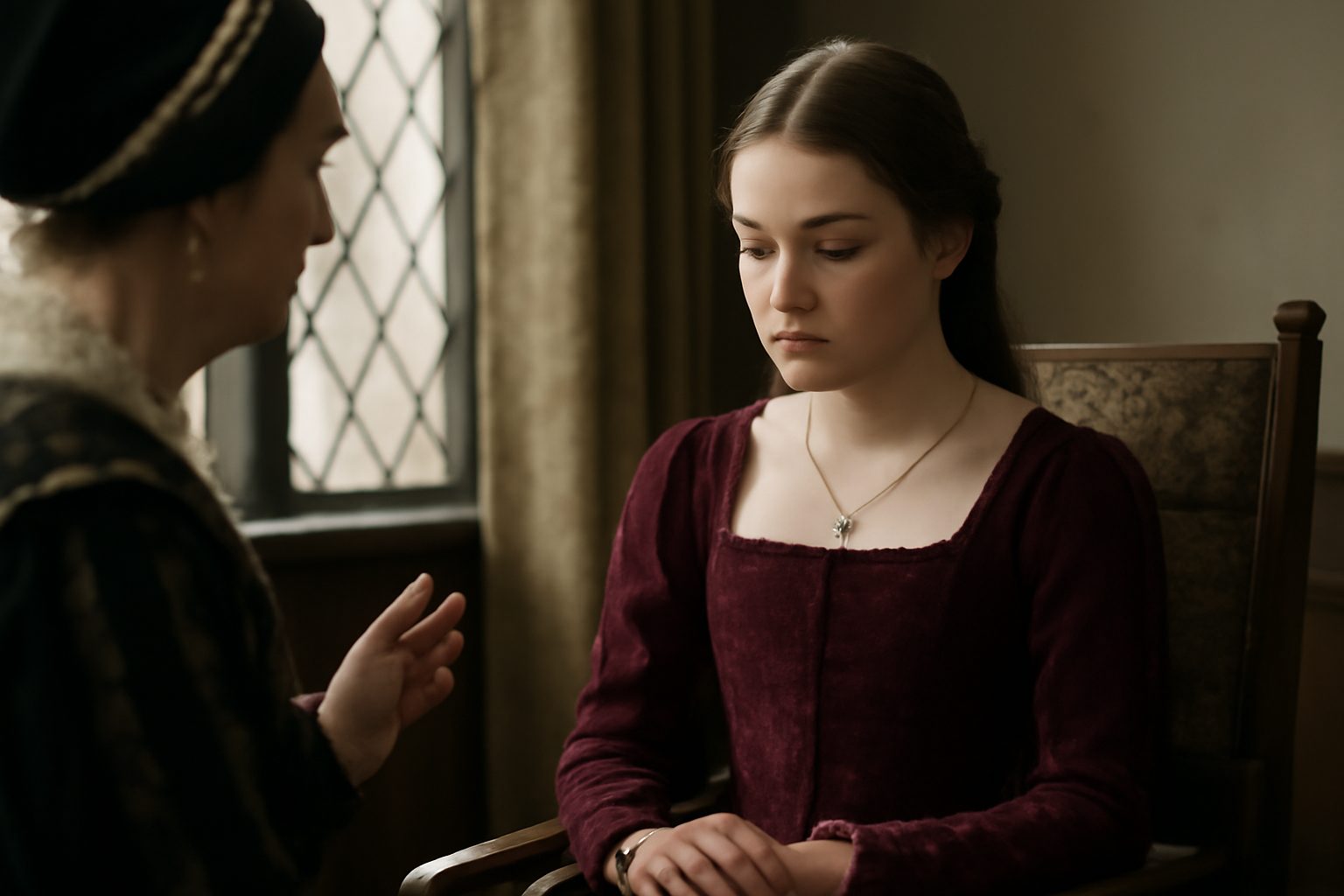
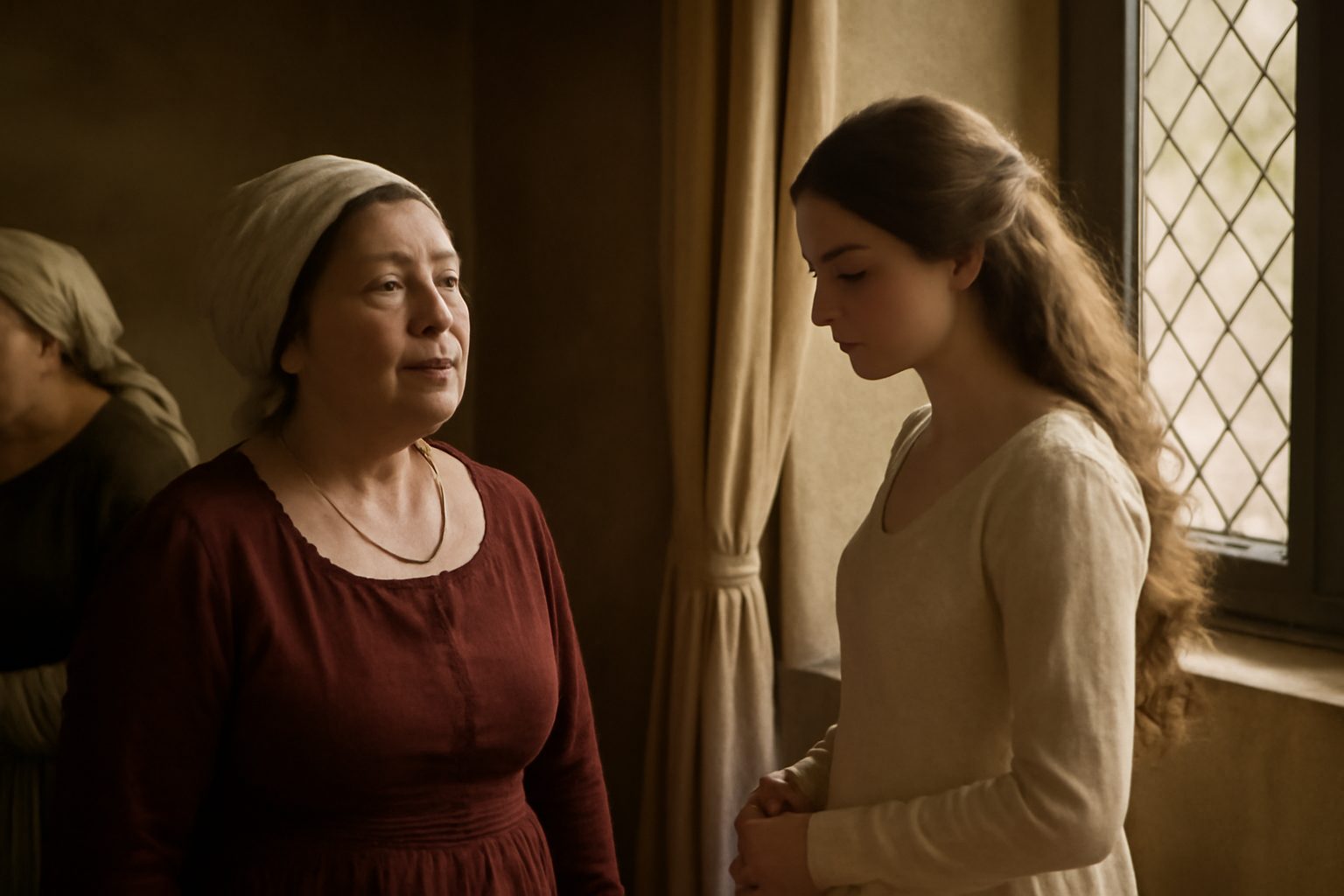
In Act 1, Scene 3 of Romeo and Juliet, Lady Capulet discusses with Juliet and the Nurse the prospect of Juliet marrying Paris. The Nurse, reminiscing about Juliet's childhood, mentions a fortnight and odd days as part of a fond memory about Juliet's age and weaning. This casual remark highlights the Nurse's affectionate, rambling nature while subtly grounding the scene in time.
Lady Capulet: "A fortnight and odd days."
In modern day english, we would say:
The Nurse is saying it has been a little over two weeks since an event she's recalling.
Frequently Asked Questions
How long is a fortnight and odd days?
A fortnight is 14 days, and odd days means a few extra days, so it is about two weeks and a few more days.
Connections to other verses:
Connections to "A fortnight and odd days"
The verse A fortnight and odd days is part of the Nurse's rambling recollection of Juliet's infancy, establishing Juliet's age as nearly fourteen. This specific time reference connects directly to Come Lammas-eve at night shall she be fourteen, which precisely dates Juliet's upcoming birthday. The Nurse's detailed memory is further emphasized in Faith, I can tell her age unto an hour, showcasing her role as Juliet's primary caregiver.
Contextual and Thematic Links
The Nurse's anecdotal style in this verse echoes her earlier mention of the earthquake eleven years prior in Tis since the earthquake now eleven years, creating a timeline of Juliet's life. Her humorous, earthy character is also reflected in verses like A' was a merry man--took up the child, where she continues sharing personal memories.
Contrast with Lady Capulet's Formality
The Nurse's colloquial time reference contrasts with Lady Capulet's more formal approach to discussing Juliet's future, such as in How stands your disposition to be married?. This difference highlights the class and generational distinctions between the two maternal figures.
Foreshadowing and Irony
The counting of days until Juliet's birthday ironically foreshadows the play's tragic timeline, where days become critically important. This connects to later verses where time pressures mount, such as Juliet, the county stays, introducing the urgency of Paris's courtship.