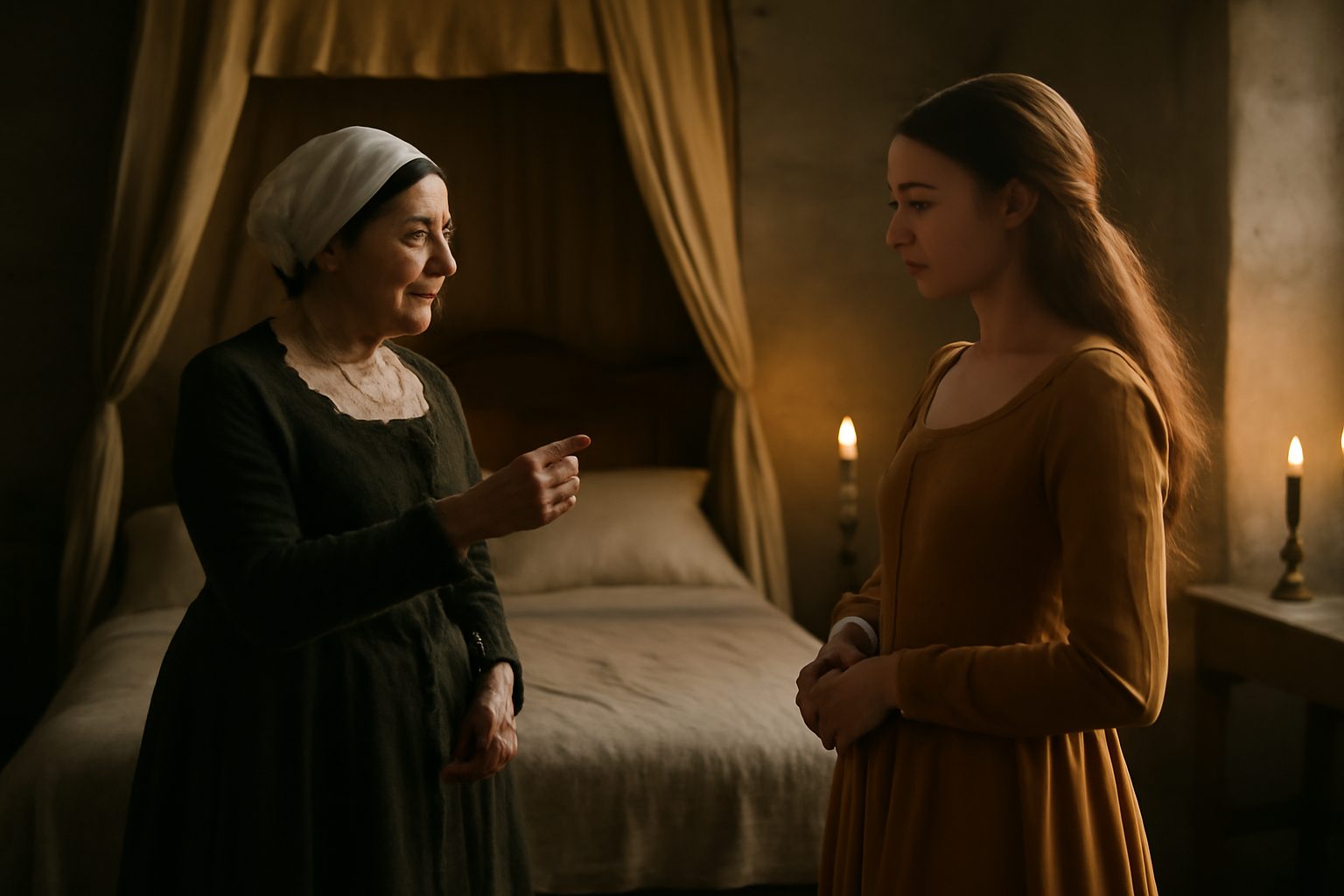
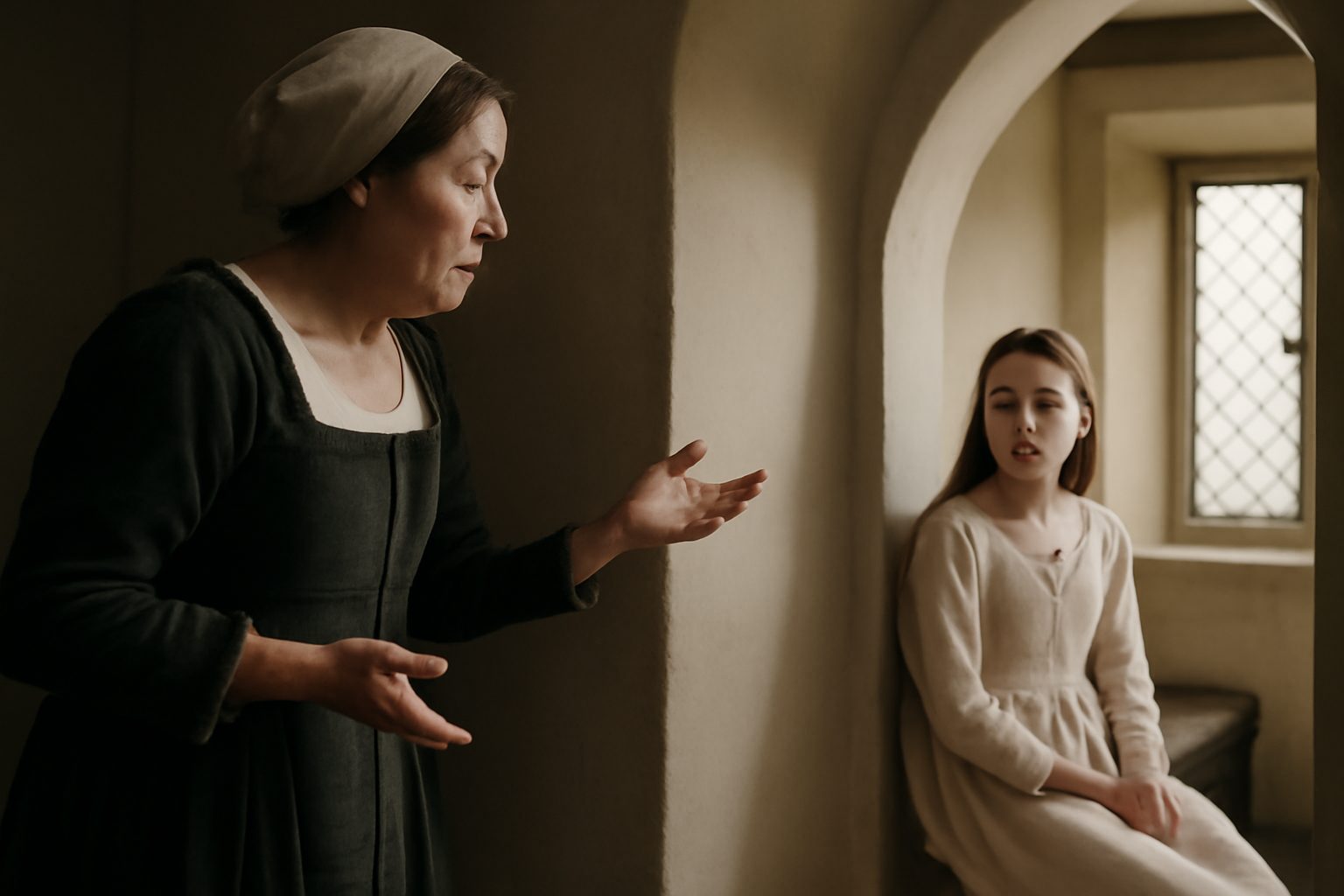
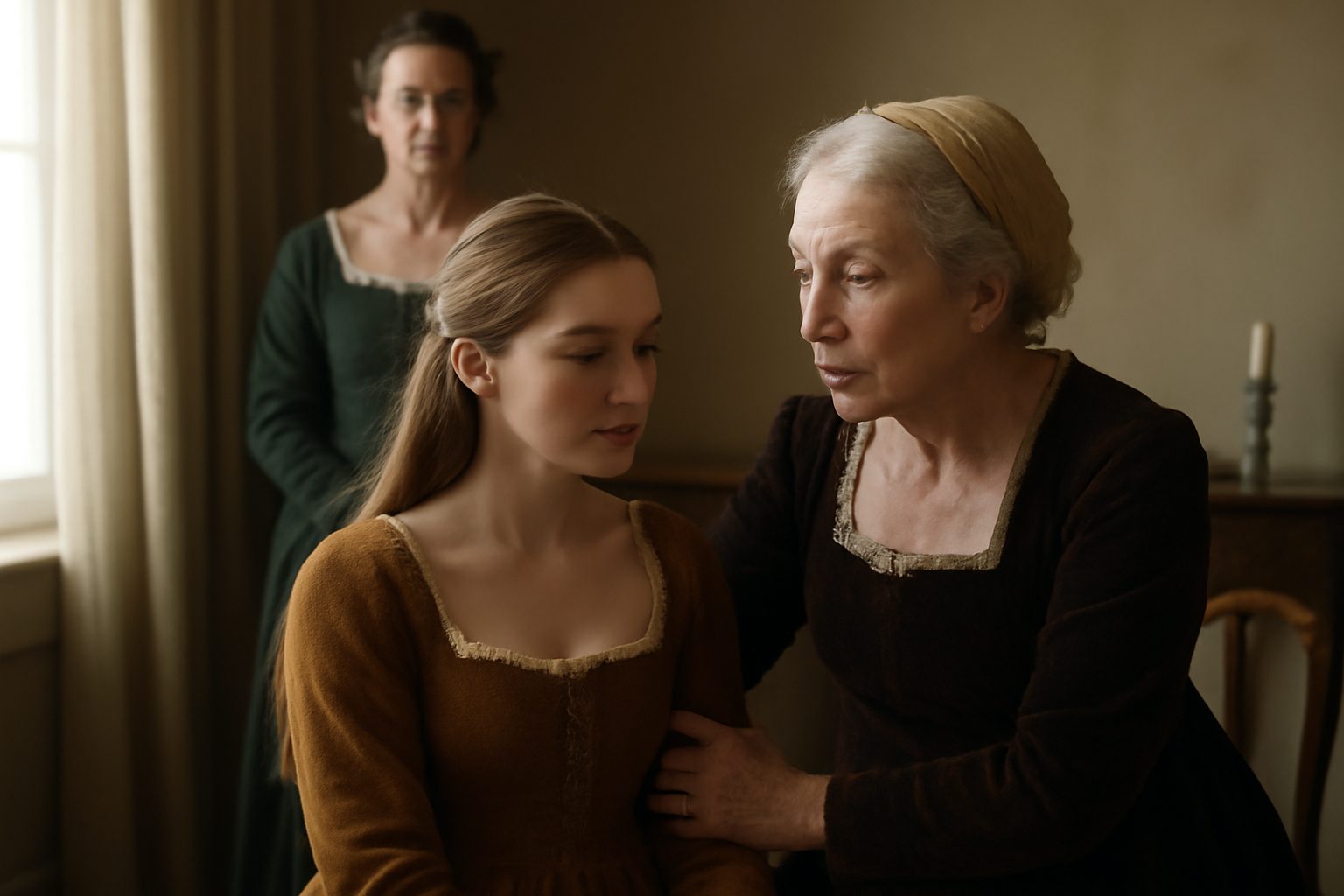
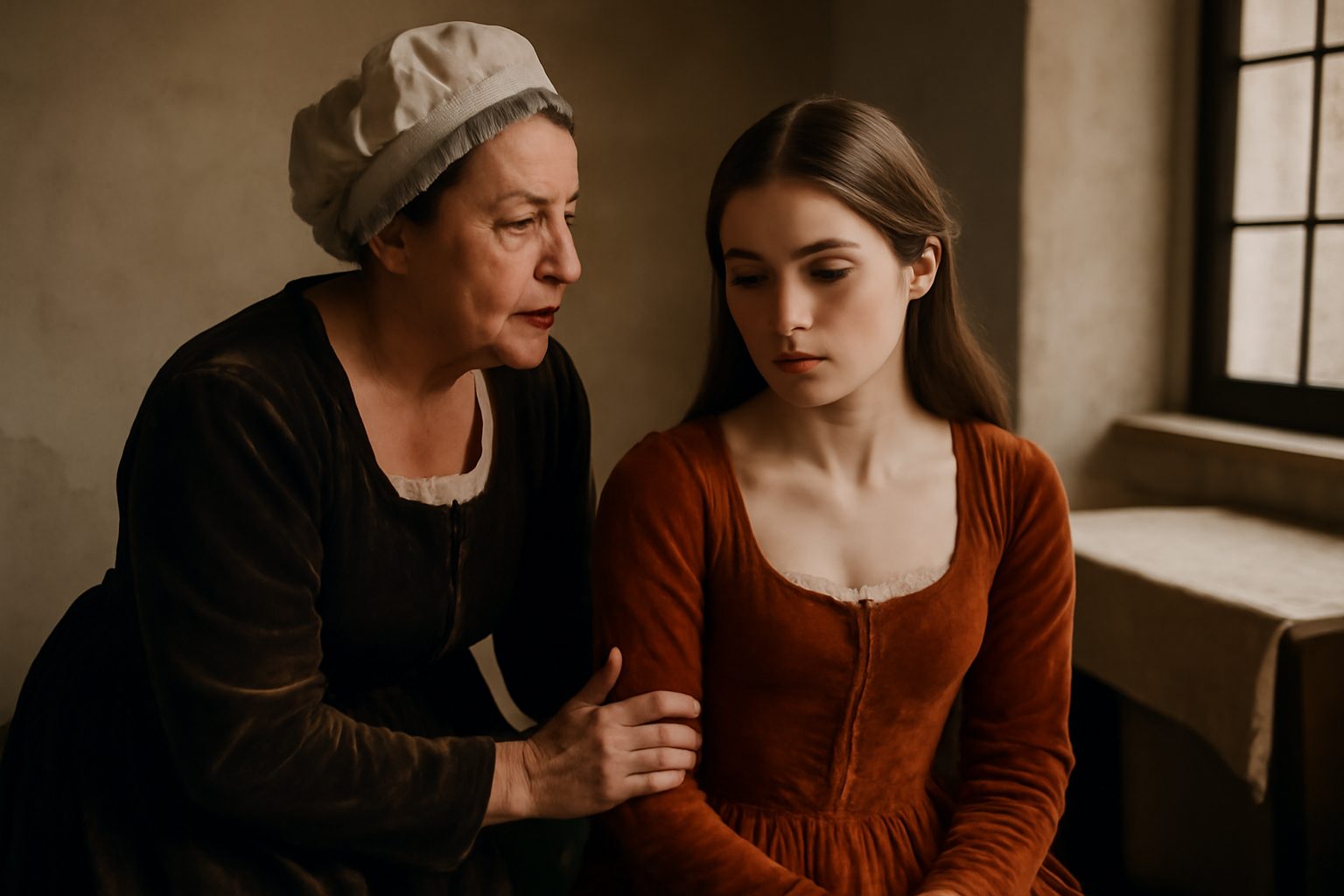
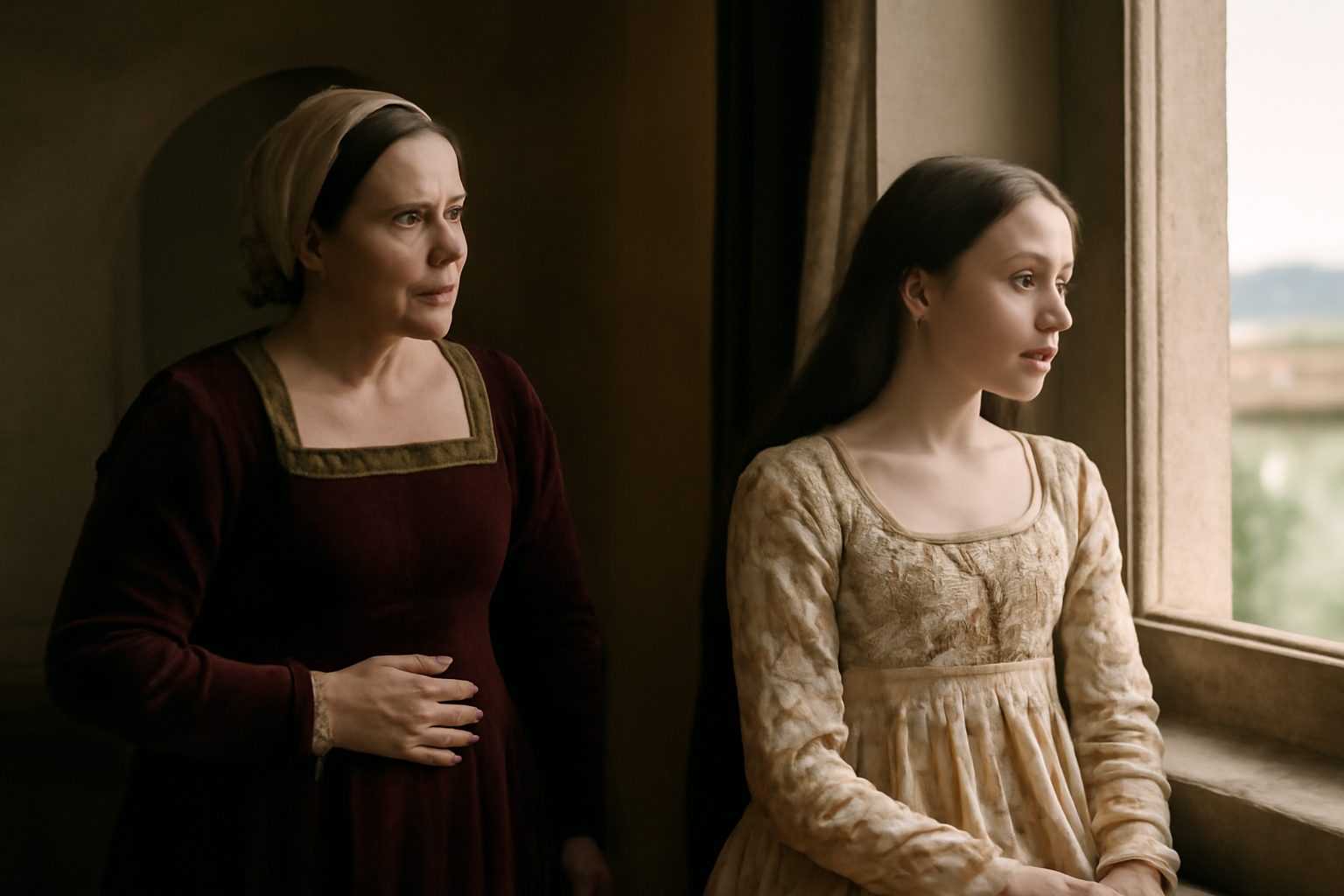
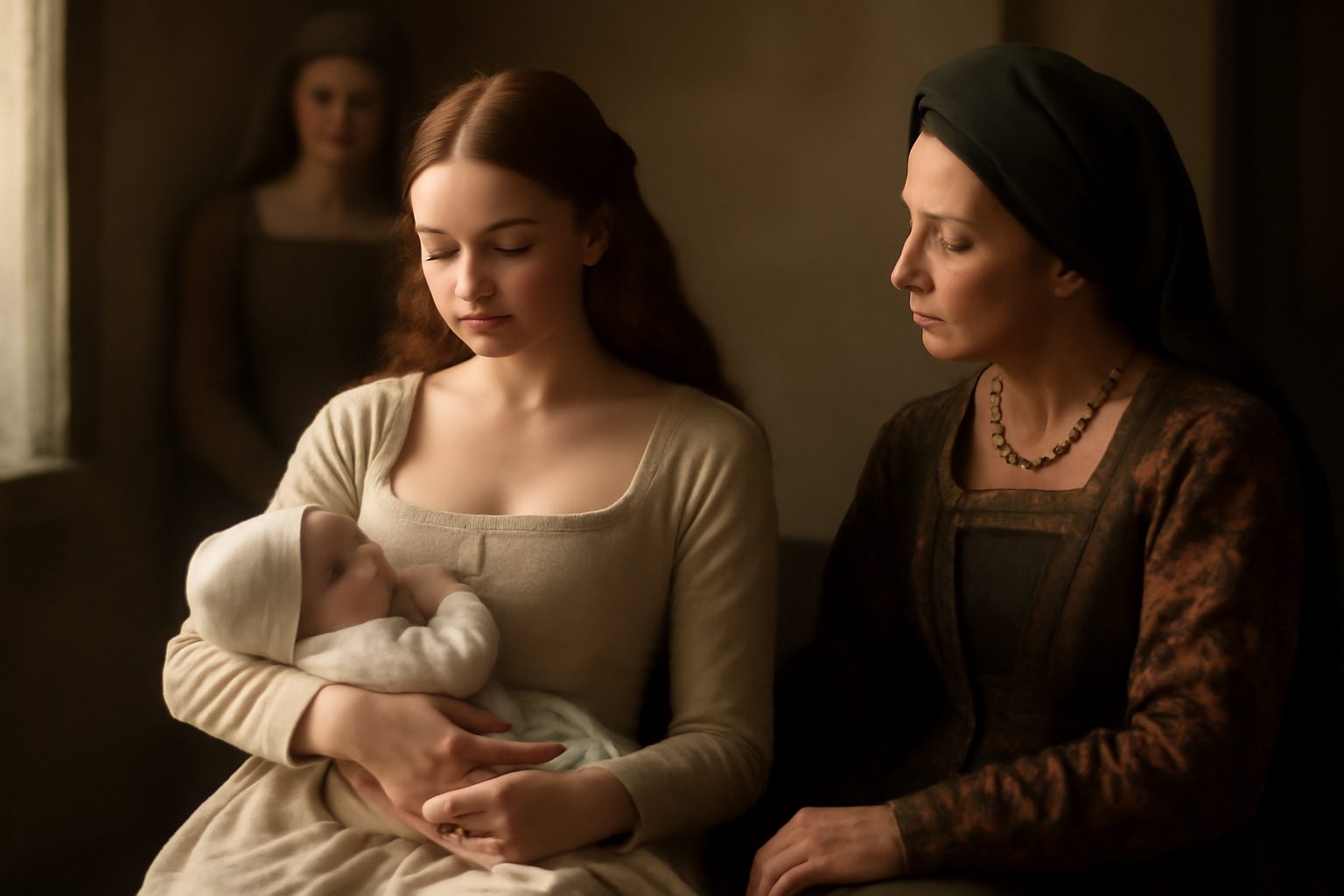
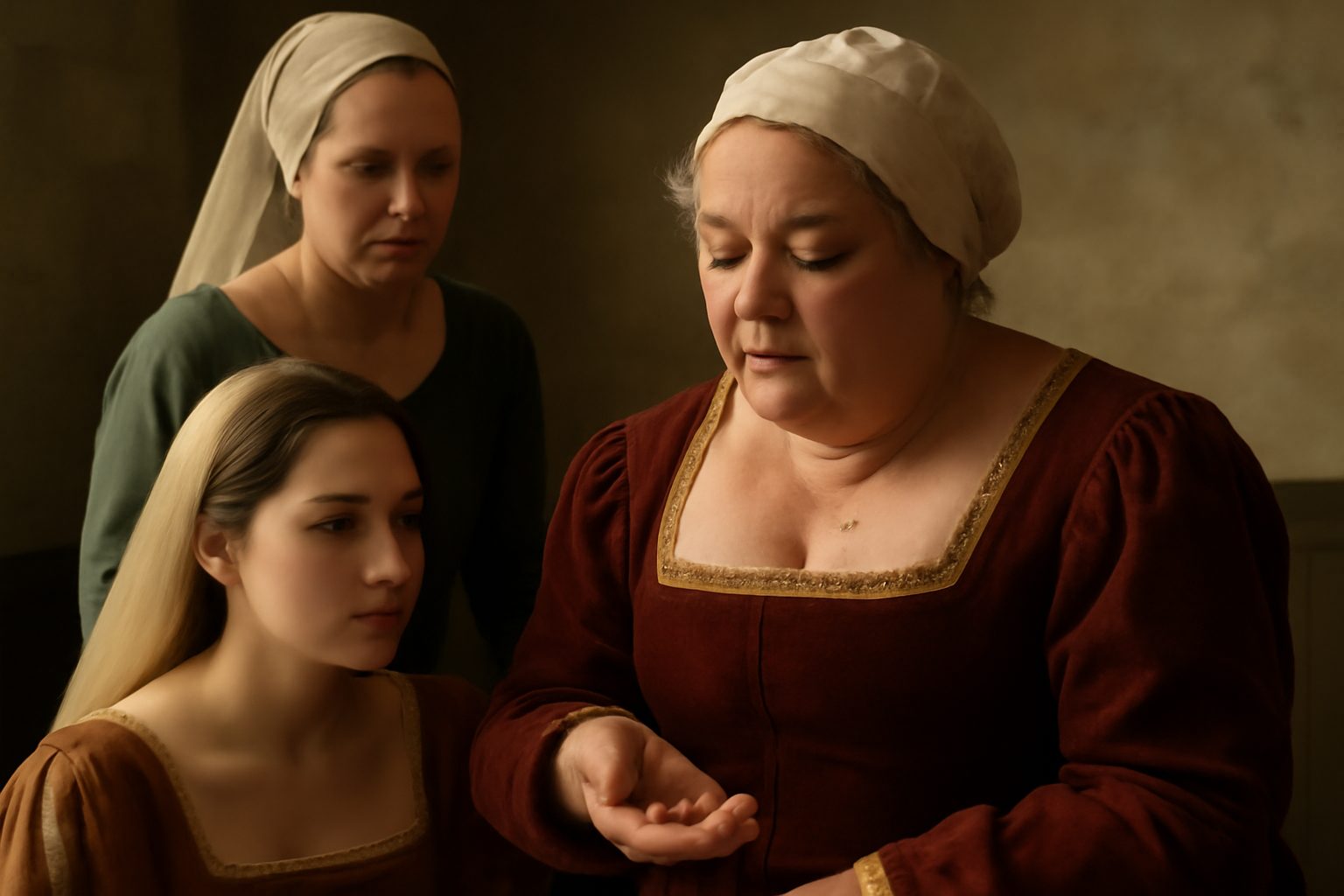
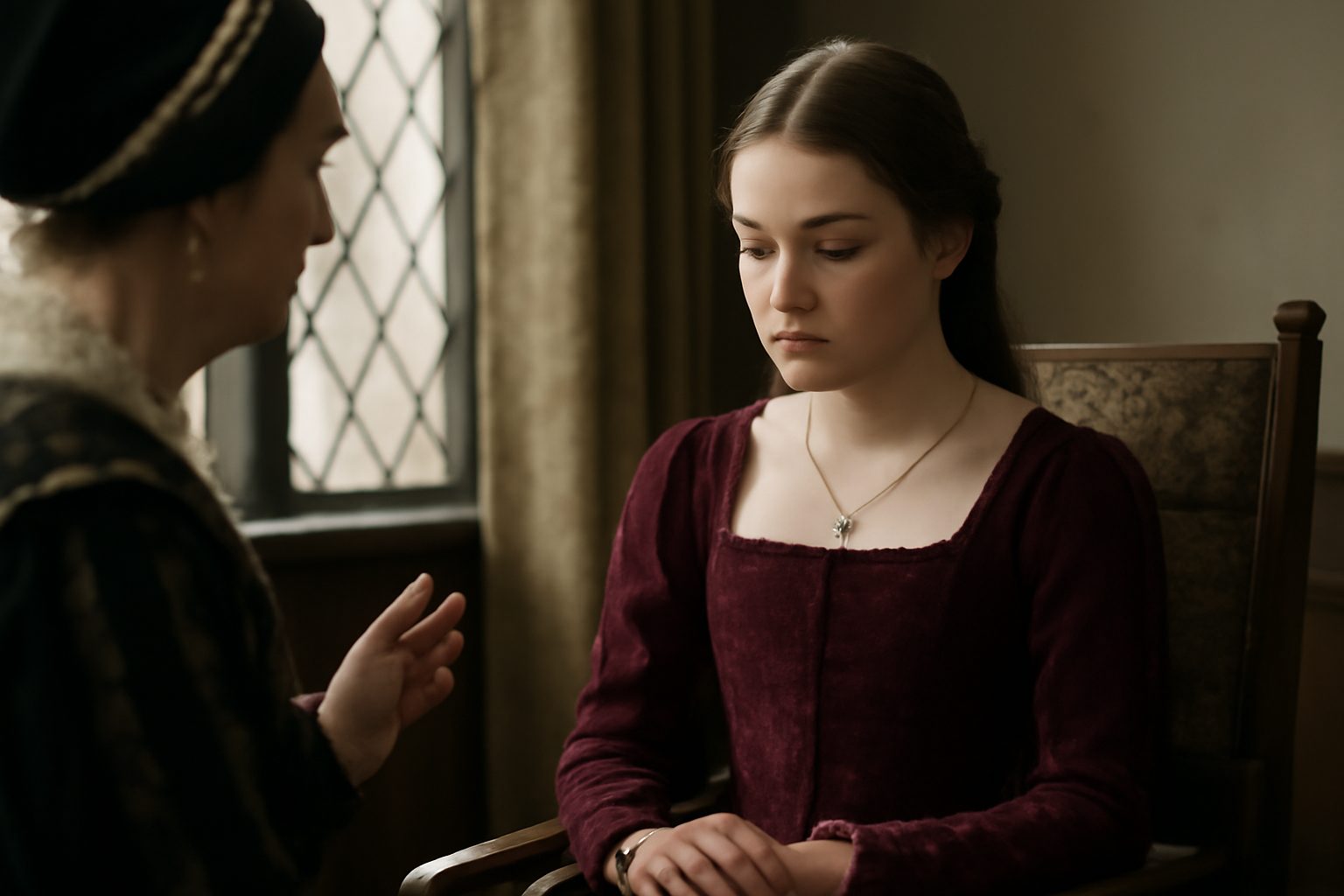
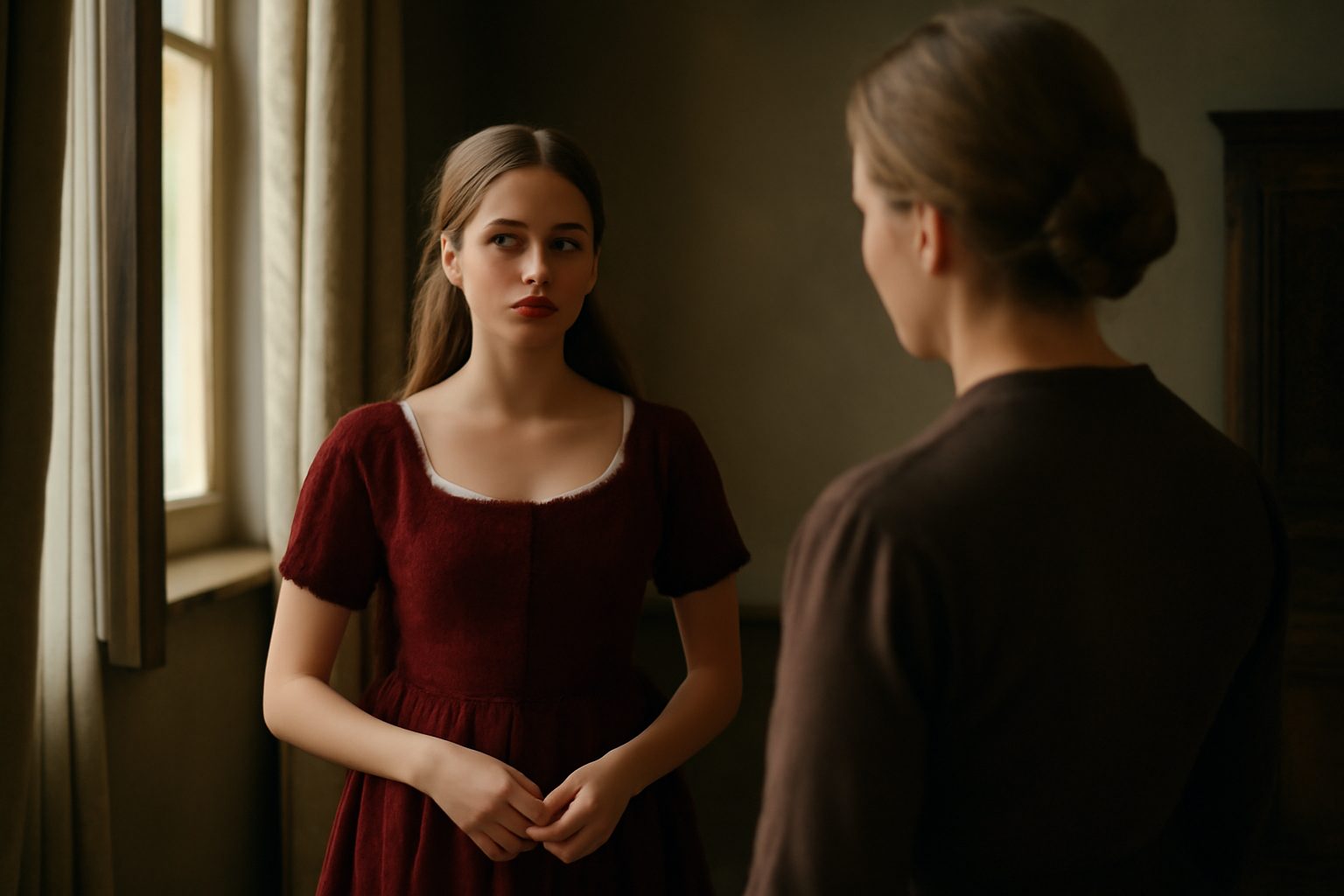
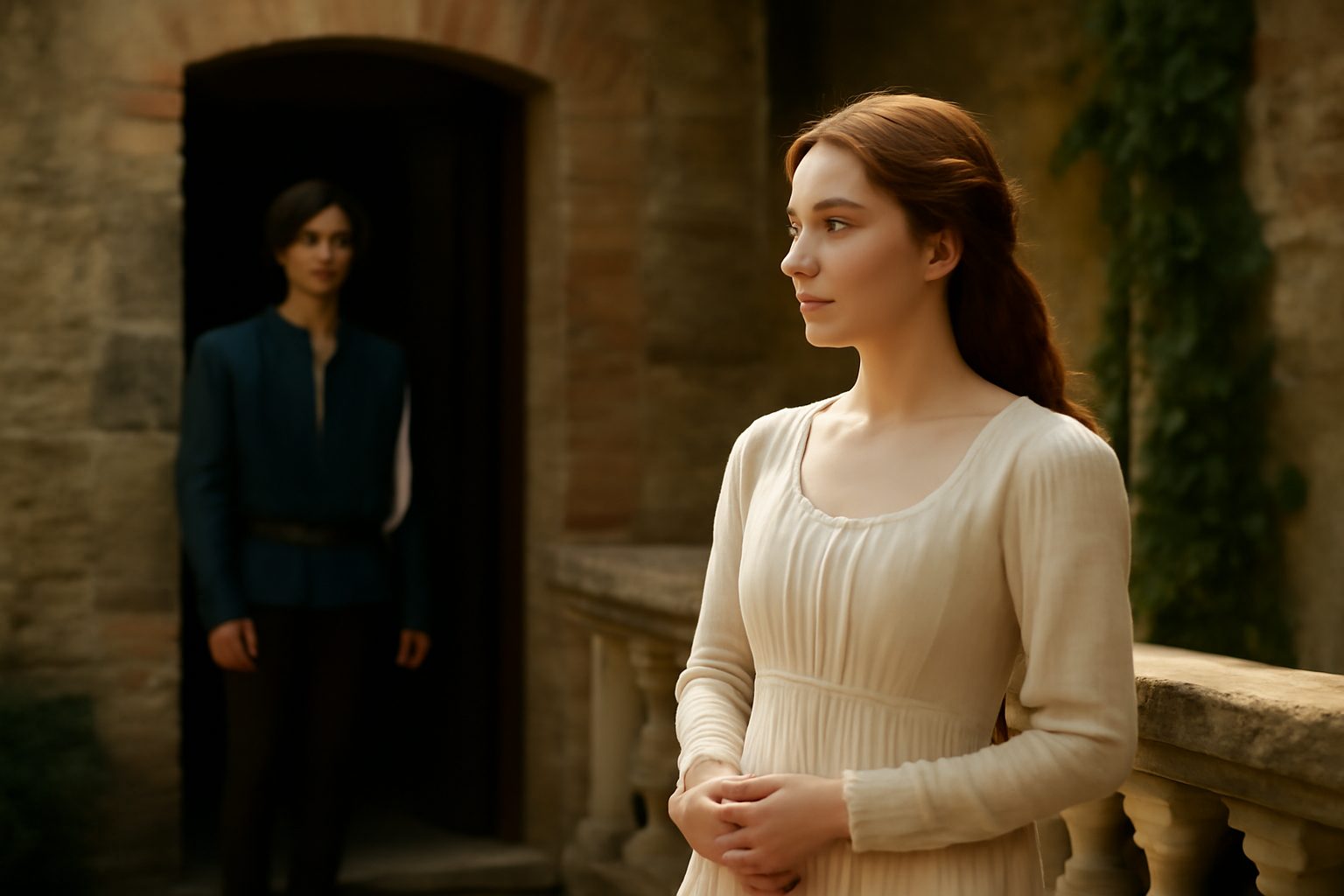
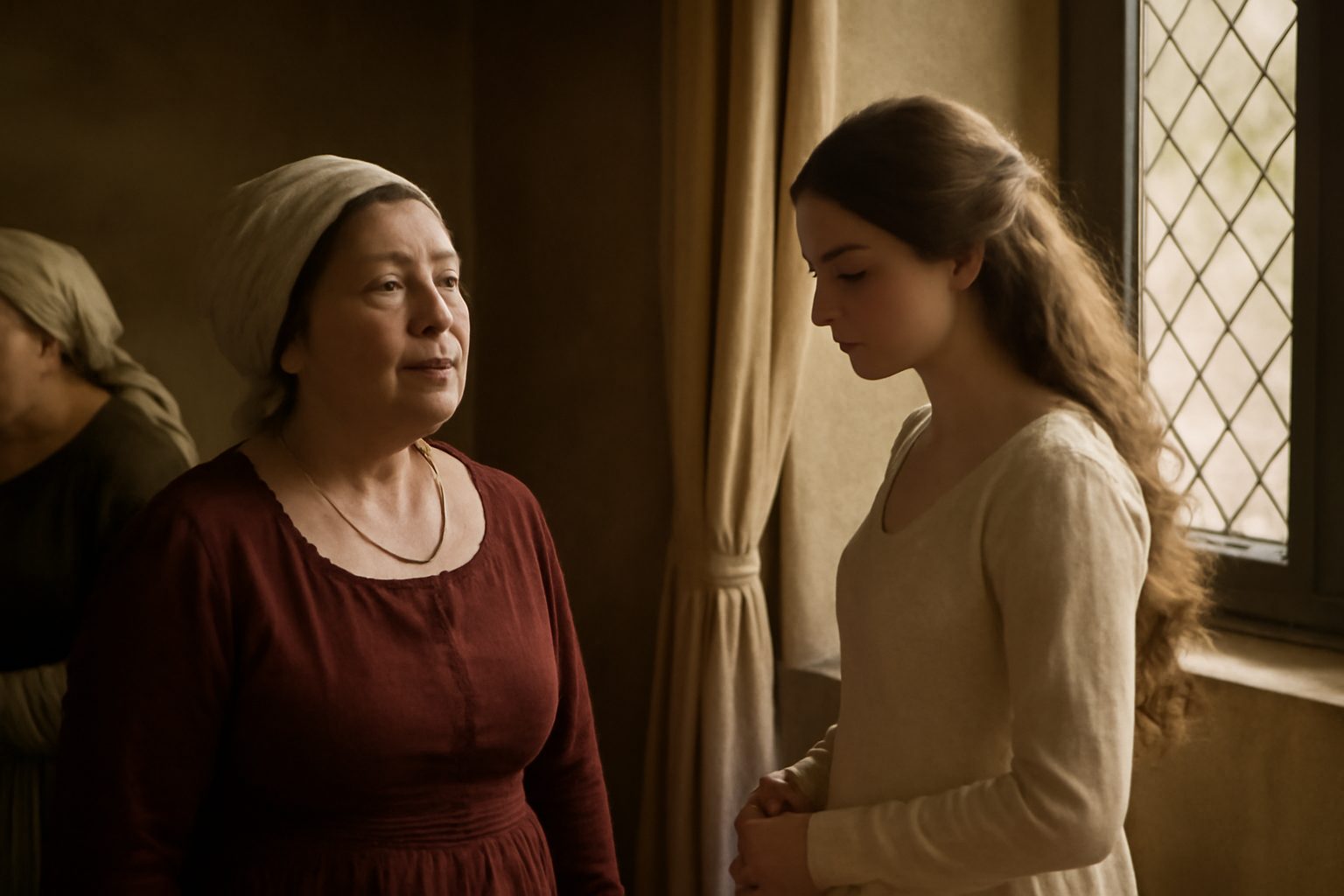
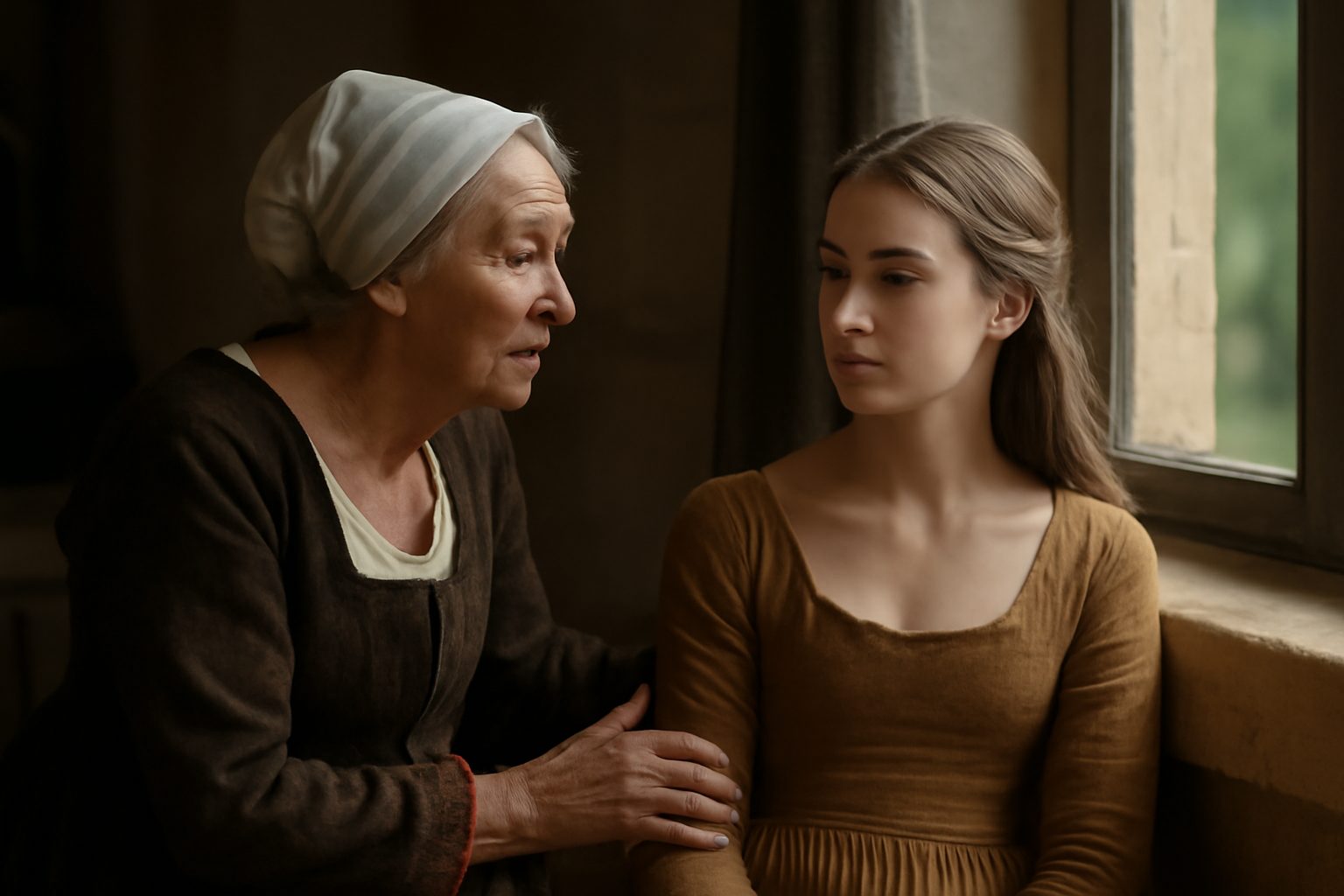
In Act 1 Scene 3 of Romeo and Juliet, Lady Capulet speaks to her daughter Juliet about the prospect of marriage, urging her to consider Paris as a worthy suitor. This line captures Lady Capulet’s enthusiastic praise for Paris, emphasizing his noble qualities in an attempt to persuade Juliet. The moment reflects the societal expectations placed on young women in Verona to marry well and quickly.
Nurse: "A man, young lady! lady, such a man"
In modern day english, we would say:
A young man, my lady—such a fine man, truly!
Frequently Asked Questions
What is the nurse saying about the man in this line?
The nurse is saying that the man is very impressive or outstanding.
Connections to other verses:
Connections to "A man, young lady! lady, such a man"
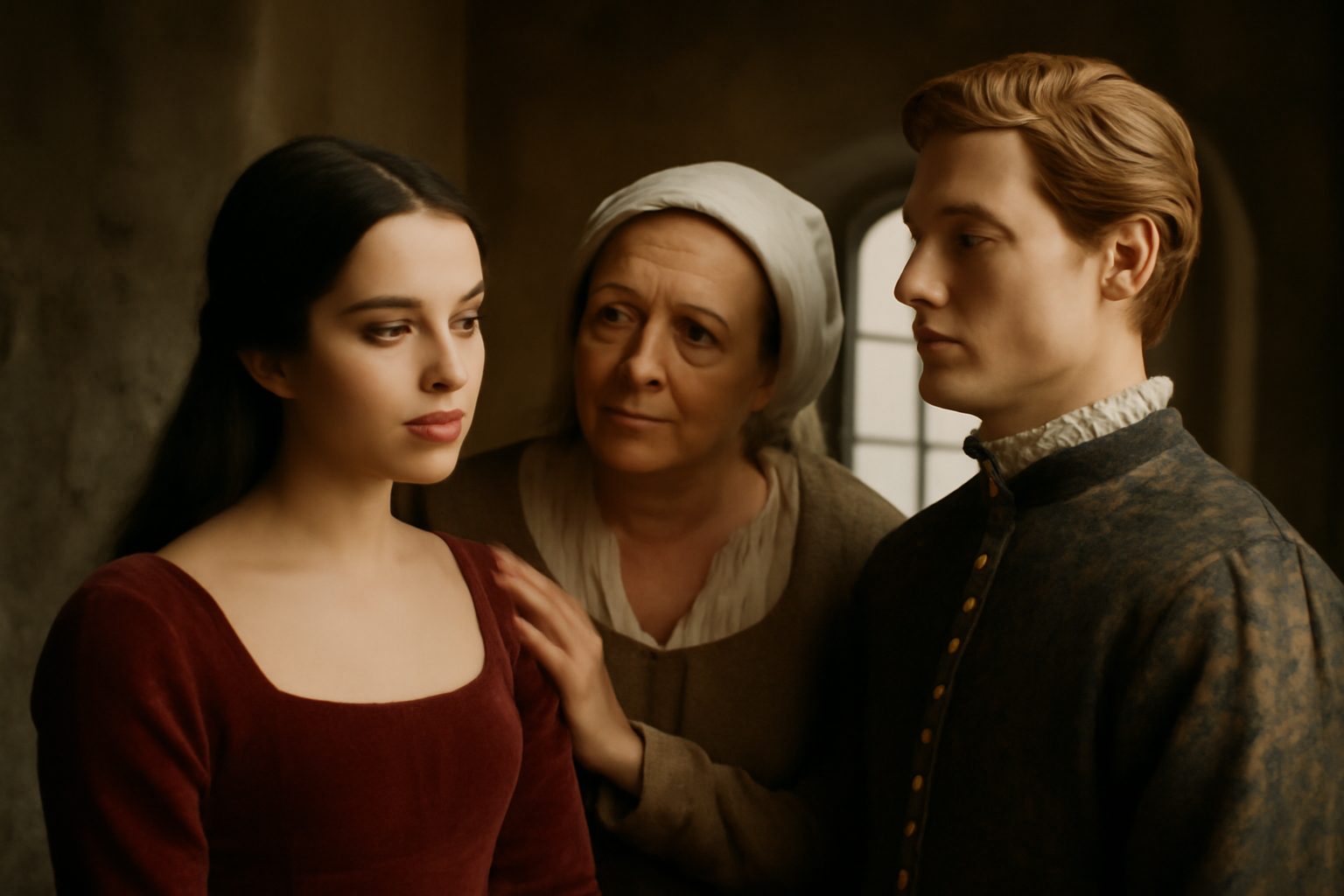
The verse "A man, young lady! lady, such a man" is part of the Nurse's enthusiastic praise of Paris, whom she is encouraging Juliet to consider as a suitor. This line highlights the idealization of Paris as a perfect match.
Connection to Physical and Personal Idealization
This description is immediately followed by "As all the world--why, he's a man of wax", reinforcing the image of Paris as a flawless, sculpted figure. The Nurse continues with "Nay, he's a flower; in faith, a very flower" and "Verona's summer hath not such a flower", using natural imagery to emphasize his beauty and rarity.
Connection to Lady Capulet's Persuasion
Lady Capulet supports the Nurse's praise, asking Juliet "What say you? can you love the gentleman?", directly tying the description of Paris to the central question of marriage. She further elaborates on his qualities by urging Juliet to "Read o'er the volume of young Paris' face", comparing him to a book full of delight and beauty, as seen in "And find delight writ there with beauty's pen" and "Examine every married lineament".
Connection to Matrimonial Themes
This idealization occurs within the broader context of marriage discussions, initiated by Lady Capulet's question "How stands your disposition to be married?" and Juliet's hesitant response "It is an honour that I dream not of". The Nurse's vivid description serves to persuade Juliet, aligning with Lady Capulet's statement "The valiant Paris seeks you for his love".
Connection to the Nurse's Character
The Nurse's effusive manner here is consistent with her earlier, more humorous anecdotes about Juliet's childhood, such as "Thou wilt fall backward when thou comest to age", showing her blend of maternal affection and bawdy humor, even when discussing serious topics like marriage.